Solar photovoltaic installations equipped with Supervisory Control and Data Acquisition (SCADA) systems face unprecedented cybersecurity threats that directly impact operational continuity, financial performance, and insurance eligibility. As renewable energy infrastructure becomes increasingly digitized and interconnected, SCADA networks managing solar arrays have evolved from isolated operational technology systems into prime targets for ransomware attacks, unauthorized access attempts, and sophisticated cyber intrusions that can disable generation capacity across multiple facilities simultaneously.
The convergence of information technology and operational technology in modern PV systems creates vulnerabilities that traditional insurance policies rarely addressed. Cyber insurance providers now require documented cybersecurity protocols, regular penetration testing, and specific technical safeguards before extending coverage to solar installations. Without adequate SCADA protection measures, facility operators risk coverage denials following security incidents, face premium increases exceeding 40 percent, and expose themselves to business interruption losses that can reach thousands of dollars per megawatt daily.
Understanding SCADA cybersecurity requirements has transitioned from optional best practice to mandatory compliance for PV professionals seeking comprehensive insurance protection. Insurance underwriters evaluate network segmentation strategies, authentication protocols, firmware update procedures, and incident response capabilities when determining policy terms. Facilities demonstrating robust cybersecurity frameworks secure favorable premium rates, broader coverage terms, and expedited claims processing.
This examination provides PV operators, facility managers, and renewable energy stakeholders with actionable intelligence on SCADA threat landscapes, insurance policy provisions, regulatory compliance obligations, and implementation frameworks specifically designed for solar installations. The analysis bridges technical cybersecurity concepts with practical insurance requirements, enabling informed decision-making that protects both digital infrastructure and financial investments in photovoltaic systems.
Understanding SCADA Systems in Solar PV Operations

Core Functions of SCADA in Solar Farms
SCADA systems serve as the central nervous system for solar farm operations, providing critical functionality that enables efficient management of distributed photovoltaic assets. Understanding these core functions is essential for professionals evaluating cybersecurity risks and insurance requirements for solar installations.
The primary function of SCADA in solar farms is real-time monitoring of system performance. These systems continuously collect data from inverters, weather stations, and electrical meters across the installation, tracking parameters such as power output, voltage levels, irradiance, and temperature. This comprehensive monitoring allows operators to maintain visibility over thousands of panels spread across large geographic areas from a single control center.
Data acquisition represents another fundamental capability, with SCADA systems gathering and storing operational data at regular intervals. This historical information enables trend analysis, performance benchmarking, and identification of gradual degradation in system components. The accumulated data proves invaluable for optimizing energy production and forecasting maintenance requirements.
Remote control capabilities distinguish SCADA systems from simple monitoring solutions. Operators can remotely adjust inverter settings, disconnect circuits during emergencies, or reconfigure system parameters without physical site visits. This functionality significantly reduces operational costs but also introduces cybersecurity vulnerabilities that require robust protection measures.
Performance optimization functions leverage collected data to maximize energy yield. SCADA systems can automatically adjust tracking systems, manage reactive power for grid stability, and implement curtailment commands during peak production periods. These automated responses enhance overall system efficiency while ensuring compliance with grid operator requirements and reducing manual intervention needs.
Why SCADA Makes PV Facilities Vulnerable
SCADA systems inherently create cybersecurity vulnerabilities in photovoltaic facilities due to their extensive connectivity requirements. Modern solar installations rely on continuous network connections to enable remote monitoring, performance optimization, and grid integration. These connections establish multiple digital access points that potential attackers can exploit. Unlike isolated operational technology systems of the past, today’s SCADA platforms require internet connectivity for real-time data transmission, creating pathways between operational networks and external environments.
The network dependencies extend beyond simple monitoring functions. SCADA systems communicate with inverters, weather stations, power meters, and grid operators through various protocols, many of which were designed without robust security features. Legacy communication protocols like Modbus and DNP3, commonly used in solar facilities, lack native encryption and authentication mechanisms. This architectural weakness becomes particularly concerning when combined with the distributed nature of solar installations, where SCADA components may span large geographic areas connected through vulnerable communication links.
Additionally, the push for improved operational efficiency has led to increased integration with corporate IT networks and cloud-based analytics platforms, further expanding the attack surface. Remote access capabilities, essential for system maintenance and troubleshooting, introduce additional vulnerabilities if not properly secured through multi-factor authentication and encrypted connections.
The Real Cyber Threats Facing Solar Infrastructure
Recent Case Studies and Industry Incidents
The renewable energy sector has experienced several significant SCADA-related cybersecurity incidents that underscore the vulnerability of photovoltaic operations. In 2019, a coordinated attack on a Utah-based renewable energy facility demonstrated how hackers could exploit SCADA vulnerabilities to disrupt grid connectivity, resulting in temporary operational shutdowns and financial losses exceeding $500,000. The incident revealed critical weaknesses in legacy SCADA protocols that lacked modern encryption standards.
More recently, a 2022 breach targeting European solar farms compromised SCADA monitoring systems across multiple installations, allowing unauthorized access to performance data and control interfaces. Attackers exploited outdated VPN configurations and default manufacturer passwords, highlighting the persistent challenge of basic security hygiene in distributed renewable energy networks. The breach affected approximately 15 megawatts of installed capacity and required extensive system audits before normal operations resumed.
The 2021 Colonial Pipeline ransomware attack, while not specifically targeting renewables, demonstrated broader implications for critical infrastructure protection. This incident prompted the U.S. Department of Energy to issue enhanced cybersecurity guidelines for renewable energy facilities, emphasizing SCADA system hardening and incident response protocols.
Research institutions collaborating with industry partners have documented that solar facilities with compromised SCADA systems experience average downtime of 72 hours and remediation costs between $250,000 and $2 million, depending on installation size. These incidents have directly influenced cyber insurance underwriting criteria, with insurers now requiring documented SCADA security assessments, regular penetration testing, and comprehensive incident response plans before extending coverage to photovoltaic operations.
Potential Operational and Financial Consequences
When SCADA systems controlling photovoltaic installations are compromised, the operational and financial ramifications extend far beyond initial breach detection. Understanding these consequences is essential for PV professionals evaluating cyber insurance needs and implementing comprehensive security protocols.
Production losses represent the most immediate impact of a SCADA cyberattack. Compromised systems can force operators to shut down entire solar arrays as a precautionary measure, resulting in direct revenue losses during downtime. For utility-scale installations generating megawatts of power, even brief outages translate to substantial financial losses and potential penalties for failing to meet power purchase agreement obligations.
Equipment damage poses another critical concern. Attackers manipulating SCADA controls can override safety parameters, causing inverters to operate outside specifications, forcing trackers into damaging positions, or creating voltage irregularities that degrade panel performance. Research from academic institutions studying renewable energy cybersecurity has documented cases where malicious SCADA manipulation resulted in permanent equipment degradation requiring costly replacements.
Grid stability issues emerge when multiple PV installations experience simultaneous SCADA compromises. Solar farms contribute significantly to grid balancing, and coordinated attacks could disrupt power distribution across entire regions, potentially triggering cascading failures.
Revenue impacts compound over time as operators face insurance premium increases, regulatory fines for inadequate cybersecurity measures, and reputational damage affecting future project financing. Industry stakeholders should recognize that cyber insurance policies specifically address these scenarios, making thorough coverage evaluation crucial for protecting both operational continuity and financial stability in an increasingly interconnected renewable energy landscape.
SCADA Cybersecurity Clauses: What Insurance Policies Should Cover

Coverage for System Intrusion and Data Breaches
Comprehensive cyber insurance policies for photovoltaic facilities with SCADA systems specifically address system intrusion and data breach scenarios unique to operational technology environments. Coverage typically extends to unauthorized access incidents where external actors compromise SCADA networks, potentially manipulating inverter settings, disrupting grid synchronization protocols, or stealing proprietary performance data. Unlike traditional IT data breaches, SCADA intrusions in solar installations may involve operational disruption rather than personal data exposure, requiring specialized policy language that accounts for industrial control system vulnerabilities.
Policy provisions commonly cover forensic investigation expenses necessary to determine breach scope, identify entry vectors, and assess compromised components within the SCADA infrastructure. These investigations demand expertise in industrial protocols like Modbus and DNP3, often requiring specialized consultants familiar with renewable energy control systems. Insurance coverage extends to notification costs when breaches affect stakeholder data or require regulatory disclosure under critical infrastructure protection requirements.
For solar operators, understanding coverage limits for business interruption following SCADA compromise proves essential, as generation downtime directly impacts revenue streams. Many insurers now include coverage for system restoration costs, including reprogramming compromised controllers and validating security configurations. Academic research partnerships between insurance providers and universities increasingly inform these specialized coverage provisions, ensuring policies reflect emerging threats in photovoltaic operational technology environments while supporting industry-wide cybersecurity education initiatives.
Business Interruption and Production Loss Protection
When a cyberattack compromises SCADA systems controlling photovoltaic installations, the immediate financial impact extends far beyond repair costs. Business interruption coverage addresses the revenue losses that occur when solar facilities reduce or cease electricity generation during incident response and system restoration. For commercial-scale PV operations, even brief disruptions can result in substantial lost income from power purchase agreements and renewable energy credit sales.
Comprehensive cyber insurance policies typically cover both the direct production losses and indirect financial impacts during the restoration period. This includes calculating the energy output differential between normal operations and compromised capacity, accounting for seasonal variations and historical performance data. The coverage period generally extends from the initial security breach detection through complete system restoration and verification, which may span several weeks depending on attack severity.
Policy structures should explicitly address lost revenue from grid-tied operations, capacity payments, and environmental attribute trading. Modern policies also recognize cascading financial consequences, including penalties for failing to meet contractual delivery obligations and increased operational expenses required to maintain partial generation capacity. For aspiring photovoltaic professionals and facility operators, understanding these coverage provisions proves essential when evaluating insurance adequacy, particularly as SCADA systems become increasingly sophisticated and interconnected across renewable energy portfolios.
Hardware and Software Restoration Costs
Following a SCADA cyberattack on photovoltaic installations, comprehensive insurance coverage must address significant restoration expenses. Hardware costs include replacing compromised servers, programmable logic controllers, remote terminal units, and network infrastructure that cannot be adequately sanitized. Software restoration encompasses licensing fees for new operating systems, SCADA platforms, and security applications, plus expenses for custom re-engineering of control algorithms and monitoring interfaces.
Insurance policies should explicitly cover forensic analysis costs to identify breach vectors and contaminated components. Enhanced security implementation costs—including multi-factor authentication systems, network segmentation hardware, and intrusion detection software—represent essential post-incident investments. Similar to equipment protection for physical assets, cyber policies must account for system downtime during restoration, typically requiring backup control systems. Academic collaborations with university cybersecurity programs can reduce long-term costs through research partnerships and educational initiatives that strengthen organizational resilience against future threats.
Third-Party Liability and Grid Impact Coverage
SCADA-related cyber incidents in photovoltaic installations can create cascading effects across interconnected electrical grids, potentially impacting neighboring facilities and utility partners. Comprehensive cyber insurance policies must include third-party liability coverage addressing claims from grid destabilization, frequency irregularities, or voltage fluctuations caused by compromised control systems. This protection extends beyond traditional force majeure provisions to specifically address cyber-induced operational failures. Coverage typically encompasses legal defense costs, settlement payments, and regulatory fines resulting from incidents where malicious actors manipulate SCADA systems to disrupt power delivery or damage connected infrastructure. For solar facility operators managing grid-tied installations, this coverage component proves essential as utilities increasingly hold distributed energy resource operators accountable for maintaining cybersecurity standards that protect overall grid integrity and reliability.
Standard Insurance Exclusions PV Professionals Must Know
Pre-Existing Vulnerabilities and Unpatched Systems
Cyber insurance policies increasingly contain specific exclusions for claims arising from pre-existing vulnerabilities and unpatched systems. Insurers conduct thorough assessments of SCADA infrastructure during underwriting, documenting known security gaps. When a breach occurs, forensic investigations often reveal that operators failed to apply available security patches or ignored vendor security advisories for months or even years. This negligence provides insurers with clear grounds for claim denial.
For photovoltaic facilities, common scenarios leading to coverage disputes include outdated SCADA software running on legacy operating systems, failure to implement manufacturer-recommended firmware updates for inverters and monitoring equipment, and documented vulnerabilities in remote access systems that remained unaddressed. Insurance policies typically require operators to maintain reasonable cybersecurity hygiene, which includes regular system updates, vulnerability scanning, and prompt remediation of identified risks.
The financial consequences extend beyond denied claims. Operators may face policy cancellations, premium increases, or difficulty securing future coverage. Academic research demonstrates that systematic patch management reduces breach likelihood by over 60 percent. Establishing documented maintenance protocols, partnering with qualified cybersecurity professionals, and maintaining detailed records of security measures strengthens both operational resilience and insurance compliance. Educational programs emphasizing preventive maintenance help aspiring professionals understand these critical obligations before assuming facility management responsibilities.
Acts of War and Nation-State Attack Carve-Outs
Most cyber insurance policies contain carve-outs that exclude coverage for acts of war and nation-state attacks, presenting significant implications for critical infrastructure operators in the renewable energy sector. These exclusions typically define cyberattacks attributed to foreign governments or state-sponsored actors as uninsurable events, leaving solar farm operators potentially exposed to catastrophic losses from sophisticated threats.
For photovoltaic installations utilizing SCADA systems, this creates a concerning coverage gap. Nation-state actors have demonstrated capabilities to infiltrate critical infrastructure networks, and renewable energy facilities represent attractive targets due to their role in national power grids. The 2015 Ukraine power grid attack exemplifies how state-sponsored adversaries can compromise industrial control systems, causing widespread disruption.
Insurance providers argue these exclusions are necessary because nation-state attacks represent unlimited liability potential that exceeds actuarial modeling capabilities. However, attributing attacks to specific state actors remains challenging, creating ambiguity during claims processes. Solar facility operators should carefully review policy language regarding attribution requirements and burden of proof standards. Some insurers offer limited coverage for cyber warfare through specialized endorsements, though premiums reflect elevated risk profiles. Academic research institutions collaborating with industry partners continue examining how renewable energy operators can better navigate these coverage limitations while maintaining operational resilience against advanced persistent threats targeting critical infrastructure systems.
Compliance Requirements That Affect Insurance Eligibility
Industry Standards and Regulatory Frameworks
Protecting solar SCADA systems requires adherence to established industry standards and regulatory frameworks that define cybersecurity requirements and best practices. For photovoltaic professionals seeking to understand their obligations, several key frameworks provide essential guidance.
The North American Electric Reliability Corporation Critical Infrastructure Protection (NERC CIP) standards represent the primary regulatory framework for grid-connected solar facilities in the United States. These standards establish mandatory cybersecurity requirements for bulk electric systems, including access controls, incident reporting, recovery planning, and personnel training. Solar facilities classified as Bulk Electric System assets must comply with NERC CIP-002 through CIP-011, which address asset identification, security management controls, and information protection.
The International Electrotechnical Commission’s IEC 62351 standard provides comprehensive security protocols specifically designed for power system communications. This framework addresses authentication, encryption, and intrusion detection for protocols commonly used in solar SCADA environments, including DNP3, IEC 60870-5, and IEC 61850.
Additionally, the National Institute of Standards and Technology (NIST) Cybersecurity Framework offers a voluntary but widely recognized approach to managing cybersecurity risks. The NIST framework’s five core functions—Identify, Protect, Detect, Respond, and Recover—align well with solar facility operational requirements and are frequently referenced in cyber insurance policies as evidence of due diligence.
Understanding these frameworks is essential for aspiring photovoltaic professionals, as compliance directly impacts facility certification, insurance eligibility, and operational resilience.
Mandatory Security Controls for Insurability
Cyber insurance policies for photovoltaic facilities with SCADA systems mandate specific security measures to qualify for coverage and maintain reasonable premiums. Understanding these requirements enables renewable energy operators to align their cybersecurity infrastructure with insurer expectations while enhancing overall system resilience.
Network segmentation stands as a fundamental requirement, requiring physical or logical separation between SCADA networks and corporate IT infrastructure. Insurers typically mandate air-gapped architectures or demilitarized zones (DMZs) with intrusion detection systems monitoring boundary traffic. This isolation prevents lateral movement of threats from business networks into operational technology environments controlling solar arrays and inverters.
Access control frameworks must incorporate multi-factor authentication, role-based permissions, and principle of least privilege enforcement. Insurance underwriters often specify periodic access audits and immediate credential revocation protocols for departing personnel. For educational institutions partnering with universities on renewable energy research, visitor access policies require particular attention to maintain compliance.
Continuous monitoring systems represent another non-negotiable element, with insurers requiring 24/7 surveillance of SCADA network traffic, system logs, and anomaly detection capabilities. Many policies stipulate Security Operations Center coverage, whether in-house or outsourced.
Comprehensive incident response plans must document detection procedures, containment strategies, communication protocols, and recovery timeframes. Regular tabletop exercises and annual plan updates demonstrate operational readiness to insurers, often resulting in premium reductions for facilities that exceed baseline requirements through proactive security postures.
Building a Cyber-Resilient SCADA Environment
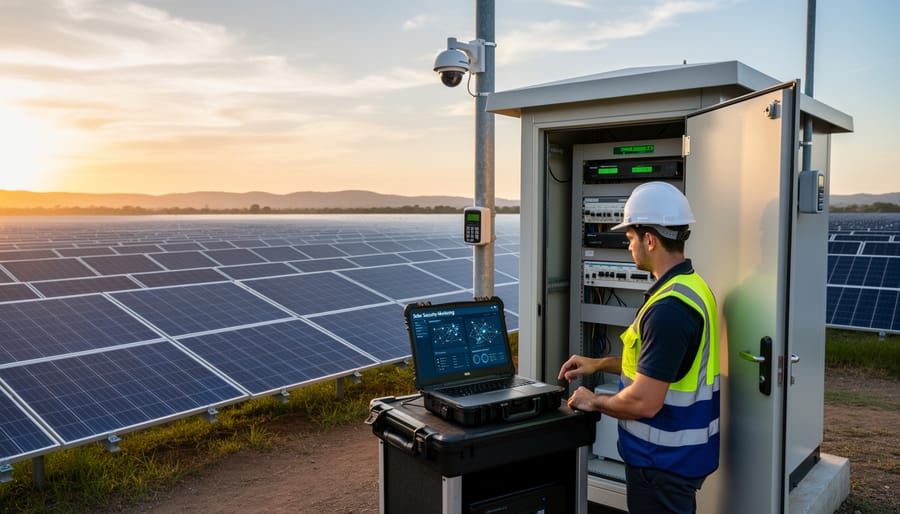
Network Architecture and Segmentation Strategies
Implementing robust network architecture is fundamental to protecting SCADA systems in photovoltaic installations. The primary strategy involves network segmentation, which creates distinct security zones separating operational technology (OT) networks from enterprise IT systems. This isolation prevents cyber threats from propagating between business operations and critical control systems managing solar arrays.
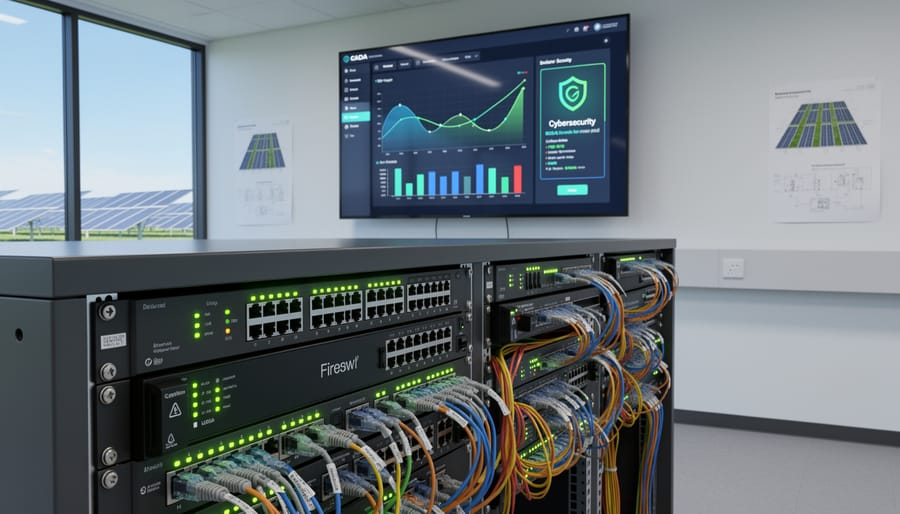
Effective segmentation begins with deploying industrial firewalls at zone boundaries, configured with strict access control lists that permit only essential communications. For PV facilities, this means limiting traffic between inverter controllers, monitoring systems, and external networks to predetermined protocols and IP addresses. Many cyber insurance policies now require documented evidence of network segmentation as a prerequisite for coverage.
Defense-in-depth architectures build multiple protective layers throughout the SCADA infrastructure. This approach combines perimeter security, internal segmentation, intrusion detection systems, and endpoint protection. Academic research partnerships, including those with universities developing next-generation security protocols, demonstrate that layered defenses significantly reduce successful breach rates.
Educational programs emphasize the importance of implementing demilitarized zones (DMZs) for external-facing services like remote monitoring portals. This intermediate network layer provides controlled access points while maintaining operational network isolation. Regular security audits and penetration testing validate architectural effectiveness, satisfying both operational requirements and insurance compliance standards for renewable energy installations.
Access Management and Authentication Protocols
Robust access management forms the foundation of SCADA cybersecurity in photovoltaic installations. Multi-factor authentication (MFA) should be mandatory for all system access, combining something users know (passwords), have (security tokens), and are (biometric verification). This layered approach significantly reduces unauthorized access risks that could compromise solar array operations.
Role-based access control (RBAC) ensures personnel can only access functions necessary for their responsibilities. For example, maintenance technicians require different permissions than system administrators or data analysts. This principle of least privilege minimizes potential damage from compromised credentials or insider threats.
Privileged account management demands particular attention, as administrative credentials provide extensive system control. Organizations should implement time-limited access sessions, detailed audit logging, and regular credential rotation for these high-risk accounts. Universities collaborating with solar facilities can contribute research on authentication protocols optimized for renewable energy infrastructure.
Insurance providers increasingly require documented access controls as part of cyber coverage eligibility. Educational programs training PV professionals should emphasize authentication best practices, helping facilities meet both operational security needs and insurance compliance requirements. Regular access reviews and immediate revocation of terminated employee credentials complete this critical security framework.
Continuous Monitoring and Incident Response
Implementing continuous monitoring capabilities is essential for maintaining robust SCADA cybersecurity in photovoltaic installations. Security Information and Event Management (SIEM) systems provide centralized visibility by aggregating logs from SCADA devices, network equipment, and control systems to identify anomalous patterns that may indicate cyber threats. These platforms enable real-time correlation of security events, allowing operators to detect potential breaches before they escalate into operational disruptions.
Effective monitoring programs should establish baseline performance metrics for normal SCADA operations, facilitating the identification of deviations such as unauthorized access attempts, configuration changes, or unusual data transfers. Many cyber insurance policies require documented evidence of continuous monitoring as a prerequisite for coverage, making these capabilities both a security necessity and a compliance requirement.
Equally critical are formalized incident response procedures that outline specific actions when security events occur. These documented protocols should define roles and responsibilities, communication channels, containment strategies, and recovery processes. Academic partnerships with universities specializing in cybersecurity can provide valuable insights into emerging threat patterns and response methodologies. Regular tabletop exercises and simulated breach scenarios ensure response teams remain prepared to execute procedures effectively, minimizing downtime and demonstrating due diligence to insurance providers.
Evaluating and Selecting Cyber Insurance Providers
Key Questions to Ask Potential Insurers
When evaluating cyber insurance providers for your photovoltaic installation’s SCADA systems, ask targeted questions that reveal the policy’s true value. Begin by inquiring about SCADA-specific coverage inclusions: Does the policy explicitly cover operational technology networks, or only information technology systems? Request clarification on coverage for firmware vulnerabilities, protocol-specific attacks like Modbus exploits, and incidents affecting remote terminal units.
Examine the claim process thoroughly. What documentation is required following a SCADA breach? How quickly does the insurer respond to incident notifications? Understanding response timeframes is critical when system downtime directly impacts energy production revenue.
Investigate sub-limits carefully, as these can significantly reduce your effective coverage. Ask about separate limits for business interruption, data restoration, forensic investigations, and legal expenses. Retention periods matter equally—confirm how long historical data must be maintained for claim validation.
Assess the insurer’s renewable energy sector experience. Request case studies demonstrating successful claims resolution for solar facilities. Have they managed incidents involving inverter communication disruptions or weather monitoring system compromises? Insurers with demonstrated SCADA expertise in renewable energy installations better understand your operational risks and can provide more relevant coverage terms.
Understanding Premium Calculations and Risk Assessments
Insurance providers evaluate SCADA cybersecurity posture through comprehensive risk assessments that examine multiple operational and technical dimensions. Insurers typically request documentation of network segmentation practices, authentication protocols, patch management schedules, and incident response capabilities specific to photovoltaic monitoring systems. Premium calculations directly reflect the maturity of these protective measures.
Key factors influencing premium costs include the age and configuration of SCADA infrastructure, historical security incidents, employee cybersecurity training programs, and third-party security audit results. Facilities demonstrating air-gapped networks, multi-factor authentication, and regular vulnerability assessments generally qualify for reduced premiums. Insurance underwriters also consider whether organizations maintain updated asset inventories and implement continuous monitoring solutions.
Solar operators can demonstrate reduced risk profiles by obtaining recognized cybersecurity certifications, participating in information sharing programs with industry peers, and engaging with educational institutions to stay current on emerging threats. Academic collaborations through university research partnerships strengthen risk management capabilities while providing verifiable evidence of commitment to security excellence. Regular penetration testing and documented security improvements create quantifiable metrics that insurers value when determining coverage terms and costs.
The convergence of renewable energy expansion and escalating cyber threats has fundamentally transformed the operational landscape for solar photovoltaic installations. As SCADA systems become increasingly interconnected and critical to grid stability, the question is no longer whether cyber incidents will occur, but when and how prepared organizations will be to respond. This reality underscores the imperative for a comprehensive approach that integrates both robust technical defenses and strategically designed cyber insurance coverage.
For aspiring photovoltaic professionals entering this dynamic industry, understanding that cybersecurity is now as essential as understanding inverter efficiency or panel degradation rates represents a fundamental shift in professional competencies. The traditional focus on maximizing energy production must now be balanced with vigilance against ransomware attacks, unauthorized access attempts, and sophisticated nation-state threats targeting energy infrastructure. Organizations that recognize this dual imperative position themselves not only for regulatory compliance but for long-term operational resilience and stakeholder confidence.
The most effective protection strategy employs layered defenses beginning with network segmentation, continuous monitoring, and regular vulnerability assessments, complemented by insurance policies specifically tailored to SCADA environments. Generic cybersecurity coverage proves insufficient for the unique operational technology risks inherent in solar facilities. Policy specifications must address business interruption from compromised SCADA systems, costs associated with grid disconnection mandates, and specialized incident response for industrial control systems.
As the renewable energy sector matures, professionals who demonstrate fluency in both technical operations and risk management frameworks will lead the industry forward. Educational programs emphasizing this integrated approach prepare the next generation to navigate an environment where cyber resilience directly impacts energy security, environmental sustainability goals, and the broader transition to clean energy infrastructure. The pathway to professional success increasingly demands expertise that transcends traditional engineering boundaries to encompass comprehensive security awareness and strategic risk mitigation.