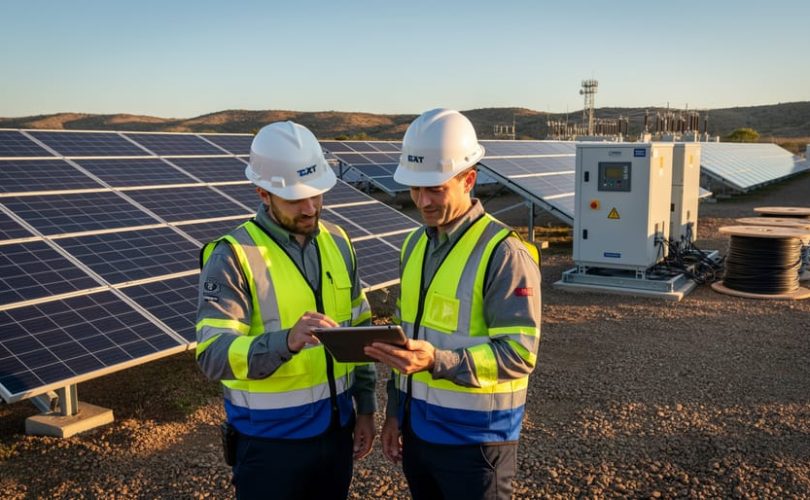
Solar project development transforms renewable energy ambitions into operational power generation facilities through a systematic, multi-phase process that demands technical expertise, financial acumen, and regulatory navigation. Understanding this process is essential for professionals entering the photovoltaic industry, stakeholders evaluating investment opportunities, and organizations committed to sustainable energy transitions.
Begin with comprehensive site assessment and feasibility analysis, evaluating solar irradiance data, land characteristics, grid connectivity options, and local permitting requirements to determine project viability. Secure land rights through purchase agreements or long-term leases while simultaneously conducting environmental impact assessments and geotechnical surveys that inform system design parameters.
Develop detailed engineering plans that specify module selection, inverter configuration, mounting systems, and electrical infrastructure, ensuring designs comply with international standards and local building codes. Navigate the complex permitting landscape by engaging with utility companies, environmental agencies, and municipal authorities to obtain necessary approvals and interconnection agreements.
Structure project financing through power purchase agreements, tax equity partnerships, or green bonds, presenting compelling investment cases supported by energy yield modeling and financial projections. Execute construction according to the established project development timeline, coordinating contractors, equipment suppliers, and quality assurance teams to ensure on-time, on-budget delivery.
This comprehensive approach, spanning initial concept through commissioning and operation, represents the foundation of successful solar installations that deliver reliable clean energy for decades while generating sustainable returns for investors and environmental benefits for communities.
Understanding Solar Project Development in the PV Module Context
Solar project development encompasses the comprehensive process of conceptualizing, planning, designing, financing, constructing, and commissioning photovoltaic installations that generate electricity from sunlight. This multifaceted discipline differs fundamentally from solar manufacturing, which focuses on producing the physical components like cells, modules, and inverters. While manufacturers create the technology, project developers transform these components into functioning power generation assets that deliver clean energy to homes, businesses, and utilities.
Understanding this distinction is essential for anyone entering the renewable energy sector. Project development begins long before the first panel is installed and continues through operational phases. It requires coordinating multiple stakeholders including engineers, financial analysts, regulators, landowners, and utilities to navigate technical specifications, permitting requirements, grid interconnection protocols, and economic viability assessments.
The relationship between project development and module selection represents a critical juncture where manufacturing meets deployment. Developers must evaluate various PV module fundamentals including efficiency ratings, temperature coefficients, degradation rates, warranty terms, and cost per watt to optimize system performance and financial returns. These decisions directly impact project feasibility, energy production forecasts, and long-term profitability.
Module selection also involves matching technology characteristics to specific site conditions and project goals. Residential installations may prioritize space efficiency with high-power density modules, while utility-scale projects might emphasize cost-effectiveness and proven reliability. Geographic factors like temperature extremes, humidity levels, and soiling conditions further influence optimal module choices.
By comprehending how project development integrates module technology into complete energy systems, aspiring professionals gain holistic perspective on transforming solar potential into operational reality, bridging the gap between manufactured products and deployed clean energy infrastructure.
Phase 1: Project Conception and Feasibility Assessment
Site Selection and Resource Evaluation
Successful solar project development begins with comprehensive site selection and resource evaluation, a critical phase that determines project viability and long-term performance. Developers employ systematic approaches to identify locations that optimize energy generation while minimizing technical and financial risks.
The evaluation process starts with solar irradiance assessment, analyzing historical meteorological data to determine the solar energy potential at prospective sites. Ground-based measurements and satellite-derived datasets provide developers with Global Horizontal Irradiance (GHI) and Direct Normal Irradiance (DNI) values, which quantify the solar radiation available for conversion into electricity. These measurements, typically spanning multiple years, help predict annual energy production and inform financial modeling.
Land characteristics constitute another essential evaluation component. Developers assess topography, analyzing slope angles and orientation to determine optimal panel positioning. Soil composition and bearing capacity influence foundation design and installation costs, while drainage patterns affect long-term site stability. Vegetation coverage, proximity to transmission infrastructure, and existing land use restrictions also factor into site suitability determinations.
Through partnerships with research institutions, including university collaborations focused on solar resource mapping, the industry continues refining evaluation methodologies. These academic partnerships enhance data accuracy and support the development of predictive models that account for microclimatic variations affecting module performance.
Environmental impact assessments complement technical evaluations, identifying potential ecological sensitivities and ensuring regulatory compliance. This comprehensive approach enables developers to select sites that balance technical performance requirements with environmental stewardship, ultimately supporting sustainable project outcomes and community acceptance.
Technical and Financial Feasibility Studies
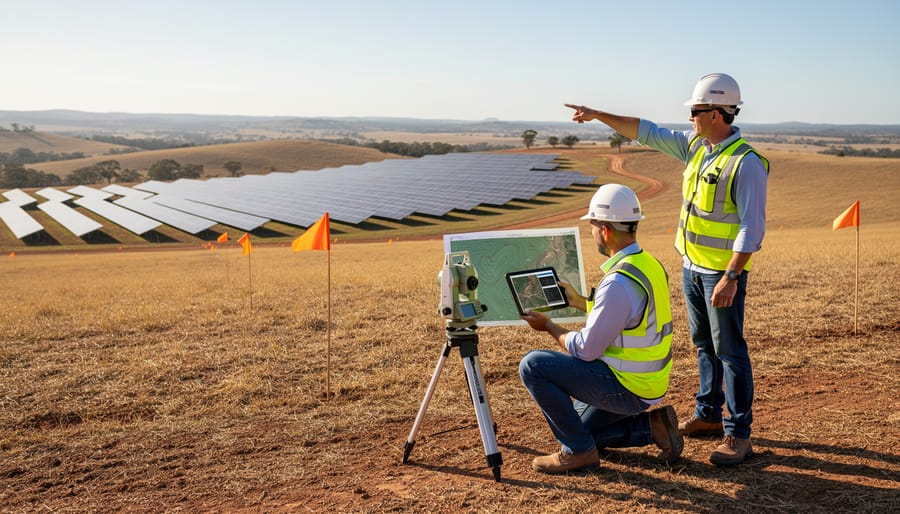
Before construction begins, rigorous technical and financial feasibility studies determine whether a solar project can achieve its intended performance and economic objectives. These assessments form the foundation for informed investment decisions and risk mitigation strategies.
Preliminary engineering assessments evaluate site-specific conditions that influence system design. Engineers conduct solar resource analysis using satellite data and ground measurements to establish expected energy production. They assess terrain characteristics, soil composition for foundation requirements, and existing electrical infrastructure capacity. Shading analysis identifies potential obstructions that could reduce panel efficiency, while wind and seismic load calculations ensure structural integrity. These technical evaluations establish realistic performance expectations and identify potential design challenges before significant capital commitments occur.
Cost-benefit analysis quantifies both capital expenditures and operational expenses against projected revenue streams. Initial costs include equipment procurement, installation labor, grid interconnection fees, and permitting expenses. Operational costs encompass maintenance, insurance, monitoring systems, and land lease payments. Financial modeling projects cash flows over the system’s operational lifetime, typically 25-30 years, incorporating factors such as electricity rates, incentive programs, and degradation rates. The levelized cost of energy calculation provides a standardized metric for comparing project economics across different configurations.
Module technology selection significantly impacts project economics and performance. Monocrystalline modules offer higher efficiency and space optimization, making them ideal for constrained sites despite premium pricing. Polycrystalline options provide cost advantages for larger installations where space is abundant. Bifacial modules capture reflected light from ground surfaces, increasing energy yield by 5-20 percent depending on albedo conditions. Temperature coefficients, degradation rates, and warranty terms further influence long-term financial returns. Academic partnerships and ongoing research continue advancing module technologies, creating opportunities for improved project economics through innovation and optimization strategies.
Phase 2: Project Design and Engineering
System Architecture and Module Selection
Selecting the appropriate photovoltaic modules represents a critical decision point that directly impacts project performance, financial returns, and long-term sustainability. This stage requires careful evaluation of multiple module technologies, each offering distinct advantages aligned with specific project parameters.
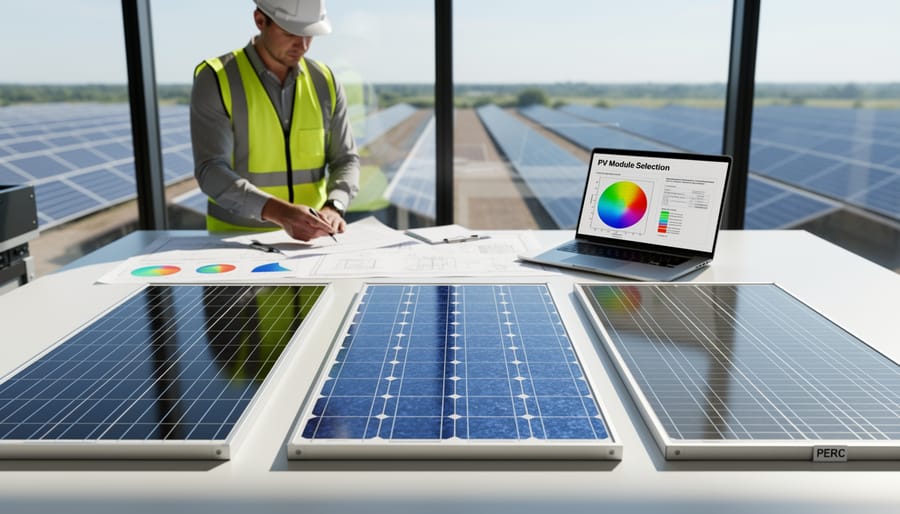
The fundamental choice begins with understanding monocrystalline versus multi-crystalline modules. Monocrystalline panels, characterized by their uniform dark appearance and higher efficiency ratings typically ranging from 18% to 22%, excel in space-constrained installations where maximizing power output per square meter is essential. Multi-crystalline modules, while offering slightly lower efficiency at 15% to 18%, provide cost-effective solutions for projects with ample installation area and tighter budget constraints.
Advanced mono PERC technology has emerged as the industry standard for commercial-scale developments, delivering enhanced performance through passivated emitter and rear cell architecture. This technology significantly improves low-light performance and reduces temperature coefficient losses, making it particularly valuable for installations in diverse climatic conditions.
Beyond conventional panels, specialized products like building-integrated photovoltaics and solar tiles address unique architectural requirements where aesthetic integration matters alongside energy generation. These solutions prove invaluable for urban developments, heritage buildings, and premium residential projects where traditional panel mounting would compromise design integrity.
The selection process must weigh efficiency requirements against budget allocation, spatial limitations, aesthetic considerations, and long-term degradation rates. Collaborating with experienced module manufacturers and leveraging performance simulation tools ensures alignment between technology selection and project-specific objectives, ultimately optimizing both immediate installation success and decades-long operational excellence.
Electrical Design and Performance Modeling
Electrical design transforms physical site plans into optimized energy production systems through careful component selection and configuration. This phase requires balancing technical specifications with economic constraints while maximizing long-term performance.
Array configuration begins with module specifications, particularly voltage and current characteristics. Designers create string configurations by connecting modules in series to achieve appropriate voltage levels for inverter operation, typically ranging from 600V to 1500V depending on system size and component ratings. Parallel string connections increase current capacity while maintaining voltage requirements. The module’s temperature coefficient becomes critical here, as voltage decreases with heat, requiring designers to account for both extreme cold and hot conditions to prevent overvoltage or undervoltage scenarios.
Inverter sizing directly impacts system efficiency and revenue generation. The DC-to-AC ratio, typically ranging from 1.1 to 1.4, represents the relationship between installed module capacity and inverter nameplate rating. This intentional oversizing accounts for inevitable losses and ensures inverters operate near peak efficiency during optimal conditions. Module specifications, including maximum power voltage and current ratings, determine compatible inverter selection and quantity requirements.
Energy yield projections synthesize meteorological data, system losses, and component specifications into financial models. Software platforms simulate hourly production using location-specific irradiance patterns, temperature effects derived from module datasheets, and degradation rates. These projections incorporate soiling losses, shading analysis, and electrical losses from wiring and conversion processes.
Module efficiency ratings and performance warranties significantly influence design decisions. Higher efficiency modules reduce balance-of-system costs by generating equivalent power from smaller areas, particularly valuable on space-constrained sites. Academic institutions partnering with module manufacturers contribute valuable research on degradation patterns and long-term performance validation, strengthening projection accuracy for stakeholders evaluating project feasibility.
Phase 3: Permitting and Regulatory Compliance
Navigating the regulatory landscape represents one of the most critical yet complex phases in solar project development. Developers must secure multiple approvals from local, state, and federal authorities before construction can commence, a process that typically requires 6 to 18 months depending on project scale and jurisdiction.
Environmental reviews form the foundation of regulatory compliance. Projects exceeding certain capacity thresholds undergo environmental impact assessments examining effects on wildlife habitats, water resources, and cultural heritage sites. The National Environmental Policy Act (NEPA) governs federal land projects, while state-level Environmental Quality Acts apply to private developments. These reviews often necessitate biological surveys, archaeological studies, and public comment periods that can extend timelines significantly.
Building permits constitute another essential component, requiring detailed engineering plans that demonstrate structural integrity, electrical safety, and fire code compliance. Local planning departments review site plans, setback requirements, and zoning compatibility. Many jurisdictions now maintain expedited permitting processes for solar installations, recognizing renewable energy’s importance in meeting climate goals. Academic collaborations with universities have helped standardize permitting best practices across municipalities, reducing bureaucratic delays.
Grid interconnection agreements represent perhaps the most technically demanding regulatory requirement. Developers must submit interconnection applications to utility companies or Independent System Operators, detailing system specifications and grid impact studies. The interconnection queue process evaluates how the proposed solar facility affects grid stability, transmission capacity, and power quality. System impact studies and facility studies assess necessary upgrades to substations and transmission lines, with costs potentially borne by the developer.
Successful navigation of this regulatory phase demands meticulous documentation, proactive stakeholder engagement, and often legal expertise. Many developers partner with permitting consultants who maintain established relationships with regulatory bodies. Understanding these compliance requirements early in project planning prevents costly delays and ensures smooth progression toward construction mobilization, ultimately accelerating the transition to clean energy infrastructure.
Phase 4: Financing and Contract Negotiation
Securing adequate financing represents a critical milestone that transforms conceptual solar projects into operational assets. Project developers typically pursue several funding pathways, including debt financing from commercial banks, tax equity investments that monetize federal incentives, and institutional capital from infrastructure funds. The financing structure significantly impacts project viability, with lenders scrutinizing technical assessments, revenue projections, and risk mitigation strategies before committing capital.
Power Purchase Agreements (PPAs) form the cornerstone of project economics by guaranteeing long-term revenue streams. These contracts, typically spanning 15-25 years, define the terms under which electricity buyers will purchase generated power at predetermined rates. Developers negotiate pricing structures that balance competitive market rates with sufficient returns to satisfy investor requirements. Investment-grade utilities, corporate offtakers, and government entities serve as preferred counterparties due to their creditworthiness and payment reliability.
Parallel to financial arrangements, developers establish supply contracts with photovoltaic module manufacturers to lock in pricing and delivery schedules. Given market volatility and supply chain complexities, securing module procurement agreements early protects against price escalations and ensures timely equipment delivery. Developers evaluate manufacturers based on product quality certifications, warranty terms, production capacity, and financial stability. These contracts often include performance guarantees specifying minimum power output and degradation rates over the system’s operational lifetime.
The negotiation phase also encompasses Engineering, Procurement, and Construction (EPC) contracts that define project execution responsibilities. Successful contract structuring requires balancing risk allocation between parties while maintaining project economics. Academic institutions collaborating with industry partners provide valuable research on optimal financing structures and contract frameworks, contributing to more efficient project development practices. This phase typically concludes with financial close, when all agreements are executed and funding becomes available for construction commencement.
Phase 5: Procurement and Supply Chain Management
Successful procurement and supply chain management form the backbone of solar project economics and timeline adherence. This phase involves strategic sourcing, rigorous quality control, and coordinated logistics to ensure project components arrive on schedule and meet performance specifications.
The procurement process begins with competitive bidding for photovoltaic modules, inverters, mounting structures, electrical equipment, and balance-of-system components. Project developers typically issue detailed requests for proposals (RFPs) that specify technical requirements, delivery schedules, warranty terms, and compliance certifications. Understanding the module manufacturing process helps developers evaluate supplier capabilities and production timelines effectively.
Quality assurance protocols are essential throughout procurement. Developers verify that modules carry appropriate certifications such as IEC 61215 and IEC 61730, confirming performance and safety standards. Factory acceptance testing may be conducted at manufacturing facilities to inspect sample modules, review production quality control measures, and validate electrical characteristics. Third-party inspection services often verify product specifications before shipment, reducing risk of substandard components reaching the site.
Supply chain coordination requires careful planning of component delivery schedules aligned with construction milestones. Developers must account for manufacturing lead times, international shipping durations, customs clearance procedures, and on-site storage capacity. Risk mitigation strategies include qualifying multiple approved vendors, maintaining buffer inventory for critical components, and establishing clear contractual terms regarding delivery penalties and performance guarantees.
Universities collaborating with solar developers often incorporate procurement case studies into renewable energy programs, helping students understand real-world supply chain challenges. Logistics planning also addresses transportation methods suited to fragile photovoltaic equipment, warehousing requirements for weather-sensitive components, and just-in-time delivery strategies that minimize on-site storage needs while preventing construction delays. Effective procurement management directly impacts project profitability, construction efficiency, and long-term system reliability.
Phase 6: Construction and Installation
The construction and installation phase represents the physical manifestation of months or years of planning, transforming approved designs into operational solar infrastructure. This critical stage typically spans three to six months for utility-scale projects, though timelines vary based on system size and site complexity.
Site preparation initiates the construction process, involving land clearing, grading to establish proper drainage patterns, and creating access roads for heavy equipment. Civil engineering teams install foundations, whether driven piles, helical anchors, or ballasted systems, depending on soil conditions and structural requirements identified during earlier assessments. Proper foundation installation ensures the mounting structure withstands environmental loads throughout the project’s 25-30 year operational lifespan.
Following foundation work, crews erect the racking systems that support photovoltaic modules. Modern mounting structures incorporate single-axis or fixed-tilt configurations, optimized during the design phase for maximum energy yield. Installation teams work systematically across the site, ensuring precise alignment and torque specifications to maintain structural integrity and facilitate efficient module installation.
Module mounting represents one of the most labor-intensive construction activities. Trained technicians carefully handle and secure panels to mounting rails, following manufacturer specifications to prevent micro-cracking and ensure warranty compliance. Quality control protocols verify proper module orientation, secure electrical connections, and absence of installation damage. This stage offers valuable hands-on learning opportunities for professionals entering the solar industry, with many university partnerships providing experiential education during active construction projects.
Electrical installation parallels mechanical work, with licensed electricians routing combiner boxes, running DC and AC cabling through conduit systems, and installing inverters that convert DC power to grid-compatible AC electricity. String configurations must precisely match electrical designs to optimize system performance while maintaining code compliance.
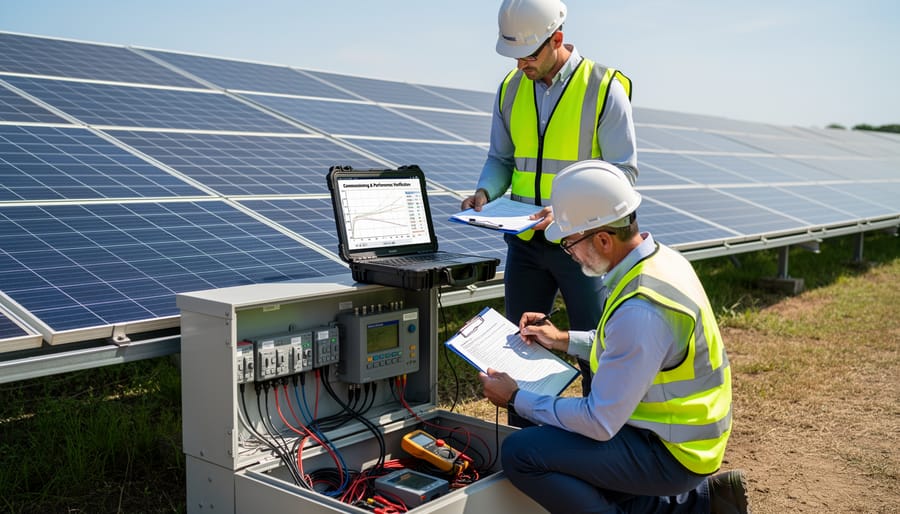
The final commissioning process validates system functionality through comprehensive testing protocols. Engineers verify electrical continuity, measure voltage and current outputs, confirm safety system operations, and conduct performance testing under various conditions. Successful commissioning culminates in utility interconnection approval, marking the transition from construction site to power-generating asset. This systematic approach ensures projects meet technical specifications, safety standards, and performance expectations established during development phases.
Phase 7: Commissioning and Grid Connection
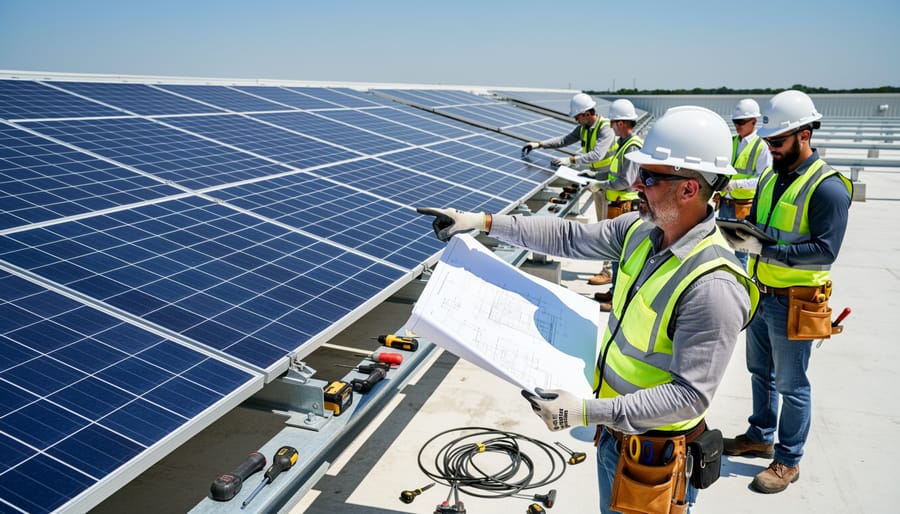
The commissioning phase represents the critical transition from construction completion to operational status, involving comprehensive testing and verification procedures. This stage ensures the solar installation performs according to design specifications and meets all contractual obligations before final acceptance.
System testing begins with individual component verification, examining inverters, combiner boxes, monitoring equipment, and safety systems. Engineers conduct electrical testing to verify proper voltage, current flow, and system grounding throughout the array. Performance testing measures actual power output against expected generation based on current irradiance levels and environmental conditions. This data collection typically occurs over several days under varying weather conditions to establish baseline performance metrics.
Commissioning teams execute functional tests on all protection systems, including arc fault detection, ground fault protection, and emergency shutdown mechanisms. The monitoring system undergoes thorough validation to ensure accurate data collection and proper communication with remote management platforms. Documentation during this phase includes detailed test reports, as-built drawings, and operation and maintenance manuals that will guide facility management throughout the project lifecycle.
The utility interconnection process involves coordination with the local distribution company to establish grid connection protocols. Final inspections by utility representatives verify compliance with interconnection agreements and technical requirements. Witness testing demonstrates system performance and protection scheme functionality to utility satisfaction. Upon successful completion, the utility authorizes permission to operate, allowing power delivery to the grid.
Project acceptance occurs when the owner’s technical team validates that all performance guarantees have been met and documentation is complete. This milestone triggers final payment releases and initiates warranty periods. Many solar developers maintain relationships with academic institutions during this phase, offering site access for research purposes and providing real-world learning opportunities for students entering the renewable energy sector.
Operations, Maintenance, and Long-Term Performance
Once a solar project becomes operational, effective management and maintenance protocols become critical to ensuring optimal performance throughout its expected 25-30 year lifespan. The operations phase represents the culmination of development efforts and determines whether projected energy yields and financial returns materialize as planned.
Performance monitoring systems form the foundation of operational management, collecting real-time data on energy production, system efficiency, and component health. Advanced monitoring platforms track metrics at multiple levels—from individual module output to inverter performance and overall system generation. These systems enable operators to quickly identify underperformance issues, whether caused by equipment malfunction, soiling, or shading concerns. Many facilities now employ predictive analytics that use machine learning algorithms to anticipate maintenance needs before failures occur, minimizing downtime and maximizing energy generation.
Maintenance protocols typically include both preventive and corrective approaches. Preventive maintenance encompasses regular module cleaning, especially in arid regions where dust accumulation significantly impacts output, as well as thermal imaging inspections to detect hot spots indicating cell degradation or connection problems. Inverter maintenance, vegetation management around ground-mounted arrays, and structural integrity assessments of mounting systems constitute essential ongoing activities. Corrective maintenance addresses specific failures, from replacing defective modules to repairing damaged wiring.
Different photovoltaic technologies exhibit varying degradation rates and maintenance requirements. Monocrystalline and polycrystalline silicon modules generally degrade at approximately 0.5-0.8 percent annually, while some thin-film technologies may experience slightly higher rates. Understanding these technology-specific characteristics helps operators establish realistic performance expectations and maintenance schedules.
Collaboration with universities and research institutions increasingly supports long-term performance analysis, contributing valuable data about real-world degradation patterns and emerging maintenance techniques. These partnerships advance industry knowledge while providing educational opportunities for students entering the renewable energy sector, ensuring continuous improvement in operational practices across the solar industry.
The solar project development process represents far more than a linear sequence of administrative and technical steps. Success in this dynamic field requires understanding how project development phases intimately connect with photovoltaic module technology, regulatory frameworks, financial structures, and market dynamics. Professionals who grasp these interconnections position themselves to navigate challenges more effectively, optimize system performance, and contribute meaningfully to the global energy transition.
Throughout the development lifecycle, from initial site assessment through commissioning and operations, module technology selection influences every decision point. Panel efficiency affects land requirements and permitting considerations. Manufacturing quality determines long-term performance guarantees that underpin financial models. Compatibility with mounting systems and inverters shapes engineering designs and installation timelines. This interconnected nature means that comprehensive knowledge across both development processes and technology fundamentals is essential rather than optional for today’s photovoltaic professionals.
The complexity of modern solar projects demands continuous learning and collaboration. Industry practitioners must stay current with evolving technologies, shifting regulatory landscapes, and emerging best practices. Mose Solar addresses this need through comprehensive educational programs designed to bridge knowledge gaps for aspiring professionals and experienced practitioners alike. These initiatives include structured training modules covering project development fundamentals, module technology specifications, and system integration principles.
Furthermore, Mose Solar’s collaboration with universities creates pathways for academic researchers and students to gain practical insights beyond theoretical frameworks. These partnerships foster knowledge exchange that benefits both industry advancement and educational excellence. For those committed to mastering the photovoltaic field, engaging with such educational resources provides invaluable opportunities to deepen technical understanding, develop practical skills, and build professional networks that support long-term career growth in renewable energy.