Wind energy has emerged as one of the fastest-growing renewable energy sectors globally, yet its expansion depends critically on sophisticated policy frameworks that transform high-capital projects into financially attractive investments. For photovoltaic professionals and renewable energy stakeholders, understanding wind energy policies offers valuable insights into financing mechanisms that can be adapted across the broader clean energy landscape.
Policy interventions have historically determined whether wind projects succeed or fail in competitive energy markets. Production Tax Credits, Feed-in Tariffs, Renewable Portfolio Standards, and auction mechanisms each create distinct financial pathways that affect project viability, investment returns, and market penetration rates. These instruments don’t merely subsidize renewable energy—they restructure risk profiles, accelerate cost reductions through market certainty, and establish predictable revenue streams that enable project financing at scale.
The parallels between wind and solar energy policies are particularly instructive. Both technologies have benefited from similar policy architectures, yet wind energy’s longer policy history provides a roadmap for solar sector evolution. Investment Tax Credits that revolutionized solar deployment mirror the Production Tax Credits that initially catalyzed wind development. Understanding how wind policies have adapted to technological maturation, grid integration challenges, and subsidy phase-outs offers strategic foresight for solar professionals navigating similar transitions.
This examination of wind energy policies explores the specific mechanisms that convert policy frameworks into bankable projects, analyzes their effectiveness across different markets, and identifies emerging trends that will shape renewable energy financing in the coming decade.
The Financial Barrier: Why Wind Energy Projects Need Policy Support
Capital Requirements and Risk Profiles
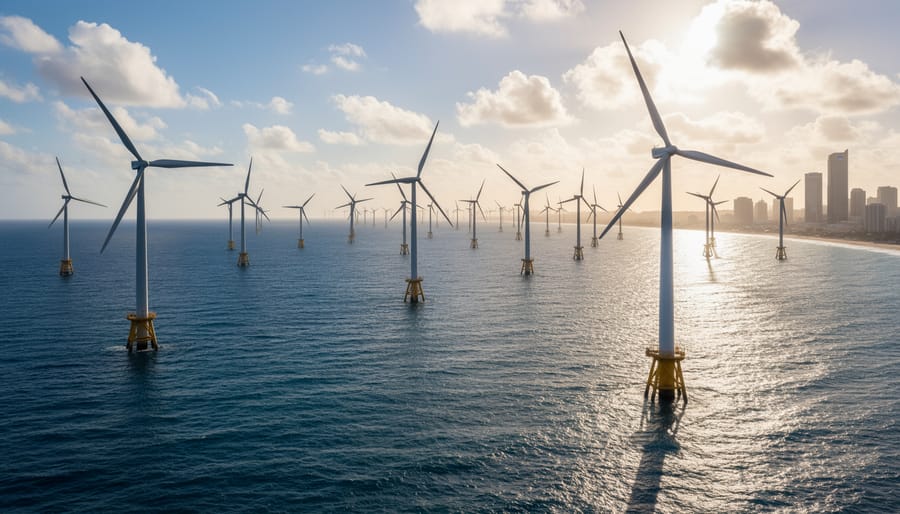
Wind energy projects present distinct financial challenges that differentiate them from conventional power generation investments. A typical utility-scale wind farm requires capital expenditures ranging from $1,300 to $2,200 per kilowatt of installed capacity, translating to initial investments between $130 million and $220 million for a 100 MW facility. These substantial upfront costs create immediate financing barriers, particularly for independent developers and emerging market participants.
Investment timelines extend well beyond initial construction phases. Development periods typically span three to five years before commissioning, during which developers face permitting uncertainties, grid interconnection delays, and land acquisition complexities. Once operational, wind projects require 15 to 20 years to achieve positive returns, creating extended risk exposure that traditional lending institutions rarely accommodate without policy support.
The risk profile encompasses multiple dimensions that conventional financing mechanisms inadequately address. Revenue volatility stems from variable wind resources and fluctuating electricity prices, while technological obsolescence threatens long-term competitiveness. Geographic concentration in remote, high-wind regions increases transmission costs and grid integration challenges. Equipment failure rates, though declining, still impact project economics significantly during early operational years. These compounding risk factors necessitate specialized financing structures supported by targeted policy interventions to achieve bankability.
Lessons for Solar and Other Renewables
Wind energy financing mechanisms provide valuable blueprints for the solar photovoltaic sector, as both technologies face remarkably similar developmental challenges. The production tax credits that accelerated wind deployment closely parallel the investment tax credits that have driven solar growth, demonstrating how targeted fiscal incentives can transform market dynamics. Both sectors benefit substantially from feed-in tariffs that guarantee price stability and long-term revenue certainty, reducing investor risk perception during crucial early-stage deployment.
Green bonds and specialized renewable energy funds, initially developed for wind projects, have proven equally effective for solar installations, creating standardized approaches to capital mobilization. Universities collaborating with renewable energy developers have documented how wind’s evolution from niche technology to mainstream energy source mirrors solar’s trajectory, with policy frameworks playing decisive roles in both transitions. Solar financing policies increasingly adopt proven wind mechanisms including power purchase agreements, community ownership models, and portfolio-based financing approaches that aggregate smaller projects to achieve economies of scale. Understanding these parallel pathways enables solar professionals to anticipate regulatory evolution and advocate for policies with demonstrated effectiveness across renewable technologies.
Production Tax Credits and Investment Tax Credits: The Foundation of Wind Finance
How Production Tax Credits Drive Long-Term Investment
Production Tax Credits represent a cornerstone financing mechanism that fundamentally transforms wind project economics by providing direct per-kilowatt-hour incentives for electricity generation. Unlike upfront subsidies, PTCs deliver predictable value streams over a project’s initial operating decade, typically offering $0.026 per kilowatt-hour adjusted for inflation. This structure directly addresses the capital-intensive nature of wind development by ensuring long-term revenue stability.
The mechanism works by reducing tax liability proportional to actual energy production, creating powerful incentives for project developers to maximize capacity factors and operational efficiency. For a typical 100-megawatt wind farm generating 350,000 megawatt-hours annually, PTCs can provide approximately $9 million in annual tax benefits during the credit period. This revenue certainty enables developers to secure favorable debt financing, often reducing borrowing costs by 50-100 basis points compared to unsubsidized projects.
Real-world impact demonstrates substantial effectiveness. Research from Lawrence Berkeley National Laboratory indicates that PTCs have catalyzed over 60 gigawatts of wind capacity installation across the United States, representing approximately $120 billion in private investment. University partnerships, including collaborative research programs at leading renewable energy institutions, have documented how PTC stability correlates directly with installation rates—periods of credit extension uncertainty consistently show 40-70 percent declines in new project development.
For professionals in the photovoltaic sector, understanding wind’s PTC framework provides valuable insights into policy design principles that could enhance solar financing mechanisms, particularly regarding predictable, performance-based incentive structures that reward operational excellence.
Investment Tax Credits: Front-Loading Financial Benefits
The Investment Tax Credit (ITC) represents a fundamentally different approach to federal tax incentives compared to production-based mechanisms. Under the ITC structure, wind project developers receive a percentage of qualified project costs as a one-time tax credit upon commissioning, currently set at 30% for projects meeting prevailing wage and apprenticeship requirements. This front-loaded benefit provides immediate capital reduction, improving project economics during the crucial development phase when financing costs are highest.
The strategic distinction between ITCs and Production Tax Credits (PTCs) centers on timing and risk allocation. ITCs deliver certainty at project inception, making them particularly attractive for projects with uncertain production profiles or innovative technologies requiring proof of concept. Conversely, PTCs distribute benefits across ten years based on actual generation, rewarding operational excellence but requiring stable tax equity partnerships to monetize credits effectively.
Wind developers typically select ITCs when project financing structures favor upfront capital cost reduction or when technological uncertainty exists. Offshore wind projects frequently leverage ITCs due to limited operational track records and higher capital intensity. The ITC also benefits smaller community-scale installations where long-term tax equity arrangements prove challenging to structure.
Recent policy developments have expanded ITC accessibility through direct pay options and transferability provisions, democratizing access for tax-exempt entities and smaller developers. These modifications address historical barriers where only large corporations with substantial tax liability could efficiently utilize credits, fundamentally reshaping wind project finance strategies across diverse ownership models.
Green Bonds and Climate Finance Instruments
The Green Bond Market Explosion
The green bond market has experienced remarkable expansion, emerging as a transformative financing mechanism for wind energy development. Global green bond issuance dedicated to renewable energy projects reached approximately $270 billion in 2022, with wind energy commanding a significant share of this capital influx. Market projections indicate this trajectory will continue, with annual issuance potentially exceeding $500 billion by 2025 as institutional investors increasingly prioritize environmental, social, and governance criteria in portfolio allocation decisions.
Green bonds fundamentally reduce capital costs for wind developers by attracting dedicated pools of climate-focused investment capital. This specialized investor base often accepts lower yields compared to conventional financing instruments, effectively decreasing the weighted average cost of capital by 25-50 basis points. For capital-intensive wind projects where financing constitutes 60-70% of total project costs, this reduction translates directly into improved project economics and enhanced competitive positioning in power purchase agreement negotiations.
The market’s maturation has also established standardized frameworks for verification and reporting, reducing transaction costs and increasing liquidity. Universities collaborating with financial institutions have developed sophisticated methodologies for impact assessment, providing transparency that further attracts institutional capital. This virtuous cycle of growing market depth, declining costs, and enhanced credibility positions green bonds as an enduring pillar of wind energy finance, with applications equally relevant to photovoltaic development strategies.

Sustainability-Linked Loans and Beyond
Sustainability-linked loans represent an innovative evolution in renewable energy financing, where loan interest rates dynamically adjust based on a project’s achievement of predetermined environmental performance metrics. These financial instruments create direct economic incentives for wind farm operators to exceed baseline sustainability targets, transforming environmental stewardship from a compliance requirement into a strategic financial advantage.
Under typical sustainability-linked loan structures, borrowers secure lower interest rates by meeting specific key performance indicators such as greenhouse gas emission reductions, enhanced biodiversity protection measures, or improvements in energy generation efficiency. For wind projects, these metrics might include turbine capacity factors, wildlife impact mitigation effectiveness, or community benefit delivery thresholds. Financial institutions partnering with academic institutions have developed sophisticated monitoring frameworks that provide transparent, verifiable data on environmental performance throughout the loan term.
The transferability of these financial innovations extends naturally to solar energy projects, where similar performance-based structures can reward efficiency improvements and environmental protection. Universities collaborating with industry stakeholders continue to refine measurement methodologies that ensure credibility while reducing administrative burdens. As green finance markets mature, sustainability-linked instruments are expanding beyond traditional loans to encompass bonds, credit facilities, and hybrid products that align financial returns with measurable environmental outcomes, fundamentally reshaping how renewable energy projects access capital markets.
Feed-in Tariffs and Power Purchase Agreements: Guaranteed Revenue Models
Feed-in Tariff Success Stories
Feed-in Tariff policies have demonstrated remarkable success in accelerating wind energy deployment across multiple continents. Germany’s Renewable Energy Act (EEG), introduced in 2000, stands as a landmark achievement. By guaranteeing fixed payment rates for 20 years, Germany increased its wind capacity from 6,113 MW in 2000 to over 59,000 MW by 2018, establishing itself as Europe’s wind energy leader. The policy’s predictable revenue streams attracted substantial private investment and catalyzed domestic manufacturing capabilities.
Denmark pioneered early FIT implementation in the 1990s, achieving 47% wind electricity penetration by 2019—the highest globally. Their tiered tariff system provided higher rates for smaller community-owned projects, fostering public acceptance and distributed ownership models that became templates for other nations.
In Asia, China’s FIT program launched in 2009 transformed the nation into the world’s largest wind market. Differentiated tariffs based on regional wind resources ensured economic viability across diverse geographies, driving capacity from 25 GW in 2009 to 221 GW by 2019. Similarly, India’s generation-based incentives and accelerated depreciation policies complemented state-level FITs, expanding capacity sevenfold between 2010 and 2020. These success stories demonstrate how well-designed FIT mechanisms reduce financial barriers, stabilize investor returns, and create replicable frameworks for renewable energy expansion across varied economic contexts.
Corporate PPAs and Market Evolution
Corporate Power Purchase Agreements (PPAs) have fundamentally transformed wind energy financing by creating direct market connections between renewable generators and commercial energy buyers. This market-driven model emerged as major corporations sought to meet sustainability commitments while securing long-term price stability for electricity procurement.
Under corporate PPAs, companies like Microsoft, Google, and Amazon contract directly with wind developers to purchase energy output for 10-25 year terms, providing the revenue certainty essential for project financing. Unlike regulated utility contracts, these agreements operate within competitive wholesale markets, introducing both opportunity and complexity. The bankability of corporate PPAs depends heavily on the creditworthiness of the offtaker, with investment-grade corporations enabling lower financing costs than smaller or unrated buyers.
This evolution carries significant implications for project finance structures. Developers must now assess counterparty credit risk alongside traditional project risks, while lenders require sophisticated evaluation of merchant exposure in markets where corporate buyers may only purchase a portion of project output. The model has also spurred innovation in virtual PPAs, where financial settlements replace physical delivery, enabling corporations to support wind development regardless of their operational location.
For photovoltaic professionals, this market evolution demonstrates parallel opportunities in solar financing. Universities increasingly participate in this landscape through research partnerships examining PPA structures and educational programs training the next generation of renewable energy analysts to navigate these complex commercial arrangements.
Public-Private Partnership Models and Development Banks
National Development Bank Initiatives
National development banks have emerged as critical institutions in reducing financial barriers for wind energy projects, particularly in markets where commercial lending remains cautious. Germany’s KfW Development Bank pioneered this approach by offering below-market interest rates and extended loan tenures specifically for renewable energy installations. Through its Renewable Energy Program, KfW has financed over 40 gigawatts of wind capacity since 2000, demonstrating how state-backed institutions can absorb initial project risks that deter private capital.
China Development Bank has taken an even more aggressive stance, providing approximately $50 billion in financing to wind projects between 2010 and 2020. This institution combines direct lending with credit guarantees and technical assistance, effectively de-risking projects during critical development phases. Their involvement has been instrumental in reducing China’s wind energy costs by nearly 60% over the past decade.
These banks typically partner with universities to develop standardized risk assessment frameworks and offer educational programs for project developers. By creating replicable financing models and training the next generation of renewable energy professionals, national development banks extend their impact beyond individual transactions, building institutional capacity that benefits the entire sector and provides valuable lessons for solar financing mechanisms.
Multilateral Climate Funds
Multilateral climate funds serve as critical financial intermediaries, channeling concessional financing from developed nations to wind energy projects in emerging economies. The Green Climate Fund (GCF), established under the UNFCCC framework, provides low-interest loans, grants, and guarantees that reduce project risk and improve investment returns for wind developments in countries with limited access to commercial capital. Similarly, the Climate Investment Funds (CIF) administers the Clean Technology Fund, which has committed billions to large-scale wind installations across Asia, Africa, and Latin America.
These institutions address market failures by absorbing early-stage development costs and currency risks that typically deter private investors. The World Bank Group’s International Finance Corporation combines concessional finance with technical assistance programs, partnering with universities and research institutions to build local capacity for wind project development and operation. This knowledge transfer component proves particularly valuable in markets lacking established renewable energy expertise.
The Asian Development Bank and African Development Bank similarly structure blended finance mechanisms that leverage public funds to mobilize private capital at ratios exceeding 1:4. By standardizing project documentation and providing credit enhancements, multilateral funds have successfully catalyzed wind energy deployment in markets where conventional financing remains prohibitively expensive, demonstrating a replicable model applicable to other renewable technologies including solar photovoltaics.
Community Wind and Crowdfunding: Democratizing Energy Investment
Policy Frameworks for Community Ownership
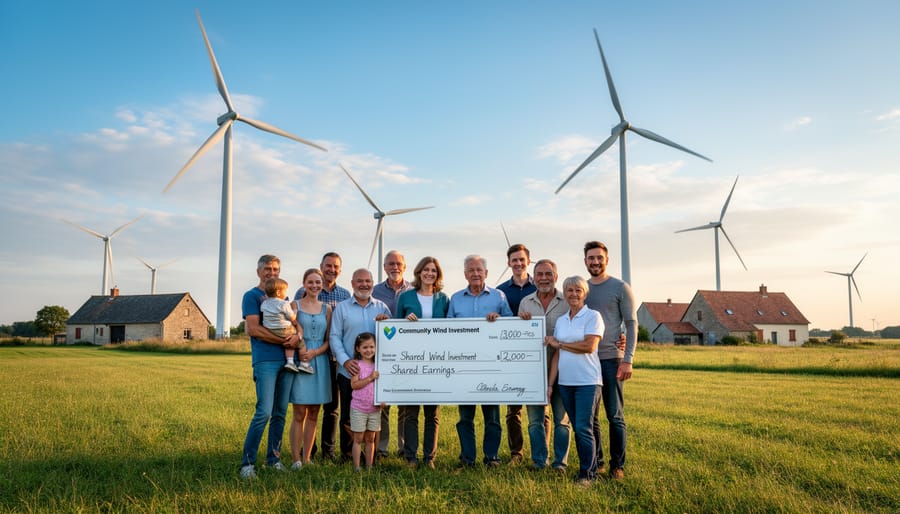
Community-owned wind projects require supportive policy frameworks that reduce barriers to entry and enable local participation in renewable energy development. Several jurisdictions have implemented specialized regulations that facilitate cooperative and community-based ownership models. These frameworks often include simplified permitting processes for smaller-scale installations, streamlined interconnection procedures, and preferential tariff structures that recognize the added social value of community projects.
Feed-in tariff programs in countries like Germany and Denmark have successfully incentivized community wind development by guaranteeing long-term, stable revenue streams. Virtual net metering provisions allow multiple community members to benefit from a single wind installation, similar to community solar programs. Universities collaborating with policymakers have developed educational programs to help communities navigate regulatory requirements and financial planning.
Additionally, some regions offer dedicated financing mechanisms such as community energy bonds, preferential loan terms through green banks, and technical assistance grants. These policies recognize that community-owned projects deliver benefits beyond electricity generation, including local economic development, enhanced public acceptance, and democratic energy governance.
Digital Platforms and Retail Investment
Fintech platforms are revolutionizing wind energy investment by reducing traditional barriers to entry. Digital crowdfunding platforms now enable retail investors to participate in wind projects with minimum investments as low as $500, compared to institutional requirements of millions. Platforms like Abundance Investment and Trine connect individual investors directly with renewable energy projects, offering returns between 4-7% annually while democratizing access to clean energy portfolios.
Blockchain technology further enhances transparency through tokenized securities representing fractional ownership in wind farms. Smart contracts automate dividend distributions and reduce administrative costs, making smaller investment sizes economically viable. Educational institutions are partnering with these platforms to develop investor literacy programs, teaching students and professionals how to evaluate wind project financial metrics, risk profiles, and policy impacts.
These innovations align with government policies encouraging retail participation in renewable energy markets. However, investors must understand regulatory frameworks governing securities offerings and perform due diligence on platform credentials. As digital infrastructure matures, retail wind investment is expected to grow significantly, complementing traditional institutional financing mechanisms.
Cross-Sector Applications: What Solar Professionals Can Learn
Adapting Wind Finance Models to Solar Deployment
The wind energy sector pioneered several financing mechanisms that have proven remarkably adaptable to solar deployment, creating a proven roadmap for photovoltaic project development. Feed-in tariffs, which guaranteed wind producers fixed long-term electricity rates, translated directly to solar installations with rate adjustments reflecting different capacity factors and cost structures. Germany’s Energiewende demonstrates this cross-pollination particularly well, with their solar feed-in tariff framework building upon two decades of wind policy refinement.
Production tax credits, originally designed to incentivize wind generation per kilowatt-hour produced, evolved into investment tax credits better suited to solar’s upfront capital requirements. This policy adaptation recognized fundamental differences between technologies while preserving the underlying incentive structure. Third-party ownership models, including power purchase agreements and lease structures initially developed for commercial wind farms, scaled effectively to residential solar markets through partnerships between universities and private developers conducting comparative financing research.
Renewable energy certificates and quota-based policies likewise transferred smoothly between sectors. These market mechanisms create technology-neutral frameworks where both wind and solar compete on economic merit. Educational programs now routinely examine these policy transfers, preparing the next generation of renewable professionals to identify successful mechanisms across technologies and advocate for evidence-based policy development.
Integrated Renewable Energy Finance Strategies
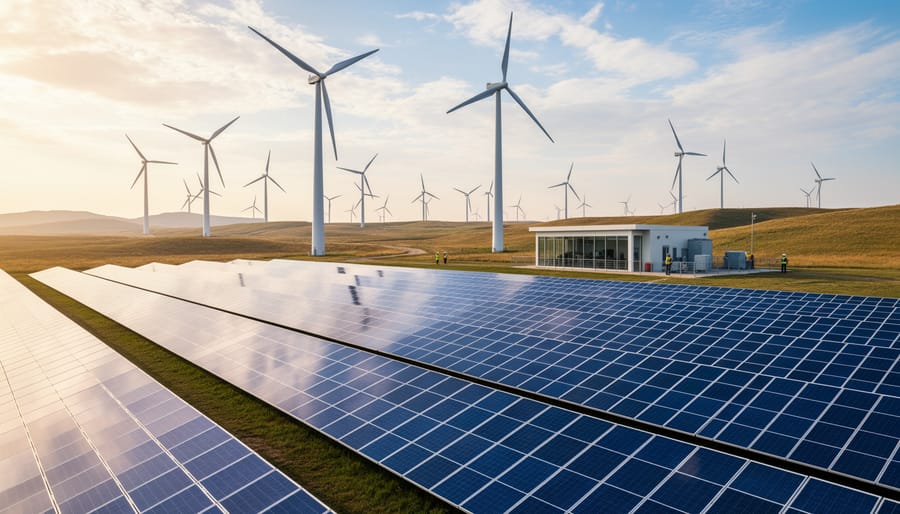
Innovative financing mechanisms increasingly recognize the complementary nature of wind and solar resources, leading to integrated renewable energy portfolios that optimize generation profiles and reduce investment risk. Hybrid financing structures combine wind and solar assets within single financial vehicles, leveraging the distinct generation patterns of each technology to create more stable revenue streams. These integrated approaches attract institutional investors seeking predictable returns while reducing capital costs through shared infrastructure, including transmission lines, substations, and operations facilities.
Universities partnering with energy developers have pioneered research demonstrating that hybrid portfolios can achieve capacity factors up to 15% higher than standalone projects. Policy frameworks supporting these structures include hybrid production tax credits, which allow developers to claim incentives for both technologies under unified ownership structures, and streamlined permitting processes for co-located facilities. Power purchase agreements increasingly specify hybrid deliveries, enabling utilities to procure renewable energy with improved dispatchability characteristics.
Financial institutions now offer specialized debt instruments for hybrid projects, recognizing the enhanced bankability resulting from diversified generation profiles. These integrated financing strategies reduce levelized costs by 8-12% compared to separate project financing, according to recent industry analyses. The approach particularly benefits regions with complementary wind and solar resources, where daytime solar generation transitions seamlessly to evening wind production, maximizing grid value and revenue optimization.
Emerging Trends: The Future of Renewable Energy Financing Policy
The landscape of renewable energy financing is undergoing rapid transformation, driven by technological advances and evolving market dynamics. Three critical areas are reshaping policy frameworks: offshore wind finance mechanisms, energy storage integration mandates, and comprehensive carbon pricing systems.
Offshore wind development represents the next frontier in policy innovation. European nations have pioneered specialized financing instruments that address the unique challenges of marine-based projects, including higher capital requirements and extended construction timelines. The United Kingdom’s Contracts for Difference scheme has successfully adapted to offshore conditions by offering longer contract durations and enhanced revenue stabilization. Similar adaptations are emerging in Asian markets, where governments are establishing dedicated offshore wind investment funds that combine public capital with private institutional investment. These hybrid financing models reduce project risk while maintaining competitive procurement processes.
Storage integration policies are becoming essential components of wind energy frameworks. Forward-thinking jurisdictions now mandate battery storage capacity alongside new wind installations, supported by enhanced tax incentives and specialized financing mechanisms. This policy evolution addresses intermittency challenges while creating bankable revenue streams from grid services. Academic collaborations between universities and regulatory bodies are producing sophisticated modeling tools that optimize storage requirements and financial returns, ensuring policies reflect technical realities.
Carbon pricing mechanisms are gaining traction as complementary financing tools. Well-designed carbon markets create additional revenue streams for wind projects while penalizing fossil fuel generation. The European Union’s Emissions Trading System demonstrates how carbon pricing can fundamentally improve wind energy economics without direct subsidies. Emerging markets are developing hybrid approaches that combine carbon pricing with traditional support mechanisms during transition periods.
These convergent trends signal a maturation of renewable energy policy, moving toward market-based frameworks that leverage multiple financing instruments simultaneously while maintaining investment certainty for long-term infrastructure projects.
The evolution of wind energy financing policies demonstrates the critical role that well-designed regulatory frameworks play in accelerating renewable energy deployment. From production tax credits and feed-in tariffs to green bonds and public-private partnerships, these policy innovations have transformed wind energy from an experimental technology into a mainstream electricity source. The financial mechanisms explored throughout this analysis reveal a fundamental truth: technological advancement alone cannot drive the energy transition without corresponding policy support that reduces investment risk and creates predictable revenue streams.
For renewable energy professionals, particularly those in the photovoltaic sector, understanding these wind energy financing models offers valuable insights applicable across the renewable energy landscape. Many policies initially developed for wind power have been adapted for solar projects, demonstrating the interconnected nature of clean energy policy development. The success of offshore wind auctions in Europe, for instance, provides a blueprint for large-scale solar procurement, while tax equity structures have proven equally effective across technologies.
Looking forward, policy evolution must keep pace with changing market conditions and technological capabilities. As wind and solar energy achieve grid parity in more markets, financing mechanisms will need to transition from heavy subsidization to market integration strategies. Emerging concepts such as contracts for difference, capacity markets, and energy storage incentives represent the next generation of policy tools.
For aspiring professionals entering the renewable energy sector, developing fluency in these financial mechanisms is as essential as understanding technical specifications. Universities and educational institutions are increasingly recognizing this need, incorporating renewable energy finance curricula into their programs. By comprehending how policies translate into bankable projects, professionals can better navigate the complex landscape of energy transition and contribute meaningfully to achieving global climate objectives.