In the race towards Industry 4.0, digital twin technology stands as a transformative force revolutionizing manufacturing processes across industries. By creating virtual replicas of physical manufacturing systems, digital twins enable real-time monitoring, predictive maintenance, and optimization of production lines with unprecedented precision. This advanced simulation technology integrates sensor data, machine learning algorithms, and historical performance metrics to create a dynamic, interactive model that mirrors every aspect of the manufacturing process.
For manufacturers, this technological leap represents more than just process automation—it offers a paradigm shift in how production systems are designed, operated, and maintained. Digital twins provide a risk-free environment for testing process improvements, identifying bottlenecks, and implementing optimization strategies before deploying changes in the physical world. This capability not only reduces operational risks but also accelerates innovation cycles while minimizing costs associated with traditional trial-and-error approaches.
As manufacturing complexity continues to increase, digital twins emerge as essential tools for maintaining competitive advantage in an increasingly data-driven industrial landscape. Their ability to bridge the physical-digital divide while enabling proactive decision-making positions them at the forefront of smart manufacturing initiatives worldwide.
Understanding Digital Twin Technology in PV Production
Core Components of PV Digital Twins
Digital twins in PV module manufacturing rely on three fundamental components that work in harmony to create accurate virtual representations. First, advanced sensor networks continuously monitor critical parameters such as temperature, humidity, material flow, and production line speeds. These sensors, strategically placed throughout the manufacturing process, provide real-time data essential for system optimization.
The second core component is the data collection and integration system, which aggregates information from multiple sources including IoT devices, quality control stations, and production equipment. This system must handle large volumes of data while ensuring accuracy and minimal latency. Modern implementations often utilize edge computing to process data closer to its source, reducing response times and network load.
The third essential element is the simulation model itself, which combines physics-based modeling with machine learning algorithms. These models process the collected data to create dynamic virtual representations that can predict system behavior, identify potential issues, and optimize production parameters. The simulation framework must accurately reflect both the physical properties of solar materials and the complex interactions within the manufacturing process.

Real-time Monitoring and Analysis
Digital twin technology enables manufacturers to monitor and analyze photovoltaic production processes in real-time, creating a powerful feedback loop between the physical and virtual environments. Through an extensive network of IoT sensors, data is continuously collected from production equipment, environmental conditions, and quality control checkpoints throughout the manufacturing line.
This constant stream of data allows for immediate detection of process deviations and potential quality issues. Advanced analytics algorithms process this information to identify patterns, predict maintenance needs, and optimize production parameters automatically. When combined with machine learning capabilities, the system can make autonomous adjustments to maintain optimal production conditions and prevent defects before they occur.
The real-time monitoring capabilities extend beyond individual processes to encompass the entire production ecosystem. Manufacturers can visualize production metrics, energy consumption, material flow, and equipment performance through comprehensive dashboards. This holistic view enables quick decision-making and proactive problem-solving, resulting in reduced downtime, improved product quality, and enhanced operational efficiency.
Integration with predictive maintenance systems further enhances the value of real-time monitoring, allowing manufacturers to schedule maintenance activities based on actual equipment condition rather than fixed intervals.
Benefits in Solar Panel Production
Quality Control Enhancement
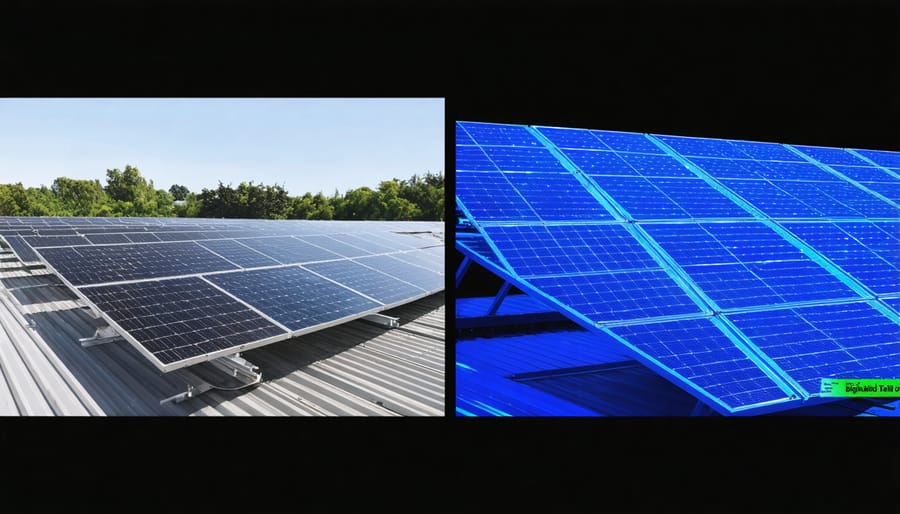
Digital twins significantly enhance quality control in solar panel production processes by providing real-time monitoring and predictive analytics capabilities. These virtual replicas enable manufacturers to detect potential defects before they manifest in physical products, substantially reducing waste and improving overall product quality.
Through continuous data collection and analysis, digital twins monitor critical parameters such as material composition, temperature variations, and assembly precision. Advanced sensors and IoT devices feed this information into the virtual model, allowing quality control teams to identify deviations from optimal specifications instantly. This proactive approach prevents defective units from progressing through the production line, saving both time and resources.
The technology also enables virtual testing of different manufacturing scenarios without disrupting actual production. Manufacturers can simulate various quality control parameters and identify optimal settings for different product specifications. This capability is particularly valuable when introducing new product variations or implementing process improvements.
Statistical process control becomes more sophisticated with digital twins, as they provide historical data analysis alongside real-time monitoring. This combination allows for better prediction of potential quality issues and more effective implementation of corrective measures. The result is consistently higher product quality, reduced defect rates, and improved manufacturing efficiency across the production lifecycle.
Production Efficiency Optimization
Digital twin technology significantly enhances production efficiency in photovoltaic manufacturing through real-time monitoring and optimization of manufacturing processes. By creating virtual replicas of physical production lines, manufacturers can analyze performance metrics, identify bottlenecks, and implement improvements without disrupting actual operations.
The technology enables precise resource allocation by simulating different production scenarios and identifying optimal manufacturing parameters. This capability typically results in 15-20% improvement in manufacturing speed and up to 25% reduction in material waste. Real-time monitoring allows for immediate detection of inefficiencies and quality issues, enabling rapid response and preventing costly production delays.
Resource utilization benefits from predictive maintenance schedules generated through digital twin analysis. By anticipating equipment maintenance needs and potential failures, manufacturers can reduce unplanned downtime by up to 30% and extend machine lifetime. The system’s ability to optimize energy consumption patterns often leads to 10-15% reduction in energy costs.
Cost reduction extends beyond direct manufacturing expenses. Digital twins enable virtual testing of new production methods and equipment configurations, eliminating the need for physical prototype testing. This virtual validation process typically reduces development costs by 20-30% and accelerates time-to-market for new solar panel designs.
The integration of machine learning algorithms with digital twin systems continuously refines production parameters, creating a self-optimizing manufacturing environment that adapts to changing conditions and requirements while maintaining consistent quality standards.
Implementation Strategies
Integration Requirements
Successful implementation of digital twin manufacturing in photovoltaic production requires robust technical infrastructure and seamless system integration. The foundation starts with a high-speed, reliable network infrastructure capable of handling real-time data transmission between physical assets and their digital counterparts. Industrial Internet of Things (IIoT) sensors and data collection devices must be strategically placed throughout the manufacturing line to capture critical parameters such as temperature, pressure, and production rates.
A comprehensive data management system is essential, typically incorporating both edge computing capabilities for real-time processing and cloud storage for historical analysis. The system architecture should support bi-directional communication, enabling both data collection from physical systems and control signals from the digital twin platform.
Integration requirements also include compatible software interfaces between various manufacturing execution systems (MES), enterprise resource planning (ERP) systems, and the digital twin platform. Advanced visualization tools and simulation software must be properly configured to create accurate 3D representations and real-time monitoring capabilities.
Cybersecurity measures are paramount, requiring encrypted data transmission, secure access controls, and regular security updates to protect sensitive manufacturing data. Additionally, the system should maintain sufficient computational power and storage capacity to handle complex simulations and large datasets effectively.

Best Practices and Challenges
Successful implementation of digital twin technology in photovoltaic manufacturing requires careful consideration of several key factors. Data quality and accuracy stand as paramount concerns, as the virtual model’s effectiveness depends entirely on the precision of input data from sensors and monitoring systems. Organizations must establish robust data collection protocols and validation mechanisms to ensure reliability.
Integration with existing manufacturing systems presents another significant challenge. Legacy equipment and software may require upgrades or modifications to support digital twin functionality. Companies should develop comprehensive integration strategies that minimize disruption to ongoing production processes while enabling seamless data flow between physical and virtual environments.
Cybersecurity remains a critical consideration, as digital twins involve sensitive manufacturing data and intellectual property. Implementing strong security protocols, including encrypted communications and access controls, is essential for protecting valuable industrial information.
Training requirements also pose challenges, as staff must develop new competencies to effectively utilize digital twin systems. Organizations should invest in comprehensive training programs and consider partnering with educational institutions to build necessary skill sets.
Resource allocation and cost management require careful planning, particularly regarding computing infrastructure and ongoing maintenance. Companies must balance the initial investment against long-term benefits while ensuring scalability for future expansion.
Future Prospects and Industry Impact
Digital twin technology is poised to revolutionize the future of solar manufacturing through several emerging trends and developments. Advanced machine learning algorithms and real-time data analytics are expected to enhance predictive maintenance capabilities, reducing downtime and optimizing production efficiency by up to 35%.
Integration with 5G networks and edge computing will enable faster data processing and more responsive digital twin systems, allowing manufacturers to make split-second decisions based on real-time information. This advancement is particularly crucial for maintaining precise control over critical processes such as silicon wafer production and cell efficiency optimization.
Emerging developments in augmented reality (AR) and virtual reality (VR) interfaces will transform how operators interact with digital twins, providing immersive visualization of manufacturing processes and enabling remote monitoring capabilities. These technologies are expected to reduce training time by 50% and improve troubleshooting efficiency by 40%.
Cross-platform integration and standardization efforts are gaining momentum, with industry leaders working to establish common protocols for digital twin implementation. This standardization will facilitate better collaboration between different manufacturing facilities and enable more comprehensive supply chain optimization.
The integration of blockchain technology with digital twins is anticipated to enhance traceability and quality assurance throughout the production process. This combination will provide unprecedented transparency in supply chain management and help maintain stringent quality standards across global manufacturing networks.
Looking ahead, artificial intelligence-driven autonomous optimization systems will continue to evolve, potentially leading to self-adjusting production lines that can automatically optimize processes based on real-time performance data and changing environmental conditions.
Digital twin technology represents a transformative force in photovoltaic manufacturing, offering unprecedented opportunities for optimization, efficiency, and innovation. By creating virtual replicas of physical manufacturing processes, companies can simulate, analyze, and refine their operations without disrupting actual production. This technological advancement has demonstrated significant benefits, including reduced production costs, improved quality control, and enhanced operational efficiency.
The implementation of digital twins in PV manufacturing has proven particularly valuable for predictive maintenance, process optimization, and rapid prototyping of new solar technologies. As the solar industry continues to evolve and face increasing demands for higher efficiency and lower costs, digital twin technology will play an increasingly crucial role in meeting these challenges.
Looking ahead, the integration of digital twins with other emerging technologies, such as artificial intelligence and machine learning, promises to further revolutionize PV manufacturing. This convergence will enable more sophisticated simulation capabilities, better decision-making processes, and ultimately, the production of more efficient and cost-effective solar solutions. As sustainability becomes increasingly important globally, the role of digital twin technology in advancing PV manufacturing will become even more significant in shaping the future of renewable energy production.