Solar energy stands as one of humanity’s most promising pathways to a sustainable future, yet this clean energy solution carries an environmental paradox that demands urgent attention. While photovoltaic systems generate zero emissions during operation, their production, maintenance, and eventual disposal create waste streams that challenge the industry’s green credentials. By 2050, the International Renewable Energy Agency projects that discarded solar panels could constitute 78 million metric tons of waste globally—a volume equivalent to over 200 Empire State Buildings.
The waste by-products of solar energy span the entire technology lifecycle. Manufacturing processes release silicon tetrachloride, hydrofluoric acid, and other hazardous chemicals. Installation generates packaging materials, mounting hardware remnants, and electrical component waste. Most critically, end-of-life solar panels contain valuable materials like silver, copper, and silicon alongside toxic substances including lead and cadmium that pose environmental risks if improperly managed.
This environmental challenge presents both an imperative and an opportunity for the photovoltaic sector. Current recycling technologies can recover up to 96% of materials from crystalline silicon panels, transforming waste into valuable resources. Innovative approaches integrate circular economy principles directly into solar project design, while emerging regulations in the European Union and several U.S. states mandate producer responsibility for panel disposal.
Understanding these waste challenges is essential for aspiring photovoltaic professionals who will shape the industry’s sustainable future. This comprehensive examination explores the full spectrum of solar waste by-products, quantifies their environmental impact, presents cutting-edge recycling technologies and waste management solutions, and identifies the regulatory frameworks governing solar waste globally. The transition to renewable energy must address not only carbon emissions but also the complete environmental footprint of the technologies enabling that transition.
Understanding Solar Energy Waste By-Products
Manufacturing Stage Waste
The manufacturing of photovoltaic modules generates substantial waste streams that aspiring solar professionals must understand to advance sustainable production practices. During the production of monocrystalline panels, silicon ingot cutting through wire sawing produces kerf loss, resulting in approximately 40-50% of the pure silicon being reduced to fine sawdust and slurry. This represents significant material waste, though modern recovery techniques can reclaim portions of this lost silicon.
Multi-crystalline module production encounters similar challenges, with casting and wafering processes generating silicon carbide particulates and contaminated silicon waste. The manufacturing stage also produces chemical by-products including hydrochloric acid, nitric acid, and hydrofluoric acid used in texturing and cleaning processes. These corrosive substances require careful neutralization and disposal to prevent environmental contamination.
Mono PERC (Passivated Emitter and Rear Cell) panel production introduces additional complexity through the rear-surface passivation layer application, which generates aluminum oxide and silicon nitride waste materials. The deposition processes emit volatile organic compounds and other atmospheric pollutants requiring specialized filtration systems.
Quality control protocols necessarily reject defective cells and modules, contributing to manufacturing waste streams. Industry estimates suggest 2-5% of produced cells fail inspection standards due to microcracks, electrical deficiencies, or aesthetic imperfections. While some defective materials enter recycling channels, many still reach landfills.
Water usage in cleaning and chemical processes generates contaminated wastewater requiring treatment before discharge. Leading manufacturers now implement closed-loop water systems and chemical recovery protocols, demonstrating how understanding these waste streams drives innovation toward circular manufacturing models that future photovoltaic professionals will continue optimizing.
End-of-Life Panel Disposal Challenges
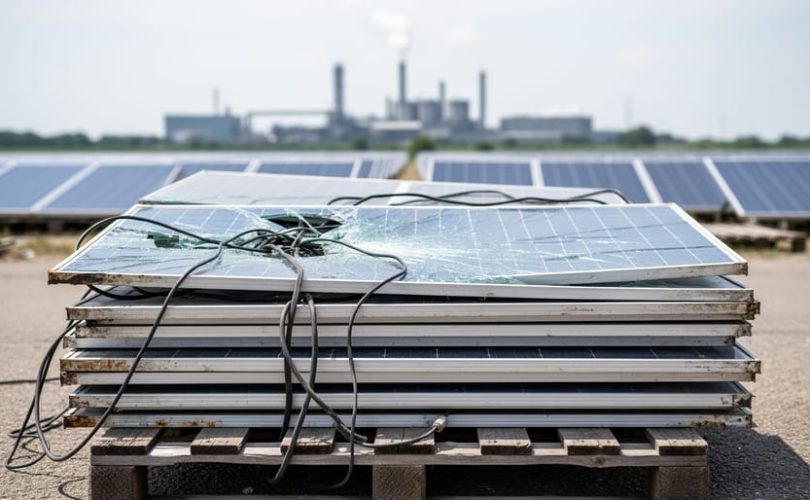
The solar industry faces a mounting challenge as first-generation photovoltaic panels reach the end of their 25-30 year operational lifespan. By 2050, the International Renewable Energy Agency estimates that decommissioned solar panels could constitute 78 million metric tons of waste globally, creating both environmental risks and economic opportunities.
End-of-life solar panels contain hazardous materials requiring careful handling. Cadmium telluride thin-film panels contain toxic cadmium compounds, while crystalline silicon modules may include lead in solder connections and selenium in certain semiconductor layers. Improper disposal in conventional landfills can lead to heavy metal leaching into soil and groundwater systems, potentially contaminating ecosystems and drinking water sources.
However, these panels also contain valuable recoverable materials. A typical crystalline silicon panel comprises approximately 76% glass, 10% polymer materials, 8% aluminum, 5% silicon, 1% copper, and trace amounts of silver and other metals. The silver content alone, used in conductive paste, represents significant economic value when recovered at scale.
Current recycling infrastructure remains inadequate for processing the anticipated volume of decommissioned panels. Mechanical recycling can recover aluminum frames and glass, but advanced thermal and chemical processes are necessary to extract high-purity silicon and precious metals. The European Union has implemented mandatory recycling targets of 85% for panel waste under the Waste Electrical and Electronic Equipment Directive, yet many regions lack comprehensive regulatory frameworks or established collection systems, highlighting the urgent need for standardized global approaches to panel decommissioning.
The Scale of the Solar Waste Challenge
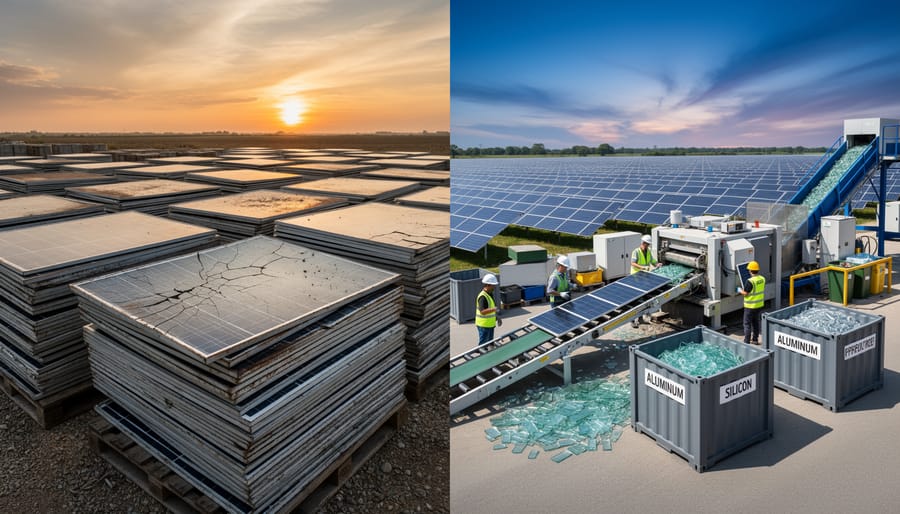
The global solar energy industry faces a mounting challenge that often remains overshadowed by its environmental benefits: the accumulation of end-of-life photovoltaic panels and manufacturing waste. According to the International Renewable Energy Agency (IRENA), the world could see up to 78 million metric tons of solar panel waste by 2050, with early projections suggesting this figure may be conservative given accelerating installation rates worldwide.
Current data reveals that approximately 250,000 metric tons of solar panel waste already exists globally, a figure expected to increase exponentially as first-generation installations from the early 2000s reach their end-of-life phase. The average photovoltaic panel lifespan ranges from 25 to 30 years, meaning the wave of decommissioned systems is just beginning to crest.
Regional distribution of this waste challenge varies significantly based on adoption rates and market maturity. China leads both in installed capacity and projected waste volumes, followed by the United States, Japan, and Germany. Europe collectively faces substantial waste management demands, with the European Union implementing forward-thinking regulations through the Waste Electrical and Electronic Equipment (WEEE) Directive to address the incoming volumes.
| Year | Global Volume (Million Metric Tons) | Leading Region | Recyclable Materials (%) |
|---|---|---|---|
| 2025 | 1.7 | China (35%) | 85-90 |
| 2030 | 8.0 | China (40%) | 85-90 |
| 2040 | 35.0 | Asia-Pacific (50%) | 90-95 |
| 2050 | 78.0 | Asia-Pacific (48%) | 90-95 |
These projections underscore an urgent need for scalable recycling infrastructure and circular economy approaches. Material composition analysis shows that photovoltaic panels contain approximately 76 percent glass, 10 percent polymer, 8 percent aluminum, 5 percent silicon, and 1 percent copper and other metals including silver and lead. The potential recovery value of these materials could reach 15 billion USD by 2050, transforming waste management from an environmental burden into an economic opportunity.
The challenge extends beyond end-of-life panels to include manufacturing by-products such as silicon dust, chemical solvents, and damaged cells, which currently represent an estimated 5-10 percent of production volume. Without coordinated global action and investment in recycling technologies, landfills will become repositories for valuable materials while missing opportunities for sustainable resource recovery.
Solar-Powered Waste Management Systems: Closing the Loop
Off-Grid Solar Recycling Facilities
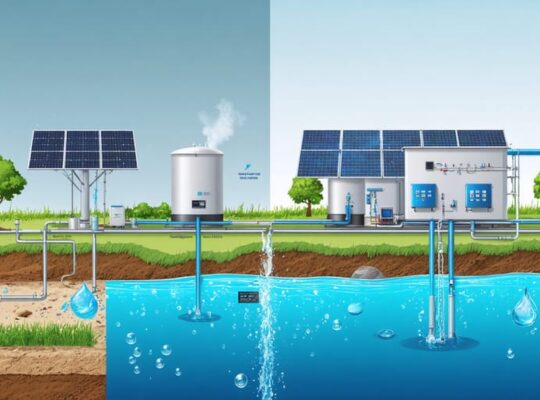
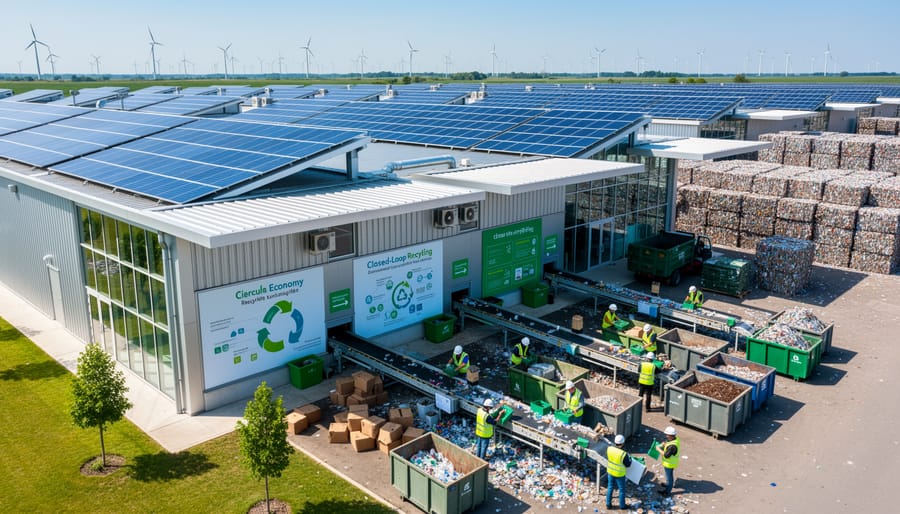
Off-grid solar PV systems are revolutionizing waste management by powering recycling facilities in remote locations where conventional grid access is unavailable or economically unfeasible. These standalone installations enable end-of-life solar panel processing at decommissioning sites, reducing transportation emissions and infrastructure costs associated with centralized recycling plants.
Remote recycling operations powered by sustainable solar systems typically integrate battery storage to maintain continuous operations during low-sunlight periods. A 50-kilowatt solar array can generate sufficient energy to operate mechanical separation equipment, crushing machinery, and thermal processing units necessary for extracting valuable materials like silicon, silver, and aluminum from decommissioned panels.
Leading academic institutions, including collaborations with universities specializing in renewable energy research, have demonstrated that solar-powered recycling facilities can achieve 30-40% reduction in carbon emissions compared to grid-dependent operations. These facilities employ modular designs that allow scalability based on regional decommissioning volumes.
The circular economy model becomes particularly compelling when solar energy powers its own waste processing infrastructure. Mobile recycling units equipped with rooftop PV arrays are emerging in Australia and rural regions of developing nations, processing panels at wind and solar farms upon decommissioning. This approach eliminates long-distance transportation while creating local employment opportunities in waste management sectors.
For aspiring PV professionals, understanding off-grid recycling systems represents an intersection of installation expertise, waste management knowledge, and sustainable infrastructure design, positioning them for emerging roles in comprehensive solar lifecycle management.
Energy-Intensive Recovery Processes
The recovery of valuable materials from end-of-life solar panels requires significant energy input, creating an opportunity to demonstrate renewable energy’s full circular potential. Solar energy itself can power the energy-intensive thermal, chemical, and mechanical processes needed to extract silicon, silver, copper, and other critical materials from decommissioned photovoltaic modules.
Thermal processing represents one of the most energy-demanding recovery methods. Pyrolysis, which involves heating panels to temperatures between 400-600°C in oxygen-controlled environments, separates the polymer encapsulant from glass and semiconductor materials. When powered by concentrated solar thermal systems or surplus grid electricity from photovoltaic arrays, this process achieves carbon-neutral material recovery. Research collaborations between industry leaders and universities have demonstrated that solar-powered pyrolysis units can process up to 1,000 panels daily while maintaining energy independence.
Chemical recovery processes, including electrolysis and acid leaching for extracting high-purity silicon and precious metals, traditionally consume substantial electrical energy. Advanced facilities now integrate on-site solar installations to offset these demands, with some operations achieving 80-90% renewable energy utilization. Mechanical separation processes, such as crushing, grinding, and electrostatic separation, similarly benefit from direct solar power integration.
Educational programs offered by technical institutes increasingly emphasize these integrated recovery systems, preparing photovoltaic professionals to design and optimize closed-loop recycling facilities. This approach not only reduces the carbon footprint of material recovery but also validates solar energy’s role in addressing its own end-of-life challenges, creating a truly sustainable value chain for the renewable energy sector.
Smart Waste Sorting with Solar Power
Innovative solar-powered automated sorting systems are transforming how the photovoltaic industry manages production waste and end-of-life panels. These systems integrate advanced optical sensors, near-infrared spectroscopy, and artificial intelligence algorithms to identify and classify different materials with remarkable precision. Solar energy powers conveyor belts, robotic arms, and sorting mechanisms, creating a closed-loop sustainability model where renewable energy facilitates its own waste recovery.
AI-driven classification technologies can distinguish between various panel types, including monocrystalline, polycrystalline, and thin-film variants, ensuring appropriate recycling pathways. Machine learning models continuously improve sorting accuracy by analyzing material composition, contamination levels, and recyclable component percentages. These automated systems reduce manual labor requirements while increasing processing efficiency by up to 40% compared to traditional methods.
Universities collaborating with solar manufacturers are developing next-generation sensor technologies that detect trace elements and hazardous materials within milliseconds, enabling safer dismantling processes. This integration of solar power with smart waste management represents a practical application of circular economy principles, demonstrating how the industry addresses its environmental footprint through technological innovation.
Innovative Recycling Technologies for Solar Panel Components
Thermal and Chemical Processing Methods
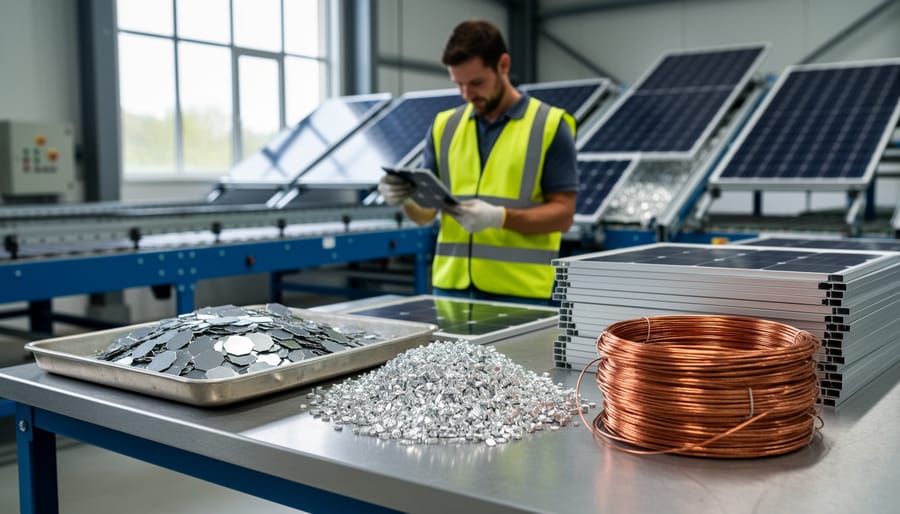
Advanced thermal and chemical processing methods offer effective solutions for separating valuable materials from end-of-life solar panels. High-temperature pyrolysis involves heating panels to 400-600°C in oxygen-controlled environments, breaking down encapsulant materials and releasing intact silicon wafers and metal components. This process, while energy-intensive, achieves recovery rates exceeding 85% for silicon and precious metals.
Chemical etching employs acid or alkaline solutions to dissolve specific layers, particularly effective for removing anti-reflective coatings and metal contacts without damaging the underlying silicon cells. Researchers collaborating with universities have refined these techniques to minimize chemical waste and improve material purity.
Solvent-based delamination represents a lower-temperature alternative, using organic solvents to separate the ethylene-vinyl acetate encapsulant from glass and cells at temperatures below 100°C. This method preserves cell integrity better than thermal approaches, enabling potential reuse of undamaged cells in secondary applications. Educational programs increasingly emphasize these processing methods as critical knowledge for photovoltaic professionals entering the recycling sector, where innovation continues to reduce processing costs and environmental impacts while improving material recovery efficiency.
Mechanical Separation Techniques
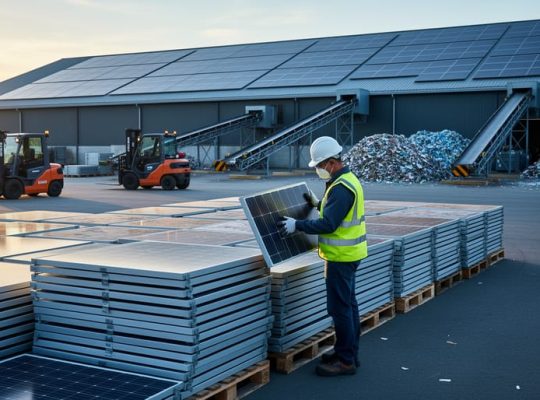
Mechanical separation serves as the crucial first stage in photovoltaic panel recycling, enabling efficient recovery of high-volume materials before more specialized processing. This approach typically begins with the removal of aluminum frames and junction boxes, which account for approximately 10% and 3% of total panel weight respectively. Industrial shredders then reduce deframed panels into smaller fragments, facilitating subsequent separation processes.
Modern recycling facilities employ hammer mills or rotary shredders capable of processing multiple panels simultaneously, achieving throughput rates of 1-2 tons per hour. Following size reduction, the material stream undergoes physical separation using techniques like magnetic separation for ferrous components, eddy current separation for aluminum particles, and air classification or density-based sorting to isolate glass cullet from other materials.
These mechanical methods can recover up to 95% of glass content and nearly 100% of aluminum framing with minimal energy expenditure compared to thermal or chemical processes. Universities collaborating with recycling operations have developed advanced optical sorting systems that further enhance separation efficiency by identifying different material types through spectral analysis. For aspiring photovoltaic professionals, understanding these foundational mechanical techniques provides essential knowledge for developing more comprehensive end-of-life management strategies that support circular economy principles within the renewable energy sector.
Emerging Circular Economy Approaches
The solar industry is increasingly embracing circular economy principles to address end-of-life panel challenges. Leading manufacturers have established take-back programs that ensure responsible disposal and resource recovery. These initiatives allow facility operators and homeowners to return decommissioned panels to manufacturers, who then channel them into certified recycling streams or refurbishment processes.
Refurbishment programs extend panel lifespan by identifying modules with minor degradation—typically those operating at 70-80% efficiency—and redirecting them to less demanding applications. These second-life opportunities include off-grid installations, educational facilities, and developing markets where lower performance thresholds remain economically viable. Universities are collaborating with industry partners to study optimal second-life deployment strategies and develop quality standards for refurbished panels.
Beyond refurbishment, innovative recyclers are extracting valuable materials like silver, silicon, and aluminum from panels that cannot be repurposed. This solar panel recycling revolution reduces dependency on virgin materials while creating specialized job opportunities in reverse logistics and materials recovery. As regulatory frameworks evolve, particularly in Europe and parts of Asia, these circular approaches are transitioning from voluntary initiatives to industry standards.
Regulatory Frameworks and Industry Standards
As solar photovoltaic installations proliferate globally, regulatory frameworks are evolving to address the mounting challenge of panel disposal and lifecycle management. The regulatory landscape varies significantly across regions, with some markets implementing comprehensive directives while others are still developing foundational policies.
The European Union leads global efforts through the Waste Electrical and Electronic Equipment (WEEE) Directive, which since 2012 has classified solar panels as electronic waste requiring specialized handling. Under this framework, producers bear financial responsibility for collection, treatment, and recycling of panels at end-of-life. The directive mandates recovery rates of 85% by weight and recycling rates of 80%, establishing Europe as the benchmark for solar waste management standards.
| Region/Market | Primary Regulation | Key Compliance Requirements |
|---|---|---|
| European Union | WEEE Directive (2012/19/EU) | 85% recovery rate, 80% recycling rate, producer responsibility |
| United States | State-level programs (WA, CA) | Varies by state; stewardship plans, take-back programs |
| China | Administrative Measures for Recovery (2021) | Producer take-back systems, recycling networks |
| Japan | Voluntary Guidelines + Pilot Programs | Industry-led collection, research initiatives |
| India | E-Waste Management Rules (2016, amended) | Extended producer responsibility, channel partner obligations |
Extended Producer Responsibility (EPR) programs represent the cornerstone of emerging compliance frameworks. These systems require manufacturers to establish financial mechanisms for future recycling costs, either through collective schemes or individual take-back programs. Washington State pioneered EPR for solar panels in the United States in 2017, followed by California, though federal regulations remain absent, creating a patchwork of state-level requirements.
China introduced comprehensive Administrative Measures for the Recovery and Disposal of Photovoltaic Modules in 2021, establishing producer responsibility and mandating development of recycling infrastructure. India’s E-Waste Management Rules extend to solar equipment, requiring producers to register and meet collection targets, though enforcement mechanisms continue developing.
Japan relies predominantly on voluntary industry guidelines supported by government pilot programs, reflecting its collaborative regulatory approach. Academic institutions partner with industry stakeholders to develop best practices and establish collection networks ahead of the anticipated decommissioning wave in the 2030s.
For aspiring photovoltaic professionals, understanding these regulatory frameworks is increasingly essential. Compliance requirements create career opportunities in environmental management, policy development, and recycling operations. Educational programs now incorporate regulatory knowledge alongside technical training, preparing the workforce for the circular economy transition within renewable energy sectors.
Economic Opportunities in Solar Waste Management
The emerging solar recycling industry presents substantial economic opportunities alongside its environmental benefits. As the first wave of solar panels approaches end-of-life, the global photovoltaic recycling market is projected to reach $2.7 billion by 2030, with compound annual growth rates exceeding 15 percent in some regions.
Material recovery from decommissioned panels offers particularly compelling financial incentives. High-purity silicon, which constitutes approximately 47 percent of a standard crystalline panel by weight, can be recovered and reprocessed at costs significantly lower than virgin production. Silver, though present in small quantities, holds substantial value at current market prices of over $700 per kilogram. Copper, aluminum, and glass also contribute meaningful revenue streams. Industry analyses indicate that recovered materials from a metric ton of crystalline silicon panels can yield approximately $150-$200 in raw material value, with specialized recycling processes achieving higher recovery rates and material purities commanding premium prices.
Job creation represents another significant economic dimension. The International Renewable Energy Agency estimates that solar recycling could generate 150,000 direct jobs globally by 2030. These positions span collection logistics, dismantling operations, advanced material processing, quality assurance, and research and development. Universities are increasingly collaborating with recycling facilities to develop specialized training programs, preparing professionals for these emerging roles.
Investment opportunities in solar recycling infrastructure are attracting both venture capital and established waste management corporations. Companies developing proprietary recycling technologies, particularly those enabling cost-effective recovery of high-purity materials, have secured substantial funding rounds. Furthermore, extended producer responsibility legislation in several jurisdictions is creating stable, predictable revenue streams for recycling operators through mandated collection and processing programs.
For aspiring photovoltaic professionals, this sector offers diverse career pathways combining materials science, environmental engineering, business development, and policy implementation. Educational programs increasingly emphasize circular economy principles alongside traditional photovoltaic design and installation, recognizing that comprehensive industry expertise must encompass entire lifecycle management.
Educational Pathways for PV Professionals in Waste Management
As the photovoltaic industry evolves to address end-of-life challenges and waste management concerns, professionals equipped with specialized knowledge in sustainable solar lifecycle management are increasingly valuable. Educational pathways that integrate circular economy principles with technical PV expertise are essential for developing the next generation of solar industry leaders.
Universities and technical institutions are expanding their curricula to include modules on solar waste management, recycling technologies, and lifecycle assessment. These programs cover critical topics such as hazardous material handling, photovoltaic material recovery processes, decommissioning protocols, and environmental compliance frameworks. Students gain practical understanding of both manufacturing waste reduction and end-of-life panel processing, preparing them for roles in recycling facilities, regulatory agencies, and sustainable manufacturing operations.
Mose Solar’s commitment to comprehensive solar education programs extends beyond basic photovoltaic technology to encompass the full environmental impact spectrum of solar energy systems. Through collaborations with academic institutions, the company provides access to real-world case studies, industry best practices, and emerging innovations in waste minimization. These partnerships create opportunities for students to engage with actual recycling challenges and develop solutions applicable to commercial-scale operations.
Professional development in this field typically combines engineering fundamentals with environmental science, policy analysis, and materials science. Aspiring professionals should seek certifications in hazardous waste management, familiarize themselves with Extended Producer Responsibility regulations, and stay current with technological advances in panel recycling methods. Internship programs with solar manufacturers and recycling facilities offer invaluable hands-on experience.
The integration of waste management principles into renewable energy education ensures that tomorrow’s photovoltaic professionals approach solar technology holistically, understanding that true sustainability requires addressing both energy generation and responsible material stewardship throughout the entire product lifecycle.
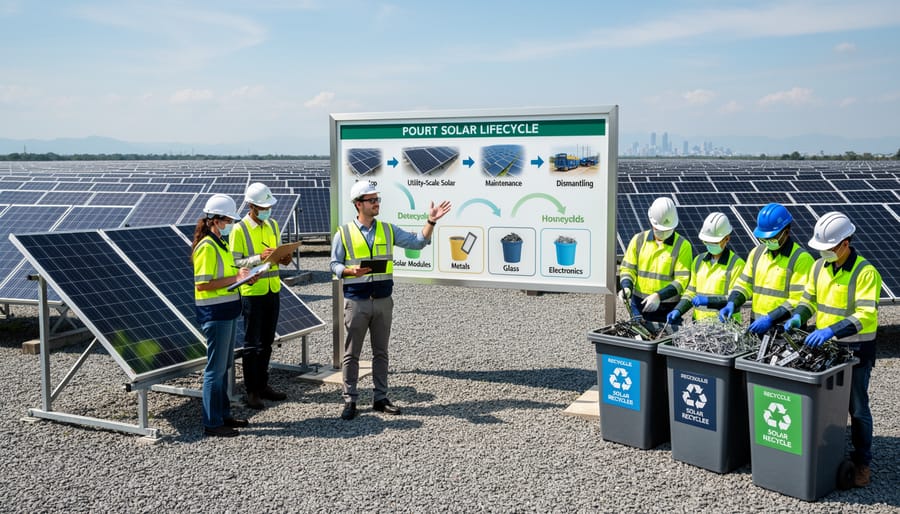
The management of solar waste by-products represents both a formidable challenge and an unprecedented opportunity for the renewable energy sector. As photovoltaic installations proliferate globally, understanding the complete lifecycle of solar technology—from raw material extraction and manufacturing processes through decades of operation to eventual decommissioning—has become essential for anyone entering this dynamic field. The waste streams generated at each stage, whether silicon tetrachloride from polysilicon production or the mounting volume of end-of-life panels, demand innovative solutions that align with the sustainability principles driving solar adoption in the first place.
What distinguishes truly sustainable solar energy is not merely the clean electricity generated during operation, but a comprehensive approach that addresses environmental impacts across the entire value chain. The emergence of solar-powered recycling facilities exemplifies this holistic thinking, demonstrating how the industry can leverage its own technology to solve its waste challenges. These facilities recover valuable materials like silver, silicon, and rare earth elements while minimizing the carbon footprint of the recycling process itself, creating a genuinely circular economy within the sector.
For aspiring photovoltaic professionals, developing expertise in solar waste management and lifecycle assessment is increasingly critical. The regulatory landscape continues to evolve, with extended producer responsibility frameworks reshaping how manufacturers approach product design and end-of-life planning. Educational programs that integrate these considerations prepare the next generation to drive innovation in areas like design for recyclability, advanced material recovery technologies, and economically viable collection systems. Engaging with these resources empowers professionals to contribute meaningfully to an industry committed to authentic environmental stewardship, ensuring that solar energy fulfills its promise as a truly sustainable solution for our energy future.