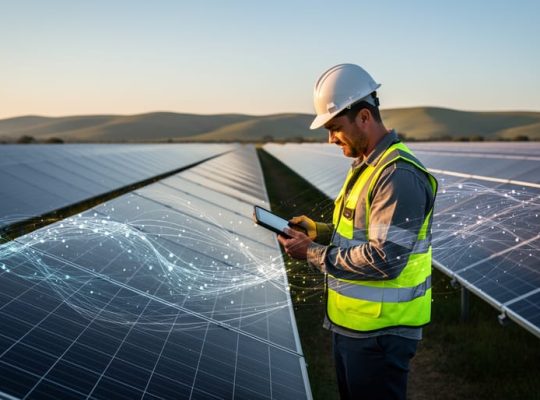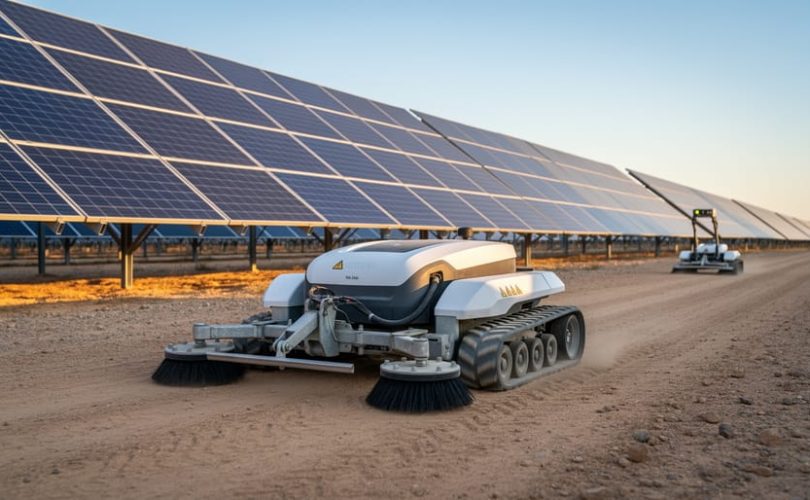
Solar panel arrays spanning acres of desert terrain face an unavoidable reality: dust accumulation, soiling, and equipment degradation reduce energy output by 15-35% annually without proper maintenance. Traditional inspection methods require teams of technicians to manually traverse vast installations, creating safety risks, labor costs, and operational downtime that erode profit margins. Dynamic robotics is revolutionizing this paradigm by deploying autonomous systems capable of continuous monitoring, precision cleaning, and predictive maintenance across photovoltaic installations of any scale.
These advanced robotic platforms integrate computer vision, artificial intelligence, and sensor arrays to detect microcracks, hotspots, and performance anomalies invisible to human inspectors. Unlike static maintenance schedules that waste resources on unnecessary servicing or miss critical issues between inspections, dynamic systems respond in real-time to actual conditions. A robotic unit can navigate panel rows autonomously, clean surfaces without water waste, capture thermal imaging data, and transmit performance metrics to operators—all while human technicians focus on complex repairs requiring specialized expertise.
The economic implications extend beyond labor savings. Utility-scale installations implementing robotic maintenance report energy yield improvements of 8-12% while reducing water consumption by 90% compared to conventional washing methods. Universities collaborating with industry leaders are developing next-generation systems featuring swarm intelligence, where multiple robots coordinate to optimize coverage patterns and maintenance prioritization algorithms.
For photovoltaic professionals entering this rapidly evolving field, understanding dynamic robotics represents essential knowledge. This technology transforms maintenance from a reactive cost center into a proactive performance optimization tool, directly impacting system reliability, return on investment, and the economic viability of large-scale solar deployment.
The Maintenance Challenge Facing Modern Solar Installations
Why Regular PV Maintenance Can’t Be Ignored
Neglecting photovoltaic system maintenance creates measurable consequences that directly impact energy production and financial returns. Research indicates that accumulated dust, debris, and soiling can reduce panel efficiency by 15-25% annually in moderate climates, with losses reaching 35% in arid or industrial environments. For a typical commercial installation generating 100 kW under optimal conditions, this translates to approximately 15,000-25,000 kWh of lost production yearly, representing significant revenue reduction.
Beyond immediate efficiency losses, deferred maintenance accelerates system degradation. Undetected microcracks, hotspots from partial shading, and corroded electrical connections compound over time, potentially reducing overall system lifespan by 20-30%. This degradation pattern particularly affects return on investment calculations, as systems designed for 25-30 year operational lifespans may require premature component replacement or complete overhaul.
Specific failure modes illustrate these risks clearly. A 2022 industry study documented that facilities conducting quarterly inspections maintained 94-96% of rated capacity, while those performing annual or sporadic maintenance averaged only 78-82% capacity retention. Additionally, unaddressed micro-defects identified through thermal imaging grew into major failures requiring costly interventions in 40% of surveyed installations. These findings underscore why systematic, technology-enabled maintenance approaches have become essential for protecting solar investments and ensuring sustained performance throughout system lifecycles.
The Limitations of Traditional Maintenance Approaches
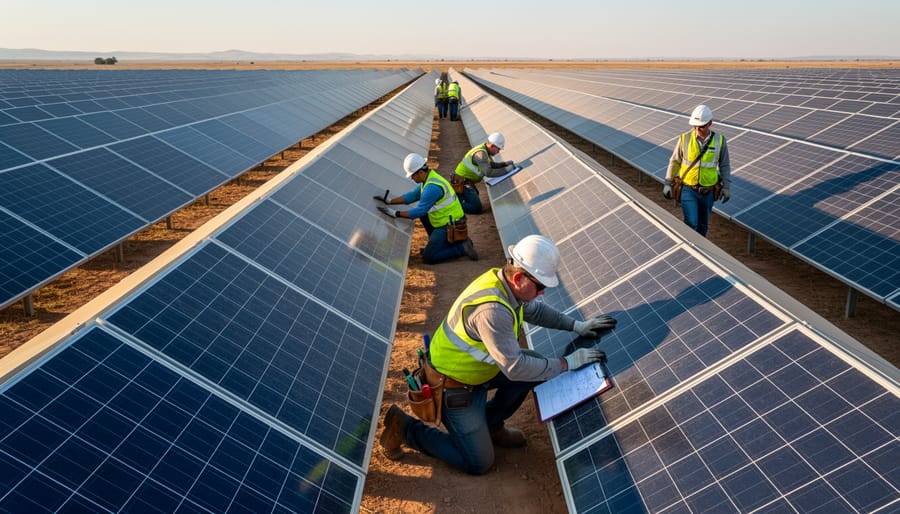
While traditional maintenance approaches have served the photovoltaic industry adequately in its early stages, they present significant limitations as solar installations scale to utility-grade proportions. Manual inspection methods require substantial labor resources, with technicians spending countless hours walking between panel rows to identify defects, soiling issues, or electrical anomalies. This labor-intensive process translates to escalating operational costs that directly impact the economic viability of large-scale solar farms.
Safety concerns compound these challenges, particularly when personnel must navigate installations on rooftops, elevated structures, or terrain with extreme temperatures. Workers face risks from electrical hazards, heat exposure, and falls, necessitating comprehensive safety protocols that further increase operational expenses.
Consistency represents another critical weakness in manual inspections. Human factors inevitably introduce variability in detection accuracy and assessment quality, with performance degradation often going unnoticed until significant energy losses occur. Different inspectors may identify issues with varying degrees of thoroughness, creating gaps in maintenance records.
Perhaps most critically, traditional methods struggle with scalability. As solar portfolios expand to encompass thousands of panels across multiple sites, manual inspection frequencies decrease proportionally, leaving systems vulnerable to prolonged periods of suboptimal performance between maintenance cycles.
What Makes a Robot ‘Dynamic’ in PV Maintenance
Adaptive Movement and Navigation Capabilities
Dynamic robots deployed in photovoltaic maintenance demonstrate remarkable adaptability through advanced sensor integration and machine learning algorithms. These systems employ real-time terrain mapping using LiDAR and computer vision to navigate uneven ground, steep slopes, and obstacles commonly found in solar installations. When encountering varying panel angles across fixed-tilt, single-axis, or dual-axis tracking systems, onboard sensors detect inclination changes and automatically adjust cleaning pressure, brush positioning, and movement speed to maintain optimal contact without causing micro-scratches or structural stress.
Weather-responsive capabilities represent another crucial advancement. Integrated meteorological sensors monitor wind speed, temperature, and precipitation, enabling robots to modify operational parameters or temporarily halt cleaning during adverse conditions that could compromise safety or effectiveness. Additionally, these systems adapt to different array configurations—from residential rooftop installations to utility-scale ground-mounted arrays—by recognizing panel spacing, frame types, and mounting structures. Through collaborative research initiatives with universities, manufacturers continue refining adaptive algorithms that enhance navigation precision while reducing energy consumption. This intelligent adaptability minimizes manual intervention requirements and ensures consistent maintenance quality across diverse installation environments, making automated solutions increasingly viable for large-scale solar operations.
Real-Time Decision Making and Sensor Integration
Dynamic robotic systems for photovoltaic maintenance rely on sophisticated onboard artificial intelligence to navigate solar arrays and execute cleaning or inspection tasks autonomously. These platforms integrate machine learning algorithms that continuously analyze environmental conditions and panel performance data to optimize maintenance schedules in real-time.
Sensor fusion represents a critical capability, combining thermal imaging to detect hotspots and electrical anomalies, visual cameras for dirt accumulation assessment, and proximity sensors for safe navigation. This multi-modal approach enables robots to distinguish between different types of panel degradation, prioritizing areas requiring immediate attention while maintaining operational efficiency.
The autonomous decision-making framework processes sensor data through neural networks trained on thousands of maintenance scenarios. Robots can identify panel defects, adjust cleaning pressure based on soiling composition, and modify navigation paths to avoid shadows or obstacles. Research collaborations between universities and industry leaders have advanced these capabilities significantly, with systems now achieving 95 percent accuracy in fault detection. This technological integration reduces human intervention requirements while ensuring comprehensive system monitoring and maintenance across large-scale solar installations.
Multi-Function Operation Systems
Modern dynamic robotic platforms have evolved into comprehensive maintenance hubs that integrate multiple operational capabilities within a single autonomous system. These advanced robots simultaneously execute cleaning, inspection, diagnostics, and minor repair functions, significantly reducing the need for multiple specialized machines or manual intervention teams.
The multi-function design typically incorporates modular tool attachments that enable seamless transitions between tasks. For instance, after completing a cleaning cycle using rotating brushes or water-free microfiber systems, the same robot can deploy high-resolution cameras and thermal imaging sensors to conduct detailed panel inspections. Embedded artificial intelligence algorithms analyze this data in real-time, identifying potential issues such as micro-cracks, hot spots, or electrical anomalies.
When diagnostics reveal minor problems like loose connections or debris accumulation in junction boxes, advanced systems can activate specialized repair modules. These may include precision grippers for tightening connectors or compressed air nozzles for targeted cleaning of sensitive components. This integrated approach minimizes system downtime and maximizes operational efficiency.
Research collaborations between industry leaders and universities have accelerated the development of these sophisticated platforms, with educational programs now incorporating hands-on training with multi-function robotic systems. This ensures the next generation of photovoltaic professionals understands both the technical capabilities and practical deployment strategies essential for modern solar farm management.
Core Technologies Enabling Dynamic Robotic Systems
Locomotion and Mobility Solutions
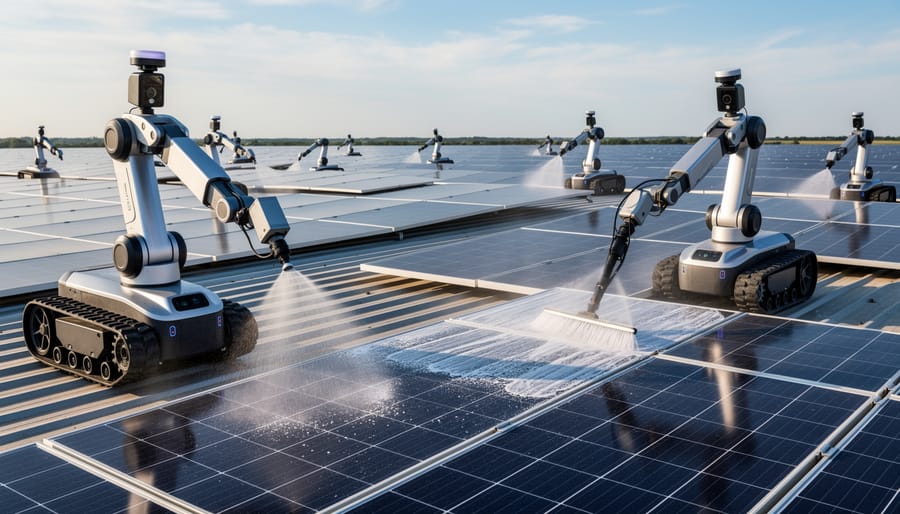
Dynamic robotic systems employ diverse locomotion methods to navigate solar installations effectively. Wheeled platforms remain the most prevalent solution, offering excellent maneuverability across standard ground-mounted arrays with minimal infrastructure modifications. These systems typically feature adjustable suspension to accommodate uneven terrain while maintaining cleaning equipment at optimal angles.
Track-based designs provide superior traction and weight distribution, making them ideal for large-scale utility installations where stability is paramount. Their increased ground contact area reduces soil compaction and enables operation across challenging surfaces, though at slightly lower speeds than wheeled alternatives.
Rail-mounted configurations represent the most structured approach, with robots traveling along fixed tracks installed parallel to panel rows. This method ensures precise positioning and consistent coverage, particularly valuable for rooftop installations where fall protection is critical. Universities collaborating with industry leaders have demonstrated that rail systems reduce operational variables, enabling more predictable maintenance schedules.
Emerging aerial drone applications are transforming inspection capabilities through thermal imaging and visual analysis. While currently limited to diagnostic functions rather than physical cleaning, drones rapidly survey extensive installations, identifying problem areas for targeted intervention. This technology complements ground-based systems, creating comprehensive maintenance ecosystems that optimize both efficiency and resource allocation across photovoltaic facilities.
Advanced Diagnostic and Imaging Technologies
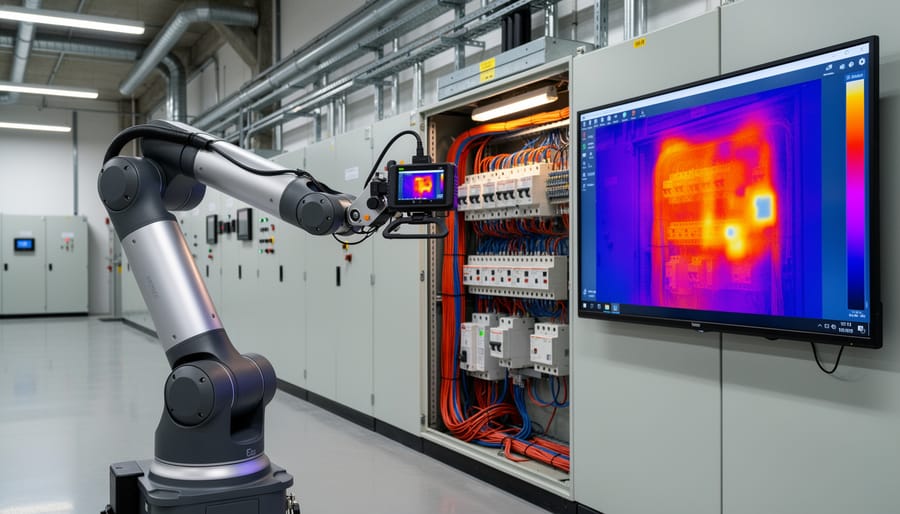
Dynamic robotic systems incorporate sophisticated diagnostic technologies that enable comprehensive solar panel assessment during maintenance operations. Thermal imaging cameras mounted on robotic platforms detect temperature anomalies across photovoltaic arrays, identifying hotspots that indicate potential cell damage, electrical faults, or bypass diode failures. These infrared sensors can scan extensive installations rapidly, detecting temperature variations as small as 0.1°C to pinpoint underperforming modules before they cause system-wide efficiency losses.
Electroluminescence testing represents another critical capability, utilizing specialized cameras to capture images of energized solar cells in darkness. This technique reveals microscopic cracks, finger interruptions, and other defects invisible to standard visual inspection. When integrated with sensor integration systems, these diagnostic tools provide real-time data correlation with performance metrics.
High-resolution visual inspection cameras enable automated surface examination, detecting soiling accumulation, physical damage, and encapsulation deterioration. Advanced image processing algorithms analyze captured footage to classify defect severity and prioritize maintenance interventions.
Current-voltage curve analysis capabilities allow robotic systems to perform electrical characterization of individual modules or strings, measuring parameters like open-circuit voltage, short-circuit current, and maximum power point. This comprehensive diagnostic approach ensures that maintenance decisions are data-driven and targeted, maximizing return on investment for large-scale photovoltaic installations.
Power Management and Autonomy
Sustained operation represents a critical challenge for autonomous robotic systems deployed in photovoltaic installations, particularly in remote or large-scale solar farms. Modern dynamic robots address this through integrated power management solutions that combine solar self-charging capabilities with advanced battery systems and intelligent scheduling algorithms.
Most contemporary maintenance robots incorporate onboard photovoltaic panels that enable opportunistic charging during operational periods. These systems typically feature high-efficiency monocrystalline cells paired with maximum power point tracking controllers to optimize energy harvesting under varying irradiance conditions. Battery systems utilize lithium-ion or lithium iron phosphate chemistries, offering energy densities sufficient for 8-12 hours of continuous operation while maintaining compact form factors suitable for mobile platforms.
Autonomous scheduling algorithms play an equally important role in extending operational periods. These systems analyze weather forecasts, battery state-of-charge data, and maintenance priorities to optimize task sequencing and charging cycles. Through university collaborations, researchers have developed machine learning models that predict energy consumption patterns and adapt robot behavior accordingly, reducing unnecessary movements and prioritizing energy-intensive tasks during peak solar production hours.
Some advanced platforms incorporate wireless charging stations positioned strategically throughout solar installations, enabling automated docking and rapid recharging without human intervention. This infrastructure approach has proven particularly effective in continuous monitoring applications where uninterrupted operation is essential for maintaining system reliability and maximizing energy production across utility-scale installations.
Practical Applications Across Different PV Installation Types
Utility-Scale Ground-Mount Systems
Large-scale ground-mount solar installations spanning hundreds of acres present unique maintenance challenges that robotic systems are uniquely positioned to address. These facilities, often housing 100,000+ panels in remote locations, require specialized autonomous solutions that can navigate vast arrays efficiently while performing multiple maintenance tasks.
Modern utility-scale robotic platforms feature GPS-guided navigation systems and terrain-adaptive mobility, enabling them to traverse uneven ground between panel rows while carrying cleaning equipment, thermal imaging cameras, and diagnostic sensors. Leading systems can clean up to 3,000 panels daily while simultaneously collecting performance data and identifying electrical faults or physical damage.
The economic case for robotics becomes particularly compelling at this scale, where reducing manual labor costs and minimizing downtime directly impacts megawatt-hour production. Several universities collaborate with solar operators to optimize robotic route planning algorithms that maximize efficiency across sprawling installations. Advanced fleet management software coordinates multiple robots working in parallel, ensuring comprehensive site coverage while avoiding redundant operations. These systems typically achieve return on investment within 18-24 months through reduced operational expenses and sustained optimal energy output.
Commercial and Industrial Rooftop Arrays
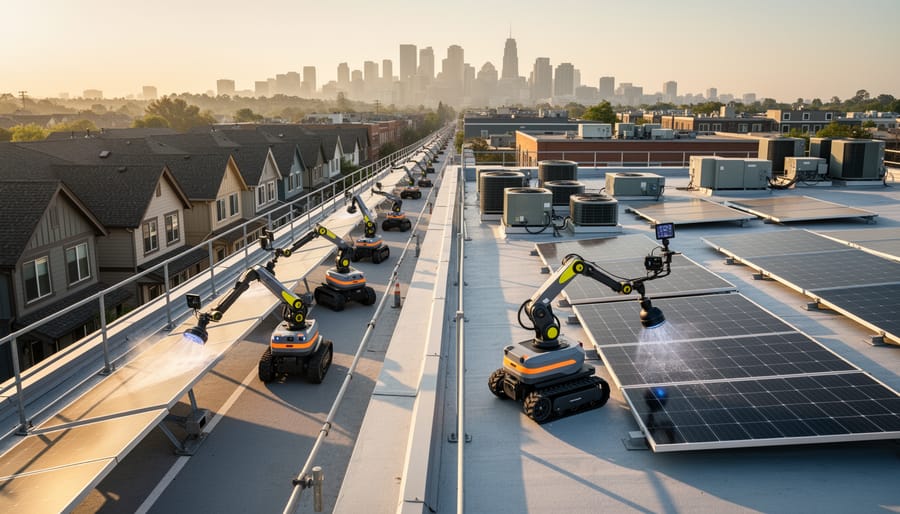
Commercial and industrial rooftop installations present unique maintenance challenges, with fall hazards representing the primary safety concern for technicians. Dynamic robotic systems address these risks by eliminating the need for human workers to navigate potentially dangerous rooftop environments. These specialized platforms incorporate enhanced stability mechanisms, including wider wheelbases and advanced grip systems designed to handle varying roof pitches and materials.
Modern rooftop cleaning robots feature lightweight construction to minimize structural load concerns while maintaining durability for commercial-scale operations. Many systems utilize wireless operation capabilities, allowing technicians to control maintenance activities from ground level or secure vantage points. Advanced models integrate real-time monitoring sensors that detect roof obstructions, edge boundaries, and potential hazards, automatically adjusting operational parameters to maintain safe working distances.
Leading manufacturers have collaborated with universities to develop standardized safety protocols specific to rooftop robotic maintenance, contributing to educational program offerings that train operators in proper deployment procedures. These safety-focused innovations significantly reduce workplace accidents while maintaining cleaning efficacy, making them increasingly valuable for facilities management teams responsible for large commercial arrays where manual maintenance poses substantial liability risks.
Residential and Distributed Solar Applications
The residential solar sector is witnessing significant innovation in compact robotic maintenance solutions tailored for smaller installations. Lightweight autonomous cleaners now navigate residential rooftops, adapting to various panel configurations and tile-integrated solar systems without requiring extensive infrastructure modifications. These systems typically weigh under 10 kilograms and operate on battery power, making them suitable for standard residential roof loads.
Several manufacturers have developed specialized robots for solar tile applications, where traditional cleaning methods prove impractical due to complex surface geometries. These devices employ soft-bristle mechanisms and precise water distribution systems that preserve tile integrity while removing accumulated debris. Universities collaborating with robotics developers are pioneering sensor technologies that enable these compact units to detect optimal cleaning patterns based on real-time efficiency monitoring.
Educational programs increasingly emphasize residential-scale robotic solutions, recognizing that distributed solar installations represent substantial growth opportunities. As production costs decrease and performance reliability improves, homeowners gain access to maintenance automation previously reserved for utility-scale facilities, democratizing advanced photovoltaic system care.
Economic and Performance Benefits for PV System Operators
Measurable ROI and Payback Periods
Dynamic robotic systems for PV maintenance demonstrate compelling financial returns through multiple value streams. Industry data indicates that automated cleaning and inspection can increase energy yield by 15-30% in dusty environments, directly translating to enhanced revenue generation. Labor cost reductions represent another significant benefit, with robotic systems eliminating the need for frequent manual interventions that pose safety risks and require specialized personnel.
Initial capital investment for dynamic robotic solutions typically ranges from $50,000 to $200,000 depending on system scale and complexity. However, the payback period generally falls between 2-4 years for utility-scale installations, driven by increased energy production and reduced operational expenses. Research conducted in collaboration with universities has validated these projections across diverse climatic conditions.
Maintenance cost savings further accelerate ROI, as robotic systems reduce panel replacement needs by identifying issues early. Facilities report 40-60% reductions in unplanned downtime through predictive maintenance capabilities. Educational program offerings from industry leaders help operators maximize these benefits by optimizing system deployment strategies. For organizations considering implementation, conducting site-specific cost-benefit analyses ensures realistic expectations and proper system sizing for optimal financial performance.
Enhanced System Performance and Longevity
Dynamic robotic maintenance systems play a crucial role in extending photovoltaic system lifespan and preserving peak operational efficiency. Regular automated cleaning and inspection cycles prevent the accumulation of dust, pollen, bird droppings, and other contaminants that can reduce energy output by 15-25% annually. By maintaining consistently clean panel surfaces, robotic systems ensure optimal light transmission and electrical performance throughout the system’s operational life.
Beyond cleaning, these advanced platforms perform continuous diagnostic assessments that identify potential failure points before they escalate into costly breakdowns. Thermal imaging sensors detect hotspots indicating defective cells or connection issues, while visual inspection algorithms recognize micro-cracks, delamination, and corrosion. Early detection enables targeted interventions that prevent minor issues from compromising entire arrays.
The predictive maintenance capabilities inherent in robotic systems significantly reduce mechanical stress on panels compared to manual cleaning methods. Gentle, calibrated brushes and optimized water pressure settings minimize surface abrasion and frame stress, protecting manufacturer warranties and preserving anti-reflective coatings. Data collected during maintenance cycles also informs system operators about degradation patterns, enabling informed decisions regarding component replacement schedules and system upgrades. This proactive approach translates to extended operational lifespans exceeding 30 years while maintaining efficiency levels within manufacturer specifications.
Implementation Considerations and Best Practices
System Selection Criteria
Selecting an appropriate dynamic robotic maintenance solution requires careful evaluation of several critical factors. Site compatibility assessment forms the foundation of this decision-making process. Consider the physical layout of your solar installation, including panel orientation, mounting systems, and accessibility constraints. Ground-mounted arrays present different challenges than rooftop installations, while terrain characteristics and spacing between rows directly impact robot mobility requirements.
Maintenance needs analysis should encompass current cleaning frequency, local environmental conditions such as dust accumulation rates, and seasonal variations in soiling patterns. Document your facility’s specific challenges, including bird droppings, pollen deposits, or industrial pollutants that may require specialized cleaning capabilities. This assessment helps determine whether waterless cleaning systems or water-based solutions better suit your operational context.
Scalability considerations prove essential for long-term investment value. Evaluate whether the robotic system can expand alongside your facility growth or adapt to evolving maintenance protocols. Integration capabilities with existing monitoring infrastructure and data management platforms ensure seamless operational workflows. Universities collaborating with industry partners often provide valuable case studies demonstrating successful implementation across various installation scales.
Finally, assess the vendor’s technical support framework, training program availability, and maintenance service agreements. These elements significantly influence operational success and return on investment for your automated maintenance solution.
Integration with Existing Monitoring Systems
Dynamic robotic systems achieve maximum effectiveness when seamlessly integrated with existing monitoring systems. Modern robotic platforms support standard communication protocols including Modbus, OPC-UA, and MQTT, enabling direct data exchange with supervisory control and data acquisition (SCADA) systems commonly deployed in utility-scale installations.
Integration architecture typically involves three layers: the robotic control system collecting operational and diagnostic data, middleware platforms processing and standardizing information formats, and cloud-based analytics engines aggregating insights from multiple sources. This structure allows maintenance robots to receive cleaning schedules based on real-time performance metrics while simultaneously feeding inspection results back into centralized databases.
Leading cloud platforms such as AWS IoT, Microsoft Azure, and specialized solar management software provide application programming interfaces (API) that facilitate bidirectional communication. These connections enable automated workflows where monitoring systems detect performance degradation, trigger robotic inspections to identify root causes, and schedule corrective maintenance accordingly.
Universities collaborating with solar operators have demonstrated that integrated systems reduce response times by 60-70% compared to manual coordination. By creating comprehensive maintenance workflows that unite predictive analytics, autonomous robotics, and human oversight, facilities achieve optimal performance while minimizing operational complexity and resource allocation challenges.
The Future Trajectory of Dynamic Robotics in Solar Maintenance
Emerging Technologies on the Horizon
The integration of artificial intelligence with robotic systems represents a transformative frontier for photovoltaic maintenance. AI-powered predictive maintenance algorithms now enable robots to anticipate component failures before they occur, analyzing historical performance data and real-time sensor inputs to schedule interventions precisely when needed. This proactive approach significantly reduces downtime and extends system lifespan.
Swarm robotics introduces collaborative capabilities where multiple autonomous units coordinate their maintenance activities across expansive solar installations. These networked systems communicate to optimize cleaning routes, share workload distribution, and provide redundancy in case of individual unit failure. Research partnerships between leading universities and industry stakeholders are advancing this technology toward commercial deployment.
Advanced materials research focuses on developing self-cleaning nanocoatings that complement robotic maintenance, reducing the frequency of required interventions. Researchers are also exploring lightweight composite materials for robot construction, improving energy efficiency and maneuverability. Educational programs now incorporate these emerging technologies, preparing the next generation of professionals to implement and manage increasingly sophisticated automated maintenance systems that will define the future of solar energy operations.
Workforce Implications and New Skill Requirements
The integration of dynamic robotics into photovoltaic system maintenance is creating a new generation of specialized professional roles that blend traditional solar expertise with advanced automation skills. As the industry transitions toward autonomous maintenance solutions, demand is growing for robotics technicians who understand both PV system operations and robotic programming, data analysts capable of interpreting sensor feedback and predictive algorithms, and maintenance coordinators who can oversee hybrid human-robot workflows.
These emerging positions require proficiency in areas such as sensor technology, machine learning fundamentals, robotic navigation systems, and automated diagnostic protocols. Educational institutions are responding by developing specialized curricula that combine photovoltaic engineering with robotics and artificial intelligence coursework. Aspiring professionals should pursue training programs that offer hands-on experience with automated maintenance platforms and real-world problem-solving scenarios.
Mose Solar recognizes this skills gap and actively collaborates with universities to design comprehensive educational pathways for the next generation of PV professionals. Through partnerships with academic institutions, the company provides access to cutting-edge robotic systems for student training and research projects. These initiatives ensure that graduates enter the workforce equipped with practical knowledge of automated maintenance technologies, positioning them to lead the industry’s ongoing transformation toward intelligent, robotically-enhanced solar operations.
Dynamic robotic systems represent a fundamental paradigm shift in photovoltaic maintenance, transforming solar energy from a labor-intensive industry into an automated, precision-driven sector. These advanced technologies address the longstanding challenges of maintenance costs, operational efficiency, and system reliability that have historically limited the economic viability of large-scale solar installations. By integrating autonomous navigation, artificial intelligence, and real-time diagnostics, dynamic robotics enable continuous monitoring and rapid response to performance issues, significantly reducing downtime and maximizing energy output.
The economic implications extend beyond immediate cost savings. Automated maintenance systems lower the levelized cost of energy, making solar power increasingly competitive with conventional energy sources while reducing the environmental footprint associated with manual maintenance operations. As photovoltaic installations continue expanding globally, these technologies will become essential infrastructure components rather than optional enhancements.
For professionals entering the renewable energy sector, understanding and implementing dynamic robotic solutions represents a critical competency. The convergence of robotics, artificial intelligence, and solar technology creates unprecedented opportunities for innovation and career development. Educational institutions and industry leaders are collaborating to develop specialized training programs that equip the next generation with these essential skills.
We encourage aspiring photovoltaic professionals to actively pursue education in robotic automation, machine learning, and advanced maintenance systems. Industry stakeholders should invest in these technologies and support workforce development initiatives. By embracing dynamic robotics, we collectively advance toward a more sustainable, economically viable solar energy future that benefits both industry growth and environmental stewardship.