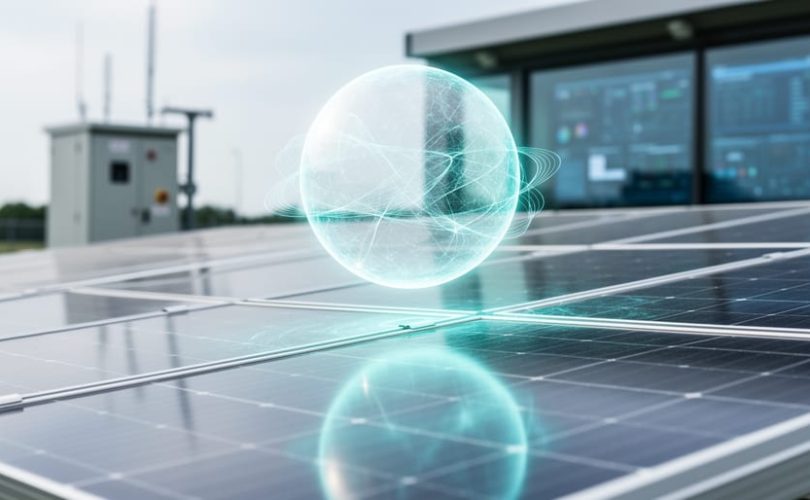
Quantum computing is a revolutionary computational approach that harnesses quantum mechanical phenomena to process information in ways fundamentally impossible for classical computers, representing a potential paradigm shift for solar photovoltaic data analysis and optimization challenges. Unlike traditional binary computing, quantum systems exploit superposition and entanglement to evaluate multiple solutions simultaneously, a capability that could transform how the solar industry tackles complex modeling, grid integration, and materials discovery problems.
The solar PV sector generates massive datasets from performance monitoring, weather forecasting, and grid management systems. Current computational methods struggle with the sheer volume and complexity of optimizing these interconnected variables in real time. Quantum computing promises to address precisely these bottlenecks by processing vast solution spaces exponentially faster than conventional supercomputers, particularly for problems involving multi-variable optimization, molecular simulation for next-generation solar materials, and predictive maintenance across distributed solar installations.
As of 2026, quantum computing has transitioned from theoretical physics labs into early commercial deployment, with several major technology providers offering cloud-based quantum processing units accessible to researchers and industry partners. The solar energy community has begun exploring practical applications through collaborative research programs linking universities, national laboratories, and industry stakeholders. These initiatives are testing whether quantum algorithms can genuinely deliver measurable advantages for solar-specific challenges like inverter control optimization, energy storage dispatch strategies, and accelerated discovery of novel photovoltaic materials with higher conversion efficiencies.
This article explains what quantum computing actually is, how it operates differently from classical computation, which quantum approaches show the most promise for photovoltaic applications, and what realistic timeline the solar industry should expect for practical implementation. Understanding these fundamentals is becoming essential for professionals positioning themselves at the intersection of renewable energy and emerging computational technologies.
What Is Quantum Computing?
Quantum computing is a revolutionary approach to processing information that harnesses the principles of quantum mechanics, the physics governing atomic and subatomic particles, to perform calculations fundamentally different from traditional computers. While classical computers encode data as binary bits that exist as either 0 or 1, quantum computers use quantum bits, or qubits, which can exist in multiple states simultaneously, enabling them to explore many possible solutions at once rather than sequentially testing each option.
This distinction gives quantum systems their extraordinary potential power. A classical computer analyzing solar irradiance patterns across thousands of locations would evaluate each scenario one after another. A quantum computer can process vast combinations of these variables in parallel, dramatically reducing the time needed to identify optimal patterns or make accurate predictions from complex meteorological datasets.
- Qubit
- The fundamental unit of quantum information that can exist in a superposition of both 0 and 1 states simultaneously, unlike classical bits that must be one or the other.
- Superposition
- The quantum property allowing a qubit to exist in multiple states at once until measured, enabling parallel processing of numerous possibilities.
- Entanglement
- A quantum phenomenon where two or more qubits become correlated such that measuring one instantly affects the others, regardless of distance, allowing coordinated processing across the quantum system.
- Quantum Gate
- The quantum equivalent of classical logic gates, operations that manipulate qubits to perform calculations by changing their quantum states.
- Quantum Supremacy
- The milestone where a quantum computer solves a problem that classical computers cannot practically solve, first demonstrated by Google in 2019.
The journey toward practical quantum computing began in the 1980s when physicists Paul Benioff and Richard Feynman independently proposed that quantum systems could simulate phenomena classical computers couldn’t efficiently model. Throughout the 1990s and 2000s, theoretical advances in quantum algorithms, particularly Peter Shor’s algorithm for factoring large numbers and Lov Grover’s search algorithm, proved quantum computers could theoretically outperform classical machines for specific tasks.
By 2026, quantum computing has transitioned from pure research to early commercial availability. Companies like IBM, Google, and IonQ offer cloud access to quantum processors with 100-1000 qubits, though error rates and qubit stability remain significant challenges. These systems now tackle real optimization problems in logistics, drug discovery, and increasingly, energy sector applications including solar PV data analysis.
How Quantum Computing Works
Quantum Bits and Superposition
A classical computer bit is either 0 or 1, two distinct, mutually exclusive states. A quantum bit, or qubit, operates under different rules. Through superposition, a qubit exists in both 0 and 1 states simultaneously until measured. This isn’t metaphorical; the qubit genuinely occupies both states at once, weighted by probability amplitudes.
This property unlocks extraordinary computational power. Where a classical system with three bits represents one of eight possible values at any moment (000, 001, 010, and so forth), three qubits in superposition represent all eight values simultaneously. The gap widens dramatically with scale: 20 qubits can represent over one million states at once; 300 qubits exceed the number of atoms in the universe.
For solar PV data analysis, this means processing multiple weather scenarios, panel configurations, or grid states in parallel rather than sequentially. A quantum algorithm can evaluate thousands of forecast models or optimization pathways simultaneously, then collapse to the most probable solution upon measurement. The computational advantage grows exponentially with problem complexity, making previously intractable calculations, like real-time optimization across massive distributed solar arrays, theoretically feasible.
Quantum Entanglement and Processing Speed
Quantum entanglement creates correlations between qubits that have no counterpart in classical computing. When two or more qubits become entangled, measuring the state of one instantly determines the state of the others, regardless of physical separation. This phenomenon allows quantum computers to coordinate calculations across multiple qubits simultaneously, rather than processing information sequentially like traditional processors.
The power of entanglement lies in how it scales computational capacity. While a classical computer with 100 bits can represent one of 2^100 possible states at any given moment, 100 entangled qubits exist in a superposition representing all 2^100 states at once. This means quantum computers can explore vast solution spaces in parallel, evaluating countless possibilities during a single operation cycle.
For solar PV data analysis, this translates to dramatic speedups when handling complex optimization problems. Classical algorithms might require years to determine the optimal configuration for a large-scale distributed solar network accounting for thousands of variables, weather patterns, and demand fluctuations. Entangled quantum systems can evaluate these interconnected factors simultaneously, potentially delivering solutions in minutes or hours.
However, the exponential quantum advantage only materializes for specific problem types. Tasks involving massive datasets with interdependent variables, like multi-year solar irradiance modeling or real-time grid balancing across thousands of installations, benefit most from entanglement-driven processing. Simple linear calculations show minimal improvement, which is why hybrid approaches combining classical and quantum resources often prove most practical for current PV applications.


Types of Quantum Computing Systems
Gate-Based Quantum Computers
Gate-based quantum computers are the most versatile quantum systems, capable of running any quantum algorithm through sequences of quantum logic gates. These machines function like universal quantum processors, where qubits pass through controlled operations that manipulate their quantum states to perform calculations.
Two dominant architectures lead commercial development. Superconducting quantum computers, pioneered by IBM and Google, use circuits cooled to near absolute zero where electrical currents flow without resistance. These systems have achieved quantum advantage in specific tasks and scale relatively easily, though they require extensive cooling infrastructure. Ion trap systems, developed by companies like IonQ and Quantinuum, suspend individual charged atoms using electromagnetic fields and manipulate them with precise laser pulses. Ion traps typically maintain quantum states longer than superconducting qubits but face engineering challenges when scaling beyond a few dozen qubits.
As of 2026, several providers offer cloud access to gate-based quantum computers through platforms like IBM Quantum, Amazon Braket, and Azure Quantum. Solar PV researchers can now test quantum algorithms for weather pattern analysis and optimization problems without owning hardware, though practical applications remain largely experimental due to current error rates and limited qubit counts.
Quantum Annealers
Quantum annealers represent a specialized category of quantum computing systems designed specifically to solve optimization problems, finding the best solution among countless possible configurations. Unlike gate-based quantum computers that perform general-purpose calculations, annealers focus on a narrower set of tasks where they excel: identifying optimal arrangements in complex systems with multiple variables and constraints.
These machines work by encoding an optimization problem into the energy landscape of a quantum system. The quantum processor then “anneals” or gradually evolves toward the lowest energy state, which corresponds to the optimal solution. Think of it like water finding the lowest point in a landscape, quantum annealers can explore multiple valleys simultaneously through quantum effects, potentially discovering better solutions faster than classical approaches that must check each path sequentially.
For solar energy applications, quantum annealers prove particularly valuable in grid management scenarios. Balancing thousands of distributed solar installations with varying output, storage systems, and fluctuating demand creates exactly the type of multi-variable optimization challenge these systems handle well. D-Wave Systems, the leading commercial quantum annealer manufacturer, has deployed systems accessible through cloud platforms as of 2026, making this technology increasingly available for energy sector research and pilot programs.
Photonic and Topological Quantum Computers
Photonic quantum computers manipulate photons, particles of light, instead of electrons or ions to encode and process quantum information. These systems operate at room temperature, eliminating the need for expensive cryogenic cooling required by superconducting qubits. Companies like Xanadu and PsiQuantum are developing photonic processors that transmit qubits through optical circuits, offering inherent compatibility with existing fiber-optic communication infrastructure. For solar PV applications, photonic quantum computers could eventually analyze spectral data from solar cells with native efficiency, since photons are already the fundamental carriers of solar energy.
Topological quantum computers take a different approach, encoding information in quasi-particles called anyons whose quantum states depend on their spatial arrangement rather than local environmental conditions. This topological protection makes them theoretically resistant to common sources of quantum errors. Microsoft is pioneering this architecture, though functional topological qubits remain in laboratory stages as of 2026. If realized, topological systems could provide the stable, error-resistant computing power needed for continuous real-time optimization of large-scale solar installations and grid networks, running complex algorithms for days without decoherence.
Quantum Computing Applications in Solar PV Data Analysis
Weather and Energy Production Forecasting
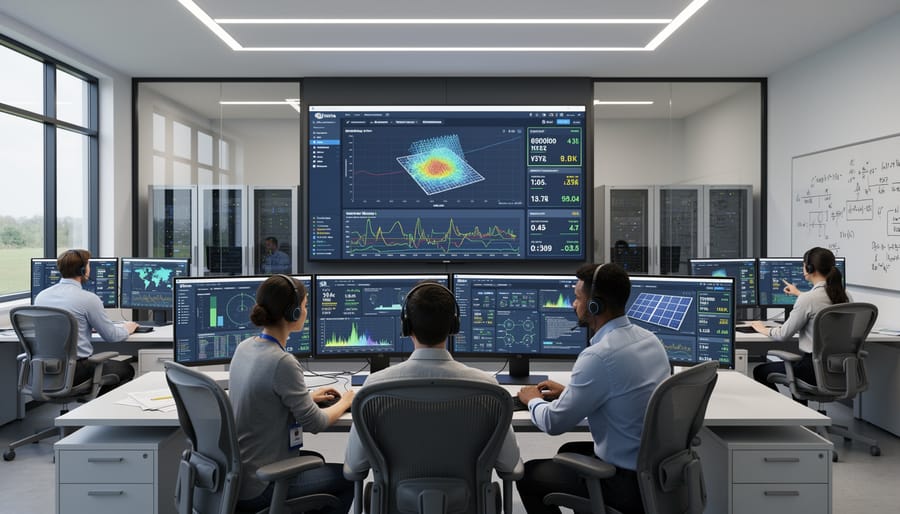
Quantum algorithms tackle weather prediction and energy forecasting problems that overwhelm classical computers. A single solar farm generates thousands of data points, temperature readings, cloud movements, atmospheric pressure variations, historical irradiance patterns, that interact in nonlinear ways. Traditional forecasting models must process these variables sequentially or make simplifying assumptions. Quantum systems exploit superposition to evaluate multiple weather scenarios simultaneously, testing how different atmospheric conditions propagate through time and affect solar panel output.
The computational advantage becomes clear with complex meteorological models. Quantum annealing approaches optimize irradiance predictions by mapping weather variables to qubit states, then finding the lowest-energy configuration that represents the most probable forecast. Early pilot programs in 2025 demonstrated 15-20% improvements in next-day solar output predictions compared to classical ensemble models, particularly during variable weather conditions when accuracy matters most for grid operators.
Current implementations combine quantum processors with AI forecasting systems, the quantum component handles the computationally intensive optimization of atmospheric models, while neural networks refine predictions using site-specific historical data. This hybrid approach addresses quantum computing’s current noise limitations while delivering measurable accuracy gains. Several utilities now test quantum-enhanced forecasting for large solar installations, processing satellite imagery, numerical weather models, and real-time sensor data to generate probabilistic production forecasts that inform energy trading decisions and reserve capacity planning.
Performance Optimization and Predictive Maintenance
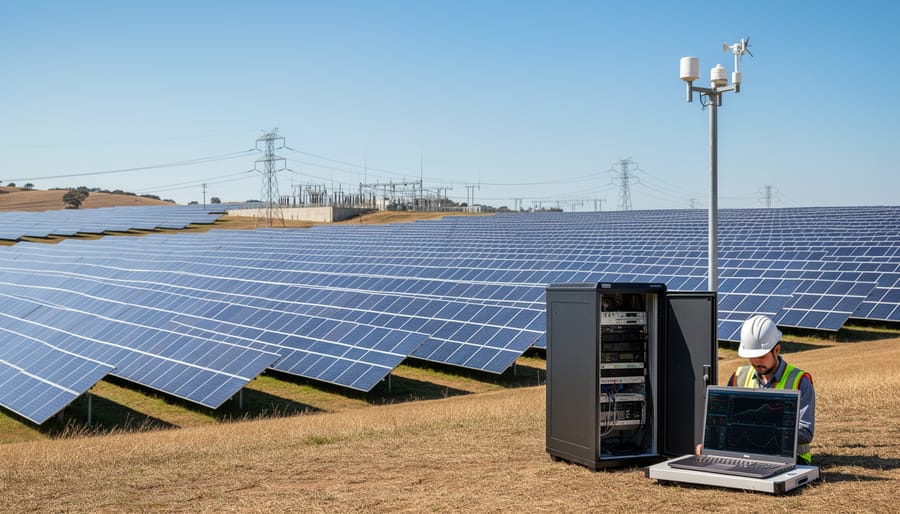
Quantum computers excel at analyzing the massive datasets generated by modern Solar PV IoT sensor networks, where thousands of data points flow continuously from individual panels, inverters, and environmental monitors. Unlike classical systems that process these streams sequentially, quantum algorithms can simultaneously evaluate multiple performance variables, voltage fluctuations, temperature anomalies, current deviations, and efficiency metrics, to detect subtle degradation patterns that precede equipment failures.
This capability transforms predictive maintenance from reactive to proactive. Quantum machine learning models can identify correlations invisible to traditional analytics: a specific combination of temperature cycles, humidity exposure, and electrical load that indicates imminent hotspot formation, or micro-degradation signatures that appear months before physical defects become visible. When integrated with digital twins quantum processors simulate thousands of operational scenarios simultaneously, predicting which components will fail under projected weather conditions and usage patterns.
The speed advantage matters for large portfolios. A quantum system can analyze ten years of historical performance data across a 500-megawatt installation in hours rather than weeks, uncovering degradation trends that classical machine learning approaches miss due to computational constraints. Several pilot programs in 2026 demonstrated 40% reductions in unplanned downtime by flagging maintenance needs 60-90 days earlier than conventional monitoring systems.
Grid Integration and Load Balancing
Grid integration presents one of solar energy’s most computationally demanding challenges: coordinating thousands of distributed PV installations, predicting their variable output, managing bidirectional power flows, and balancing supply with demand across entire regions, all in real time. Traditional algorithms struggle with the sheer complexity of optimizing these interconnected variables simultaneously. Quantum optimization algorithms excel at precisely this type of multivariate problem.
Quantum annealers, in particular, show promise for solving grid integration challenges. These systems can evaluate millions of potential configurations simultaneously to determine optimal energy routing from distributed solar arrays, coordinate battery storage charging and discharging cycles, and balance loads across transmission networks. Early pilot programs in 2026 demonstrate quantum computers finding better load-balancing solutions 40-60% faster than classical approaches, with improvements of 15-20% in overall grid efficiency.
The integration extends to coordinating DERMS platforms that manage behind-the-meter solar installations. Quantum algorithms can process real-time data from thousands of residential and commercial PV systems, optimizing when to feed power back to the grid, when to charge local batteries, and how to respond to demand response signals. This coordination becomes critical as distributed solar penetration increases beyond 30-40% of grid capacity.
Current quantum systems handle network optimization problems involving 1,000-2,000 nodes, sufficient for neighborhood-scale grids but not yet entire utility territories. However, researchers project that by 2028, quantum computers could optimize regional grids with 50,000+ connection points, fundamentally transforming how we manage renewable energy integration.
Benefits of Quantum Computing for PV Professionals
For aspiring and practicing photovoltaic professionals, quantum computing promises to fundamentally reshape how you approach complex analytical challenges. The most immediate benefit lies in processing speed: tasks that currently require weeks of computation on classical systems, such as analyzing years of performance data across thousands of panels, could be completed in hours or even minutes. This acceleration translates directly into faster decision-making, reduced project timelines, and the ability to test multiple scenarios before implementation rather than after installation.
Enhanced forecasting accuracy represents another critical advantage. Quantum algorithms can simultaneously evaluate countless atmospheric variables and historical patterns to predict solar irradiance with precision that current models cannot match. For project developers and operations managers, this means more reliable energy yield assessments, better financing terms, and optimized maintenance schedules that prevent costly downtime. When combined with existing energy optimization strategies, quantum-enhanced forecasting could reduce performance uncertainty from typical ranges of 8-12% down to 3-5%.
Career opportunities in this emerging field are expanding rapidly. As quantum computing becomes accessible through cloud platforms, PV professionals who understand both domains will command premium positions. Companies are already seeking specialists who can translate quantum capabilities into practical solar applications, roles that didn’t exist five years ago. Research institutions and utilities need professionals who can evaluate whether quantum solutions actually outperform classical approaches for specific problems, requiring both technical knowledge and cost-benefit judgment.
The competitive advantage matters too. Organizations that adopt quantum tools early will be positioned to handle the massive data volumes from increasingly instrumented solar installations, while competitors struggle with processing bottlenecks. For individual professionals, building quantum literacy now, even at a conceptual level, prepares you for an industry where these capabilities will become standard rather than exceptional.
Current Limitations and Challenges
Despite the promise, quantum computing faces substantial hurdles before it becomes a practical tool for solar PV analysis. Error rates remain the most pressing technical challenge. Current quantum systems experience decoherence, the loss of quantum states, within milliseconds or even microseconds. These errors accumulate rapidly during calculations, often requiring thousands of physical qubits to create a single reliable logical qubit through error correction. For context, solving optimization problems useful in solar forecasting might need tens of thousands of stable qubits, while today’s most advanced systems offer hundreds with high error rates.
Qubit stability compounds this problem. Quantum computers require extreme operating conditions, temperatures near absolute zero for superconducting systems, precise laser control for ion traps, and complete electromagnetic isolation. Maintaining these environments is technically demanding and extraordinarily expensive. A single quantum computer can cost $10-15 million, with ongoing operational expenses reaching hundreds of thousands annually.
Accessibility presents another barrier. Most quantum systems exist only in specialized research labs or are available through limited cloud platforms with restricted computing time. Aspiring PV professionals cannot simply purchase quantum hardware or expect immediate access for testing quantum solar applications.
The skills gap is equally challenging. Programming quantum computers requires expertise in quantum mechanics, linear algebra, and specialized languages like Qiskit or Cirq, knowledge most energy professionals lack. Universities are only beginning to develop quantum computing curricula relevant to renewable energy applications.
Perhaps most critically, quantum advantage remains elusive for many promised applications. Classical computers using optimized algorithms and modern GPUs often outperform current quantum systems for real-world solar data tasks. The theoretical speedup only materializes once quantum error correction matures and systems scale beyond 1,000 reliable logical qubits, a milestone likely years away.
The Future Outlook: 2026 and Beyond
As we stand in 2026, quantum computing for solar PV data analysis is transitioning from experimental curiosity to practical tool, though widespread adoption remains several years away. Current projections place utility-scale quantum advantage for complex energy forecasting around 2028-2030, with niche applications emerging sooner.
Error correction represents the critical bottleneck. Today’s quantum computers achieve error rates around 0.1-1% per gate operation, but most useful algorithms require rates below 0.01%. Logical qubit implementations, where multiple physical qubits work together to create one error-resistant qubit, are showing promise. IBM’s roadmap targets 100 logical qubits by 2029, sufficient for meaningful solar irradiance modeling that outperforms classical supercomputers. Google and other major players project similar timelines.
Cloud accessibility is accelerating faster than hardware improvements. Amazon Braket, Azure Quantum, and IBM Quantum already provide pay-per-use access to quantum processors, democratizing experimentation for research institutions and forward-thinking solar companies. By 2028, expect these platforms to offer pre-built quantum algorithms specifically for renewable energy optimization, similar to today’s machine learning toolkits. Monthly costs for modest quantum computing tasks should drop from thousands to hundreds of dollars as competition intensifies.
Hybrid classical-quantum systems will dominate the next decade. These architectures use quantum processors for specific bottleneck calculations, like optimizing grid configurations across millions of possible states, while classical computers handle data preparation, post-processing, and tasks where they remain superior. This pragmatic approach lets solar companies gain quantum advantages without abandoning existing infrastructure.
For solar PV specifically, expect quantum weather modeling to reach commercial viability by 2029, improving day-ahead forecasting accuracy by 15-25%. Maintenance prediction algorithms should follow by 2030-2031. Grid-scale optimization for distributed solar resources faces more complexity and likely won’t see quantum advantages until 2032 or later.
The skills gap poses a real challenge. Universities are expanding quantum computing curricula, but demand for quantum-literate energy professionals will outpace supply through at least 2030. Aspiring PV professionals who build even basic quantum literacy now position themselves advantageously. The technology won’t replace classical approaches wholesale; instead, quantum computing will become another specialized tool in the solar industry’s analytical toolkit, applied where exponential speedup justifies the cost and complexity.
Frequently Asked Questions
As quantum computing moves from theoretical promise to practical pilot projects in the solar energy sector, professionals and companies have urgent questions about what this technology means for their work and businesses. Understanding the current realities helps you make informed decisions about skill development and technology adoption.
Do I need quantum computing knowledge to build a career in solar PV?
No, you don’t need quantum computing expertise to succeed in the PV industry today or in the near future. Classical data analysis skills, understanding of solar system design, and knowledge of grid integration remain the core competencies employers seek, though familiarity with quantum concepts may become advantageous in specialized roles focused on advanced forecasting or large-scale optimization.
When will quantum computers become accessible to small and mid-sized solar companies?
Cloud-based quantum computing platforms from major providers are already accessible in 2026, but practical applications that deliver clear advantages over classical methods remain limited to specific optimization problems. Most small solar companies will likely access quantum capabilities through specialized software vendors who integrate quantum algorithms into user-friendly tools rather than directly programming quantum systems themselves, with this becoming more common between 2028 and 2030.
Can quantum computing actually reduce the cost of solar energy?
Quantum computing has the potential to lower costs indirectly by improving forecasting accuracy (reducing grid penalties and storage waste), optimizing panel placement and maintenance schedules, and enhancing manufacturing processes through materials simulation. However, these cost reductions won’t come from the quantum technology itself, which remains expensive, but from the better decisions and designs it enables across the solar value chain.
How reliable is quantum computing for critical energy infrastructure operations?
Current quantum systems have error rates too high for direct control of critical infrastructure, which is why hybrid approaches use quantum computers for optimization calculations that classical systems then verify and implement. Quantum computing in 2026 functions as a planning and analysis tool rather than a real-time operational system, with quantum-generated insights feeding into proven classical control systems that manage actual grid operations.
These practical realities matter because they shape how you should approach quantum computing as a PV professional. Rather than viewing it as an immediate requirement, treat quantum literacy as a long-term professional development investment. Organizations like Mose Solar partner with universities to offer educational programs that introduce these emerging technologies alongside core PV skills, ensuring aspiring professionals build a balanced foundation without getting distracted by technologies that won’t affect most jobs for several years.
The skills that will serve you best combine traditional solar engineering knowledge with computational thinking. Understanding optimization problems, data analysis principles, and how algorithms improve decision-making translates across both classical and quantum computing environments. When quantum applications mature to the point where they directly impact your work, you’ll have the conceptual framework to adopt new tools without needing to understand the quantum physics underneath, much as you can use advanced weather forecasting models today without comprehending every atmospheric calculation they perform.
Types or components
Every quantum computing system deployed for photovoltaic data processing comprises several essential hardware and software components working in concert.
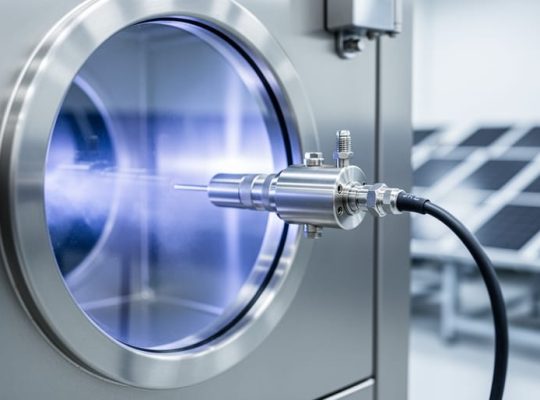
Quantum Processor Unit (QPU) forms the heart of the system, housing the physical qubits that perform computations. For solar applications in 2026, most accessible systems use superconducting qubits operating at temperatures near absolute zero, requiring sophisticated cryogenic refrigeration units to maintain quantum states during calculations.
Classical Control Systems manage quantum operations through precise microwave pulses and laser signals. These computers orchestrate gate operations, compile quantum algorithms into executable instructions, and handle error mitigation, crucial for maintaining calculation accuracy when processing complex solar irradiance models.
Quantum-Classical Interface Software translates solar PV optimization problems into quantum-compatible formats. This middleware layer converts meteorological datasets, grid constraints, and performance metrics into quantum circuits that the QPU can execute.
Error Correction Architecture monitors and compensates for quantum decoherence and operational errors. Physical qubits are grouped into logical qubits with redundancy protocols, essential for maintaining reliability when forecasting solar production patterns across extended timeframes.
Cloud Access Platform provides remote connectivity to quantum hardware, enabling PV professionals to submit analysis jobs without maintaining on-premise quantum infrastructure.
uses
Quantum computing serves multiple critical functions in solar PV data analysis that classical systems struggle to handle efficiently. In weather forecasting, quantum algorithms process enormous meteorological datasets simultaneously to generate more accurate solar irradiance predictions up to 72 hours in advance. For system optimization, quantum processors analyze millions of performance variables across distributed solar installations to identify optimal panel configurations and inverter settings that maximize energy capture.
Grid operators use quantum computing to solve complex load balancing equations, determining how to integrate fluctuating solar output with demand patterns while maintaining grid stability. Predictive maintenance applications leverage quantum machine learning to detect subtle degradation patterns in sensor data, flagging components likely to fail weeks before traditional analytics would catch issues.
Research institutions apply quantum simulation to model new photovoltaic materials at the molecular level, accelerating the development of higher-efficiency solar cells. Financial analysts employ quantum optimization algorithms to evaluate investment portfolios across thousands of solar projects simultaneously, identifying the most promising opportunities based on location, technology type, and market conditions.
Quantum computing stands at the threshold of transforming solar PV data analysis, yet it remains a developing technology rather than a ready-made solution. Throughout 2026, we’ve witnessed significant advances in quantum error correction and hybrid classical-quantum systems, but the practical applications in photovoltaic analysis are still largely exploratory. The most immediate value comes from hybrid approaches that combine quantum algorithms for specific optimization tasks with classical computing for broader data processing workflows.
For aspiring photovoltaic professionals, this emerging landscape presents both opportunity and responsibility. Understanding quantum computing fundamentals now positions you to leverage these tools as they mature over the coming decade. The technology’s potential to revolutionize weather forecasting accuracy, optimize grid integration strategies, and predict maintenance needs with unprecedented precision makes it impossible to ignore, even while acknowledging current limitations in qubit stability and accessibility.
The path forward requires balanced engagement. Building foundational knowledge in quantum principles, algorithms, and their specific applications to energy systems will prove valuable regardless of how quickly full-scale quantum advantages materialize. Educational programs like those offered by Mose Solar, developed in collaboration with universities at the forefront of renewable energy research, provide structured pathways to understand these complex systems without requiring expertise in quantum physics.
Rather than waiting for quantum computing to fully arrive, start integrating awareness of quantum-enhanced approaches into your professional development today. Follow pilot programs, understand which problems quantum systems genuinely solve better than classical methods, and cultivate the analytical mindset that will allow you to evaluate new quantum tools critically as they emerge. The quantum revolution in solar PV analysis is coming, and those who prepare now will shape how it unfolds.