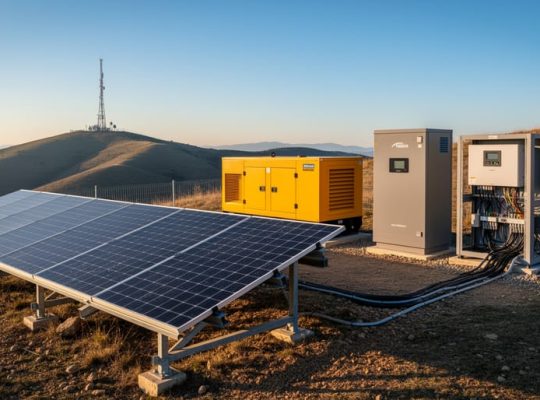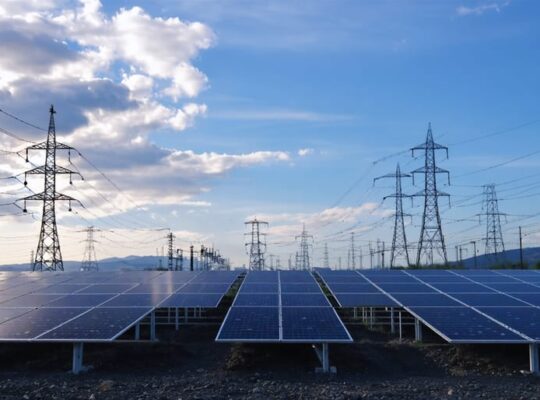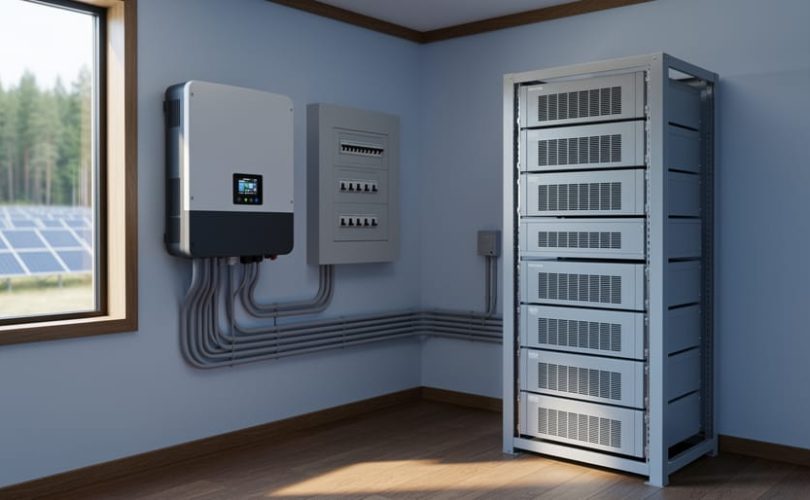
Three-phase solar inverters represent a critical technology advancement for professionals designing high-capacity renewable energy installations, particularly in hybrid and off-grid PV systems where balanced power distribution and system efficiency are paramount. These sophisticated devices convert direct current from solar arrays into three separate alternating current phases, each offset by 120 degrees, enabling superior performance in commercial, industrial, and large residential applications.
Understanding three-phase inverter technology becomes essential when system loads exceed 10 kW or when powering three-phase equipment such as industrial motors, HVAC systems, and heavy machinery. Unlike single-phase alternatives, these inverters distribute power across three conductors simultaneously, reducing current per phase by approximately 58 percent and minimizing transmission losses while enhancing overall system stability.
The strategic implementation of three-phase inverters in non-grid-tied applications addresses fundamental challenges that system designers encounter: voltage stability during high-load demands, reduced conductor sizing requirements, and seamless integration with battery storage systems. Modern hybrid three-phase inverters incorporate advanced maximum power point tracking algorithms, ensuring optimal energy harvest even under partial shading conditions while managing battery charge cycles with precision.
This comprehensive examination explores the technical foundations, operational advantages, and practical design considerations that distinguish three-phase inverter technology in standalone power systems, equipping professionals with the knowledge to specify, design, and implement robust renewable energy solutions that meet demanding performance requirements across diverse applications.
Understanding 3-Phase Solar Inverter Technology
How 3-Phase Inverters Differ from Single-Phase Systems
Understanding the fundamental differences between 3-phase and single-phase inverter systems is essential for proper solar installation design and optimization. These configurations vary significantly in their technical architecture and operational characteristics.
Single-phase inverters distribute electrical power through two conductors, delivering alternating current at 120V or 240V depending on the regional standard. This configuration works well for residential applications with modest energy demands, typically up to 10 kW. However, the power delivery fluctuates in a sinusoidal wave pattern, creating momentary power variations that can affect sensitive equipment.
In contrast, 3-phase inverters utilize three separate conductors, each carrying alternating current offset by 120 degrees from the others. This phase separation creates a continuous, balanced power flow that significantly reduces voltage fluctuations and harmonic distortion. The combined output delivers smoother power with a constant magnitude, making these systems ideal for commercial and industrial installations requiring higher capacity and consistent power quality.
The voltage balancing mechanism in 3-phase systems represents a critical advantage. Each phase operates independently while maintaining synchronized timing, distributing the electrical load evenly across all three conductors. This balanced distribution minimizes neutral conductor current and reduces transmission losses, achieving efficiency gains of 2-5% compared to equivalent single-phase configurations.
Power distribution characteristics also differ substantially. While a single-phase 10 kW inverter experiences peak power moments that stress components, a 3-phase inverter of equivalent capacity distributes that load across three phases, reducing thermal stress and extending equipment lifespan. This load distribution enables 3-phase systems to handle higher aggregate power levels—often ranging from 15 kW to several megawatts—while maintaining component reliability.
For off-grid and hybrid applications, 3-phase inverters provide superior motor starting capability and support for three-phase loads like industrial pumps, HVAC systems, and manufacturing equipment, capabilities that single-phase systems simply cannot replicate efficiently.
Core Components and Conversion Process
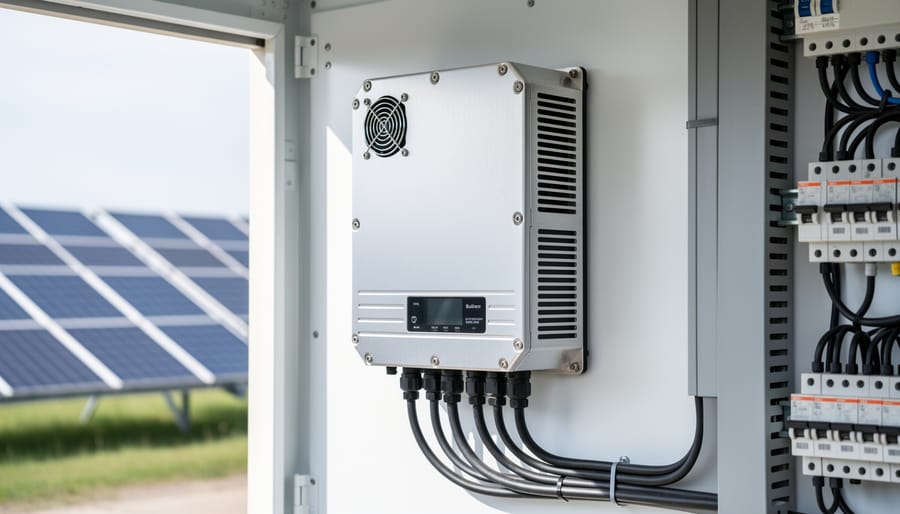
The architecture of a 3-phase solar inverter comprises several sophisticated components working in synchronization to convert direct current from photovoltaic arrays into three-phase alternating current. At the foundation lies the DC-AC conversion mechanism, which utilizes advanced semiconductor switches—typically insulated-gate bipolar transistors (IGBTs) or silicon carbide (SiC) MOSFETs—to rapidly modulate the incoming DC voltage. These switches operate at frequencies ranging from 4 kHz to 20 kHz, creating pulse-width modulated waveforms that approximate sinusoidal AC output across three phases offset by 120 degrees.
The control system serves as the inverter’s intelligence center, incorporating digital signal processors (DSPs) or microcontrollers that continuously monitor voltage, current, and frequency parameters. This sophisticated control architecture implements maximum power point tracking algorithms to optimize energy harvest from solar arrays while maintaining precise phase synchronization and voltage regulation. The control circuitry also manages protection functions including over-voltage, under-voltage, and islanding detection protocols.
Additional critical components include DC link capacitors that stabilize input voltage fluctuations, electromagnetic interference filters ensuring power quality compliance, and thermal management systems dissipating heat generated during conversion. Modern designs integrate communication interfaces enabling remote monitoring and grid interaction capabilities. The combined efficiency of these components typically achieves conversion rates exceeding 97 percent in premium units, minimizing energy losses during the transformation process. Understanding these core elements enables professionals to evaluate system specifications and optimize performance for hybrid and off-grid applications.
The Role of 3-Phase Inverters in Hybrid Solar Systems
Battery Storage Integration
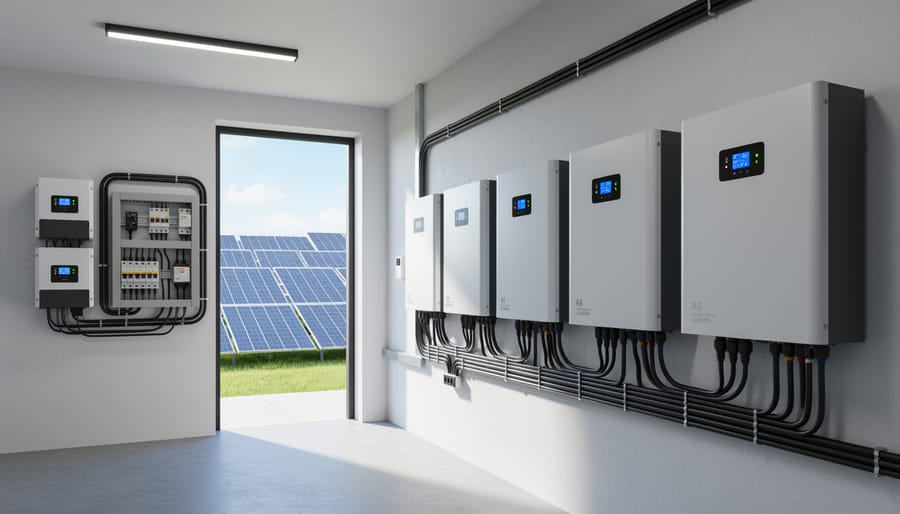
Modern hybrid solar systems equipped with 3-phase inverters have transformed how renewable energy integrates with battery banks, enabling sophisticated power management across multiple energy sources and loads. These advanced inverters coordinate bidirectional power flow, allowing seamless transitions between solar generation, battery discharge, and grid interaction while maintaining balanced phase distribution.
At the core of battery storage integration lies the inverter’s ability to manage DC-coupled or AC-coupled battery configurations. In DC-coupled systems, the inverter directly interfaces with both the solar array and battery bank through integrated charge controllers, optimizing conversion efficiency by minimizing power transformation stages. AC-coupled configurations offer greater installation flexibility, particularly in retrofit applications where existing solar infrastructure requires battery augmentation.
The bidirectional conversion capability enables 3-phase inverters to charge batteries from excess solar production while simultaneously supplying loads across all three phases. Advanced power management algorithms continuously monitor system parameters including state of charge, load demand, solar production, and grid availability. This intelligent coordination ensures optimal energy utilization, prioritizing solar consumption, battery storage during surplus generation, and strategic discharge during peak demand periods or grid outages.
Phase balancing becomes particularly critical in battery-integrated systems, as unequal load distribution can compromise system efficiency and battery longevity. Modern 3-phase hybrid inverters employ sophisticated load monitoring across each phase, dynamically adjusting battery discharge rates to maintain equilibrium. This prevents voltage imbalances that could trigger protective disconnections or accelerate component degradation.
Research collaborations between inverter manufacturers and academic institutions continue advancing battery communication protocols, enabling predictive charging strategies based on weather forecasting and consumption patterns. These innovations maximize system autonomy while extending battery lifecycle through optimized charge-discharge cycles tailored to specific application requirements.
Grid-Interactive Features and Backup Capabilities
Three-phase solar inverters integrate sophisticated grid-interactive features that ensure safe, reliable operation while maintaining power quality standards. These capabilities are particularly critical for commercial and industrial installations where seamless coordination with utility infrastructure is essential.
Anti-islanding protection represents a fundamental safety requirement for grid-connected systems. This technology immediately detects grid outages and disconnects the inverter within two seconds, preventing dangerous backfeeding conditions that could endanger utility workers. Three-phase systems employ advanced detection methods including voltage and frequency monitoring across all phases simultaneously, impedance measurement techniques, and active frequency drift algorithms. Modern implementations utilize multiple redundant detection layers to achieve detection times under 100 milliseconds, exceeding regulatory requirements while ensuring worker safety.
Seamless transfer switching technology enables uninterrupted power delivery during grid disturbances. When properly configured with battery storage, three-phase hybrid inverters can transition between grid-connected and backup modes in under 20 milliseconds, maintaining critical loads without perceptible interruption. This rapid transfer capability proves invaluable for facilities requiring continuous operation, such as data centers, healthcare facilities, and manufacturing plants with sensitive equipment.
Grid support functions have become increasingly important as utility interactive inverters play larger roles in power system stability. Three-phase inverters now incorporate reactive power compensation, voltage regulation support, and frequency response capabilities. These features allow systems to provide ancillary services including volt-var optimization, frequency-watt response, and dynamic grid stabilization. Advanced models support programmable power factor ranges from 0.8 leading to 0.8 lagging, enabling utilities to manage distributed generation resources effectively while maintaining system reliability standards across increasingly complex distribution networks.
Recent Innovations in 3-Phase Inverter Technology
Advanced Power Electronics and Efficiency Gains
Modern 3-phase solar inverters leverage cutting-edge semiconductor technology to achieve unprecedented efficiency levels. Silicon carbide (SiC) and gallium nitride (GaN) semiconductors have revolutionized power conversion by operating at higher switching frequencies with significantly lower energy losses compared to traditional silicon-based components. These wide-bandgap materials withstand elevated temperatures and voltages, enabling more compact designs while reducing thermal management requirements.
SiC semiconductors excel in high-power applications, offering switching speeds up to ten times faster than conventional silicon. This translates to reduced switching losses and improved power density. GaN technology, while typically employed in lower-power ranges, provides exceptional efficiency gains in residential and light commercial installations. Both materials enable inverters to maintain peak performance across varying load conditions.
Multi-level topology designs represent another advancement in 3-phase inverter technology. These configurations use multiple voltage levels to create smoother output waveforms, reducing harmonic distortion and electromagnetic interference. Three-level and five-level topologies have become increasingly common, delivering cleaner power while minimizing filtering requirements. The reduced harmonic content particularly benefits sensitive equipment in off-grid installations.
Leading manufacturers now routinely achieve conversion efficiencies exceeding 98 percent, with some models reaching 98.8 percent. This represents a substantial improvement from earlier generations that typically operated at 94-96 percent efficiency. Through collaborative research with universities, the industry continues pushing efficiency boundaries while developing educational programs to train professionals in these advanced technologies. These gains directly translate to increased energy harvest and improved system economics across hybrid and off-grid applications.
Smart Monitoring and AI-Driven Optimization
Modern three-phase solar inverters increasingly incorporate sophisticated monitoring and optimization capabilities that transform system performance and reliability. Internet of Things (IoT) connectivity enables remote diagnostics and real-time data transmission, allowing system operators to monitor voltage levels, current flow, power output, and efficiency metrics across all three phases simultaneously from any location. This connectivity proves particularly valuable in hybrid and off-grid installations where system reliability directly impacts energy security.
Advanced predictive maintenance algorithms analyze operational data patterns to identify potential component failures before they occur. These systems monitor variables such as capacitor degradation rates, thermal stress patterns, and switching frequency anomalies, enabling proactive maintenance scheduling that minimizes downtime and extends equipment lifespan. Research collaborations between inverter manufacturers and university engineering departments have refined these algorithms to achieve failure prediction accuracy exceeding 85 percent in field conditions.
Real-time performance analytics provide granular insights into system efficiency, comparing actual output against theoretical performance under current environmental conditions. These analytics help identify issues such as unbalanced phase loading, partial shading effects, or suboptimal battery charging profiles in hybrid configurations.
Adaptive Maximum Power Point Tracking (MPPT) strategies represent a significant advancement, utilizing machine learning algorithms to optimize power extraction under varying conditions. Unlike conventional MPPT controllers that follow predetermined algorithms, adaptive systems learn from historical performance data and adjust tracking strategies based on site-specific conditions, seasonal variations, and array characteristics. Educational programs now incorporate training on these advanced optimization techniques, preparing professionals to implement and maintain next-generation three-phase inverter systems effectively.
Enhanced Safety and Grid Compliance Features
Modern three-phase solar inverters incorporate sophisticated safety mechanisms that exceed contemporary grid requirements and protect both personnel and equipment. Rapid shutdown systems now respond within seconds of detecting abnormal conditions, automatically de-energizing DC conductors to safeguard emergency responders and maintenance personnel during system interventions.
Arc-fault detection technology represents a significant advancement in fire prevention. These intelligent monitoring systems continuously analyze electrical signatures, identifying potentially hazardous arc conditions before they escalate into serious safety incidents. When detected, the inverter immediately interrupts the circuit and logs the event for subsequent analysis.
Compliance with updated IEEE 1547-2018 standards ensures seamless grid interaction through advanced functions including autonomous voltage regulation and frequency-watt response. These capabilities enable inverters to actively support grid stability rather than simply disconnecting during minor disturbances.
Enhanced voltage ride-through capabilities allow systems to remain operational during voltage sags and swells, maintaining power delivery when the grid experiences temporary irregularities. This resilience proves particularly valuable in hybrid configurations where continuity matters most. Many manufacturers now collaborate with universities to validate these safety features through rigorous testing protocols, ensuring reliability across diverse installation scenarios while supporting educational program offerings that train the next generation of photovoltaic professionals in proper system design and compliance verification.
Sizing and Design Considerations for Off-Grid Applications
Load Analysis and Power Requirements
Accurate load analysis forms the foundation of effective three-phase inverter sizing for off-grid installations. Begin by cataloging all connected equipment, noting their continuous power requirements in watts and startup surge characteristics. Motor-driven appliances—including pumps, compressors, and workshop machinery—typically demand surge currents ranging from three to seven times their rated capacity during initial startup, a critical consideration often underestimated in preliminary assessments.
Calculate total continuous load by summing the operating wattage of all simultaneously running devices across the three phases. For balanced system performance, distribute loads evenly, aiming for variance no greater than 10-15 percent between phases. Unbalanced loading creates neutral current flow and reduces overall inverter efficiency while potentially triggering protective shutdowns.
Motor loads warrant special attention in off-grid environments. A 2-horsepower water pump rated at 1,500 watts continuous may require 9,000 watts momentarily during startup. Modern three-phase inverters accommodate these demands through surge capacity ratings, typically specified for duration periods of two to five seconds. Verify that inverter surge specifications exceed your highest anticipated starting load with appropriate safety margin.
Agricultural and industrial applications frequently incorporate multiple motors cycling on and off throughout operational periods. Document duty cycles—the percentage of time equipment operates versus remains idle—to establish realistic power profiles. This analysis prevents oversizing, which increases capital costs unnecessarily, while ensuring adequate capacity during peak demand scenarios. Educational institutions collaborating with renewable energy programs provide valuable resources and calculation tools for comprehensive load assessment methodologies.
Matching Inverter Capacity with PV Array and Battery Bank
Proper inverter sizing requires careful consideration of three critical parameters: voltage compatibility, DC-AC ratio, and battery discharge rates. Understanding these relationships ensures optimal system performance and extended component lifespan in 3-phase off-grid and hybrid installations.
Voltage compatibility forms the foundation of successful system integration. The inverter’s maximum power point tracking (MPPT) voltage window must align with the PV array’s operating voltage range across varying temperature conditions. For 3-phase systems, this becomes particularly important as string configurations must accommodate the higher power throughput. Verify that your array’s open-circuit voltage never exceeds the inverter’s maximum DC input voltage, even during cold winter mornings when voltage peaks occur.
The DC-AC ratio, or inverter loading ratio, represents the relationship between installed PV capacity and inverter output rating. While traditional grid-tied systems often accept ratios up to 1.4:1, off-grid configurations typically maintain more conservative ratios between 1.1:1 and 1.3:1. This approach prevents excessive power clipping while ensuring adequate inverter capacity during peak demand periods when battery support becomes necessary. Research programs conducted in collaboration with universities have demonstrated that optimized DC-AC ratios can improve system economics by 8-12% over 20-year operational periods.
Battery C-rate considerations directly impact system longevity. The C-rate defines charging and discharging speeds relative to battery capacity. Most lithium-ion batteries tolerate continuous discharge rates of 0.5C to 1C, meaning a 10kWh battery can safely deliver 5-10kW continuously. Your 3-phase inverter’s maximum charge and discharge currents must align with these specifications. Exceeding recommended C-rates accelerates degradation, potentially reducing battery lifespan by 30-40%. Educational program offerings from manufacturers often include sizing calculators that account for these thermal and electrical constraints, enabling precise component matching for reliable long-term operation.
Performance Benefits in Off-Grid and Hybrid Installations
Higher Power Handling and Reduced Current Loads
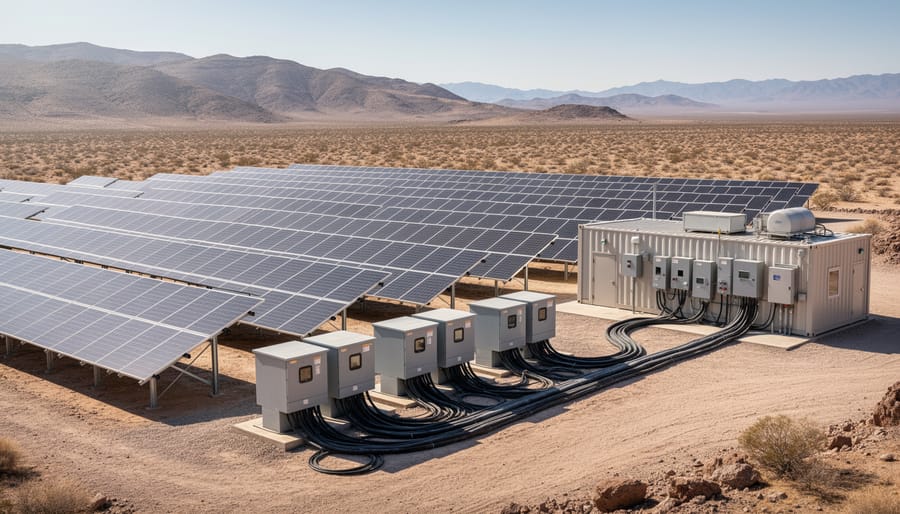
Three-phase solar inverters offer significant advantages in power handling capacity by distributing electrical loads across three separate conductors rather than concentrating them in a single phase. This fundamental design principle allows each phase to carry approximately one-third of the total system current, effectively reducing the amperage requirements per conductor. For instance, a 30-kilowatt system operating at 400 volts three-phase requires only about 43 amperes per phase, compared to 125 amperes in a single-phase configuration at 240 volts.
This current distribution translates directly into reduced conductor sizing requirements. Lower current loads permit the use of smaller gauge wiring throughout the installation, reducing material costs and simplifying cable management in confined spaces. The reduced current flow also minimizes resistive losses and heat generation within conductors, improving overall system efficiency while extending component lifespan.
Thermal stress reduction represents another critical benefit for off-grid and hybrid applications where equipment reliability is paramount. By spreading heat generation across three phases, inverters operate at lower junction temperatures, reducing thermal cycling stress on semiconductor components. This thermal advantage becomes particularly valuable in remote installations where maintenance access is limited and component longevity directly impacts long-term system economics. Research collaboration with universities has validated that three-phase systems typically demonstrate 15-20 percent lower operating temperatures under equivalent load conditions.
Improved Motor Efficiency and Industrial Equipment Compatibility
Three-phase solar inverters provide seamless integration with commercial and industrial equipment designed for three-phase power systems. Unlike single-phase inverters that require costly phase converters or specialized equipment modifications, these inverters deliver power in the exact format required by most industrial motors, commercial HVAC systems, and heavy-duty pumps. This direct compatibility eliminates conversion losses and reduces system complexity, making off-grid and hybrid installations more practical for commercial applications.
Industrial three-phase motors operate with significantly higher efficiency when powered directly by three-phase inverters, as the balanced load distribution across all three phases reduces heat generation and mechanical stress. Agricultural operations benefit particularly from this advantage, as irrigation pumps and processing equipment can run at optimal performance levels without grid dependence. The consistent power delivery also extends equipment lifespan by minimizing voltage imbalances and current fluctuations that commonly occur with phase converter solutions.
For system designers working on commercial-scale renewable energy projects, this compatibility streamlines equipment selection and reduces installation costs. Research partnerships with universities have documented efficiency improvements of 15-20 percent in motor-driven applications when comparing direct three-phase inverter power to converted single-phase alternatives, making these systems economically advantageous for energy-intensive operations.
Enhanced System Reliability and Redundancy
Three-phase solar inverters deliver superior fault tolerance compared to single-phase systems through inherent phase redundancy. When one phase experiences technical issues or component failure, the remaining two phases continue generating power, ensuring partial system operation rather than complete shutdown. This redundancy proves particularly valuable in off-grid installations where continuous power availability is critical for essential loads.
The distributed architecture across three phases means system degradation occurs gradually rather than catastrophically. If a single phase fails, the inverter can continue operating at approximately 66% capacity, providing sufficient power for priority appliances while repairs are arranged. Advanced inverters incorporate intelligent monitoring systems that detect phase imbalances or anomalies, automatically redistributing loads and alerting operators to potential issues before complete failure occurs.
This resilience makes three-phase inverters especially suitable for remote installations, medical facilities, data centers, and agricultural operations where power continuity directly impacts operations and safety. The ability to maintain partial functionality during component failures significantly reduces downtime costs and enhances overall system dependability in mission-critical applications.
Installation and Commissioning Best Practices
Electrical Configuration and Safety Protocols
Establishing proper electrical configuration and adhering to stringent safety protocols represents a critical foundation for reliable 3-phase solar inverter installations. Professional installers must prioritize comprehensive grounding techniques that protect both equipment and personnel from electrical hazards while ensuring optimal system performance.
Grounding begins with establishing a low-impedance path to earth for all conductive components. The equipment grounding conductor must connect the inverter chassis, array frame, and all exposed metallic surfaces to a dedicated grounding electrode system. According to National Electrical Code requirements, grounding electrode conductors for 3-phase systems typically require larger wire gauges due to increased fault current capabilities. A proper grounding system also minimizes electromagnetic interference and reduces the risk of ground faults that could compromise system integrity.
Phase rotation verification ensures correct motor operation in pump systems and prevents equipment damage. Technicians should employ phase sequence indicators or digital multimeters capable of rotation testing before energizing the complete system. Incorrect phase sequencing can result in reverse motor rotation, reduced efficiency, and potential mechanical failure in connected loads.
Compliance with electrical codes extends beyond basic safety requirements. Local jurisdictions may mandate specific disconnect switches, overcurrent protection devices rated for DC and AC circuits, and arc-fault circuit interrupters for enhanced fire protection. Documentation of all electrical configurations, including single-line diagrams and load calculations, facilitates inspection approval and future maintenance activities.
Through collaboration with universities and electrical engineering programs, industry professionals continue developing enhanced safety standards that reflect evolving technology and real-world installation experiences, ensuring best practices remain current and accessible to aspiring photovoltaic professionals.
Testing and System Validation
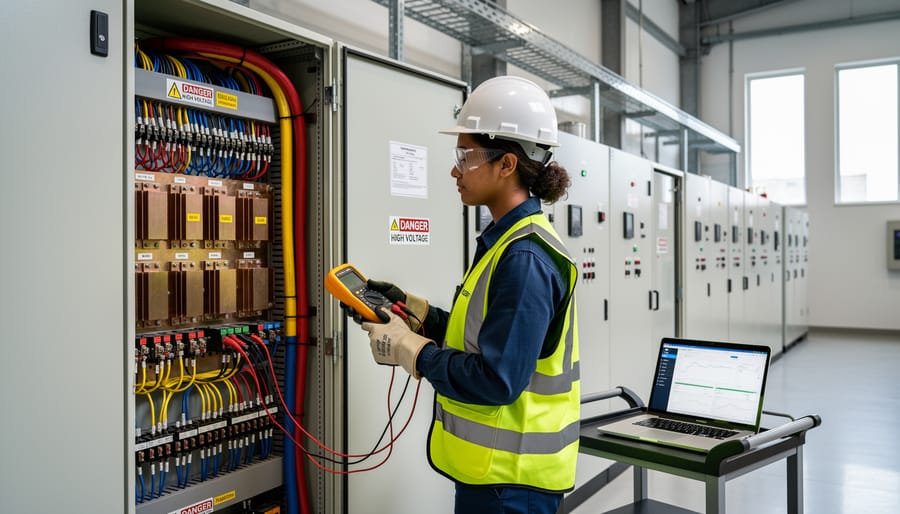
Proper commissioning ensures optimal performance and system longevity. Before energizing a 3-phase solar inverter, conduct comprehensive pre-startup inspections. Begin with voltage balance testing across all three phases, verifying that voltage deviation remains within manufacturer specifications, typically under 2%. This measurement prevents operational inefficiencies and potential equipment damage from unbalanced loading conditions.
Insulation resistance verification represents a critical safety parameter. Using a megohmmeter, test between DC input terminals and ground, then between AC output phases and ground. Acceptable readings typically exceed 1 megohm, though specific requirements vary by regional electrical codes and manufacturer guidelines. Document all measurements for compliance records and future reference.
Performance baseline establishment involves recording initial operating parameters under various load conditions. Monitor power conversion efficiency, harmonic distortion levels, and thermal performance during initial operation cycles. These benchmarks become invaluable for identifying performance degradation over the system’s operational lifetime.
Functional testing should include grid synchronization verification for grid-tied modes, battery charging algorithm validation for hybrid configurations, and islanding protection mechanisms. Many academic institutions collaborating on photovoltaic research emphasize systematic documentation during commissioning phases, enabling continuous improvement in installation practices. Educational programs frequently incorporate these validation procedures as essential competencies for emerging professionals in the renewable energy sector.
Economic and Environmental Impact Analysis
Total Cost of Ownership Comparison
When evaluating 3-phase solar inverters for hybrid and off-grid applications, the total cost of ownership extends well beyond the initial purchase price. While single-phase inverters may appear more economical upfront, 3-phase systems typically demonstrate superior long-term value, particularly in commercial and industrial installations.
Initial investment costs for 3-phase inverters range from 15-30% higher than comparable single-phase units, reflecting their advanced power electronics and robust construction. However, this premium is offset by significant operational advantages. Three-phase systems exhibit higher conversion efficiencies (typically 97-98%), reducing energy losses and maximizing power harvest over the system’s lifespan. Additionally, balanced load distribution across three phases minimizes thermal stress on components, extending operational life expectancy to 15-20 years compared to 10-15 years for single-phase alternatives.
Maintenance requirements remain relatively modest, with most quality 3-phase inverters requiring only periodic inspections and occasional component replacements. The modular design of many commercial units facilitates cost-effective repairs without complete system replacement. Grid-interactive hybrid systems may incur additional costs for monitoring equipment and utility interconnection, but these investments enable revenue generation through feed-in tariffs or demand charge management. When calculating lifecycle economics, 3-phase inverters consistently demonstrate lower cost per kilowatt-hour delivered, making them the preferred choice for installations exceeding 10kW capacity where performance reliability and longevity justify the premium.
Carbon Footprint Reduction and Energy Independence
Three-phase solar inverters deliver measurable environmental benefits through significant carbon footprint reduction. A typical 10kW three-phase system offsets approximately 12-15 metric tons of CO2 annually, equivalent to removing two to three passenger vehicles from roads. Over a 25-year operational lifespan, this translates to preventing 300-375 tons of greenhouse gas emissions, contributing substantively to climate change mitigation efforts.
These systems advance energy independence by enabling decentralized power generation at residential, commercial, and industrial scales. In off-grid configurations, three-phase inverters eliminate reliance on fossil fuel-powered generators, particularly benefiting remote communities and agricultural operations. Hybrid installations reduce grid dependency by 60-80%, enhancing energy security while stabilizing local distribution networks.
Academic research partnerships with universities have quantified that distributed three-phase solar infrastructure reduces transmission losses by 8-12% compared to centralized generation, as power is consumed near production points. Educational programs emphasizing lifecycle assessments demonstrate that manufacturing energy costs are typically recovered within 2-3 years of operation, establishing favorable energy payback ratios. This decentralized approach strengthens grid resilience, reduces infrastructure strain, and democratizes renewable energy access across diverse geographic and socioeconomic contexts.
The transformative potential of 3-phase solar inverter technology represents a significant milestone in advancing both off-grid and hybrid solar systems. As renewable energy infrastructure continues to evolve, these sophisticated devices have emerged as critical enablers of reliable, scalable power solutions for residential, commercial, and industrial applications. Their ability to deliver balanced power distribution, enhanced efficiency, and superior system resilience positions them at the forefront of sustainable energy innovation.
However, realizing the full benefits of 3-phase inverter technology requires more than merely installing equipment. The complexity of these systems demands comprehensive understanding of electrical principles, system integration, and troubleshooting protocols. Proper implementation hinges on well-trained photovoltaic professionals who can navigate the technical challenges of hybrid and off-grid installations with confidence and precision.
Educational advancement remains paramount for the industry’s continued growth. Many universities have recognized this need, establishing partnerships with renewable energy institutions to develop specialized training programs. These collaborations provide aspiring PV professionals with hands-on experience, theoretical knowledge, and practical skills essential for successful system deployment. Access to structured educational resources, combined with real-world project exposure, ensures that the next generation of solar professionals can confidently tackle increasingly sophisticated energy challenges.
As 3-phase inverter technology continues advancing, investing in professional development and education will prove instrumental in maximizing system performance, ensuring safety compliance, and accelerating the global transition toward clean, renewable energy solutions.