When a typhoon destroys solar panels awaiting installation, when government regulations suddenly prohibit grid connections, or when a pandemic halts construction for months, solar projects face events beyond any party’s control. These scenarios invoke force majeure and change-in-law provisions—contractual safeguards that determine who bears the financial burden when the impossible or unforeseeable occurs.
Force majeure, French for “superior force,” excuses contractual performance when extraordinary events make obligations impossible or impracticable to fulfill. In photovoltaic projects, these clauses protect developers, contractors, and investors from liability when natural disasters, political upheaval, or pandemics disrupt timelines and deliverables. Change-in-law provisions address a related but distinct risk: regulatory shifts that fundamentally alter project economics or feasibility after contract execution.
Understanding these provisions is essential for anyone involved in solar project development. A poorly drafted force majeure clause can leave developers financially exposed during crises, while an overly broad one may enable contractors to escape legitimate obligations. Similarly, change-in-law allocations determine whether developers or investors absorb losses when governments modify feed-in tariffs, impose new environmental requirements, or alter permitting processes.
The solar industry’s rapid growth has exposed critical gaps in how these risks are allocated. Recent global events—from COVID-19 supply chain disruptions to sudden tariff implementations—have transformed theoretical contract language into disputed claims worth millions. Project stakeholders now recognize that standard boilerplate provisions often fail to address the unique challenges of renewable energy development.
This article examines how force majeure and change-in-law clauses function in solar contracts, identifies common allocation strategies among developers, contractors, and financiers, and provides actionable guidance for negotiating provisions that protect legitimate interests while maintaining project viability.
What Force Majeure Actually Means in Solar Energy Contracts
The Legal Definition and Origins
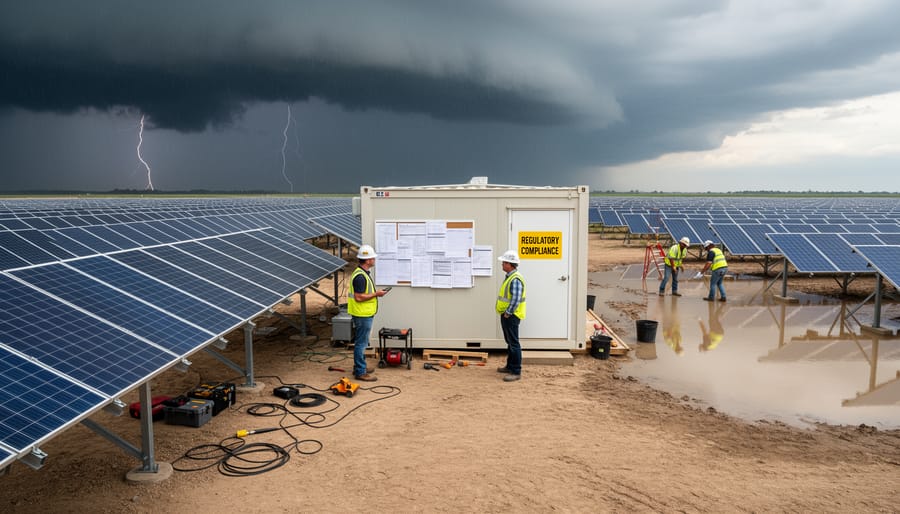
Force majeure, derived from French meaning “superior force,” refers to unforeseeable circumstances that prevent parties from fulfilling contractual obligations. In legal terms, it encompasses extraordinary events beyond reasonable control, including natural disasters, wars, government actions, or other catastrophic occurrences that make contract performance impossible or impracticable.
Within modern energy contracts, particularly in photovoltaic projects, force majeure clauses serve as critical risk allocation mechanisms. These provisions excuse non-performance when specified events occur, protecting parties from liability for delays or failures caused by circumstances beyond their control. The clause typically requires three elements: the event must be unforeseeable, unavoidable, and render performance impossible.
In solar energy agreements, force majeure provisions have evolved to address industry-specific challenges. Project developers, equipment suppliers, and power purchasers incorporate these clauses to manage risks associated with extreme weather events, regulatory changes, supply chain disruptions, and grid connectivity issues. Unlike traditional commercial contracts, photovoltaic agreements often require precise definitions of qualifying events, notification procedures, and mitigation obligations. Understanding these legal foundations enables aspiring professionals to navigate contract negotiations effectively and protect project stakeholders from unforeseen disruptions that could otherwise jeopardize project viability and financial returns.
Typical Force Majeure Events in Solar Projects
Solar projects face numerous force majeure events that can disrupt timelines, budgets, and contractual obligations. Understanding these triggers is essential for proper risk allocation and contract drafting.
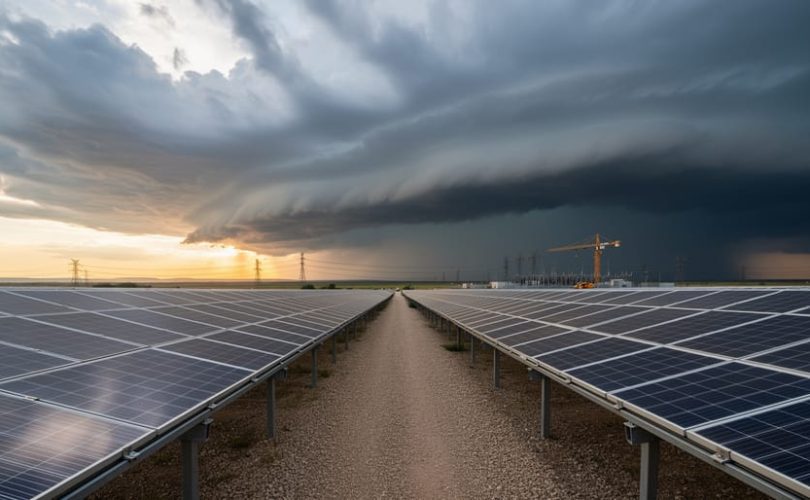
Natural disasters represent the most traditional category, including earthquakes, floods, hurricanes, and wildfires that can damage solar installations or prevent site access. The increasing frequency of extreme weather events due to climate change has made these provisions particularly relevant for photovoltaic projects. Tornadoes and hailstorms pose specific risks to solar panels and mounting structures, potentially causing significant equipment damage.
Pandemics, as demonstrated by COVID-19, can halt construction activities, disrupt global supply chains, and prevent personnel from accessing project sites. The solar industry experienced widespread delays in module deliveries and installation schedules during 2020-2021, highlighting the importance of pandemic-related force majeure clauses.
Wars, civil unrest, and terrorism can prevent project execution, particularly in politically unstable regions. These events may also trigger export restrictions on critical solar components.
Labor strikes and lockouts can significantly impact project timelines, especially when they affect manufacturers of specialized photovoltaic equipment or transportation networks crucial for module delivery.
Government actions including regulatory changes, permit denials, import restrictions, and transmission interconnection delays frequently affect solar projects. Supply chain disruptions specific to the solar industry include polysilicon shortages, shipping container unavailability, and semiconductor chip scarcity affecting inverter production. Module manufacturers’ bankruptcy or facility closures can also constitute force majeure events when they prevent contractual fulfillment.
Change-in-Law Provisions: The Regulatory Wild Card
How Regulatory Changes Impact Solar Projects
Regulatory changes represent one of the most significant change-in-law risks affecting solar projects, often triggering contractual protections when they materially impact project economics or feasibility. Unlike traditional force majeure events, regulatory modifications are governmental actions that alter the legal framework under which solar installations operate.
Tariff modifications constitute a primary concern for photovoltaic developers. When governments adjust import duties on solar panels or components, project costs can escalate dramatically. For instance, sudden tariff increases of 25-30% on imported modules can render previously viable projects financially unsustainable, particularly for developers who have already locked in power purchase agreement pricing.
Tax credit alterations present another critical regulatory risk. Changes to investment tax credits or production tax credits directly affect project financing structures. The reduction, phase-out, or modification of these incentives can fundamentally alter expected returns, potentially making projects unbankable. Developers often negotiate change-in-law provisions specifically addressing tax policy modifications to protect against this exposure.
Permitting requirement changes also impact project timelines and budgets. When jurisdictions implement new environmental assessments, stricter zoning regulations, or additional approval processes after contract execution, developers face unexpected delays and costs. These regulatory shifts may extend construction schedules by months or years, affecting debt service coverage and commercial operation deadlines.
Grid interconnection rule updates represent a frequently overlooked regulatory risk. Utilities and grid operators periodically revise technical requirements, study processes, or cost allocation methodologies. Such changes can impose substantial additional expenses for upgraded equipment or system modifications, particularly for projects already in advanced development stages.
When Does Change-in-Law Qualify as Force Majeure?
The intersection between change-in-law provisions and force majeure clauses frequently generates contractual disputes in solar projects. While both address unforeseen circumstances beyond parties’ control, they serve distinct purposes and trigger different remedies.
Force majeure typically encompasses extraordinary events like natural disasters, wars, or pandemics that physically prevent contract performance. Change-in-law provisions specifically address legislative or regulatory modifications affecting project economics or feasibility. The critical question becomes: when does a regulatory change rise to the level of a force majeure event?
Generally, courts distinguish between these provisions based on foreseeability and impact severity. In the 2018 case involving Spanish renewable energy subsidies, tribunals ruled that retroactive cuts to feed-in tariffs did not constitute force majeure because regulatory risk in the energy sector remains inherently foreseeable. The changes made projects less profitable but didn’t render performance physically impossible.
Conversely, when China abruptly suspended solar project approvals in certain provinces in 2019, some developers successfully invoked force majeure. The governmental prohibition directly prevented contract execution, meeting the impossibility threshold that distinguishes force majeure from mere economic hardship.
For photovoltaic professionals, understanding this distinction proves essential during contract negotiations. Well-drafted agreements should explicitly delineate whether specific regulatory scenarios—such as tariff modifications, permitting delays, or grid connection rule changes—fall under change-in-law, force majeure, or neither. Ambiguous language creates litigation risk and project uncertainty. Academic researchers studying renewable energy contracts emphasize that careful drafting prevents costly disputes while maintaining equitable risk allocation between project developers, equipment suppliers, and off-takers.
Risk Allocation Strategies Between Project Parties

Developer vs. EPC Contractor Risk Allocation
Engineering, Procurement, and Construction (EPC) contracts in photovoltaic projects establish critical risk boundaries between project developers and contractors. These agreements typically allocate force majeure risk through carefully negotiated provisions that address module supply chain disruptions, construction delays, and material shortages. Developers generally retain risks related to permitting delays and site access issues, while EPC contractors assume responsibility for equipment procurement and construction execution within specified timeframes.
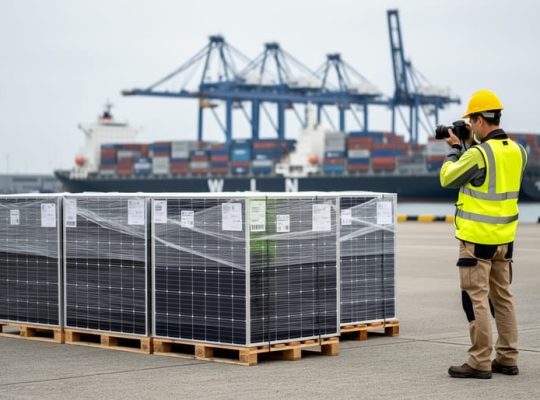
Module supply chain disruptions present a particularly complex challenge. Contracts must clarify whether delays caused by manufacturer failures, port congestion, or international shipping constraints constitute force majeure events. Many developers now require contractors to maintain backup supplier relationships and adequate inventory buffers, transferring supply chain risk to the EPC party. This approach to contractor risk mitigation helps protect project schedules and financial performance.
Construction delays triggered by labor shortages, extreme weather events, or unforeseen site conditions require clear allocation mechanisms. Standard EPC contracts often include specific performance guarantees with liquidated damages for non-force majeure delays, while legitimate force majeure events grant schedule extensions without financial penalties. Defining the boundary between excusable and non-excusable delays remains essential for preventing disputes. Collaborative approaches that include universities researching supply chain resilience can inform more effective risk allocation strategies in future contracts.
Power Purchase Agreement Considerations
Power Purchase Agreements in solar projects require carefully drafted force majeure provisions that balance the interests of project developers and offtakers. These contracts typically define force majeure events broadly to include natural disasters, grid failures, regulatory changes, and unforeseen legal restrictions that prevent energy delivery. However, utilities and corporate offtakers often negotiate narrower definitions to limit their exposure to non-performance claims.
Price adjustment mechanisms become particularly important when regulatory changes impact project economics. Many PPAs include change-in-law provisions allowing developers to petition for rate adjustments if new regulations materially increase operating costs or reduce revenue streams. For instance, modifications to renewable energy credits, interconnection requirements, or environmental compliance standards may trigger these clauses. The agreement should specify notification procedures, documentation requirements, and dispute resolution processes for such adjustments.
Termination rights represent another critical consideration. Most PPAs grant both parties the right to terminate following extended force majeure events, typically after 6-12 months of sustained non-performance. Some agreements include step-in rights allowing offtakers to assume project operations during force majeure periods, particularly in utility-scale transactions. Developers should negotiate adequate cure periods and ensure termination provisions distinguish between controllable operational failures and genuine force majeure circumstances beyond reasonable control, protecting project financing arrangements and limiting liability exposure.
Investor and Lender Protection Mechanisms
Project finance agreements for solar installations incorporate multiple layers of protection to safeguard investors and lenders against force majeure events. Reserve accounts represent a primary mechanism, requiring developers to maintain dedicated funds covering debt service obligations for specified periods, typically six to twelve months. These accounts provide liquidity buffers when revenue generation ceases due to unforeseen circumstances.
Comprehensive insurance requirements form another critical safeguard. Lenders mandate property damage coverage, business interruption insurance, and often parametric insurance products that trigger payouts based on predetermined weather thresholds rather than actual losses. These policies ensure financial recovery mechanisms exist when force majeure events occur.
Covenant structures establish ongoing compliance requirements that protect stakeholder interests. Financial covenants monitor debt service coverage ratios, while operational covenants mandate maintenance standards and performance benchmarks. Step-in rights allow lenders to assume project control if developers fail to remedy force majeure impacts within specified cure periods. Additionally, completion guarantees from creditworthy sponsors provide recourse if projects cannot achieve commercial operation due to qualifying events. These interconnected mechanisms create a robust risk allocation framework that balances project viability with investor protection.
Real-World Examples from the Solar Industry
COVID-19 Supply Chain Disruptions
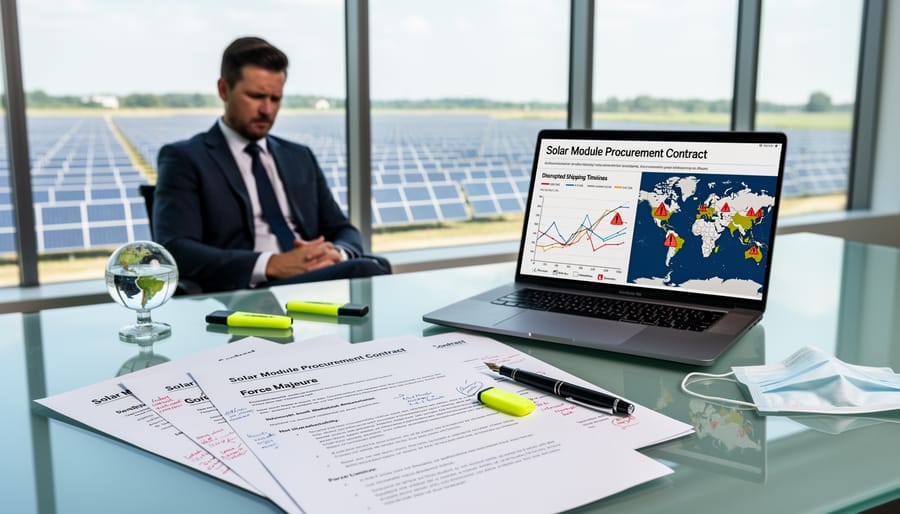
The COVID-19 pandemic created unprecedented supply chain disruptions across the solar industry, triggering numerous force majeure clause invocations. Module manufacturers in Southeast Asia faced factory shutdowns due to government-mandated lockdowns, while international shipping delays extended delivery timelines by months. Many suppliers declared force majeure to excuse late deliveries or price escalations, leading to disputes over whether pandemic-related impacts truly qualified as unforeseeable events beyond reasonable control.
Contract interpretations varied significantly. Some tribunals accepted force majeure claims where government orders directly prevented performance, while others rejected claims when manufacturers could have sourced materials from alternative suppliers or mitigated delays through reasonable efforts. The outcomes often hinged on specific contract language regarding foreseeability thresholds and notice requirements. Projects executed in 2019 generally supported force majeure invocations, as COVID-19 was genuinely unforeseeable at contract signing. However, contracts signed in mid-2020 faced scrutiny, as parties arguably should have anticipated pandemic-related risks.
These experiences highlighted critical lessons: precise drafting distinguishing between impossibility and mere economic hardship, establishing clear mitigation obligations, and including pandemic-specific carve-outs in post-2020 agreements. The solar industry now increasingly incorporates explicit pandemic provisions and alternative supplier requirements into procurement contracts to address similar future disruptions proactively.
Tariff Changes and Trade Policy Shifts
U.S. solar projects have faced significant change-in-law disruptions stemming from evolving trade policies. The Section 201 tariffs, first imposed in 2018 and subsequently extended with modifications, placed substantial duties on imported crystalline silicon photovoltaic cells and modules. These tariffs created immediate pricing impacts for projects that had negotiated fixed-price equipment procurement contracts before the policy announcement. Developers found themselves facing cost increases of 10-30% on module purchases, triggering change-in-law provisions in their engineering, procurement, and construction agreements.
Antidumping and countervailing duties on solar products from specific countries have similarly disrupted project economics. When the Department of Commerce imposed duties on Chinese-origin cells and modules in 2012 and later extended enforcement to products transshipped through third countries, many developers invoked change-in-law relief to renegotiate contract terms or delay project timelines.
The Uyghur Forced Labor Prevention Act enforcement, beginning in 2022, created another layer of compliance requirements. Customs and Border Protection detentions of polysilicon-containing imports forced project developers to verify supply chain transparency, causing delays that qualified as regulatory change-in-law events. These examples underscore the importance of carefully drafted change-in-law provisions that specifically address tariff modifications, trade enforcement actions, and import compliance requirements in solar project contracts.
Interconnection Queue Reforms
Recent reforms to interconnection queue processes have introduced significant delays that frequently trigger force majeure provisions in solar project contracts. FERC Order 2023, implemented in 2023, fundamentally restructured the generator interconnection process by introducing first-ready, first-served principles and increased study deposits. While designed to reduce speculative projects clogging queues, the transition period has extended timelines for many active projects by 12-24 months as utilities restudied entire queues.
State-level reforms have similarly impacted project schedules. California’s wholesale distribution access tariff modifications and New York’s updated interconnection procedures require additional technical studies and expanded community engagement periods. These regulatory changes constitute qualifying events under many change-in-law provisions, allowing developers to seek deadline extensions or cost adjustments from offtakers.
Project developers now routinely cite interconnection delays as force majeure events, particularly when reforms occur after contract execution but before construction begins. Universities offering renewable energy programs increasingly address these evolving regulatory frameworks in their curricula, preparing future professionals to navigate complex timeline negotiations and identify when queue reforms justify contractual relief versus when delays reflect developer underperformance.
Drafting Effective Provisions: Best Practices for PV Professionals
Key Elements of a Strong Force Majeure Clause
Crafting a robust force majeure clause requires careful attention to specific contractual elements that protect all parties in photovoltaic projects. The language used should balance comprehensiveness with clarity, particularly when defining qualifying events.
The choice between inclusive and exclusive event lists significantly impacts clause effectiveness. Inclusive lists provide examples while allowing flexibility through phrases like “including but not limited to,” whereas exclusive lists restrict claims to specifically enumerated events. For solar projects, inclusive approaches typically prove more practical, covering unforeseen circumstances such as novel regulatory changes or unprecedented natural phenomena affecting installation schedules.
Notice requirements establish critical procedural safeguards. Well-drafted clauses specify exact timeframes—often 5-10 business days—within which the affected party must notify counterparties of force majeure events. These provisions should detail required documentation, such as government declarations or meteorological reports, substantiating the claim’s validity.
Mitigation obligations prevent parties from simply relying on force majeure to avoid performance. Effective clauses require the invoking party to demonstrate reasonable efforts to minimize delays and explore alternative solutions, whether through equipment substitution or adjusted installation timelines.
Duration limits protect against indefinite contract suspension. Standard provisions allow either party to terminate agreements if force majeure conditions persist beyond specified periods—commonly 90 to 180 days—ensuring projects don’t remain in perpetual limbo. These temporal boundaries provide certainty while acknowledging that some disruptions fundamentally alter project viability.
Change-in-Law Clause Components
A comprehensive change-in-law clause for photovoltaic projects requires four critical components working in concert. First, the scope definition must clearly specify which legislative or regulatory changes trigger the provision—this typically includes amendments to feed-in tariffs, grid connection requirements, environmental standards, tax codes, and import duties on solar equipment. Well-drafted clauses distinguish between foreseeable regulatory developments and genuine legislative surprises.
Second, cost allocation mechanisms establish which party bears expenses resulting from legal changes. In solar projects, developers often accept responsibility for general business regulation changes, while off-takers assume costs from energy-specific policy shifts affecting project economics. Third, price adjustment formulas provide mathematical frameworks for recalculating power purchase agreement rates when regulatory changes impact project costs. These formulas should reference objective indices and include verification procedures requiring documentation of actual cost impacts.
Finally, termination triggers define thresholds justifying contract cancellation. Common triggers include regulatory changes reducing project internal rate of return below specified levels or making continued operation commercially impracticable. Academic research through university collaborations has demonstrated that precisely calibrated termination provisions reduce financing costs by providing lenders with clear exit criteria during regulatory upheaval.
Common Pitfalls and How to Avoid Them
Solar project developers frequently encounter four critical errors when drafting force majeure provisions. First, excessively narrow definitions that list specific events without catchall language can exclude unforeseen circumstances like pandemics or novel regulatory actions. Best practice requires balanced enumeration alongside broader qualifying language.
Second, contracts often lack detailed notice procedures specifying timeframes, documentation requirements, and recipient parties. Without clear protocols—typically requiring written notification within 48-72 hours of the triggering event—disputes over timely communication arise, potentially invalidating force majeure claims.
Third, ambiguous materiality thresholds create uncertainty about when delays justify relief. Contracts should quantify impact parameters: define whether a two-week delay or 15% cost increase constitutes material impairment, establishing objective standards rather than subjective interpretations.
Finally, insufficient mitigation requirements allow parties to claim force majeure without demonstrating reasonable efforts to overcome obstacles. Robust provisions mandate documented mitigation attempts, alternative sourcing exploration, and regular progress updates. Incorporating comprehensive risk mitigation tools alongside clear contractual language protects all stakeholders while maintaining project momentum during unforeseen disruptions.
The Role of Insurance and Risk Mitigation Tools
Delay-in-Start-Up Insurance
Delay-in-Start-Up (DSU) insurance provides critical financial protection when force majeure events postpone the commercial operation date of photovoltaic projects. This specialized coverage compensates developers for lost revenue during extended construction periods caused by qualifying force majeure circumstances such as natural disasters, extreme weather, or pandemic-related shutdowns. Unlike standard property insurance, DSU policies specifically address the financial impact of delayed cash flows and increased financing costs during the pre-operational phase.
For solar developers, DSU insurance works alongside contractual force majeure provisions rather than replacing them. While force majeure clauses may excuse performance obligations and prevent contract termination, they typically don’t compensate for financial losses incurred during delays. DSU coverage fills this gap by providing revenue replacement based on projected energy production. Similar to how trade credit insurance protects against contractor defaults, DSU insurance safeguards project economics when unforeseen circumstances disrupt timelines. Policy terms should align carefully with construction contracts to ensure coverage triggers correspond with contractual force majeure definitions and waiting periods.
Political Risk and Regulatory Change Insurance
The insurance industry has responded to heightened regulatory uncertainty in renewable energy markets by developing specialized political risk and regulatory change insurance products. These innovative policies specifically protect solar project developers and investors against financial losses stemming from adverse legislative changes, including modifications to feed-in tariffs, renewable energy credits, tax incentives, or grid connection requirements. Unlike traditional force majeure clauses that typically exclude governmental action, these insurance instruments provide direct financial compensation when policy shifts negatively impact project economics.
Leading insurers now offer tailored coverage addressing retroactive subsidy reductions, permitting delays caused by regulatory changes, and unexpected grid code modifications that require costly equipment upgrades. Academic research institutions have collaborated with insurance providers to develop sophisticated risk models that price these policies based on country-specific regulatory stability indicators. Premium costs typically range from 0.5% to 2% of project value, depending on jurisdiction and coverage scope. For photovoltaic professionals structuring complex project finance arrangements, these products represent an essential complement to contractual risk allocation mechanisms, particularly in emerging markets where regulatory frameworks remain fluid and political transitions create substantive policy uncertainty.
Understanding and properly allocating force majeure and change-in-law risks represents a fundamental competency for photovoltaic professionals navigating today’s complex renewable energy landscape. As this analysis has demonstrated, these contractual provisions are far more than boilerplate language—they serve as essential risk management tools that determine financial outcomes, project viability, and stakeholder relationships across the solar project lifecycle.
The renewable energy sector faces an increasingly uncertain regulatory environment. Policy shifts at federal, state, and local levels continue to reshape market dynamics, while climate-related disruptions intensify in frequency and severity. Recent trends indicate that regulatory frameworks governing solar development are becoming more volatile rather than more stable, driven by political transitions, evolving grid integration requirements, and changing incentive structures. This reality elevates the strategic importance of well-crafted force majeure and change-in-law provisions beyond their traditional backstop function.
For aspiring PV professionals, developing expertise in contract risk management is no longer optional. The ability to identify risk allocation mechanisms, evaluate their adequacy for specific project contexts, and negotiate balanced provisions that protect all stakeholders will increasingly differentiate successful professionals in the field. This competency extends beyond legal teams to encompass project developers, financial analysts, engineering managers, and operations specialists who must understand how contractual risk allocation affects their respective domains.
Mose Solar’s commitment to comprehensive education addresses this critical need by equipping the next generation of renewable energy professionals with both technical photovoltaic knowledge and the commercial acumen necessary for project success. As the industry matures and projects grow in scale and complexity, the intersection of technical expertise and risk management sophistication will define professional excellence. Those who master these dual competencies will be best positioned to advance solar deployment while maintaining project bankability and stakeholder confidence in an evolving regulatory landscape.
The path forward requires vigilance, adaptability, and continuous learning—qualities that characterize both successful solar projects and the professionals who deliver them.