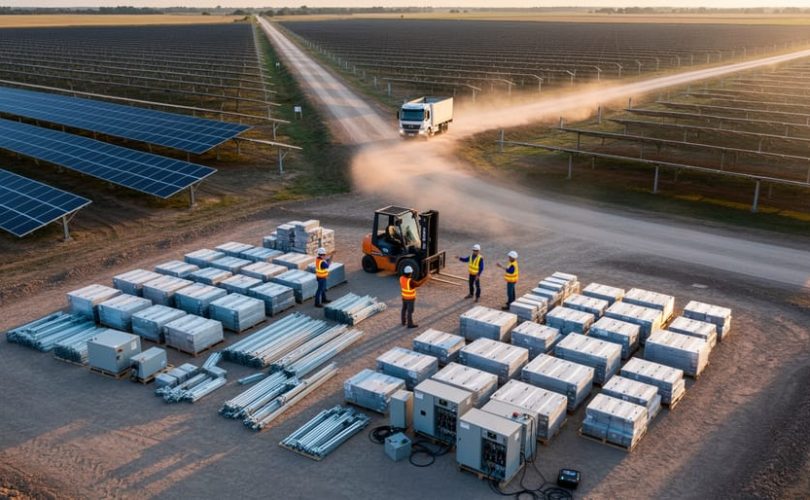
Establish a centralized material staging area within 50 feet of installation zones to reduce worker travel time by up to 40% and minimize handling damage to photovoltaic modules. Map your delivery schedule against installation sequences, ensuring inverters, racking components, and panels arrive in the exact order crews need them—not when suppliers find convenient. Implement a digital tracking system that assigns unique identifiers to material batches, enabling real-time inventory visibility and preventing the costly delays that occur when teams discover missing hardware mid-installation.
Construction logistics in photovoltaic projects determines whether installations finish on schedule and within budget or spiral into expensive overruns. The coordination of materials, equipment, labor, and site access represents a complex challenge that separates successful solar contractors from those struggling with inefficiency. Every day of delay costs money, yet the average PV installation experiences 15-20% timeline extensions due to preventable logistics failures.
Modern solar projects demand precision material management because installation crews often work across multiple roof sections or ground-mounted arrays simultaneously. When the wrong components arrive or critical materials sit in warehouses while crews wait on-site, labor productivity plummets and project margins evaporate. The introduction of kitting—pre-packaging complete sets of materials for specific installation phases—has revolutionized how leading contractors approach job site coordination.
Effective construction logistics directly influences quality outcomes by ensuring crews have correct materials readily available, reducing improvisation that compromises system integrity. This article provides aspiring PV professionals with practical frameworks for planning material flows, coordinating deliveries, implementing kitting strategies, and measuring logistics performance—essential competencies for managing successful solar installations in an increasingly competitive renewable energy landscape.
Understanding Construction Logistics in Solar PV Projects
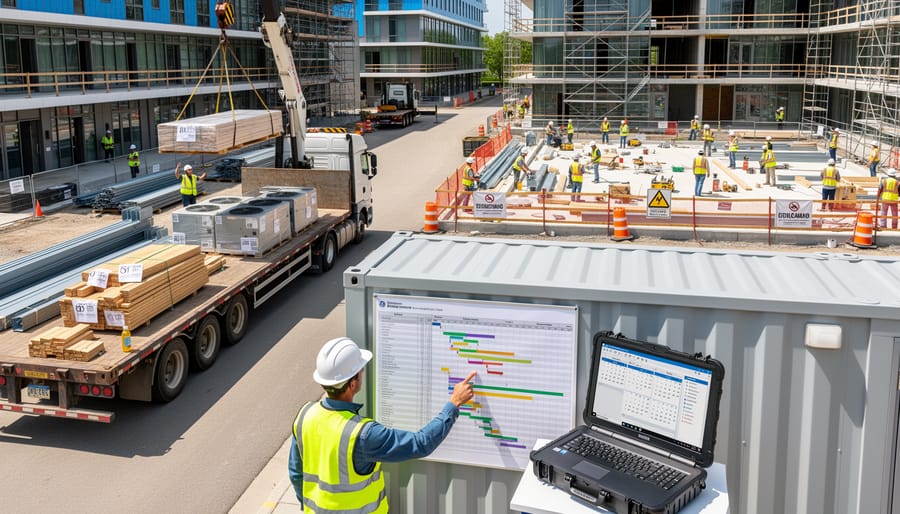
What Makes PV Installation Logistics Different
Solar photovoltaic installations present distinct logistical challenges that set them apart from conventional construction projects. Understanding these unique characteristics is essential for successful project execution and efficient resource management.
The fragile nature of solar components demands specialized handling protocols. Photovoltaic modules contain delicate crystalline silicon cells or thin-film materials that can crack or develop microfractures from improper handling, stacking, or transportation. This fragility requires careful packaging, dedicated storage areas, and trained personnel who understand proper lifting techniques and safety protocols. Unlike standard construction materials, damaged panels may not show visible defects immediately, potentially leading to long-term performance degradation.
Weather sensitivity adds another layer of complexity to PV logistics. Installation windows are constrained by multiple meteorological factors beyond simple rain delays. High winds prevent safe panel handling, extreme temperatures affect adhesive curing times and worker safety, and seasonal variations impact daylight working hours. Project managers must coordinate delivery schedules with weather forecasts while maintaining buffer inventory without overwhelming limited staging areas.
Rooftop access presents physical constraints rarely encountered in ground-level construction. Crane availability, elevator capacity, stairwell dimensions, and load-bearing limitations dictate material delivery sequences. Each component must reach its installation point through restricted pathways, often requiring multiple handling stages and intermediate staging locations.
Additionally, PV projects require precise coordination among specialized trades including electricians, roofers, structural engineers, and certified installers. Each trade depends on specific materials arriving in proper sequence, making supply chain synchronization critical to maintaining project momentum and avoiding costly delays.
The Hidden Costs of Poor Logistics Planning
Poor logistics planning in photovoltaic installations carries substantial financial consequences that extend far beyond initial budget projections. Industry data indicates that logistics failures typically increase project costs by 15-30%, with timeline extensions averaging 2-4 weeks for residential installations and significantly longer for commercial-scale projects.
Material damage represents one of the most immediate costs. Solar panels damaged during transport or on-site handling can cost $200-$400 per module to replace, not including expedited shipping fees. Inverters and mounting hardware face similar risks, with replacement costs often compounded by project delays while awaiting new shipments. A single delivery mishap affecting just 10% of materials can add $5,000-$15,000 to a typical residential project budget.
Installer downtime creates cascading financial impacts. When crews arrive on-site without necessary materials or equipment, labor costs continue accruing without productive output. At average installer rates of $50-$75 per hour per technician, a three-person crew experiencing just four hours of material-related delays costs $600-$900 in wasted labor. Multiple such incidents throughout a project quickly erode profit margins.
Double handling occurs when materials must be moved, sorted, or relocated multiple times due to poor initial placement or inadequate site organization. Research from construction management studies shows that double handling can consume 20-25% of total labor hours on poorly planned projects. For a 50-panel installation requiring 80 labor hours, this translates to 16-20 hours of preventable handling time, costing approximately $800-$1,500.
Project delays compound these costs through contractual penalties, extended equipment rental periods, and opportunity costs from delayed system commissioning. Each week of delay postpones the client’s ability to generate revenue or savings from their solar investment, creating dissatisfaction and potential reputational damage that affects future business acquisition.
Core Components of PV Construction Logistics
Material Procurement and Supplier Coordination
Effective material procurement forms the backbone of successful photovoltaic construction logistics, requiring strategic coordination across multiple suppliers and product categories. Solar projects typically involve four primary component streams: photovoltaic panels, inverters, mounting systems, and electrical balance-of-system components, each with distinct lead times and supplier relationships.
Lead time management begins during project planning, as panels may require 4-8 weeks for delivery, while specialized inverters can extend to 12-16 weeks depending on specifications and market conditions. Establishing strong supplier relationships enables priority allocation during periods of high demand and provides early visibility into potential supply chain disruptions. Project managers should maintain communication channels with at least two qualified suppliers per component category to mitigate procurement risks.
Coordination between multiple vendors demands precise scheduling to prevent material bottlenecks or costly storage situations. Successful procurement strategies align delivery schedules with installation phases, ensuring mounting hardware arrives before panels and inverters reach the site concurrent with electrical work commencement. Many solar contractors now collaborate with universities to develop standardized procurement protocols that reduce ordering errors and improve timeline accuracy.
Digital procurement platforms increasingly facilitate real-time tracking of orders, allowing teams to adjust installation schedules proactively. When suppliers provide advance shipping notifications and material certifications, quality control processes begin before site delivery, minimizing delays from defective components and ensuring regulatory compliance throughout the construction process.
Transportation and Delivery Scheduling
Effective transportation and delivery scheduling forms the backbone of successful photovoltaic installation projects, directly impacting both timeline adherence and cost management. Site-specific constraints such as narrow residential streets, limited commercial parking zones, and weight restrictions on access routes require careful assessment during the pre-construction phase. Project managers must coordinate with local authorities to secure necessary permits for oversized loads and identify optimal delivery windows that minimize traffic disruption while maximizing crew productivity.
Staging area requirements vary significantly between residential and commercial installations. Residential sites typically offer limited space for material storage, necessitating precise delivery timing to prevent theft, weather damage, or neighborhood complaints. Commercial projects may provide dedicated staging zones but require coordination with ongoing business operations to avoid conflicts. Establishing clear protocols for unloading sequences ensures materials arrive in installation order, reducing double-handling and site congestion.
Just-in-time delivery strategies have become increasingly valuable in solar construction logistics, particularly when combined with kitting approaches. By synchronizing material arrivals with installation schedules, contractors minimize on-site storage needs and reduce capital tied up in inventory. This approach requires robust communication channels between suppliers, logistics providers, and installation teams. Universities collaborating with industry leaders increasingly incorporate these scheduling methodologies into educational programs, preparing aspiring professionals to optimize delivery coordination and avoid common scheduling pitfalls that compromise project efficiency.
On-Site Material Management
Effective on-site material management directly impacts photovoltaic installation timelines and project profitability. Once materials arrive at the project site, establishing proper storage protocols becomes paramount to maintaining component integrity and preventing costly delays.
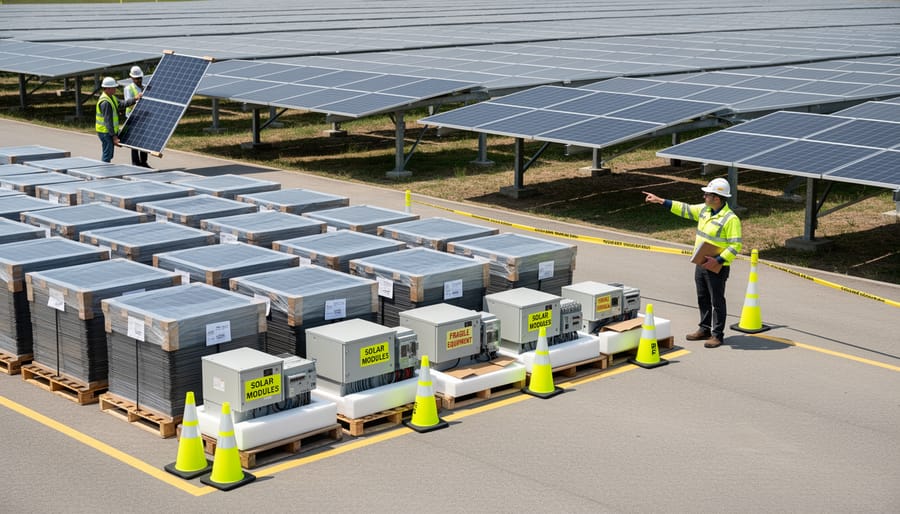
Storage areas should be designated based on material sensitivity and installation sequence. Photovoltaic modules require covered, elevated platforms that prevent ground moisture contact and thermal cycling damage. Inverters and electrical components demand climate-controlled environments when possible, or at minimum, weatherproof enclosures with adequate ventilation. Mounting hardware and racking systems can typically withstand outdoor storage but must be organized systematically to prevent corrosion and facilitate efficient retrieval.
Weather protection extends beyond simple coverage. Module glass surfaces require protection from debris accumulation, while junction boxes must remain sealed against moisture infiltration. Strategic placement of storage areas minimizes handling distance to installation points, reducing both labor hours and damage risk during transport across the site.
Inventory tracking systems, whether digital or manual, should record material locations, quantities, and condition assessments. Daily cycle counts of high-value components like inverters and modules help identify discrepancies before they impact workflow. Barcode scanning or RFID technology streamlines this process for larger installations, providing real-time visibility into material consumption rates.
Optimizing material flow requires analyzing the path from delivery trucks through storage to final installation. Minimizing handling steps, establishing clearly marked zones, and coordinating deliveries with installation schedules reduces congestion and maintains productivity. This systematic approach to on-site logistics ensures materials arrive at installation points in optimal condition, precisely when installers need them.
Kitting: The Game-Changer for PV Installation Efficiency
What Is Kitting and Why It Matters
Kitting is a strategic material management approach that involves pre-packaging and organizing all components, tools, and materials required for specific installation tasks or project zones before work begins. In photovoltaic construction, this means assembling complete sets of panels, mounting hardware, inverters, wiring, connectors, and specialized tools designated for particular roof sections or ground-mount areas into coordinated packages.
This methodology transforms traditional material handling by eliminating the need for installers to search through bulk inventory or make multiple trips to storage areas during active installation phases. Each kit arrives at the worksite as a self-contained unit, containing precisely what crews need to complete their assigned tasks without excess or shortage.
The efficiency gains from kitting are substantial and measurable. Installation teams experience reduced downtime, as all necessary components are immediately accessible. This streamlined approach directly contributes to improved installation efficiency, with projects often completing 15-25% faster than those using conventional material distribution methods.
Error reduction represents another critical benefit. When materials are pre-verified and organized by task or zone, the risk of using incorrect components diminishes significantly. This prevents costly rework and ensures quality compliance throughout the installation process. Kitting also simplifies inventory tracking and accountability, as materials are assigned and documented at the kit level rather than individually.
For project managers overseeing multiple solar installations, kitting provides enhanced predictability in scheduling and resource allocation, making it an essential component of modern construction logistics strategy.

Creating Effective Kits for Different Installation Phases
Effective kit creation requires aligning materials with specific installation phases to minimize downtime and eliminate unnecessary trips to storage areas. Each phase demands a distinct approach based on labor requirements, equipment needs, and sequencing dependencies.
For mounting system installation, kits should contain all structural components for defined roof sections or ground-mount zones. A typical residential roof kit includes rails, mounting brackets, fasteners, flashing materials, and sealants sufficient for a specific array section. This phase-specific approach prevents workers from sorting through bulk materials while working at heights, significantly improving safety and productivity.
Electrical work kits focus on DC-side infrastructure, grouping wire management components, junction boxes, connectors, and appropriately sized conductors. Advanced kitting strategies pre-cut and label wire runs based on measured distances between strings and combiner locations. Universities collaborating with installation companies have documented productivity gains of 30-40 percent when using pre-configured electrical kits compared to field-measured cutting approaches.
Panel installation kits typically consist of photovoltaic modules, mounting hardware, and torque-specific tools for the designated installation zone. Best practice involves staging these kits in reverse installation order, ensuring crews access materials in the correct sequence without backtracking.
Final connection kits contain specialized components like inverter mounting hardware, AC disconnects, grounding equipment, and monitoring system components. These kits often require coordination with electrical inspectors and utility requirements, making accurate pre-assembly critical.
Educational programs increasingly emphasize that successful kit creation depends on detailed site assessments, accurate material quantification, and clear labeling systems. When properly implemented, phase-specific kitting transforms installation logistics from reactive problem-solving into proactive execution, reducing material waste while accelerating project completion timelines.
Kitting Best Practices for Residential vs. Commercial Projects
Kitting strategies vary significantly between residential and commercial photovoltaic installations, reflecting fundamental differences in project scale, complexity, and site conditions. For residential projects, typically involving 5-15 kilowatt systems with 15-40 panels, kitting emphasizes mobility and simplicity. Installers benefit from compact, pre-organized kits that can be transported in standard work vehicles and easily carried to rooftops or ground-mount locations. These kits often combine all hardware for 2-4 panels per package, including mounting rails, clamps, grounding equipment, and fasteners, minimizing trips between the truck and installation point.
Commercial projects, ranging from 100 kilowatts to multi-megawatt installations, require more sophisticated kitting approaches. These large-scale arrays demand zone-based kitting strategies where materials are organized by installation area or phase. Commercial kits typically contain components for entire rows or strings, accounting for variations in structural mounting requirements across expansive rooftops or ground arrays. Staging areas become essential, with kits delivered in sequence to match construction schedules and prevent site congestion.
Both scales benefit from clear labeling systems, though commercial projects require more detailed documentation linking kits to engineering drawings and specific array sections. Weather protection also differs: residential kits may use simple plastic wrapping, while commercial operations often employ weather-resistant palletizing and containerized storage for extended project timelines. Understanding these distinctions enables logistics coordinators to optimize material flow regardless of project magnitude.
Implementing a Construction Logistics Plan
Pre-Construction Site Assessment
Successful photovoltaic installations begin with comprehensive site evaluation during pre-construction planning. This assessment identifies logistical constraints that can significantly impact project timelines and costs.
Access route evaluation determines whether delivery vehicles can navigate site approaches and whether weight restrictions apply to local roads. Project managers must verify that trucks carrying panels, inverters, and mounting systems can reach designated unloading zones without infrastructure damage. Narrow streets, overhead obstructions, or weak bridges may necessitate alternative delivery strategies.
Staging area identification establishes temporary zones for equipment assembly, material storage, and workforce coordination. These areas must provide adequate space for sequencing deliveries while maintaining safe distances from active construction zones. Proper staging reduces material handling time and minimizes installation delays.
Utility mapping locates existing electrical infrastructure, underground conduits, water lines, and communication cables. Accurate utility information prevents costly service disruptions and safety hazards during foundation excavation or trenching activities.
Storage constraints assessment examines secure locations for protecting valuable components from weather exposure and theft. Limited on-site storage may require just-in-time delivery coordination or off-site warehousing arrangements.
Neighbor considerations address noise restrictions, access limitations during specific hours, and potential concerns from adjacent property owners. Proactive communication with stakeholders helps maintain positive community relations throughout project execution.
Creating a Logistics Timeline
A synchronized logistics timeline serves as the backbone of efficient photovoltaic system installations, coordinating three critical variables: material arrival, labor deployment, and installation sequencing. Begin by mapping out your project phases in reverse chronological order, starting from the desired completion date and working backward to identify delivery windows for each component category.
Effective timeline development requires detailed communication with suppliers about lead times, particularly for specialized equipment like inverters and mounting systems that may have extended procurement periods. Cross-reference these delivery schedules with your crew availability calendar, ensuring that skilled technicians are on-site when materials arrive to prevent costly storage fees and site congestion.
Consider weather patterns and seasonal variations that may affect both transportation and installation activities. Building buffer time between sequential phases allows for unexpected delays without derailing the entire project schedule. Many successful installation firms collaborate with universities to refine scheduling methodologies using predictive analytics and historical project data.
Implement weekly coordination meetings during the pre-construction phase to verify that all stakeholders understand the timeline dependencies. Digital project management tools enable real-time updates when delivery dates shift, allowing immediate crew schedule adjustments. This proactive approach minimizes idle time, reduces demurrage charges, and maintains installation momentum throughout the project lifecycle.
Technology Tools for Logistics Management
Modern digital solutions have transformed logistics coordination in photovoltaic installations, enabling project managers to optimize material flow and resource allocation with unprecedented precision. Cloud-based inventory management systems provide real-time visibility into component availability, tracking solar panels, inverters, mounting hardware, and electrical materials across multiple project sites. These platforms integrate barcode scanning and RFID technology to monitor stock levels, trigger automatic reordering, and prevent costly installation delays caused by material shortages.
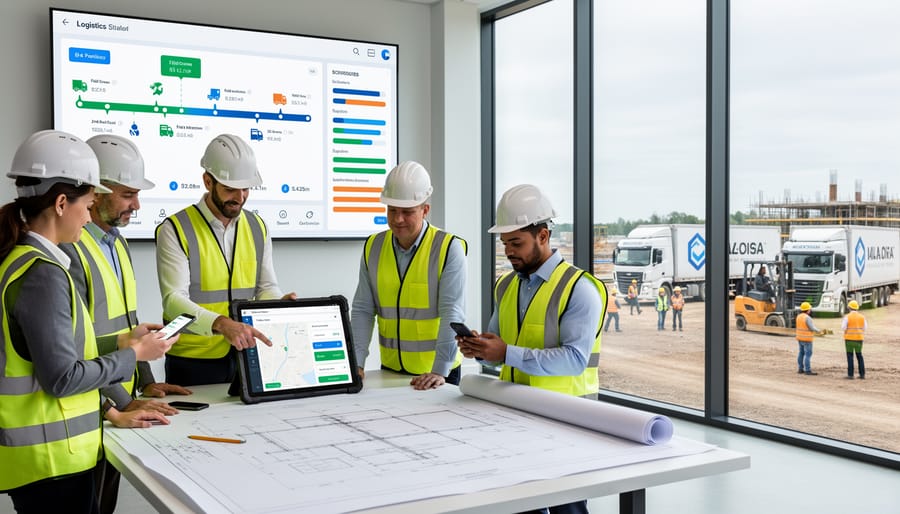
Project management platforms such as Procore, Buildertrend, and specialized solar software solutions consolidate logistics planning, crew scheduling, and delivery coordination into unified dashboards. These tools facilitate collaboration between warehouse teams, installation crews, and suppliers, ensuring materials arrive precisely when needed at job sites. GPS-enabled tracking systems allow real-time monitoring of delivery vehicles and equipment transport, providing accurate arrival estimates and enabling dynamic schedule adjustments.
Advanced analytics features within these platforms help identify bottlenecks, analyze historical performance data, and optimize future logistics strategies. Integration with enterprise resource planning systems creates seamless information flow between procurement, finance, and operations departments, supporting data-driven decision-making throughout the project lifecycle.
Common Logistics Challenges and Solutions
Weather-Related Delays and Material Protection
Weather conditions pose significant challenges to photovoltaic installation schedules and equipment integrity. Effective construction logistics require comprehensive weather management strategies that balance protection with productivity.
Develop contingency timelines that account for seasonal weather patterns in your project location. Historical climate data should inform realistic scheduling buffers, particularly during rainy seasons or periods of extreme temperature. Building flexibility into project timelines—typically 10-15% additional time for weather delays—prevents cascade failures across subsequent installation phases.
Material protection protocols are essential for safeguarding sensitive photovoltaic components. Modules, inverters, and electrical equipment require weatherproof storage solutions with proper ventilation to prevent moisture accumulation and temperature extremes. Establish covered staging areas near installation points to minimize exposure during transport and handling. For multi-day installations, implement tarp systems and moisture barriers that protect partially completed arrays without impeding airflow.
Create weather monitoring systems that provide real-time alerts and 48-hour forecasts, enabling proactive decision-making about material deployment and crew scheduling. Universities conducting renewable energy research have demonstrated that weather-adaptive logistics reduce equipment damage by up to 40% while maintaining installation momentum during marginal conditions. Document all weather-related delays with photographic evidence and meteorological data to support schedule adjustments and stakeholder communications.
Access Limitations and Space Constraints
Challenging installation sites demand specialized logistical planning to overcome physical barriers and regulatory constraints. Urban rooftop installations often face narrow stairwells, limited elevator capacities, and strict building access schedules that restrict material delivery windows. In these scenarios, crane lifts or material hoists become essential, requiring advance permits and coordination with municipal authorities. Project managers must conduct thorough site assessments before material procurement to ensure equipment dimensions align with access pathways.
Remote locations present different challenges, including unpaved access roads, extended transportation distances, and limited local resources. Pre-kitting materials at distribution centers reduces the number of deliveries required, minimizing wear on difficult terrain and reducing fuel costs. For properties with restricted access, such as gated communities or historical districts, establishing clear communication protocols with property managers and obtaining all necessary approvals before mobilization prevents costly project delays.
Innovative solutions like portable conveyor systems, compact electric vehicles for material transport, and modular scaffolding designed for confined spaces enable successful installations despite physical limitations. Academic partnerships through university engineering programs continue advancing lightweight materials and compact equipment designs that expand installation possibilities across diverse site conditions.
Coordinating Multiple Trades and Subcontractors
Effective photovoltaic installation requires meticulous orchestration of electricians, racking specialists, roofing contractors, and inspection personnel. Successful crew coordination begins with detailed sequencing plans that map dependencies between tasks and prevent bottlenecks. For example, structural assessments must precede racking installation, which in turn must be completed before module mounting begins.
Implementing daily standup meetings enables real-time communication and rapid problem resolution across teams. Digital collaboration platforms that track task completion and material availability help subcontractors anticipate their deployment schedules accurately. Establishing clear site protocols, including designated staging areas for each trade, minimizes workspace conflicts and safety hazards.
Educational institutions partnering with industry leaders emphasize the importance of master scheduling techniques that account for weather windows, equipment availability, and permitting timelines. Creating buffer periods between sequential tasks accommodates unexpected delays without derailing project completion dates. Regular performance reviews with subcontractors ensure accountability and continuous improvement throughout multi-phase solar installations.
Measuring Logistics Performance and Continuous Improvement
Key Performance Indicators for PV Logistics
Measuring logistics performance enables continuous improvement in photovoltaic installation projects. On-time delivery rates serve as the primary indicator of supply chain effectiveness, with industry benchmarks typically targeting 95% or higher for critical path materials. This metric directly impacts project timelines and labor productivity, as delays cascade through subsequent installation phases.
Material waste percentages reveal procurement accuracy and handling efficiency. Well-managed PV projects maintain waste rates below 2% for major components like modules and racking systems. Tracking this metric identifies opportunities to refine order quantities, improve storage conditions, and enhance handling procedures.
Installer productivity, measured in kilowatts installed per labor hour, provides insight into workflow efficiency. This KPI increases significantly when materials arrive organized and readily accessible at workstations. Projects implementing structured logistics approaches often achieve 20-30% productivity gains compared to traditional methods.
Project timeline adherence monitors whether installations complete within scheduled windows. This comprehensive metric reflects the cumulative effect of all logistics decisions, from initial material ordering through final delivery coordination. Academic research collaborations have demonstrated that systematic logistics planning reduces timeline overruns by approximately 15-25%, directly improving project profitability and customer satisfaction while supporting the broader adoption of renewable energy solutions.
Learning from Each Project
Conducting thorough post-project reviews transforms each photovoltaic installation into a valuable learning opportunity that strengthens future logistics planning. Establish a structured debriefing process within two weeks of project completion, gathering input from site supervisors, installation crews, logistics coordinators, and supply chain partners. This collaborative approach ensures comprehensive documentation of what worked well and what requires improvement.
Create standardized templates to capture specific logistics metrics including material delivery accuracy rates, kitting effectiveness, equipment utilization levels, and timeline adherence. Document unexpected challenges such as site access restrictions, weather-related delays, or component shortages along with the solutions implemented. Many universities collaborating with industry partners have developed frameworks for systematically analyzing these data points to identify recurring patterns and optimization opportunities.
Translate insights into actionable improvements by updating logistics protocols, refining material checklists, and adjusting scheduling templates. Establish a centralized knowledge repository accessible to all project teams, enabling continuous improvement across your organization. Educational programs increasingly emphasize this reflective practice, recognizing that consistent application of lessons learned distinguishes high-performing installation companies from competitors. Regular quarterly reviews of accumulated insights help identify systemic improvements in vendor relationships, transportation strategies, and on-site material management approaches that enhance overall project efficiency.
Mastering construction logistics and kitting represents far more than operational competence—it establishes a fundamental competitive advantage in the rapidly evolving photovoltaic industry. Professionals who demonstrate excellence in these critical areas consistently deliver projects on time, within budget, and with superior quality outcomes, positioning themselves as invaluable assets to employers and clients alike. The ability to orchestrate complex material flows, coordinate diverse teams, and implement systematic kitting processes directly translates to enhanced project profitability and client satisfaction, two metrics that drive career advancement in this competitive field.
The integration of construction logistics expertise with technical solar knowledge creates well-rounded professionals capable of managing entire project lifecycles. This comprehensive skill set addresses the industry’s persistent demand for individuals who understand both the engineering principles of photovoltaic systems and the practical realities of field implementation. Organizations increasingly recognize that technical proficiency alone cannot overcome the challenges presented by poor logistics planning, making these capabilities essential for anyone seeking leadership roles in solar construction management.
Mose Solar’s commitment to developing complete solar professionals reflects this industry reality. By incorporating construction logistics and material management principles into educational programming alongside technical training, we prepare aspiring professionals for the multifaceted challenges they will encounter in real-world installations. Our collaboration with universities and comprehensive curriculum ensures graduates understand that project success depends equally on proper system design and meticulous execution planning. This holistic approach to professional development empowers individuals to not only enter the renewable energy workforce but to excel within it, contributing meaningfully to the industry’s continued growth and the global transition to sustainable energy solutions.