A Phase 3 Environmental Site Assessment (ESA) is the remediation and cleanup process undertaken when contamination identified during Phase 1 and Phase 2 assessments exceeds regulatory thresholds and poses a risk to human health or the environment. Unlike the investigative stages that precede it, Phase 3 involves active intervention to remove, contain, or neutralize contaminants on a property.
For solar developers, encountering the need for Phase 3 remediation represents a critical juncture in project feasibility analysis. The costs, timelines, and regulatory complexity associated with environmental cleanup can dramatically alter a site’s economic viability. Understanding when remediation becomes necessary and what approaches are available allows developers to make informed decisions during the site screening process rather than discovering expensive obstacles after securing land rights.
Phase 3 assessments typically become necessary when soil or groundwater contamination from industrial operations, leaking storage tanks, or hazardous waste disposal is confirmed through laboratory analysis. The remediation strategies deployed vary widely based on contaminant type, concentration, site geology, and regulatory requirements. Options range from excavation and off-site disposal to in-situ treatment methods that address contamination without removing soil.
This guide examines the Phase 3 process from a solar development perspective. You’ll learn how remediation integrates with project planning, the typical approaches employed for common contaminant scenarios, and how to evaluate whether a contaminated site warrants further consideration or should be removed from your candidate portfolio. Through collaboration with university environmental programs, we’ve structured this resource to serve both newcomers seeking foundational knowledge and experienced practitioners navigating complex remediation decisions. The information presented here reflects current regulatory frameworks and industry practices as of 2026.
What a Phase 3 Environmental Site Assessment Means for Solar Projects
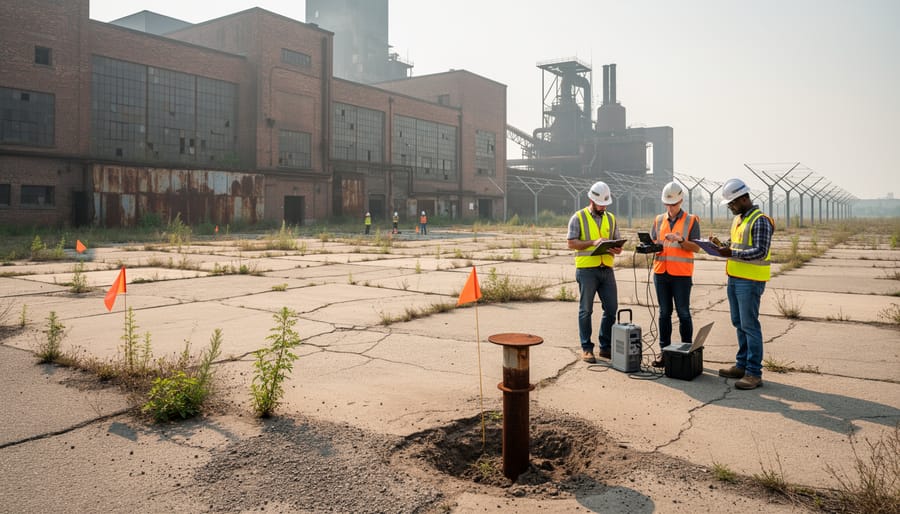
A Phase 3 Environmental Site Assessment is the remediation and cleanup phase triggered when Phase 2 testing confirms contamination levels that exceed regulatory standards or pose unacceptable risks to human health or the environment. Unlike Phase 1 and Phase 2 assessments, which focus on identifying potential and actual contamination, Phase 3 involves active intervention to remove, treat, or manage contaminants on-site.
For solar developers, Phase 3 becomes necessary when soil or groundwater sampling during Phase 2 reveals hazardous substances above cleanup thresholds established by state or federal regulators. Common triggers include petroleum hydrocarbons from underground storage tanks, heavy metals from industrial operations, or volatile organic compounds from manufacturing facilities. The ESA timeline typically extends significantly once Phase 3 is required, but this shouldn’t automatically disqualify a site from consideration.
- Phase 3 ESA
- The remediation stage of environmental assessment where confirmed contamination is actively addressed through cleanup, removal, or risk management strategies to achieve regulatory closure.
- Remediation
- The process of removing, reducing, or containing contaminants to restore a site to acceptable safety and regulatory standards.
- Corrective Action Plan
- A detailed roadmap outlining the specific remedial technologies, cleanup goals, monitoring protocols, and timelines required to address site contamination.
- Risk-Based Cleanup
- An approach that sets cleanup standards based on site-specific exposure pathways and future land use rather than strict background concentration levels.
- Regulatory Closure
- Formal confirmation from environmental agencies that remediation objectives have been met and no further action is required under applicable cleanup programs.
Contaminated sites often present viable opportunities for solar development because photovoltaic installations impose minimal ground disturbance and restrict human exposure through fencing and limited access. Many state programs now encourage solar deployment on remediated brownfields, offering streamlined permitting and liability protections that make these projects financially attractive. The key is understanding whether remediation costs and timelines align with project economics, and whether cleanup goals match the protective measures inherent in solar facilities.
How the Phase 3 Remediation Process Works
Corrective Action Planning
Corrective action planning transforms Phase 2 contamination findings into a workable remediation roadmap. This planning stage begins with establishing site-specific cleanup objectives that balance regulatory requirements, project timelines, and intended land use. Solar developers benefit here because photovoltaic installations impose minimal exposure pathways compared to residential or agricultural uses.
The planning team must select appropriate cleanup standards. Risk-based standards evaluate contamination levels against actual exposure scenarios, how people interact with the site. For solar arrays, where human presence is limited to maintenance visits, risk-based approaches often allow higher residual contamination than residential standards would permit. Background concentration standards, by contrast, require contamination reduction to naturally occurring levels, typically demanding more extensive and costly remediation.
State environmental agencies drive this process through required consultation and plan approval. Effective stakeholder coordination involves presenting remediation alternatives, demonstrating how each meets regulatory criteria, and negotiating timelines that align with solar development schedules. Some states offer expedited review tracks for renewable energy projects, potentially shortening approval windows from months to weeks. The corrective action plan must document everything: baseline conditions, proposed remedial technologies, performance metrics, contingency measures, and post-remediation verification protocols. This documentation becomes the binding blueprint for all subsequent Phase 3 activities.
Implementation and Verification
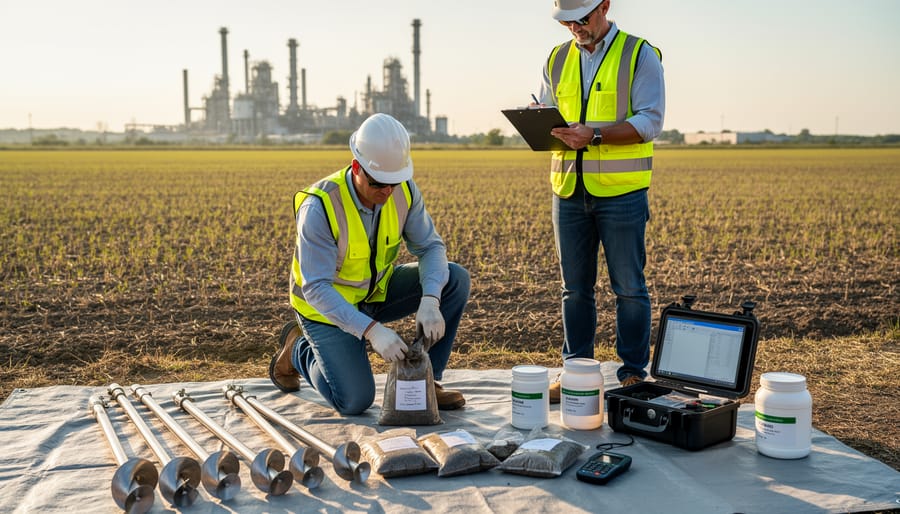
Once the remediation plan receives regulatory approval, contractors mobilize equipment and begin active cleanup operations. During excavation projects, workers systematically remove contaminated soil and transport it to licensed disposal facilities while keeping detailed chain-of-custody records. For in-situ treatment systems, technicians install wells, piping, and treatment equipment according to engineering specifications, then initiate operations under close supervision.
Throughout implementation, environmental consultants conduct performance monitoring to verify the remediation is achieving cleanup goals. Groundwater extraction systems require regular flow rate measurements and effluent testing. Soil vapor extraction operators track vacuum pressures and vapor concentrations to ensure contaminant mass removal continues at acceptable rates. This ongoing data collection reveals whether the remediation performs as modeled or needs adjustment.
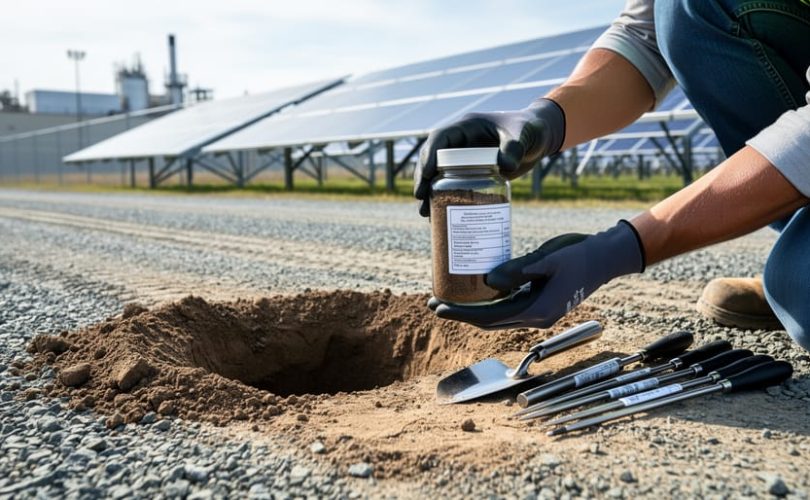
Verification sampling follows prescribed protocols to demonstrate cleanup success. For excavation, technicians collect confirmation samples from sidewalls and base of the excavation pit, analyzing them for target contaminants. Results must fall below cleanup standards before the excavation receives regulatory approval for backfilling. Groundwater remediation requires sequential sampling rounds showing contaminant concentrations declining to acceptable levels across the treatment area.
Field conditions frequently necessitate strategy modifications. Encountering unexpected contamination depth may require switching from excavation to soil mixing with stabilizing agents. Declining remediation efficiency might prompt technology upgrades or treatment duration extensions to achieve closure.
Types of Remediation Approaches in Phase 3
Active Remediation Technologies
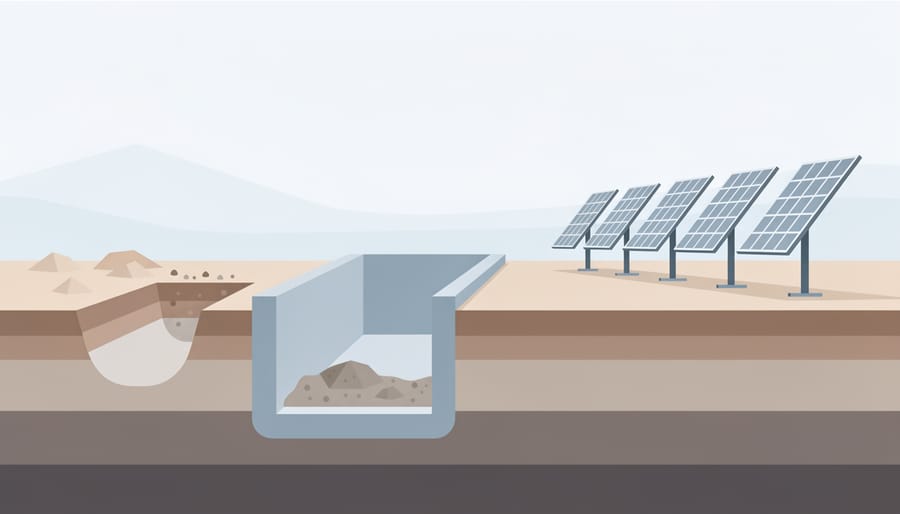
Active remediation technologies physically remove or destroy contaminants rather than simply containing them. For solar developers evaluating contaminated sites, understanding these methods helps assess cleanup timelines and whether solar construction can proceed during or after remediation.
Excavation and removal remains the most straightforward approach: contaminated soil is dug up, transported offsite, and disposed at permitted facilities, then replaced with clean fill. This method works well for localized contamination and delivers definitive cleanup, but costs escalate quickly with soil volume and disposal fees for hazardous materials.
Soil vapor extraction (SVE) targets volatile organic compounds in unsaturated soil zones by applying vacuum pressure through extraction wells, pulling contaminated vapors to the surface for treatment. SVE systems can operate for months or years depending on contamination extent, allowing solar arrays to be installed once surface impacts are minimized.
Pump-and-treat systems address groundwater contamination by extracting contaminated water through wells, treating it above ground to remove contaminants, then discharging or reinjecting the cleaned water. These long-term operations require ongoing energy and maintenance but leave surface areas available for solar development.
In-situ treatment methods destroy or immobilize contaminants underground without excavation. Chemical oxidation injects reactive compounds that break down organic pollutants, while bioremediation introduces microorganisms or nutrients to accelerate natural degradation. Thermal treatment heats soil to vaporize or destroy contaminants. These techniques minimize surface disruption and often prove cost-effective for deep or widespread contamination.
Passive and Risk-Management Approaches
When active remediation proves too costly or time-intensive for a solar development timeline, passive and risk-management strategies offer alternative pathways to regulatory closure while still protecting human health and the environment.
Monitored natural attenuation relies on naturally occurring processes, biodegradation, dispersion, dilution, to reduce contaminant concentrations over time. This approach requires extensive documentation that natural processes are effectively reducing risk, coupled with long-term groundwater monitoring to verify contaminant trends. For solar projects, MNA can work well since the infrastructure doesn’t create exposure pathways or disturb subsurface contaminants, though developers must commit to ongoing monitoring obligations.
Institutional controls prevent exposure through legal restrictions rather than physical removal. Deed restrictions, land use covenants, and groundwater use prohibitions can satisfy regulatory requirements without excavation. A solar farm naturally serves as an institutional control by restricting residential or agricultural use, making these sites particularly compatible with risk-based closures.
Engineering controls use physical barriers to contain contaminants. Clean soil caps, asphalt covers, or geomembrane barriers prevent direct contact and infiltration. Solar arrays often require grading and compacted layers that function as engineered caps, potentially serving dual purposes. The ballasted racking systems common in commercial solar construction can be designed to avoid penetrating contaminated zones entirely.
Risk-based closure strategies assess exposure scenarios specific to the intended land use. Since solar facilities involve minimal human contact and no residential or potable water use, they often qualify for site-specific cleanup standards less stringent than residential thresholds, accelerating closure while maintaining protective measures.
When and Why Solar Developers Need Phase 3 Assessments
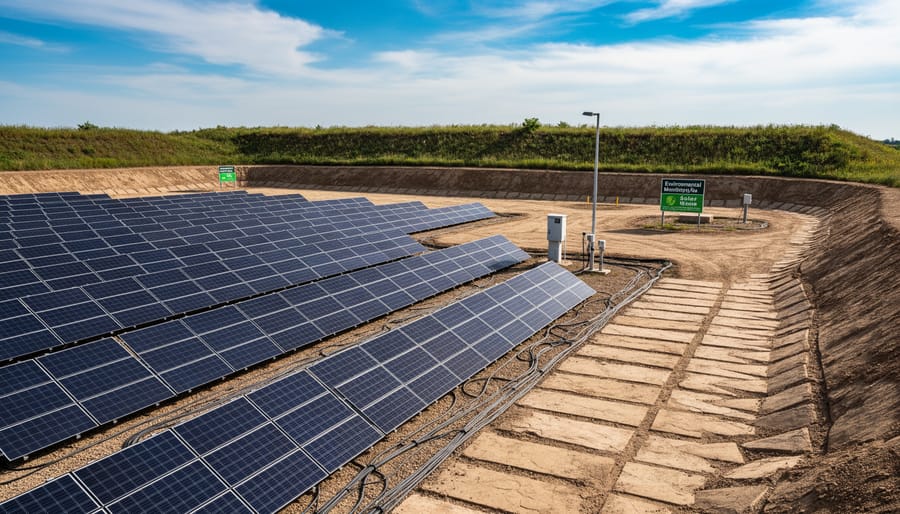
Solar developers encounter Phase 3 assessments most frequently when pursuing brownfield redevelopment opportunities, where contaminated sites offer strategic advantages despite requiring remediation. These projects align with federal and state policies encouraging productive reuse of impaired land, and solar installations present an ideal end use that minimizes soil disturbance compared to traditional development. A Phase 3 becomes necessary when Phase 2 sampling confirms contaminant concentrations exceeding regulatory thresholds for the intended use, triggering mandatory remediation before a site can receive environmental closure and advance through permitting.
Common scenarios that push solar projects into Phase 3 territory include:
- Former industrial facilities with legacy soil or groundwater contamination from manufacturing operations
- Agricultural properties impacted by historical pesticide application or underground storage tank releases
- Closed landfills where engineered caps provide suitable foundations for ground-mount arrays
- Petroleum release sites where residual hydrocarbons remain above risk-based screening levels
- Sites enrolled in state voluntary cleanup programs seeking liability protections through solar redevelopment
The liability management benefits drive many developers toward Phase 3 engagement rather than site abandonment. Completing remediation establishes clear environmental closure, secures regulatory no-further-action determinations, and protects developers from future cleanup liability that could emerge post-construction. This documentation proves essential during financing negotiations and title insurance underwriting, where lenders demand certainty about environmental risk exposure.
Integration with land feasibility analysis workflows requires coordination between environmental consultants and development teams from initial screening forward. Phase 3 timelines and costs must factor into project pro formas alongside traditional due diligence items like title and easements interconnection studies, and permitting schedules. Smart developers evaluate whether remediation costs plus discounted land acquisition prices yield better economics than competing greenfield sites, particularly where brownfield incentives, grants, or tax credits offset cleanup expenses. The decision hinges on whether the remedial strategy allows concurrent solar construction or requires sequential phases that extend the project timeline beyond acceptable commercial parameters.
Phase 3 Implications for PV Environmental and Permitting Feasibility
Phase 3 remediation findings fundamentally reshape the feasibility calculus for solar development. A contaminated site doesn’t automatically fail pre-screening, but it does introduce three critical variables: remediation costs that must pencil against land acquisition savings, extended timelines that can push projects past interconnection deadlines, and financing hurdles from lenders wary of environmental liability. The decision to proceed hinges on whether the site’s advantages, discounted purchase price, superior solar resource, favorable interconnection position, or proximity to load, justify the remediation investment and schedule risk.
Timeline impact deserves particular scrutiny during energy yield screening. Active remediation approaches like excavation or soil vapor extraction typically add twelve to thirty-six months before solar construction can begin, potentially jeopardizing time-sensitive power purchase agreements or interconnection queue positions. Passive strategies, engineered caps, institutional controls, monitored natural attenuation, often allow concurrent solar development, compressing the overall schedule. A solar array can function as part of the remediation strategy itself, with racking foundations designed to avoid contaminated zones and impervious ground cover limiting infiltration and contaminant migration.
Financing becomes more complex but not impossible. Traditional project finance lenders typically require environmental liability insurance, closure letters from regulators, or reserve accounts covering potential cost overruns, adding 5 to 15 percent to upfront capital requirements. Specialized lenders and tax equity investors focused on brownfield redevelopment have emerged, recognizing that solar arrays paired with remediation often generate dual revenue streams: electricity sales plus environmental credits, grants, or liability relief. The federal Brownfields Tax Incentive and state voluntary cleanup programs can offset remediation costs, sometimes tipping the analysis in favor of contaminated sites over greenfield parcels with clean Phase 1 results but inferior solar economics.
The cost-benefit comparison must account for opportunity costs. A $2 million remediation budget might secure a contaminated fifty-acre site for $500,000, while a clean alternative costs $3 million. If remediation allows immediate construction and the site delivers equivalent energy yield, the contaminated parcel wins. But if cleanup delays commissioning by two years, forfeiting revenue and risking interconnection expiration, the greenfield site proves cheaper despite the higher purchase price. Developers increasingly view contaminated sites as strategic opportunities rather than problems, especially in land-constrained markets where brownfield solar solves two challenges simultaneously.
Regulatory Framework and Compliance Requirements
Phase 3 environmental remediation operates within a complex regulatory framework that solar developers must navigate during site pre-screening. Understanding these requirements early determines both project feasibility and the path to regulatory closure.
At the federal level, the Environmental Protection Agency establishes baseline standards through programs like CERCLA (Comprehensive Environmental Response, Compensation, and Liability Act) and RCRA (Resource Conservation and Recovery Act). These laws define cleanup thresholds and liability structures for contaminated properties. However, most solar developers won’t interact directly with EPA oversight unless the site qualifies as a Superfund location or involves federal facilities.
State environmental agencies typically take the lead role in Phase 3 regulation. Most states operate Voluntary Cleanup Programs that streamline remediation for properties not on the National Priorities List. These programs offer significant advantages for solar developers: expedited review timelines, technical assistance from state personnel, and liability protections through No Further Action letters or Certificates of Completion. States like New Jersey, Pennsylvania, and California have particularly well-developed programs that align with renewable energy development goals.
The regulatory pathway you’ll follow depends on contamination type and severity. Petroleum releases often fall under state underground storage tank programs with separate funding mechanisms and less stringent requirements. Hazardous substances trigger more comprehensive oversight, possibly requiring formal corrective action plans subject to public comment and multi-agency coordination.
Liability protection represents a critical consideration. Under CERCLA’s innocent landowner and bona fide prospective purchaser provisions, developers who conduct appropriate environmental due diligence and don’t contribute to contamination can shield themselves from cleanup liability. State programs typically offer additional protections through covenant-not-to-sue agreements.
During pre-screening, request existing regulatory correspondence, agency determinations, and any recorded institutional controls. Sites already enrolled in voluntary cleanup programs with approved work plans present lower regulatory risk than properties where contamination hasn’t been formally addressed. The difference can mean eighteen months versus five years to regulatory closure.
Common Questions About Phase 3 Environmental Site Assessments
Solar developers and PV professionals new to contaminated site redevelopment often have similar questions about how Phase 3 assessments impact project economics and timelines. Understanding these practical considerations helps teams make informed decisions during environmental pre-screening and determine whether a site with contamination warrants further pursuit.
What does Phase 3 remediation typically cost and how long does it take?
Costs range from $50,000 for simple soil removal to several million dollars for complex groundwater treatment systems, with timelines spanning 6 months to several years depending on contamination extent and selected remediation approach. Each site requires individual assessment based on contaminant type, volume, regulatory requirements, and cleanup standards.
Can solar installation proceed while remediation is ongoing?
In some cases, yes, passive remediation approaches like monitored natural attenuation or engineering controls may allow concurrent solar construction, while active remediation typically requires completion before development. Coordination with environmental consultants and state regulators determines feasibility on a case-by-case basis.
Who pays for the cleanup, and are there financing options for contaminated solar sites?
Liability for cleanup costs depends on ownership history and applicable regulations, though state voluntary cleanup programs and brownfield grants often provide financial assistance. Some lenders and tax equity investors will finance solar projects on remediated sites, particularly those with regulatory closure letters and liability protections in place.
How does Phase 3 affect project insurance and risk allocation?
Environmental insurance products like pollution legal liability coverage can protect solar developers from residual contamination risks, though premiums increase for sites with known issues. Careful contract language allocating environmental liability between landowners, developers, and EPCs becomes critical when Phase 3 remediation history exists.
The decision to walk away from a contaminated site depends on several factors beyond just Phase 3 costs. If remediation expenses plus holding costs exceed the land value differential compared to clean alternatives, greenfield sites make better economic sense. However, brownfield solar projects often qualify for expedited permitting, tax incentives, and community support that can offset higher upfront environmental costs. Projects should be evaluated holistically, considering regulatory closure certainty, timeline alignment with power purchase agreements, and whether the contamination truly prevents solar use or simply requires managed risk controls that solar infrastructure can accommodate.
Understanding Phase 3 Environmental Site Assessments equips solar developers and PV professionals with the knowledge to turn environmental challenges into project opportunities. Contaminated sites often present lower land acquisition costs, favorable zoning for industrial use, and compelling sustainability narratives that combine renewable energy deployment with environmental restoration. When remediation is approached strategically during pre-screening, these sites can advance from liability to asset.
The key lies in comprehensive PV Environmental and Permitting Feasibility Pre-Screening that incorporates Phase 3 considerations early in site selection. Developers who integrate environmental due diligence into their feasibility workflows make informed decisions about remediation costs, project timelines, and regulatory pathways before committing capital. This approach transforms contaminated site assessment from an obstacle into a competitive advantage, particularly as prime greenfield locations become scarcer.
For aspiring PV professionals, Phase 3 expertise represents a valuable specialization at the intersection of environmental science and renewable energy development. Mose Solar offers educational programs developed in collaboration with universities that provide hands-on training in environmental due diligence for solar projects. These programs equip students and practitioners with practical skills in assessing remediation feasibility, navigating regulatory frameworks, and evaluating the economic viability of brownfield solar development.
Responsible solar development requires technical competence across environmental, engineering, and regulatory disciplines. Mastering Phase 3 assessment principles positions professionals to contribute to projects that deliver both clean energy and environmental remediation benefits.