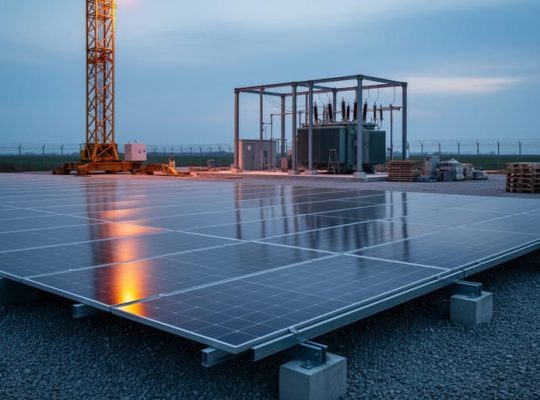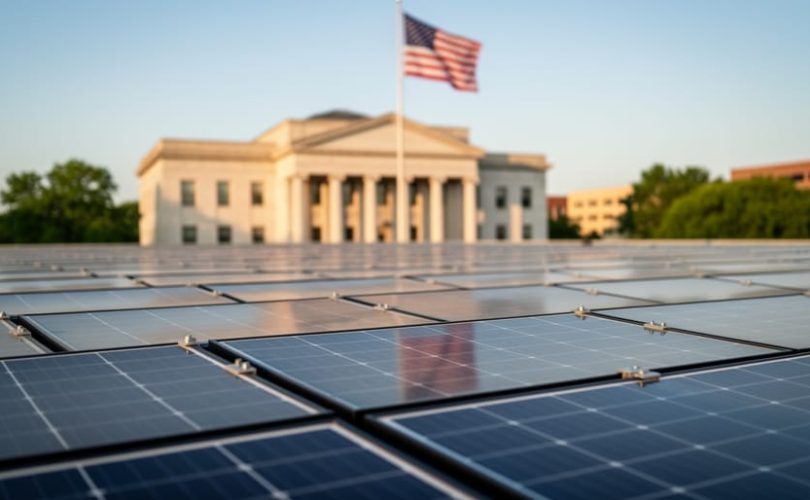
Understand Qualified Energy Conservation Bonds as tax-credit bonds authorized under the Emergency Economic Stabilization Act of 2008, specifically designed to finance renewable energy projects including solar installations for state, local, and tribal governments. These financial instruments differ fundamentally from traditional municipal bonds by providing bondholders with federal tax credits rather than interest payments, effectively reducing borrowing costs for public entities to near-zero rates.
Recognize the allocation system where $3.2 billion in bonding authority was distributed nationally, with 70% designated for state and local governments and 30% reserved for public power providers. This limited allocation creates competitive dynamics requiring public sector entities to act strategically when pursuing solar project financing through this mechanism.
Evaluate QECB structures through their two primary forms: direct tax-credit bonds where investors receive credits equal to the applicable credit rate set quarterly by Treasury, or issuer tax-credit bonds where governments claim credits directly and pay bondholders nominal interest. This flexibility allows municipalities to optimize financing based on market conditions and institutional capabilities.
Position QECBs within the broader green bonds landscape as specialized instruments preceding more recent sustainable finance innovations. While newer green bond mechanisms have gained prominence, QECBs remain relevant for qualifying public entities with existing allocations or those accessing supplemental authority through state energy offices.
Examine eligibility requirements mandating that at least 95% of proceeds fund qualified conservation purposes, including solar energy installations, green community programs, research facilities, and mass commuting infrastructure. This specificity ensures capital deployment directly supports measurable energy conservation outcomes while maintaining compliance with federal tax regulations governing these specialized financing vehicles.
Understanding Qualified Energy Conservation Bonds
What Makes QECBs Different from Standard Green Bonds
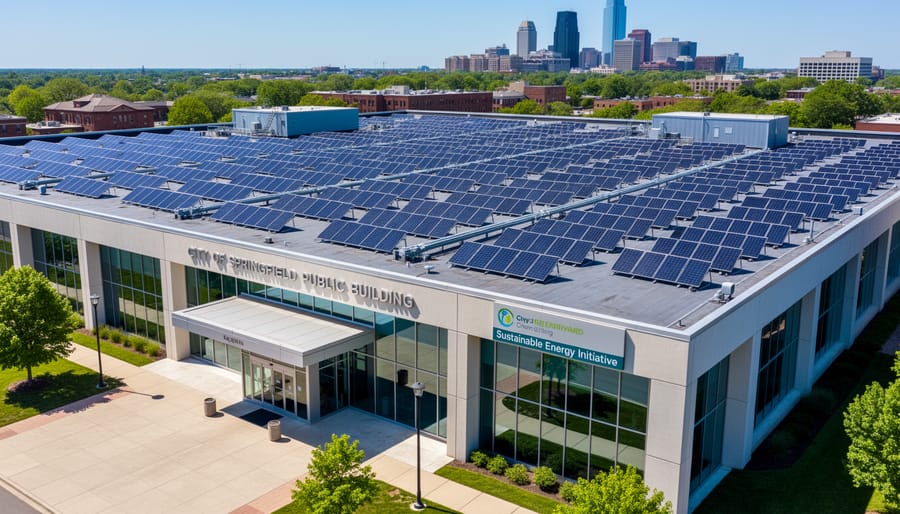
While standard green bonds have become increasingly popular for financing renewable energy projects, Qualified Energy Conservation Bonds offer distinct advantages through their federal tax credit structure. The most significant difference lies in how investors receive returns: QECB holders earn their profit through federal tax credits rather than traditional interest payments, creating a unique investment vehicle that reduces borrowing costs for issuers.
The federal subsidy mechanism represents another key distinction. Under the original QECB program, the U.S. Treasury either provided direct payments to issuers equal to a percentage of interest costs or offered tax credits to bondholders. This direct federal involvement contrasts sharply with green bonds, which rely on market-driven pricing without explicit government subsidies. For municipalities and public entities developing solar installations, this federal support translates to substantially lower effective interest rates, often making project financing more accessible.
QECBs also maintain a narrower, more specific focus on qualified energy conservation purposes, including solar photovoltaic systems, energy efficiency improvements, and renewable energy research facilities. This targeted scope differs from the broader environmental objectives that green bonds can fund, which may encompass water conservation, sustainable agriculture, or pollution prevention initiatives beyond energy applications.
Furthermore, QECBs face volume cap limitations and allocation requirements through state and local governments, creating a structured distribution system absent in the green bond market. This regulatory framework ensures strategic deployment of federal resources toward priority conservation projects while maintaining accountability for public funds invested in renewable energy infrastructure.
Eligible Issuers and Project Requirements
Qualified Energy Conservation Bonds are issued exclusively by designated governmental entities and public power providers, ensuring accountability and alignment with public policy objectives. Under IRS guidelines established through Section 54D of the Internal Revenue Code, eligible issuers include state governments, local governments, tribal governments, and public power providers such as municipal utilities and electric cooperatives. These restrictions ensure that QECBs serve public interests while facilitating energy efficiency and renewable energy deployment at the community level.
The IRS defines qualifying conservation purposes across several categories, each designed to reduce energy consumption or increase renewable energy generation. Eligible projects include capital expenditures for reducing energy consumption in publicly owned buildings by at least 20 percent, implementation of green community programs that demonstrate measurable reductions in energy use and greenhouse gas emissions, and renewable energy production facilities including solar photovoltaic installations. Research facilities and demonstration projects advancing energy efficiency technologies also qualify, provided they meet specific documentation requirements.
For solar energy professionals, understanding project qualification criteria is essential. Solar installations must demonstrate clear public benefit, measurable energy generation capacity, and compliance with applicable building and electrical codes. Projects financed through QECBs typically require detailed engineering assessments, energy modeling, and verification protocols to satisfy IRS requirements. Public power providers have utilized these bonds extensively for community solar programs and distributed generation projects that serve municipal operations. The bond allocation process involves coordination between state energy offices and project sponsors, with priority often given to projects demonstrating the highest energy savings or renewable generation potential per dollar invested.
How QECBs Support Solar Energy Infrastructure
Qualifying Solar Technologies and Installations
Qualified Energy Conservation Bonds specifically support solar photovoltaic installations that demonstrate clear energy generation and conservation benefits. Understanding which technologies and project configurations qualify is essential for financing professionals and developers seeking to leverage this mechanism.
The Internal Revenue Service recognizes several categories of qualifying solar technologies. Standard crystalline silicon solar modules, including both monocrystalline and polycrystalline panels, meet QECB criteria when installed as grid-connected or off-grid systems. Thin-film technologies such as cadmium telluride and copper indium gallium selenide modules also qualify, provided they comply with applicable safety and performance standards. Building-integrated photovoltaic systems, where solar cells are incorporated directly into building materials like roofing tiles or facade elements, represent another eligible category.
Project scale significantly influences QECB applicability. Utility-scale solar farms exceeding one megawatt capacity routinely utilize these bonds, particularly for public utility and municipal installations. Commercial rooftop systems ranging from 50 kilowatts to several hundred kilowatts on government buildings, schools, and community facilities represent ideal candidates. Residential installations typically do not qualify unless aggregated within community solar programs sponsored by governmental entities.
Practical examples include a county government financing a 500-kilowatt solar array on its administrative complex, or a public school district installing rooftop panels across multiple campuses totaling two megawatts. These projects must demonstrate quantifiable energy savings and meet prevailing wage requirements to maintain QECB eligibility. Hybrid systems combining solar generation with energy storage may qualify, though battery components require careful structuring to ensure compliance with conservation-focused QECB regulations.
Tax Credit Advantages for Solar Projects
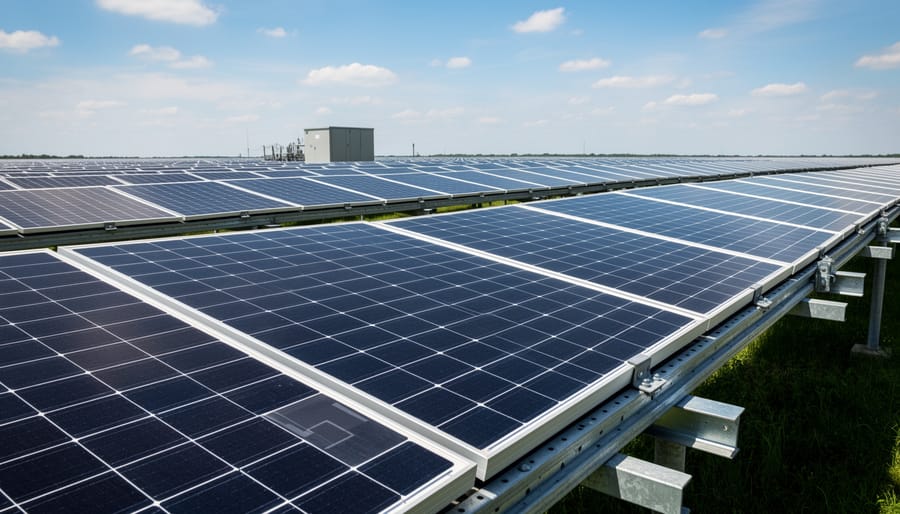
Qualified Energy Conservation Bonds provide public entities with a substantial financial advantage through a federal tax credit subsidy that effectively reduces borrowing costs for solar project development. Unlike conventional municipal bonds where investors receive tax-exempt interest payments, QECBs allow the issuer to receive a direct tax credit payment from the federal government, enabling them to offer significantly lower interest rates to bondholders while maintaining investor appeal.
The mechanics of this advantage are straightforward yet powerful. When a municipality issues QECBs to finance a solar installation, the issuer receives a tax credit equal to the interest payments owed to bondholders. This credit is typically set at 70 percent of the comparable taxable bond rate, though the issuer can elect to receive a direct payment from the Treasury instead. This structure allows public entities to reduce their effective borrowing costs dramatically, often by 2 to 4 percentage points compared to traditional tax-exempt bonds.
Consider a practical example: A county government issues 5 million dollars in QECBs to construct a 2-megawatt solar array on municipal buildings. With the federal credit subsidy, the county might pay an effective interest rate of just 1.5 percent rather than the 4.5 percent they would pay on conventional municipal bonds. Over a 15-year bond term, this translates to savings exceeding 650,000 dollars in interest costs, funds that can be redirected toward additional renewable energy initiatives or other community priorities.
These reduced borrowing costs make solar projects financially viable for smaller municipalities and public institutions that might otherwise struggle to secure favorable financing terms. Universities partnering with local governments have particularly benefited from these mechanisms, leveraging QECBs to develop campus-based solar installations while maintaining fiscal responsibility. The tax credit advantage effectively democratizes access to solar infrastructure financing across diverse public sector entities.
The Financial Mechanics: How QECBs Work in Practice
Issuance Process and Allocation Requirements
Obtaining qualified energy conservation bond allocation represents a structured process governed by federal regulations and administered through designated authorities. The Internal Revenue Service initially allocated QECB authority to states, large municipalities, and Indian tribal governments based on population formulas, creating a finite pool of available bonding capacity that issuers must secure before proceeding with solar or other energy conservation projects.
Prospective issuers begin by requesting allocation from their state energy office or designated state authority responsible for administering the QECB program. Applications typically require detailed project descriptions, including technical specifications of the proposed solar installation, energy savings projections, and comprehensive financial analyses demonstrating project viability. States maintain varying application procedures, with some operating on a first-come, first-served basis while others employ competitive scoring systems that prioritize projects based on environmental impact, cost-effectiveness, or alignment with state energy goals.
Volume cap limitations significantly constrain QECB availability. The American Recovery and Reinvestment Act of 2009 provided approximately $3.2 billion in national allocation authority, distributed proportionally among eligible entities. Once allocated to specific projects, this authority becomes reserved, reducing the remaining pool available for subsequent applicants. Issuers must recognize that allocation authority expires if not utilized within specified timeframes, typically requiring bond issuance within three years of receiving allocation approval.
Coordination with bond counsel and financial advisors proves essential throughout the allocation process, as technical compliance requirements demand careful navigation. Universities partnering with municipalities on campus solar installations must work collaboratively through these channels to ensure proper allocation documentation and regulatory adherence, positioning their projects for successful bond issuance.

Interest Rate Structures and Tax Credit Elections
Qualified Energy Conservation Bonds provide issuers with two distinct financing structures, each offering unique advantages depending on the issuer’s financial circumstances and strategic objectives. Understanding these options is essential for municipalities and qualifying entities seeking to optimize their solar project financing.
The first option involves issuing traditional tax-exempt bonds, where interest payments to bondholders remain exempt from federal income taxation. This structure allows issuers to offer lower interest rates to investors, who accept reduced yields in exchange for the tax exemption benefit. This approach works best for issuers with strong credit ratings and established access to capital markets, as the tax-exempt status alone provides sufficient investor appeal.
The second option permits issuers to structure QECBs as taxable bonds while receiving direct federal subsidy payments. Under this arrangement, the federal government reimburses the issuer for a portion of the interest costs, effectively reducing the net borrowing expense. The subsidy rate was initially set at 70 percent of the comparable Treasury obligation rate, though sequestration adjustments have reduced this amount in recent years. This structure proves particularly advantageous for smaller municipalities or entities with limited market access, as the direct subsidy reduces their effective interest burden without requiring them to navigate complex tax-exempt bond markets.
The choice between structures depends on several factors: the issuer’s creditworthiness, market conditions, administrative capacity, and the relative value of tax exemption versus direct payment. Many public sector issuers have favored the direct subsidy approach, appreciating the predictable federal payment mechanism and simplified investor marketing, as taxable bonds typically attract a broader investor base than tax-exempt securities.
Cost Savings Compared to Conventional Financing
Qualified Energy Conservation Bonds deliver substantial financial advantages over conventional financing mechanisms. Traditional municipal bonds typically carry interest rates ranging from 3.5% to 5.5%, while commercial loans for energy projects may exceed 6-8%. QECBs, through their federal tax credit subsidy structure, effectively reduce borrowing costs to 0% for issuers when the subsidy covers 70% of interest payments on taxable bonds.
For a $10 million solar installation, this translates to approximately $2-3 million in interest cost savings over a 20-year term compared to conventional municipal bonds. The direct subsidy payment mechanism eliminates the need for complex tax-exempt structures, reducing administrative costs by 15-25%. Additionally, QECBs enable public entities with limited tax-exempt borrowing capacity to access affordable capital specifically designated for energy conservation projects, creating opportunities that might otherwise remain financially unfeasible through traditional financing channels.
Real-World Applications: Solar Projects Funded Through QECBs
Municipal Solar Installations
Municipal governments across the United States have leveraged Qualified Energy Conservation Bonds to advance public sector solar development on various facilities. The City of Portland, Oregon utilized QECB financing to install solar arrays on multiple municipal buildings, including fire stations and administrative offices, reducing operational costs while demonstrating environmental leadership. Similarly, Los Angeles County deployed QECB-funded photovoltaic systems across its extensive public school district, generating clean electricity for educational facilities while creating hands-on learning opportunities for students studying renewable energy technologies.
In the Midwest, Cincinnati implemented a comprehensive QECB program that installed solar panels on water treatment facilities and maintenance yards, achieving significant energy cost savings. These installations typically ranged from 100 kilowatts to several megawatts in capacity, depending on building size and energy requirements. The financing mechanism proved particularly advantageous for smaller municipalities with limited capital budgets, as the federal subsidy effectively lowered borrowing costs. Many projects incorporated community engagement components, partnering with local universities to monitor system performance and provide educational programming about photovoltaic technology and energy conservation strategies.
Public Utility Solar Development
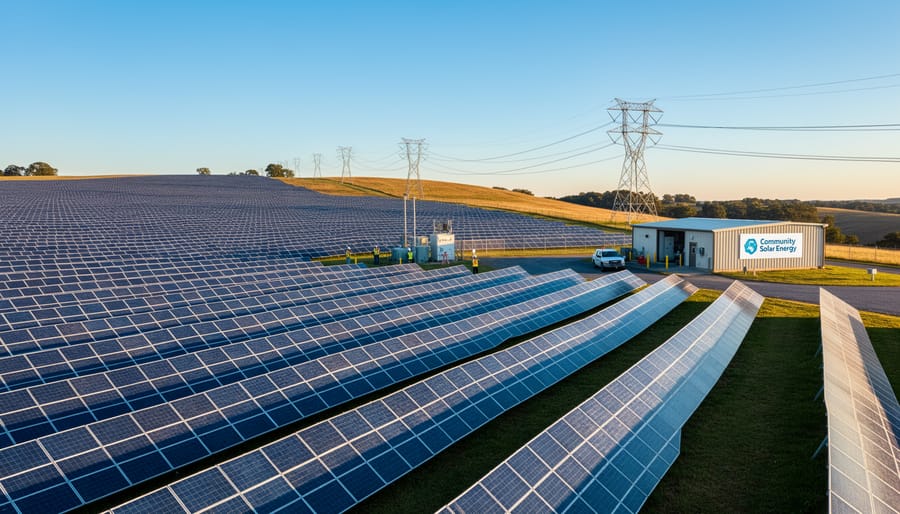
Public power providers, including municipal utilities and electric cooperatives, have emerged as significant beneficiaries of Qualified Energy Conservation Bonds for developing utility-scale solar installations and community solar programs. These publicly owned entities can access QECB financing to support large-scale renewable energy infrastructure that serves their customer base while maintaining competitive electricity rates.
For utility-scale projects, public power providers typically utilize QECBs to finance solar farms ranging from several megawatts to utility-scale installations exceeding 50 megawatts. The tax credit subsidy effectively reduces the borrowing cost, enabling these entities to undertake capital-intensive projects that might otherwise strain municipal budgets. This financing mechanism proves particularly valuable for smaller public utilities that lack the revenue streams or credit ratings of investor-owned utilities.
Community solar programs represent another strategic application of QECBs for public utilities. These initiatives allow multiple customers to subscribe to a shared solar array, receiving credits on their electricity bills proportional to their subscription. By using QECB financing, public utilities can develop these community-scale projects while keeping subscription costs affordable for residential and commercial participants who cannot install rooftop systems due to unsuitable roof conditions, renting status, or financial constraints.
Research collaborations with universities have helped public utilities optimize QECB-financed solar deployments through performance modeling and grid integration studies. Many utilities also incorporate educational program offerings, providing transparency about renewable energy investments to ratepayers and fostering community support for the transition to clean energy infrastructure. This educational component strengthens public acceptance while demonstrating fiscal responsibility in managing taxpayer-supported financing mechanisms.
Limitations and Considerations for PV Professionals
Volume Caps and Allocation Challenges
Qualified Energy Conservation Bonds faced significant practical limitations due to their restricted volume caps established by the American Recovery and Reinvestment Act of 2009. Congress authorized a total national allocation of $3.2 billion in QECB capacity, which was distributed among state, local, and tribal governments according to population-based formulas. This relatively modest allocation created intense competition among potential issuers, particularly as renewable energy projects including solar installations gained momentum across the country.
The allocation mechanism required state energy offices to coordinate distribution among municipalities, counties, and other qualifying governmental entities within their jurisdictions. Many states implemented competitive application processes where prospective issuers submitted project proposals for evaluation. This created administrative burdens and uncertainty for public sector decision-makers attempting to secure financing for photovoltaic installations and other eligible conservation measures.
Large-scale solar projects often required substantial portions of available QECB authority, further constraining access for smaller municipalities with modest conservation initiatives. Once allocated amounts were exhausted in a given jurisdiction, issuers had no recourse except waiting for potential future congressional authorization, which never materialized. This scarcity transformed QECBs from a broadly available financing tool into a limited resource accessible primarily to well-prepared issuers with strong application materials and strategic timing.
Restrictions on Private Sector Participation
Qualified Energy Conservation Bonds operate under a fundamental restriction that limits their availability exclusively to governmental entities, including state and local governments, tribal governments, and qualified issuers designated by these authorities. This structural limitation means that private sector developers, independent power producers, and commercial enterprises cannot directly access QECB financing for solar projects, regardless of project scale or environmental benefit.
This restriction significantly impacts the solar industry’s financing landscape. Private solar developers must instead pursue alternative financing mechanisms such as tax equity partnerships, commercial loans, or power purchase agreements. Commercial building owners seeking rooftop solar installations cannot leverage the low-cost capital that QECBs provide, potentially facing higher financing costs that may affect project feasibility.
However, creative partnership structures have emerged to bridge this gap. Private developers can collaborate with public entities through lease agreements, whereby municipalities issue QECBs to finance solar installations on government facilities, then contract with private firms for construction, operation, and maintenance services. Educational institutions have particularly benefited from such arrangements, as universities can issue bonds for campus solar projects while engaging private contractors for technical implementation.
Despite these workarounds, the public-only restriction fundamentally shapes QECB deployment patterns, concentrating benefits among government facilities, public schools, and municipal infrastructure rather than broader commercial solar development.
The Broader Green Bond Landscape for Solar Financing
Qualified Energy Conservation Bonds represent just one instrument within a rapidly expanding universe of green finance options supporting solar project development. Understanding how QECBs fit into this broader landscape helps stakeholders make informed decisions about optimal financing structures for their specific circumstances.
Corporate green bonds have emerged as a dominant force in renewable energy financing, with major solar developers and utilities issuing bonds specifically earmarked for photovoltaic installations. Unlike QECBs, which are limited to governmental entities, corporate green bonds allow private companies to access capital markets directly while demonstrating environmental commitment to investors. These instruments typically offer conventional interest rates without tax credits, making them suitable for larger-scale commercial projects with established revenue streams.
Climate bonds, certified under the Climate Bonds Standard, provide another sophisticated option. These third-party verified instruments ensure proceeds finance projects meeting rigorous environmental criteria, offering investors confidence in their climate impact. The certification process adds credibility that can lower borrowing costs for issuers while attracting environmentally focused institutional investors who might otherwise hesitate to participate in renewable energy markets.
Municipal solar bonds and Property Assessed Clean Energy financing mechanisms complement QECBs by addressing different segments of the solar market. PACE financing, for instance, allows property owners to repay solar investments through property tax assessments, removing upfront cost barriers that traditional financing cannot overcome. These innovative financing mechanisms collectively create a diversified toolkit for solar deployment.
The integration of QECBs within this ecosystem is particularly valuable for public sector entities seeking subsidized borrowing rates. While corporate green bonds excel at financing large utility-scale installations and PACE programs target residential and commercial properties, QECBs occupy a strategic middle ground—enabling schools, municipalities, and tribal governments to access favorable financing terms specifically designed for their unique fiscal constraints and public service missions.
Qualified Energy Conservation Bonds represent a significant, though underutilized, financing mechanism that has facilitated solar project development for public sector entities facing capital constraints. While the authorization cap and complexities of navigating federal tax credit structures have limited widespread adoption compared to traditional financing vehicles, QECBs occupy an important niche in the municipal and public utility solar development landscape. For jurisdictions unable to directly monetize tax credits or access conventional bond markets at favorable rates, these instruments provide a viable pathway to deploy photovoltaic systems that advance clean energy goals while addressing budget limitations.
For aspiring photovoltaic professionals entering the industry, understanding QECBs and similar specialized financing mechanisms offers competitive advantages when working with municipal clients, educational institutions, and public utilities. The ability to identify appropriate financing structures based on client tax status, project scale, and long-term energy objectives distinguishes knowledgeable solar professionals in an increasingly sophisticated marketplace. Public sector clients particularly value partners who comprehend the interplay between federal incentives, local financing options, and operational requirements.
Looking forward, the solar financing landscape continues to evolve with emerging green bond structures, innovative power purchase agreements, and refinements to existing federal programs. While QECBs themselves face uncertain reauthorization prospects, the principles underlying these bonds—leveraging federal support to reduce borrowing costs for clean energy projects—persist across new financing models. The industry trajectory points toward increasingly accessible capital for solar development, driven by institutional investor interest, climate policy momentum, and technological cost reductions. Professionals who cultivate expertise across diverse financing mechanisms, including specialized instruments like QECBs, position themselves to navigate this dynamic environment and deliver optimal solutions for varied client contexts.