Building-Integrated Photovoltaics (BIPV) represents a fundamental shift in how solar technology merges with architectural design. Unlike traditional rooftop panels that sit atop existing structures, BIPV systems function as integral building components—replacing conventional materials like windows, facades, roofing tiles, or shading devices while simultaneously generating electricity. This dual functionality transforms buildings from energy consumers into power producers without compromising aesthetic appeal or structural integrity.
Understanding BIPV extends beyond simple definition. For professionals entering the photovoltaic industry, grasping the certification landscape proves essential. International standards such as IEC 61215 and IEC 61730 establish baseline performance and safety requirements, while specialized BIPV standards address unique challenges like building integration, thermal stress, and architectural compliance. The European Committee for Standardization (CEN) and various national bodies provide additional frameworks governing installation practices, fire safety ratings, and weatherproofing specifications.
The certification process directly impacts project feasibility, insurance coverage, building permits, and long-term warranty validity. Architects must specify certified products to meet building codes. Installers require knowledge of compliance documentation to avoid liability. Project developers need this expertise to secure financing and grid connection approvals. As the global BIPV market accelerates toward projected multi-billion dollar valuations, professionals equipped with comprehensive standards knowledge position themselves as indispensable assets in this rapidly evolving sector where architectural innovation intersects with renewable energy generation.
What BIPV Actually Means in Today’s Construction Landscape

The Dual Role: Building Material Meets Energy Generator
Building-integrated photovoltaics occupy a distinctive position in the construction industry, simultaneously functioning as structural building elements and renewable energy generators. This dual purpose creates unprecedented certification complexities, as BIPV products must satisfy rigorous requirements from two traditionally separate regulatory domains.
Unlike conventional solar panels that mount onto existing structures, BIPV components replace conventional building materials such as roof tiles, facade cladding, windows, or skylights. Consequently, these products must meet comprehensive building material standards addressing weather resistance, structural integrity, fire safety, thermal performance, and durability under environmental stresses. A BIPV curtain wall, for example, must withstand wind loads, prevent water infiltration, and provide adequate insulation—all while generating electricity efficiently.
Simultaneously, BIPV systems must meet photovoltaic performance standards governing electrical output, conversion efficiency, and safety protocols. This dual compliance requirement demands specialized testing procedures and certification pathways that few manufacturers initially understood. The result is a complex evaluation process where construction material testing laboratories must collaborate with photovoltaic certification bodies.
Academic institutions partnering with industry leaders have established educational programs specifically addressing these certification challenges, helping professionals navigate the intricate requirements. This collaborative approach ensures that aspiring photovoltaic professionals understand both building science fundamentals and renewable energy technology, preparing them for BIPV project development and implementation.
Common BIPV Applications and Products
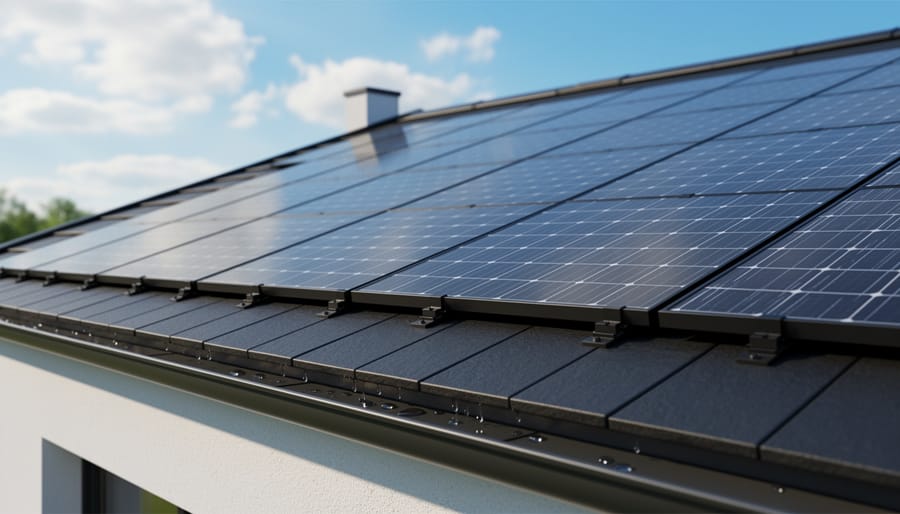
Building-integrated photovoltaics manifest in diverse architectural applications, each offering distinct advantages for solar energy generation while maintaining aesthetic integrity. Solar roof tiles represent perhaps the most recognizable BIPV solution, seamlessly replacing conventional roofing materials with photovoltaic alternatives that preserve traditional architectural appearances. These systems provide complete roof coverage while generating electricity, making them particularly suitable for residential and commercial renovations.
Façade-integrated systems transform vertical building surfaces into energy-generating assets, utilizing curtain walls, spandrel panels, and cladding elements embedded with photovoltaic technology. This application proves especially valuable for high-rise structures where roof space limitations restrict conventional solar installations. Transparent and semi-transparent BIPV modules enable architects to balance daylighting requirements with energy generation capabilities.
Photovoltaic skylights and canopies deliver dual functionality by providing weather protection and natural illumination while simultaneously generating power. These applications work effectively for atriums, walkways, and parking structures, optimizing underutilized building spaces.
Mose Solar’s product portfolio addresses these diverse BIPV applications through certified solutions designed for various architectural contexts. By offering systems that meet international certification standards, the company supports professionals seeking reliable, aesthetically integrated photovoltaic products that comply with building codes and performance requirements across different project types.
The Essential Standards Framework for BIPV Systems
International Electrotechnical Commission (IEC) Standards
Building-integrated photovoltaics must meet rigorous international standards to ensure safety, reliability, and performance. The International Electrotechnical Commission establishes these critical benchmarks through two primary standards that govern PV module certifications for BIPV applications.
IEC 61215 serves as the foundational standard for crystalline silicon photovoltaic modules, establishing comprehensive performance testing requirements. This standard evaluates BIPV modules through thermal cycling tests, humidity-freeze cycles, damp heat exposure, and mechanical load testing. For BIPV products specifically, these tests verify that modules maintain electrical performance and structural integrity when integrated into building envelopes where they face unique environmental stresses compared to traditional rooftop installations. The standard requires modules to retain at least 95 percent of their initial rated power output after completing the test sequence.
IEC 61730 addresses safety qualification requirements for photovoltaic modules, covering both construction and testing protocols. This two-part standard examines electrical safety, fire resistance, and mechanical hazards. Part 1 defines construction requirements including insulation coordination and protection against electric shock, while Part 2 outlines specific test procedures. For BIPV applications, compliance with IEC 61730 becomes particularly critical because these modules serve dual functions as both power generators and building components. The standard ensures that BIPV products withstand environmental conditions without creating safety hazards for building occupants. Universities partnering with industry leaders increasingly incorporate these standards into renewable energy curricula, preparing professionals to evaluate compliance documentation and specify appropriate products for architectural integration projects.
Building Code and Construction Standards
Building-integrated photovoltaic systems face a uniquely complex regulatory landscape compared to conventional solar installations. Unlike traditional rack-mounted PV arrays that function purely as energy-generating equipment, BIPV components serve dual purposes as both power producers and integral building elements. This fundamental distinction subjects BIPV products to comprehensive building code compliance requirements that standard photovoltaic systems never encounter.
Structural integrity represents a primary concern for BIPV installations. Whether integrated as facades, roofing materials, or skylights, these systems must withstand the same wind loads, snow accumulation, seismic forces, and dead loads as conventional building materials. Engineers must verify that BIPV modules possess adequate structural capacity while maintaining their photovoltaic functionality throughout the building’s design life.
Fire safety standards impose rigorous testing protocols on BIPV products. Building codes mandate specific fire resistance ratings, flame spread classifications, and smoke development indices. BIPV roofing materials, for instance, typically require Class A fire ratings in most jurisdictions, ensuring they perform comparably to traditional roofing products during fire events.
Waterproofing and weather resistance create additional challenges unique to BIPV applications. These systems must provide continuous weather barriers, preventing water infiltration while managing thermal expansion and contraction. Building envelope requirements demand that BIPV installations maintain their weatherproofing integrity across temperature extremes and environmental exposure.
Thermal performance standards further complicate BIPV implementation. Beyond energy generation metrics, these systems must meet insulation values, condensation control requirements, and thermal bridging limitations specified in energy codes. This integration of building science principles with photovoltaic technology distinguishes BIPV from conventional solar applications.
Regional Certification Requirements
Building-integrated photovoltaic systems must navigate distinct certification landscapes across global markets, each with specific requirements that directly impact project timelines and deployment strategies. Understanding these regional variations is essential for professionals working with BIPV installations.
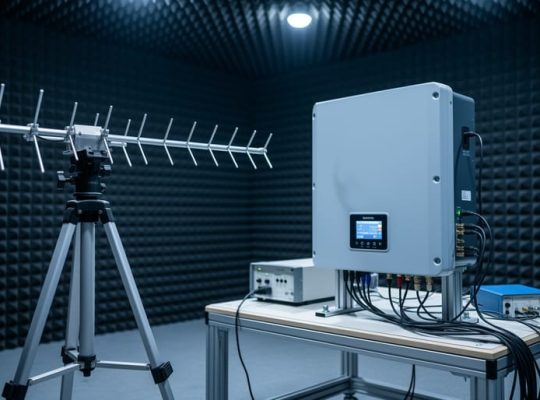
In North America, Underwriters Laboratories (UL) standards dominate the certification process. BIPV products typically require UL 61730 certification for photovoltaic module safety, alongside UL 1703 for flat-plate modules. Additionally, building code compliance necessitates meeting structural glazing standards when BIPV elements replace conventional building materials. Fire rating classifications under UL 790 or ASTM E108 become critical for roofing applications. Products must also satisfy EMC certification requirements to ensure electromagnetic compatibility with building systems.
European markets mandate CE marking, demonstrating conformity with essential health, safety, and environmental protection requirements. BIPV manufacturers must comply with the Construction Products Regulation (CPR) alongside the Low Voltage Directive (LVD) and IEC 61215 or IEC 61646 for module performance. The EN 50583 series specifically addresses BIPV systems, addressing both photovoltaic functionality and building envelope performance characteristics.
Asia-Pacific markets present varied requirements, with China requiring CCC certification, Japan enforcing JIS standards, and Australia mandating compliance with AS/NZS standards. These regional differences necessitate careful planning when sourcing BIPV products for international projects. Many manufacturers pursue multiple certifications simultaneously to access diverse markets, though this approach increases initial costs and development timelines. Professionals should verify that proposed BIPV systems carry appropriate certifications for their specific jurisdiction before procurement decisions.
Critical Certification Processes for BIPV Products
Performance and Safety Testing Requirements
Building-integrated photovoltaic products must pass rigorous performance and safety testing protocols before receiving certification. These comprehensive evaluations ensure that BIPV systems can withstand real-world environmental conditions while maintaining structural integrity and electrical performance throughout their operational lifespan.
Mechanical load testing subjects BIPV modules to simulated wind and snow loads, verifying their structural capacity to endure extreme weather events. Testing protocols apply both static and dynamic loads exceeding typical building code requirements, ensuring products maintain their protective envelope function while generating electricity. This evaluation is particularly critical since BIPV components serve dual purposes as both building materials and energy generators.
Thermal cycling tests expose products to repeated temperature fluctuations ranging from -40°C to +85°C, simulating decades of seasonal variations. These cycles identify potential material degradation, delamination, or joint failures that could compromise either the building envelope or electrical performance. Products typically undergo 200 to 600 thermal cycles depending on certification standards.
Humidity-freeze testing combines moisture exposure with temperature cycling to replicate harsh climatic conditions. BIPV modules are subjected to extended periods at 85% relative humidity followed by freezing temperatures, revealing vulnerabilities in edge seals, lamination quality, and junction box integrity. This testing ensures long-term weather resistance essential for building envelope applications.
Electrical safety verification encompasses multiple assessments, including insulation resistance, wet leakage current, and ground continuity testing. Similar to inverter safety standards, these protocols protect occupants from electrical hazards while confirming system reliability. Hot-spot endurance testing also evaluates module behavior under partial shading or cell failure conditions, preventing fire risks associated with localized overheating.
These comprehensive testing requirements distinguish certified BIPV products from conventional building materials, providing architects and developers confidence in their long-term performance and safety.
Third-Party Certification Bodies and Their Role
Independent third-party certification bodies serve as crucial gatekeepers in the BIPV industry, providing unbiased verification that products meet established international standards. These organizations conduct rigorous testing and evaluation processes to ensure that certified photovoltaic modules perform safely and reliably in building-integrated applications.
TÜV (Technischer Überwachungsverein), a leading German certification body, offers comprehensive testing services for BIPV products across electrical safety, fire resistance, and structural integrity parameters. Their certification process includes laboratory testing, factory inspections, and ongoing surveillance to maintain quality standards. TÜV’s global recognition makes their certification particularly valuable for manufacturers seeking international market access.
Underwriters Laboratories (UL), based in North America, specializes in safety certification for electrical components and building materials. For BIPV systems, UL evaluates products against standards including UL 1703 for flat-plate photovoltaic modules and UL 1741 for inverters. Their mark signifies compliance with North American safety requirements and building codes, making UL certification essential for projects in the United States and Canada.
The Canadian Standards Association (CSA) provides similar certification services with specific focus on Canadian market requirements. CSA testing encompasses electrical performance, mechanical stress resistance, and environmental durability under conditions typical of various Canadian climate zones.
These certification bodies maintain independence from manufacturers, ensuring objective evaluation of product claims. Their verification processes typically involve initial type testing, factory quality audits, and periodic sample testing from production lines. This multi-layered approach provides architects, installers, and building owners with confidence that BIPV products will perform as specified throughout their operational lifetime, protecting both investment value and occupant safety.
Why Proper Certification Protects Your Investment
Financial Incentives and Certification Requirements
Financial incentives represent substantial economic drivers for BIPV adoption, but accessing these benefits typically requires strict adherence to certification standards. Government tax credits, utility rebates, and feed-in tariff programs commonly mandate that photovoltaic products carry recognized certification marks demonstrating compliance with established safety and performance benchmarks. For instance, the U.S. Investment Tax Credit often requires products to meet specific listing standards, while European feed-in tariffs frequently stipulate CE marking and IEC compliance.
This certification requirement protects consumers and ensures public investments support reliable, safe installations. Project developers who specify non-certified BIPV systems risk disqualification from lucrative incentive programs, potentially eliminating 26-30% of project costs through lost tax benefits. Additionally, insurance providers and building code officials increasingly demand certified products, making standards compliance essential for project feasibility.
For professionals entering the BIPV field, understanding these financial linkages between certification and incentives proves critical. Educational programs should emphasize how certification documentation directly impacts project economics, enabling informed product selection and maximizing available financial support for building-integrated photovoltaic installations.
Liability and Insurance Considerations
Selecting non-certified BIPV products introduces significant legal and financial risks that building owners and developers must carefully consider. When photovoltaic systems lack proper certification, manufacturers’ warranties may become void or unenforceable, leaving property owners responsible for repair or replacement costs that could reach hundreds of thousands of dollars.
Insurance providers typically require documentation proving that building materials meet established safety and performance standards. Non-certified BIPV installations may result in coverage denials or substantially higher premiums, as insurers view these systems as unquantified risks. In the event of fire, structural failure, or electrical incidents involving uncertified products, insurance claims may be rejected entirely, exposing building owners to devastating financial liability.
Professional liability concerns extend to architects, engineers, and contractors who specify or install non-certified systems. These professionals may face legal action if building performance issues or safety incidents occur, particularly when certified alternatives were available. Construction defect lawsuits can name all parties involved in the design and installation process, creating cascading liability across project teams.
Compliance issues further complicate the risk landscape. Building departments and permitting authorities increasingly scrutinize BIPV installations, with many jurisdictions explicitly requiring certification documentation before issuing certificates of occupancy. Retroactive compliance efforts can prove extraordinarily expensive, potentially requiring complete system removal and reinstallation with certified products.
For aspiring photovoltaic professionals, understanding these liability considerations is essential for protecting both clients and professional reputations. Recommending only certified BIPV products demonstrates due diligence and adherence to industry best practices, establishing a foundation for sustainable career development in the renewable energy sector.
Evaluating BIPV Products: What Professionals Need to Know
Key Certification Marks and What They Signify
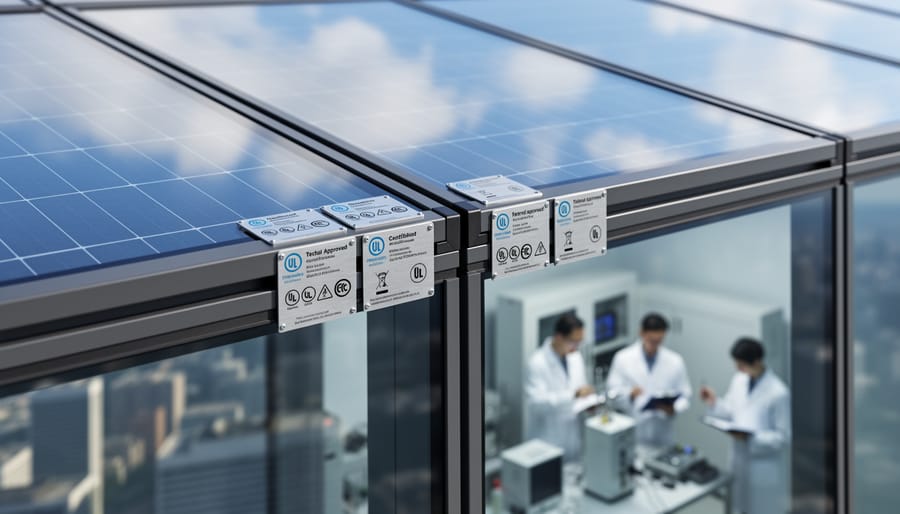
Recognizing legitimate certification marks is essential when evaluating BIPV products for procurement or installation. The most widely recognized mark is the IEC certification logo, typically displayed as a circular emblem with “IEC” lettering, which verifies compliance with International Electrotechnical Commission standards for electrical safety and performance. Products bearing this mark have undergone rigorous third-party testing for both photovoltaic functionality and building material requirements.
The CE marking, mandatory for BIPV products sold in European markets, indicates conformity with EU safety, health, and environmental protection standards. This rectangular mark with stylized letters confirms the manufacturer has assessed the product against applicable directives including construction products regulation and electrical equipment safety.
UL certification marks, common in North American markets, appear as a backward “UR” symbol within a circle. These verify that Underwriters Laboratories has tested the BIPV component for fire safety, structural integrity, and electrical performance according to region-specific codes.
TUV certification logos, showing “TUV” with distinctive styling and often accompanied by country identifiers, represent independent German testing organizations that evaluate both product quality and manufacturing processes. Look for marks that specify the relevant standard number, such as IEC 61215 or IEC 61730, providing transparency about which specific requirements the product meets.
Red Flags in Product Documentation
When evaluating BIPV products, several documentation red flags warrant immediate scrutiny. Missing or expired certification marks represent the most obvious concern, as legitimate manufacturers maintain current certifications and prominently display them. Vague performance claims without supporting test data from accredited laboratories should raise suspicion, particularly when manufacturers cannot provide detailed technical specifications or independent verification reports.
Documentation that references outdated standards or omits critical testing parameters often indicates non-compliance. Authentic certification includes specific test report numbers, issuing body identification, and validity dates. Be wary of products claiming “equivalent” certifications without recognized third-party validation or those using ambiguous phrases like “meets industry standards” without specifying which standards.
Incomplete fire safety classifications, missing electrical safety certifications, or absent structural load calculations signal potential specification risks. Reputable BIPV manufacturers provide comprehensive technical documentation including installation guidelines, warranty terms tied to proper certification, and transparent supply chain information. Products lacking clear country-of-origin details or manufacturer contact information deserve additional verification. When documentation appears professionally deficient or manufacturers resist providing certification evidence, consider alternative suppliers. Protecting project integrity requires thorough due diligence, particularly for installations where building code compliance and long-term performance warranties depend on legitimate product certification.
The Future of BIPV Standards and Emerging Requirements
The BIPV standards landscape continues to evolve rapidly in response to climate commitments, technological innovation, and market demands. Future certification frameworks are increasingly incorporating comprehensive sustainability metrics that extend beyond energy generation efficiency to encompass environmental impact throughout the product lifecycle.
Emerging standards are adopting circular economy principles, requiring manufacturers to demonstrate recyclability, material traceability, and end-of-life recovery strategies for BIPV components. The European Union’s construction product regulations are pioneering requirements for environmental product declarations that quantify carbon footprints, embodied energy, and resource depletion impacts. These holistic assessment criteria will become standard practice globally, fundamentally changing how BIPV products are evaluated and specified.
Digitalization is transforming certification processes, with blockchain-enabled product passports and AI-driven compliance verification systems streamlining documentation and enhancing transparency. Digital twins of BIPV installations enable continuous performance monitoring against certification benchmarks, creating feedback loops that inform future standard revisions.
The complexity of evolving requirements presents significant educational opportunities for professionals entering the photovoltaic sector. Universities worldwide are developing specialized curricula addressing BIPV design, installation, and certification compliance. These programs integrate architectural considerations, electrical engineering principles, and regulatory knowledge essential for successful project delivery.
For professionals seeking to position themselves at the forefront of this dynamic field, understanding emerging standards is crucial. The convergence of building codes, energy regulations, and sustainability frameworks creates demand for specialists who can navigate multiple compliance pathways while optimizing system performance.
Industry stakeholders should monitor standards organizations like IEC, CEN, and national certification bodies for upcoming revisions. Participating in public consultation periods and industry working groups provides valuable insights while contributing to practical, implementable standards that advance BIPV adoption while maintaining rigorous quality and safety benchmarks.
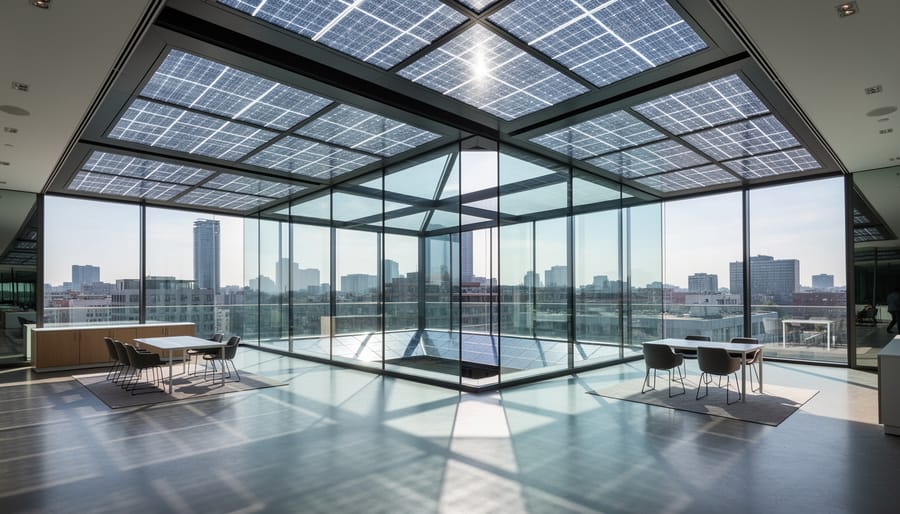
Understanding BIPV standards and certification requirements represents a fundamental competency for any professional entering the photovoltaic industry. As building-integrated photovoltaic systems continue to gain market prominence, architects, installers, project developers, and engineers must maintain current knowledge of evolving certification frameworks to ensure product compliance, system safety, and project success. The complex interplay between electrical performance standards, construction requirements, and regional certification variations demands continuous professional development.
For aspiring PV professionals, investing time in comprehensive standards education provides measurable competitive advantages in an increasingly specialized field. Knowledge of IEC, UL, and regional certification protocols enables more informed product selection, facilitates smoother project approvals, and reduces costly compliance errors during installation and commissioning phases.
Mose Solar’s educational programs are designed to support this ongoing learning journey, offering structured curriculum that translates complex certification requirements into practical, actionable knowledge. Through collaboration with universities and industry experts, these programs equip participants with the technical foundation and standards literacy necessary for professional advancement. Whether you are beginning your career in renewable energy or seeking to expand existing expertise, staying current with BIPV certification requirements positions you at the forefront of sustainable building innovation.