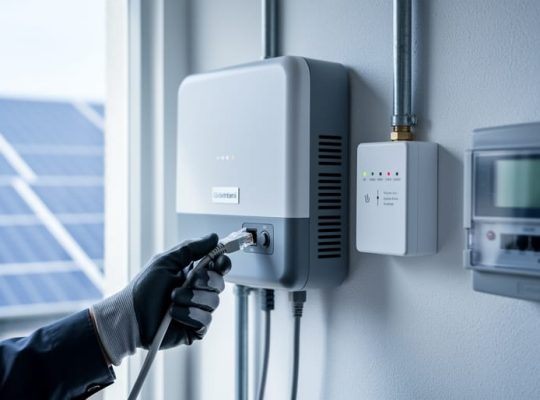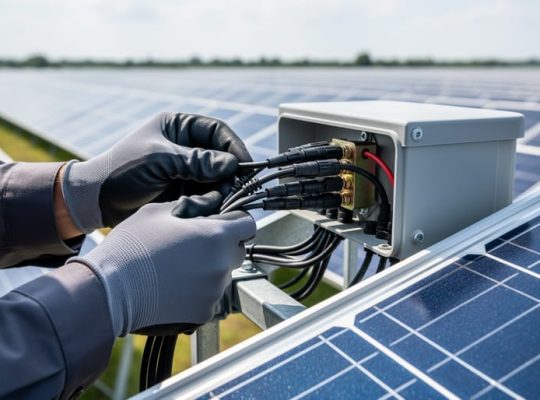
Electromagnetic compatibility certification determines whether photovoltaic equipment can operate without causing or suffering from electromagnetic interference—a regulatory requirement that directly impacts market access, system reliability, and professional credibility in the solar industry. For manufacturers, EMC certification validates that inverters, charge controllers, and monitoring systems meet international standards like IEC 61000 series, EN 61000, and FCC Part 15, preventing costly recalls and legal complications. Without proper certification, PV equipment cannot legally enter European, North American, or most Asian markets, rendering even technically superior products commercially worthless.
The certification process involves rigorous testing for conducted emissions, radiated emissions, electrostatic discharge immunity, and surge immunity—assessments that reveal how equipment behaves in real-world electrical environments where multiple devices interact. Understanding these requirements transforms from academic knowledge into competitive advantage when professionals can specify compliant components, troubleshoot interference issues, or guide procurement decisions. Manufacturers face testing costs ranging from $5,000 to $50,000 depending on equipment complexity and applicable standards, making early compliance planning essential for project budgets and timelines.
As renewable energy systems integrate increasingly sophisticated electronics—from smart inverters to IoT-enabled monitoring—electromagnetic compatibility challenges intensify. Educational programs addressing these technical realities equip professionals with skills to navigate evolving standards, interpret test reports, and implement design practices that ensure first-time certification success. This knowledge foundation separates competent practitioners from those merely reacting to compliance failures after production begins.
What EMC Certification Actually Means for PV Equipment
The Difference Between EMC and EMI
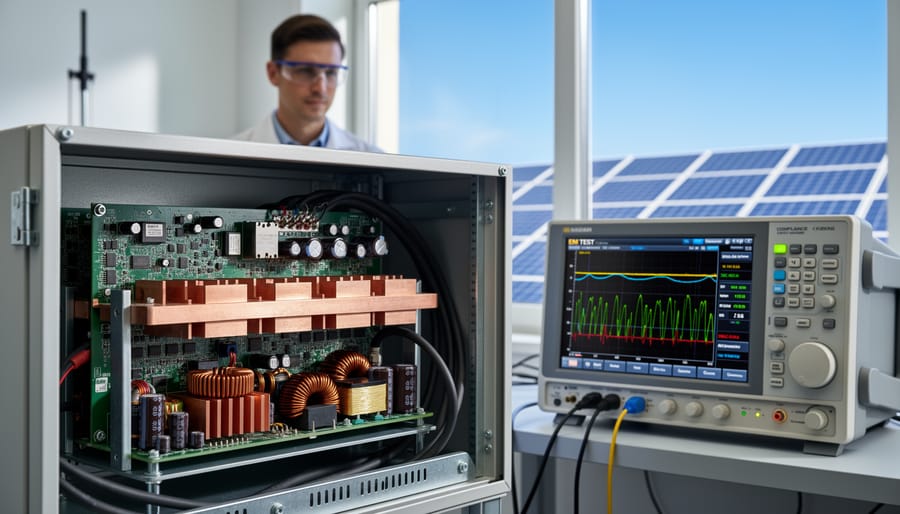
Electromagnetic Compatibility (EMC) serves as the umbrella term encompassing two distinct but interrelated aspects of electromagnetic performance. Understanding this distinction is essential for photovoltaic professionals navigating certification requirements.
Electromagnetic Interference (EMI) refers to the emissions aspect—the unwanted electromagnetic energy that equipment releases into its environment. For solar inverters and power conditioning systems, these emissions could potentially disrupt nearby electronic devices, communication systems, or monitoring equipment. EMI testing measures and limits these radiated and conducted emissions to ensure devices operate as good electromagnetic neighbors.
Conversely, electromagnetic immunity (often abbreviated as EMS) addresses how well equipment withstands external electromagnetic disturbances. In renewable energy installations, solar equipment must continue functioning reliably despite exposure to radio frequency interference, electrical fast transients, voltage surges, and other electromagnetic phenomena common in industrial and residential settings.
EMC certification requires that equipment satisfies both emission and immunity requirements. A solar inverter must not only limit its own electromagnetic emissions but also demonstrate resilience against external interference. This dual requirement ensures reliable operation within complex electrical environments where multiple devices coexist. For professionals entering the photovoltaic sector, grasping this emission-immunity relationship provides foundational knowledge for understanding how EMC standards protect both equipment functionality and overall system performance.
Why PV Systems Create Electromagnetic Challenges
Photovoltaic systems present distinctive electromagnetic compatibility challenges that extend beyond conventional electrical equipment. Solar inverters, the critical components that convert DC power to AC electricity, employ high-frequency switching operations that generate electromagnetic interference across broad frequency spectrums. These rapid switching cycles, often occurring at frequencies between 16 kHz and 100 kHz, produce conducted and radiated emissions that can interfere with nearby electronic devices, communication systems, and utility grid operations.
DC-DC converters, which optimize voltage levels within PV arrays, similarly utilize pulse-width modulation techniques that introduce additional electromagnetic noise. The extensive DC cabling connecting panels to inverters acts as unintentional antennas, radiating interference and increasing susceptibility to external electromagnetic disturbances. Long cable runs, sometimes extending hundreds of meters in utility-scale installations, amplify these effects considerably.
Furthermore, modern PV systems incorporate power optimizers, monitoring equipment, and communication modules that contribute to the electromagnetic environment. Unlike PV module certifications that focus primarily on electrical safety and performance, EMC certification addresses these unique interference characteristics. Without proper electromagnetic management, PV installations can disrupt radio communications, interfere with medical equipment in nearby facilities, or experience reduced performance from external electromagnetic sources. These challenges necessitate rigorous testing protocols and compliance verification to ensure solar equipment operates harmoniously within the broader electromagnetic spectrum while maintaining reliability and safety standards.
Key EMC/EMI Standards Governing PV Equipment
IEC 61000 Series: The Foundation Standards
The IEC 61000 series represents the cornerstone framework for electromagnetic compatibility in photovoltaic systems, establishing measurable criteria that equipment manufacturers must meet to ensure reliable grid integration and operational safety. This comprehensive standard family divides into six distinct parts, each addressing specific aspects of EMC performance.
IEC 61000-4-2 through 61000-4-6 focus on immunity testing, evaluating how PV equipment responds to electrostatic discharge, radiated electromagnetic fields, electrical fast transients, and conducted disturbances. For solar installations, these standards prove particularly critical given the exposure of outdoor components to lightning strikes and switching transients from nearby industrial operations. IEC 61000-6-2 and 61000-6-4 establish generic emission and immunity requirements for industrial environments where most utility-scale solar farms operate.
The emission standards, particularly IEC 61000-6-3, limit the electromagnetic interference that PV inverters and power conditioning equipment may introduce to the electrical grid. These requirements directly impact inverter security standards and overall system performance. Manufacturers must demonstrate compliance through rigorous testing protocols that simulate real-world conditions, including voltage fluctuations, harmonic distortion, and radio frequency interference.
Understanding these foundational standards enables professionals to specify appropriate equipment, anticipate testing requirements, and ensure project compliance. Academic institutions collaborating with industry leaders increasingly incorporate IEC 61000 interpretation into their curricula, recognizing that comprehensive standards knowledge differentiates competent practitioners from novices in the renewable energy sector.
EN 61000-6-3 and EN 61000-6-2: European Compliance Requirements
For photovoltaic equipment manufacturers seeking market access in Europe, understanding EN 61000-6-3 and EN 61000-6-2 is fundamental to achieving CE marking compliance. These harmonized standards form the cornerstone of electromagnetic compatibility requirements within the European Union.
EN 61000-6-3 addresses emission standards for equipment operating in residential, commercial, and light-industrial environments. This standard sets limits on conducted and radiated electromagnetic emissions that solar inverters, charge controllers, and monitoring systems may generate during normal operation. Compliance demonstrates that your photovoltaic equipment will not interfere with other electronic devices, radio communications, or electrical networks in its vicinity.
Conversely, EN 61000-6-2 establishes immunity requirements for industrial environments. This standard ensures that PV equipment maintains reliable performance when exposed to electromagnetic disturbances such as electrostatic discharge, radio frequency interference, electrical fast transients, and voltage fluctuations common in industrial settings. For solar installations in commercial or industrial facilities, meeting these immunity thresholds is essential for long-term operational stability.
Both standards work together to verify that photovoltaic systems neither create electromagnetic problems nor succumb to external electromagnetic influences. Manufacturers must conduct comprehensive testing through accredited laboratories to demonstrate conformity before affixing the CE mark, which grants legal market access across European Economic Area member states.
FCC Part 15 and Other Regional Requirements
While European CE marking establishes baseline EMC requirements for photovoltaic equipment, North American and Asian markets impose additional regulatory frameworks that manufacturers must navigate. Understanding these regional variations is essential for professionals developing or specifying PV systems for global deployment.
In North America, the Federal Communications Commission (FCC) Part 15 regulations govern unintentional radiators, including solar inverters and power conditioning equipment. These rules limit electromagnetic interference that could disrupt radio communications and neighboring electronic devices. Class A devices intended for commercial environments face less stringent limits than Class B equipment designed for residential use. Most residential PV inverters must meet Class B requirements, which demands more rigorous emission control. Manufacturers typically demonstrate compliance through testing at accredited laboratories, following measurement procedures outlined in ANSI C63.4 standards.
Canadian requirements largely mirror FCC standards through the Innovation, Science and Economic Development Canada (ISED) regulations, formerly known as Industry Canada standards. However, manufacturers must obtain separate certification and labeling for the Canadian market despite technical similarities.
Asian markets present diverse regulatory landscapes. Japan enforces the Voluntary Control Council for Interference (VCCI) standards for IT equipment and increasingly applies these principles to renewable energy systems. China requires China Compulsory Certification (CCC) for numerous product categories, including certain PV equipment types. South Korea maintains its own KC certification system, combining safety and EMC requirements under unified testing protocols.
Australia and New Zealand recognize CISPR standards but require local compliance marking through regulatory bodies like the Australian Communications and Media Authority (ACMA). Professionals entering these markets should verify current requirements as regulations continue evolving with renewable energy technology advancement.
The EMC Certification Process: Step by Step
Pre-Compliance Testing and Design Considerations
Integrating EMC considerations during the product design phase represents a strategic approach that significantly reduces certification costs and accelerates time-to-market for photovoltaic equipment manufacturers. Pre-compliance testing involves conducting preliminary electromagnetic compatibility assessments using in-house equipment or third-party laboratories before formal certification submissions. This proactive methodology allows engineers to identify potential interference issues early, when design modifications remain relatively inexpensive compared to post-production corrections.
Effective EMC design practices for solar inverters, charge controllers, and monitoring systems include proper circuit board layout, strategic component placement, appropriate grounding techniques, and shielding implementation. Engineers must consider cable routing, filtering requirements, and impedance matching to minimize both conducted and radiated emissions. Many manufacturers collaborate with universities and research institutions to access specialized testing facilities and expertise during development phases.
Design teams benefit from establishing internal EMC guidelines that align with international standards such as IEC 61000 series and CISPR requirements. Simulation software enables electromagnetic modeling before physical prototyping, predicting potential compliance challenges. Educational programs focusing on EMC principles equip design engineers with knowledge to implement cost-effective solutions from project inception, substantially improving first-time certification success rates while maintaining product performance and reliability standards essential for renewable energy applications.
Selecting an Accredited Testing Laboratory
Choosing the right testing laboratory is critical to obtaining valid EMC certification for photovoltaic equipment. Accredited facilities must hold recognition from national or international accreditation bodies such as ISO/IEC 17025, which ensures technical competence and reliable test results. When evaluating laboratories, verify their specific scope of accreditation covers the standards relevant to your PV products, including IEC 61000 series requirements and product-specific EMC standards.
Consider laboratories with demonstrated experience in renewable energy equipment testing, as photovoltaic systems present unique challenges including DC-to-AC conversion, high voltage DC circuits, and power inverter switching frequencies. Request documentation of their measurement uncertainty calculations and equipment calibration records to ensure accuracy. Geographic location matters too, since proximity can reduce shipping costs and facilitate communication during the testing process.
Review the laboratory’s turnaround times, reporting procedures, and willingness to provide pre-compliance guidance. Many accredited facilities offer preliminary testing services that identify potential issues before formal certification testing begins, saving both time and resources. Confirm that test reports will be recognized by your target markets’ regulatory authorities. Working with properly accredited laboratories protects your investment and ensures certification validity across international markets.
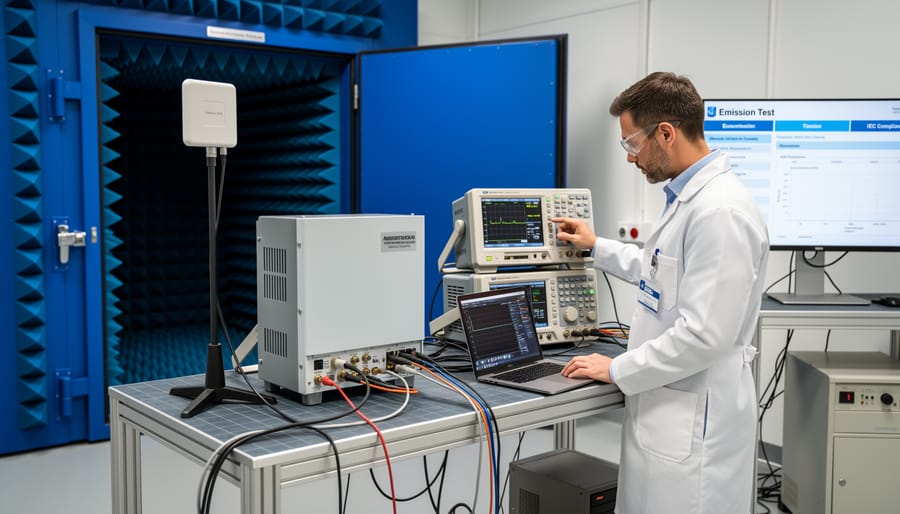
Conducting Emission and Immunity Tests
EMC testing procedures for photovoltaic equipment involve comprehensive evaluations to verify compliance with applicable standards. These tests assess both emissions produced by the equipment and its immunity to external electromagnetic disturbances, ensuring reliable operation in real-world installations.
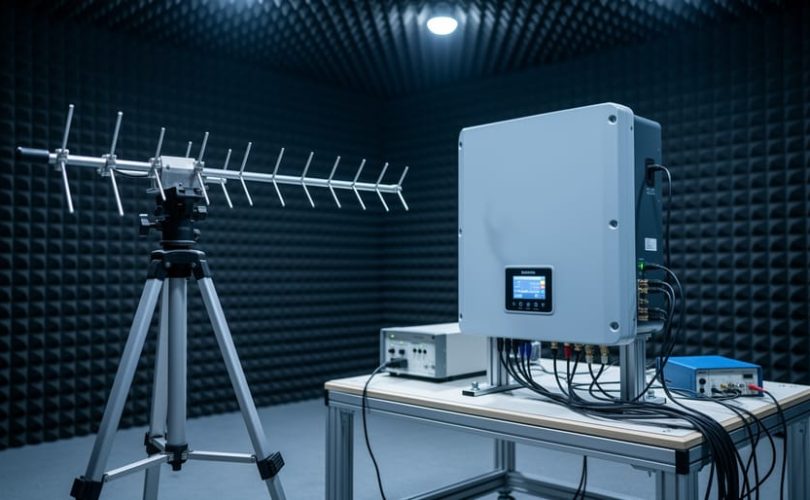
Emissions testing comprises two primary categories. Radiated emissions tests measure electromagnetic fields generated by the equipment using antennas positioned at specified distances, typically in semi-anechoic chambers or open-area test sites. Conducted emissions tests evaluate unwanted signals traveling through power and communication cables using line impedance stabilization networks (LISNs) that provide consistent measurement conditions while isolating the equipment from external grid noise.
Immunity testing evaluates how well PV equipment withstands electromagnetic interference. Electrostatic discharge (ESD) testing simulates static electricity events that occur during human contact or environmental conditions, applying high-voltage pulses to equipment surfaces and interfaces. Electrical fast transient (EFT) and surge immunity tests assess resilience against voltage spikes from switching operations and lightning-induced transients on power and signal lines.
Additional immunity tests include radiated field immunity, where equipment operates normally while exposed to electromagnetic fields of varying frequencies and strengths, and conducted radio-frequency immunity tests for disturbances coupled through cables. Power frequency magnetic field immunity tests are particularly relevant for inverters and other components installed near transformers.
Accredited testing laboratories conduct these evaluations following standardized procedures, documenting performance against specified limits. Test results inform necessary design modifications before final certification, ensuring PV equipment meets stringent electromagnetic compatibility requirements for safe grid integration and optimal system performance.
Common EMC Challenges in PV Equipment Design
Inverter Switching Noise and Harmonics
Photovoltaic inverters convert DC power from solar panels to AC power through rapid switching operations, typically occurring at frequencies between 10 kHz and 100 kHz. This high-frequency switching generates electromagnetic interference that can propagate through both conducted and radiated paths, potentially disrupting nearby electronic equipment and violating PV inverter compliance requirements.
The primary sources of switching noise include insulated-gate bipolar transistors (IGBTs), metal-oxide-semiconductor field-effect transistors (MOSFETs), and pulse-width modulation circuits. These components create voltage and current transients with rich harmonic content extending well into the MHz range. Without proper mitigation, these harmonics can exceed limits defined in EMC standards.
Effective mitigation strategies include installing input and output filters with appropriately rated capacitors and inductors to attenuate high-frequency components. Shielded cables minimize radiated emissions, while proper grounding techniques reduce common-mode noise. Advanced inverter designs incorporate soft-switching techniques and optimized PCB layouts with controlled trace impedances. Ferrite cores on DC and AC cables provide additional suppression at critical frequency ranges, ensuring electromagnetic compatibility across the installation.
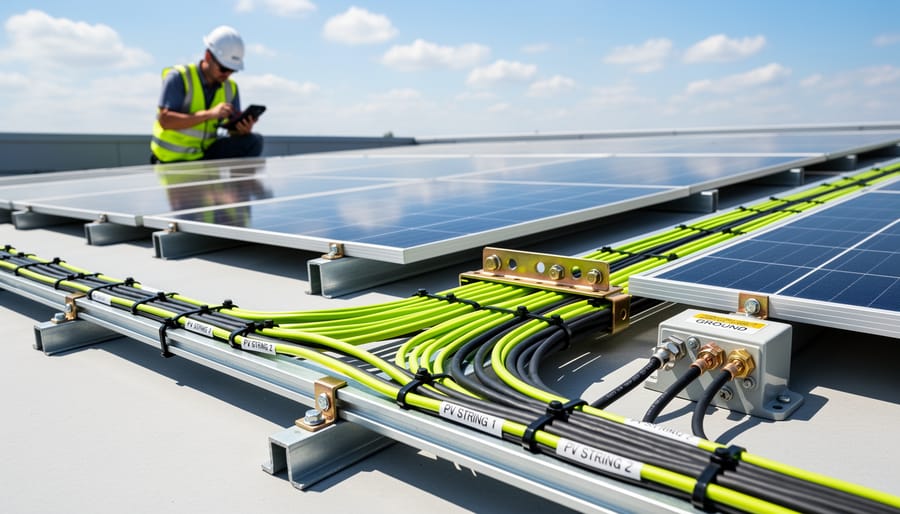
Cable Routing and Grounding Considerations
Proper cable routing and grounding practices significantly influence electromagnetic compatibility performance in photovoltaic installations, often determining whether a compliant system maintains its certification status in the field. Understanding these installation considerations helps prevent EMC-related failures that may not surface during initial testing but emerge during actual operation.
Cable routing requires careful attention to minimize electromagnetic interference. Direct current cables carrying high currents should maintain sufficient separation from sensitive signal cables, typically at least 30 centimeters for low-power communication lines. When parallel routing is unavoidable, minimize the parallel run length and use shielded cables with proper termination at both ends. Twisting DC positive and negative cables together reduces the loop area, thereby decreasing radiated emissions that could interfere with nearby equipment or violate emission standards.
Grounding establishes the foundation for effective EMC management. All metallic components, including inverter chassis, module frames, and mounting structures, must connect to a common grounding point to prevent ground loops that can amplify electromagnetic noise. The grounding conductor should follow the shortest practical path with minimal bends, as longer routes increase inductance and reduce high-frequency noise suppression effectiveness.
Bonding connections require low-impedance contacts, typically achieved through star washers or dedicated grounding lugs that penetrate surface oxidation. Regular inspection ensures connections remain tight, as environmental factors like thermal cycling can degrade contact quality over time. Professional training programs increasingly emphasize these practical installation aspects, recognizing that theoretical knowledge of EMC standards must translate into competent field practices for reliable, compliant photovoltaic system performance.
What Non-Compliance Really Costs Your Business
Market Access Restrictions and Legal Liabilities
Without proper EMC certification, photovoltaic equipment manufacturers face significant market barriers and legal risks that can severely impact business operations. Most regulated markets, including the European Union, North America, and major Asian economies, prohibit the sale and installation of non-certified PV equipment. This regulatory framework exists to protect electrical grids from interference and ensure public safety, making certification requirements non-negotiable for market entry.
The absence of certification creates substantial liability exposure for manufacturers, installers, and system owners. Equipment causing electromagnetic interference may result in grid disruptions, equipment damage, or safety hazards, leading to costly legal claims and regulatory penalties. Insurance providers typically exclude coverage for uncertified equipment, leaving parties fully exposed to financial risk. Additionally, warranty claims become unenforceable when products lack proper certification documentation.
Market access restrictions extend beyond initial sales prohibitions. Customs authorities routinely block shipments of uncertified equipment, resulting in delayed deliveries, storage fees, and potential contract violations. These barriers emphasize why understanding and meeting EMC compliance standards represents a fundamental business requirement rather than an optional consideration for photovoltaic industry participants.
Performance Issues and Customer Complaints
Electromagnetic interference in photovoltaic systems creates tangible operational challenges that extend beyond laboratory test results. One of the most frequently reported issues involves communication failures between system components. Inverters, monitoring equipment, and power optimizers rely on data transmission protocols that EMI can disrupt, leading to inaccurate performance reporting or complete loss of remote monitoring capabilities. These disruptions prevent operators from detecting system faults promptly, resulting in extended downtime and revenue losses.
Grid stability concerns represent another critical consequence of poor EMC performance. When multiple PV installations inject harmonic distortions and conducted emissions into the electrical grid simultaneously, utilities may experience voltage fluctuations and power quality degradation. This scenario has prompted grid operators in several regions to impose stricter interconnection requirements and conduct more rigorous pre-installation testing.
Customer complaints often center on radio frequency interference affecting household electronics, wireless networks, and communication devices. Poorly shielded PV equipment can generate conducted and radiated emissions that interfere with AM/FM radio reception, television signals, and WiFi connectivity. These quality-of-life impacts damage the reputation of solar installations and create warranty claims that burden manufacturers and installers. Understanding these real-world consequences underscores why EMC certification serves as more than a regulatory checkbox—it represents essential quality assurance for reliable, interference-free photovoltaic systems.
How Educational Programs Prepare PV Professionals
Understanding EMC certification requirements represents just one component of comprehensive professional development in the photovoltaic industry. As solar technology advances and regulatory landscapes evolve, aspiring professionals need structured educational pathways that integrate theoretical knowledge with practical compliance expertise.
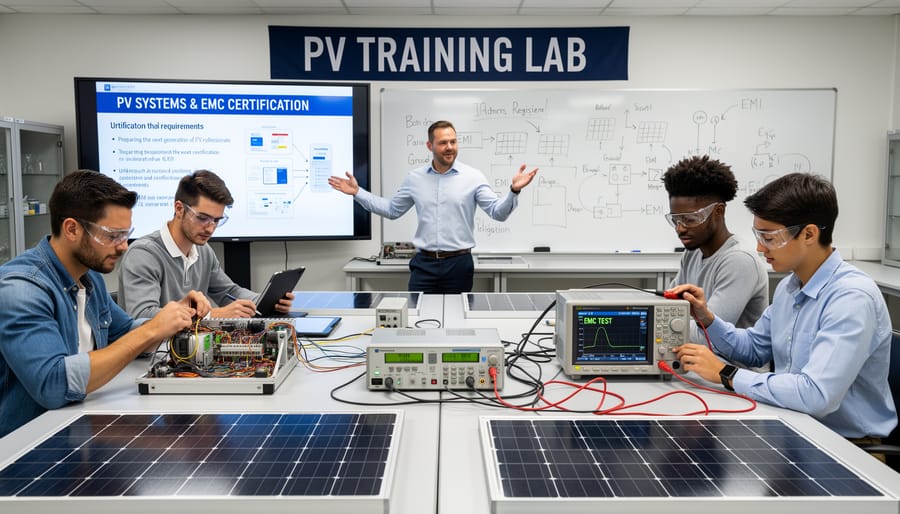
Mose Solar recognizes this critical need through strategic university-collaboration programs designed to bridge the gap between academic learning and industry requirements. These partnerships create educational frameworks where EMC certification knowledge becomes embedded within broader curricula covering photovoltaic system design, installation, and maintenance. Students gain exposure to electromagnetic compatibility principles alongside hands-on experience with testing procedures and compliance documentation.
The educational programs emphasize real-world application by incorporating case studies of certification challenges faced by manufacturers and installers. Participants learn to identify potential EMC issues during the design phase, understand mitigation strategies, and interpret technical testing reports. This proactive approach prepares professionals to contribute meaningfully to product development teams and quality assurance processes from day one of their careers.
Through laboratory sessions and demonstration projects, students interact directly with certified PV equipment, observing how proper EMC design translates into reliable, grid-compatible installations. Faculty members with industry experience guide learners through the nuances of international standards, helping them understand regional variations in certification requirements and their implications for global market access.
These collaborative educational initiatives also foster networking opportunities, connecting students with industry professionals, certification bodies, and equipment manufacturers. Such connections prove invaluable as graduates navigate their career paths, whether they pursue roles in manufacturing, system integration, regulatory compliance, or research and development. By investing in education that incorporates EMC certification competencies, Mose Solar helps cultivate a workforce equipped to maintain the highest standards of electromagnetic compatibility throughout the expanding solar industry.
EMC certification represents far more than a regulatory checkbox for photovoltaic equipment manufacturers and professionals—it serves as a fundamental pillar of market access, product reliability, and industry credibility. Throughout this comprehensive examination, we have explored how electromagnetic compatibility standards protect both equipment functionality and user safety while enabling global commerce in solar technologies. The certification process, though rigorous, ultimately distinguishes professional-grade products from substandard alternatives and positions manufacturers for international success.
For aspiring photovoltaic professionals, mastering EMC requirements constitutes an essential component of technical expertise. Understanding electromagnetic interference mechanisms, measurement techniques, and applicable standards directly impacts your ability to contribute meaningfully to product development and quality assurance initiatives. This knowledge becomes increasingly valuable as renewable energy markets expand and regulatory frameworks evolve.
The renewable energy sector continues advancing rapidly, making continuous education indispensable for maintaining professional relevance. Whether you are designing inverters, managing certification projects, or researching next-generation solar technologies, deepening your understanding of EMC principles through structured educational programs and university collaborations will enhance your career trajectory. Prioritize this specialized knowledge as you build expertise in photovoltaic systems, recognizing that technical competence in compliance matters translates directly to market leadership and sustainable industry growth.