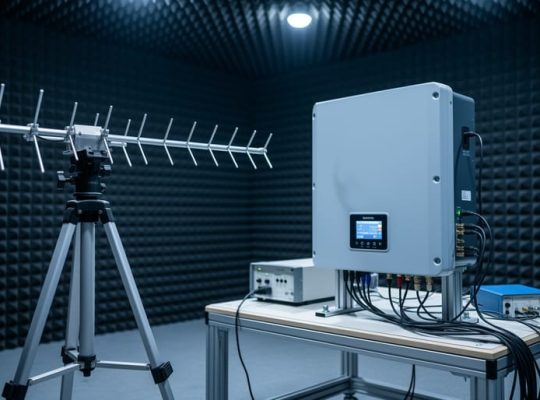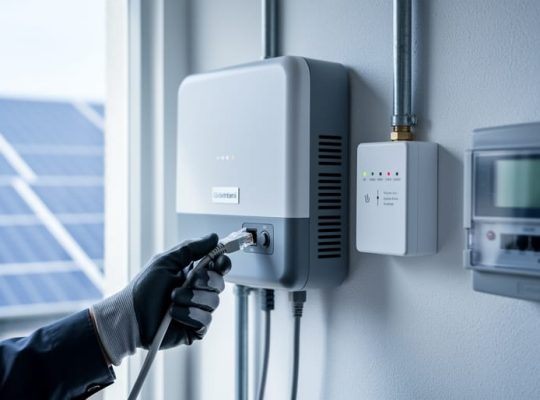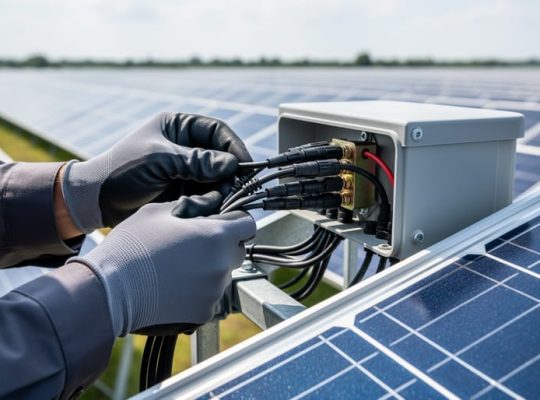
The global photovoltaic industry operates on a foundation of rigorous testing protocols and internationally recognized certification standards that determine whether solar modules can safely enter commercial markets. Every solar panel installed on rooftops, ground-mount systems, or utility-scale facilities has undergone extensive evaluation to verify electrical performance, mechanical durability, and long-term reliability under real-world environmental stresses.
PV certifications represent far more than bureaucratic checkboxes. They function as universal quality language that enables manufacturers to demonstrate compliance, helps procurement specialists compare products objectively, and allows financiers to assess project risk with confidence. Understanding certifications like IEC 61215 for crystalline silicon modules, UL 1703 for North American markets, and CE marking for European distribution becomes essential for anyone entering the solar industry professionally.
The certification process itself reveals critical insights into how modules withstand thermal cycling, humidity freeze testing, mechanical load simulations, and potential-induced degradation. These standardized tests directly correlate with warranty terms, insurance requirements, and building code approvals that determine project viability. For aspiring solar professionals, comprehending certification frameworks bridges the gap between theoretical photovoltaic knowledge and practical industry application.
This comprehensive examination explores the major international certification bodies, details the specific testing procedures modules undergo, and demonstrates how these qualifications impact financing decisions, installation compliance, and quality assurance protocols across residential, commercial, and utility-scale projects. Mastering this certification landscape positions professionals to make informed technical recommendations and navigate regulatory requirements with authority.
What PV Certifications Actually Mean for Module Quality
Qualification Testing vs. Safety Certification
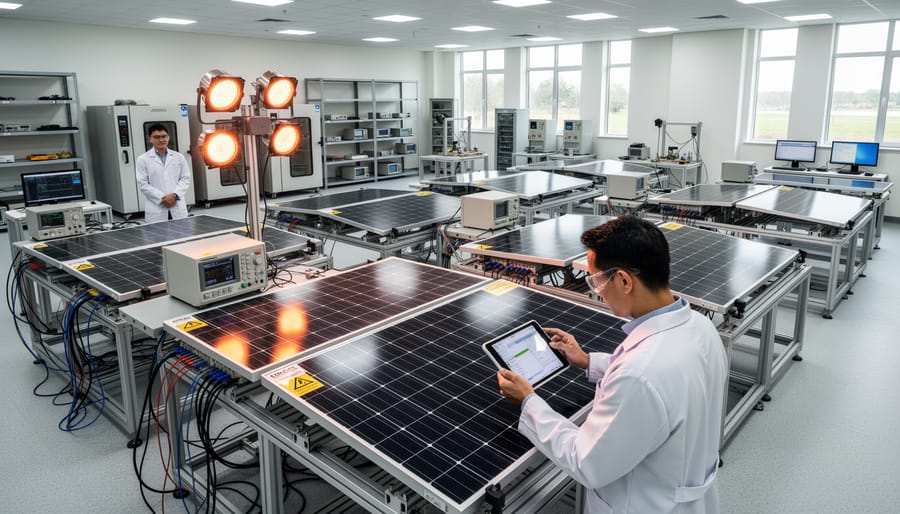
Understanding the distinction between qualification testing and safety certification is fundamental for anyone navigating the photovoltaic certification landscape. While these two categories often work together, they serve distinctly different purposes in ensuring solar panel reliability and safety.
Qualification testing, governed primarily by standards like IEC 61215 and IEC 61730, focuses on verifying that PV modules can withstand anticipated environmental stresses throughout their operational lifetime. These tests simulate decades of exposure to conditions such as temperature cycling, humidity, mechanical loads, and ultraviolet radiation. The objective is to demonstrate durability and performance reliability under normal operating conditions. Qualification testing essentially answers the question: Will this module survive and perform as expected over 25-30 years in the field?
Safety certification, conversely, addresses potential hazards that could cause injury, fire, or electrical shock. Standards like UL 1703 and IEC 61730 evaluate whether a module meets minimum safety requirements for construction, electrical insulation, and fire resistance. This certification protects installers, end-users, and property from immediate dangers associated with faulty design or manufacturing defects.
These two certification categories complement each other within the broader certification ecosystem. A module might pass qualification testing yet fail safety certification if it presents electrical hazards, or vice versa. Comprehensive certification programs require both to ensure modules are not only durable but also safe to install and operate. For procurement specialists and project developers, verifying that modules possess both qualification and safety certifications is essential for securing financing, meeting building codes, and protecting long-term investments in solar infrastructure.
The Stakeholders Who Depend on Certified Modules
Certified photovoltaic modules serve as the foundation of trust for multiple stakeholders across the solar energy ecosystem. Solar installers depend on certifications to ensure they’re deploying reliable products that meet inverter certification standards and local electrical codes, protecting their professional reputation and reducing liability exposure. Building inspectors require these certifications to verify code compliance during installation reviews, streamlining the permitting process and ensuring public safety. Insurance companies evaluate certified modules when underwriting policies and calculating premiums, as third-party verification reduces risk assessment uncertainty and potential claim costs.
Utility companies rely on certifications when approving grid-connected systems, ensuring that solar installations meet interconnection requirements and won’t compromise grid stability. Financial institutions use certification status when evaluating solar project loans or power purchase agreements, as validated performance data supports investment decisions. End consumers benefit most directly, gaining confidence that their substantial investment meets safety standards, will perform as advertised, and qualifies for incentive programs. Without proper certifications, projects may face installation delays, insurance coverage gaps, utility interconnection rejections, or complete disqualification from government rebate programs, ultimately affecting project viability and stakeholder confidence throughout the solar value chain.
Essential International PV Module Qualification Standards
IEC 61215: Crystalline Silicon Module Design Qualification
IEC 61215 stands as the international benchmark for crystalline silicon photovoltaic module qualification, establishing comprehensive testing protocols that manufacturers must satisfy before modules reach the market. First published in 1993 and regularly updated to reflect technological advances, this standard evaluates whether modules can withstand twenty-five years of outdoor exposure under various environmental stresses.
The standard encompasses several critical test sequences that simulate decades of real-world conditions. Thermal cycling subjects modules to 200 or more cycles between -40°C and 85°C, verifying that repeated expansion and contraction won’t compromise electrical connections or encapsulation materials. This test identifies potential solder joint failures and delamination issues that might otherwise appear only after years of field operation.
Humidity-freeze testing alternates between high humidity conditions at 85°C and freezing temperatures at -40°C over ten cycles, examining the module’s ability to resist moisture ingress and subsequent ice formation. Damp heat exposure maintains modules at 85°C and 85% relative humidity for 1,000 hours, accelerating degradation mechanisms like corrosion and encapsulant breakdown that moisture penetration can trigger.
UV preconditioning delivers ultraviolet radiation equivalent to several months of sunlight exposure, ensuring that encapsulants and backsheets maintain optical clarity and structural integrity. Mechanical load testing applies uniform pressure simulating wind and snow loads, verifying structural soundness under forces modules encounter during their operational lifetime.
The standard also includes electrical performance measurements, insulation testing, and hot-spot endurance evaluation. Modules must demonstrate that power degradation remains within acceptable limits throughout all test sequences, typically not exceeding five percent after initial stabilization. For aspiring professionals, understanding IEC 61215 requirements proves essential when evaluating module quality, advising clients, or working in quality assurance roles where distinguishing between certified and substandard products directly impacts project success and long-term energy yields.
IEC 61730: Module Safety Qualification
IEC 61730 represents the international benchmark for photovoltaic module safety qualification, providing comprehensive guidelines that address critical hazards associated with solar panel operation. This standard operates as a two-part framework designed to ensure modules meet rigorous safety thresholds before market deployment.
Part one, IEC 61730-1, establishes the foundational requirements for construction and manufacturing. It defines electrical safety requirements including insulation properties, grounding provisions, and protection against electric shock. This component also specifies mechanical design criteria to withstand environmental stresses and sets parameters for thermal management to prevent overheating conditions.
Part two, IEC 61730-2, details the testing procedures that validate compliance with part one requirements. Testing protocols examine electrical safety through hi-pot tests and wet leakage current measurements. Fire hazard assessments evaluate flame propagation resistance and determine appropriate fire classification ratings. Mechanical stress testing subjects modules to simulated hail impact, static and dynamic load conditions, and thermal cycling to verify structural integrity across operational lifespans.
The standard classifies modules into different application classes based on voltage levels and accessibility, with Class A representing the highest safety tier for general applications and Class C covering specific limited-access installations. For procurement specialists and project developers, IEC 61730 certification confirms that modules have undergone independent third-party verification, reducing liability risks and ensuring compliance with building codes and insurance requirements. This certification works synergistically with IEC 61215 performance standards to provide complete module qualification.
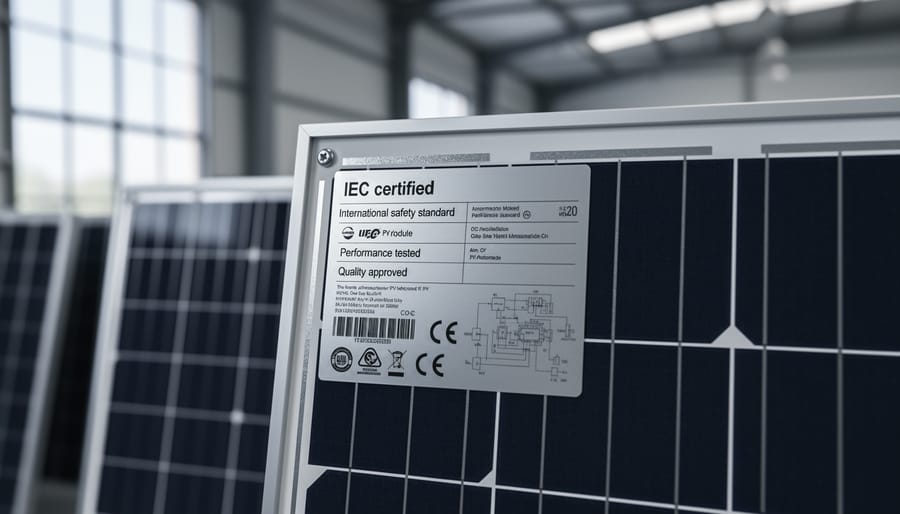
IEC 61646 and Thin-Film Technology Standards
While crystalline silicon modules dominate the solar market, thin-film photovoltaic technologies require specialized testing protocols. IEC 61646 establishes qualification standards specifically for thin-film terrestrial modules, addressing their unique material properties and performance characteristics that differ substantially from traditional silicon-based panels.
The fundamental distinction lies in how these materials respond to environmental stressors. Thin-film modules using cadmium telluride, amorphous silicon, or copper indium gallium selenide exhibit different degradation patterns and temperature coefficients compared to crystalline silicon. IEC 61646 testing protocols account for these variations through modified thermal cycling procedures, light-soaking requirements, and specific humidity-freeze testing sequences that reflect thin-film behavior under real-world conditions.
Key testing differences include extended exposure periods to assess initial light-induced degradation, a phenomenon more pronounced in certain thin-film technologies. The standard also incorporates damp-heat testing at elevated durations to evaluate moisture ingress vulnerabilities inherent to some thin-film constructions. These qualification requirements ensure manufacturers demonstrate product stability throughout the warranty period, providing procurement specialists and project developers with confidence when specifying thin-film solutions for utility-scale installations or building-integrated photovoltaic applications where these technologies often excel.
Emerging Standards for Bifacial and PERC Technologies
As bifacial panels and Passivated Emitter and Rear Cell (PERC) technologies gain market prominence, certification bodies are developing specialized testing protocols to address their unique performance characteristics. Traditional single-sided module testing proves insufficient for bifacial designs that capture reflected light on rear surfaces, prompting the International Electrotechnical Commission to release IEC TS 60904-1-2, which establishes standardized measurement procedures for bifacial photovoltaic devices. This technical specification addresses bifaciality coefficients, rear-side irradiance conditions, and albedo effects that significantly impact energy yield calculations.
PERC modules, featuring enhanced efficiency through rear surface passivation, undergo additional scrutiny for potential induced degradation and light-induced degradation phenomena. Testing laboratories now incorporate extended stress sequences and accelerated aging protocols specifically designed for these advanced cell architectures. Manufacturers pursuing certification must demonstrate consistent performance under varied operating conditions, including bifacial gain measurements and temperature coefficient verification for both module faces.
These evolving standards ensure that advanced technologies meet rigorous quality benchmarks while enabling accurate performance modeling for project developers and financial institutions evaluating long-term energy production guarantees.
Regional Safety Certification Requirements You Must Know
UL 1703 and the North American Market
Underwriters Laboratories (UL) 1703 represents the primary safety certification for photovoltaic modules entering the United States and Canadian markets. This standard addresses flat-plate PV modules, thin-film panels, and solar roof tiles, establishing comprehensive requirements for electrical safety, fire resistance, and mechanical durability. The UL certification standards verify that modules can withstand environmental stresses including temperature cycling, humidity exposure, and mechanical loading conditions specific to North American climates.
Recent updates to UL 1703 have strengthened testing protocols for potential-induced degradation and enhanced fire safety requirements, particularly for rooftop installations. The certification process evaluates junction box integrity, cable connections, grounding provisions, and bypass diode functionality. Modules must demonstrate compliance through rigorous third-party testing at UL-certified laboratories before receiving the distinctive UL mark.
For solar professionals operating in North America, UL 1703 certification is not merely recommended but essential. Building permits, utility interconnection agreements, and financing arrangements typically mandate UL-listed components. This certification also facilitates compliance with the National Electrical Code and local building regulations, streamlining project approvals and ensuring long-term system reliability for installers and end-users alike.
CE Marking and European Compliance
For photovoltaic modules entering the European Economic Area, CE marking represents a legal requirement rather than an optional certification. This mandatory conformity marking indicates that products comply with essential health, safety, and environmental protection standards established by European directives. The Low Voltage Directive (LVD) 2014/35/EU governs PV modules operating between 50 and 1,000 volts AC or 75 to 1,500 volts DC, encompassing most residential and commercial installations.
Manufacturers must demonstrate compliance through a rigorous self-declaration process, which requires comprehensive technical documentation proving adherence to harmonized European standards. This documentation typically includes test reports from accredited laboratories confirming compliance with IEC 61215 or IEC 61730 standards, which address module performance and safety requirements respectively.
The CE marking process also requires manufacturers to prepare a Declaration of Conformity, maintain technical files for regulatory inspection, and implement quality management systems. Unlike third-party certifications, the manufacturer assumes full responsibility for compliance claims, making accurate documentation critical. European customs authorities and market surveillance agencies actively enforce these requirements, with non-compliant products facing market withdrawal and financial penalties. For professionals entering the solar industry, understanding CE marking requirements proves essential when specifying equipment for European projects or working with international suppliers serving multiple markets.
CEC and TÜV Certifications
The California Energy Commission (CEC) maintains a comprehensive listing database for solar modules eligible for state incentive programs, making CEC approval essential for manufacturers targeting the California market. This listing verifies that photovoltaic modules meet rigorous performance standards and electrical safety requirements, serving as a prerequisite for projects seeking rebates or renewable energy credits in California. The CEC database provides transparency for procurement specialists and installers by offering verified performance data on power output, efficiency ratings, and temperature coefficients.
TÜV Rheinland certification represents one of the most recognized quality marks in the global solar industry, extending beyond basic safety compliance to encompass comprehensive product evaluation. German-based TÜV Rheinland conducts extensive testing protocols that include long-term reliability assessments, environmental stress testing, and manufacturing facility audits. Their certification signals to international markets that products meet exacting European standards while demonstrating manufacturer commitment to quality assurance. For renewable energy professionals, understanding these certifications proves valuable when evaluating equipment suppliers, as both CEC listing and TÜV marks indicate products have undergone independent third-party verification, reducing project risk and enhancing investor confidence in system performance and longevity.
Region-Specific Requirements in Asia and Australia
Beyond international standards, entering Asian and Oceanic markets requires compliance with region-specific certifications. In Japan, the JET (Japan Electrical Safety & Environment Technology Laboratories) certification is mandatory for photovoltaic products, ensuring conformance with Japanese electrical safety laws and technical standards. This certification validates that modules meet rigorous performance criteria under Japan’s unique climatic conditions, including typhoon resilience and seismic considerations.
China’s photovoltaic market demands CQC (China Quality Certification) certification, administered by the China Quality Certification Centre. CQC certification demonstrates compliance with Chinese national standards and is increasingly required for both domestic sales and participation in government-subsidized solar programs. The process involves factory inspections, product testing, and ongoing surveillance to maintain certification status.
For Australia and New Zealand, AS/NZS 5033 standards govern the installation and safety requirements of photovoltaic arrays. Products must also meet AS/NZS 61215 and AS/NZS 61730 standards, which align with IEC standards but include additional regional considerations for extreme heat tolerance and bushfire safety. These certifications ensure PV systems withstand Australia’s harsh environmental conditions while maintaining grid stability and electrical safety compliance.
The Certification Testing Process: From Lab to Label
Sample Selection and Pre-Testing Preparation
Sample selection for PV certification testing follows rigorous protocols established by certification bodies and international standards. Testing laboratories typically require manufacturers to submit representative production samples rather than specially prepared prototypes, ensuring results reflect actual product quality. The quantity varies by certification type, but standard testing usually requires 6-12 modules from regular production runs, selected randomly to prevent cherry-picking of superior units.
Before testing commences, manufacturers must provide comprehensive preliminary documentation including detailed product specifications, bill of materials, manufacturing process descriptions, and quality control procedures. This documentation package also requires design drawings, electrical schematics, and material safety data sheets for all components. Certification bodies review these documents to verify compliance with applicable standards and identify potential issues before physical testing begins.
Production batch information and traceability records are essential, demonstrating the manufacturer’s ability to maintain consistent quality across production volumes. Some certifications require factory inspection reports or ISO 9001 quality management system documentation as prerequisite evidence. Proper preparation of samples and documentation significantly reduces testing delays and associated costs while increasing the likelihood of successful certification outcomes.
Key Test Sequences and What They Reveal
PV module certification testing involves rigorous examination through multiple standardized test sequences, each designed to simulate decades of real-world environmental stress. Understanding these sequences provides insight into what manufacturers must prove before modules reach the market.
Thermal cycling tests subject modules to extreme temperature fluctuations, typically ranging from -40°C to 85°C over 200 to 600 cycles. This sequence reveals how solder bonds, encapsulant materials, and electrical connections withstand expansion and contraction, identifying potential delamination or connection failures that could occur over a module’s 25-year lifespan.
Humidity freeze testing combines high humidity exposure with freezing temperatures to detect moisture ingress vulnerabilities. Modules endure 10 to 20 cycles alternating between 85% relative humidity at 85°C and freezing conditions at -40°C. This process exposes weaknesses in edge sealing and junction box integration that could lead to corrosion or electrical failures.
Mechanical load tests apply static and dynamic forces simulating wind loads and snow accumulation, typically 2,400 pascals front and rear. These tests verify structural integrity and reveal potential glass breakage, frame deformation, or cell cracking under physical stress.
Damp heat testing maintains modules at 85°C and 85% relative humidity for 1,000 hours, accelerating corrosion processes and chemical degradation. This sequence identifies encapsulant discoloration, backsheet deterioration, and potential-induced degradation susceptibility.
Together, these sequences provide comprehensive validation that certified modules will maintain performance, safety, and reliability throughout their operational lifetime under diverse environmental conditions.

Certification Body Evaluation and Approval
Accredited certification bodies serve as independent third-party organizations authorized to evaluate photovoltaic products against established standards. These bodies, such as TÜV Rheinland, Intertek, and UL Solutions, employ qualified engineers and inspectors who thoroughly review laboratory test reports to verify compliance with specifications like IEC 61215 or UL 1703. The evaluation process extends beyond test data analysis to include comprehensive factory inspections, where auditors assess manufacturing processes, quality control systems, and production consistency. During these inspections, certification personnel examine raw material handling, assembly procedures, and final product verification protocols to ensure manufacturers maintain the standards demonstrated during initial testing. Upon successful completion of all requirements, the certification body grants permission to display their certification mark on approved products and documentation. This mark serves as a recognized symbol of quality and safety for installers, project developers, and end-users worldwide. Ongoing surveillance audits, typically conducted annually, maintain certification validity and ensure continued adherence to standards as manufacturing processes evolve and production scales.
Why Certification Matters for Your PV Career and Projects
Project Financing and Insurance Requirements
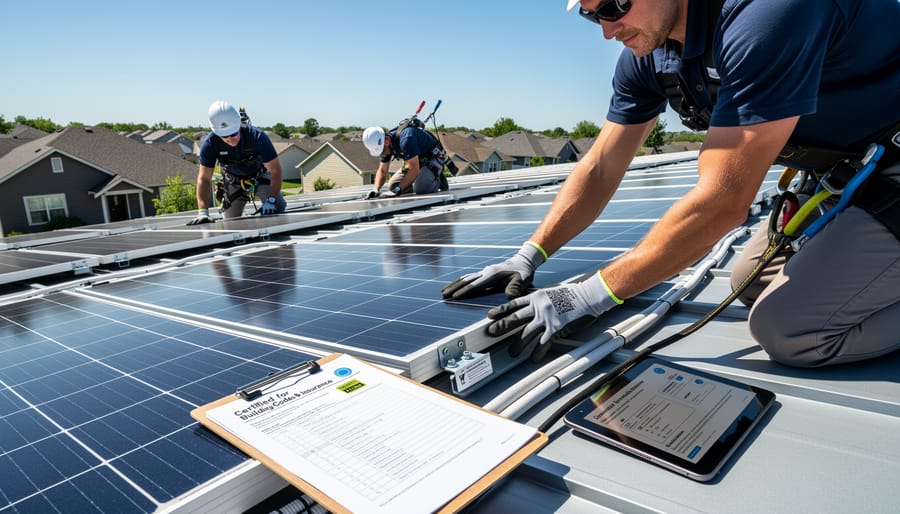
Certified photovoltaic modules serve as critical gatekeepers for project financing and risk management. Financial institutions, banks, and investment firms typically require proof of internationally recognized certifications before approving solar project loans or investments. This requirement stems from the need to minimize financial risk—certified modules demonstrate verified performance, durability, and safety standards that protect long-term return on investment.
Insurance providers similarly mandate certification compliance when underwriting solar installations. Policies covering equipment failure, performance guarantees, and liability protection often stipulate that only certified components qualify for coverage. Without proper certification documentation, projects may face premium increases or coverage denial entirely.
Manufacturer warranties also depend heavily on certification status. Most reputable module producers void warranties if products are installed outside jurisdictions where their certifications apply, or if uncertified modules are used in violation of local building codes. Project managers must therefore maintain comprehensive certification documentation throughout the project lifecycle, from procurement through commissioning and ongoing operations. Understanding which certifications satisfy specific financing, insurance, and warranty requirements has become an indispensable competency for solar professionals managing commercial and utility-scale installations.
Code Compliance and Installation Standards
Building codes and electrical regulations worldwide increasingly reference specific PV certification standards as mandatory requirements for system installations. The National Electrical Code (NEC) in the United States, for instance, explicitly requires that PV modules and inverters carry recognized certifications like UL or equivalent testing laboratory marks before they can be legally installed. Similarly, European installations must demonstrate compliance with CE marking requirements, while international projects often mandate IEC certification as proof of safety and performance standards.
For installers and inspectors, understanding these code compliance standards is not optional—it’s fundamental to professional practice. Inspectors verify certification markings during permitting and final inspections, and installations using non-certified equipment face rejection, removal requirements, and potential insurance complications. Installers who specify certified components protect themselves from liability while ensuring projects meet jurisdictional requirements. This regulatory framework transforms certification knowledge from academic theory into practical necessity, directly impacting project approval timelines and professional credibility in the renewable energy sector.
Quality Assurance and Procurement Decisions
When procuring PV modules for solar projects, certification documentation serves as a critical quality indicator that directly impacts project viability and long-term performance. System designers and project developers should request complete certification packages from manufacturers, including test reports, factory inspection records, and certificates from accredited bodies like TÜV, UL, or IEC-recognized laboratories. Prioritize modules with certifications matching your project jurisdiction requirements—IEC 61215 and IEC 61730 for international projects, UL 1703 for North American installations, or CE marking for European markets.
Beyond verifying basic certification presence, examine the certification date and testing laboratory accreditation status. Recent certifications indicate ongoing quality control, while outdated certificates may signal production changes without retesting. Request nameplate ratings that align with certified performance parameters, as discrepancies suggest potential non-compliance. Compare warranty terms against certification standards, ensuring manufacturers back their certified performance with appropriate guarantees.
For comprehensive project quality assurance, extend certification verification beyond modules to include system component certification for inverters, mounting structures, and electrical components. This holistic approach minimizes compatibility issues and ensures complete system certification eligibility, which financiers and authorities increasingly require for project approval and insurance coverage.
How Mose Solar Approaches Module Certification
Certification Standards in Product Development
Mose Solar maintains rigorous quality assurance protocols across its complete product portfolio, ensuring that every photovoltaic solution—from high-efficiency mono PERC panels to innovative solar tiles and mounting systems—complies with applicable international certification standards. The company’s development process integrates certification requirements from the initial design phase, allowing engineering teams to address IEC, UL, and CE specifications proactively rather than retroactively. This approach reduces time-to-market while guaranteeing regulatory compliance across diverse geographic markets.
Each product category undergoes tailored testing protocols aligned with its specific application and operational environment. Residential panels face different stress conditions than commercial installations, requiring distinct certification pathways. Mose Solar collaborates with accredited third-party testing laboratories and maintains partnerships with universities to validate product performance under real-world conditions. This commitment extends beyond minimum compliance, with the company pursuing additional certifications that demonstrate superior durability, efficiency, and safety margins. By standardizing certification achievement across product lines, Mose Solar provides procurement specialists and installers confidence that every component meets stringent quality benchmarks essential for project financing and long-term system reliability.
Educational Program Coverage of Certification Standards
Mose Solar’s university-collaborative educational program integrates comprehensive certification standards training to prepare the next generation of photovoltaic professionals. Through partnerships with leading academic institutions, the program curriculum covers essential certification frameworks including IEC 61215, IEC 61730, UL 1703, and CE marking requirements. Students gain hands-on experience understanding testing protocols, quality benchmarks, and compliance documentation that govern global solar markets.
The program emphasizes practical application of certification knowledge, teaching aspiring professionals how these standards influence project financing, insurance requirements, and building code compliance. Participants learn to evaluate module datasheets, interpret test reports, and assess manufacturer claims against recognized certification criteria. This competency proves invaluable when entering careers in system design, quality assurance, or procurement roles.
By embedding certification standards throughout coursework rather than treating them as isolated topics, Mose Solar ensures graduates understand how IEC, UL, and other certifications directly impact installation safety, system performance, and long-term reliability. This integrated approach produces professionals capable of making informed decisions about component selection and project specifications in real-world applications.
In an industry where safety, performance, and longevity directly impact both economic returns and environmental outcomes, PV certifications are not optional considerations but fundamental requirements. These standards serve as the universal language that bridges manufacturers, installers, investors, and regulators, ensuring that solar installations meet stringent quality benchmarks regardless of geographic location or market segment. For professionals entering or advancing within the photovoltaic sector, comprehensive certification literacy represents far more than technical knowledge—it functions as a critical professional differentiator that opens doors to career advancement, enhances project credibility, and builds stakeholder confidence.
The solar industry continues its rapid evolution, with emerging technologies, updated regulatory frameworks, and increasingly sophisticated grid integration requirements demanding professionals who understand not just how systems work, but how they are verified and validated. Those who invest time in mastering the nuances of IEC standards, UL testing protocols, and international compliance frameworks position themselves as indispensable resources within their organizations. Whether you are an aspiring installer, project developer, procurement specialist, or quality assurance professional, your ability to navigate certification requirements directly influences project success rates and career trajectory.
As you continue your professional development journey, consider leveraging educational programs offered through industry associations, accredited universities, and specialized training providers. These structured learning opportunities provide the depth of understanding necessary to confidently specify, evaluate, and implement certified photovoltaic solutions. The investment you make today in certification knowledge establishes the foundation for tomorrow’s leadership roles in this dynamic, essential industry.