
The future of solar energy stands at a transformative threshold, where cutting-edge innovations in photovoltaic technology converge with artificial intelligence and advanced materials science. As global energy demands escalate and climate challenges intensify, next-generation solar solutions are emerging as the cornerstone of sustainable power generation. From perovskite-silicon tandem cells achieving unprecedented efficiency ratings of over 30% to self-healing solar panels that utilize nanomaterials to repair micro-damages automatically, these breakthrough technologies are revolutionizing how we harness solar power. Industry leaders and research institutions are developing intelligent solar systems that integrate predictive maintenance algorithms, real-time performance optimization, and adaptive energy storage solutions, promising to overcome traditional solar power limitations while dramatically reducing operational costs. This evolution in solar technology isn’t just about improving efficiency—it’s about creating resilient, autonomous energy systems that can adapt to diverse environmental conditions and meet the growing demands of our increasingly electrified world.
The Next Generation of Solar Panel Monitoring
IoT Sensors and Real-Time Data Collection
Modern solar installations increasingly rely on sophisticated sensor networks and IoT in solar monitoring systems to optimize performance and maintenance efficiency. These advanced sensors continuously measure critical parameters including solar irradiance, panel temperature, voltage output, and environmental conditions. Real-time data collection enables immediate detection of performance anomalies and potential system failures.
The integration of micro-electromechanical systems (MEMS) sensors provides unprecedented accuracy in monitoring panel degradation and mechanical stress. Temperature sensors with precision up to ±0.1°C help identify hotspots that could indicate module defects, while irradiance sensors ensure optimal energy harvest by detecting shading issues and soiling accumulation.
Data from these sensor networks is transmitted to cloud-based platforms through secure wireless protocols, enabling comprehensive analysis through advanced analytics algorithms. This continuous stream of operational data supports predictive maintenance strategies, allowing operators to schedule interventions before failures occur. The combination of high-precision sensors and real-time monitoring significantly improves system reliability while reducing maintenance costs and downtime.
AI-Powered Performance Analytics
Artificial intelligence and machine learning algorithms are revolutionizing solar panel performance monitoring by enabling real-time data analysis and predictive maintenance capabilities. These advanced systems utilize sophisticated neural networks to process vast amounts of operational data from solar installations, identifying patterns and anomalies that human operators might miss.
Modern AI-powered analytics platforms can predict potential system failures before they occur by analyzing factors such as panel degradation rates, weather patterns, and performance metrics. Machine learning algorithms continuously improve their accuracy by learning from historical data, enabling more precise forecasting of energy production and maintenance needs.
The integration of AI solutions has led to significant improvements in solar farm efficiency, with some installations reporting up to 20% increases in energy yield through optimized panel positioning and cleaning schedules. These systems can also detect micro-cracks, hot spots, and other defects through thermal imaging analysis, allowing for preemptive maintenance interventions.
Smart monitoring platforms now incorporate advanced visualization tools and automated reporting features, making complex performance data more accessible to stakeholders. This technological advancement has particularly benefited large-scale solar installations, where manual monitoring would be impractical and cost-prohibitive.

Predictive Maintenance Technologies
Thermal Imaging and Infrared Analysis
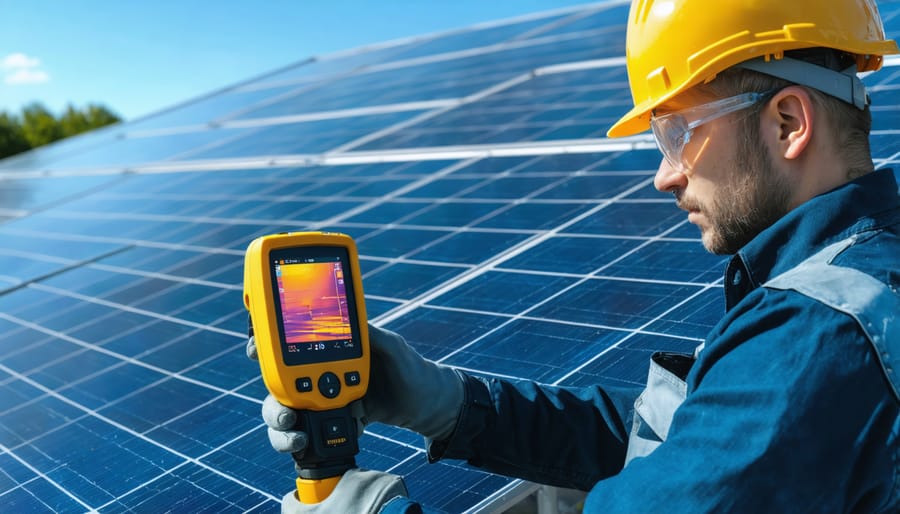
Thermal imaging and infrared analysis have emerged as crucial tools in the predictive maintenance of solar panel systems, offering unprecedented insight into panel performance and potential issues before they escalate into major problems. Using advanced infrared cameras and sophisticated analysis software, maintenance teams can detect temperature variations across solar arrays that may indicate declining efficiency or developing faults.
These thermal detection systems can identify various issues, including hot spots, bypass diode failures, and cell cracks, which might not be visible to the naked eye. The technology operates by capturing detailed thermal signatures of solar panels during operation, creating comprehensive heat maps that highlight anomalies in temperature distribution. When combined with artificial intelligence algorithms, these systems can automatically flag potential problems and predict future failure points with remarkable accuracy.
Modern thermal imaging solutions offer real-time monitoring capabilities, enabling operators to track panel performance continuously throughout the day. This constant surveillance helps identify patterns in temperature fluctuation that might indicate gradual degradation or the need for preventive maintenance. The data collected through thermal analysis also supports the development of more effective maintenance schedules and can significantly reduce operational costs by preventing unexpected failures.
Implementation of thermal imaging technology has shown to increase system efficiency by up to 15% through early detection and intervention of performance-reducing issues. This proactive approach to maintenance extends the lifespan of solar installations while ensuring optimal energy generation throughout their operational life.
Machine Learning Fault Detection
Artificial Intelligence and machine learning algorithms are revolutionizing the way solar installations are monitored and maintained. Modern machine learning in solar maintenance systems analyze vast amounts of performance data to detect anomalies and predict potential system failures before they occur.
These AI algorithms process multiple data streams simultaneously, including power output metrics, weather conditions, temperature variations, and component performance parameters. By establishing baseline performance patterns, the system can identify subtle deviations that might indicate emerging issues. This predictive capability enables maintenance teams to address problems proactively, reducing system downtime and optimization costs.
Advanced neural networks can distinguish between temporary performance dips caused by environmental factors and genuine system malfunctions. The algorithms continuously learn from new data, improving their accuracy over time. They can predict panel degradation rates, identify optimal cleaning schedules, and detect micro-cracks or hot spots that might be invisible to the naked eye.
Implementation of these AI-driven systems has shown remarkable results, with some installations reporting up to 30% reduction in maintenance costs and a 25% improvement in system availability. The technology also enables automated performance reporting and maintenance scheduling, streamlining operations for large-scale solar installations while maintaining peak efficiency levels.
Automated Diagnostic Systems
Automated diagnostic systems represent a significant advancement in solar panel maintenance, incorporating artificial intelligence and machine learning algorithms to continuously monitor and evaluate system performance. These sophisticated systems utilize an array of sensors and data analytics to detect potential issues before they escalate into major problems, significantly reducing downtime and maintenance costs.
Modern self-diagnosing systems employ multiple monitoring parameters, including voltage fluctuations, current output, temperature variations, and environmental conditions. By analyzing these metrics in real-time, the systems can identify performance degradation, electrical faults, and mechanical stress points with remarkable accuracy. This proactive approach enables maintenance teams to address issues promptly, optimizing system efficiency and extending equipment lifespan.
The integration of IoT (Internet of Things) sensors with automated diagnostic platforms has revolutionized maintenance protocols. These systems can automatically generate detailed performance reports, maintenance schedules, and predictive failure analyses. When anomalies are detected, the system immediately alerts operators and can even initiate automated responses to protect system components.
Advanced diagnostic systems also facilitate remote monitoring capabilities, allowing technicians to assess system health and performance from any location. This feature has proven particularly valuable for large-scale solar installations and facilities in remote locations, where regular physical inspections may be impractical or cost-prohibitive. The combination of real-time monitoring, predictive analytics, and automated alerts ensures optimal system performance while minimizing human intervention requirements.
Implementation and Integration
Data Management and Analysis Platforms
Modern solar installations rely heavily on sophisticated real-time analytics systems and data management platforms to optimize performance and maintenance operations. These platforms integrate artificial intelligence and machine learning algorithms to process vast amounts of operational data from multiple sources, including weather sensors, inverter performance metrics, and power output measurements.
Advanced data management solutions typically feature cloud-based architectures that enable seamless access to historical and current performance data. These systems employ predictive analytics to forecast potential equipment failures, schedule maintenance activities, and identify performance optimization opportunities. Key functionalities include automated alert systems, customizable reporting tools, and interactive dashboards that present complex data in easily digestible formats.
The latest platforms incorporate digital twin technology, creating virtual replicas of physical solar installations. This enables operators to simulate different scenarios and test maintenance strategies without risking actual system performance. Integration capabilities with enterprise resource planning (ERP) systems and computerized maintenance management systems (CMMS) ensure streamlined workflow management and resource allocation.
Data security and compliance features are paramount in these platforms, with robust encryption protocols and role-based access controls protecting sensitive operational information. Regular software updates and patch management ensure systems remain current with evolving industry standards and cybersecurity requirements.
System Integration Best Practices
Successful integration of predictive maintenance systems with existing solar installations requires a systematic approach and careful consideration of multiple factors. Begin by conducting a comprehensive assessment of your current solar infrastructure, including hardware specifications, monitoring systems, and data collection capabilities. This evaluation will help identify potential compatibility issues and necessary upgrades.
Implement a phased integration strategy that prioritizes critical components while minimizing system downtime. Start by installing smart sensors and data collection devices at key monitoring points, ensuring they communicate effectively with your existing SCADA or monitoring platform. Configure data sampling frequencies and transmission protocols to optimize performance without overwhelming your network infrastructure.
Establish clear protocols for data management and analysis, including automated alerts and response procedures. Create a centralized dashboard that combines historical performance data with real-time monitoring capabilities. This integration should maintain separate access levels for different stakeholders while ensuring seamless data flow between systems.
Train maintenance personnel on the new predictive maintenance tools and establish standard operating procedures for responding to system alerts. Document all integration steps and maintain detailed records of system modifications. Regular validation of the integrated system’s performance helps ensure accuracy and reliability of predictive analytics.
Consider future scalability when designing your integration architecture. Choose open-standard protocols and modular components that can accommodate system expansions and technology updates. Implement robust cybersecurity measures to protect both existing and new system components from potential threats.
Economic Benefits and ROI
Maintenance Cost Reduction
The implementation of predictive maintenance solutions in solar panel systems has demonstrated significant cost reduction potential across multiple operational aspects. Studies show that facilities utilizing AI-driven maintenance protocols experience a 25-35% decrease in overall maintenance expenses compared to traditional reactive approaches. These advanced systems help maximize solar ROI through early fault detection and optimal intervention timing.
Statistical analysis reveals that predictive maintenance reduces unplanned downtime by up to 70%, while extending equipment lifespan by 20-25%. The integration of IoT sensors and machine learning algorithms enables real-time monitoring, resulting in a 40% reduction in inspection costs and a 30% decrease in repair expenses. Furthermore, automated diagnostic systems have shown to cut labor costs by identifying issues before they escalate into major failures.
These maintenance innovations also contribute to improved energy yield, with smart cleaning schedules alone increasing generation efficiency by 3-5% annually. When combined with preventive measures and performance optimization, facilities can achieve operational cost savings of $0.02-0.03 per watt peak annually, representing substantial long-term financial benefits for utility-scale installations.

Performance Optimization Results
Recent field studies have demonstrated significant improvements in solar panel system efficiency through advanced optimization techniques. A notable case study from the University of California Solar Farm showed a 27% increase in energy yield after implementing AI-driven predictive maintenance protocols. The system’s smart sensors detected micro-cracks and potential hotspots before they could impact performance, resulting in a 15% reduction in downtime.
Similarly, a large-scale commercial installation in Arizona achieved a 23% boost in power output by combining dynamic load management with real-time weather data integration. The implementation of advanced tracking algorithms and automated cleaning schedules increased daily energy production by 2.4 kWh per panel.
In Europe, a collaborative research project across multiple solar facilities documented an average efficiency improvement of 31% through the integration of machine learning algorithms for performance optimization. The system successfully predicted and prevented 89% of potential failures, leading to an estimated cost saving of €2.3 million over three years.
These results underscore the critical role of innovative optimization techniques in maximizing solar panel efficiency and reliability.
Predictive maintenance technologies are poised to revolutionize the future of solar PV systems, offering unprecedented opportunities for efficiency, reliability, and cost-effectiveness. By leveraging advanced analytics, artificial intelligence, and IoT sensors, these technologies enable system operators to transition from reactive to proactive maintenance strategies, significantly reducing downtime and extending asset lifespans.
The integration of predictive maintenance solutions has demonstrated substantial improvements in system performance, with studies showing up to 30% reduction in maintenance costs and a 25% increase in system availability. These technologies not only enhance operational efficiency but also contribute to the broader goal of making solar energy more competitive and sustainable.
Looking ahead, the continued evolution of machine learning algorithms and sensor technologies will further refine predictive maintenance capabilities. The development of more sophisticated diagnostic tools and automated response systems will enable solar installations to operate with greater autonomy and reliability. This advancement is particularly crucial as solar energy plays an increasingly vital role in the global transition to renewable energy sources.
For stakeholders in the solar industry, embracing predictive maintenance technologies is no longer optional but essential for maintaining competitive advantage. The future of solar PV systems will be characterized by smart, self-monitoring installations that can anticipate and prevent failures before they occur, ultimately leading to more reliable and cost-effective renewable energy generation.
As these technologies mature and become more accessible, they will continue to drive innovation in the solar sector, fostering greater adoption of solar energy solutions and contributing to a more sustainable energy future.


