Home solar battery storage systems allow you to store excess energy generated by your solar panels for use during nighttime, grid outages, or peak-rate periods, effectively maximizing your energy independence and reducing reliance on utility power. The right system depends on your energy usage patterns, backup priorities, and budget, with usable capacity, power output, and chemistry type serving as the primary selection criteria.
The decision to add battery storage transforms solar panels from a daytime-only electricity source into a comprehensive home energy solution. Without storage, your solar array sends excess daytime production back to the grid through net metering, and you draw grid power once the sun sets. With a battery system, you capture that surplus energy for later use, potentially eliminating evening grid consumption entirely. This becomes particularly valuable in regions experiencing frequent outages, time-of-use utility rates that penalize evening consumption, or where net metering policies offer minimal credit for exported energy.
The technology has matured considerably through 2026, with lithium-ion chemistries dominating the residential market due to their superior energy density, extended cycle life, and declining costs. Leading manufacturers including Tesla, FranklinWH, Enphase, and SolarEdge now offer integrated solutions that pair seamlessly with both new and existing solar installations. The Tesla Powerwall 3 currently ranks as the top choice among battery systems evaluated for residential applications, though the optimal system for your home depends on factors beyond brand recognition.
Understanding the core performance specifications, comparing lithium-ion variants against emerging alternatives, evaluating compatibility with your existing or planned solar array, and navigating available incentive programs will position you to make an informed purchase decision. This guide walks through each consideration systematically, helping you identify which battery storage system aligns with your energy goals and household requirements.
Understanding Home Solar Battery Storage Systems
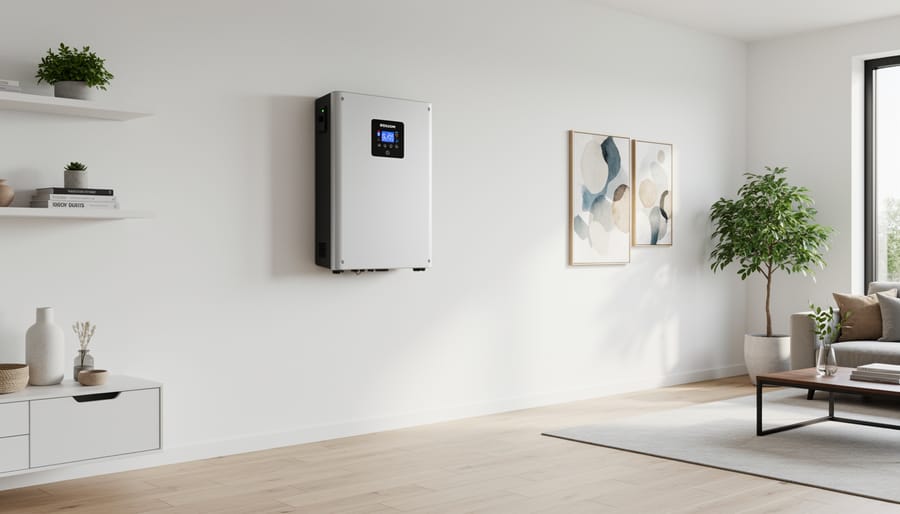
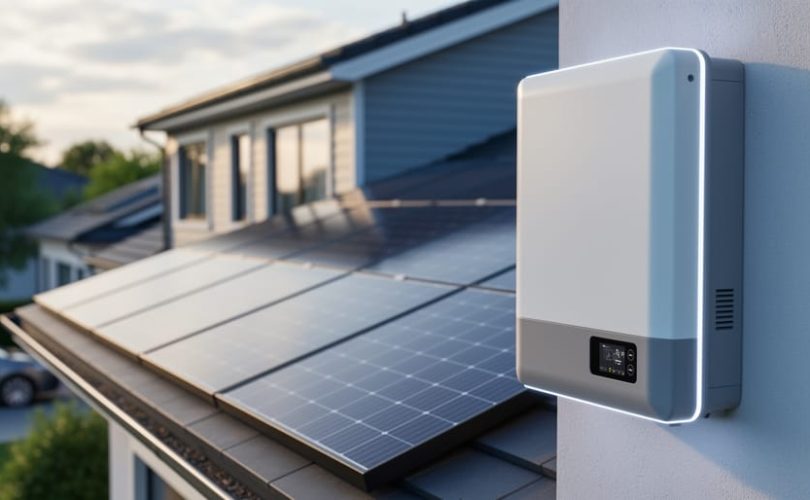
Home solar battery storage systems work by capturing excess electricity your solar panels generate during peak sunlight hours and storing it for use when the sun isn’t shining. Instead of sending all surplus power back to the grid, the energy flows into rechargeable batteries, typically housed in wall-mounted or floor-standing units near your electrical panel. When your home needs electricity after dark or during cloudy weather, the system automatically draws from this stored energy before pulling from the utility grid.
The basic components include the battery cells themselves, an inverter to convert stored DC power to usable AC electricity, a charge controller to regulate power flow, and monitoring software that tracks energy production and consumption. Some systems integrate these elements into a single unit, while others use separate components that connect to your existing solar setup.
Pairing batteries with solar panels makes economic and practical sense for several reasons. First, it maximizes your solar investment by storing energy that would otherwise be exported to the grid at minimal compensation, allowing you to use that power during evening hours when electricity rates are typically higher. Second, it provides backup power during grid outages, keeping essential appliances running when neighbors lose electricity. Third, it increases your energy independence, reducing monthly utility bills and insulating you from rate increases.
The value proposition extends beyond immediate savings. Battery systems can boost solar output effectiveness by enabling time-of-use optimization, where you strategically charge and discharge batteries to avoid peak electricity rates. For homeowners in areas with time-of-use pricing structures or frequent power outages, the benefits compound significantly over the system’s lifespan, typically 10 to 15 years for modern lithium-based batteries.
Key Factors to Consider When Choosing Solar Battery Storage
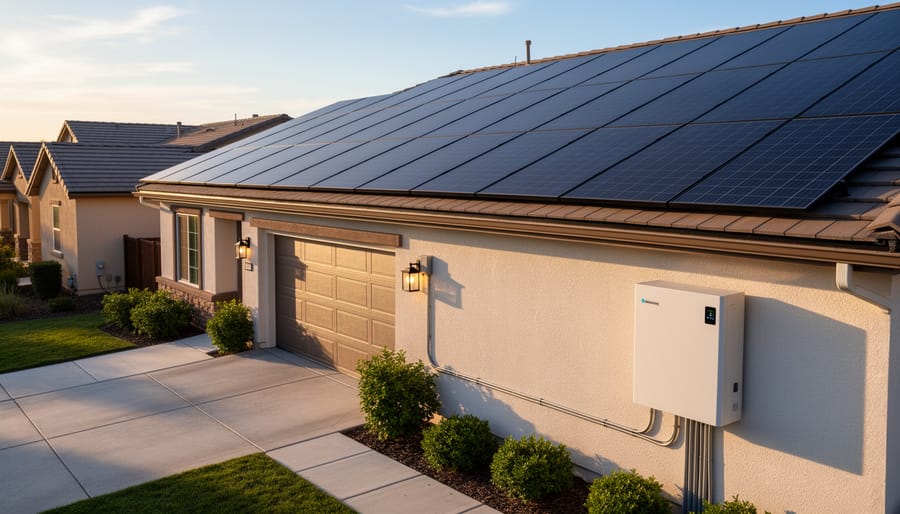
Capacity and Power Requirements
Choosing the right battery storage begins with understanding two distinct measurements: capacity (measured in kilowatt-hours, or kWh) and power output (measured in kilowatts, or kW). Capacity determines how much energy your battery can store, while power output dictates how much electricity it can deliver at once.
Start by reviewing your electricity bills to identify your average daily consumption. Most households use between 20 and 30 kWh per day, though this varies significantly based on home size, climate, and appliance usage. For backup power during outages, decide which circuits you need to run, essential loads like refrigeration and lighting might require only 5-10 kWh, while whole-home backup demands substantially more capacity.
Power output matters equally. A battery with 10 kWh capacity but only 5 kW output can’t simultaneously run a water heater, air conditioner, and electric stove, even if it holds enough total energy. Calculate your peak power demand by adding up the wattage of appliances you’ll run concurrently during outages or peak-rate periods.
Consider that panel efficiency affects how quickly your solar array can recharge batteries during daylight hours. If you’re installing before the December 31, 2025 deadline, review the battery storage credit requirements to ensure your system qualifies for the 30% Residential Clean Energy Credit while it remains available.
Battery Chemistry and Technology
Lithium-ion batteries dominate the home storage market for good reason. They pack high energy density into compact units, charge and discharge efficiently, and tolerate thousands of cycles before degrading. Within this category, lithium iron phosphate (LFP) chemistry has gained ground in residential applications because it offers superior thermal stability and a longer cycle life than standard lithium nickel manganese cobalt (NMC) variants. LFP batteries run cooler, pose a lower fire risk, and typically last 6,000 to 10,000 cycles, making them a safer long-term investment despite slightly lower energy density.
Lead-acid batteries, both flooded and sealed AGM types, remain an option for budget-conscious homeowners or off-grid setups. They cost less upfront but require regular maintenance, deliver fewer cycles (300 to 1,500), and occupy more space for the same usable capacity. Their lower depth of discharge also means you can only safely use 50 to 60 percent of rated capacity, reducing real-world storage.
Saltwater and flow batteries exist as emerging alternatives, promising non-toxic materials and theoretically unlimited cycles, but they carry higher costs, larger footprints, and limited market availability. For most residential solar installations, lithium-ion chemistry strikes the best balance of performance, safety, and proven track record.
Efficiency and Performance Metrics
When comparing battery storage systems, round-trip efficiency tells you how much of the electricity you put into the battery actually comes back out when you need it. Most quality lithium-ion systems achieve 85-95% round-trip efficiency, meaning you lose roughly 5-15% to heat and conversion losses during the charge-discharge cycle. A system with 90% efficiency storing 10 kWh delivers 9 kWh of usable power, the difference compounds over thousands of cycles, affecting both your electricity savings and the system’s payback period.
Depth of discharge (DoD) indicates how much of a battery’s total capacity you can safely use without degrading its lifespan. A battery rated at 13.5 kWh with 100% DoD provides all 13.5 kWh; one with 90% DoD gives you 12.2 kWh. Manufacturers typically specify a DoD limit in the solar warranty to preserve cycle life, pushing a battery beyond its recommended DoD accelerates capacity fade. Modern lithium iron phosphate batteries often support deeper discharge than older chemistries, translating to more usable energy from the same nameplate capacity and better long-term value as the system ages.
System Compatibility and Scalability
When selecting a battery storage system, ensure it works with your existing or planned solar setup and can grow with your needs. The coupling method matters: AC-coupled batteries connect to your home’s AC electrical system through their own inverter, making them compatible with any solar setup and easier to add to existing installations. DC-coupled systems link directly to your solar panels’ DC output before the main inverter, offering better efficiency by reducing energy conversions but requiring coordinated equipment.
Check inverter compatibility carefully. Some batteries come as integrated units with built-in inverters, while others require specific inverter brands or models to function properly. If you already have solar panels, verify whether your current inverter supports battery addition or if you’ll need a hybrid inverter that manages both solar production and storage.
Scalability lets you start with a smaller system and expand later as your energy needs change or your budget allows. Modular battery systems let you add capacity incrementally, though you’ll want to confirm the maximum expansion limit and whether future additions require professional installation. Consider whether your electrical panel has sufficient capacity for additional batteries and if your installation location can accommodate extra units.
Types of Home Battery Storage Systems Compared
Home battery storage systems come in several configurations, each designed for different installation scenarios and energy goals. Understanding these distinctions helps you match the right system architecture to your specific situation and solar setup.
AC-Coupled vs. DC-Coupled Systems
The coupling method determines how your battery integrates with your solar panels and home electrical system. DC-coupled systems connect the battery directly to the solar array before power conversion, using a hybrid inverter that manages both solar production and battery storage. This approach offers higher efficiency (typically 4-6% better round-trip efficiency) because electricity converts from DC to AC only once when powering your home. DC-coupled systems work best for new solar installations where you’re designing the entire system from scratch.
AC-coupled systems connect the battery after the solar inverter, using a separate battery inverter. While this involves an extra conversion step (solar DC to AC, then AC back to DC for storage), AC-coupled systems shine when retrofitting batteries to existing solar installations. You keep your current solar inverter and simply add the battery system alongside it. This flexibility makes AC-coupled the dominant choice for adding storage to established solar arrays.
All-in-One vs. Modular Designs
All-in-one systems integrate the battery cells, inverter, and control electronics in a single cabinet. These streamlined units simplify installation, reduce component complexity, and often look cleaner on your wall. The Tesla Powerwall 3, which EnergySage ranks as the top solar battery for homes in 2026, exemplifies this integrated approach.
Modular systems separate components, letting you mix and match batteries, inverters, and control systems. This design offers greater flexibility for customization and future expansion. You can start with a smaller battery bank and add capacity as your needs grow or your budget allows, without replacing the entire system.
| System Type | Configuration | Best Use Case | Key Considerations |
|---|---|---|---|
| DC-Coupled | Battery connects before inverter | New solar installations | Higher efficiency, requires hybrid inverter |
| AC-Coupled | Battery connects after inverter | Retrofitting existing solar | Easy integration, slightly lower efficiency |
| All-in-One | Integrated battery and electronics | Simplified installation | Cleaner aesthetics, limited expansion |
| Modular | Separate components | Custom systems, future growth | Flexible capacity, more complex setup |
Grid-Tied vs. Off-Grid Capable Systems
Grid-tied battery systems remain connected to utility power, using the battery primarily for backup during outages and to shift solar energy to evening hours. These systems cost less and meet most homeowners’ needs for resilience and bill reduction.
Off-grid capable systems can operate independently from the utility grid indefinitely, provided you have sufficient solar production and battery capacity. These advanced systems require larger battery banks, more robust charge controllers, and careful energy management. They suit remote properties without grid access or homeowners pursuing complete energy independence. However, achieving true off-grid capability demands significantly higher upfront investment and larger system sizing to cover periods of low solar production.
Most residential installations favor grid-tied systems with backup capability, which deliver reliability benefits without the complexity and cost of full off-grid operation.
Leading Battery Storage Solutions for 2026
The battery storage landscape continues to evolve, and choosing from today’s top solutions requires balancing proven performance with system compatibility. According to EnergySage’s evaluation of dozens of models quoted on its Marketplace, the Tesla Powerwall 3 comes in at number one for home solar batteries in 2026. The platform identified six brands that stood out: Tesla, FranklinWH, MidNite Solar, Sigenergy, Enphase, and SolarEdge.
What makes these manufacturers noteworthy is their track record of reliability, installer support networks, and compatibility with a wide range of solar configurations. Tesla’s Powerwall line has established itself through years of real-world deployments and continuous firmware improvements. FranklinWH offers modular designs that appeal to homeowners planning to scale their storage over time. MidNite Solar brings decades of off-grid expertise to grid-tied applications, while Sigenergy focuses on integrated energy management systems that coordinate solar production, storage, and consumption.
Enphase and SolarEdge leverage their established positions in the solar inverter market to provide tightly integrated battery solutions that work seamlessly with their existing equipment. This integration can simplify installation and monitoring, particularly for homeowners already using these manufacturers’ inverters. Before committing to any system, consider how it fits with your current solar setup or planned installation, and conduct energy efficiency testing to accurately size your storage needs based on actual consumption patterns rather than estimates.
Financial Considerations and Incentives
Battery storage systems represent a significant investment that typically adds $8,000 to $15,000 to your solar installation, but federal and state incentives can dramatically reduce these costs. Understanding which financial benefits you qualify for and when they expire directly affects your bottom line and project timeline.
The federal government offers the most substantial savings through the 30% Residential Clean Energy Credit, which applies to qualified clean energy property installed in your home from 2022 through December 31, 2025. This nonrefundable credit reduces your federal tax liability dollar-for-dollar, and any excess unused credit carries forward to offset taxes owed in future years. If you install a battery storage system costing $12,000 alongside your solar panels before the deadline, you could claim a $3,600 credit on your tax return. The credit disappears entirely for property placed in service after December 31, 2025, making timing critical for maximizing savings.
State and local programs provide additional layers of financial support:
- Illinois Shines ProgramDelivers one upfront payment for the Solar Renewable Energy Credits (SRECs) your system is projected to generate over 15 years
- Illinois Solar for All ProgramEliminates upfront costs for qualifying lower-income customers and caps monthly payments at half the value received from the solar energy system
- Smart inverter or distributed generation rebateProvides $300 per kW of solar capacity or $300 per kWh of storage installed as an immediate rebate
These incentives stack with the federal credit, compounding your savings. A 10 kWh battery system qualifying for the smart inverter rebate would receive an additional $3,000 upfront reduction, separate from the 30% federal credit.
The expiration of the federal credit at the end of 2025 creates urgency for homeowners considering battery storage. Systems installed in 2026 or later lose this significant benefit, effectively raising total costs by 30%. However, rushing into installation without proper planning can lead to choosing undersized capacity or incompatible systems that cost more in the long run. Balance the incentive deadlines against the need for thorough evaluation and qualified professional installation. Contact your state energy office or visit the Database of State Incentives for Renewables & Efficiency to identify additional local programs that may apply to your installation.
Common Mistakes to Avoid When Buying Battery Storage
Homeowners often underestimate their actual energy storage needs, selecting batteries based on average daily consumption rather than peak usage patterns and backup requirements during outages. This miscalculation leaves you without power when you need it most, particularly during multi-day grid failures or seasonal demand spikes. Calculate your essential load requirements first, then add capacity for comfort loads and future growth rather than choosing the smallest system that technically covers baseline usage.
Compatibility issues between batteries, inverters, and existing solar arrays represent another frequent error. Not all battery systems work with every inverter or solar panel configuration, and retrofitting an incompatible system often requires expensive upgrades to other components. Verify that your chosen battery supports your solar system’s voltage, whether it requires AC or DC coupling for your specific setup, and confirm compatibility with your current or planned inverter before making purchase commitments.
Focusing solely on upfront cost while ignoring total system value creates long-term regrets. The cheapest battery often comes with lower efficiency ratings, shorter cycle life, and limited warranty coverage that costs more over the system’s lifetime. Compare warranties, round-trip efficiency, depth of discharge limits, and expected cycle life alongside purchase price to understand the true cost per usable kilowatt-hour over 10-15 years.
Many buyers overlook local permitting requirements, utility interconnection rules, and building codes that affect installation feasibility and timeline. Some jurisdictions require specific safety certifications, impose size restrictions based on installation location, or mandate utility approval before connecting battery storage to the grid. Research these requirements early in your planning process to avoid installation delays, unexpected compliance costs, or discovering your preferred system isn’t permitted in your area.
Installation and Professional Considerations
Professional installation of a home solar battery storage system requires specialized expertise that goes well beyond basic electrical work. The installer you choose directly impacts system performance, safety, and warranty coverage. Start by verifying credentials: look for installers certified by the North American Board of Certified Energy Practitioners (NABCEP) in battery storage systems, not just solar PV. These professionals understand the specific requirements of battery integration, including proper inverter configuration, electrical code compliance, and safety protocols for energy storage systems.
A thorough site assessment identifies potential installation challenges before work begins. Your installer should evaluate panel locations, existing electrical infrastructure, available mounting space for batteries, ambient temperature ranges where batteries will be housed, and proximity to the main service panel. Battery storage systems perform best in temperature-controlled environments, typically garages or utility rooms, where they won’t experience extreme heat or cold. The assessment should also determine whether your existing solar system can accommodate battery storage or if inverter upgrades are necessary.
Permitting and inspections add time to the installation process but protect your investment. Most jurisdictions require electrical permits for battery storage installations, and many mandate utility interconnection agreements for grid-tied systems. Your installer should handle all permitting paperwork and coordinate required inspections. Expect the permitting process to add two to six weeks to your timeline, depending on local building department workloads.
The PV industry continues to evolve rapidly, raising the bar for professional standards. Educational programs developed through collaborations between industry leaders like Mose Solar and universities help ensure installers stay current with emerging technologies and best practices. When evaluating installers, ask about their ongoing education and whether they participate in manufacturer-specific training programs for the battery systems they install.
Frequently Asked Questions About Home Solar Battery Storage

How long do solar batteries typically last?
Most lithium-ion solar batteries come with warranties ranging from 10 to 15 years, though actual lifespan depends on usage patterns, depth of discharge, and operating conditions. Well-maintained systems can often exceed their warranty period, with performance gradually declining rather than failing abruptly.
Can I add battery storage to my existing solar panel system?
Yes, you can retrofit battery storage to most existing solar installations, though the process varies depending on your current setup. AC-coupled batteries offer the most flexibility for retrofits, while DC-coupled options may require inverter upgrades or replacements to ensure compatibility.
What happens during a grid outage if I have battery storage?
During grid outages, your battery storage system can provide backup power to essential circuits or your entire home, depending on capacity and configuration. The battery draws from stored solar energy or charged reserves, allowing you to maintain power for lights, refrigeration, and critical appliances until the grid is restored or the battery depletes.
How much maintenance do solar batteries require?
Modern lithium-ion battery systems require minimal maintenance beyond periodic inspections and software updates, which installers often perform remotely. Unlike older battery technologies, these systems don’t need water refills or regular cleaning, though you should monitor performance through the manufacturer’s app or monitoring portal.
How can I maximize my battery’s lifespan?
Optimize battery longevity by avoiding extreme temperatures, maintaining charge levels between 20% and 80% when possible, and configuring smart energy tech to prevent deep discharge cycles. Regular firmware updates and proper system sizing to match your actual energy consumption also help preserve battery health over time.
Understanding these fundamentals helps you set realistic expectations for your battery storage investment. The technology has matured significantly, and most concerns homeowners have about reliability, maintenance, and longevity are addressed through modern battery chemistry and smart management systems that handle optimization automatically.
Recommendations by Use Case
Choosing the right battery storage system depends on your specific circumstances. For budget-conscious homeowners adding storage to an existing solar array, AC-coupled solutions from brands like Enphase offer straightforward retrofitting without replacing current inverters. These systems work well when you need basic backup power for essential circuits during outages and want to start small with the option to add more batteries later.
Homeowners installing new solar systems from scratch should consider DC-coupled options or integrated solutions like the Tesla Powerwall 3, which streamline installation and typically deliver better round-trip efficiency. If you live in an area with frequent grid outages or unreliable power, prioritize systems with higher power output (measured in kW) to run multiple appliances simultaneously, not just higher capacity alone.
Off-grid applications or homes seeking maximum energy independence require larger capacity systems with robust charge controllers and multiple battery modules. Brands like FranklinWH and Sigenergy offer scalable configurations that can grow with your needs. For those primarily interested in maximizing solar self-consumption and reducing utility bills rather than backup power, smaller systems with smart energy management features often provide the best value without oversizing capacity you won’t regularly use.
Choosing the right home solar battery storage system comes down to aligning your purchase with three fundamental priorities: matching technical specifications to your household’s actual energy needs, securing available financial incentives before they expire, and partnering with qualified professionals who can ensure proper installation and long-term performance.
Start by calculating your daily energy consumption and backup requirements. This determines whether you need a compact system or a larger, modular configuration that can scale over time. Consider how Z-Wave energy control and similar smart home technologies can optimize your battery’s charging and discharge cycles, maximizing the value of your investment.
Act strategically on incentives. The 30% Residential Clean Energy Credit ends December 31, 2025, and state programs like Illinois Shines offer significant upfront value for those who qualify. These financial benefits can substantially reduce your total system cost, but timing matters.
Finally, invest in education. Understanding battery chemistry, efficiency ratings, and system compatibility protects you from costly mistakes. Mose Solar’s online educational programs, developed in collaboration with universities, provide the technical foundation you need to evaluate options confidently and work effectively with installers. The right battery storage system represents a long-term commitment to energy independence, make that choice with knowledge, not just marketing.