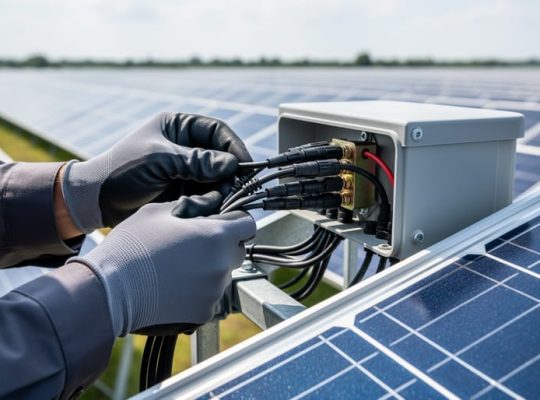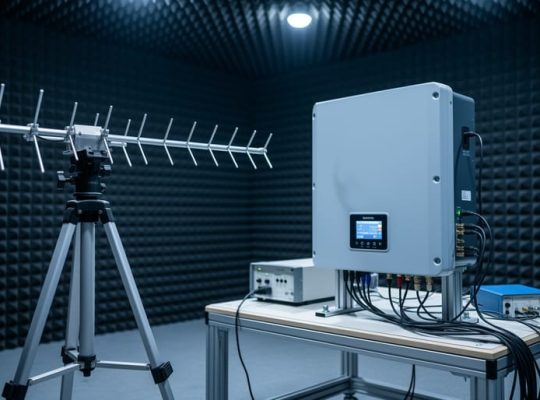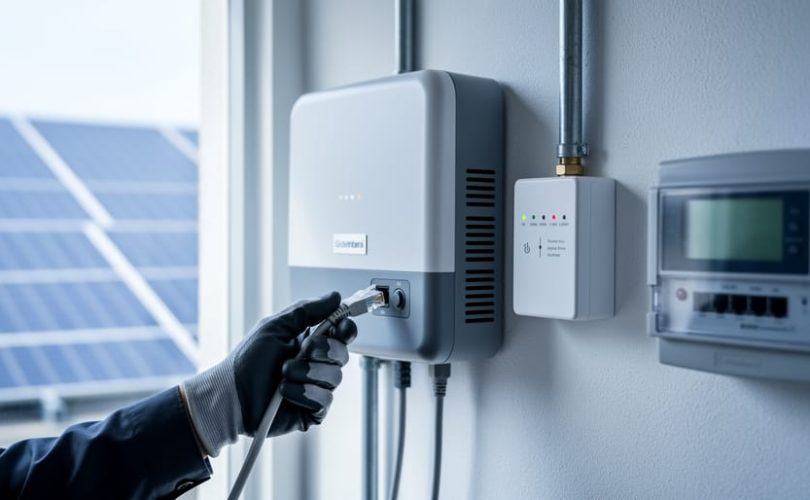
Selecting the appropriate photovoltaic inverter requires understanding how three primary architectures—string inverters, microinverters, and power optimizers—differ in functionality, performance, and increasingly, cybersecurity vulnerability. String inverters centralize DC-to-AC conversion for multiple solar panels, creating a single point of system control that demands robust network security protocols to prevent unauthorized access to utility-connected systems. Microinverters distribute conversion at the individual panel level, expanding the attack surface through multiple network-connected devices but isolating potential breaches to smaller system segments. Power optimizers combine centralized inversion with panel-level DC optimization, requiring dual-layer security considerations for both the optimizer network and the central inverter gateway.
Modern inverter selection extends beyond traditional efficiency and cost metrics to encompass communication protocols, firmware update mechanisms, and compliance with IEC 62443 industrial cybersecurity standards. Each architecture presents distinct advantages: string inverters offer simplified monitoring with fewer network endpoints, microinverters provide granular performance data through distributed intelligence, and hybrid inverter systems with battery storage introduce additional security considerations for bidirectional power flow and grid services participation.
Understanding these technical distinctions enables system designers to implement appropriate security measures during installation rather than retrofitting protection after deployment. The integration of inverters into smart grid infrastructure, demand response programs, and remote monitoring platforms has transformed these devices from passive power conversion equipment into active network participants requiring authentication protocols, encrypted communications, and regular security updates. This comprehensive exploration examines each inverter type through the dual lenses of operational performance and cybersecurity requirements, equipping photovoltaic professionals with the knowledge to design resilient, secure solar installations.
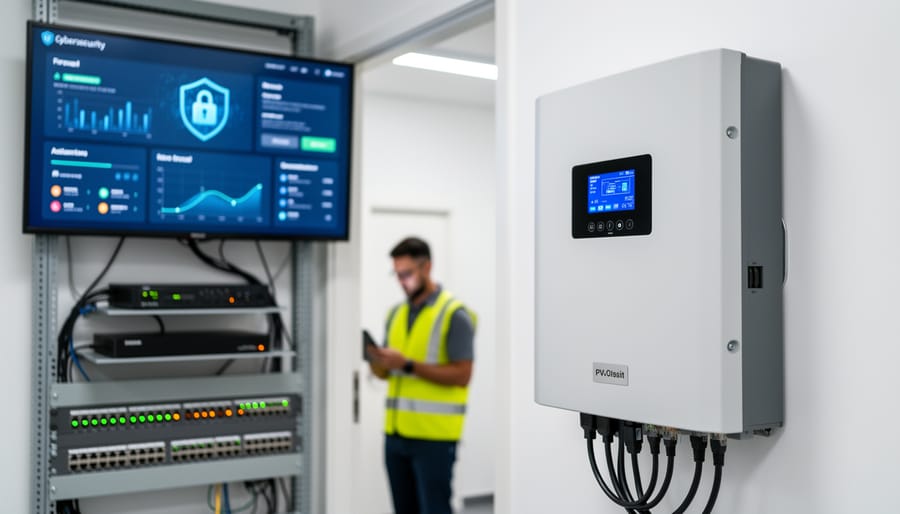
Understanding PV Inverter Types and Their Core Functions
String Inverters
String inverters represent one of the most widely deployed photovoltaic conversion technologies, connecting multiple solar panels arranged in series configurations to create strings with combined DC voltage outputs. As fundamental solar system components, these devices typically serve residential and commercial installations ranging from 3 kW to 100 kW capacity. Each string inverter manages multiple panel strings through a centralized conversion process, transforming direct current into grid-compatible alternating current.
From a connectivity perspective, modern string inverters increasingly incorporate communication interfaces including Wi-Fi, Ethernet, and cellular modules that enable remote monitoring and system optimization. These network capabilities facilitate real-time performance tracking, firmware updates, and diagnostic functions through manufacturer-specific platforms or third-party monitoring services. However, this connectivity introduces cybersecurity considerations that system designers must address during installation planning.
String inverters commonly feature standardized communication protocols such as Modbus TCP/IP and SunSpec, which allow integration with building management systems and grid operators. The centralized architecture means a single compromised inverter could affect multiple panel strings, making robust authentication mechanisms and secure network configurations essential for protecting system integrity and maintaining reliable energy production across the installation.
Microinverters
Microinverters represent a fundamentally different approach to solar energy conversion by operating at the individual panel level. Unlike string inverters that manage multiple panels collectively, each microinverter attaches directly beneath a single solar panel, creating a distributed architecture throughout the photovoltaic array. This configuration eliminates single points of failure and optimizes energy harvest from each module independently, particularly beneficial in installations with shading concerns or complex roof geometries.
From a security perspective, microinverter systems present a unique landscape characterized by their network-based communication protocols. These devices typically communicate through proprietary wireless protocols or power line communication (PLC) technology to transmit performance data to central monitoring gateways. The distributed nature means each unit functions as a potential network endpoint, exponentially increasing the attack surface compared to centralized systems. Security considerations must address both the individual microinverter firmware vulnerabilities and the communication channels connecting them.
Modern microinverter installations often integrate with cloud-based monitoring platforms, enabling remote diagnostics and performance optimization. While this connectivity enhances system management capabilities, it simultaneously introduces cybersecurity challenges requiring robust authentication mechanisms, encrypted data transmission, and regular security updates. Academic institutions collaborating with industry leaders continue researching enhanced security protocols specifically designed for distributed inverter architectures, recognizing that protecting these increasingly connected systems remains essential for grid stability and consumer confidence.
Central Inverters
Central inverters represent the most powerful inverter technology, designed specifically for utility-scale solar installations ranging from 500 kilowatts to several megawatts. These large-scale systems consolidate power conversion from extensive photovoltaic arrays, typically serving solar farms and commercial installations where economies of scale justify their substantial infrastructure requirements.
The architecture of central inverters incorporates sophisticated network connectivity features, enabling integration with supervisory control and data acquisition (SCADA) systems for real-time monitoring and control. These communication capabilities utilize protocols such as Modbus, DNP3, and IEC 61850, facilitating seamless data exchange with grid operators and facility management systems. However, this extensive connectivity introduces significant cybersecurity considerations, as networked inverters become potential entry points for unauthorized access.
Central inverters typically include advanced control systems with grid support functionalities, including voltage regulation, frequency response, and reactive power management. Their centralized configuration allows for streamlined maintenance procedures but creates single points of failure that require robust security protocols. Modern installations implement layered security approaches, incorporating firewalls, encrypted communications, and authentication mechanisms to protect against cyber threats while maintaining operational efficiency and grid stability requirements.
Hybrid Inverters
Hybrid inverters represent an evolution in PV technology, combining traditional grid-tied functionality with integrated battery storage management capabilities. These sophisticated devices enable homeowners and businesses to store excess solar energy for later use, providing backup power during outages and optimizing self-consumption rates. By managing bidirectional power flow between solar panels, batteries, grid connection, and loads, hybrid inverters offer unprecedented flexibility in energy management.
However, this multifunctionality creates an expanded attack surface from a cybersecurity perspective. The integration of battery management systems introduces additional communication protocols and control pathways that adversaries could potentially exploit. Each connected component—from battery monitoring circuits to energy management software—represents a potential entry point for cyber threats. The increased complexity of hybrid systems requires more sophisticated network segmentation strategies and monitoring protocols compared to simpler inverter types.
Security professionals must address vulnerabilities across multiple subsystems, including battery state-of-charge monitoring, charge controller interfaces, and automated switching mechanisms. Educational programs emphasizing secure integration practices are essential for preparing installers to properly configure these advanced systems while maintaining robust cybersecurity posture throughout the installation lifecycle.
Cybersecurity Vulnerabilities Across Different Inverter Types
Communication Protocol Weaknesses
Modern photovoltaic inverters rely on communication protocols to transmit performance data, receive commands, and integrate with monitoring systems. However, these protocols often present significant security vulnerabilities that vary across different inverter architectures.
Modbus, one of the most widely adopted industrial protocols in solar installations, operates without native encryption or authentication mechanisms. Originally designed for closed industrial networks, Modbus TCP implementations in string and central inverters expose systems to unauthorized access and data manipulation. Attackers can potentially modify operational parameters, inject false data, or disrupt communications without sophisticated tools, making it particularly vulnerable when exposed to internet-facing networks.
SunSpec Alliance developed standardized communication models to ensure interoperability across manufacturers. While SunSpec provides consistency in data representation, it inherits the security limitations of its underlying transport protocols, typically Modbus. The standardization actually increases risk exposure since attackers can leverage publicly available specifications to target multiple inverter brands simultaneously. This affects both residential microinverters and commercial-scale systems using SunSpec-compliant devices.
Proprietary communication systems, commonly found in microinverter and power optimizer configurations, present a different challenge. Manufacturers often implement security through obscurity rather than robust cryptographic methods. While these closed systems may seem protected, reverse engineering remains feasible for determined adversaries. Additionally, proprietary protocols complicate third-party security audits and vulnerability assessments, leaving potential weaknesses undiscovered until exploitation occurs.
Academic institutions partnering with industry leaders are actively researching secure communication frameworks. These collaborative efforts, including educational programs focused on cybersecurity in renewable energy systems, aim to develop enhanced protocols incorporating authentication, encryption, and intrusion detection capabilities suitable for distributed solar architectures.
Network Architecture and Access Points
The network architecture of photovoltaic systems varies significantly based on inverter configuration, creating distinct cybersecurity implications for each topology. Centralized inverter systems typically employ a simplified network structure where a single large-capacity inverter serves as the primary access point to the broader electrical grid and monitoring infrastructure. This architecture creates a concentrated attack surface, meaning that compromising one device potentially affects the entire solar array. However, centralized systems offer advantages in security monitoring, as administrators need only secure and audit one primary connection point with standardized protocols.
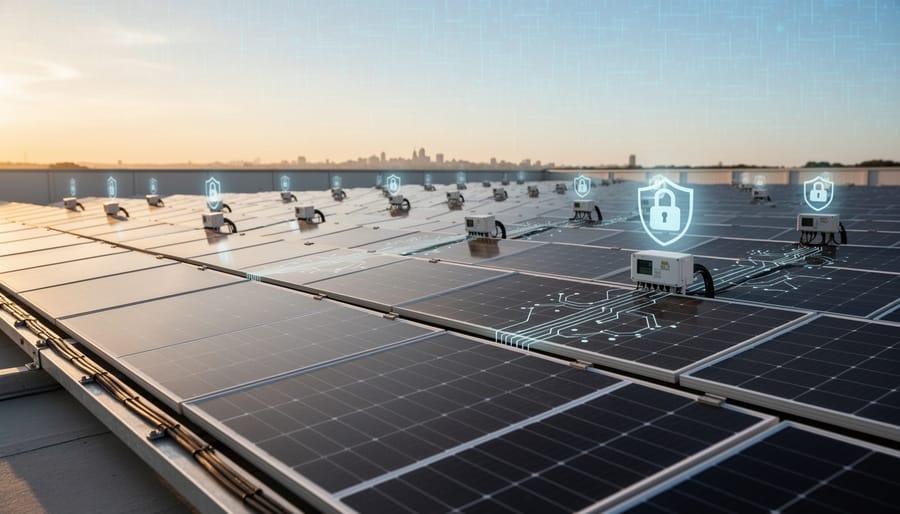
In contrast, distributed inverter architectures, including string and microinverter configurations, establish multiple network nodes throughout the installation. Each inverter functions as an independent access point, communicating through power line communication, wireless protocols, or dedicated networking cables. This decentralized topology presents a broader attack surface with numerous entry points that require individual security consideration. Microinverter systems, which can include dozens or hundreds of units in residential installations, create particularly complex network environments where each device requires firmware management, authentication protocols, and potential vulnerability patches.
The proliferation of Internet of Things connectivity in modern inverter systems has expanded these network architectures beyond traditional boundaries. Cloud-based monitoring platforms, mobile applications, and remote diagnostic tools introduce additional network pathways that cybercriminals may exploit. Educational programs through university collaborations emphasize that professionals must understand these architectural differences to implement appropriate security measures, including network segmentation, encrypted communications, and access control mechanisms tailored to each inverter topology. Proper network design becomes fundamental to maintaining system integrity and protecting against unauthorized access attempts.
Firmware and Software Update Mechanisms
Firmware and software updates represent critical maintenance operations for all inverter types, yet they simultaneously create significant security vulnerabilities when improperly implemented. String inverters typically receive updates through wired connections or network interfaces, with manufacturers providing periodic patches to address performance issues and security flaws. However, many legacy systems lack encrypted update channels or cryptographic signature verification, allowing attackers to inject malicious firmware that could compromise entire installations.
Microinverters present unique update challenges due to their distributed architecture. While some manufacturers implement over-the-air updates through powerline communication or wireless mesh networks, these transmission methods often lack adequate encryption protocols. An attacker intercepting unencrypted update packets could potentially distribute compromised firmware across hundreds of individual units simultaneously, creating widespread system failures or data breaches.
Central inverters in utility-scale applications generally employ more robust update mechanisms, including secure boot processes and digital signature verification. Nevertheless, vulnerabilities emerge when technicians bypass security protocols during maintenance or when manufacturers fail to revoke compromised signing keys promptly.
The absence of standardized secure update procedures across inverter types creates inconsistent security postures within the industry. Research collaborations between manufacturers and universities have identified that approximately 60 percent of deployed inverters lack basic update authentication mechanisms. Best practices require implementing encrypted communication channels, mandatory signature verification, rollback capabilities for failed updates, and regular security patch schedules. Professional training programs increasingly emphasize these update security protocols as fundamental competencies for PV system designers and installers.
Key Cybersecurity Standards Applicable to PV Inverters
IEC 62443: Industrial Communication Networks Security
IEC 62443 represents the international standard framework specifically designed to address cybersecurity in industrial automation and control systems (IACS). Originally developed by the International Society of Automation (ISA) as ISA-99, this comprehensive standard was adopted by the International Electrotechnical Commission and now serves as the cornerstone for securing critical infrastructure, including photovoltaic systems.
The standard comprises multiple parts organized into four categories: general considerations, policies and procedures, system requirements, and component requirements. For PV inverter manufacturers and system integrators, IEC 62443-4-2 holds particular relevance, establishing technical security requirements for IACS components including inverters, data loggers, and communication gateways.
IEC 62443 introduces the concept of Security Levels (SL), ranging from SL 1 to SL 4, which define protection against increasingly sophisticated threat actors. Most residential and commercial PV installations target SL 2, providing protection against intentional violations using simple means with low resources and generic skills. Large-scale utility installations may require SL 3 compliance, defending against sophisticated attacks with moderate resources.
The standard emphasizes defense-in-depth strategies through zones and conduits, requiring PV system designers to segment networks logically and implement appropriate security controls at boundaries. This approach directly influences inverter selection and system architecture, particularly for string inverters with centralized communication versus distributed microinverter networks. Academic institutions collaborating on renewable energy research increasingly incorporate IEC 62443 principles into educational programs, preparing future professionals for secure system design practices.
IEEE 1547 and Grid Interconnection Security
IEEE 1547 establishes the technical specifications and interoperability requirements for distributed energy resources connecting to the electric power grid. This standard mandates advanced grid-support functions in modern PV inverters, including voltage and frequency ride-through capabilities, active power control, and reactive power compensation. For grid-connected systems, these requirements ensure stable operation during grid disturbances while enabling two-way communication between inverters and utility operators.
The cybersecurity implications are significant, as IEEE 1547-2018 introduced requirements for secure communication protocols and data exchange mechanisms. Inverters must now implement authentication procedures, encrypted data transmission, and access control measures to prevent unauthorized grid manipulation. The standard also addresses firmware security, requiring manufacturers to establish procedures for secure updates and vulnerability management.
Compliance with IEEE 1547 necessitates that inverter manufacturers integrate robust cybersecurity frameworks throughout the product lifecycle. These measures protect against potential threats such as false data injection, denial-of-service attacks, and unauthorized control commands that could destabilize grid operations or compromise distributed energy resource performance.
NERC CIP Standards for Utility-Scale Systems
Large-scale photovoltaic installations utilizing central inverters must comply with the North American Electric Reliability Corporation (NERC) Critical Infrastructure Protection (CIP) standards when connected to bulk electric systems. These comprehensive cybersecurity requirements become particularly relevant for utility-scale projects exceeding 75 MVA aggregate capacity, where central inverters serve as critical control points within the grid infrastructure.
Central inverter architectures present unique compliance challenges due to their networked supervisory control and data acquisition (SCADA) systems. NERC CIP-007 mandates specific security controls for these systems, including patch management, malware prevention, and port monitoring protocols. The centralized nature of these inverters requires robust physical security measures under CIP-006 and personnel training requirements specified in CIP-004.
System designers must implement electronic security perimeters compliant with CIP-005, effectively segregating inverter communication networks from external access points. Documentation requirements under CIP-003 necessitate comprehensive cybersecurity policies tailored to inverter operations. Educational institutions partnering with industry organizations increasingly offer specialized training programs addressing NERC CIP compliance for renewable energy systems, preparing professionals to navigate these complex regulatory frameworks while maintaining operational efficiency in utility-scale solar installations.
UL 1741 and SunSpec Security Requirements
Photovoltaic inverters must comply with rigorous certification standards to ensure both operational safety and cybersecurity resilience. UL 1741, the foundational North American standard for inverter testing and certification, addresses electrical safety, grid interconnection requirements, and increasingly, cybersecurity provisions. The standard’s Supplement A incorporates advanced grid support functions that necessitate secure communication protocols to prevent unauthorized control of distributed energy resources.
SunSpec Alliance has emerged as the industry leader in developing interoperability and security specifications for solar equipment. The SunSpec Modbus protocol establishes a common data model for monitoring and control, while SunSpec security guidelines provide implementation frameworks for authentication, encryption, and secure firmware updates. These specifications are particularly critical for string inverters and central inverters that manage substantial power flows and require remote monitoring capabilities.
Compliance with these standards ensures inverters can resist common attack vectors including unauthorized access attempts, man-in-the-middle attacks, and malicious firmware injection. For professionals designing or installing PV systems, understanding these requirements is essential for selecting appropriate inverter types that meet both performance objectives and security mandates. Modern certification processes now evaluate cybersecurity features alongside traditional electrical safety parameters, reflecting the growing recognition that grid-connected inverters represent critical infrastructure requiring robust protection mechanisms.
Security Implementation Strategies by Inverter Type
Securing String and Microinverter Residential Systems
Residential string and microinverter systems present unique security challenges due to their distributed nature and widespread deployment. Unlike utility-scale installations with dedicated IT teams, residential systems often lack robust cybersecurity oversight, making them attractive targets for coordinated attacks.
Network segmentation represents the first line of defense for residential installations. Solar monitoring systems should operate on isolated network segments separate from home automation and personal devices. This prevents lateral movement if one system becomes compromised. Many modern inverters support VLAN configuration, allowing installers to create dedicated subnetworks for energy management equipment.
Access control measures are equally critical. Default administrator credentials must be changed immediately upon installation, with strong passwords enforcing complexity requirements. Multi-factor authentication should be enabled whenever supported by monitoring platforms. Regular credential rotation, ideally every 90 days, reduces exposure from potential breaches.
Secure monitoring practices involve encrypted communication protocols, particularly when accessing systems remotely. Installers should disable unnecessary ports and services, implement firewall rules restricting inbound connections, and ensure firmware updates are applied promptly. Educational partnerships between equipment manufacturers and universities have developed certification programs emphasizing these best practices, ensuring emerging professionals understand the security implications of residential PV system design and maintenance.
Commercial and Central Inverter Protection Measures
Commercial and central inverter installations demand enterprise-grade protection measures that extend beyond residential security frameworks. These larger systems, often exceeding 100 kW capacity, require comprehensive security architectures incorporating multiple defensive layers.
Network intrusion detection systems (IDS) serve as the first line of defense, continuously monitoring communication traffic for suspicious patterns or unauthorized access attempts. Modern commercial installations should implement Security Information and Event Management (SIEM) platforms that aggregate data from multiple inverters, enabling real-time threat correlation and automated incident response.
Encrypted communications protocols, particularly TLS 1.3 or higher, protect data transmission between inverters, monitoring systems, and remote operations centers. Virtual Private Networks (VPNs) establish secure tunnels for remote maintenance access, preventing credential theft and man-in-the-middle attacks.
Many utility-scale installations now employ dedicated Security Operations Centers (SOCs) that provide 24/7 surveillance of system integrity. These facilities utilize advanced analytics and machine learning algorithms to detect anomalous behavior before it escalates into critical failures.
Educational institutions collaborating with industry leaders have developed specialized training programs addressing commercial-scale PV security management, ensuring professionals understand both technical implementation and regulatory compliance requirements. Regular penetration testing and vulnerability assessments complete the security framework, identifying potential weaknesses before malicious actors can exploit them.
Hybrid Inverter and Energy Storage Security
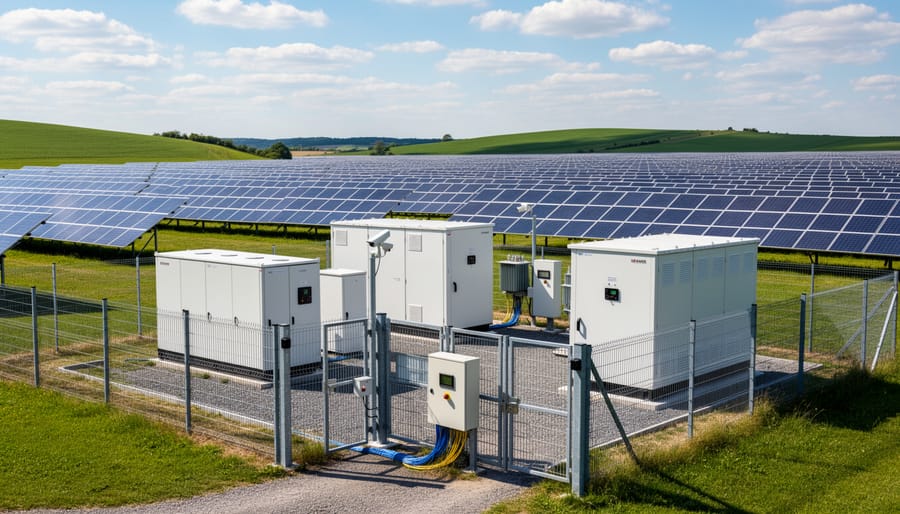
Hybrid inverters managing battery storage integration present unique security challenges due to their bidirectional power flow capabilities and complex energy management systems. These systems require robust protection mechanisms to safeguard both the charging and discharging cycles, preventing unauthorized manipulation that could damage batteries, destabilize grid connections, or compromise system efficiency.
Critical security considerations include implementing encrypted communication protocols between the inverter and battery management system (BMS) to prevent interception or tampering. Access controls must restrict energy dispatch commands to authorized users only, as malicious actors could deliberately drain batteries or trigger unsafe charging conditions. Firmware integrity verification becomes essential, as compromised code could alter power flow algorithms or disable safety thresholds.
The energy management system (EMS) controlling charge-discharge schedules requires particular attention, as it often connects to external networks for demand response programs or time-of-use optimization. Network segmentation, intrusion detection systems, and regular security audits help maintain system integrity. Additionally, physical security measures protecting battery enclosures and inverter controls prevent direct tampering. Universities collaborating on energy storage research increasingly emphasize these security fundamentals in their curriculum, recognizing that professional installers must understand both operational and cybersecurity aspects of modern hybrid systems.
Emerging Threats and Future-Proofing Inverter Security
AI-Powered Attacks and Advanced Persistent Threats
As photovoltaic systems become increasingly digitized and interconnected, sophisticated cyber threats pose significant risks to inverter infrastructure and grid stability. Advanced Persistent Threats (APTs) represent coordinated, long-term attack campaigns where malicious actors establish hidden access points within inverter networks to gather intelligence, manipulate operations, or prepare for future disruptions. These attacks typically exploit multiple vulnerabilities across different inverter types, combining social engineering, zero-day exploits, and customized malware designed specifically for industrial control systems.
AI-powered attacks have emerged as particularly concerning developments in the renewable energy sector. Machine learning algorithms enable attackers to analyze communication patterns between inverters and grid operators, identifying optimal timing for disruptions that maximize impact while minimizing detection. Automated reconnaissance tools can rapidly scan thousands of internet-connected string and microinverters for known vulnerabilities, creating comprehensive maps of exploitable systems. Sophisticated attackers leverage artificial intelligence to adapt their methods in real-time, adjusting attack vectors when encountering security measures.
Grid-scale central inverters present attractive targets for APTs due to their substantial power capacity and critical infrastructure role. Research conducted through university collaborations has demonstrated how coordinated attacks on multiple central inverters could destabilize regional power distribution. Educational programs now incorporate APT awareness training, preparing professionals to recognize indicators of compromise and implement layered defense strategies that combine network segmentation, anomaly detection systems, and regular firmware validation protocols.
Quantum Computing and Encryption Challenges
The emergence of quantum computing presents a significant challenge to current encryption protocols used in PV inverter communications. Quantum computers, expected to achieve practical applications within the next decade, could potentially break RSA and elliptic curve cryptography that currently secures inverter-to-cloud communications and firmware updates. This vulnerability has prompted the National Institute of Standards and Technology to develop post-quantum cryptographic algorithms, with industry leaders already testing quantum-resistant encryption methods.
Leading inverter manufacturers are collaborating with universities to develop future-proof security architectures. Several institutions now offer educational program offerings that include quantum-safe cryptography modules specifically designed for energy infrastructure professionals. The industry is implementing hybrid encryption approaches that combine classical and quantum-resistant algorithms, ensuring backward compatibility while preparing for the quantum era. Proactive measures include establishing longer key lengths, implementing crypto-agility frameworks that allow rapid algorithm updates, and developing hardware capable of supporting more computationally intensive post-quantum algorithms. Organizations like the Solar Energy Industries Association recommend that new inverter deployments consider quantum-readiness in their security specifications, particularly for systems with expected lifespans extending into the 2030s when quantum threats may materialize.
Compliance and Certification: What PV Professionals Need to Know
For PV professionals working with inverter systems, understanding compliance requirements and certification pathways is essential for career advancement and ensuring secure system deployments. The cybersecurity landscape for photovoltaic systems continues to evolve, requiring practitioners to maintain current knowledge of standards and best practices.
Professionals should begin by familiarizing themselves with key regulatory frameworks governing PV inverter cybersecurity. The IEC 62443 series provides industrial cybersecurity standards applicable to grid-connected inverter systems, while NERC CIP requirements affect utility-scale installations. The UL 1741 standard now incorporates cybersecurity provisions for inverters, making compliance knowledge crucial for system designers and installers. Additionally, regional requirements such as California’s Rule 21 mandate specific security capabilities for distributed energy resources.
Pursuing professional certification in both PV systems and cybersecurity enhances career prospects and demonstrates competency to employers and clients. Organizations like the North American Board of Certified Energy Practitioners offer credentials that increasingly incorporate security considerations. Complementary certifications in industrial control systems security, such as GIAC Critical Infrastructure Protection, provide specialized knowledge applicable to PV inverter protection.
Educational institutions partnering with industry leaders now offer specialized training programs addressing inverter cybersecurity. These programs typically cover threat modeling specific to different inverter architectures, secure configuration practices, and incident response protocols. Hands-on laboratory experiences with various inverter types allow professionals to understand vulnerabilities firsthand and develop mitigation strategies.
Staying current requires ongoing professional development through industry conferences, webinars, and technical publications. Organizations such as the Solar Energy Industries Association and IEEE provide resources specifically addressing emerging threats and evolving compliance requirements. Networking with cybersecurity experts and participating in information sharing forums helps professionals learn from real-world incidents and implement preventive measures.
Documentation skills are equally important, as professionals must demonstrate compliance through proper record-keeping, security assessment reports, and system configuration documentation. Understanding how to conduct security audits and document remediation efforts becomes increasingly valuable as regulatory scrutiny intensifies across the renewable energy sector.
The selection of photovoltaic inverter types represents a foundational decision that reverberates throughout every aspect of system security architecture. As this examination has demonstrated, string inverters, microinverters, and power optimizers each present distinct cybersecurity profiles that demand tailored protection strategies. The critical insight for solar professionals is unmistakable: security considerations must inform inverter selection from the earliest design phases, not serve as remedial measures applied after installation.
Modern grid-interactive solar systems function as interconnected nodes within expanding energy networks, making them potential entry points for sophisticated cyber threats. Whether implementing centralized string inverter configurations or distributed microinverter architectures, security protocols must align with both the technical characteristics of the chosen technology and evolving regulatory frameworks. The convergence of IEC 62443 standards, UL cybersecurity certifications, and emerging grid codes establishes a comprehensive compliance landscape that professionals cannot afford to ignore.
Mose Solar remains committed to advancing professional competency in this rapidly evolving field through collaborative educational initiatives. Our partnerships with leading universities and specialized training programs ensure that aspiring photovoltaic professionals gain practical knowledge of both inverter technologies and their security implications. As cyber threats grow more sophisticated and grid integration deepens, continuous learning becomes essential rather than optional.
We encourage renewable energy practitioners, system designers, and industry stakeholders to actively engage with available educational resources and professional development opportunities. The intersection of photovoltaic technology and cybersecurity will continue reshaping industry best practices, and informed professionals will lead this transformation. Stay current with technological advances, monitor emerging security standards, and invest in ongoing education to ensure your solar installations meet both performance and protection requirements in an increasingly connected energy landscape.