
Purchase Price Variance (PPV) is the difference between the actual cost of procured goods and their standard or expected cost, and in photovoltaic supply chains, it serves as a critical metric for controlling solar module procurement expenses and ensuring accurate customs valuation for import compliance. When your organization pays more or less than the budgeted rate for solar panels, the variance directly impacts project profitability and may trigger adjustments in cost accounting and duty calculations.
For solar project developers and procurement teams, PPV calculation becomes essential during three scenarios: annual contract negotiations with module manufacturers, spot market purchases when prices fluctuate, and customs declarations where declared value must reflect actual transaction prices. The metric helps financial controllers identify cost overruns early, enables supply chain managers to evaluate supplier performance, and provides customs brokers with documentation required for harmonized tariff classification.
Understanding PPV extends beyond basic accounting. The variance reflects real supply chain dynamics such as polysilicon price shifts, currency exchange fluctuations, shipping cost volatility, and negotiated volume discounts. Unfavorable variances signal higher-than-expected costs that compress project margins, while favorable variances may indicate either skilled negotiation or quality concerns that require technical review.
This guide explains what triggers PPV in solar procurement, when companies must calculate and report it, how to perform accurate variance analysis across multi-megawatt shipments, and what obligations procurement teams face when variance affects import duties. Whether you’re managing your first utility-scale solar project or refining cost controls for an established renewables portfolio, mastering PPV analysis strengthens both financial oversight and regulatory compliance. Educational programs through university partnerships offer deeper training in supply chain finance for photovoltaic professionals seeking specialized expertise.
What PPV Is in Solar PV Supply Chain Management

PPV vs. Other Cost Variance Metrics
Purchase Price Variance focuses on the difference between budgeted and actual unit costs at the moment of purchase order or invoice receipt. In solar procurement, this means tracking whether you paid more or less per watt than planned when you locked in pricing with a module supplier.
Material price variance, by contrast, measures cost changes in raw inputs like polysilicon or silver paste before they reach the finished module stage. This metric matters to manufacturers but rarely appears in project-level procurement accounting.
Exchange rate variance isolates currency fluctuations between contract signing and payment. If you agreed to pay a Chinese supplier in yuan and the exchange rate moved unfavorably before settlement, that delta is captured separately from the underlying module price shift. The purchase price variance definition treats this as a distinct line item to preserve transparency in cost reporting.
Duty-related cost changes refer to tariff rate adjustments or reclassifications that alter the landed cost after modules clear customs. While these increase total expenditure, they’re often tracked under customs compliance rather than rolled into PPV, since the supplier’s invoice price remains unchanged. Separating these variances helps project teams pinpoint whether cost overruns stem from negotiation outcomes, currency risk, or trade policy shifts.
Why PPV Matters for PV Project Economics
Purchase price fluctuations directly shape whether a solar project meets its financial targets or erodes planned returns. Modules typically represent the largest single equipment cost in a photovoltaic installation, so even modest variance between budgeted and actual pricing cascades through the entire cost structure. An unfavorable PPV squeezes margin, forcing trade-offs elsewhere in the bill of materials or eating into contingency reserves.
Lenders and equity partners rely on vetted procurement budgets when structuring project finance. Significant cost deviations trigger reforecasting, can delay financial close, and may require renegotiation of debt terms or additional sponsor equity. Accurate PPV tracking builds investor confidence by demonstrating procurement discipline and transparent cost control.
Competitive positioning hinges on delivering promised pricing. Developers bidding into utility tenders or corporate power purchase agreements operate on narrow spreads. Teams that anticipate and manage purchase price variance maintain credibility, secure repeat contracts, and avoid the reputational damage that comes from missing cost commitments due to unchecked procurement volatility.
When PPV Analysis Applies in Solar Procurement
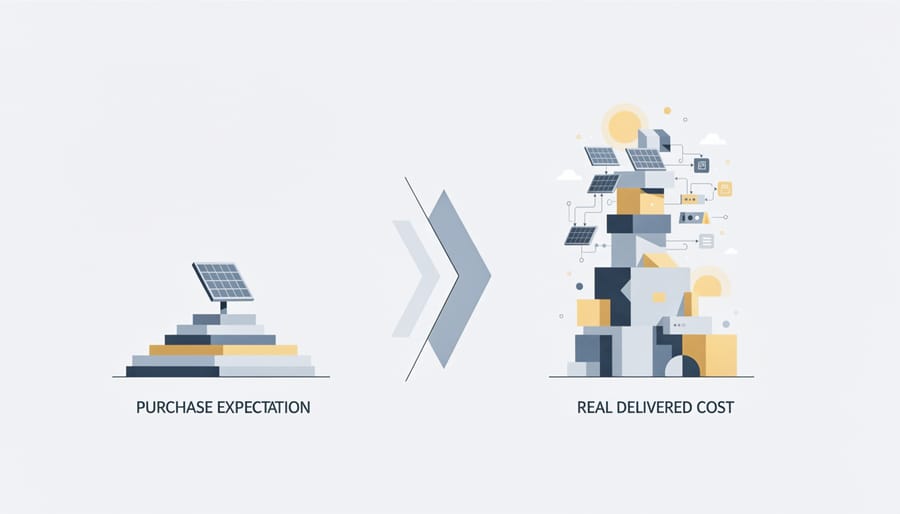
Not every solar project requires formal Purchase Price Variance tracking. PPV analysis becomes essential when procurement complexity, contract structure, or regulatory oversight demands precise cost reconciliation. Understanding when to implement PPV tracking helps project managers allocate resources appropriately and maintain compliance without over-engineering cost controls for straightforward purchases.
Large-scale utility projects typically warrant systematic PPV monitoring. When module orders exceed several megawatts and span multiple shipments over months, even modest price deviations compound into material budget impacts. A procurement team managing a utility-scale installation benefits from tracking each delivery against baseline pricing to identify trends early and adjust forecasting models before cost overruns threaten project viability.
Multi-vendor sourcing strategies introduce price variability that PPV analysis captures effectively. Organizations splitting orders among several suppliers to mitigate risk or secure capacity face different pricing, payment terms, and delivery conditions across vendors. Tracking purchase price variance for each supplier reveals which relationships deliver the best value and informs future allocation decisions.
Long-term supply agreements, where buyers lock in pricing for future deliveries, create natural PPV scenarios. Market conditions shift between contract signing and shipment arrival. Currency fluctuations, silicon price movements, or tariff changes can drive wedges between agreed rates and current market benchmarks, making variance analysis critical for understanding true procurement performance.
Import contracts subject to tariffs demand PPV tracking for compliance and financial accuracy. Customs duties, anti-dumping assessments, and trade remedy measures alter landed costs. Procurement teams must reconcile budgeted prices with actual costs including all duty components, ensuring customs declarations match financial records and variance reports reflect the full import expense.
Common procurement situations that trigger PPV analysis include:
- Orders exceeding predefined monetary thresholds set by finance or audit policies
- Contracts with price adjustment clauses tied to commodity indices or exchange rates
- Purchases involving letters of credit or performance bonds requiring cost certification
- Procurement subject to grant funding or investor reporting with strict budget adherence requirements
- Situations where suppliers propose mid-contract price modifications or force majeure claims
- Projects requiring detailed cost breakdowns for tax credits, tariff exclusions, or subsidy applications
Audit and compliance scenarios often mandate PPV documentation retroactively. Regulators reviewing customs entries, auditors examining project financials, or investors conducting due diligence expect transparent records showing how actual costs diverged from budgets and what factors drove those variances. Maintaining organized PPV data simplifies these reviews and demonstrates procurement discipline.
Risk management protocols may trigger PPV tracking when cost volatility threatens project margins. Finance teams set variance thresholds; breaching them activates deeper analysis and mitigation planning. Establishing clear criteria for when PPV monitoring begins, and at what intensity, prevents both gaps in oversight and wasteful tracking of immaterial purchases.
How to Calculate and Track PPV in Solar Module Procurement
Setting Your Baseline Purchase Price
Your baseline purchase price is the budgeted module cost you expect to pay when you lock in a supply contract or issue a purchase order. Without a documented baseline, you cannot calculate variance or spot cost overruns.
Start by recording the per-watt or per-module price agreed in your supply contract, noting the Incoterms (FOB, CIF, DDP) that define which party bears freight, insurance, and duty costs. If you negotiate a forward pricing agreement, fixing rates for future deliveries, document the agreed price, delivery schedule, and any escalation clauses tied to silicon or currency benchmarks.
Include all cost components within your control: the ex-works module price, estimated freight and insurance if you arrange shipping, and anticipated customs duties based on current tariff classifications for your destination country. Cross-check Harmonized System codes with your customs broker to ensure you budget the correct duty rate.
Record the currency of the transaction and the exchange rate used for budgeting. If your contract allows quarterly price adjustments, note the formula and reference indices so you can distinguish contractual price changes from true variances.
Finally, archive these assumptions with your purchase order and customs documentation. Auditors and compliance teams will ask why actual costs differ from budget; clear baseline records let you explain whether the variance stems from market forces, supplier changes, or errors in your original forecast.
Recording Actual Costs and Import Adjustments
Recording actual purchase costs accurately requires systematic documentation at every stage of the import process. Start by collecting supplier invoices that itemize the module price, quantity, and payment terms. When goods ship, obtain the commercial invoice and packing list showing FOB or CIF values, then add ocean or air freight charges from the carrier’s bill of lading. Insurance certificates provide the premium cost to cover transit risk.
Once the shipment arrives, your customs broker files the entry documentation and calculates duties based on the tariff classification and declared value. Collect the customs entry summary and duty payment receipts. Add any broker fees, inspection charges, or compliance costs incurred during clearance. Port handling and inland delivery expenses complete the landed cost.
Cross-reference this final delivered cost against your original purchase order. Ensure the customs-declared value matches the supplier invoice amount to maintain compliance and avoid discrepancies during audits. Feed these verified figures into your accounting system to compute the variance against your baseline. Maintaining this alignment between procurement records and customs filings provides the foundation for accurate PPV calculation and transparent regulatory reporting.
Computing the Variance
The Purchase Price Variance formula is straightforward: subtract the actual unit cost from the budgeted unit cost, then multiply by the quantity purchased. When actual costs fall below budget, the variance is favorable; when they exceed it, the variance is unfavorable. Express the result both as a total dollar amount and as a percentage of the budgeted spend to give finance teams and project managers a clear view of cost performance. Most project accounting systems allow you to post PPV to a dedicated variance account rather than adjusting the original inventory asset value, preserving the audit trail. Record the variance in the same period as the purchase invoice, and flag significant deviations for review by procurement and finance. This workflow ensures that cost overruns or savings are visible immediately, enabling timely corrective action or reallocation of contingency funds across the solar project portfolio.
Rights, Responsibilities, and Compliance Obligations
Managing Purchase Price Variance in solar module procurement isn’t just an internal accounting exercise. Each stakeholder carries distinct obligations to ensure that PPV records serve both project cost control and regulatory compliance.
Procurement teams bear primary responsibility for documenting the pricing assumptions underlying budgeted costs. When actual purchase prices deviate from forecasts, these teams must record the specific causes: supplier contract amendments, exchange rate shifts, commodity price changes, or shipping cost increases. Clear documentation protects the organization during audits and helps finance teams understand whether variances stem from controllable negotiation issues or external market forces. Procurement must also maintain correspondence with suppliers that explains pricing adjustments, especially when contract terms reference formula-based pricing tied to silicon spot markets or currency indices.
Finance teams reconcile PPV calculations with customs entry documentation to ensure reported costs align across accounting and trade compliance systems. Import transactions require accurate declared values on commercial invoices and customs forms. If a project’s actual purchase price falls below or exceeds the declared import value, finance must investigate and correct discrepancies before filing entries. This reconciliation prevents customs authorities from questioning valuation accuracy and avoid panels stuck at customs due to documentation mismatches.
Importers must classify modules and components under correct Harmonized Tariff Schedule codes and apply appropriate duty rates when calculating landed costs. Misclassification distorts PPV by recording incorrect baseline costs and creates compliance risk. Tariff accuracy feeds into variance analysis because duties form part of total delivered cost. Importers also ensure that any duty drawback claims, temporary import bonds, or preferential tariff treatments appear consistently in both PPV records and customs filings.
Auditors and compliance officers require transparent, traceable PPV documentation during internal reviews and regulatory examinations. They verify that variance causes are legitimate, that no costs were shifted between periods to manipulate financial results, and that import valuation matches purchase order records. Maintaining audit trails that link PPV calculations to supplier invoices, purchase orders, shipping documents, and customs entries demonstrates good governance. Understanding frameworks like KPIV and KPOV helps teams identify critical input variables driving variances and output metrics for compliance monitoring.
Project managers should recognize that PPV analysis intersects with broader procurement requirements, including local content rules that may dictate sourcing from specific regions. When local content mandates shift procurement to higher-cost domestic suppliers, the resulting unfavorable PPV is a compliance cost rather than a negotiation failure. Clear stakeholder communication prevents misinterpreting such variances as procurement inefficiency.
Common Causes of PPV in Solar PV Logistics

Purchase price variances in solar PV logistics stem from multiple interconnected factors, each capable of shifting actual procurement costs away from baseline budgets. Understanding these drivers helps project teams anticipate and mitigate financial exposure.
Commodity silicon prices represent a foundational cause of PPV. Polysilicon feedstock costs fluctuate based on global supply-demand dynamics, manufacturing capacity expansions or contractions, and energy input costs in production regions. When silicon prices rise between the time a project sets its budget and the time modules are procured, the variance appears as unfavorable. Conversely, market oversupply can deliver favorable variances. These swings affect module manufacturers’ costs directly, which they pass through to buyers in negotiated pricing.
Exchange rate movements create variance when contracts are denominated in foreign currencies. A solar developer budgeting in U.S. dollars who contracts with a Chinese supplier invoicing in yuan faces currency risk throughout the payment period. If the dollar weakens against the yuan before payment, the actual dollar cost exceeds the budgeted amount, generating unfavorable PPV. Companies can hedge this exposure through forward contracts, but unhedged positions remain vulnerable to forex volatility.
Tariff changes impose sudden cost shifts. When governments adjust import duties, anti-dumping penalties, or countervailing duties on solar products, the landed cost of modules changes immediately. Projects with locked-in FOB pricing but open-ended tariff exposure see these changes flow directly into PPV calculations. Trade policy shifts can materialize quickly, leaving little room for mid-project adjustments.
| Variance Driver | Typical Impact Direction | Mitigation Strategy |
|---|---|---|
| Silicon price volatility | Unfavorable or favorable | Fixed-price contracts, early procurement |
| Exchange rate fluctuation | Unfavorable or favorable | Currency hedging, USD-denominated contracts |
| Tariff adjustments | Typically unfavorable | Diversified sourcing, tariff-inclusive pricing |
| Shipping cost surges | Typically unfavorable | CIF contracts, freight rate locks |
| Contract renegotiations | Unfavorable or favorable | Strong contract terms, volume commitments |
Supplier contract renegotiations emerge when market conditions shift dramatically. A manufacturer facing rising input costs may seek to amend pricing terms mid-contract, particularly if force majeure clauses or material adverse change provisions apply. Buyers may negotiate downward adjustments during market downturns. These renegotiations directly alter the purchase price, creating variance against the original baseline.
Shipping cost volatility affects delivered pricing. Ocean freight rates fluctuate based on vessel availability, fuel costs, port congestion, and seasonal demand. Insurance premiums vary with geopolitical risk and cargo values. FOB contracts shift these risks to the buyer, while CIF contracts place them with the seller, but either way, unexpected logistics cost increases can lead to variance if not properly baselined.
Force majeure events, natural disasters, pandemics, regulatory shutdowns, disrupt supply chains and trigger cost escalations. A factory closure may force a buyer toward spot market purchases at elevated prices, or a port shutdown may necessitate rerouting shipments at premium freight rates. These unpredictable events often generate the largest single-period variances in solar procurement.
Where to Get Help with PPV Analysis and Solar Import Compliance

Professionals navigating purchase price variance analysis and import compliance for solar projects can access support from multiple specialized sources. The complexity of tracking cost deviations across international supply chains, tariff classifications, and customs valuation requires both technical knowledge and practical guidance.
Mose Solar offers an online educational program developed in collaboration with universities, providing structured training on solar procurement fundamentals, cost accounting for renewable energy projects, and trade compliance essentials. The curriculum equips aspiring PV professionals with frameworks for analyzing purchase price fluctuations, understanding how duties and freight affect delivered costs, and maintaining documentation for audit purposes. This university-backed program serves professionals seeking to build competency in solar logistics and project finance without requiring prior cost accounting experience.
Industry associations dedicated to solar energy and supply chain management frequently host workshops and publish guidance on cost tracking, variance analysis, and procurement best practices. These organizations connect members with peers facing similar PPV challenges and share evolving approaches to managing module pricing volatility.
For hands-on assistance with customs and import requirements, licensed customs brokers and trade compliance consultants provide services tailored to solar equipment importers. These specialists help classify modules and components under the correct tariff codes, calculate landed costs including all duties and fees, and prepare documentation that aligns purchase records with customs declarations. Their expertise proves valuable when reconciling actual costs against budgeted figures for compliance reviews.
Additional resources include:
- ERP and procurement software vendors offering modules with built-in variance tracking, purchase order management, and cost reconciliation features
- Government customs agencies publishing tariff schedules, duty rates, classification rulings, and import compliance manuals
- Trade policy research organizations providing analysis of tariff changes, trade remedy cases, and regulatory developments affecting solar imports
- University extension programs and business schools offering courses in international procurement and supply chain finance
Combining formal education with practical tools and expert consultation enables project managers to implement robust PPV tracking systems. The right mix of resources depends on project scale, sourcing complexity, and internal team capabilities, but establishing reliable support networks early prevents costly errors in both cost accounting and regulatory compliance.
How to Apply or Complete the Process
Implementing PPV tracking in your solar procurement workflow begins with defining baseline costs in your purchase order system. Record your expected module price, including any negotiated discounts, payment terms, and delivery conditions, at the time you issue each PO. When the shipment arrives and you receive the commercial invoice, capture the actual cost paid, noting any currency conversion rates applied on the payment date.
Next, reconcile the two figures. Subtract your baseline price from the actual price to calculate the variance. Document the reasons: Did silicon spot prices shift between contract signing and delivery? Did shipping costs surge? Did a tariff reclassification change the landed cost? Clear variance notes support both internal cost reviews and customs audits.
Integrate PPV data into your project accounting and inventory optimization systems so finance teams can adjust forecasts and procurement can renegotiate future contracts if unfavorable variances persist. Schedule regular variance reviews, monthly for active projects, to catch cost trends early. Maintain a variance log with supporting documents: POs, invoices, customs entry forms, and supplier correspondence. This record keeps your team accountable and provides the audit trail regulators or project investors may request.
Frequently Asked Questions About PPV in Solar Supply Chain
What does a favorable PPV mean for a solar project?
A favorable purchase price variance occurs when the actual cost paid for modules or components is lower than the budgeted baseline price. This variance improves project margins and can free up capital for other project needs, though it should be documented for financial reporting and customs valuation purposes.
How do tariffs affect PPV calculations?
Tariffs and import duties become part of the landed cost, so any change in tariff rates or classifications between budgeting and actual purchase will directly impact PPV. An unexpected tariff adjustment can turn a favorable module price variance into an unfavorable total cost variance once customs fees are included.
Can PPV be negative, and what does that indicate?
Yes, PPV can be negative when actual costs exceed budgeted amounts, signaling an unfavorable variance. This often results from supplier price increases, currency depreciation, tariff hikes, or unforeseen freight and compliance costs that weren’t captured in the original budget.
How often should PPV be reviewed during a solar project?
Review frequency depends on project scale and procurement cadence. Large utility projects with staggered module deliveries typically track PPV monthly or quarterly, while smaller installations may review variance only at major procurement milestones or project closeout.
What documentation is needed for customs and audit purposes?
Maintain purchase orders, supplier invoices, baseline pricing agreements, customs entry forms, bills of lading, and variance analysis records. Auditors and customs officials require clear documentation linking budgeted costs to actual landed costs, including all adjustments for freight, insurance, duties, and compliance fees.
Beyond these core questions, practitioners often ask whether exchange rate hedges should be reflected in the baseline price or treated as separate adjustments. The answer depends on your accounting framework: if you’ve locked in a forward contract at the time of budgeting, include the hedged rate in your baseline; if not, track currency variance separately to isolate true purchase price movement from foreign exchange effects.
Another common concern involves how to handle partial shipments or phased deliveries under long-term supply agreements. Calculate PPV incrementally for each delivery batch rather than waiting until project completion, as this provides early warning of cost drift and supports timely corrective action. Document each variance calculation with delivery dates, invoice details, and applicable tariff rates at the time of import to ensure your records withstand audit scrutiny and support accurate project cost reporting.
Understanding Purchase Price Variance is essential for anyone managing solar module procurement or overseeing PV project budgets. PPV analysis reveals cost deviations early, enabling project teams to adjust forecasts, renegotiate contracts, or refine supplier strategies before variances erode margins. Accurate tracking also supports import compliance: customs declarations must reflect actual landed costs, and transparent PPV records help auditors verify that tariff classifications and valuations align with purchase documentation.
For aspiring photovoltaic professionals, mastering PPV calculation and variance interpretation builds competence in cost control and supply chain oversight, skills increasingly valued as solar projects scale and procurement becomes more complex. Mose Solar’s educational program, developed in collaboration with universities, offers structured training in PV logistics, cost accounting, and compliance fundamentals. Supplement formal coursework with industry association resources, customs broker consultations, and hands-on experience in procurement systems to develop a well-rounded understanding of supply chain finance and regulatory obligations in the renewable energy sector.