“B car insurance” most likely refers to Section B of a Contractors’ All Risks (CAR) policy, the third-party liability cover that pays when construction or installation work injures a person or damages property you don’t own. Section A protects the works themselves, such as solar modules, inverters, and mounting structures. Section B protects everyone else from the consequences of your project, from a contractor’s dropped panel damaging a neighboring roof to a site accident involving a passer-by.
For solar PV projects, this distinction matters more than many newcomers expect. Section B sits alongside material damage cover and, on larger builds, Delay in Start-Up (DSU) cover, and the three have to be structured together to avoid gaps. Exact wording, limits, and exclusions vary by insurer and jurisdiction, so treat any summary as a starting point, not a substitute for your policy schedule.
This guide explains what Section B covers, who qualifies, and what the policy requires of you. It also points to authoritative sources of help. It reflects the practical, project-based approach we teach in our educational programs and university collaborations, where insurance literacy is part of becoming a capable PV professional.
What B Cover Means Inside a CAR or EAR Policy
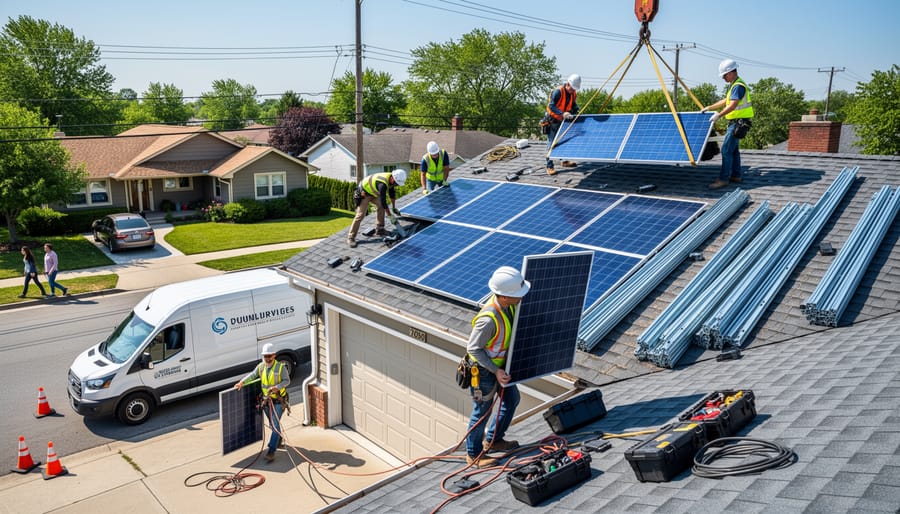
Third-Party Liability Explained: What Section B Typically Covers
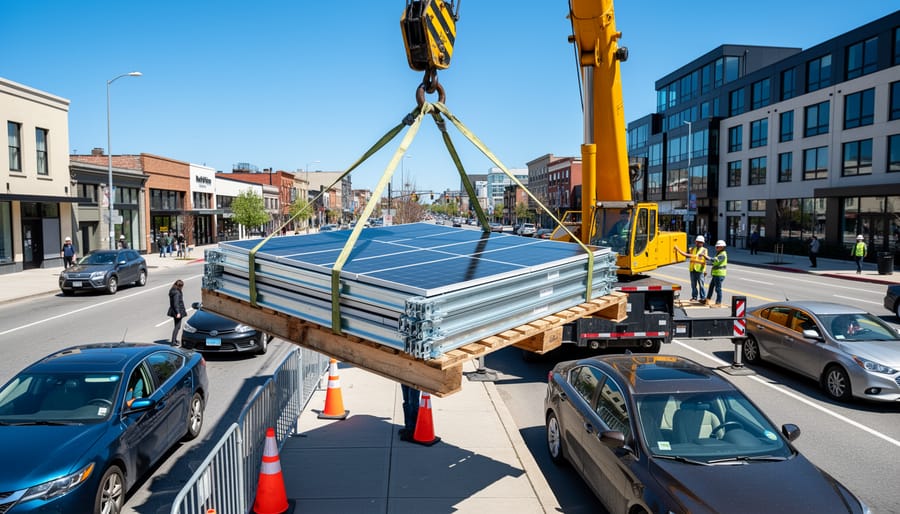
Section B of a CAR or EAR policy typically responds when construction activity harms someone outside the insured project. That covers bodily injury to third parties and damage to their property. On a solar build, think of a module pallet dropped from a lift onto a passing vehicle, a crane incident that strikes an adjacent building, or vibration from piling that cracks a neighboring structure. For a fuller walkthrough, see this Section B overview.
The table below places Section B alongside the other common policy components.
| Component | What it protects | Who is typically affected | Solar PV example |
|---|---|---|---|
| Section A, material damage | The works and materials on site | Principal, EPC contractor, lenders | Storm damage to racked modules before commissioning |
| Section B, third-party liability | Injury or property damage to outsiders | Neighbors, the public, adjacent owners | Crane strike on a neighboring warehouse |
| DSU extension | Financial loss from delayed start-up after insured damage | Developer, lenders | Inverter damage pushing back grid connection |
| Common exclusions | Not covered, such as wear and tear or faulty design | All insureds | Gradual deterioration of stored equipment |
Section lettering and naming vary by insurer, so always confirm the scope, limits, and exclusions against your actual policy wording.
CAR vs. EAR for Solar Installations
Contractors’ All Risks (CAR) is built for construction projects where the main exposure sits in civil and building works: foundations, trenches, access roads, substations, mounting structure concrete, and site buildings. Erection All Risks (EAR) is built for the installation of plant and machinery, such as inverters, transformers, racking systems, modules, and production equipment being assembled and tested. The wording differs mainly in how each policy treats testing, commissioning, and the stage at which equipment passes from installation into operation. For a closer look at how these covers compare, see our guide on CAR vs CAR/EAR.
In practice, the right policy depends on the project type. Utility-scale PV usually involves heavy civil works alongside a large equipment installation, so it is commonly placed under a combined CAR/EAR form. Rooftop systems are mostly equipment installation on an existing structure, which often points toward EAR, though structural alterations can bring CAR elements into play. Manufacturing equipment installations, such as cell or module production lines, typically fall under EAR, with CAR added where new buildings or facility works are part of the scope.
This is why many projects blend both: a single program avoids gaps between civil and erection phases and keeps third-party liability consistent across the whole build.
How Section B Fits into CAR/EAR and DSU Insurance Program Structuring
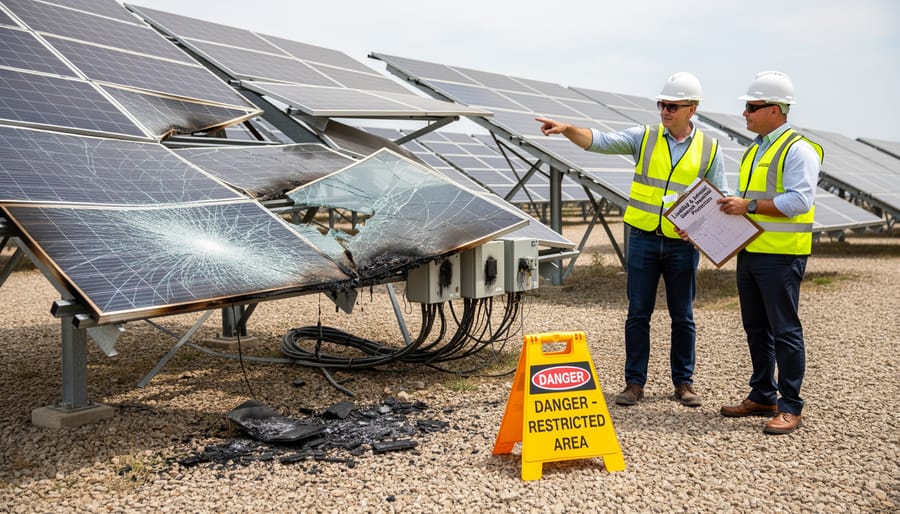
A solar PV project rarely buys liability, physical damage, and income-protection cover as three separate products. In practice they are layered into one program, and each layer depends on the others.
Section B sits alongside the material damage section (often Section A) of the CAR or EAR policy. Section A responds when the works, equipment, or materials on site are physically damaged, for example a transformer lost in a fire or modules broken during transit. Section B responds when that same construction activity injures outsiders or damages their property. A single incident can trigger both: a crane failure might wreck the installed array and also damage a neighboring structure.
DSU is the third layer, and it has a built-in dependency. DSU cover is generally triggered only when an insured physical damage event under the material damage section delays commissioning. Without a covered Section A loss, a delay caused by permitting, supply chain, or grid connection problems typically falls outside it. For a detailed comparison, see our guide on DSU cover explained.
Because the layers interlock, their terms need to be aligned:
– Limits: Liability limits should reflect the site’s surroundings and third-party exposure, while material damage sums insured should match the full replacement value of the works.
– Deductibles: Time-based DSU waiting periods should be set with the physical damage deductible in mind, so a gap does not leave the project unprotected.
– Indemnity periods: The DSU indemnity period should cover a realistic repair and recommissioning window, not just the planned build schedule.
Lenders often shape all of this. Financing agreements commonly set minimum limits, maximum deductibles, required indemnity periods, and loss payee or co-insured status, so the insurance structure usually has to be agreed alongside the financing timeline rather than after it.
Wording and requirements vary by insurer and jurisdiction, so confirm how these layers interact against your actual policy documents and lender requirements.
Who Qualifies: Eligibility Requirements for Project Cover
Eligibility for project cover usually starts with insurable interest. In plain terms, you must stand to lose something financially if the works are damaged or someone sues over them. A project owner, an EPC contractor, a subcontractor and a financing lender can all meet that test, though each one’s interest is different.
Most solar policies list several parties as named insureds. These commonly include the principal (the developer or asset owner), the EPC contractor, the subcontractors and, where debt is involved, the lenders. Naming everyone on a single policy helps avoid gaps and disputes about who is protected for which loss. It also keeps Section B third-party liability consistent across the whole site rather than leaving each firm to arrange its own.
Underwriters then judge how risky the project looks. Project stage matters: cover is normally placed before works begin, because insurers prefer to price a build from the start rather than pick it up midway. Site and technology details carry weight too, since a rooftop array, a ground-mounted utility-scale plant and a manufacturing line each present different exposures. Contractor experience is another common factor, particularly for newer technologies or unusually large installations.
Typical information requested includes:
- Project description and location, including the type and size of the PV installation.
- Contract value and construction schedule, including the planned commissioning date.
- Contractor track record on comparable solar projects.
- Site risk factors such as flood, wind, hail and seismic exposure.
- Safety and quality procedures used on site.
These are common underwriting considerations, not guaranteed rules. Each insurer sets its own appetite and requirements, and wording varies by jurisdiction. Providing complete, accurate information at the outset also supports your disclosure duties later, which is why a well-prepared project brief tends to matter as much as the project itself.
Rights and Obligations of the Insured
What Policyholders Are Entitled To
Under a Section B third-party liability cover, policyholders are generally entitled to indemnity for legal liability to outsiders for injury or property damage arising from the insured works, up to the limit stated in the policy schedule. Many wordings also pay defense costs and legal fees incurred with the insurer’s consent, though some count these inside the limit while others pay them on top. Check which applies to your policy.
You should also expect clear, timely communication from the insurer once a claim is notified: acknowledgment of the incident, an explanation of what information is needed, and written reasons if cover is declined or reduced. Good brokers help keep that dialogue moving, especially on projects with lenders waiting for updates.
If you disagree with a decision, most jurisdictions provide a route to challenge it. Start with the insurer’s internal complaints process, then escalate to an independent ombudsman or regulator where one exists. Available remedies and time limits differ by location, so confirm them in your policy documents.
What Policyholders Must Do
Policyholders carry several duties that run from the day cover is placed until the project is handed over. The first is disclosure. Insurers price the risk on the information supplied, so the insured must describe the project accurately at inception: site location, nearby structures and public access, construction methods, equipment values and contractor experience. That duty usually continues during the works, which means material changes such as a revised scope, a new subcontractor or an extended schedule should be reported promptly.
Risk management is the second obligation. Policies commonly attach conditions covering site safety, such as perimeter fencing, crane and lifting controls, working-at-height procedures and compliance with local regulations. A breach of these conditions can weaken a claim, so they should be built into the contractor’s site plan rather than treated as paperwork.
Third, incidents must be notified quickly. If a passerby is injured or a neighboring property is damaged, the insured should alert the insurer or broker within the timeframe the wording sets, preserve evidence and avoid admitting fault or agreeing to settlements without consent. Insurers generally expect full cooperation with investigations, including access to site records, photographs and witnesses.
Finally, the insured must honor the deductible and respect the exclusions. Deductibles are paid by the policyholder before indemnity applies, and excluded events stay uninsured, so both should be reviewed against the actual policy wording before works begin.
How to Place and Maintain Cover: From Broker Brief to Claims
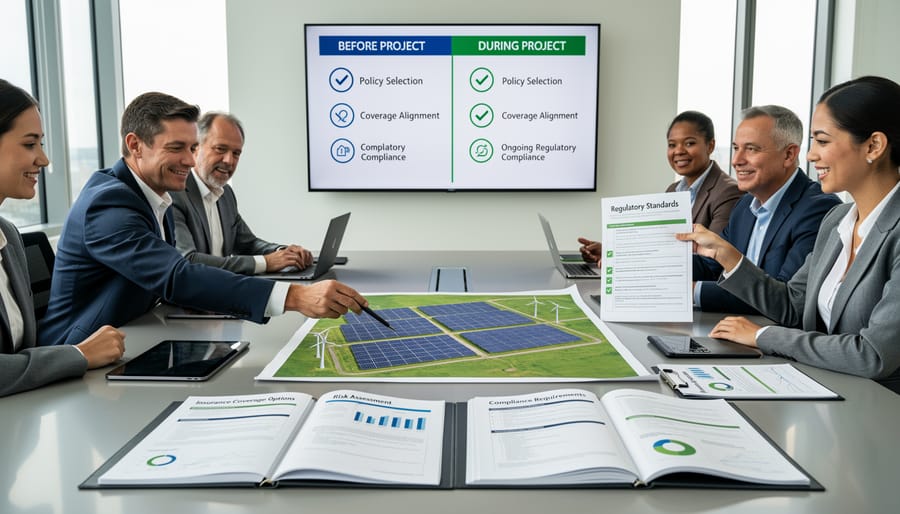
Start with the project, not the quote. Before approaching anyone, pull together the essentials an underwriter will ask about: the site location and ground conditions, the contract value, the construction programme, the technology and major equipment, the roles of the principal, EPC contractor and subcontractors, and any lender requirements. A clear brief saves weeks and avoids disclosure problems later.
Next, engage a specialist construction insurance broker. Give them the project brief, the contract’s insurance clauses and the financing documents, and ask them to approach insurers with relevant solar experience. The broker should also help you work out which party is responsible for arranging cover under the contract, since principals and EPC contractors often split that duty.
When quotes arrive, compare wordings, not only premiums. Check the definition of third-party liability, the exclusions, the deductibles, the defence cost provisions and any conditions tied to site safety. Two policies with similar prices can respond very differently to the same incident, so read the wording line by line and ask the broker to explain every difference.
Then structure the limits as one program. Set the Section A material damage sum insured to match the full replacement value of the works, choose a Section B liability limit that reflects the project’s exposure to neighbours, public access and adjacent assets, and align the DSU indemnity period with the realistic commissioning timeline. Lenders often set minimums here, so confirm their expectations early.
Timing matters. Bind cover before works begin, and certainly before mobilisation, because a loss on day one is only protected if the policy is already in force. Get written confirmation of cover and keep the policy documents with the project file.
Maintenance continues throughout construction. Notify your broker or insurer promptly of material changes, such as scope variations, programme delays, new subcontractors or relocated works. Report any incident that could give rise to a third-party claim as soon as it happens, preserve evidence, and cooperate fully with any investigation. Delayed notification is a common reason claims run into difficulty.
Where to Get Help: Brokers, Regulators, and Training
Insurance questions on a solar build rarely have to be solved alone. Several kinds of professionals and bodies exist precisely to help, and knowing which one to call saves time.
Start with a specialist construction insurance broker. Brokers who work regularly with CAR and EAR programs can compare insurers’ wordings, explain how Section B liability, material damage and DSU limits fit together, and flag exclusions that might surprise you later. Ask for experience with renewable energy projects specifically, since solar risks differ from general building work.
Insurers’ technical or underwriting teams are a second resource. If a wording is unclear, a direct question about how a clause is applied is reasonable, and the answer should be put in writing.
For disputes or complaints, look to your country’s national insurance regulator and any ombudsman or complaints service attached to it. Their role is to oversee fair treatment of policyholders, and most publish plain-language guidance. Check which body has authority in the jurisdiction where your project sits, because the right contact depends on location.
Lender technical advisers deserve early involvement too. They often set minimum coverage requirements, so consulting them before you finalize limits avoids costly revisions. Industry associations can also supply model contract terms, risk guidance and networking with peers who have faced similar placements.
Finally, build your own foundation. Mose Solar’s online educational program, developed in collaboration with universities, helps aspiring PV professionals understand project risk, warranties and the paperwork behind a build. That literacy makes conversations with brokers and lenders far more productive. A good starting point is learning how a manufacturer defect warranty differs from insurance, since the two protect against different problems.
Common Questions About B CAR Insurance on Solar Projects
Short answers follow, based on typical wording. Always confirm against your own policy and with your broker.
What does B stand for in CAR insurance?
In most CAR and EAR policies, Section B is the third-party liability section. It responds to injury or property damage suffered by outsiders because of your construction work, though lettering and scope depend on the insurer’s wording.
Is DSU included automatically?
No. Delay-in-start-up cover is usually an optional extension that you add and size separately. It generally responds only after an insured physical damage event under the material damage section.
Does Section B cover workers on site?
Usually not. Injury to your own employees and subcontractor staff typically falls under employers’ liability or workers’ compensation, and many CAR wordings exclude it from third-party cover. Check how the policy defines “third party” before relying on it.
When does cover end, and what replaces it?
Construction-phase cover normally ends at commissioning, handover or the policy expiry date, whichever comes first. Operational property and liability policies then take over, so plan that transition well before energization.
Who should be named as insured depends on the contract chain. Principals, EPC contractors and their subcontractors are commonly named, and lenders are often added as additional insureds or loss payees. The right setup follows who holds insurable interest in the works, so your broker should map it against the project agreements.
Limits are usually chosen by looking at the surroundings of the site, the cost of the works, the nature of the activities (cranes, work at height, public access) and any lender or contract minimums. Neighboring structures, roads and occupied buildings push liability limits up, while delay-in-start-up indemnity periods should reflect realistic commissioning and grid-connection timelines.
A related concern is what happens when a subcontractor cannot perform or pay. That risk sits outside a standard CAR liability section, and it is worth reviewing separately alongside any contractor failure coverage you are considering for the project.
Section B third-party liability, material damage, and delay-in-start-up cover each protect a different part of a solar PV build, and they perform best when structured together as one coordinated CAR/EAR program. Aligned limits, deductibles, and indemnity periods reduce gaps that tend to surface only after an incident, when fixing them is hardest.
Because wording differs between insurers and jurisdictions, always check eligibility criteria and policy obligations against the actual documents before works begin. A specialist construction broker can help you compare wordings and set limits that fit your financing and commissioning timeline.
Understanding project risk also pays off beyond the policy itself. Mose Solar’s online educational program, developed in collaboration with universities, helps aspiring PV professionals build that knowledge and approach insurance decisions with confidence.