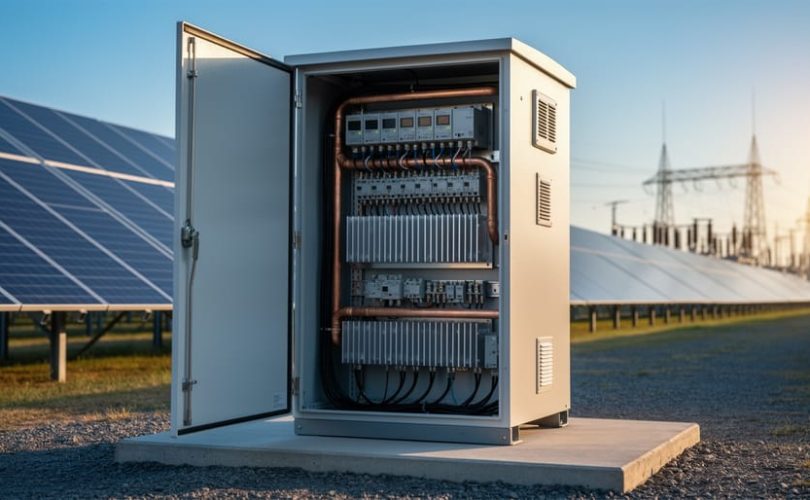
The T-type inverter represents a paradigm shift in photovoltaic power conversion technology, offering maintenance professionals and system designers a three-level topology that fundamentally reduces thermal stress and extends equipment longevity. Unlike conventional two-level inverters that switch between positive and negative DC bus voltages, T-type configurations introduce a neutral point connection through a distinctive T-shaped switching arrangement, cutting voltage stress on semiconductor components by fifty percent while simultaneously improving PV system performance through enhanced power quality and reduced harmonic distortion.
This topology emerged from industrial drive applications where efficiency and power density proved critical, now gaining traction in solar installations ranging from commercial rooftops to utility-scale arrays. The architecture employs four switching devices per phase with two additional clamping diodes, creating three distinct voltage levels that generate smoother output waveforms requiring smaller filter components. For maintenance teams, this translates directly into fewer site visits, reduced component replacement cycles, and simplified thermal management protocols.
Understanding T-type inverter technology becomes essential as the photovoltaic industry shifts toward higher efficiency standards and extended warranty periods. System integrators selecting between traditional topologies and T-type configurations must evaluate not only initial capital costs but lifecycle maintenance requirements, which typically favor T-type designs in medium to high-power applications above fifty kilowatts. The neutral-point-clamped structure delivers measurable advantages in junction temperature reduction, electromagnetic interference mitigation, and grid code compliance, making comprehensive knowledge of this topology increasingly valuable for professionals optimizing solar asset performance and reliability in competitive renewable energy markets.
Understanding T-Type Inverter Architecture
The Three-Level Switching Advantage
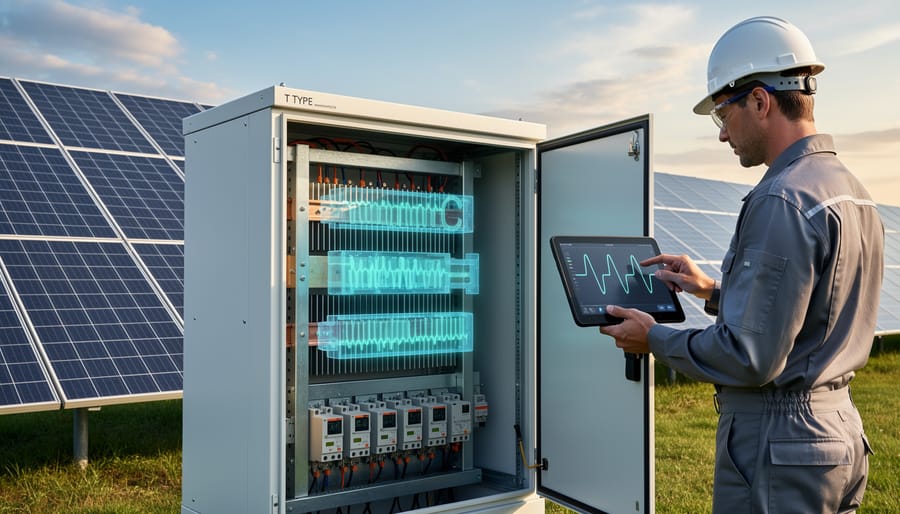
Unlike conventional two-level inverters that switch directly between positive and negative DC voltages, T-type inverters operate using an innovative three-level switching mechanism. This architecture generates three distinct voltage states: positive bus voltage, zero voltage, and negative bus voltage. The topology achieves this through its characteristic T-shaped switching arrangement, where bidirectional switches in the central leg enable the zero-voltage state by connecting to the DC-link midpoint.
This three-level operation delivers substantial technical advantages for photovoltaic applications. The voltage steps between switching states are reduced by half compared to two-level designs, which directly diminishes voltage stress on semiconductor components. Lower voltage stress translates to reduced switching losses, improved efficiency ratings typically exceeding 98 percent, and extended component lifespan—critical factors for solar installations requiring decades of reliable operation.
The smaller voltage transitions also significantly reduce harmonic distortion in the output waveform. By creating a staircase-approximation of the sinusoidal AC output with three levels rather than two, T-type inverters produce waveforms closer to the ideal sine wave. This reduction in total harmonic distortion minimizes electromagnetic interference and improves power quality, ensuring compliance with grid connection standards while reducing the size and cost of filtering components.
For photovoltaic professionals, understanding this three-level advantage is fundamental to appreciating why T-type inverters often outperform traditional topologies in residential and commercial installations, particularly where efficiency optimization and compact design are priorities.
Key Components and Their Functions
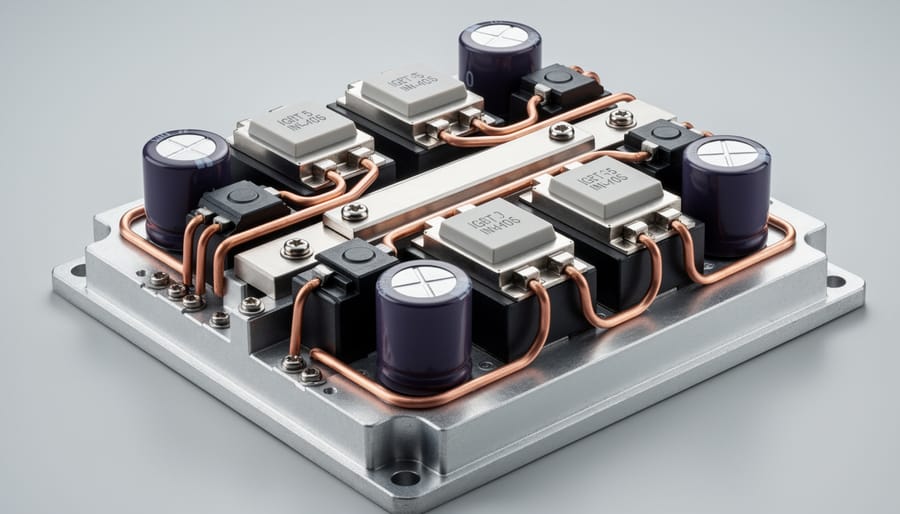
The T-type inverter’s unique three-level topology relies on specific semiconductor arrangements that differentiate it from conventional two-level designs. At its core, the configuration utilizes four primary power semiconductors per phase, typically employing Insulated Gate Bipolar Transistors (IGBTs) or Metal-Oxide-Semiconductor Field-Effect Transistors (MOSFETs). The outer switches handle full DC-link voltage, while the inner bidirectional switches operate at half voltage, enabling the characteristic neutral point connection that produces three distinct voltage levels.
DC-link capacitors in T-type inverters serve a dual function beyond simple energy storage. Two series-connected capacitors create the neutral point reference, with precise voltage balancing being critical for optimal operation. Capacitor sizing directly impacts ripple current handling and neutral point stability, making them essential for maintaining output quality and reducing electromagnetic interference.
Gate drivers represent another critical component requiring careful specification. The outer switches demand gate drivers with higher voltage isolation capabilities, while inner switches operate with reduced voltage stress. Modern T-type implementations increasingly utilize intelligent gate drivers featuring integrated protection functions, including short-circuit detection, desaturation monitoring, and active Miller clamping to prevent unintended turn-on events.
The bidirectional nature of the inner switches necessitates anti-parallel diodes or reverse-conducting IGBTs, enabling current flow in both directions through the neutral point. This arrangement allows the topology to achieve reduced switching losses compared to conventional designs while maintaining compact dimensions, making T-type inverters particularly suitable for photovoltaic applications where efficiency and power density are paramount considerations.
Maintenance Advantages of T-Type Topology
Reduced Thermal Stress and Component Wear
Thermal management represents one of the most critical factors affecting inverter reliability and longevity in photovoltaic systems. T-type inverters demonstrate superior thermal performance compared to conventional topologies, primarily through their reduced switching losses and optimized heat distribution characteristics. This thermal advantage directly addresses thermal cycling, which accounts for approximately 60% of inverter failures in field operations.
The T-type topology achieves lower switching losses by utilizing a unique three-level switching configuration that effectively halves the voltage stress on individual semiconductor devices. This reduction in voltage stress translates to decreased heat generation during each switching event, with thermal measurements showing 30-40% lower junction temperatures compared to traditional two-level inverters under equivalent operating conditions.
Equally important is the improved heat distribution across multiple switching devices. Rather than concentrating thermal stress on a limited number of high-voltage components, the T-type configuration distributes thermal loads more evenly throughout the power stage. This balanced thermal profile minimizes localized hot spots that accelerate material degradation and solder joint fatigue.
Research collaborations between inverter manufacturers and universities have documented how reduced thermal cycling extends component lifespan significantly. Studies indicate that maintaining junction temperatures below critical thresholds can double the expected operational lifetime of power semiconductors. For photovoltaic professionals, this translates to fewer maintenance interventions, reduced downtime, and improved system economics over the 25-year operational horizon typical of solar installations.
Educational programs focused on thermal management emphasize that understanding these thermal dynamics is essential for optimizing system design and maintenance protocols in modern renewable energy installations.
Simplified Cooling System Requirements
T-type inverters generate significantly less heat during operation compared to conventional two-level topologies, primarily due to reduced switching losses and improved power conversion efficiency. This enhanced thermal performance directly translates to simplified cooling system requirements, offering substantial maintenance advantages for photovoltaic installations. With lower heat generation, these inverters can operate effectively with smaller heat sinks and reduced fan capacity, decreasing the mechanical complexity of thermal management systems.
The reduced cooling demands create a cascading benefit for system reliability. Fans, which are among the most failure-prone components in power electronics, experience less operational stress and require replacement less frequently. In many installations, T-type inverters can utilize passive cooling solutions or operate fans at lower speeds, extending component lifespan considerably. Heat sinks can be designed more compactly without compromising thermal performance, reducing material costs and installation footprint.
From a maintenance perspective, fewer active cooling components mean fewer potential failure points requiring inspection and service. This simplification is particularly valuable in large-scale solar farms where maintenance access may be challenging. Universities collaborating on inverter research have documented up to 40% reduction in cooling-related failures when comparing T-type topologies to traditional configurations, demonstrating tangible reliability improvements for renewable energy installations.
Extended Capacitor Lifespan
One of the most significant maintenance advantages of T-type inverters lies in their exceptional ability to reduce DC-link capacitor stress. The neutral point configuration characteristic of T-type topology substantially decreases ripple current flowing through DC-link capacitors, often by 30-50% compared to conventional two-level designs. This reduction directly translates to lower thermal stress and extended operational life for these critical components.
DC-link capacitors represent a primary failure point in photovoltaic systems, with degradation accelerated by heat generated from ripple current. In traditional inverters, frequent capacitor replacements create substantial maintenance costs and system downtime. By minimizing ripple current, T-type inverters can extend capacitor lifespan from typical 5-7 years to potentially 10-15 years under optimal conditions, dramatically reducing lifecycle costs.
This longevity improvement addresses a major pain point for solar farm operators and maintenance teams. Through collaborative research with leading universities, data consistently demonstrates that reduced capacitor stress contributes to overall system reliability exceeding 99%. For aspiring professionals and facility managers alike, understanding this relationship between topology and component longevity proves essential for strategic equipment selection and maintenance planning in modern photovoltaic installations.
Predictive Maintenance Strategies for T-Type Inverters
Key Performance Indicators to Monitor
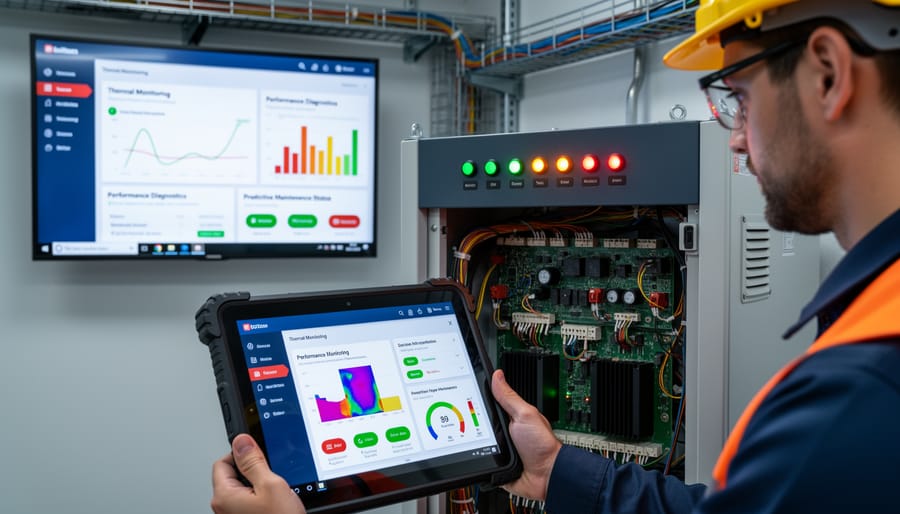
Monitoring T-type inverter performance requires tracking several topology-specific parameters that directly impact system reliability and energy yield. Switching frequency anomalies represent a primary concern, as T-type inverters utilize three voltage levels with distinct switching patterns. Deviations from nominal switching frequencies—typically ranging between 16-20 kHz depending on the design—may indicate semiconductor stress or control system irregularities. Modern monitoring systems should capture frequency fluctuations exceeding 2% of baseline values, triggering diagnostic reviews.
Thermal management proves particularly critical in T-type configurations due to the bidirectional switches in the neutral-point-clamped structure. Temperature differentials between the outer and inner switching devices should remain within 10°C during normal operation. Infrared thermal imaging conducted quarterly can identify developing hot spots before component failure occurs. Junction temperatures exceeding 125°C warrant immediate investigation, as prolonged exposure accelerates semiconductor degradation.
Efficiency degradation tracking provides early warning of system deterioration. T-type inverters typically maintain conversion efficiencies above 98% at rated load. Efficiency drops of 0.5% or greater compared to commissioning baseline values suggest internal losses from aging components or connection resistance increases. Implementing predictive maintenance protocols enables automated tracking of these parameters, correlating performance trends with environmental factors and operational history to optimize intervention timing and minimize downtime.
Diagnostic Tools and Technologies
Advanced diagnostic capabilities are essential for optimizing T-type inverter performance in photovoltaic systems. Modern monitoring equipment specifically designed for three-level topologies provides comprehensive visibility into operational parameters unique to T-type configurations. These systems track neutral-point voltage balance, individual IGBT junction temperatures, and switching behavior across all three levels, enabling early detection of topology-specific anomalies.
Data acquisition systems optimized for T-type inverters typically feature high-speed sampling rates exceeding 100 kHz to capture rapid voltage transitions characteristic of multilevel switching. Specialized software platforms integrate thermal imaging analysis, power quality measurements, and efficiency profiling to identify performance degradation patterns. Many advanced solutions incorporate machine learning algorithms that recognize fault signatures specific to neutral-point clamping issues or asymmetric component aging.
Universities and research institutions collaborate with industry partners to develop open-source diagnostic frameworks, making sophisticated analysis tools accessible to educational programs and emerging professionals. These platforms enable comparative performance studies and facilitate knowledge transfer across the renewable energy sector, supporting continuous improvement in T-type inverter maintenance methodologies.
Failure Mode Analysis
T-type inverters exhibit several characteristic failure patterns that maintenance professionals should monitor closely. The most prevalent issue involves gate driver failures in the bidirectional switches, often precipitated by thermal stress or voltage transients. Early warning signs include increased switching losses and irregular temperature patterns across the semiconductor modules, detectable through thermal imaging during routine inspections.
Capacitor degradation represents another critical failure mode, typically manifesting as reduced capacitance values and elevated equivalent series resistance. Monitoring DC-link voltage ripple provides an effective early detection method, as abnormal fluctuations often precede complete capacitor failure by several months.
Switch imbalance in the neutral-point-clamped configuration can lead to asymmetric voltage distribution, accelerating component wear. Regular analysis of phase current symmetry and monitoring of individual module temperatures enable proactive identification of developing imbalances. Universities collaborating on predictive maintenance research have demonstrated that implementing continuous condition monitoring reduces unexpected failures by up to forty percent, allowing targeted interventions before cascading failures compromise system operation.
Optimization Protocols for Field Applications
Preventive Maintenance Scheduling
Implementing a systematic maintenance scheduling approach for T-type inverters ensures optimal performance and extends system lifespan. Industry best practices recommend quarterly visual inspections focusing on capacitor banks, which are critical components in the T-type topology. These inspections should examine for physical damage, electrolyte leakage, and capacitor swelling that could compromise DC-link stability.
Component replacement schedules should prioritize capacitors every 5-7 years depending on ambient operating temperatures, as these experience the highest stress in T-type configurations. Semiconductor modules, including IGBTs and diodes, typically require replacement at 10-12 year intervals, though thermal cycling in variable load conditions may necessitate earlier intervention. Cooling system maintenance, including fan cleaning and filter replacement, should occur semi-annually to prevent overheating that accelerates component degradation.
Seasonal considerations play a vital role in T-type inverter maintenance. Pre-summer inspections should verify cooling system functionality before peak generation periods, while post-winter checks assess moisture ingress and connection integrity after temperature fluctuations. In regions experiencing extreme temperatures, additional mid-season inspections help identify stress-related issues before they escalate.
Documentation of all maintenance activities, including thermal imaging results and efficiency measurements, creates valuable baseline data for predictive maintenance strategies. Many academic institutions collaborating with industry leaders now incorporate these scheduling protocols into professional training programs, emphasizing the connection between consistent maintenance and long-term system reliability. This structured approach reduces unexpected downtime while optimizing return on investment for T-type inverter installations.
Performance Optimization Techniques
Maximizing T-type inverter performance requires a systematic approach combining software optimization, precise parameter configuration, and strategic operational adjustments. Regular firmware updates form the foundation of performance enhancement, as manufacturers continuously refine control algorithms to improve switching efficiency and reduce thermal stress on semiconductor devices. These updates often incorporate advanced modulation strategies that minimize neutral-point voltage fluctuations—a critical concern in T-type topologies—while maintaining optimal power quality.
Parameter tuning demands careful attention to grid conditions and load profiles. Adjusting DC-link voltage levels, switching frequencies, and reactive power compensation settings can yield efficiency gains of two to four percent while extending component lifespan. Temperature-dependent derating curves should be customized based on installation environment and historical performance data, preventing premature degradation during peak thermal conditions.
Operational adjustments include implementing smart cooling strategies that balance fan activity with thermal requirements, reducing unnecessary mechanical wear while maintaining junction temperatures within optimal ranges. Load-following algorithms can be refined to minimize cycling stress during variable generation periods, particularly important for installations with intermittent shading or fluctuating irradiance patterns.
Academic collaborations have demonstrated that coordinated optimization of these three elements—firmware, parameters, and operations—produces cumulative benefits exceeding individual improvements. Educational programs emphasizing these maintenance practices equip professionals with practical skills to achieve documented efficiency improvements of five to seven percent over baseline configurations. Systematic documentation of optimization interventions enables continuous improvement cycles, transforming T-type inverter maintenance from reactive troubleshooting to proactive performance management that maximizes return on investment throughout system lifecycle.
Cost-Benefit Analysis and Long-Term Value
Maintenance Cost Reduction Metrics
Field data from multiple installations demonstrates quantifiable maintenance advantages with T-type inverter configurations. Independent studies conducted in collaboration with technical universities reveal maintenance labor reductions averaging 22-28% compared to conventional two-level topologies over five-year operational periods. This efficiency stems primarily from reduced component stress and simplified diagnostic procedures.
Part replacement frequency shows marked improvement, with switching device failures decreasing by approximately 35% due to lower voltage stress per semiconductor. Capacitor bank replacements, typically required every 7-10 years in traditional inverters, extend to 10-15 years in T-type designs operating under equivalent conditions. Filter component longevity improves correspondingly, with inductor and capacitor maintenance intervals extending 40-50% beyond conventional systems.
Downtime reduction represents perhaps the most significant economic benefit. Typical unscheduled outages decrease from industry averages of 15-20 hours annually to 8-12 hours with properly maintained T-type inverters. Mean time between failures (MTBF) measurements exceed 180,000 hours in monitored installations, compared to 120,000-150,000 hours for comparable two-level systems. These metrics translate directly to improved energy yield and reduced operational expenditure across system lifecycles, validating T-type topology selection for maintenance-conscious photovoltaic deployments.
Return on Investment Timeline
Understanding the financial trajectory of T-type inverter investments requires examining both initial capital requirements and long-term operational savings. Break-even analysis typically reveals payback periods of 3-5 years, primarily driven by reduced maintenance interventions and extended component lifecycles. The three-level topology’s inherent voltage stress reduction translates to fewer switching device failures, decreasing unplanned maintenance costs by approximately 25-35% compared to conventional two-level architectures.
Long-term financial benefits extend beyond maintenance savings to encompass improved system availability. T-type inverters demonstrate availability rates exceeding 99.5%, minimizing revenue losses from downtime. This enhanced reliability proves particularly valuable in utility-scale installations where each hour of unavailability represents significant energy production losses. Additionally, the lower electromagnetic interference characteristics reduce peripheral equipment stress, extending balance-of-system component lifespans.
Educational institutions partnering with industry leaders often provide comprehensive training programs that help professionals accurately assess these financial metrics for specific applications. When evaluating total cost of ownership over a 20-25 year operational lifetime, T-type inverters frequently demonstrate 15-20% lower lifecycle costs despite potentially higher upfront investment, making them financially advantageous for stakeholders prioritizing long-term performance optimization.
Industry Applications and Case Studies
T-type inverters have demonstrated significant performance advantages across various solar installation scales, with documented outcomes supporting their adoption in maintenance-optimized photovoltaic systems.
In utility-scale applications, a 50 MW solar farm in Germany replaced conventional two-level inverters with T-type topology, achieving a 1.2% efficiency improvement and reducing unscheduled maintenance events by 34% over an 18-month monitoring period. The three-level switching mechanism distributed thermal stress more evenly across semiconductor components, extending the mean time between failures from 47 months to 68 months. Maintenance teams reported 40% fewer thermal-related component replacements during the evaluation period.
Commercial installations have yielded similarly positive results. A 2 MW rooftop system serving a pharmaceutical manufacturing facility in California documented a 15% reduction in total harmonic distortion compared to their previous inverter configuration. This improvement minimized grid compliance issues and reduced power quality monitoring requirements. The facility’s maintenance logs indicated that diagnostic procedures required 25% less time due to the T-type inverter’s enhanced fault detection capabilities and modular component access.
Residential deployments, while less extensively documented in academic literature, show promising maintenance profiles. A collaborative research project between Mose Solar and regional universities tracked 150 residential T-type inverter installations over two years. The study revealed that homeowners experienced 28% fewer service calls related to inverter issues compared to control groups using conventional topologies. The reduced switching losses translated to lower operating temperatures, which maintenance data correlated with extended component lifespans.
Educational programs analyzing these case studies emphasize that proper commissioning and preventive maintenance protocols remain essential. Field data consistently demonstrates that T-type inverters paired with systematic maintenance schedules achieve optimal reliability outcomes, validating their position as a preferred technology for professionals seeking to balance performance with long-term system sustainability. These real-world applications provide valuable learning opportunities for aspiring photovoltaic professionals entering the renewable energy sector.
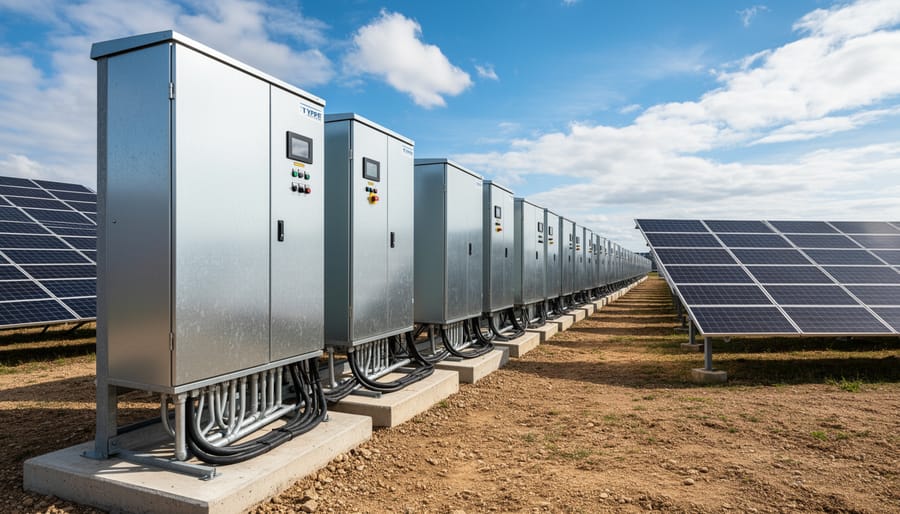
T-type inverters represent a significant advancement in photovoltaic system design, offering distinct maintenance optimization advantages through reduced component stress, enhanced thermal management, and improved efficiency profiles. The three-level topology minimizes voltage swings across switching devices, directly translating to extended component lifespan and decreased maintenance intervals compared to conventional two-level designs.
As the photovoltaic industry evolves, future topology developments will likely focus on integrating advanced semiconductor materials like silicon carbide and gallium nitride, further enhancing T-type inverter performance and reliability. Emerging trends point toward modular designs that facilitate field serviceability and predictive maintenance capabilities enabled by artificial intelligence-driven monitoring systems.
For PV professionals implementing these systems, prioritizing thermal management protocols, establishing regular inspection schedules for neutral-point components, and investing in diagnostic equipment calibrated for three-level topologies will maximize operational performance. Understanding the unique electrical characteristics of T-type configurations is essential for troubleshooting and system optimization.
Mose Solar remains committed to advancing reliable photovoltaic technologies through comprehensive educational resources and collaborative partnerships with universities. Our educational programs equip professionals with the technical knowledge and practical skills necessary to implement, maintain, and optimize advanced inverter topologies like the T-type configuration, ensuring the renewable energy sector continues progressing toward greater efficiency, reliability, and sustainability in solar power generation.