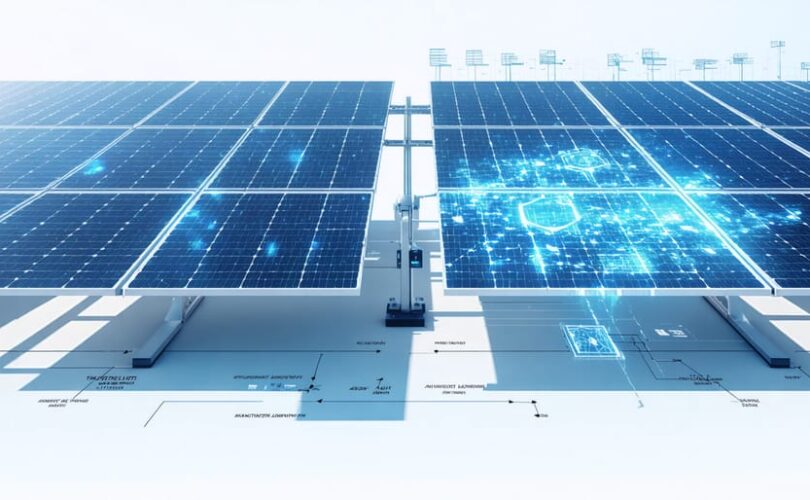
Renewable energy innovation stands at the forefront of humanity’s response to climate change, driving unprecedented technological advancement and economic transformation. The integration of smart PV management systems with artificial intelligence and machine learning algorithms has revolutionized how we harness and distribute clean energy. Recent breakthroughs in energy storage technology, advanced materials science, and grid optimization have pushed the boundaries of what’s possible in sustainable power generation.
As global investment in renewable energy reached $500 billion in 2023, innovative solutions continue to emerge across solar, wind, and hydrogen technologies. These developments are not merely incremental improvements but transformative advances that promise to reshape our energy landscape. From perovskite solar cells achieving record-breaking efficiency rates to breakthrough battery technologies extending storage capabilities, the renewable energy sector is experiencing a renaissance of innovation.
This evolution in clean energy technology represents more than environmental stewardship; it embodies economic opportunity and energy security for nations worldwide. As we stand at this pivotal moment, the convergence of digital technology, materials science, and environmental imperatives is accelerating the transition to a sustainable energy future.
The Evolution of PV Energy Management Systems
Traditional vs. Modern PV Management
Traditional photovoltaic management systems relied heavily on manual monitoring and basic data collection, often resulting in delayed response times and reduced system efficiency. These conventional approaches typically involved periodic physical inspections and basic performance logging, limiting the ability to optimize energy production in real-time.
Modern PV management systems, by contrast, incorporate advanced IoT sensors, artificial intelligence, and machine learning algorithms to provide comprehensive system oversight. These innovations enable predictive maintenance, automated performance optimization, and real-time fault detection. Smart inverters now automatically adjust power output based on grid conditions, while sophisticated monitoring platforms provide detailed analytics and performance forecasting.
The transition to modern management systems has yielded significant improvements in system efficiency, with studies showing up to 20% increase in energy yield compared to traditional methods. Contemporary solutions also offer enhanced grid integration capabilities, remote troubleshooting, and automated reporting features that reduce operational costs while maximizing system uptime. This evolution represents a fundamental shift from reactive to proactive system management, ensuring optimal performance throughout the installation’s lifecycle.

Key Technical Advancements
Recent breakthroughs in photovoltaic management have revolutionized the renewable energy landscape. Advanced bifacial solar panels now achieve up to 27% greater energy yield compared to traditional modules by capturing reflected light on both surfaces. Smart inverter technology has evolved to incorporate artificial intelligence-driven optimization, enabling real-time performance adjustments and predictive maintenance capabilities.
Perovskite-silicon tandem cells represent a significant leap forward, achieving laboratory efficiency rates exceeding 29.8%, while commercial applications are rapidly approaching these benchmark figures. Advanced energy storage solutions, particularly solid-state batteries and flow battery systems, have enhanced grid integration capabilities and improved overall system reliability.
Innovative tracking systems utilizing machine learning algorithms have optimized solar panel positioning, resulting in efficiency gains of up to 35% in variable weather conditions. Additionally, the implementation of blockchain technology in energy management systems has enabled sophisticated peer-to-peer energy trading platforms, democratizing access to renewable energy resources.
These developments, coupled with improved manufacturing processes and materials science advancements, have contributed to a 75% reduction in solar energy costs over the past decade, making photovoltaic systems increasingly competitive with traditional energy sources.
AI and Machine Learning in Solar Energy Optimization

Predictive Maintenance Solutions
Artificial Intelligence has revolutionized maintenance practices in renewable energy systems by enabling predictive maintenance solutions that significantly reduce downtime and operational costs. These advanced systems utilize machine learning algorithms to analyze real-time data from various sensors and monitoring devices installed across solar installations.
The predictive maintenance process begins with continuous data collection from multiple sources, including inverter performance metrics, weather conditions, and power output variations. AI algorithms process this information to identify patterns and anomalies that might indicate potential system failures. By detecting subtle changes in performance parameters, these systems can forecast maintenance needs weeks or even months before actual failures occur.
Key components of predictive maintenance solutions include sensor networks that monitor temperature fluctuations, electrical characteristics, and mechanical stress levels. These sensors feed data into sophisticated analytics platforms that create detailed performance models and establish baseline operations parameters. When deviations from these baselines occur, the system alerts maintenance teams with specific diagnostic information and recommended actions.
The implementation of predictive maintenance has shown remarkable results in the field, with studies indicating up to 30% reduction in maintenance costs and 70% decrease in unexpected failures. For large-scale solar installations, this translates to significant improvements in system reliability and energy yield. Additionally, these solutions optimize maintenance scheduling by prioritizing critical issues and combining multiple maintenance tasks to minimize site visits.
Real-Time Performance Optimization
Real-time performance optimization in renewable energy systems has revolutionized how we optimize solar panel efficiency through artificial intelligence and machine learning algorithms. These advanced systems continuously monitor and analyze multiple parameters, including solar irradiance, temperature, and weather conditions, to make instantaneous adjustments that maximize energy yield.
The implementation of smart sensors and IoT devices enables the collection of high-resolution data points across the entire solar installation. This data feeds into sophisticated AI models that predict performance patterns and identify potential inefficiencies before they impact output. The system can automatically adjust panel angles, optimize inverter settings, and manage power distribution in response to changing environmental conditions.
Machine learning algorithms analyze historical performance data alongside real-time measurements to create adaptive optimization strategies. These strategies account for factors such as seasonal variations, cloud cover patterns, and equipment degradation rates. The system learns from each optimization cycle, continuously refining its decision-making processes to achieve increasingly better results.
Recent developments in edge computing have enhanced these capabilities by enabling faster response times and more localized decision-making. This reduces latency and allows for more precise control over individual system components, resulting in energy yield improvements of up to 20% compared to traditional fixed-parameter systems.

Integration with Smart Grid Technologies
Grid Stability Enhancement
Smart photovoltaic systems are revolutionizing grid stability through advanced control mechanisms and intelligent power management. These systems employ sophisticated algorithms to regulate power output, voltage levels, and frequency response, ensuring seamless integration with existing power infrastructure.
Modern PV installations incorporate grid-support functions such as reactive power control, fault ride-through capabilities, and dynamic voltage support. These features allow solar systems to actively contribute to grid stability rather than merely feeding power into the network. Advanced inverter technologies enable real-time response to grid conditions, adjusting power output to maintain optimal system performance and prevent destabilization.
Grid stability enhancement is further achieved through distributed energy resource management systems (DERMS), which coordinate multiple PV installations across the network. These systems optimize power flow, manage peak demand, and provide ancillary services such as frequency regulation and voltage control.
The implementation of smart monitoring and forecasting tools enables predictive maintenance and proactive grid management. Weather forecasting integration helps operators anticipate fluctuations in solar generation, allowing for better resource allocation and grid balance maintenance. This comprehensive approach to grid stability ensures reliable power delivery while maximizing renewable energy utilization.
Energy Storage Integration
Advanced energy storage solutions have become pivotal in maximizing the potential of renewable energy systems. Modern battery management systems (BMS) integrate sophisticated algorithms and predictive analytics to optimize energy storage efficiency and extend battery life cycles. These systems employ smart charging protocols and real-time monitoring to maintain optimal operating conditions while protecting against overcharging and thermal runaway.
Lithium-ion technology remains at the forefront of energy storage innovation, with recent developments in solid-state batteries showing promise for increased energy density and enhanced safety profiles. Grid-scale storage solutions now incorporate hybrid systems that combine different storage technologies, such as flow batteries and compressed air energy storage, to address varying power demands and duration requirements.
Advanced thermal management systems and intelligent load balancing mechanisms ensure consistent performance across diverse environmental conditions. The integration of artificial intelligence enables predictive maintenance schedules and automated response protocols, significantly reducing system downtime and operating costs. These technological advancements have made renewable energy storage more reliable and cost-effective, facilitating broader adoption across industrial and residential applications.
Future Prospects and Implementation Challenges
Emerging Technologies
Recent PV technology breakthroughs have ushered in a new era of intelligent solar management systems. Advanced artificial intelligence algorithms now enable real-time optimization of solar panel performance, adapting to environmental conditions and energy demand patterns with unprecedented precision.
Smart inverter technology has evolved to incorporate machine learning capabilities, allowing for predictive maintenance and automated performance adjustments. These systems can anticipate potential issues before they occur, significantly reducing downtime and maintaining optimal energy generation efficiency.
Blockchain integration is revolutionizing energy trading and management within solar microgrids. This technology enables secure, transparent peer-to-peer energy transactions while providing detailed performance analytics and automated compliance reporting.
Internet of Things (IoT) sensors are being deployed across solar installations to collect granular data on panel performance, weather conditions, and energy consumption patterns. This data feeds into sophisticated analytics platforms that optimize energy distribution and storage strategies.
Digital twin technology is emerging as a powerful tool for solar farm management, creating virtual replicas of physical installations. These models enable operators to simulate different scenarios, optimize maintenance schedules, and maximize system efficiency without risking actual hardware.
These innovations collectively represent a significant leap forward in PV management capabilities, promising improved reliability, enhanced efficiency, and reduced operational costs for solar energy systems.
Implementation Strategies
The successful implementation of new PV management systems requires a methodical approach combining technical expertise with strategic planning. Organizations should begin by conducting comprehensive site assessments to evaluate existing infrastructure and identify specific needs. This initial evaluation helps determine the most suitable technological solutions and establishes baseline performance metrics.
A phased implementation strategy often proves most effective, starting with pilot programs in controlled environments before expanding to larger-scale deployments. This approach allows organizations to identify and address potential challenges while minimizing disruption to existing operations. Key stakeholders should be involved from the outset, ensuring alignment with organizational goals and facilitating smooth adoption across all levels.
Training programs for technical staff are crucial for system optimization. These should cover both theoretical understanding and hands-on experience with new management tools. Regular performance monitoring and data analysis help identify areas for improvement and validate system effectiveness.
Integration with existing infrastructure requires careful planning to ensure compatibility and seamless operation. Organizations should establish clear protocols for data management, system maintenance, and emergency responses. Regular updates and maintenance schedules must be implemented to maintain optimal performance.
Successful adoption also depends on establishing partnerships with technology providers and maintaining open communication channels for technical support. Organizations should develop clear metrics for measuring success and implement regular review processes to ensure continuous improvement and adaptation to evolving technology landscapes.
Industry Standards and Regulations
The renewable energy sector operates within a complex regulatory framework that ensures safety, reliability, and environmental compliance. Key international standards include IEC 61215 and IEC 61730 for photovoltaic module certification, along with IEEE 1547 for grid interconnection requirements. These standards establish crucial benchmarks for equipment performance, safety protocols, and system integration.
In the United States, the National Electrical Code (NEC) Article 690 specifically addresses solar photovoltaic systems, while the Department of Energy’s regulations govern efficiency requirements and installation practices. The Environmental Protection Agency (EPA) oversees environmental impact assessments and emissions regulations related to renewable energy projects.
Additionally, many jurisdictions have implemented Renewable Portfolio Standards (RPS) that mandate specific percentages of energy production from renewable sources. These requirements are complemented by international agreements such as the Paris Accord, which influences national policies and industry standards. Compliance with these regulations requires careful documentation, regular auditing, and continuous monitoring of system performance to maintain certifications and operational permits.
The innovations in photovoltaic management systems have ushered in a new era of renewable energy efficiency and sustainability. Through the integration of advanced monitoring technologies, artificial intelligence, and predictive maintenance capabilities, modern PV systems are delivering unprecedented levels of performance and reliability. These developments have significantly reduced operational costs while maximizing energy yield, making solar power increasingly competitive with traditional energy sources.
The impact of these innovations extends beyond immediate operational benefits. Enhanced data analytics and smart grid integration are paving the way for more resilient and adaptable energy networks. The standardization of management protocols and improved interoperability between different system components have created a more cohesive and efficient renewable energy ecosystem.
Looking ahead, the future of PV management systems appears promising. Emerging technologies such as blockchain for energy trading, advanced energy storage solutions, and machine learning algorithms for optimization are set to further revolutionize the industry. The continued focus on research and development, coupled with decreasing technology costs, suggests that solar energy will play an increasingly vital role in the global energy transition.
As we move forward, the success of these innovations will largely depend on continued collaboration between industry stakeholders, research institutions, and policy makers. The commitment to sustainable energy solutions, supported by robust management systems, positions the solar industry to make substantial contributions to achieving global climate goals and energy security objectives.