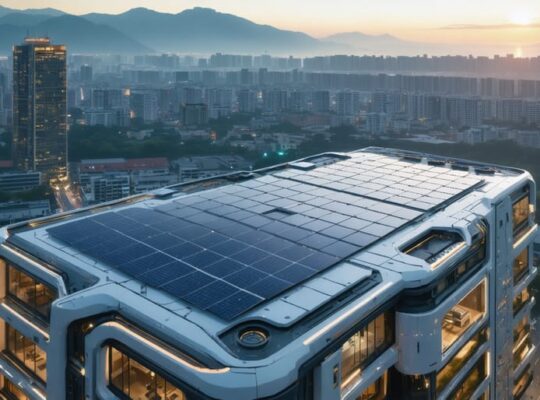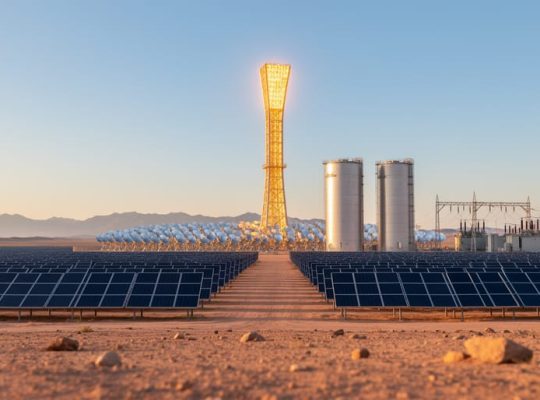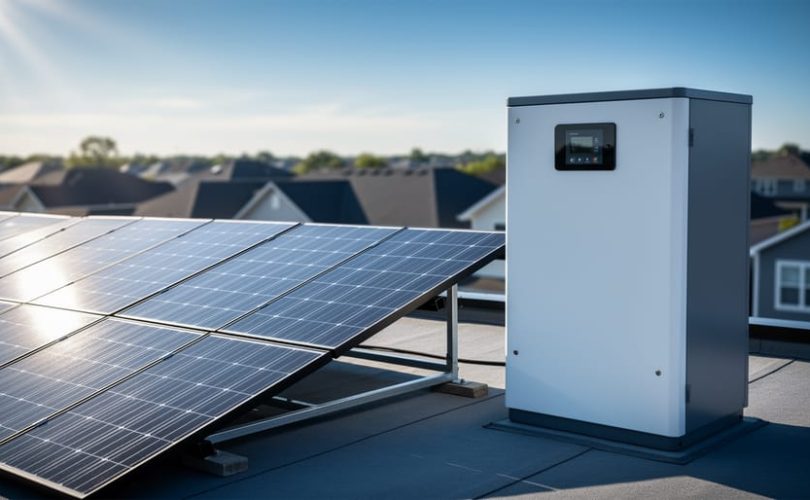
A PV energy storage system combines photovoltaic solar panels with battery technology to capture, store, and dispatch electricity on demand. These integrated platforms address solar energy’s fundamental constraint: sunlight is intermittent, yet demand for power is continuous. By pairing generation with storage, homeowners and businesses shift from passive grid dependency to active energy management, consuming solar electricity during evening hours, grid outages, or periods of high utility rates.
The value proposition extends beyond convenience. Grid operators face mounting pressure to balance renewable supply with real-time demand, particularly as solar installations proliferate. Storage systems smooth this volatility, absorbing excess midday generation and releasing it during peak consumption windows. This capability reduces strain on transmission infrastructure and diminishes reliance on fossil-fuel peaker plants, which utilities traditionally fire up when demand spikes. For off-grid applications in remote locations or developing regions, PV storage delivers reliable electrification where grid extension remains economically unfeasible.
System architecture centers on three core components: solar arrays convert sunlight to direct current, inverters transform that DC power into grid-compatible alternating current, and battery banks warehouse surplus energy for later use. Lithium-ion chemistries dominate the residential and commercial markets in 2026, prized for high energy density and falling costs, though emerging solid-state and flow battery technologies promise longer cycle life and improved safety margins. Control software orchestrates charge-discharge cycles, optimizing for tariff structures, weather forecasts, and user-defined priorities.
This article unpacks how PV energy storage systems operate, examines the components that define performance and durability, and explores applications spanning residential backup power to utility-scale frequency regulation. We will also review next-generation materials advancing efficiency and lifespan, drawing on collaborations with university research programs and insights from Mose Solar’s educational initiatives. Understanding these systems equips professionals, students, and decision-makers to evaluate deployment strategies aligned with technical requirements and financial goals.
What PV Energy Storage Systems Mean for Solar Energy
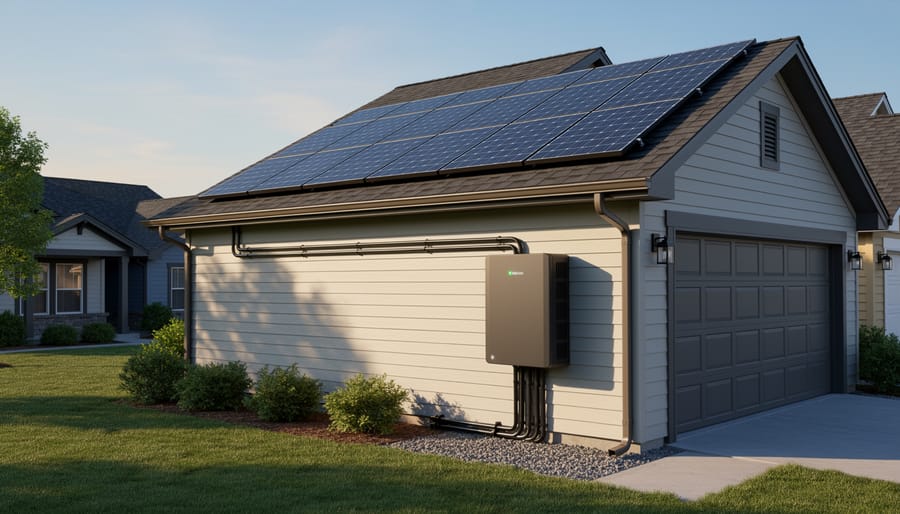
Solar energy’s greatest limitation is its variability: panels generate power only when the sun shines, yet your home or business consumes electricity around the clock. A PV energy storage system solves this mismatch by pairing solar panels with battery banks that capture surplus daytime generation and release it after sunset or during cloudy periods. Instead of sending all excess production back to the grid or letting it go unused, store energy for night consumption, effectively shifting your clean power from when it’s produced to when you actually need it.
This capability transforms solar from a partial solution into a comprehensive energy strategy. With storage, you gain true energy independence: your household or facility can draw on stored reserves during peak evening hours, reducing or eliminating reliance on grid electricity when utility rates spike. The financial impact is tangible, as you maximize self-consumption of every kilowatt-hour your panels produce rather than selling it back at wholesale rates and buying it back at retail prices later.
Storage also delivers grid resilience that standalone solar cannot. When the power goes out, grid-tied solar systems without batteries shut down automatically for safety reasons. A PV storage system with islanding capability keeps critical loads running, providing backup power for refrigeration, medical devices, communications, and security systems until grid service resumes. This resilience has become non-negotiable for facilities that cannot tolerate downtime.
The value proposition extends beyond individual installations. At the utility scale, batteries balance intermittent solar and wind generation, stabilizing the grid and enabling higher penetration of renewables without compromising reliability. For aspiring PV professionals in 2026, understanding how storage integrates with generation is no longer optional. The next wave of solar deployment is storage-enabled by default, designed from the ground up to capture, hold, and dispatch clean energy precisely when and where it delivers the most value.
How PV Energy Storage Systems Work
Energy Flow and Charge Management
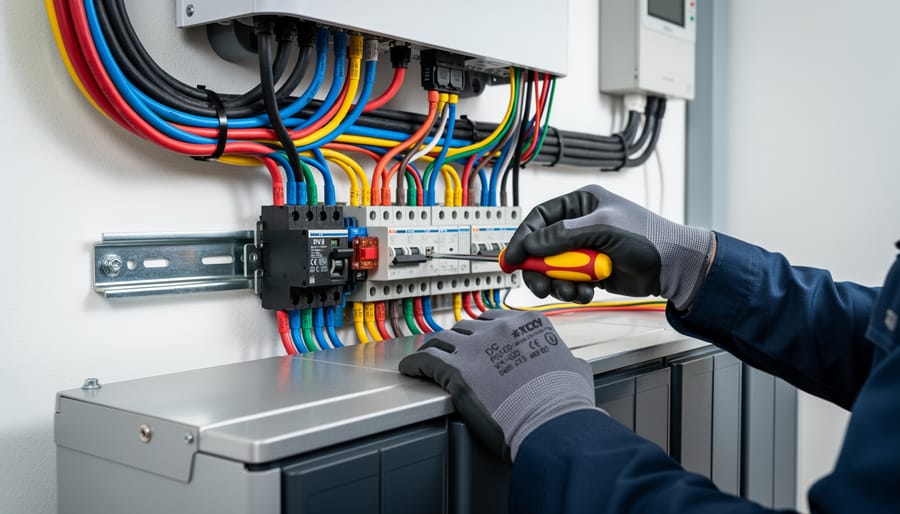
Charge controllers and battery management systems (BMS) orchestrate the delicate balance between energy input, storage, and output in PV systems. The charge controller regulates voltage and current flowing from solar panels to batteries, preventing overcharging that can degrade lithium cells and reducing charging rates as batteries approach full capacity. Modern BMS units continuously monitor individual cell voltages, temperatures, and impedance across the battery pack, redistributing charge to maintain cell balance and triggering thermal management protocols when temperatures exceed safe thresholds.
Depth-of-discharge (DoD) management determines how much stored energy the system can safely extract. Most lithium iron phosphate (LFP) batteries in 2026 systems support 90-95% DoD, meaning you can use nearly all stored capacity without harming longevity, while older lead-acid technologies typically limit DoD to 50%. The BMS enforces these limits by cutting discharge when state-of-charge (SoC) drops to the predetermined floor, preserving cycle life. SoC monitoring uses voltage measurements and coulomb counting, tracking electrons in and out, to estimate remaining capacity in real time, displayed through smart PV management interfaces that show homeowners or facility operators exactly how much energy remains available and when the system will recharge.
Grid-Connected vs. Off-Grid Operation
Grid-connected PV energy storage systems remain linked to the utility grid while incorporating battery backup for outages and peak periods. In this configuration, the system draws from stored energy during high electricity rates or grid failures, but returns to utility power when batteries deplete or demand exceeds storage capacity. Net metering agreements allow excess solar generation to flow back to the grid for credits, effectively using the utility as a virtual battery. When the grid goes down, systems equipped with islanding capability automatically disconnect from utility lines to prevent backfeeding dangerous voltage to repair crews, then switch to battery power to maintain critical loads. Automatic transfer switching orchestrates this transition in milliseconds, ensuring refrigerators, medical equipment, and communication devices stay online without interruption.
Off-grid systems operate independently without any utility connection, relying entirely on solar generation and battery storage to meet all energy needs. These standalone installations require larger battery banks to provide multi-day autonomy during extended cloudy periods and must be sized conservatively to prevent deep discharge events that shorten battery lifespan. Backup generators often complement off-grid systems as a secondary power source when solar input falls short. The absence of grid support demands rigorous load management, users monitor consumption actively and defer high-draw appliances to sunny hours when batteries can recharge fully.
Core Components of a PV Energy Storage System
Battery Technologies in Use
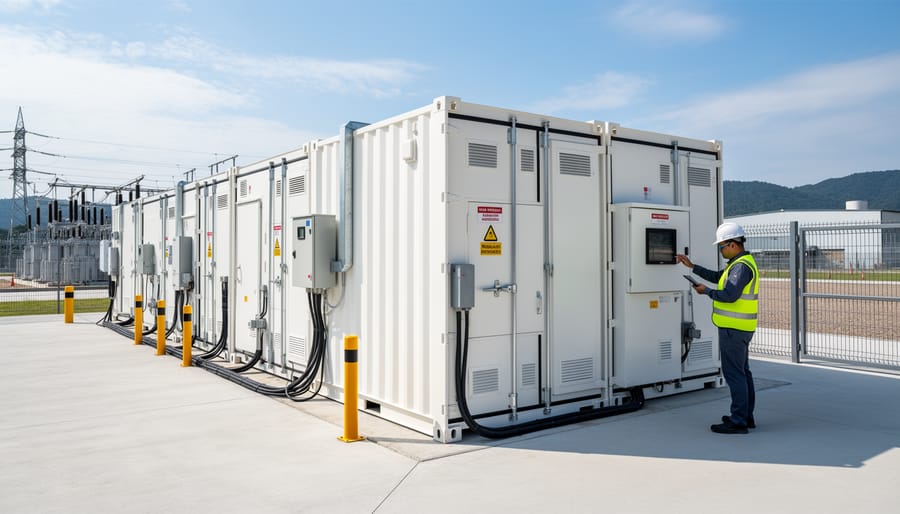
Modern PV energy storage systems deploy a range of battery chemistries, each with distinct performance characteristics. Lithium-ion variants dominate the residential and commercial markets. Nickel Manganese Cobalt (NMC) batteries offer high energy density, making them suitable for space-constrained installations, but they carry higher thermal runaway risk. Nickel Cobalt Aluminum (NCA) variants deliver excellent specific energy and long cycle life, though cobalt sourcing raises sustainability concerns. Lithium Iron Phosphate (LFP) has emerged as the preferred chemistry in 2026 for stationary storage applications. LFP batteries provide superior thermal stability, eliminating the fire risk associated with cobalt-based chemistries, and deliver 4,000 to 10,000 charge cycles depending on depth of discharge. Their lower energy density compared to NMC is less critical in stationary applications where space constraints matter less than in electric vehicles.
Lead-acid batteries remain in service for budget-conscious off-grid systems, offering low upfront cost and established recycling infrastructure. However, their short cycle life of 500 to 1,200 cycles, shallow recommended discharge depth, and maintenance requirements make them increasingly uncompetitive against lithium alternatives.
Emerging technologies promise step-change improvements. Solid-state batteries replace liquid electrolytes with ceramic or polymer separators, eliminating leakage and dendrite formation risks while enabling higher operating temperatures and energy densities approaching 500 Wh/kg. Several manufacturers have announced pilot production facilities for 2026 deployment. Sodium-ion batteries use abundant, low-cost sodium instead of lithium, targeting applications where weight matters less than material availability. Early commercial units deliver 2,000 to 3,000 cycles with energy densities around 150 Wh/kg, positioning them for utility-scale installations where footprint is not constrained.
Next-Gen Materials Enhancing PV Energy Storage
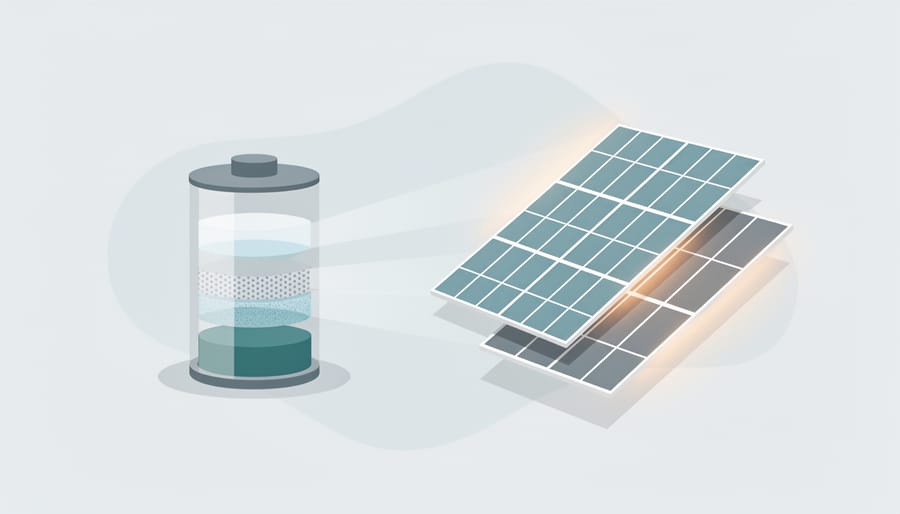
The materials science revolution underway in 2026 is transforming both sides of the PV energy storage equation, solar generation and battery storage. Advanced battery materials are addressing the fundamental limitations of conventional lithium-ion cells, while next-generation photovoltaic technologies are boosting the energy available for storage in the first place.
Solid-state electrolytes represent the most significant battery breakthrough, replacing flammable liquid electrolytes with ceramic or polymer-based solid materials. These electrolytes enable lithium-metal anodes that store roughly twice the energy per kilogram compared to traditional graphite anodes, dramatically increasing system capacity without expanding footprint. Research teams at Stanford and MIT have demonstrated solid-state cells that maintain over 80% capacity after 5,000 cycles, more than double the lifespan of many liquid-electrolyte systems. The enhanced safety profile eliminates thermal runaway risks, a critical advantage for residential installations where batteries sit in garages or basements.
Silicon anodes are reaching commercial maturity, offering up to ten times the theoretical capacity of graphite while integrating with existing lithium-ion manufacturing. The challenge has been silicon’s expansion during charging, which cracks electrode structures. Nanostructured silicon particles and silicon-carbon composites solve this by creating flexible architectures that accommodate volume changes. Companies like Sila Nanotechnologies and Amprius are shipping silicon-dominant anodes that boost cell energy density by 20-40%, translating to smaller, lighter battery packs for the same usable capacity.
On the solar side, perovskite-silicon tandem cells are pushing module efficiencies beyond 30% in lab settings, with commercial products approaching 28%. These tandems layer a perovskite top cell that captures high-energy blue and green photons over a silicon bottom cell that harvests lower-energy red and infrared light. Oxford PV and other manufacturers are scaling production for 2026 deployment. Bifacial monocrystalline PERC modules, now standard in many premium systems, capture reflected light from the ground or roof surface, increasing total generation by 5-15% depending on installation conditions, more energy flowing into storage without additional panel area.
Novel electrode materials built from graphene and carbon nanotubes are reducing internal resistance and enabling faster charge rates. Graphene’s two-dimensional structure provides exceptional electron mobility and surface area, while multi-walled carbon nanotubes create highly conductive pathways through electrode matrices. These materials support charge rates above 2C (full charge in under 30 minutes) without degrading cycle life, making PV storage systems responsive enough for grid services and demand management.
- Solid-State Electrolyte
- A non-flammable ceramic or polymer material that conducts ions between battery electrodes, replacing conventional liquid electrolytes. Solid-state designs improve safety, enable higher energy densities, and extend operational temperature ranges.
- Perovskite Solar Cell
- A photovoltaic technology using crystalline materials with a perovskite structure (typically methylammonium lead halide) to convert sunlight to electricity. Perovskites offer high efficiency and low manufacturing costs, often layered with silicon in tandem configurations.
- Graphene Electrode
- A battery electrode incorporating graphene, a single-layer carbon lattice with exceptional conductivity and surface area, to reduce resistance and increase charge/discharge rates. Graphene additives improve power density and cycle stability.
- Silicon Anode
- A negative battery electrode using silicon particles or nanostructures instead of graphite to store lithium ions during charging. Silicon anodes offer significantly higher theoretical capacity but require careful engineering to manage expansion stresses.
- Lithium-Metal Battery
- An advanced battery design using pure lithium metal as the anode, enabled by solid-state electrolytes that prevent dendrite formation. Lithium-metal cells achieve energy densities approaching 400-500 Wh/kg, roughly double conventional lithium-ion performance.
Universities are central to commercializing these innovations. Collaboration programs between institutions like UC Berkeley, Imperial College London, and industry partners are accelerating pilot-scale manufacturing and field testing. These partnerships address the gap between laboratory prototypes and products that meet certification standards, cost targets, and real-world durability requirements. For aspiring PV professionals, understanding these home energy storage breakthroughs is essential, as material choices increasingly determine system performance, warranty terms, and total cost of ownership. The integration of advanced materials isn’t simply incremental improvement, it’s redefining what’s possible in solar-plus-storage architecture.
Applications and Use Cases
PV energy storage systems have moved from niche applications to mainstream deployment across every sector of the energy economy. Residential installations pair rooftop solar arrays with 10-15 kWh battery units, enabling homeowners to store midday generation for evening consumption and maintain power during grid outages, solid-state and LFP chemistries introduced in recent years have extended usable cycle life beyond 6,000 cycles while reducing fire risk. Commercial buildings deploy larger 50-200 kWh systems to shave demand peaks, cutting monthly utility bills by 20-40% through strategic discharge during expensive on-peak periods; graphene-enhanced electrodes allow faster charge and discharge rates, making these systems responsive enough to react within seconds to demand spikes detected by smart meters.
The versatility of PV energy storage spans diverse operational contexts:
- Residential self-consumption, homeowners maximize solar utilization and reduce grid reliance with 10-20 kWh battery banks
- Commercial peak shaving, office buildings and retail centers deploy 100+ kWh systems to avoid demand charges during high-cost periods
- Utility frequency regulation, grid operators use megawatt-scale battery arrays paired with solar farms for fast-response balancing services
- Remote telecom sites, off-grid cellular towers in rural areas combine PV panels with ruggedized lithium-ion storage for 24/7 operation
- EV charging stations, solar-plus-storage microgrids buffer grid load and enable charging even during peak demand or outages
Industrial facilities with multi-megawatt loads integrate containerized battery systems, often 500 kWh to several MWh, to participate in demand response programs, providing grid services while maintaining backup capacity for critical processes. Manufacturing plants in regions with unreliable grids pair solar generation with storage to eliminate downtime: a 2 MWh system can sustain operations through multi-hour blackouts, protecting production schedules and sensitive equipment.
Utility-scale projects represent the fastest-growing segment, with solar-plus-storage installations routinely exceeding 100 MWh. These systems stabilize renewable-heavy grids by dispatching stored solar energy during evening demand ramps, effectively extending solar generation hours beyond sunset. Next-gen perovskite-silicon tandem modules boost daytime energy capture by 15-20%, feeding larger storage reserves without expanding the PV footprint. Microgrid configurations serve island communities, military bases, and industrial parks, combining local solar generation with multi-megawatt-hour storage and diesel backup for complete energy autonomy.
Performance Metrics and System Sizing
Selecting the right PV energy storage system requires understanding several interdependent performance metrics. Usable capacity, measured in kilowatt-hours (kWh), indicates how much energy the battery can store and deliver, a 10 kWh system can theoretically power a 1 kW load for ten hours. However, this figure must account for depth of discharge (DoD), which specifies how much of the total capacity you can safely use without degrading battery life and retention. Lithium iron phosphate (LFP) batteries commonly allow 90-95% DoD, while older lead-acid systems may limit you to 50%, meaning a nominal 10 kWh lead-acid battery offers only 5 kWh of usable storage.
Power rating, expressed in kilowatts (kW), defines how quickly the battery can discharge energy. A 5 kW inverter paired with a 13 kWh battery can run several appliances simultaneously but won’t handle an entire home’s peak demand if that exceeds 5 kW. Round-trip efficiency, the percentage of stored energy you actually retrieve, typically ranges from 85% to 95% in modern lithium-ion systems. Higher efficiency means less energy lost to heat during charge and discharge cycles, directly impacting your return on investment.
Cycle life measures how many full charge-discharge cycles a battery endures before capacity degrades to 80% of its original rating. Premium LFP batteries now offer 6,000-10,000 cycles, translating to 15-25 years of daily cycling under moderate DoD. Warranty terms should reflect this, guaranteeing both a minimum cycle count and a specific energy throughput in megawatt-hours (MWh).
To size your system, calculate average daily consumption in kWh and multiply by your desired autonomy days, typically one to three for grid-tied backup, more for off-grid installations. Cross-reference this with your solar generation profile: if your array produces 30 kWh daily but you consume 25 kWh, a 10-15 kWh battery captures most excess generation while providing overnight coverage. Oversizing wastes capital; undersizing limits self-consumption and backup duration. Match power rating to your peak simultaneous load to avoid inverter limitations during outages.
Frequently Asked Questions
How long do PV storage batteries last?
Modern lithium-ion batteries typically provide 10 to 15 years of service or 5,000 to 10,000 charge-discharge cycles, depending on chemistry and usage patterns. Next-generation solid-state batteries promise even longer lifespans, with early prototypes demonstrating over 15,000 cycles before reaching 80% capacity retention.
Can I add storage to an existing solar system?
Yes, though the ease of integration depends on your current setup. Systems with hybrid inverters can accommodate batteries directly, while older systems may require an AC-coupled battery solution or inverter upgrade to enable storage functionality.
What happens during a power outage?
Grid-tied systems with battery backup automatically disconnect from the grid and switch to islanding mode, powering critical loads from stored energy. Without storage, standard grid-tied solar systems shut down during outages for safety reasons, even when the sun is shining.
How do next-gen materials improve storage performance?
Advanced materials like silicon anodes increase energy density by up to 30%, solid-state electrolytes eliminate fire risk and extend cycle life, and graphene-enhanced electrodes reduce internal resistance for faster charging. These improvements translate to smaller, safer, longer-lasting systems.
Are PV storage systems cost-effective?
Economics vary by location and utility rate structure. In areas with high demand charges, time-of-use rates, or frequent outages, storage systems often achieve payback within 7 to 12 years, and a detailed cost-saving analysis can reveal your specific return potential.
What safety certifications should I look for?
UL 9540 certification covers the entire energy storage system, while UL 1973 addresses battery cells and modules specifically. Look for products tested to these standards, along with compliance to IEEE 1547 for grid interconnection and local electrical codes.
These questions reflect the real concerns of professionals entering the PV field and homeowners evaluating storage investments. Battery longevity depends heavily on temperature management and how deeply you discharge the cells each cycle. LFP batteries tolerate deeper discharges better than NMC or NCA chemistries, which partially explains their growing market share in residential storage.
Retrofitting storage becomes simpler when you plan for it during the initial solar installation, but even systems installed years ago can integrate batteries with the right equipment. The key is matching voltage and communication protocols between components. Off-grid systems prioritize autonomy and redundancy, while grid-connected setups balance economics with backup capability. Understanding these trade-offs helps you design systems that meet client needs without overbuilding capacity or compromising reliability.
PV energy storage systems have matured from niche components into foundational infrastructure for reliable solar energy deployment. By capturing excess generation and delivering it when needed, these systems eliminate the intermittency barrier that once limited solar’s potential. Residential users gain energy independence, commercial facilities reduce demand charges, and utility-scale operators provide grid services that stabilize modern power networks.
The performance leap in 2026 stems directly from next-generation materials. Solid-state electrolytes deliver safer, longer-lasting batteries. Perovskite-silicon tandem cells boost solar conversion efficiency beyond traditional limits. Graphene-enhanced electrodes enable faster charge rates and deeper discharge cycles. Together, these advances compress system payback periods while extending operational lifespans, making storage economically viable across applications that were marginal just years ago.
Cost reductions follow material innovation. Higher energy density means fewer battery modules for equivalent capacity. Improved cycle life spreads capital investment over more years of service. Enhanced efficiency reduces the array size needed to charge storage fully. These factors compound to lower the total cost of ownership, accelerating adoption across residential, commercial, and industrial sectors.
For aspiring photovoltaic professionals, mastering storage integration is no longer optional. Mose Solar offers educational programs developed in collaboration with universities, equipping participants with the technical knowledge to design, size, and commission systems that leverage these emerging materials. Understanding how solid-state chemistries, advanced inverters, and intelligent management systems interact positions you at the forefront of solar’s next chapter.