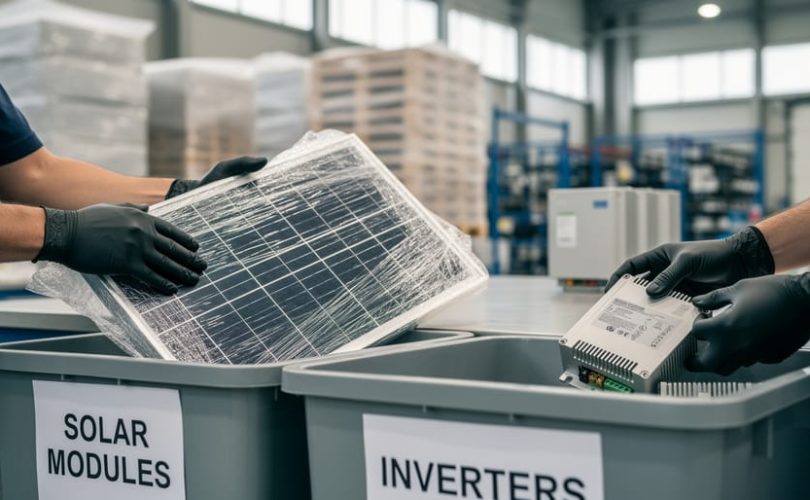
A reverse logistics provider is a company that moves products backward through the supply chain: collecting returned, defective, or end-of-life goods from customers and routing them to repair, refurbishment, resale, recycling, or safe disposal. In photovoltaics, that means handling returned modules, inverters, and batteries under warranty claims (the RMA, or return merchandise authorization, process) and helping producers meet take-back and recycling duties under Extended Producer Responsibility (EPR) rules.
Why does this matter now? The United States still has no federal EPR framework, so states have set their own definitions, reporting requirements, fees, timelines, and performance measures. Spring 2026 brought a notable convergence, with May 31 reporting deadlines landing across California, Oregon, Colorado, Washington, Minnesota, and Maryland. Those filings concern packaging, but they show how quickly producer obligations are multiplying and how much traceable data producers must now collect.
For manufacturers, distributors, and installers, the right provider shortens RMA cycles, documents chain of custody, and keeps recovered materials out of the waste stream. This guide covers what these providers do, how an RMA workflow runs from claim to disposition, how the EPR landscape connects to it, and how to evaluate a partner. It also reflects the kind of university collaboration and educational programming we support to prepare the next generation of PV professionals for this work.
What a Reverse Logistics Provider Actually Does in the Solar Industry
Core Services: From Collection to Final Disposition
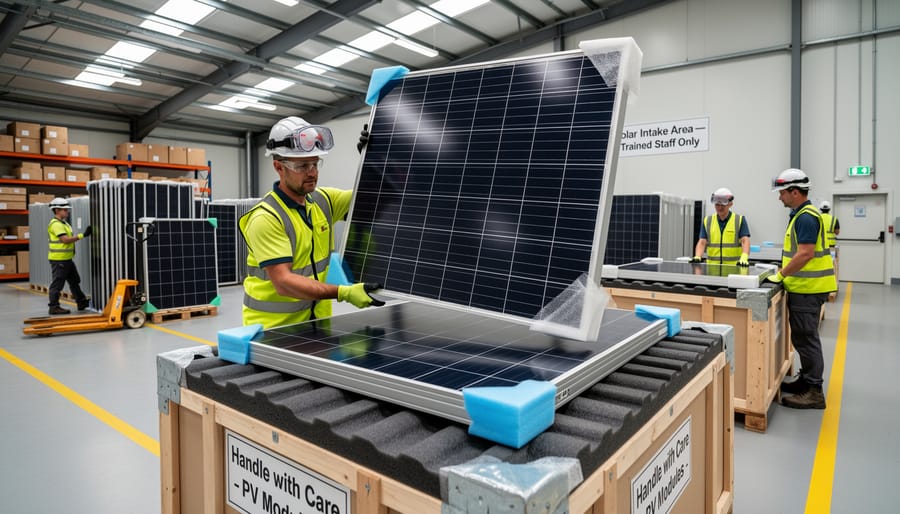
A reverse logistics provider typically starts with collection. That means scheduling pickup, arranging freight suited to fragile glass and heavy pallets, and keeping the shipment documented from the first handoff. Some brands fold this step into broader 4PL logistics arrangements, where one coordinator oversees several carriers and warehouses.
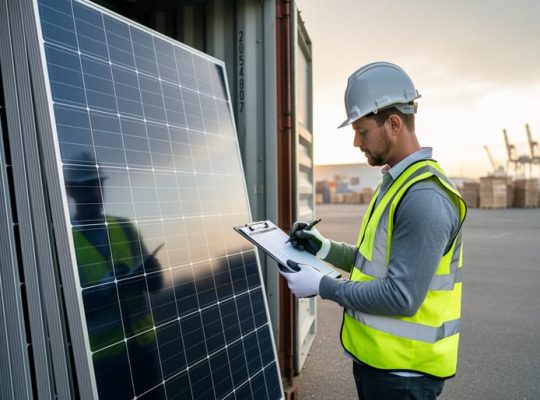
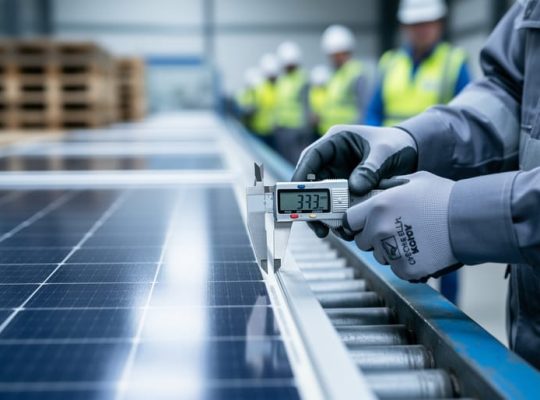
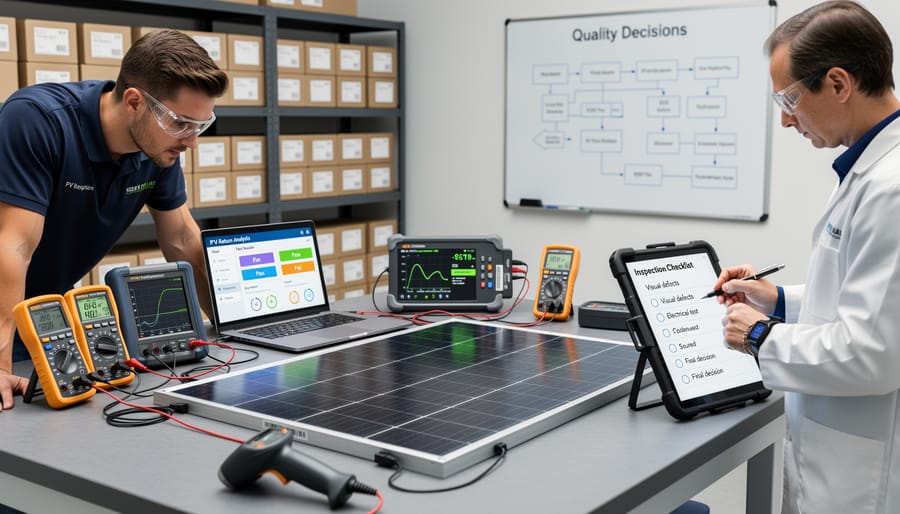
Once units arrive, inspection and testing begin. Technicians check for physical damage, such as cracked glass or bent frames, and run electrical tests to see whether a module still performs as expected. Findings are recorded against the serial number.
Grading then drives the routing decision. A unit in good condition may go back to restock. One with a repairable fault can be sent for repair, a functional but cosmetically imperfect unit may be resold through a secondary channel, and anything beyond saving moves to recycling.
Throughout, the provider keeps records of each disposition and reports them back to the manufacturer or distributor. That documentation supports warranty outcomes and gives compliance teams the data trail they need later.
Why Solar Modules Are Not Ordinary Returns
A solar module looks like a simple flat panel, but it behaves very differently from a pallet of ordinary goods once it comes back through the supply chain. The front surface is tempered glass, and a microcrack that cannot be seen by eye can quietly reduce output or grow into a failure later. That makes rough handling, stacking errors, and poorly secured loads a real risk to the value of every returned unit.
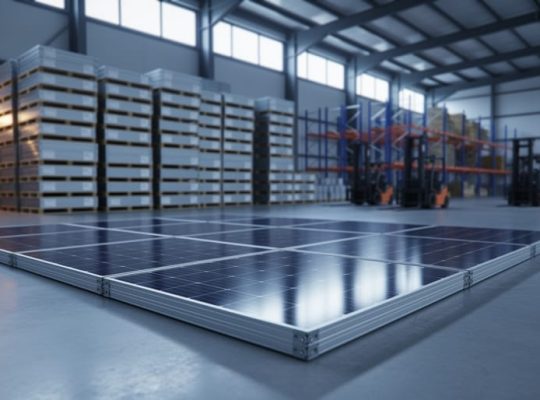
Size and weight add another layer. Modules are large, awkward to grip, and heavy enough that a single person should not carry them alone. They are typically moved on pallets or in frames, and they need to be stored and transported at the right orientation with proper edge protection. A standard parcel workflow is simply not built for this.
Electrical safety matters too. A module generates voltage whenever light reaches its cells, even when it is disconnected and sitting in a warehouse. Returned units may also have cracked glass or exposed conductors, so handlers need to know how to isolate, cover, and move them without creating a shock or injury hazard.
Packaging is the final piece. Returns often arrive in whatever protection remains from installation, which is rarely adequate. A capable provider re-packs units with suitable corner and edge support, secures them against vibration, and documents their condition on receipt.
All of this points to trained handlers as the defining requirement. Mose Solar’s online educational program, developed in collaboration with universities, covers the safety and handling fundamentals that underpin this work, giving aspiring PV professionals a practical foundation before they ever touch a returned module.
How the RMA Process Works for PV Products
Common Reasons for PV Returns and Claims
PV returns rarely arrive for one reason, and the reason decides where the product goes next. A reverse logistics provider sorts each case at intake so it isn’t treated like every other box on the dock.
Transit damage is the most visible category. Cracked glass or bent frames usually trace back to packaging or handling, so inspection photos and carrier claims matter as much as the product itself. Suspected defects and warranty claims need testing before anyone assigns a verdict, and order errors or overstock often skip repair entirely and go back into inventory. Related shipping problems, such as customs delays, can also leave product sitting in storage and tied up in disputes before it ever reaches a customer.
| Return reason | Typical documentation | Likely disposition |
|---|---|---|
| Transit damage | Delivery photos, carrier claim, packing records | Replace, or recycle if beyond repair |
| Suspected defect | Serial number, test results, installation details | Repair or replace after testing |
| Warranty claim | Proof of purchase, serial number, failure description | Replace, or recycle if beyond repair |
| Order error or overstock | Original order, condition check | Resell or restock |
The routing logic is the point. Because the disposition path differs by return type, the provider’s grading step is where value is kept or lost. It also shapes what is later reported for compliance, which the next sections take up.
Documentation and Traceability
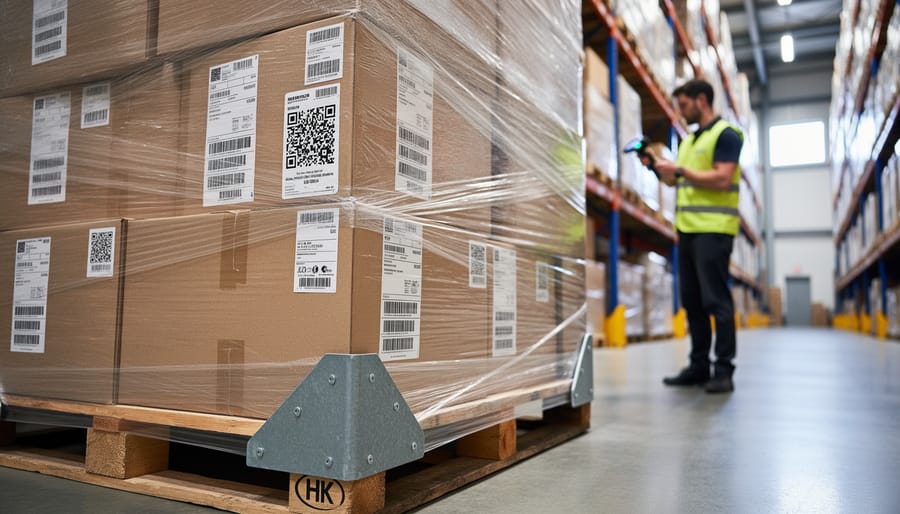
A reverse logistics provider is only as useful as the records it keeps. Serial number tracking ties each returned module or inverter to its original shipment, so a warranty claim can be checked against purchase and installation history instead of guesswork. Photographs taken at receipt document the condition of the unit and its packaging, which helps separate transit damage from a suspected manufacturing defect. Test results, such as electrical measurements or visual inspection findings, give the manufacturer evidence for approving or denying a claim.
Chain-of-custody records add another layer. They show who handled the product, where it went, and what happened to it, from pickup through repair, resale, or recycling. That trail protects every party in a dispute and makes the final disposition verifiable.
The same data supports compliance. As noted earlier, producers must collect and report detailed packaging information to a designated producer responsibility organization. A provider that captures clean, consistent records during returns makes that reporting far easier.
Where EPR Compliance Fits In
A State-by-State Patchwork Without a Federal Framework
Because there is no federal EPR framework each state sets its own terms. Definitions, reporting formats, fees, timelines, and performance measures all differ. A producer shipping modules and packaging into several states can’t assume one program’s rules apply in the next.
The calendar shows the strain. May 31, 2026 is the reporting deadline for California’s Annual Supply Report and Annual Source Reduction Report, and for Oregon and Colorado’s Annual Supply Reports, all using 2025 data. Washington, Minnesota, and Maryland have Simplified Supply Reports due the same day.
This is where a provider with strong compliance data capabilities earns its place. If it captures packaging details and product data at the point of return or shipment, producers have cleaner inputs for each state’s format. The same discipline matters elsewhere in the supply chain. Local content rules for instance, also depend on traceable records.
Key Reporting Dates and Resources for 2026
Several state packaging EPR reporting obligations converge in spring 2026, which matters for any producer that ships PV products and packaging. The verified May 31, 2026 deadlines are summarized below.
| State | Report Type | Data Year | Deadline |
|---|---|---|---|
| California | Annual Supply Report and Annual Source Reduction Report | 2025 | May 31, 2026 |
| Oregon | Annual Supply Report | 2025 | May 31, 2026 |
| Colorado | Annual Supply Report | 2025 | May 31, 2026 |
| Washington, Minnesota, Maryland | Simplified Supply Report | Not specified in the source | May 31, 2026 |
The data behind these filings is granular. Producers must collect detailed packaging information and report to a designated PRO meaning a producer responsibility organization. GS1 US has published guidance on packaging EPR reporting requirements, which is a useful starting point for structuring that data.
This is where a capable reverse logistics provider earns its place. Pallets, crates, corner protectors, and cartons move through the same return flows as the modules themselves, so a provider that records what came back, and in what packaging, can make a producer’s data collection far easier.
For registration and reporting resources, the Circular Action Alliance Producer Resource Center centralizes the most up-to-date information on reporting obligations. Because requirements differ from state to state, confirm current details directly with each state program before you file, rather than relying on a summary like this one.
Choosing and Working With a Reverse Logistics Provider
Building Internal Readiness
Readiness starts before the first return arrives. Manufacturers, distributors, and installers should write clear return policies that state eligibility windows, required photos and serial numbers, and who pays for freight. Keep product data current too: model numbers, dimensions, weights, and pallet configurations let a provider quote, pack, and route units correctly. Document packaging specifications as well, since damaged crating is a common source of disputes and, as the 2026 reporting cycle shows, producers may need detailed packaging information on file for state programs. Several of those programs share a May 31, 2026 reporting date, so it is worth confirming each state’s requirements directly.
Supply chain scrutiny belongs in this preparation as well. Teams that track provenance and handle forced labor risk alongside returns data are better placed to answer questions when units move back through the chain.
Finally, train your staff. People who log RMAs, inspect shipments, and talk to customers need to understand handling safety and documentation habits.
For people building careers in this field, Mose Solar’s online educational program, developed with universities, covers lifecycle management, safety, and sustainability practices. It gives aspiring PV professionals the grounding to run these processes well.
Frequently Asked Questions About PV Reverse Logistics, RMA, and EPR
What is a reverse logistics provider?
It is a third-party partner that manages the backward flow of PV products, including returns, warranty claims, damaged shipments, surplus stock, and end-of-life modules, from the customer to the manufacturer, refurbisher, or recycler.
How is it different from a standard freight carrier?
A carrier moves a shipment from point A to point B. A reverse logistics provider also handles inspection, testing, grading, documentation, and the decision to restock, repair, resell, or recycle.
Are an RMA and a warranty claim the same thing?
No. A warranty claim asks the manufacturer to honor its coverage, while an RMA is the authorization and tracking step that controls how a return moves. Returns for transit damage or order errors also use an RMA but may never involve a warranty.
How do I stay current on EPR deadlines?
Rules differ by state, so confirm requirements directly with each state program. The Circular Action Alliance Producer Resource Center centralizes registration and reporting resources, and several states have May 31, 2026 reporting deadlines.
For deeper study of lifecycle management, safety, and sustainability practices, Mose Solar’s online educational program, developed with universities, is a practical next step.
Reverse logistics, RMA discipline, and EPR compliance are not three separate chores. A provider moves the product, the RMA process authorizes and documents each return, and EPR reporting depends on the records both of them create. When one link is weak, the others suffer.
Because state rules differ and keep changing, confirm current requirements directly with each program administrator before you rely on any summary, including this one.
For those building careers in solar, Mose Solar’s online educational program, developed with universities, offers a clear path into lifecycle management, safety, and sustainability practices across the PV industry.