
6V solar batteries stand at the forefront of sustainable energy storage solutions, offering a critical bridge between solar power generation and reliable off-grid applications. These specialized deep-cycle batteries, designed specifically for photovoltaic systems, deliver consistent power output while maintaining optimal performance in diverse environmental conditions. Unlike conventional batteries, 6V solar variants feature robust lead-acid or lithium-based chemistry engineered to withstand repeated discharge cycles, making them indispensable in renewable energy installations.
Understanding the role of 6V solar batteries becomes increasingly vital as the renewable energy sector expands. These units typically offer higher energy density and longer service life compared to traditional 12V configurations, while their compact form factor facilitates flexible installation options in both residential and commercial applications. Modern 6V solar batteries incorporate advanced technologies such as enhanced plate design, precision manufacturing processes, and sophisticated battery management systems, ensuring optimal charge retention and prolonged operational lifespan.
For professionals and enthusiasts in the photovoltaic industry, selecting the appropriate 6V solar battery requires careful consideration of factors including capacity requirements, discharge rates, and environmental conditions. This comprehensive examination explores the technical specifications, practical applications, and maintenance protocols essential for maximizing the performance of 6V solar battery systems in sustainable energy solutions.
Understanding 6V Solar Battery Technology
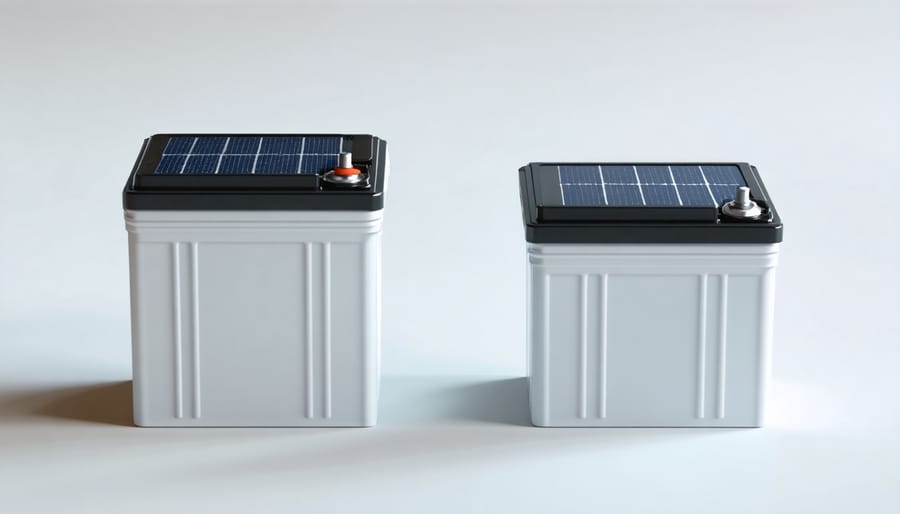
Lead-Acid vs. Lithium 6V Options
When selecting 6V batteries for solar applications, two primary chemistries dominate the market: lead-acid and lithium-based options. Lead-acid batteries, including flooded and sealed variants, have been the traditional choice due to their lower initial cost and proven reliability. These batteries typically offer 6-8 years of service life and are well-suited for stationary applications where weight and space constraints are not primary concerns.
Lithium-based 6V batteries, particularly Lithium Iron Phosphate (LiFePO4), represent the newer technology with several advantages. They offer up to 5000 charge cycles compared to 1500 cycles for lead-acid, maintain consistent voltage throughout discharge, and weigh approximately 60% less than their lead-acid counterparts. While their upfront cost is higher, the total cost of ownership over the battery’s lifetime is often lower due to their extended lifespan and minimal maintenance requirements.
Performance characteristics also differ significantly. Lead-acid batteries typically require regular maintenance, operate best at 50% depth of discharge, and have temperature-sensitive performance. In contrast, lithium batteries can be discharged to 80% capacity, require virtually no maintenance, and maintain stable performance across a broader temperature range. For solar applications requiring frequent cycling or limited maintenance access, lithium-based solutions often prove more advantageous despite their higher initial investment.
Performance Characteristics
6V solar batteries exhibit distinct performance characteristics that make them suitable for specific solar energy applications. These batteries typically offer capacity ranges from 4.5 to 12 ampere-hours (Ah), with premium models reaching up to 20Ah. The discharge rate, a crucial performance metric, generally maintains a steady 0.2C to 0.3C under normal operating conditions, ensuring reliable power delivery for extended periods.
The efficiency of 6V solar batteries varies depending on several factors, including temperature and depth of discharge (DoD). Under optimal conditions (20-25°C), these batteries achieve conversion efficiencies between 85% and 92%. The self-discharge rate remains relatively low at 3-5% per month when properly maintained.
Cycle life performance is another critical metric, with quality 6V batteries capable of delivering 500-1,500 cycles at 50% DoD. Deep-cycle variants specifically designed for solar applications can achieve up to 2,000 cycles while maintaining 80% of their original capacity.
The internal resistance of 6V solar batteries typically ranges from 4 to 8 milliohms, contributing to their voltage stability under load. Most models maintain a steady voltage output between 6.3V and 5.8V during normal operation, with voltage regulation capabilities ensuring consistent power delivery to connected devices.
Temperature performance characteristics show optimal operation between -20°C and 45°C, though efficiency decreases notably at temperature extremes. Advanced models incorporate temperature compensation features to maintain performance across varying environmental conditions.
Environmental Impact and Sustainability
Manufacturing Footprint
The production of 6V solar batteries involves significant environmental considerations across the manufacturing chain. Primary production facilities are predominantly located in Asia, with China accounting for approximately 70% of global manufacturing capacity. These facilities typically employ energy-intensive processes for cell assembly and chemical processing, consuming an estimated 2,000 kWh of energy per battery unit produced.
Recent innovations in manufacturing techniques have reduced the environmental footprint through automated assembly lines and improved resource efficiency. Leading manufacturers have implemented closed-loop water systems, reducing water consumption by up to 40% compared to traditional methods. Additionally, many facilities now utilize renewable energy sources for production, with some achieving up to 30% of their energy needs through on-site solar installations.
The extraction of raw materials, particularly lead and rare earth elements, remains a significant environmental concern. However, industry leaders have established responsible sourcing initiatives and recycling programs that recover up to 95% of materials from end-of-life batteries. Advanced facilities now incorporate dust collection systems and chemical scrubbers to minimize air emissions, while waste treatment processes ensure proper handling of chemical byproducts.
Operational Sustainability
6V solar batteries play a crucial role in advancing sustainable energy solutions through their operational efficiency and environmental benefits. These batteries demonstrate exceptional energy conversion rates, typically achieving 85-90% efficiency during charge-discharge cycles. This high efficiency translates to minimal energy loss during operation, reducing the overall environmental footprint of solar power systems.
The operational sustainability of 6V solar batteries is further enhanced by their long service life, which can extend up to 10-15 years with proper maintenance. This longevity reduces the frequency of battery replacement and associated resource consumption. During their operational phase, these batteries contribute to significant carbon emission reductions by enabling efficient energy storage from renewable sources.
Additionally, modern 6V solar batteries incorporate advanced temperature management systems and smart charging algorithms, optimizing performance while minimizing energy waste. These features ensure consistent power delivery while maintaining battery health, ultimately extending the system’s operational lifespan and reducing its environmental impact.
End-of-Life Management
Proper disposal and recycling of 6V solar batteries are crucial aspects of battery lifecycle management that require careful attention to environmental regulations and safety protocols. These batteries contain materials such as lead, acid, and other potentially hazardous components that must be handled responsibly to minimize environmental impact.
Licensed recycling facilities typically employ a multi-step process to reclaim valuable materials from spent 6V solar batteries. The process begins with battery sorting and dismantling, followed by the separation of components such as lead plates, plastic casings, and electrolyte solutions. Advanced recycling technologies enable the recovery of up to 99% of battery materials, which can be repurposed for manufacturing new batteries or other products.
To maximize battery lifespan and reduce waste, implement preventive maintenance practices such as regular voltage monitoring, proper charging cycles, and temperature control. When replacement becomes necessary, contact certified recycling centers or battery manufacturers that offer take-back programs. Many jurisdictions require proper documentation of battery disposal to ensure compliance with environmental regulations.
Organizations should develop comprehensive end-of-life management plans that include staff training, proper handling procedures, and partnerships with authorized recycling facilities. This approach not only ensures regulatory compliance but also contributes to sustainable energy practices and reduced environmental impact.
Integration with PV Systems
System Design Considerations
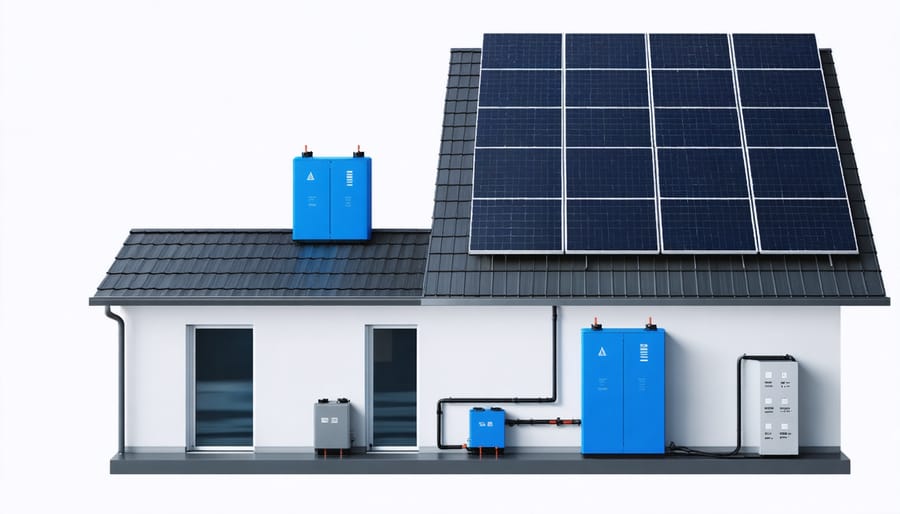
When designing a solar power system with 6V batteries, proper configuration and sizing are crucial for optimal performance. Understanding PV system components and their interconnections ensures reliable operation and maximum energy efficiency.
Battery configurations typically involve series and parallel connections to achieve desired voltage and capacity requirements. For a 12V system, two 6V batteries connected in series provide the necessary voltage, while parallel connections increase the overall ampere-hour capacity. This flexibility allows system designers to meet specific power requirements while maintaining system stability.
Following established solar system design principles, proper sizing calculations must account for daily energy consumption, desired autonomy days, and depth of discharge limitations. A general guideline suggests maintaining a 20-50% depth of discharge for optimal battery longevity.
Temperature considerations play a vital role in system design, as battery capacity and performance vary with ambient conditions. Installation locations should maintain temperatures between 20-25°C (68-77°F) for optimal performance. System designers must also incorporate appropriate charge controllers and inverters compatible with 6V battery configurations.
When determining the number of batteries required, consider factors such as:
– Daily energy consumption (kWh)
– System voltage requirements
– Battery efficiency
– Weather patterns and solar availability
– Backup power requirements
– Available installation space
– Budget constraints
This systematic approach ensures a well-designed system that meets performance expectations while maintaining battery health and longevity.
Maintenance and Monitoring
Regular maintenance and monitoring are crucial for maximizing the performance and lifespan of 6V solar batteries. A systematic maintenance protocol should include monthly visual inspections of battery terminals for corrosion, proper connection tightness, and electrolyte levels in flooded lead-acid variants. Clean terminals with a solution of baking soda and water, ensuring all connections remain free from oxidation and debris.
Monitor voltage levels consistently using a high-quality multimeter, maintaining readings within manufacturer-specified parameters. For optimal performance, keep detailed records of voltage measurements, charging cycles, and ambient temperature conditions. Most 6V solar batteries perform best between 20°C and 25°C (68°F to 77°F), with temperature compensation required for operations outside this range.
Implement a quarterly maintenance schedule that includes:
– Testing specific gravity in flooded batteries
– Checking for physical damage or case distortion
– Verifying proper ventilation in battery enclosures
– Assessing charging system performance
– Documenting battery capacity tests
For sealed AGM or gel variants, while requiring less maintenance, regular voltage monitoring remains essential. Install battery monitoring systems that provide real-time data on state of charge, temperature, and voltage levels. These systems can alert operators to potential issues before they become critical.
Safety protocols during maintenance should include wearing appropriate personal protective equipment, ensuring proper ventilation, and following manufacturer guidelines for handling and testing procedures. Regular staff training on maintenance procedures and safety protocols helps prevent accidents and ensures consistent battery care practices.
Six-volt solar batteries play a crucial role in sustainable photovoltaic systems, offering a balanced combination of reliability, efficiency, and versatility. Throughout this comprehensive analysis, we’ve explored how these specialized batteries serve as fundamental components in various solar applications, from small-scale residential installations to more complex off-grid systems.
The key advantages of 6V solar batteries include their superior cycle life, enhanced depth of discharge capabilities, and excellent charge retention characteristics. When properly maintained and integrated into well-designed solar systems, these batteries can significantly extend system longevity while maintaining optimal performance levels.
Environmental considerations remain paramount in the selection and implementation of 6V solar batteries. Their potential for recycling, reduced toxic material content, and overall lower environmental impact compared to traditional battery options make them an environmentally responsible choice for sustainable energy storage solutions.
For photovoltaic professionals and system designers, understanding the technical specifications, maintenance requirements, and integration strategies for 6V solar batteries is essential for maximizing system efficiency and reliability. The proper selection, installation, and maintenance of these batteries directly impact the overall performance and sustainability of solar power systems.
As renewable energy technology continues to evolve, 6V solar batteries remain a proven and dependable option for energy storage in photovoltaic applications, supporting the global transition toward cleaner, more sustainable energy solutions.