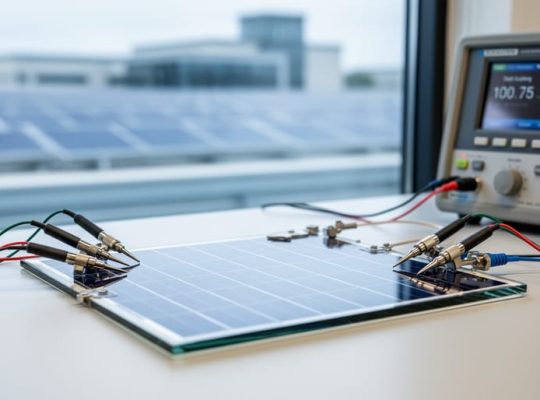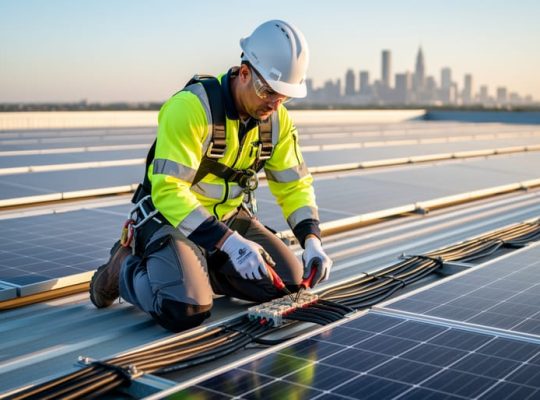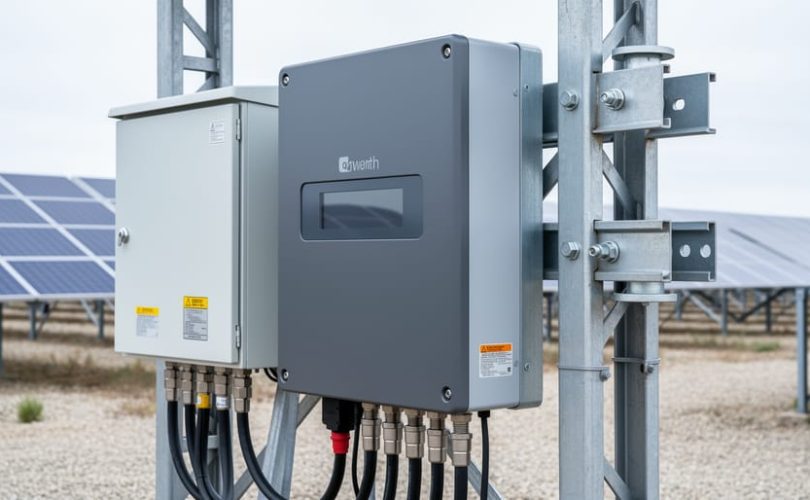
Reliability components are the Balance-of-System elements in a photovoltaic project whose demonstrated performance and durability directly determine whether financiers will fund the system and whether it will meet 25-year revenue projections. These include inverters, combiner boxes, monitoring systems, mounting structures, wiring, and protection devices. Unlike modules, which benefit from extensive third-party certification programs and decades of field data, BOS components face fragmented qualification standards and shorter operational track records, making their reliability assessment both critical and challenging for bankability evaluations.
In 2026, project finance teams evaluate BOS reliability through three lenses: component-level qualification testing to recognized standards, manufacturer financial stability and warranty enforceability, and field failure data from comparable installations. A single inverter failure can idle megawatts of generation. Corroded electrical connections can trigger cascading faults. Inadequate monitoring may leave performance issues undetected for months, eroding returns that debt models assume with precision. Lenders understand this exposure. They require evidence that every component connecting modules to the grid can withstand environmental stress, maintain electrical integrity, and perform predictably across the project lifecycle.
The qualification framework for reliability components spans IEC standards, UL certifications, accelerated life testing protocols, and increasingly, independent third-party validation programs developed in collaboration with research institutions. Mose Solar partners with leading universities to advance testing methodologies that better predict real-world performance, translating laboratory results into bankable risk metrics.
This article defines reliability components in the BOS context, explains how qualification standards translate to financial confidence, identifies the failure modes that most often compromise project economics, and provides educational resources for professionals entering the field.
What Are Reliability Components in Solar BOS Systems?
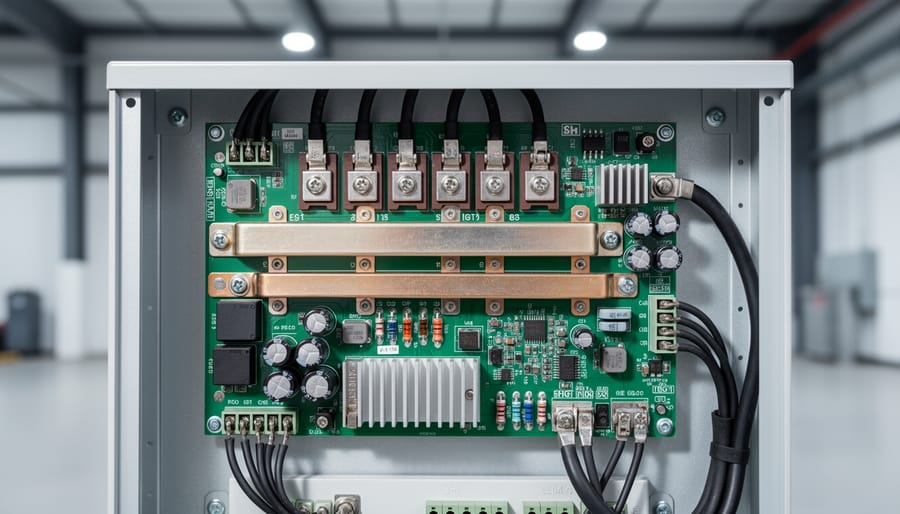
Reliability components in solar Balance-of-System (BOS) equipment encompass all non-module elements that determine whether a photovoltaic installation will deliver consistent performance over its expected 25-year lifespan. While solar panels themselves typically undergo separate bankability qualification processes, the supporting infrastructure, inverters, mounting hardware, electrical connections, and control systems, collectively determines whether a project meets institutional investor criteria and secures favorable financing terms.
- Inverters
- Power conversion equipment transforming DC electricity from panels into AC grid power, representing the single most critical reliability component due to complex electronics and high failure rates relative to other BOS elements.
- Mounting Structures
- Racking and support frameworks securing panels to rooftops or ground installations, where material corrosion and structural fatigue directly impact long-term system stability and safety.
- Combiner Boxes and Junction Equipment
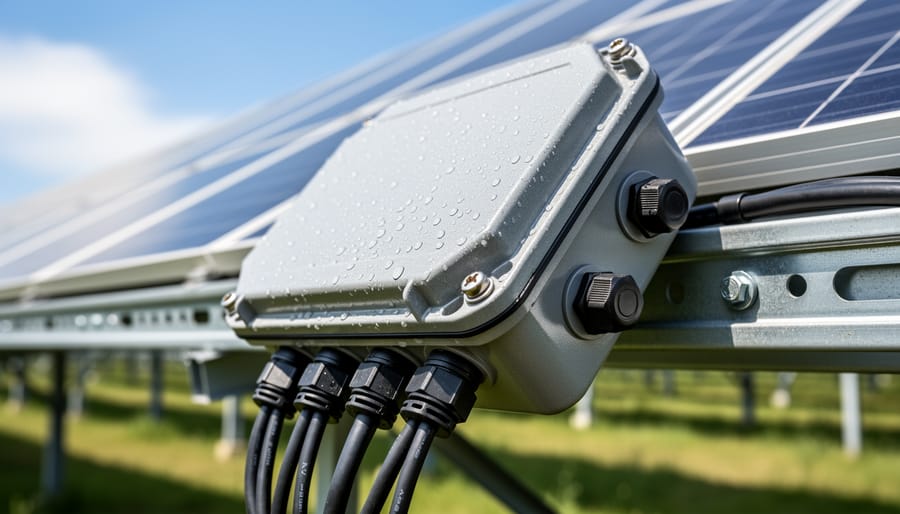
- Electrical enclosures consolidating multiple panel strings into manageable circuits, housing protective devices where connection failures and component degradation frequently occur.
- DC and AC Wiring
- Cable infrastructure carrying electrical current throughout the system, vulnerable to insulation breakdown, conductor corrosion, and thermal stress that can trigger performance losses or safety hazards.
- Disconnect Switches and Overcurrent Protection
- Safety and isolation devices enabling maintenance and emergency shutdowns, which must maintain mechanical integrity and electrical ratings across thousands of operation cycles.
Inverter reliability receives disproportionate attention in bankability qualification because these devices contain active electronics, moving parts (in some designs), and thermal management systems that degrade faster than passive components. A single inverter failure can disable substantial portions of a solar array, directly impacting revenue generation and loan repayment capacity. This explains why lenders typically require inverters from manufacturers with extensive field deployment histories and robust warranty programs.
Mounting structures face intense scrutiny in coastal, high-wind, and snow-load environments where structural failures pose catastrophic risks. Engineers evaluate material specifications, corrosion resistance coatings, fastener quality, and design compliance with local building codes. Similarly, monitoring systems and energy storage interfaces have gained prominence in bankability assessments as project economics increasingly depend on performance verification and grid service capabilities.
Less visible components like wiring and connectors become critical when projects scale to utility dimensions. A connection failure affecting one combiner box in a residential system creates minor revenue loss, but the same defect replicated across thousands of connection points in a 100 MW project represents material financial exposure. Qualification frameworks therefore emphasize manufacturing consistency, quality control processes, and field performance data demonstrating that reliability holds across production volumes.
The BOS Component Reliability and Bankability Qualification Framework
Testing and Certification Standards
Every BOS component destined for bankable solar projects must survive a gauntlet of standardized tests designed to simulate decades of real-world stress in compressed timeframes. Inverters, for instance, undergo thermal cycling tests per IEC 62093, where units endure hundreds of temperature swings from -40°C to +85°C to expose solder joint failures and capacitor degradation before they occur in the field. Mounting structures face corrosion resistance testing under salt spray exposure (ASTM B117) for 1,000+ hours, simulating coastal and industrial environments that accelerate rust and structural weakening.
Electrical components like combiners and disconnect switches must pass BOS-5 certification protocols, which verify mechanical endurance through 10,000+ operational cycles and measure contact resistance degradation under load. Wiring and connectors undergo UV exposure testing (UL 1703) equivalent to 30 years of sunlight, plus pull tests exceeding 200% of rated mechanical loads to validate crimp quality and strain relief design.
Accelerated lifetime testing compresses 25 years into 12-18 months using elevated stress conditions, higher voltages, extreme temperatures, humidity chamber cycling at 85°C/85% RH for damp heat tests. These protocols, governed by IEC 61215 and UL 61730 standards, identify latent defects and design weaknesses that only emerge after years of operation. Monitoring equipment and communication devices must additionally achieve EMC certification under IEC 61000 standards, proving immunity to electromagnetic interference from nearby inverters and grid equipment while not emitting disruptive signals themselves.
Field validation remains the final arbiter. Even lab-certified components undergo pilot deployments where performance data from actual installations, spanning diverse climates from Arizona deserts to German winters, confirm that laboratory results translate to reliable operation. Third-party certification bodies like TÜV, UL, and CSA witness these tests, providing independent verification that manufacturers cannot manipulate data or selectively report favorable results.
Performance Metrics and Benchmarks
Quantifying BOS component reliability requires standardized metrics that translate physical durability into financial risk. Industry qualification frameworks rely on four core measures: mean time between failures (MTBF), annual degradation rates, failure modes and effects analysis (FMEA) scoring, and warranty-backed performance guarantees. Together, these benchmarks establish whether a component meets the 25-year operational threshold that most project models demand.
MTBF represents the average operating hours between component failures under defined conditions. For inverters, bankable units typically demonstrate MTBF values exceeding 200,000 hours, roughly 23 years of continuous operation, though real-world performance depends on ambient temperature, load cycling, and maintenance intervals. Mounting structures face different stresses; corrosion resistance testing and mechanical load cycling determine their reliability rather than electronic failure metrics.
Degradation rates measure the percentage decline in component performance per year. String inverters with bankable qualification maintain efficiency above 96% through year fifteen, with total degradation below 5% over the system’s life. Electrical connectors and combiner boxes must show contact resistance increases of less than 2% annually under accelerated thermal cycling that simulates decades of daily temperature swings.
| Component Type | Typical MTBF Range | Standard Warranty Period |
|---|---|---|
| Central Inverters | 250,000-300,000 hours | 10-15 years (extendable) |
| String Inverters | 200,000-250,000 hours | 10-12 years |
| Mounting Structures | N/A (structural lifespan) | 20-25 years |
| DC Combiner Boxes | 300,000+ hours | 10 years |
FMEA protocols assign severity scores to potential failure modes, prioritizing components where single-point failures cascade through the system. A failed inverter IGBT module might halt production across multiple strings, earning a higher risk score than a single monitoring sensor dropout. Bankable components must demonstrate redundancy or rapid replaceability for high-severity failure modes, supported by field data showing actual failure frequencies below 0.5% annually across the installed base.
Why Reliability Components Matter for Project Bankability
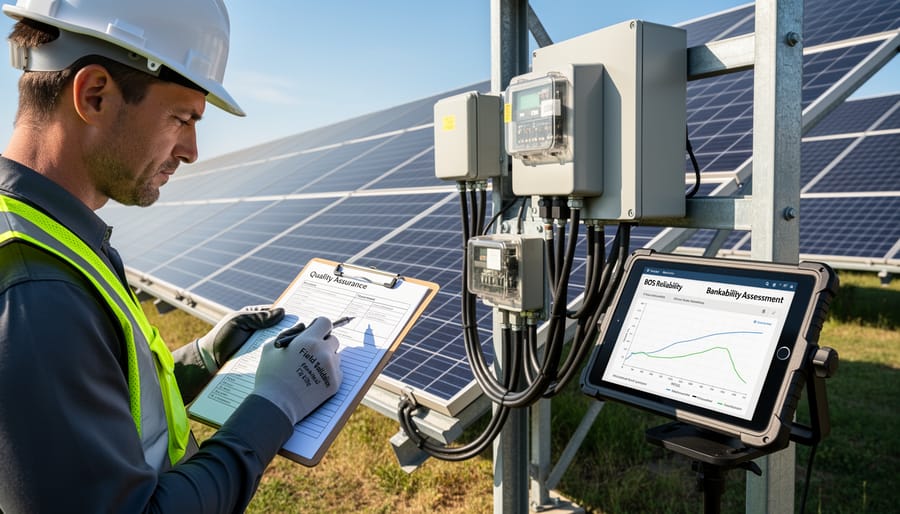
Project financing for utility-scale and commercial solar installations hinges on demonstrable long-term performance certainty. Lenders and equity investors commit capital based on 25-year revenue projections, and BOS component reliability directly determines whether those forecasts prove conservative or catastrophically optimistic. A single component category with elevated failure risk can derail financing altogether or force developers to accept punitive interest rates that erode project returns by several percentage points.
Financial institutions evaluate BOS reliability through multiple lenses. Bankability qualification serves as the initial gate, components from manufacturers with established certification records, sufficient production history, and credible warranty backing move forward; unproven equipment triggers heightened scrutiny or outright rejection. Investment committees review mean time between failure data, field performance statistics from comparable installations, and the manufacturer’s balance sheet strength to ensure warranty obligations can be honored two decades hence.
Insurance underwriters apply parallel analysis when pricing policies against equipment failure and business interruption losses. Projects incorporating bankable BOS components secure coverage at standard premiums, while those deploying lesser-known or unqualified equipment face higher costs, coverage exclusions, or requirements for additional reserves. These insurance differentials compound over project lifetimes, directly impacting net present value calculations and investor returns.
The connection manifests most clearly in debt terms. Projects achieving investment-grade component profiles, typically defined as equipment from manufacturers with five-plus years of field deployment and certification to relevant IEC and UL standards, access senior debt at 60-75% loan-to-value ratios with interest rates benchmarked to prevailing market conditions. Projects with marginal BOS reliability credentials see loan-to-value ratios compressed to 50% or below, requiring sponsors to inject substantially more equity and accept lower leveraged returns.
Beyond initial financing, component reliability affects refinancing opportunities and secondary market valuations. Operating projects with demonstrated BOS performance track records command premium pricing when sold to infrastructure funds or institutional buyers. Conversely, assets requiring early component replacements or experiencing above-model failure rates suffer valuation haircuts that penalize original sponsors and subsequent owners alike. This reality explains why experienced developers prioritize bankability qualification over marginal upfront cost savings, the financing and risk-adjusted return implications dwarf component price differentials.
Common Reliability Failure Modes in BOS Components
Understanding failure modes helps developers and operators anticipate problems before they compromise system performance or financing viability. Inverter electronics face thermal stress from continuous power conversion cycles, capacitor aging from ripple current exposure, and semiconductor junction degradation under high operating temperatures. These failures often manifest as reduced efficiency first, followed by unexpected shutdowns or complete component failure. Desert installations with extreme temperature swings accelerate capacitor dry-out, while coastal projects battle salt-laden humidity that corrodes internal connections.
Mounting structure failures typically stem from galvanic corrosion where dissimilar metals contact each other in wet environments, wind-induced fatigue cracks at stress concentration points, and foundation anchor degradation in expansive soils. Aluminum rail corrosion rates vary dramatically based on coastal proximity and atmospheric pollutant levels. Stainless steel fasteners can experience crevice corrosion under torque washers when moisture penetrates thread interfaces, creating hidden weak points that only reveal themselves during high-wind events years after installation.
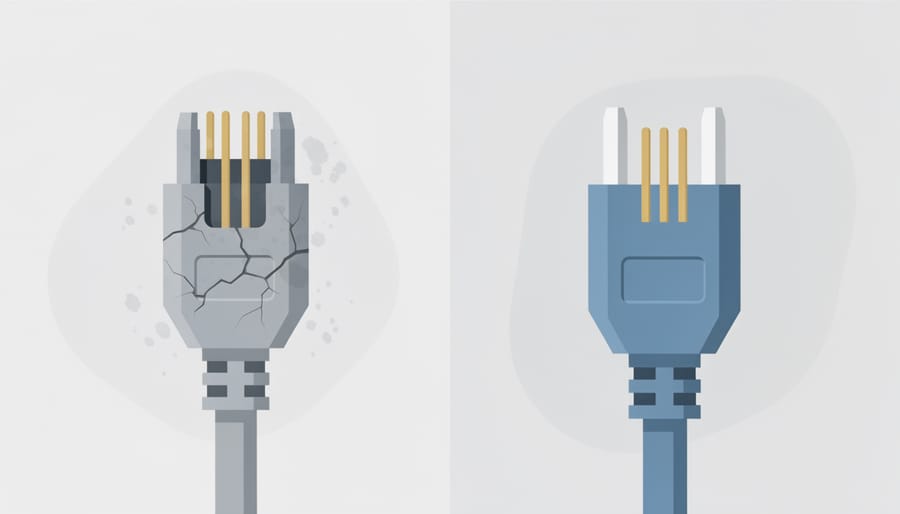
Connector and wiring failures represent a significant portion of BOS reliability incidents. MC4-style connectors degrade from UV exposure when improperly installed above module frames, thermal cycling loosens crimped connections over time, and rodent damage in agricultural settings exposes conductors to short-circuit risks. Cable insulation experiences photo-oxidative breakdown in high-UV climates, while chlorine from PVC jacket outgassing attacks copper conductors in poorly ventilated combiner boxes. Implementing electrical predictive maintenance allows operators to detect these degradation patterns through thermographic surveys and electrical signature analysis before catastrophic failures occur.
Monitoring system failures often result from communication protocol incompatibilities after firmware updates, sensor drift in pyranometers measuring irradiance, and data logger memory corruption during power transients. Wireless communication links fail when vegetation growth blocks transmission paths, while Ethernet connections corrode in outdoor junction boxes lacking proper environmental ratings. These monitoring gaps create blind spots where performance issues go undetected, undermining the operational visibility that bankability qualification assumes.
Environmental stressors compound all failure mechanisms. Salt fog accelerates corrosion by orders of magnitude compared to inland sites, while high-altitude UV intensity doubles polymer degradation rates. Freeze-thaw cycles crack potting compounds around electronic assemblies, and dust accumulation creates thermal insulation that drives components beyond rated operating temperatures, collapsing reliability predictions based on standard test conditions.
Manufacturer Qualification and Supply Chain Considerations
Component reliability begins long before installation, it is built into manufacturing processes, quality systems, and supply chain stability. Bankability assessments scrutinize manufacturers as thoroughly as the products themselves, recognizing that consistent production quality and operational longevity depend on the organizations behind the components.
ISO 9001 certification forms the baseline quality management requirement for credible BOS manufacturers. This standard ensures documented processes for design control, production oversight, corrective actions, and continuous improvement. Financiers look beyond the certificate itself to audit records, defect tracking systems, and evidence of effective quality management in practice. Manufacturers with mature quality systems demonstrate lower failure rates and more predictable performance across production batches.
Tier 1 classifications, while originally developed for PV modules, have extended informally to major BOS components like inverters. These rankings consider financial stability, production scale, vertical integration, and field deployment history. A Tier 1 inverter manufacturer typically shows five-plus years of consistent production, gigawatts of installed capacity, robust warranty reserves, and direct sales operations rather than white-label arrangements. Project financiers favor Tier 1 suppliers because bankruptcy or market exit mid-warranty creates stranded liabilities.
Production volume history matters for two reasons: it demonstrates manufacturing consistency at scale, and it generates the field data necessary to validate reliability claims. A manufacturer with 10,000 units deployed for seven years provides statistically meaningful failure rate evidence. A newer entrant with limited installations, regardless of test certifications, carries higher perceived risk until field performance proves durability.
Supply chain stability has gained prominence following recent disruptions. Bankability assessments now examine component traceability, multi-sourcing strategies for critical subcomponents, inventory depth, and geographic production diversification. Manufacturers dependent on single suppliers for key elements, specialized capacitors, control boards, weatherproofing gaskets, face qualification scrutiny if those supply relationships prove fragile. The most bankable manufacturers maintain qualified alternate sources and demonstrate supply continuity even during market shocks.
Educational Resources and Professional Development
Understanding BOS component reliability requires more than reading specification sheets, it demands hands-on experience with certification frameworks, testing protocols, and real-world failure analysis. Mose Solar’s educational programs, developed in collaboration with leading universities, bridge this gap by equipping aspiring photovoltaic professionals with practical skills in evaluating balance-of-system equipment bankability.
The curriculum integrates theoretical foundations with applied case studies drawn from actual project financing scenarios. Students learn to interpret IEC and UL certification reports, analyze manufacturer test data for red flags, and assess whether component qualification documentation meets lender requirements. Interactive modules cover reliability metrics interpretation, including how to calculate system-level MTBF from component data and translate degradation curves into financial impact projections.
Field-validated exercises replicate procurement decision workflows. Participants compare competing inverter models using standardized reliability scorecards, review mounting system qualification portfolios to identify gaps, and evaluate manufacturer quality management certifications. These practical assignments mirror the due diligence processes professionals encounter in project development roles, where selecting bankable components directly affects financing viability.
Advanced coursework addresses emerging challenges, such as qualifying energy storage system interfaces and evaluating reliability data for components incorporating new materials or designs. Collaboration with university research departments ensures curriculum updates reflect evolving IEC standards and industry best practices. Graduates enter the workforce capable of making informed BOS component selections that satisfy both technical performance requirements and the stringent reliability thresholds demanded by institutional investors and project lenders.
Frequently Asked Questions About BOS Reliability Components
How do reliability requirements differ between utility-scale and residential systems?
Utility-scale projects face stricter qualification criteria because lenders and investors demand components with proven track records across hundreds of megawatts of deployed capacity. Residential systems typically allow greater component flexibility since individual system failures pose lower financial risk, though reputable installers still prioritize bankable equipment to minimize warranty claims and service costs.
What happens when a non-bankable component is used in a solar project?
Projects incorporating non-bankable BOS components often face higher financing costs, reduced loan-to-value ratios, or outright rejection by institutional lenders. Even if financing is secured, insurers may exclude coverage for unqualified components or charge premium rates, while equipment performance guarantees from EPCs typically carry exclusions tied to component qualification status.
How often are qualification standards for BOS components updated?
Major standards bodies like IEC and UL review and revise testing protocols every three to five years to address emerging failure modes, new technologies, and field performance data. However, technical committees issue interim amendments more frequently, sometimes annually, when critical safety issues or systematic reliability problems are identified across deployed systems.
Can older BOS components be retroactively qualified under current standards?
Manufacturers can submit legacy components for testing against current qualification frameworks, but the equipment must pass all modern requirements without modification. Most older designs fail updated thermal cycling, humidity-freeze, or accelerated lifetime tests, which is why bankability assessments typically favor components designed and certified within the past five years rather than decades-old platforms.
These questions surface repeatedly during project procurement and due diligence reviews. The answers highlight a practical reality: qualification isn’t just a checkbox exercise. Financial institutions have learned through costly experience that component reliability directly impacts debt service coverage ratios and asset values over 25-year project lifespans.
Developers sometimes attempt to substitute non-bankable components to reduce upfront capital costs, particularly in competitive bid environments. This strategy rarely pays off. The financing penalty, whether through higher interest rates, increased equity requirements, or extended due diligence timelines, usually exceeds any component savings. Worse, insurers scrutinize BOS component specifications during underwriting, and coverage gaps for unqualified equipment create contingent liabilities that sophisticated buyers flag during project sales.
The retroactive qualification question deserves special attention for projects considering equipment upgrades or replacements. Even if a manufacturer successfully qualifies an older component design, lenders may still discount its bankability due to limited remaining production runs, spare parts availability concerns, or the manufacturer’s shift in focus to newer product lines. Field-proven reliability matters, but so does the assurance that replacement parts and technical support will remain accessible throughout the project’s operational life.
Reliability components form the operational backbone of solar projects, directly determining whether systems deliver the 25-year performance profiles investors expect and financing models require. As photovoltaic technology advances, with higher-voltage strings, integrated energy storage, and increasingly sophisticated power electronics, qualification frameworks continue to evolve, tightening standards and expanding test protocols to match real-world deployment conditions.
The stakes extend beyond individual component failure rates. A single non-bankable element can compromise financing terms, inflate insurance premiums, or trigger warranty disputes that erode project economics. Conversely, proven reliability across the BOS ecosystem reduces operational risk, strengthens stakeholder confidence, and enables competitive financing.
For developers, understanding qualification criteria transforms procurement from a cost exercise into a risk management discipline. Engineers gain the vocabulary to evaluate certification claims critically. Lenders receive the assurance needed to structure favorable terms. This shared fluency in reliability assessment accelerates project development and raises industry standards collectively.
Mose Solar’s educational programs, developed with university partners, equip aspiring professionals to navigate this evolving landscape, interpreting test data, assessing manufacturer credibility, and applying bankability principles throughout the project lifecycle. As solar deployment scales globally, rigorous BOS component evaluation remains fundamental to sustaining investor trust and achieving the industry’s long-term potential.