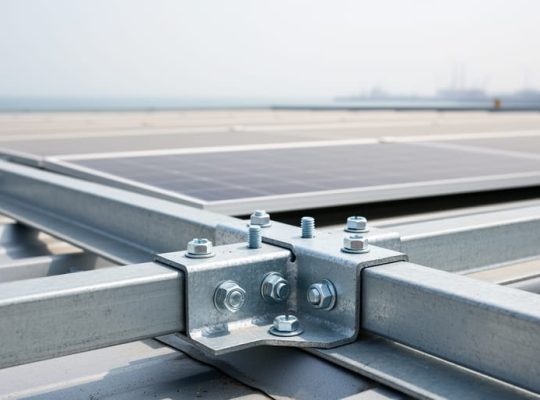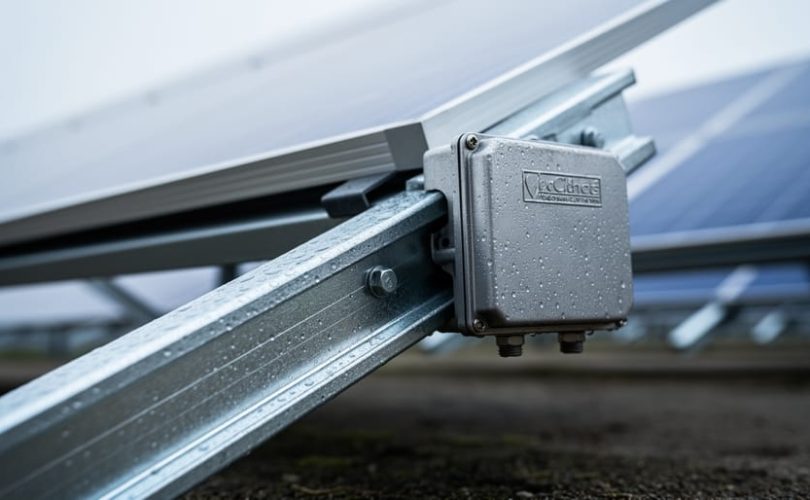
Corrosion resistant transition metals are elements from the d-block of the periodic table that form protective oxide layers on their surfaces, preventing further degradation when exposed to moisture, oxygen, and environmental contaminants. In solar photovoltaic installations, three metals stand out for their exceptional durability: titanium, chromium, and nickel. These materials serve as the backbone of long-term reliability in mounting systems, electrical contacts, and junction boxes where equipment must withstand decades of exposure to rain, humidity, salt spray, and temperature cycling.
The distinction matters because corrosion represents one of the primary failure mechanisms in solar installations. A mounting rail that deteriorates after five years can compromise the structural integrity of an entire array. Electrical contacts that oxidize create resistance hotspots, reducing system performance and potentially triggering safety hazards. Material selection at the design stage determines whether a solar installation meets its 25-year warranty or requires costly mid-life repairs.
This article explains the electrochemical principles behind corrosion resistance in transition metals, profiles the specific properties of titanium, chromium, and nickel that make them valuable in solar applications, and identifies where each metal appears in modern photovoltaic systems. Whether you’re specifying components for a utility-scale project or evaluating the longevity of residential hardware, understanding these three metals provides the foundation for informed material decisions. Through collaboration with universities and our ongoing educational programs, we continue to advance industry knowledge on material science fundamentals that directly impact system performance and financial returns.
What Corrosion Resistant Transition Metals Are
Transition metals occupy the central block of the periodic table, groups 3 through 12, and include familiar elements like iron, copper, nickel, chromium, and titanium. These metals share specific atomic structures: partially filled d-orbitals that give them unique chemical and physical properties. Unlike reactive metals that corrode rapidly or noble metals priced beyond practical use, certain transition metals strike a balance between reactivity and stability that makes them ideal for long-term outdoor applications like solar PV installations.
What sets corrosion resistant transition metals apart is their ability to form protective surface barriers when exposed to oxygen and moisture. While all metals react with their environment to some degree, these particular elements create stable oxide layers that actually shield the underlying material from further attack. This self-protecting mechanism allows them to maintain structural integrity and electrical conductivity across decades of exposure to rain, humidity, temperature swings, and atmospheric pollutants.
- Transition Metals
- Elements in groups 3-12 of the periodic table with partially filled d-orbitals, giving them distinctive properties including variable oxidation states, catalytic activity, and the ability to form protective oxide layers.
- Corrosion Resistance
- A material’s ability to withstand degradation from environmental exposure, particularly oxidation and electrochemical reactions with moisture, oxygen, and contaminants.
- Passivation Layer
- A thin, stable oxide film that forms spontaneously on certain metal surfaces, creating a barrier that prevents further oxidation and protects the base material from corrosive attack.
- Electrochemical Potential
- A measure of a metal’s tendency to lose electrons and corrode; metals with higher (more noble) potentials resist oxidation better than those with lower potentials.
The outdoor environment presents multiple corrosion threats to solar installations. UV radiation degrades many materials over time. Temperature cycling causes expansion and contraction that can crack protective coatings. Moisture, from rain, dew, or humidity, initiates electrochemical reactions. Salt spray in coastal regions accelerates attack. Industrial pollutants like sulfur dioxide create acidic conditions. A corrosion resistant transition metal must withstand all these factors simultaneously while maintaining mechanical strength and electrical performance.
The three transition metals most valuable for solar PV, aluminum, chromium-based stainless steels, and titanium, each form exceptionally stable passivation layers. Their oxide films are dense, adherent, and self-healing: if scratched or damaged, they reform quickly when exposed to air. This regenerative protection distinguishes them from materials that rely solely on applied coatings, which degrade irreversibly once breached.
How Corrosion Resistance Works in These Metals
Corrosion resistance in transition metals used for solar PV systems relies on three fundamental mechanisms that work together to protect components from environmental degradation.
The primary defense mechanism is passivation layer formation. When these metals are exposed to oxygen, a thin, stable oxide film forms on the surface within milliseconds. This layer acts as a barrier between the base metal and corrosive elements in the environment. In aluminum, this natural oxide layer (aluminum oxide) measures only 2-10 nanometers thick yet provides exceptional protection. Stainless steel forms a chromium oxide layer when the alloy contains at least 10.5% chromium. Titanium develops titanium dioxide on its surface. These oxide films are self-healing, if scratched or damaged, they reform almost instantly in the presence of oxygen.
Oxide film stability determines long-term protection. The oxide layers on corrosion-resistant transition metals remain intact across wide temperature ranges and pH levels. Unlike iron oxide (rust), which flakes off and exposes fresh metal to further attack, these protective oxides adhere tightly to the base metal and resist cracking. The chemical bonds in these oxides are stronger and more stable than those in corrosion products of reactive metals.
Electrochemical nobility refers to a metal’s resistance to oxidation in electrochemical reactions. Transition metals with high nobility (measured on the galvanic series) are less likely to lose electrons and corrode when exposed to moisture or electrolytes. This property becomes critical in solar installations where dissimilar metals contact each other, moisture is present, or salt spray reaches components. Noble metals act as cathodes rather than anodes in galvanic cells, meaning they accept electrons instead of surrendering them.
In solar PV environments, these mechanisms work continuously. Morning dew, rain, and humidity provide moisture that would corrode unprotected metals. Salt spray in coastal installations introduces chloride ions that accelerate corrosion in many materials. UV radiation and temperature swings from -40°C to 90°C stress metal structures. Corrosion-resistant transition metals withstand these conditions because their protective mechanisms function across this entire range of exposures, maintaining structural integrity and electrical conductivity throughout a system’s 25-30 year design life.
The Three Essential Corrosion Resistant Transition Metals for Solar PV
Aluminum: Lightweight Protection for Frames and Mounting
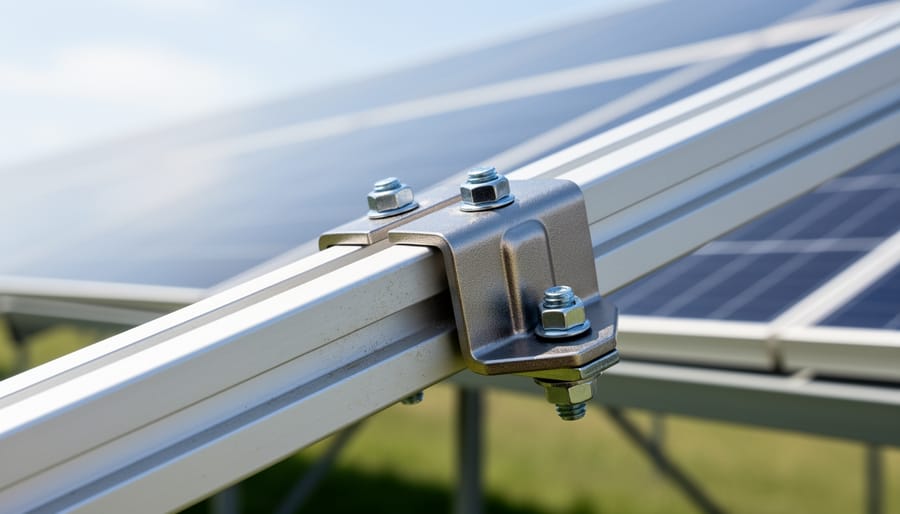
Aluminum dominates solar PV mounting systems because it delivers robust corrosion resistance at a fraction of the weight and cost of premium alternatives. When exposed to air, aluminum spontaneously forms a dense aluminum oxide layer on its surface within milliseconds, a protective film just nanometers thick that shields the underlying metal from oxygen, moisture, and most environmental contaminants. This natural passivation process makes aluminum inherently self-healing: if scratched or abraded, the oxide layer regenerates almost instantly, maintaining continuous protection without human intervention.
The metal’s impressive strength-to-weight ratio makes it particularly valuable for rooftop installations where structural loading matters. Aluminum mounting rails and frames provide sufficient load-bearing capacity while adding minimal weight to roof structures, a critical consideration for both residential and commercial projects. In ground-mount arrays spanning acres, this weight advantage translates directly to reduced foundation requirements and lower installation costs.
Solar PV applications overwhelmingly rely on aluminum alloys rather than pure aluminum. The 6000-series alloys (particularly 6061 and 6063) combine magnesium and silicon for enhanced strength and excellent corrosion resistance, making them the standard choice for extruded frame components and mounting rails. The 5000-series alloys, which incorporate magnesium, offer superior corrosion resistance in marine environments and frequently appear in coastal installations where salt spray accelerates degradation of lesser materials.
Key advantages that make aluminum essential for solar mounting include:
- Natural oxide layer provides immediate, self-renewing corrosion protection
- Cost-effective compared to stainless steel and titanium alternatives
- High thermal conductivity aids heat dissipation from panel backs
- 100% recyclable without performance degradation, supporting circular economy goals
- 6000-series alloys (6061, 6063) balance strength and formability; 5000-series offers enhanced marine protection
For installations in particularly aggressive environments, anodizing provides an engineered upgrade to aluminum’s natural protection. This electrochemical process thickens the oxide layer from nanometers to microns, creating a harder, more durable surface that resists scratching and enhances resistance to acid rain, industrial pollutants, and salt exposure. Anodized aluminum components typically carry 25-30 year performance warranties that align with PV module lifespans, ensuring mounting systems match panel durability. The anodizing process also accepts dyes, allowing color-matching for architectural integration where aesthetics matter alongside performance.
Stainless Steel: Durability for Fasteners and Structural Components
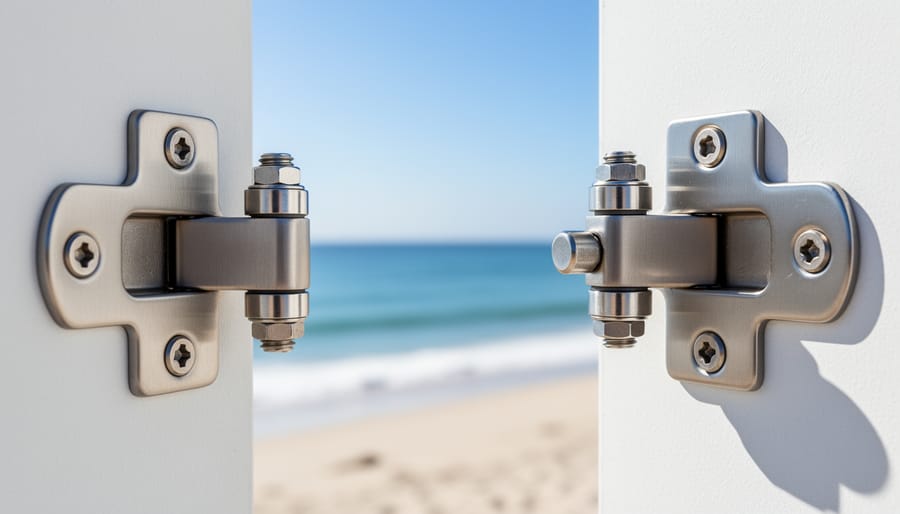
Stainless steel owes its corrosion resistance to chromium, a transition metal that comprises at least 10.5% of the alloy’s composition. When exposed to oxygen, chromium forms a thin, invisible oxide layer on the steel’s surface that spontaneously repairs itself if damaged. This self-healing characteristic makes stainless steel particularly valuable for solar PV fasteners and structural components that face continuous environmental exposure.
The most common grades in solar installations are 304, 316, and 316L. Grade 304 contains 18% chromium and 8% nickel, offering excellent corrosion resistance in most environments at a moderate cost. It works well for inland installations where salt spray isn’t a concern. Grade 316 adds 2-3% molybdenum to the mix, significantly improving resistance to chlorides and acids. This makes it the preferred choice for coastal installations and industrial areas. Grade 316L is a low-carbon variant of 316 that reduces the risk of carbide precipitation during welding, maintaining corrosion resistance even at weld points where heat has altered the metal’s structure.
Stainless steel fasteners undergo passivation, a chemical treatment that removes free iron from the surface and enhances the protective chromium oxide layer. This process creates a more uniform, robust barrier against corrosion. Without passivation, microscopic iron particles can create weak points where rust begins.
In solar PV systems, stainless steel appears throughout the installation. Bolts, nuts, and washers secure panels to mounting rails. Clamps hold arrays together and attach grounding conductors. Brackets connect structural elements and support electrical components. For these applications, 304-grade hardware suffices in dry, inland climates, while 316 or 316L becomes essential within three miles of coastlines.
Marine-grade stainless steel, typically 316 or 316L, costs 40-60% more than standard 304 but extends service life dramatically in corrosive environments. A coastal installation using 304 fasteners might experience rust staining within five years and structural concerns by year fifteen. The same system with marine-grade hardware maintains integrity throughout the full 25-30 year warranty period, eliminating premature replacement costs and potential system failures that compromise power generation and safety.
Titanium: Premium Performance for Specialized Applications
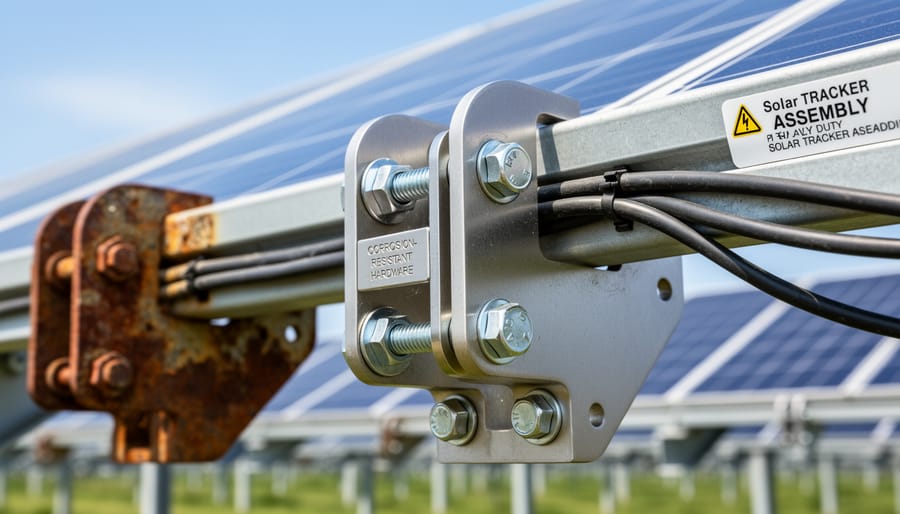
Titanium stands as the most corrosion-resistant transition metal used in solar PV, offering performance that surpasses both aluminum and stainless steel in extreme environments. Its exceptional resistance stems from an extraordinarily stable titanium dioxide (TiO₂) passive layer that forms instantly when exposed to oxygen, creating a barrier virtually impervious to chloride attack, acidic conditions, and sustained UV exposure.
The metal’s strength-to-weight ratio exceeds stainless steel by approximately 40%, allowing engineers to design lighter components without sacrificing structural integrity. Titanium maintains this performance across temperature extremes from -250°C to 600°C, making it suitable for installations in harsh climates where traditional materials degrade prematurely.
Cost presents the primary limitation. Titanium fasteners typically cost 6-10 times more than marine-grade stainless steel equivalents, while structural components may command even higher premiums due to difficult machining and specialized fabrication requirements. These economics restrict titanium to applications where its unique properties justify the investment.
Coastal installations within 500 meters of saltwater represent the clearest use case, particularly for critical fasteners securing tracking systems or ground-mount arrays in industrial zones with airborne contaminants. Offshore floating solar arrays increasingly specify titanium for submerged and splash-zone components, where 25-year service life expectations eliminate alternatives.
Emerging applications include bifacial module frames in extreme environments, specialized electrical connectors for high-voltage systems, and components for concentrated solar power installations where sustained high temperatures challenge conventional materials. For standard rooftop or ground-mount projects in moderate climates, titanium remains cost-prohibitive.
The premium becomes justified when replacement costs, downtime expenses, or safety considerations outweigh initial material investment. Engineers should evaluate total lifecycle costs rather than upfront pricing, particularly for installations designed to operate 30-40 years in aggressive environments where component failure risks system-wide damage or costly maintenance interventions.
Applications in Solar PV System Components
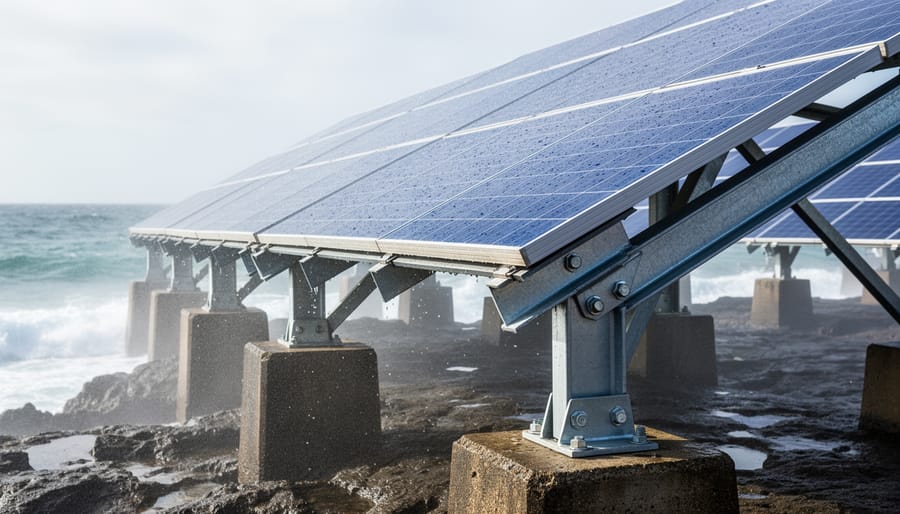
Understanding where aluminum, stainless steel, and titanium are deployed in solar installations clarifies how material selection directly impacts system longevity and helps prevent the conditions that explain why solar panels corrode over time.
Corrosion resistant transition metals appear throughout every solar PV system, with specific metals chosen for their unique combination of durability, cost-effectiveness, and environmental suitability:
- Frames and racking structures: Aluminum alloys dominate due to their strength-to-weight ratio and self-forming oxide layer that withstands decades of outdoor exposure
- Fasteners and clamps: Stainless steel grades 304 and 316 provide the tensile strength and corrosion resistance needed for secure panel attachment in varied climates
- Grounding systems: Aluminum conductors and stainless steel lugs create reliable electrical pathways while resisting degradation from moisture and soil chemistry
- Inverter and combiner box housings: Aluminum enclosures protect sensitive electronics from weather intrusion while dissipating heat efficiently
- Tracking system components: Stainless steel bearings, shafts, and pivot points maintain precision movement despite continuous outdoor operation and mechanical stress
- Specialized coastal installations: Titanium fasteners and marine-grade stainless steel prevent accelerated corrosion from salt spray in oceanside environments
The mounting and racking infrastructure represents the largest volume application for these metals. Ground-mount systems typically use extruded aluminum rails and posts that combine structural rigidity with decades-long corrosion resistance, while stainless steel hardware secures panels at precise angles. Roof-mount applications rely on aluminum L-feet and stanchions paired with stainless steel lag bolts that penetrate roofing materials without degrading from water infiltration.
Electrical interconnection points demand careful material pairing. Junction boxes use aluminum housings with stainless steel terminal blocks, preventing galvanic corrosion while maintaining conductivity. DC optimizers and microinverters feature aluminum heat sinks that protect internal components through passive cooling and weather resistance.
Tracking systems present particularly demanding environments. Single-axis and dual-axis trackers use stainless steel slew drives, motor housings, and controller enclosures that maintain mechanical precision through temperature swings, wind loading, and daily movement cycles. Titanium finds application in the most corrosive tracker environments, where its premium cost justifies exceptional durability.
Balance-of-system components from wire management clips to module-level power electronics all incorporate these three metals in specific grades matched to their exposure level and mechanical requirements. This comprehensive material strategy transforms corrosion management from a single-component concern into a system-wide design principle that protects the entire 25-30 year investment.
Corrosion Management Strategies Beyond Material Selection
Selecting corrosion resistant transition metals establishes a foundation for longevity, but material choice alone doesn’t guarantee optimal performance over decades of outdoor exposure. A comprehensive corrosion management strategy combines multiple protective layers and proactive maintenance protocols that work synergistically with the inherent properties of aluminum, stainless steel, and titanium.
Protective coatings provide an additional barrier between metal surfaces and corrosive elements. Powder coating on aluminum frames creates a durable, UV-resistant finish that enhances the natural oxide layer. For stainless steel fasteners, passivation treatments after fabrication remove free iron from the surface and strengthen the chromium oxide film. In coastal installations, zinc-rich primers on mounting structures offer sacrificial protection, with the zinc corroding preferentially to preserve the underlying metal. These coatings require careful application, any gaps or damage during installation creates vulnerability points where moisture can penetrate and accelerate localized corrosion.
Galvanic corrosion prevention demands careful attention to material compatibility. When dissimilar metals contact each other in the presence of an electrolyte (even morning dew), the more reactive metal corrodes faster. Installing aluminum rails directly against stainless steel bolts without isolation creates a galvanic cell. The solution involves non-conductive barriers: nylon washers, plastic bushings, or specialized tape that electrically isolates metals while maintaining mechanical integrity. In mixed-metal assemblies, dielectric grease applied to threads prevents moisture intrusion and breaks the conductive path.
Environmental context shapes corrosion management priorities. Coastal installations within five kilometers of saltwater face aggressive chloride exposure, demanding marine-grade stainless steel (316L minimum) and frequent washing schedules to remove salt deposits. Desert environments present different challenges, extreme temperature swings and abrasive dust that can degrade protective coatings through mechanical wear. Industrial areas introduce acidic pollutants and particulates that require more resistant materials and sealed component housings.
Regular inspection protocols catch corrosion before it compromises structural integrity. Annual visual assessments should document surface discoloration, pitting, white rust formation on aluminum, or staining around fasteners. Thermal imaging can reveal hidden corrosion under coatings by detecting heat patterns from increased electrical resistance. Torque checks on fasteners identify loosening from corrosion-induced thread damage.
Proactive maintenance extends material lifespan significantly. Washing panels twice annually removes corrosive deposits. Retightening fasteners after the first year compensates for initial settling. Touching up damaged coatings prevents corrosion initiation. These practices, combined with quality materials, ensure solar installations deliver expected performance throughout their warranted lifetime and beyond.
Performance Expectations and Economic Considerations
Investing in corrosion resistant transition metals carries an upfront premium, but the economics shift dramatically when analyzed across a complete system lifecycle. Aluminum frames typically add 15-20% to initial component costs compared to carbon steel alternatives, while marine-grade stainless steel fasteners cost 2-3 times more than standard hardware. Titanium, where specified, commands the highest premium at 4-6 times standard material costs.
The payoff emerges in years 10-25 of system operation. Field data shows properly specified corrosion resistant metals maintain structural integrity and electrical performance across full 25-30 year PV system lifespans, while inadequate material choices trigger replacement cycles at 8-12 years. A mounting structure requiring mid-life replacement not only incurs $15,000-$40,000 in direct replacement costs for a typical residential installation, but also generates 3-5 days of production losses and potential module damage during re-installation.
Warranty implications compound these economics. Most module manufacturers void performance guarantees if mounting hardware fails and causes physical stress or electrical degradation. System owners who specify aluminum frames, 316L stainless fasteners in coastal environments, and proper material pairing protect both equipment warranties and performance guarantees that underpin financing agreements and power purchase contracts.
Total cost of ownership calculations from Mose Solar’s educational program for PV professionals demonstrate that premium materials reduce lifecycle costs by 18-32% when factoring in avoided replacements, maintained efficiency, and preserved warranty coverage. A zinc corrosion inhibitor coating adds marginal expense while extending component life in moderate corrosion zones.
The ROI calculation changes with environment. Desert installations may justify standard-grade stainless, while coastal systems demand marine-grade specifications. Implementing predictive maintenance protocols catches early corrosion before it compromises structural integrity. Following proven solar PV maintenance tips maximizes the protection these materials provide. Engineers must match material specifications to site conditions, balancing initial investment against decades of reliable operation.
Frequently Asked Questions
Is stainless steel worth the extra cost compared to standard steel?
Yes, in solar applications. While stainless steel costs 3-5 times more initially, it eliminates replacement cycles and corrosion-related failures over 25-30 years, making it cost-effective for long-term installations.
Which material should I choose for coastal installations?
Marine-grade stainless steel (316L) is the standard choice for salt spray environments, offering superior chloride resistance. For frames and mounting, anodized aluminum performs well, while titanium fasteners are reserved for the most extreme coastal exposures.
How often do these corrosion resistant metals need maintenance?
Annual visual inspections are sufficient for most installations. In coastal or industrial environments, semi-annual checks of fastener integrity and oxide layer condition help catch potential issues early, contributing to overall solar panel longevity.
Can I mix aluminum and stainless steel components?
Yes, but use isolating washers or coatings at contact points to prevent galvanic corrosion. The electrochemical potential difference between dissimilar metals can accelerate degradation without proper insulation or compatible fastener materials.
What certifications should I look for in corrosion resistant materials?
ASTM standards (B221 for aluminum, A240/A276 for stainless steel, B265 for titanium) ensure material composition and quality. For coastal applications, verify components meet ASTM B117 salt spray testing requirements.
When should I upgrade from standard aluminum to titanium?
Titanium makes economic sense in extreme environments (heavy industrial pollution, severe coastal exposure, high-temperature applications) where even marine-grade stainless steel shows accelerated degradation. The 10-15x cost premium requires justification through extended service life in harsh conditions.
These material decisions directly impact system reliability and maintenance burden. Getting the specification right at installation prevents costly retrofits and component failures that compromise energy production. For residential rooftop systems in moderate climates, anodized aluminum and 304 stainless steel provide excellent value. Commercial ground-mount installations in aggressive environments benefit from marine-grade stainless steel throughout, with selective titanium use in critical fastening applications where replacement would be prohibitively expensive.
Selecting the right corrosion resistant transition metals, aluminum, stainless steel, and titanium, directly determines whether your solar PV installation delivers reliable performance over its 25-30 year lifespan or succumbs to premature failure. These three materials form the defensive backbone against moisture, salt spray, UV degradation, and temperature cycling that threaten system integrity and return on investment.
Aluminum provides lightweight, cost-effective protection for frames and mounting structures. Stainless steel offers proven durability for fasteners and structural components, particularly in harsh coastal and industrial environments. Titanium delivers premium corrosion resistance where extreme conditions or specialized applications justify the investment.
Effective corrosion management isn’t an afterthought, it’s a fundamental engineering decision that protects your capital investment, minimizes maintenance costs, and ensures your system continues generating clean energy for decades. Material selection shapes warranty coverage, lifecycle economics, and total cost of ownership.
At Mose Solar, we’re committed to advancing corrosion management knowledge through our educational programs and university partnerships. We equip aspiring PV professionals and industry stakeholders with the technical expertise to specify materials correctly, evaluate environmental factors, and implement comprehensive corrosion prevention strategies that support the renewable energy transition.