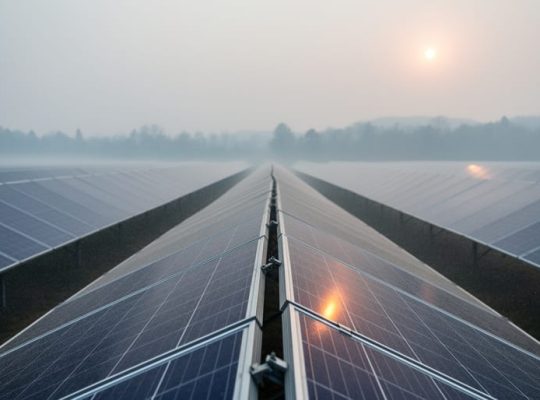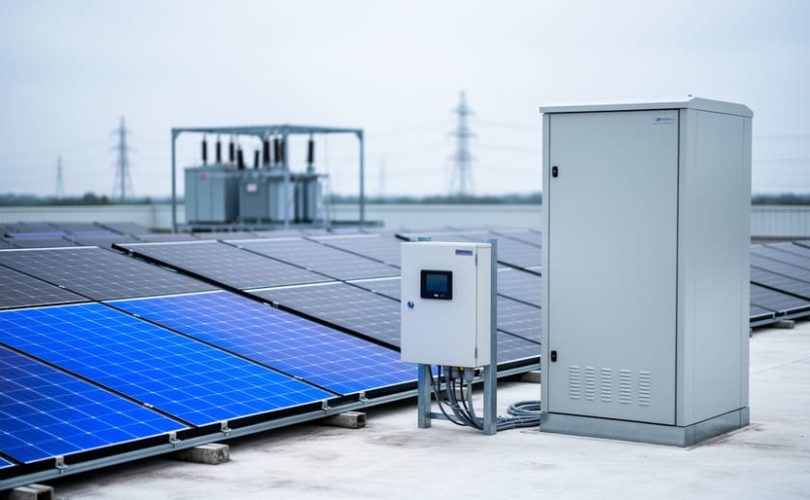
Pre-feasibility screening for PV+BESS projects determines whether a proposed solar-plus-storage installation justifies detailed engineering and financial analysis by evaluating site conditions, energy demand patterns, grid characteristics, and preliminary economics. This early-stage assessment typically requires three to five days of data collection and analysis, focusing on solar resource availability, load profiles, regulatory environment, and basic system sizing to identify red flags and opportunities before committing significant resources to full feasibility studies.
The integration of battery energy storage systems with photovoltaic arrays has transformed how project developers approach renewable energy installations. What began as simple solar generation has evolved into sophisticated energy management platforms capable of peak shaving, demand charge reduction, backup power, and grid services. Yet this added complexity demands rigorous upfront screening. A PV system alone might prove viable based purely on solar irradiance and available roof space, but adding storage introduces variables like cycling requirements, discharge duration, round-trip efficiency losses, and evolving utility tariff structures.
Understanding which screening parameters matter most saves both time and capital. Solar resource data, historical utility bills, interconnection capacity, and local permitting requirements form the foundation. Beyond these basics, battery-specific considerations like ambient temperature ranges, space constraints for equipment, and fire code compliance can make or break project viability. Many developers discover during detailed design that their site lacks adequate ventilation for battery systems or that local fire marshals require prohibitively expensive suppression systems.
Through collaboration with university research programs and educational offerings tailored to renewable energy professionals, the industry has developed standardized screening methodologies that balance thoroughness with efficiency. This guide presents those frameworks, explaining what to measure, which tools to deploy, and how to interpret results that determine whether your PV+BESS concept deserves advancement to the next development phase.
Understanding PV+BESS: Why Battery Storage Matters for Solar Projects
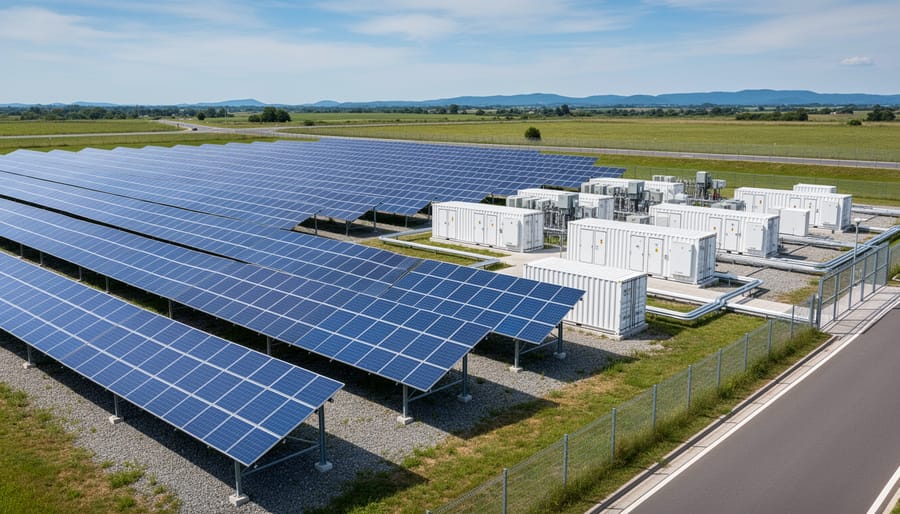
Solar energy’s greatest limitation has always been its variability. When the sun sets or clouds roll in, photovoltaic panels stop generating electricity, yet demand persists around the clock. Battery energy storage systems solve this fundamental mismatch by capturing excess solar production during peak generation hours and releasing it when needed most, transforming intermittent renewable generation into a dispatchable, controllable power resource.
A PV+BESS configuration pairs solar arrays directly with battery banks, creating an integrated system where generation and storage operate in concert. During midday hours when solar irradiance peaks, the batteries charge from surplus PV output that exceeds immediate consumption or grid export limits. As afternoon transitions to evening and solar production declines, the stored energy discharges to meet demand, effectively shifting clean energy from low-value daytime hours to high-value evening periods when grid electricity prices typically spike.
This capability extends far beyond simple load shifting. Modern BESS installations provide ancillary grid services including frequency regulation, voltage support, and spinning reserves. When grid frequency drops due to sudden demand spikes or generator failures, batteries can inject power within milliseconds, far faster than conventional thermal plants. These services command premium compensation in wholesale electricity markets, adding revenue streams that standalone PV cannot access.
The evolution from standalone PV to integrated storage reflects both technological maturation and market realities. Lithium-ion battery costs have dropped roughly 90 percent since 2010, crossing the threshold where storage economics make sense for an expanding range of applications. Simultaneously, many regions face grid saturation during solar production hours, leading to curtailment or negative pricing that penalizes pure PV projects. Storage circumvents these constraints by absorbing energy when the grid cannot accept it and delivering power during capacity-critical windows.
For 2026 project development, PV+BESS has shifted from experimental to standard practice in utility-scale installations and increasingly attractive for commercial applications. Regulatory frameworks now recognize storage as a distinct asset class, and interconnection queues show combined projects outnumbering standalone PV in multiple markets. Understanding how to properly assess these integrated systems during pre-feasibility screening has become essential competency for renewable energy professionals seeking to deploy economically viable, grid-compatible solar projects.
PV Resource and Energy Yield Pre-Feasibility Screening Fundamentals
Solar Resource Assessment in Combined Systems
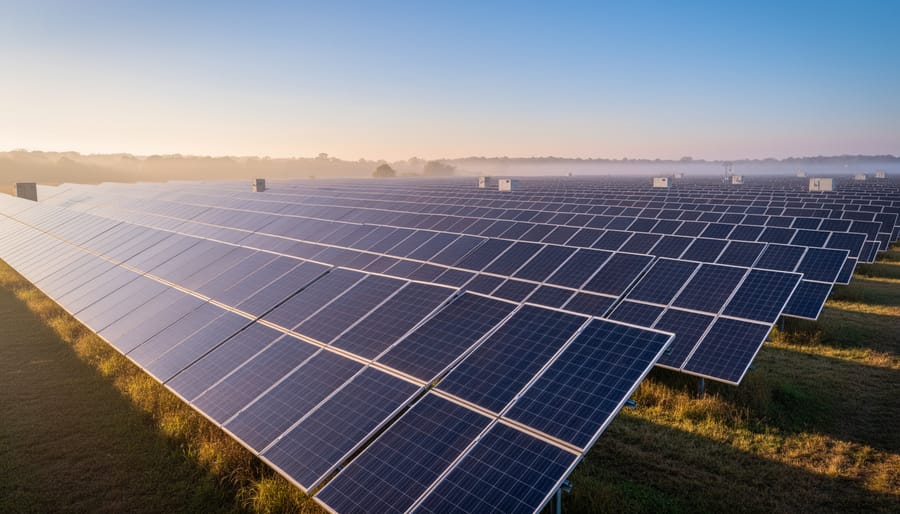
Evaluating solar resources for PV+BESS systems requires more comprehensive meteorological analysis than standalone photovoltaic projects. You must account not only for when the sun shines but also for how storage will capture and redistribute that energy across daily demand cycles.
Start with global horizontal irradiance (GHI), which measures total solar radiation reaching a horizontal surface. GHI provides the broadest picture of solar availability at your site and establishes baseline generation expectations. For most grid-connected PV+BESS installations, GHI data reveals daily and seasonal production patterns that directly inform battery sizing decisions, sites with pronounced afternoon peaks may require different storage capacities than locations with more evenly distributed irradiance.
Direct normal irradiance (DNI) matters primarily for tracking systems or concentrated photovoltaic technologies. While fixed-tilt arrays depend less on DNI, this metric helps assess whether your site receives clear-sky direct radiation or experiences frequent cloud cover that reduces instantaneous power output. High DNI variability increases the value of battery buffering, as storage smooths generation fluctuations before they reach the grid.
Diffuse horizontal irradiance (DHI) captures scattered sunlight from clouds and atmospheric particles. Sites with high DHI ratios, common in coastal or humid regions, produce steadier but lower-intensity generation throughout the day. This affects both panel selection and discharge strategy, since batteries may need to compensate for reduced peak output rather than time-shift concentrated midday production.
Beyond irradiance metrics, collect multi-year temperature data, as cell efficiency drops in heat and influences both PV yield and battery performance. The NREL PV efficiency chart helps translate these variables into realistic performance expectations. Wind speed, precipitation patterns, and soiling rates complete the meteorological picture, shaping maintenance schedules and degradation assumptions that determine whether adding storage delivers sufficient return over the system’s lifetime.
Energy Yield Modeling with Storage Integration
Energy yield modeling for PV+BESS systems requires a fundamentally different approach than standalone solar calculations. While a conventional PV plant’s yield depends primarily on irradiance and panel efficiency, adding battery storage introduces temporal shifting, cycling losses, and new dispatch variables that directly impact total usable energy output.
Capacity Factor Adjustments
A standalone solar array might achieve a 20-25% capacity factor in favorable climates, meaning it generates power at that fraction of its maximum rating over time. When BESS is integrated, the system’s effective capacity factor changes because stored energy can be released during high-value hours when the PV array produces nothing. However, this does not simply add to the PV capacity factor, it redistributes generation across time while introducing round-trip efficiency losses. A system storing 40% of daily PV production at 85% round-trip efficiency effectively reduces that portion’s contribution by 15%, which must be factored into yield projections.
Performance Ratio Complexities
The performance ratio (actual output divided by theoretical maximum) becomes multidimensional with storage. You must separate PV generation PR from BESS cycling PR, then model their interaction. Temperature effects, inverter clipping, and soiling losses still apply to the solar component, while battery degradation, auxiliary loads, and thermal management impact storage efficiency. A comprehensive yield model tracks both subsystems independently before calculating combined output.
Storage Cycle Modeling
BESS sizing directly influences project economics through cycle depth and frequency. A 2-hour duration battery cycling once daily at 80% depth of discharge behaves very differently from a 4-hour system cycling shallower but more frequently for grid services. Yield models must simulate realistic dispatch strategies, peak shaving, time-of-use arbitrage, or frequency regulation, because each pattern produces different annual throughput, degradation rates, and revenue potential. Oversizing storage without demand justification inflates capital costs while underutilizing capacity, whereas undersizing limits revenue capture during extended low-sun periods.
Initial BESS Configuration Parameters
During pre-feasibility screening, five fundamental battery parameters shape the initial system design. Power capacity (measured in MW) determines how quickly the battery can charge from solar panels or discharge to the grid. Energy capacity (MWh) defines total storage volume, how much energy the system holds. The duration ratio, calculated by dividing energy capacity by power capacity, indicates how many hours the battery can sustain full discharge. A 4-hour duration (4MW/16MWh) suits time-shifting afternoon solar to evening peaks, while 2-hour configurations target shorter arbitrage windows.
Round-trip efficiency, typically 85-92% for lithium-ion systems, quantifies energy lost during charge-discharge cycles, directly affecting project economics. Finally, preliminary charging strategies must align with solar production curves: charging during midday generation peaks and discharging during evening demand spikes maximizes revenue potential. These interdependent parameters establish whether the proposed PV+BESS configuration matches site resources and market opportunities before detailed engineering begins.
Key Variables in PV+BESS Pre-Feasibility Analysis
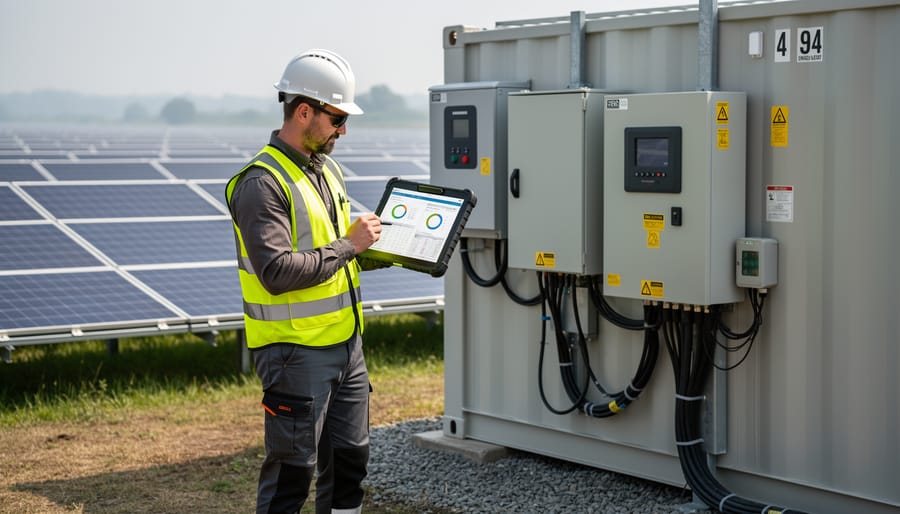
Load Profile Matching and Demand Analysis
Load profile analysis forms the foundation of effective BESS sizing and dispatch strategy. Customer electricity consumption patterns, captured as hourly or sub-hourly load data over representative periods, reveal when energy demand peaks, when it falls to baseload levels, and how these cycles align with solar generation curves. A commercial facility with air conditioning peaks between 2:00 PM and 6:00 PM, for example, may see strong natural overlap with PV output, requiring modest storage capacity to bridge short evening demand tails. Conversely, an industrial site operating second and third shifts faces minimal daytime consumption, making a larger BESS essential to capture midday solar generation and discharge it during night operations when grid rates are often higher.
Time-of-use rate structures magnify the economic value of load-profile matching. When utilities charge premium rates during evening peak windows (typically 4:00 PM to 9:00 PM in many markets), strategically sized battery storage shifts solar energy from low-value midday periods to high-value evening hours, directly improving project revenue. Demand charge mitigation presents another critical consideration: facilities facing monthly charges based on their peak 15-minute demand interval can deploy BESS to shave consumption spikes, reducing both energy and capacity costs simultaneously. Projects that complete thorough land feasibility analysis and load profiling during pre-feasibility screening achieve superior storage configurations, avoiding both undersized systems that leave economic value unrealized and oversized installations carrying unnecessary capital costs.
Electricity Rate Structures and Revenue Streams
Understanding electricity rate structures is crucial when screening PV+BESS feasibility because storage only makes economic sense when energy can be time-shifted profitably. Time-of-use (TOU) rates create the primary arbitrage opportunity: batteries charge when solar generation coincides with low off-peak rates and discharge during expensive peak periods, capturing the price differential. Projects in markets with wide peak-to-off-peak spreads, sometimes exceeding $0.15/kWh, show substantially better economics than those in flat-rate environments.
Demand charges represent another significant value stream, particularly for commercial and industrial applications. BESS can shave peak demand by discharging during the facility’s highest consumption intervals, reducing monthly demand fees that often account for 30-50% of a customer’s total electricity bill. During pre-feasibility screening, quantify the demand charge structure and estimate potential savings based on historical load data.
Wholesale market participation opens additional revenue opportunities for utility-scale projects. BESS can provide frequency regulation, voltage support, and capacity reserves that earn payments beyond simple energy arbitrage. Markets like PJM and CAISO offer lucrative ancillary service programs where fast-responding batteries command premium prices.
Screening must map these revenue streams against project costs. Calculate the combined value from TOU arbitrage, demand charge reduction, and available market services, then compare against BESS capital and operational expenses. Projects need multiple stacked revenue sources to achieve acceptable returns, making comprehensive rate structure analysis non-negotiable during early evaluation.
Grid Interconnection Considerations
Preliminary grid interconnection assessment reveals whether the local network can absorb PV+BESS output without expensive upgrades. Start by identifying the nearest substation, available capacity, and voltage level, information typically obtained through a utility pre-application inquiry. BESS can reduce peak export to the grid by storing surplus solar production, potentially allowing projects to proceed in capacity-constrained areas that would otherwise require costly substation expansions or new feeders. Battery systems also smooth ramping and provide reactive power support, which may simplify technical interconnection requirements. Factor in preliminary interconnection timelines (often 12-24 months for utility-scale projects), deposit requirements, and any study fees alongside Phase 1 and 2 studies for site due diligence. Understanding these constraints early determines whether BESS provides sufficient value to offset additional system complexity and capital cost.
Screening Tools and Methodologies for Combined Systems
Effective pre-feasibility screening for PV+BESS projects depends on selecting the right combination of modeling tools and data sources that balance technical rigor with time efficiency. Unlike standalone photovoltaic systems, combined installations require software capable of simulating the complex interactions between solar generation, battery charging cycles, and dispatch strategies. Most professionals employ a tiered approach: first using simplified tools for quick site elimination, then applying more sophisticated platforms for promising locations.
The industry relies on several established software platforms and data sources, each offering different levels of detail and analytical capability:
- PVWatts, NREL’s calculator for rapid solar resource estimates and basic energy yield projections
- System Advisor Model (SAM), comprehensive simulation platform supporting detailed PV+BESS configuration and financial analysis
- HOMER Grid and HOMER Pro, specialized tools for modeling hybrid systems with multiple dispatch strategies
- NASA POWER and Solargis, satellite-based irradiance databases providing historical meteorological data for site assessment
- Excel-based financial models, custom spreadsheets integrating generation profiles with time-of-use rates and storage value streams
For initial screening, many developers start with PVWatts to establish baseline solar production estimates using minimal input parameters. This provides a quick sanity check on whether a location’s solar resource justifies further investigation. When a site shows promise, professionals typically advance to SAM, which offers battery storage modules that simulate charging protocols, degradation curves, and various operational modes.
HOMER excels at evaluating different system configurations side by side, allowing engineers to test multiple BESS sizing scenarios against identical solar arrays and load profiles. The software automatically optimizes dispatch schedules based on tariff structures, revealing which storage duration (two-hour, four-hour, six-hour) delivers the strongest economics for a specific project context.
Ground-measured meteorological data improves accuracy but is rarely available during pre-feasibility stages. Most screening analyses therefore use satellite-derived datasets with typical meteorological year (TMY) formats that capture multi-year climate patterns. Cross-referencing outputs from two independent sources, such as Solargis and NASA POWER, helps identify data outliers and builds confidence in resource assumptions before committing to expensive site measurements.
Economic Pre-Feasibility Indicators for PV+BESS
Economic pre-feasibility screening for PV+BESS projects requires evaluating several interconnected financial metrics that capture both generation and storage value. The most fundamental indicator is the levelized cost of energy (LCOE) with storage, which extends traditional LCOE calculations to include battery capital costs, replacement reserves, operation and maintenance expenses, and efficiency losses through charge-discharge cycles. For combined systems, LCOE typically ranges from $0.04 to $0.12 per kWh depending on project scale, location, and financing structure, with storage adding $0.02 to $0.05 per kWh compared to standalone PV.
Simple payback period calculations provide a quick screening tool by dividing total project costs by annual net savings or revenue. For commercial and industrial projects leveraging demand charge reduction and time-of-use arbitrage, payback periods of 5 to 8 years often indicate preliminary viability. Utility-scale projects participating in wholesale markets may show longer payback periods but benefit from capacity payments and ancillary service revenues that extend beyond basic energy yield screening.
Capacity credit value represents the system’s contribution to meeting peak demand and avoiding generation capacity investments. Evaluating this metric requires comparing your project’s discharge capability during peak hours against regional capacity market prices, which can range from $30 to $150 per kW-year. A 100 MW PV+BESS with 4-hour storage providing 90% capacity credit during peak periods might earn $2.7 million to $13.5 million annually from capacity markets alone.
Quick economic assessments should also calculate the net present value (NPV) using a 7% to 10% discount rate typical for renewable projects, and the internal rate of return (IRR) threshold of 10% to 15% that most commercial developers require. Revenue stacking from multiple value streams, energy arbitrage, capacity payments, frequency regulation, and avoided transmission costs, often determines whether a project clears these hurdles during preliminary screening.
Common Screening Outcomes and Decision Points

Pre-feasibility screening typically yields three outcomes that dictate your next steps. A positive result, where projected returns exceed threshold criteria and technical constraints appear manageable, triggers advancement to detailed feasibility studies, including comprehensive interconnection applications, finalized equipment specifications, and potentially a Phase 3 environmental site assessment if earlier studies identified contamination concerns. A marginal outcome prompts system redesign: perhaps reducing BESS capacity, adjusting the PV-to-storage ratio, or exploring different revenue strategies like capacity markets instead of energy arbitrage.
Threshold criteria vary substantially by project scale. Utility-scale PV+BESS projects (typically 50 MW+) generally require internal rates of return above 10-12% and capacity factors exceeding 25% with storage, given the capital intensity and long development timelines. Commercial and industrial installations operate on tighter margins, often needing payback periods under seven years and demonstrable demand charge savings of at least 30% to justify the complexity of adding BESS to rooftop or ground-mount arrays. Residential systems face the strictest viability tests, homeowners typically expect five-year paybacks in markets without generous incentives, which limits storage adoption to regions with high time-of-use rate differentials or frequent outages that justify backup power premiums.
An unfavorable screening outcome, poor solar resource, inadequate rate structures, prohibitive interconnection costs, or unfavorable load alignment, leads to project abandonment or fundamental site reassessment. Rather than forcing marginal economics through wishful modeling, experienced developers recognize that capital flows more productively to sites where fundamentals align. The screening phase exists precisely to filter out projects before significant engineering expenditures accumulate.
Educational Resources and Professional Development
The renewable energy sector’s rapid adoption of combined PV+BESS systems has created substantial demand for professionals skilled in evaluating these integrated configurations. Traditional solar training programs often treat storage as a separate discipline, but modern project assessment requires practitioners who understand the interplay between generation and storage from the outset.
Mose Solar addresses this educational gap through collaborations with universities offering specialized training modules on PV+BESS pre-feasibility screening. These online educational programs equip participants with practical skills in resource assessment, yield modeling, and economic analysis specific to combined systems. Courses typically cover software tools for storage dispatch optimization, financial modeling techniques that capture multiple value streams, and case study analysis of successful installations across different market structures.
For aspiring photovoltaic professionals entering the field in 2026, competency in battery storage evaluation is no longer optional, it distinguishes candidates in competitive hiring markets and enables meaningful contributions to project development teams. The ability to conduct preliminary screening, interpret energy yield models that account for charging cycles, and communicate storage benefits to stakeholders represents essential professional capabilities as the industry shifts toward integrated renewable energy solutions.
Thorough pre-feasibility screening represents the foundation of successful PV+BESS project development. By investing time in proper solar resource assessment and energy yield modeling during these early stages, developers identify promising opportunities while avoiding costly mistakes on marginal sites. The screening process establishes whether technical conditions, economic drivers, and regulatory frameworks align sufficiently to warrant detailed engineering work. Projects that skip this step or rush through it often face unexpected challenges during implementation, from undersized battery systems to revenue streams that don’t materialize as anticipated.
The integration of battery storage with photovoltaic systems requires a more sophisticated evaluation framework than standalone solar projects. Developers must assess not just irradiance levels and panel performance, but also load profiles, electricity rate structures, storage dispatch strategies, and the complex interactions between generation and storage cycles. Getting these preliminary assessments right means optimized system configurations, reduced development risk, and improved project economics across utility-scale, commercial, and residential applications.
What is the typical BESS duration ratio for solar projects?
Most solar-plus-storage projects use duration ratios between 2 and 4 hours, though specific applications vary. Utility-scale systems commonly target 4-hour durations to capture evening peak demand periods, while commercial installations often use 2-hour systems aligned with shorter demand charge windows.
How does battery degradation affect long-term yield?
Battery capacity typically degrades 1-2% annually depending on chemistry and cycling patterns, reducing available storage over the project lifetime. Pre-feasibility models should account for this degradation when projecting energy yields and revenue streams across 20-25 year project horizons.
When does adding storage make economic sense?
Storage becomes economically viable when time-of-use rate differentials exceed 10-15 cents per kWh, demand charges are substantial, or ancillary service markets provide additional revenue opportunities. Sites with misaligned solar production and consumption patterns benefit most.
What solar resource threshold is needed for viable PV+BESS?
Locations with average daily solar irradiance above 4.5 kWh/m²/day generally support viable combined systems, though economic factors matter more than resource levels alone. Higher-quality solar resources reduce the levelized cost of charging the battery system.
What are the main differences between screening utility-scale vs. C&I PV+BESS projects?
Utility-scale screening focuses on wholesale market prices and grid services, while commercial projects emphasize demand charge reduction and behind-the-meter value. Data requirements and economic thresholds differ significantly between these project types.
As the renewable energy sector continues evolving, competency in combined PV and storage evaluation becomes increasingly valuable for professionals. Understanding how to conduct rigorous pre-feasibility screening separates effective project developers from those who waste resources on unviable concepts. Building this analytical capability through education and practical experience positions aspiring photovoltaic professionals to contribute meaningfully to the industry’s transition toward integrated solar-plus-storage solutions that deliver reliable, dispatchable clean energy.