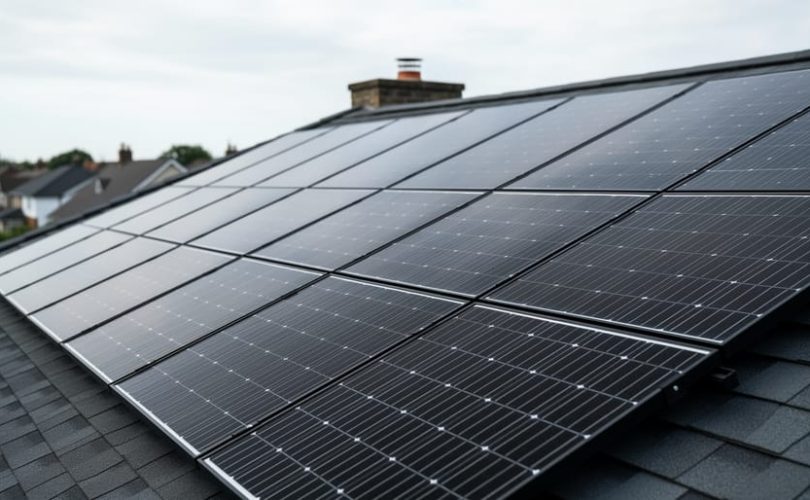
Shingled modules are solar panels built from cells cut into narrow strips that overlap at their edges, like roof shingles, and are bonded together with electrically conductive adhesive instead of the flat metal ribbons used in conventional panels. Because the strips overlap, there are no gaps between cells, so more of the module’s surface area is active silicon. The cutting and bonding steps also change how current flows through the string, which is why shingled designs sit at the center of current discussions about Shingled Solar Panel Manufacturing Techniques.
For anyone entering photovoltaics, understanding this architecture matters. It affects cell layout, interconnection methods, and the equipment a production line needs. This article defines the technology in plain language, walks through how the modules are made, outlines their main components and design variations, and shows where they’re used and how they compare with standard panels. At Mose Solar, we teach these fundamentals through our educational programs and university collaborations, so the explanation here stays practical, accurate, and free of unverified performance claims.
What Shingled Modules Mean in Plain Language

How Overlapping Cells Differ From Ribbon-Connected Cells
In a conventional module, each full or half-cut cell sits apart from its neighbors with a small gap between them. Flat metal ribbons run across the front of every cell, collecting current from its fine surface fingers and carrying it to the next cell, where the ribbon is soldered in place. Those ribbons shade a little of the active surface, and the gaps between cells hold no cell at all.
A shingled module removes both features. Narrow strips overlap at their edges, so the gaps disappear and more of the panel area is active silicon. Current passes straight from one strip to the next through the overlap, with no front-side ribbon needed. That shorter path through the metal can lower resistive losses.
A few terms recur throughout this article:
- Cell strip
- A narrow piece cut from a full solar cell, used as the building block of a shingled module.
- Busbar
- A thicker metal line on a cell that gathers current from the fine fingers and passes it onward.
- Electrically conductive adhesive (ECA)
- A glue containing conductive particles that bonds overlapped strips and carries current between them.
- Cell-to-cell spacing
- The gap between neighboring cells in a conventional module, which shingling largely removes.
- Series resistance
- The internal resistance that current meets as it flows through a cell and its connections, which wastes some power as heat.
Keep these definitions in mind, because the manufacturing steps that follow depend on them.
How Shingled Solar Panel Manufacturing Works, Step by Step
Cutting Cells Into Strips Without Damaging Them
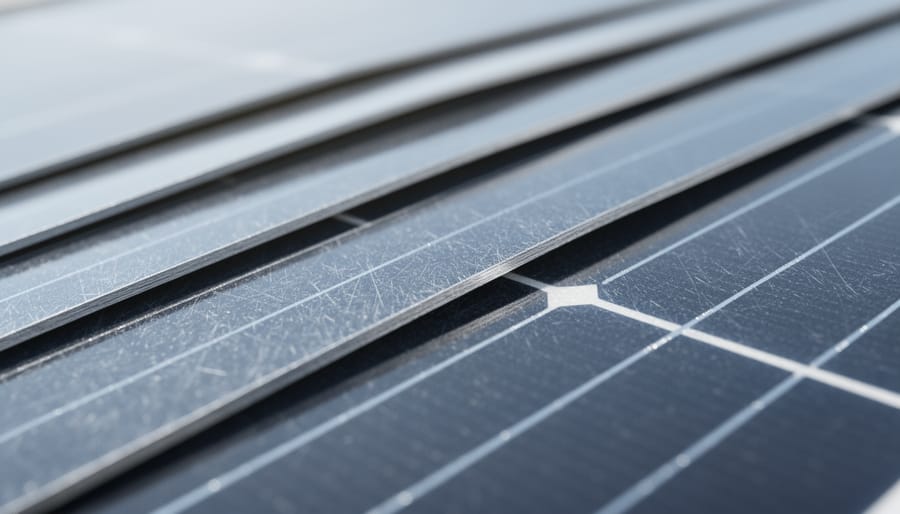
Before a solar cell can be overlapped, it has to be divided into narrow strips. Most manufacturers use laser scribing, in which a focused laser beam cuts a shallow groove partway through the silicon wafer along a planned line. The cell is then cleaved, meaning it is gently snapped along that groove, so the break follows the scribed path instead of wandering across the cell.
Edge quality matters because the freshly cut edge is the most fragile part of a strip. Excess laser heat can leave micro-cracks, which are tiny fractures too small to see but able to spread under mechanical stress or temperature swings. The cut also creates a rough, chemically unfinished edge where charge carriers (the electrons and holes that make up current) tend to recombine. This is edge recombination loss: carriers vanish at the edge before they can contribute to power output.
Manufacturers manage this in several ways. They tune laser power and speed to limit heat damage, scribe only part of the way through the wafer, and apply gentle, controlled cleaving. Some also treat the cut edge afterward to reduce recombination. Research on cutting multi-piece cells also looks at the thermal effects of adhesives and how cell technology influences edge loss, a reminder that each design choice affects the others. Careful cutting protects both efficiency and long-term durability.
Conductive Adhesive and Overlap Bonding
In a shingled module, the joint between two overlapped cell strips is made with electrically conductive adhesive (ECA) rather than solder. Each strip’s edge sits slightly over its neighbor’s, and a thin bead of adhesive in that overlap carries current from one strip to the next. The adhesive is typically an epoxy or silicone resin loaded with silver or other conductive particles, so it bonds the strips mechanically and conducts electricity at the same time.
Manufacturers avoid solder here because it needs high temperatures, which can stress thin, freshly cut silicon strips and leave them prone to micro-cracks. Solder joints are also rigid. Adhesive cures at much lower temperatures, so it puts less thermal stress on the cells during assembly.
Curing matters more than it might seem. Under-cured adhesive can leave weak bonds or higher electrical resistance at the junction, while consistent curing gives a stable, low-resistance joint. Flexibility is just as important. Over decades outdoors, a module expands and contracts as temperatures swing, and silicon and the bonding layer respond differently. A joint that can flex slightly without cracking or losing contact holds up far better under thermal cycling than a brittle one. Sealing the finished laminate against moisture is part of the same reliability picture, which is why panel encapsulation deserves attention alongside the adhesive itself.
Key Components and Design Variations in Shingled Modules
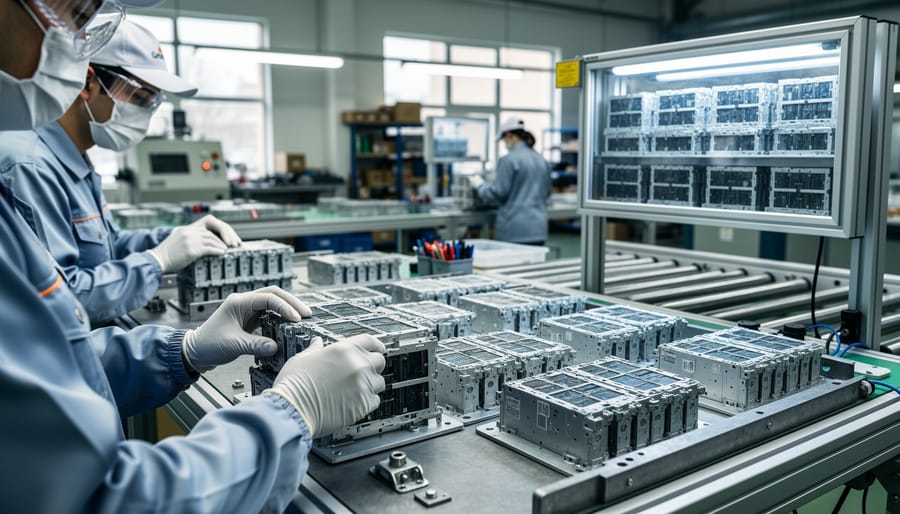
A shingled module is built from a handful of parts, and each design choice affects how it performs once it is on a roof. The cell strips come first, cut from full wafers and overlapped at their edges. The conductive adhesive bonds those overlaps and carries current between strips, which removes the need for solder and front-side ribbons. The interconnection layout then decides how those strips are grouped into strings and wired to bypass diodes.
The cell technology underneath matters just as much. Manufacturers often build shingled modules on monocrystalline silicon, and many use Mono PERC cells, which add a rear passivation layer to capture more light. Because the strips are cut from these finished cells, the quality of the starting wafer carries straight through to the final panel.
Common design variations include:
- Strip count per cell, typically cut into several narrow pieces.
- Overlap width, which balances active area against bond strength.
- String arrangement and bypass diode layout, which shape shading behavior.
- Compatible cell types, such as monocrystalline and mono PERC.
- Glass or backsheet options, chosen for durability and appearance.
String layout is where shingling shows its most practical benefit. In a conventional panel, shading a single cell can pull down a long series string. Shingled designs typically group strips into shorter parallel sections, each protected by bypass diodes. When a shadow falls on one portion, current can route around it rather than stalling the whole string. The result is a module that tolerates partial shading more gracefully, though the exact benefit depends on the specific wiring design, so check the manufacturer’s datasheet.
Where Shingled Modules Are Used and Why Designers Choose Them
Shingled modules show up wherever designers want more usable power from a fixed footprint. On rooftops, where space is limited and every square meter counts, the overlapped layout helps because there are no inter-cell gaps or front-side ribbons taking up area that could be generating electricity. A larger share of the module’s surface is active cell material, which can translate into higher power density for the same physical size.
Appearance is another reason. Because the strips overlap and the ribbons disappear from the front, the module has a uniform, dark, almost seamless look. Residential customers and architects who care about how an array looks from the street often prefer this over the visible grid lines of conventional panels. Utility-scale and commercial projects also use shingled modules, mainly where land, racking, or roof area costs make higher power per module worth considering.
Designers also point to a few general advantages:
– Fewer gaps between cells, so more of the module area collects light
– Reduced resistive losses, since current travels shorter paths through the cells and adhesive joints
– Better tolerance to partial shading, because the string layout can limit how much one shaded area drags down the rest
The trade-offs are real, though. Production is more complex than standard ribbon-based assembly, and manufacturers need specialized equipment for cutting, dispensing adhesive, and overlapping strips accurately. That investment can affect cost and availability. Reliability also depends on the conductive adhesive holding up through years of temperature swings, so bonding quality matters.
Because performance claims vary between products, check manufacturer datasheets and independent certification results before specifying a module. Those documents show how a particular shingled panel actually behaves, rather than how the technology performs in theory.
Common Questions About Shingled Modules
Readers researching shingled technology tend to ask the same handful of things, so here are measured answers to the most common ones.
Are shingled modules more efficient than conventional modules?
Shingling removes inter-cell gaps and front-side ribbons, which increases the active cell area within the same footprint and can raise module-level power density. Actual results depend on the cell technology and design, so compare the efficiency figures on each manufacturer’s datasheet rather than assuming a fixed advantage.
How do they handle partial shading?
Many shingled layouts divide the module into multiple parallel-connected strings of cell strips. That arrangement can limit how much a shaded area drags down the rest of the panel, though the benefit varies by design.
Are they more fragile because of the adhesive and cell cutting?
Cutting and bonding do add manufacturing considerations, such as edge quality and adhesive behavior under thermal cycling. Independent certification results and warranty terms are the best indicators of how a specific product holds up.
Can shingling be combined with PERC or other cell types?
Yes. Shingling is an interconnection approach, so it can be applied to cell technologies such as monocrystalline PERC, depending on how the manufacturer designs the strips and contacts.
When evaluating a product, look beyond the headline wattage. Check the datasheet for temperature coefficients, degradation rates and warranty terms, and confirm that independent certification results are available. Thermal cycling and damp-heat test outcomes are especially relevant to long-term reliability, since adhesive joints face repeated expansion and contraction over decades outdoors. It is also worth asking how a manufacturer plans for end-of-life, because material choices affect PV recycling options down the line.
Shingled modules take a familiar idea from roofing and apply it to solar. Cells are cut into narrow strips and overlapped, then bonded with conductive adhesive instead of soldered ribbons. That one change removes the gaps and front-side wiring found in conventional panels, so more of the module’s surface is active and current travels shorter paths.
The manufacturing process reflects this. Laser cutting, careful edge handling and adhesive bonding replace the soldering stage, and each step demands tight control to avoid micro-cracks and ensure reliable joints over years of thermal cycling. The trade-off is added production complexity and equipment investment, which is why shingling suits some products and projects better than others.
In the wider solar PV landscape, shingled designs sit alongside half-cut and other advanced layouts as one more route to higher power density and a cleaner look. For anyone who wants to understand module design and production at a professional level, Mose Solar’s online PV education program, developed in collaboration with universities, offers a structured way to build those skills.