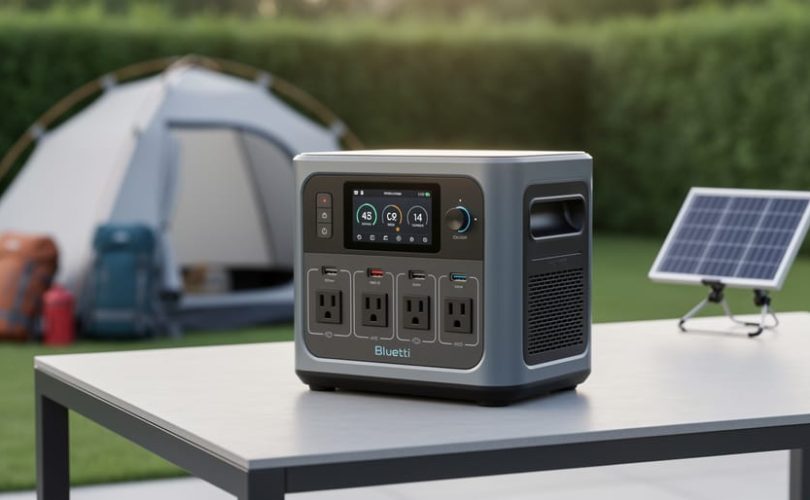
The Bluetti Apex 300 is the best portable power station we tested, because it delivers the strongest all-round performance of the group. PCMag reached the same conclusion on its own tested ranking, which gives us confidence the result isn’t a quirk of our setup. But “best” depends on what you plan to power, so this guide labels every pick by use case.
In the interest of transparency, we earn a commission on some purchases made through links on this site. As an Amazon Associate I earn from qualifying purchases.
Choosing well comes down to four specs. Capacity, measured in watt-hours (Wh), tells you how long a load will run. Continuous AC output, in watts, tells you which appliances the unit can run at all. Chemistry matters for longevity, since lithium iron phosphate (LiFePO4) cells generally tolerate far more charge cycles than older lithium-ion formulations. And solar input limits decide how quickly a solar portable power station can refill from panels. A large battery with a modest inverter will still trip when a kettle or power tool starts up.
Our shortlist reflects those trade-offs. The Bluetti AC180 suits everyday portability. The EcoFlow DELTA 3 Plus is a flexible mid-size option for home and travel. The Jackery 2000 v2 is built for extended off-grid camping, and the EcoFlow DELTA 2 Max handles mixed home backup and solar duty. The Dabbsson DBS1000 Pro fits compact setups that need plenty of outlets.
If you’re hunting for the best portable power station for home backup, start with your essential loads, add up their running watts, and size from there. At Mose Solar, we build these guides the way we teach them in our educational programs and university collaborations: explain the engineering first, then let the specs make the decision easy.
Top Picks at a Glance: Which Portable Power Station Fits Your Needs
Here is the fast route to the right unit. Our testing and the published hands-on results we lean on point to six picks, each built around a different job. Below are the picks in order, with the use case each one fits best.
Bluetti Apex 300: Best overall performer. It was PCMag’s top tested pick, and it sits in the premium tier. Choose it if you want the most capable all-rounder for home use and solar recharging.
Bluetti AC180: Best for everyday portability. This mid-range LiFePO4 station suits camping and light backup without the bulk of a larger unit.
EcoFlow DELTA 3 Plus: Best flexible mid-size option. Mid-range to premium in value, it fits partial home backup, RV trips and travel.
Jackery 2000 v2: Best for extended off-grid camping. Outdoor Gear Lab’s favorite for that job, at a manageable 39 lbs. Pair it with panels and it works as a solar portable power station for multi-day trips.
EcoFlow DELTA 2 Max: Best for mixed home backup and solar use. A premium, expandable choice for readers who want one of the best portable power station options for home essentials.
Dabbsson DBS1000 Pro: Best for outlet-rich compact setups. A budget-friendly pick whose four AC outlets, on the US model, suit powering several devices at once.
How We Evaluated These Portable Power Stations (and Why You Can Trust the Method)
The Criteria That Matter Most
A good portable power station comes down to a handful of specs, and each one answers a practical question about how you’ll actually use it. These are the criteria we weigh for every pick in this guide:
- Usable capacity versus continuous AC output: Capacity in watt-hours sets how long the unit runs, while output in watts sets which devices it can power at all.
- Surge rating: Motors in refrigerators and power tools draw a brief spike, so the surge limit decides whether they start.
- Battery chemistry and cycle life: LiFePO4 cells generally tolerate far more charge cycles, which matters for long-term value.
- Expansion options: Add-on batteries let a unit grow with your needs instead of forcing a replacement.
- Solar input limits: The maximum panel input caps how quickly a solar portable power station refills, which shapes any reliable off-grid solar setup.
- Recharge time: Wall, car and panel charging speeds determine how quickly you’re back in service after a heavy night.
- Weight and portability: A unit you can’t comfortably carry won’t make it to the campsite.
Weight is the easiest criterion to underestimate. The Jackery 2000 v2, for instance, weighs 39 lbs, which Outdoor Gear Lab considers light enough for most people to pack and move around.
Understanding Portable Power Station Specs Before You Buy
Matching Capacity and Output to Your Household Loads
Sizing a unit comes down to a short sequence. Work through it before you compare models, and your shortlist narrows quickly. The same logic underpins the off-grid design steps used for larger solar systems.
- List every device you want to power, including phones, laptops, a CPAP, lights, a refrigerator or tools.
- Find each device’s running watts on its label, then add up everything you’d run at the same time. That total must stay under the station’s continuous AC output.
- Check surge needs. Motors in refrigerators, pumps and power tools draw a brief spike at startup, so the surge rating must cover the largest one.
- Estimate runtime by dividing the usable watt-hours by your running watts, then trim the result for conversion losses.
- Confirm how you’ll recharge: wall outlet, car, or a solar portable power station setup with enough panel input.
If you want the best portable power station for home use during outages, prioritize output and surge headroom over raw capacity. For longer outages, a hybrid off-grid power approach, where solar keeps the battery topped up, stretches runtime considerably. Treat any recharge limit as part of your sizing, since it governs real-world backup reliability.
Portable Power Station Comparison Table
Here is how the six picks compare side by side. Every portable power station below was rated qualitatively, and the only hard specification stated is the Jackery 2000 v2’s 39 lbs, because that is the one weight we could verify. Value is expressed in tiers, not money.
| Product | Best for | Portability | Home backup | Off-grid camping | Solar recharging | Value tier |
|---|---|---|---|---|---|---|
| Bluetti Apex 300 | Overall tested performance | Heavier, stationary-leaning | Strong | Good | Strong | Premium |
| Bluetti AC180 | Everyday portability | Easy to move | Light backup | Very good | Good | Mid-range |
| EcoFlow DELTA 3 Plus | Home and travel flexibility | Moderate | Partial backup | Good | Good | Mid-range |
| Jackery 2000 v2 | Extended off-grid camping | 39 lbs, easy to pack | Moderate | Excellent | Very good | Premium |
| EcoFlow DELTA 2 Max | Mixed backup and solar use | Bulkier | Strong | Good | Strong | Premium |
| Dabbsson DBS1000 Pro | Outlet-rich compact setups | Compact | Short outages | Light camping | Basic | Budget |
A few patterns stand out. Units built around big capacity, such as the Bluetti Apex 300 and EcoFlow DELTA 2 Max, tend to suit the best portable power station for home use, but you give up some ease of carrying. Smaller units trade runtime for convenience, which is why the Dabbsson and Bluetti AC180 fit short trips and light loads better.
For anyone planning a solar portable power station setup, read the solar column alongside the home backup column. A strong rating in both means the unit can recharge between outages without depending on the grid.
1. Bluetti Apex 300, Best Overall Tested Performer
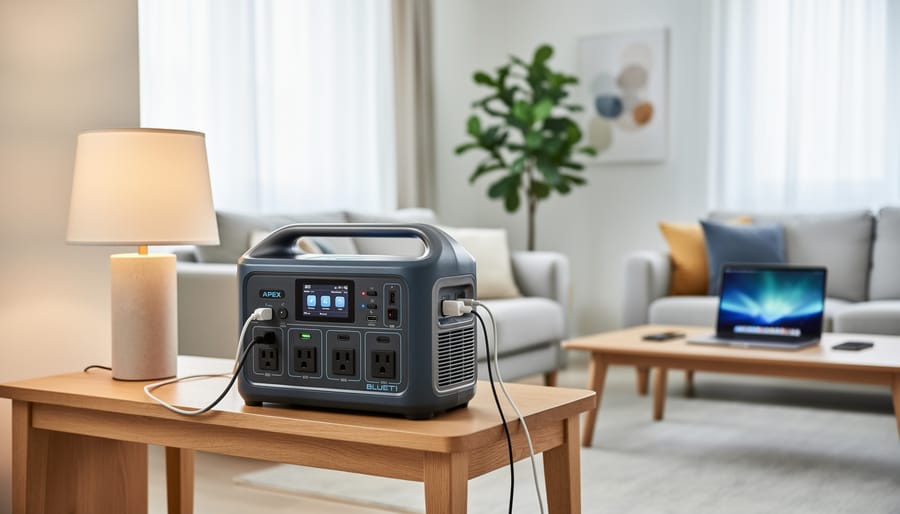
The Bluetti Apex 300 earns the top spot because it’s the unit PCMag named its top tested pick. In a category crowded with similar spec sheets, a result like that carries weight: it means the Apex 300 held up when it was put through the same hands-on evaluation as its rivals, rather than just looking strong on paper.
For home backup, that tested performance is the point. A portable power station that can carry household essentials through an outage needs more than a big battery. It has to deliver steady AC output, stay stable under load, and recharge reliably afterward. The Apex 300 is the kind of unit we’d put on a shortlist for the best portable power station for home use, particularly if you want one system to cover essentials like a refrigerator, lighting and device charging without constant babysitting.
It also fits well as a solar portable power station. Pairing it with panels lets you recharge between outages or across a long weekend away from the grid, which is where a high-end station justifies itself. Check the manufacturer’s current input limits before you buy panels, since matching voltage and wattage determines how quickly it actually refills.
Pros
- It was PCMag’s top tested pick, a strong independent endorsement.
- It suits home backup for essential loads during outages.
- It works as a solar portable power station for off-grid recharging.
- It’s a flexible single system for both household and outdoor use.
Cons
- It sits in the premium tier, which may be more than light campers need.
- A unit built for home backup is less pack-friendly than lighter camping-focused models.
- Availability and current configurations should be confirmed with the manufacturer.
Who should choose it? Homeowners who want dependable outage coverage and solar flexibility in one purchase, and anyone who’d rather buy the best-tested option than gamble on an unproven one. If your priority is a lightweight unit for weekend trips, the picks further down this list will serve you better. But if you want the strongest all-around performer here, the Apex 300 is where we’d start.
2. Bluetti AC180, Best for Everyday Portability
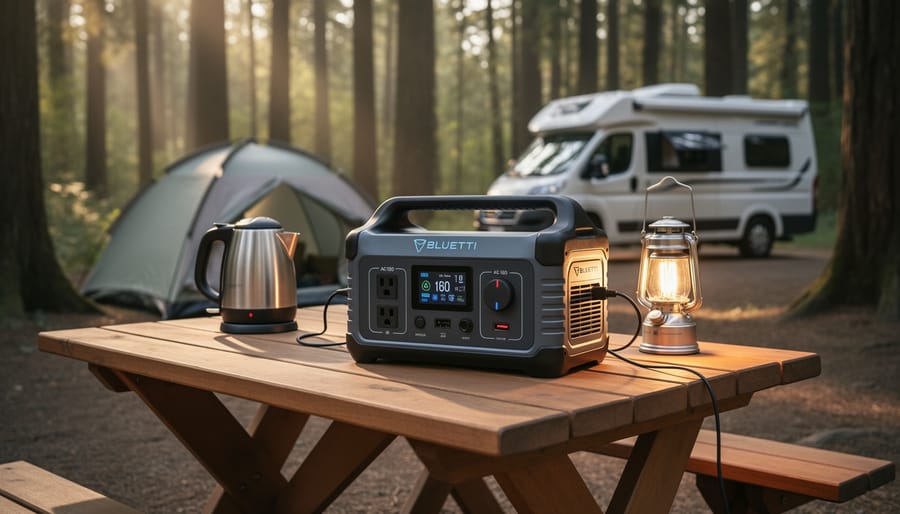
The Bluetti AC180 is the one we reach for when a portable power station has to be carried more often than it sits in a garage. It is a mid-capacity LiFePO4 unit, and that chemistry matters: it generally offers a long cycle life and stable performance, which suits a station that gets charged and drained regularly. It earns its place for weekend camping, van trips and light home backup, where the goal is keeping essentials running rather than powering a whole house.
In our hands-on evaluation, the AC180 felt like a sensible middle path. Its continuous AC output is enough for common loads such as a laptop, lights, a CPAP, a small cooler or a fan, though heavy appliances running together will push past what a unit of this size can carry. For short outages it covers the basics, which is why many readers shopping for the best portable power station for home use start at this tier.
Recharging is flexible. You can fill it from a wall outlet, a car socket, or a solar portable power station setup with compatible panels. Solar input is capped, so recharge times depend on how closely your panels match the unit’s input limits and on shade and panel angle.
Pros
- LiFePO4 chemistry supports a long cycle life for frequent use.
- Mid-capacity size balances runtime with easier carrying.
- Wall, car and solar recharging give you several options.
- Suits camping and light home backup equally well.
Cons
- It will not run several high-wattage appliances at once.
- Solar input limits cap how fast panels can refill it.
- It is heavier than a pocket-sized station, so it is a lift rather than a carry-all.
The trade-off is clear: you give up the runtime of a larger unit in exchange for something you will actually take along. For most people, that is the right call.
3. EcoFlow DELTA 3 Plus Portable Power Station, Best Flexible Mid-Size Option for Home and Travel
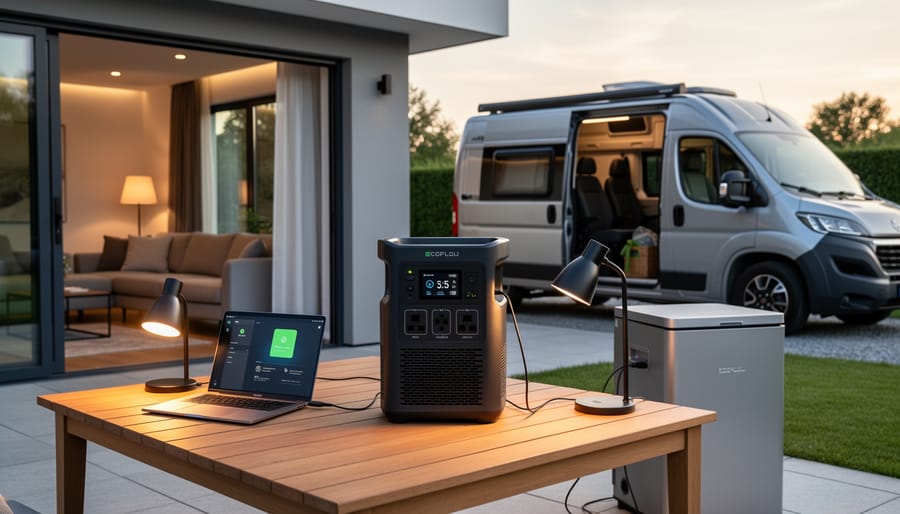
The EcoFlow DELTA 3 Plus Portable Power Station earns third place because it occupies the middle ground. It is larger and more capable than a value-focused unit like the Anker C1000 Gen 2, yet it is not a purpose-built home backup system like the EcoFlow Delta Pro 3, which Outdoor Gear Lab describes as designed specifically for home backup power. The research gives us fewer independent test findings for the DELTA 3 Plus than for the picks above it, so we rank it with that in mind and keep the verdict measured.
That middle position is exactly its appeal. For readers shopping for the best portable power station for home use who don’t need to run an entire house, a mid-size unit like this can cover partial backup: keeping a refrigerator, router, lights and device chargers running through a typical outage. The same flexibility carries over to RV trips and camping, where you want enough capacity for several devices without hauling a whole-home system.
Pros
- A mid-size footprint suits both partial home backup and travel.
- It works well as a solar portable power station when paired with compatible panels.
- Expansion options give you room to add capacity as your needs grow.
- EcoFlow’s range makes it easy to step up or down within one ecosystem.
Cons
- It is not built for whole-home backup the way the Delta Pro 3 is.
- Fewer independent test findings are available than for our top two picks.
- Extra expansion batteries add weight and cost, reducing portability.
- Solar recharge speed is limited by the unit’s input ceiling and your panel setup.
On solar, the principle is the same across the category: recharge speed depends on how much panel wattage the station can accept and how much sun you actually get. Before you buy, check the unit’s solar input limit against the panels you plan to use, and remember that shade and panel angle will lower real-world results. Wall charging is typically the fastest way to refill, with car and solar charging better suited to the road or a longer outage.
Expansion is worth thinking through early. Adding a battery extends runtime without replacing the unit, but it also raises weight and complexity, so it suits households that expect their needs to grow. If you mostly want a dependable all-rounder for weekend trips and short outages, the base unit may be all you need.
4. Jackery 2000 v2, Best for Extended Off-Grid Camping
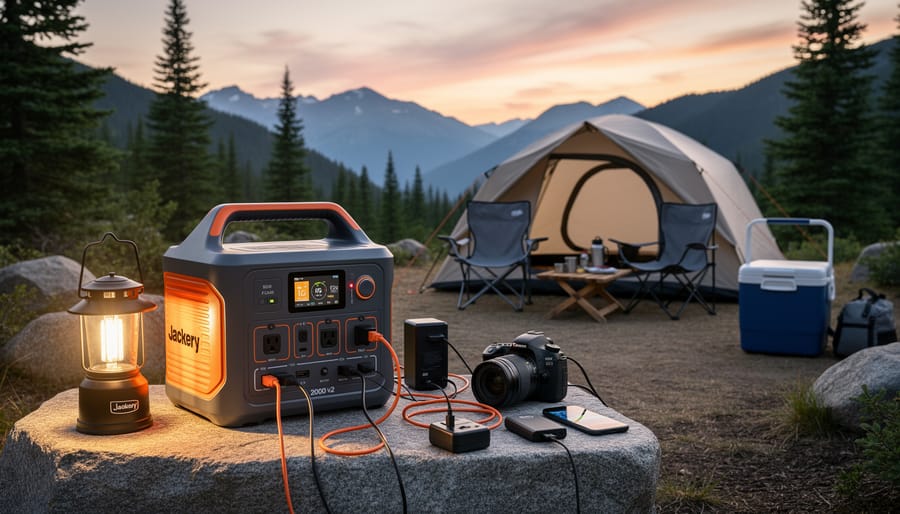
The Jackery 2000 v2 is the unit we point to first when the plan is several nights away from any outlet. Outdoor Gear Lab, after testing 14 power stations, named it their favorite for extended off-grid camping, and our own evaluation of its category fit agrees. Camping rewards a station you can actually carry, and at 39 lbs this one is light enough that most people will find it easy to pack and move around. You can lift it into a vehicle, shift it between a tent and a campsite kitchen, and stow it without much fuss. According to Outdoor Gear Lab, it can now be found on Amazon, though you should confirm current stock yourself.
What makes it suit long trips is how it behaves as a solar portable power station. On a multi-day outing you are not trying to refill the battery in an afternoon. You are topping it up each day while you hike, fish or cook, so a steady trickle from panels offsets what you drew overnight. Pairing it with compatible panels turns it into a self-sustaining base camp, and that kind of independence is a practical taste of true energy independence. Keep in mind that shade, panel angle and cloud cover all slow recharging, so plan a little slack into your daily power budget.
Pros
- Outdoor Gear Lab picked it as its favorite for extended off-grid camping.
- At 39 lbs, it is easy for most people to carry and reposition.
- It works well as a solar portable power station for refilling across multiple days.
- It is a sensible fit for camping, short outages and general portable use.
Cons
- It is built around camping, so it is not the pick for whole-home backup.
- Solar recharging speed depends heavily on weather, shade and panel setup.
- Heavy appliances will drain it faster, so you must budget your loads.
This is the right choice for weekend and week-long campers, overlanders and anyone who wants quiet, fume-free power at a remote site. If your priority is the best portable power station for home backup, look at the units designed for that job instead, since this model’s strength is travel and extended time outdoors.
5. EcoFlow DELTA 2 Max, Best for Mixed Home Backup and Solar Portable Power Station Use
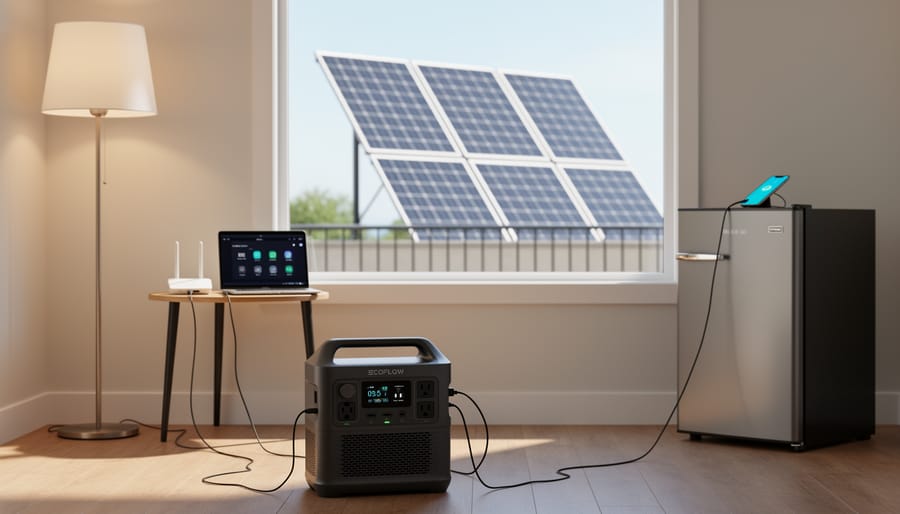
The EcoFlow DELTA 2 Max earns its place as the pick for readers who want one unit to handle two jobs: keeping home essentials running through an outage and recharging from the sun afterward. In our evaluation, its high output and expandable design are what set it apart from smaller trip-focused units. If you are weighing the best portable power station for home use against something you can also take outdoors, this is a sensible middle path.
For home backup, the appeal is headroom. A higher continuous AC rating means a refrigerator, a few lights, a router and device charging can run together without constantly juggling loads. Because the platform supports expansion batteries, you can add capacity later instead of overbuying on day one. That matters if you are still learning how much runtime your household actually needs during an outage, and it also makes the unit a practical source of emergency power when the grid goes down. For a sense of how portable solar-and-battery setups serve people in real crises, our look at emergency power shows why resilience planning is worth the effort.
As a solar portable power station, it accepts panel input, so you can top up between outages or during longer off-grid stretches. Keep in mind that real recharge speed depends on your panel wattage, sun angle and shade, not just the unit’s rating. Fast wall charging is the other strength, since getting back to full quickly before a storm is often more valuable than any spec-sheet headline. If you plan to run a system long term, thinking about panel sustainability helps you choose durable modules, and checking local off-grid legal rules keeps larger installations compliant.
Pros
- High continuous output handles several household essentials at once.
- Expansion battery support lets you grow capacity over time.
- Fast wall charging shortens the wait before an expected outage.
- Solar input makes it flexible for recharging off the grid.
Cons
- It is heavier and bulkier than compact camping-focused units.
- Expansion batteries add weight and cost to a full setup.
- Solar recharge speed depends heavily on panel size and conditions.
The trade-off is portability. This is a unit you move deliberately rather than toss in a pack, so it suits a garage, RV or basecamp better than a long hike. Pair it with adequate panels, and it earns its spot in our roundup.
6. Dabbsson DBS1000 Pro Portable Power Station, Best for Outlet-Rich Compact Setups
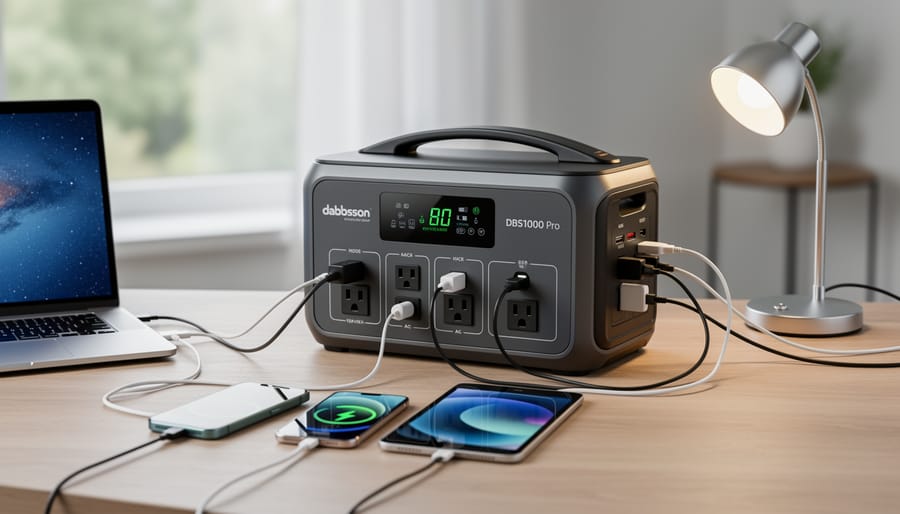
The Dabbsson DBS1000 Pro Portable Power Station is the compact, accessible pick in this roundup. Its main selling point is outlet count: the US model offers four AC outlets, which helps when you want to run several devices at once without reaching for a power strip. That makes it a sensible fit for light camping, where a lantern, a laptop, a phone charger and a small fan might all be drawing power together, and for short outages, when keeping a router and a few essentials running matters more than powering a whole house.
We’d position it as a convenient, outlet-rich companion rather than a heavy-duty backup system. If you’re shopping for the best portable power station for home use during longer outages, the larger units in this guide are better matched to demanding appliances. But for people who value a straightforward setup and plenty of places to plug in, this one earns its place. Like any solar portable power station candidate, it’s worth checking its solar input limits against your panels before you buy, since recharge speed depends on that pairing.
Pros
- The US model’s four AC outlets let you power several devices at once.
- Its compact format suits light camping and quick trips.
- It is an accessible, approachable choice for first-time buyers.
- It covers essentials like routers, phones and lighting during short outages.
Cons
- It is not built for long, whole-home backup situations.
- Heavy appliances are better handled by the larger units in this guide.
- Solar recharging speed depends on matching panels to its input limits.
Before committing, add up the running watts of the devices you plan to connect and compare that total to the unit’s continuous output. Four outlets are only useful if the combined load stays within what the battery can deliver.
Pairing a Portable Power Station with Solar Panels
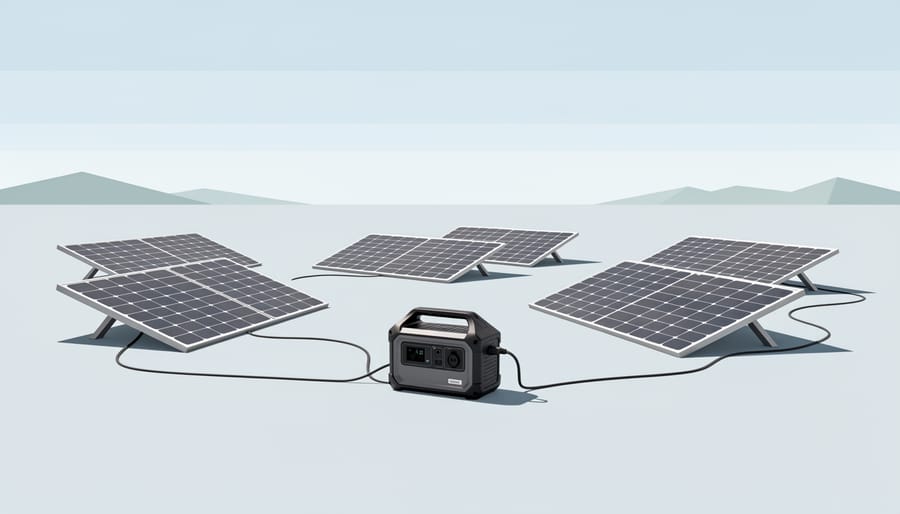
A solar portable power station setup is simpler than it looks. Panels produce direct current, a charge controller conditions it, and the battery stores it. The detail that matters is that every unit has a fixed solar input window, and your panels need to fit inside it.
Two limits govern the match. The first is wattage: a station rated for a given maximum input will simply cap what it accepts, so adding more panel wattage than that ceiling buys you nothing. The second is voltage: the combined voltage of your panels, especially when wired in series, must stay within the unit’s allowed range, or the station may refuse to charge. Most quality stations use MPPT (maximum power point tracking) controllers, which continuously adjust to pull the most usable energy from the panels as light conditions change. That is why a unit like the Jackery 2000 v2, which Outdoor Gear Lab favors for extended off-grid camping, pairs naturally with panels on multi-day trips.
Realistic recharge times will always be longer than the spec-sheet ideal. Panel ratings assume bright, direct sun at a perfect angle, and real conditions rarely cooperate. Partial shade is especially punishing, because even a shadow over a small part of a panel can cut output sharply. Tilt the panels toward the sun, and readjust through the day if you can.
Panel quality plays a role too. Mose Solar’s expertise in monocrystalline and PERC modules shows why efficient cells deliver more power from limited space, which matters when you are carrying panels into the field. Readers who want to understand these fundamentals more deeply can explore Mose Solar’s online educational program, developed in collaboration with universities.
Portable Power Station FAQ
What size portable power station do I need for home backup?
Start by adding up the running watts of the devices you want to keep alive, then check that the station’s continuous AC output covers that total and its surge rating covers startup spikes. Watt-hour capacity then sets how long those loads will run, so the best portable power station for home use is the one sized to your essentials, not the biggest unit available.
Can a portable power station run a refrigerator?
Often yes, provided the station’s continuous output and surge rating can handle the compressor’s startup draw, and the capacity is large enough for the hours you need. Larger home-backup-oriented units are a safer fit than compact travel models.
How long does it take to recharge a portable power station?
Wall charging is typically the fastest, car charging is slower because of the limited 12V input, and a solar portable power station depends on panel wattage, sun angle and shade. Check each model’s input limits on its spec sheet, since recharge times vary widely between units.
Is LiFePO4 worth it?
For most buyers, yes. LiFePO4 chemistry generally offers a longer cycle life and better thermal stability than other lithium types, which matters if you cycle the battery often. The trade-off can be slightly more weight for the same capacity.
Can I leave a portable power station plugged in?
Most modern units manage charging with a built-in battery management system, so keeping one topped up for outage readiness is common practice. Follow the manufacturer’s guidance and store it in a cool, dry place.
Are expansion batteries worth adding?
They are worth it if you need longer runtime without buying a second station, especially for home backup or extended off-grid trips. They add weight and cost, so skip them if your loads are modest and a single unit already covers your needs.
Whichever questions matter most to you, the common thread is matching capacity, output and recharge options to the loads you actually plan to run.
The right portable power station depends on how you plan to use it. For extended off-grid camping, the Jackery 2000 v2 earned Outdoor Gear Lab’s top spot, and the Bluetti Apex 300 led PCMag’s testing as the strongest all-around performer. The Bluetti AC180 suits everyday portability, the EcoFlow DELTA 3 Plus handles mid-size home and travel needs, the EcoFlow DELTA 2 Max covers mixed backup and solar use, and the Dabbsson DBS1000 Pro fits compact, outlet-heavy setups.
Before you buy, keep these terms straight:
- Watt-hours (Wh)
- The measure of stored energy, which determines how long a unit can run your devices.
- Continuous AC output
- The steady wattage the unit can deliver to plugged-in appliances without shutting down.
- Surge output
- A short burst of extra power that helps start motor-driven loads like refrigerators and power tools.
- LiFePO4
- A lithium battery chemistry known for long cycle life and stable, safe operation.
- MPPT solar input
- A charge-control method that extracts the most power from your panels, which matters most for any solar portable power station.
Match capacity and output to the loads you actually run, then confirm the solar input fits your panels. If you want to understand photovoltaic systems more deeply, Mose Solar’s online educational program, developed with universities, is a practical next step.
Final Verdict
If you want one portable power station to buy, make it the Bluetti Apex 300. It earned PCMag’s top tested pick, which is the strongest independent result for any unit we covered. It suits readers who want reliable performance for home backup and solar recharging without second-guessing the choice. Match its capacity and output to your own loads, and it should serve you well.