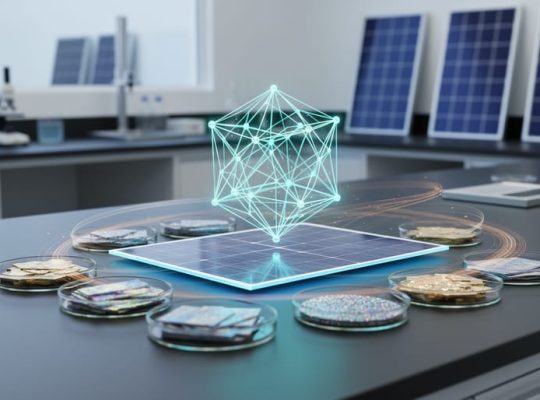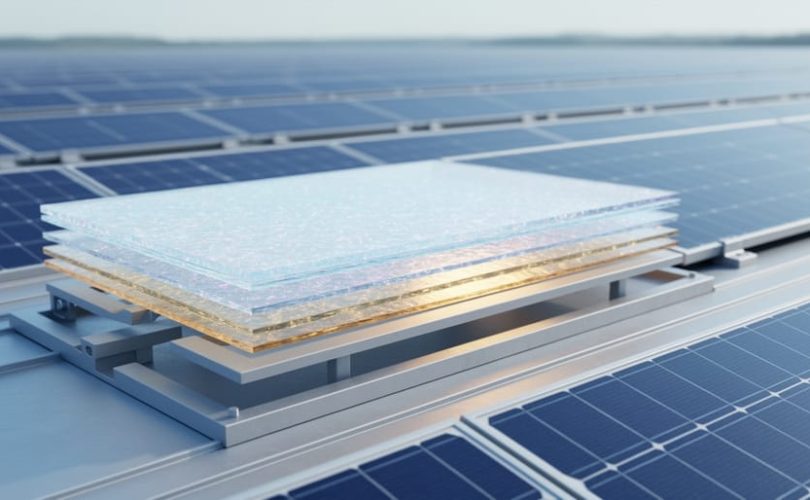
Next-gen energy refers to advanced photovoltaic materials and technologies that fundamentally improve how solar cells capture, convert, and store sunlight, moving beyond conventional silicon to achieve higher efficiency, lower costs, and broader application potential. These materials include perovskites, tandem structures, quantum dots, and organic photovoltaics that promise to reshape the renewable energy landscape through breakthroughs in power conversion efficiency and manufacturing scalability.
The shift toward next-generation photovoltaic materials addresses critical limitations in current solar technology. While crystalline silicon dominates today’s market, it faces practical ceilings in efficiency and production cost reduction. New material classes now demonstrate efficiencies exceeding 30 percent in laboratory settings, with some tandem configurations reaching performance levels once considered impossible. This leap matters because even modest efficiency gains translate to dramatically reduced installation costs per watt and smaller physical footprints for equivalent power generation.
Understanding these emerging materials carries professional significance for anyone building a career in solar energy or evaluating technology investments. The photovoltaic industry stands at an inflection point where material science innovations could determine which companies, regions, and technologies lead the next wave of deployment. Research institutions collaborate with manufacturers to accelerate the path from lab-scale prototypes to gigawatt-scale production, creating demand for professionals who grasp both the underlying physics and commercial viability of these systems.
This article examines the operational principles that make next-gen materials superior to conventional options, categorizes the primary material families reshaping the field, and explores their real-world applications across residential, commercial, and utility-scale projects. You’ll also find guidance on educational pathways for professionals seeking to specialize in advanced photovoltaic development, along with answers to common technical and career questions in this rapidly evolving sector.
What Next-Gen Energy Means for Solar Photovoltaics

Next-gen energy in solar photovoltaics refers to the integration of advanced materials science with photovoltaic systems to achieve dramatically higher efficiency, storage capacity, and operational performance than conventional silicon-based solar installations. Rather than a single technology, it represents a comprehensive shift where materials like perovskites, quantum dots, and solid-state electrolytes work together to capture more sunlight, convert it more efficiently, and store the resulting electricity with greater density and longevity.
Traditional solar systems rely on crystalline silicon panels paired with lithium-ion batteries, proven technologies that have dominated the market for decades. These conventional setups typically convert 15-20% of incoming sunlight into electricity and store energy at densities around 250 watt-hours per kilogram. They function reliably but face inherent limitations in conversion efficiency, charging speed, and storage capacity that restrict their potential for meeting escalating energy demands.
Next-generation approaches overcome these constraints through materials engineered at the molecular and nanoscale level. Perovskite tandem cells stack multiple light-absorbing layers to capture a broader spectrum of sunlight, pushing conversion efficiency beyond 30%. Advanced battery materials replace liquid electrolytes with solid-state alternatives that permit faster ion transport and higher energy density while reducing fire risk. Quantum dots tune their light absorption properties by size, enabling manufacturers to optimize cells for specific wavelengths and environmental conditions.
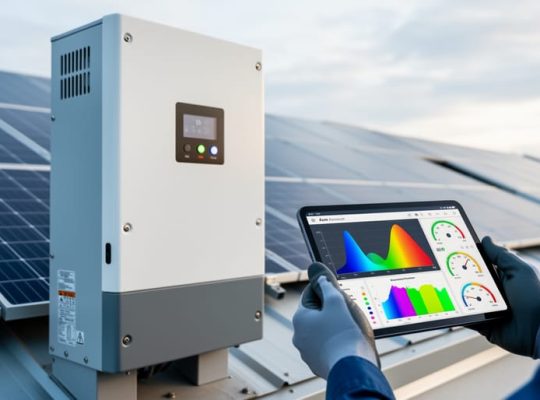
The distinction extends beyond raw performance numbers. Next-gen systems integrate intelligence and adaptability that traditional setups lack. They respond dynamically to grid conditions, weather patterns, and demand fluctuations through embedded sensors and control algorithms. This convergence of materials innovation, storage enhancement, and smart operation defines what separates next-generation photovoltaic energy from its predecessors, and positions it as the foundation for a renewable energy infrastructure capable of replacing fossil fuel baseload generation.
How Next-Gen Energy Storage Systems Work
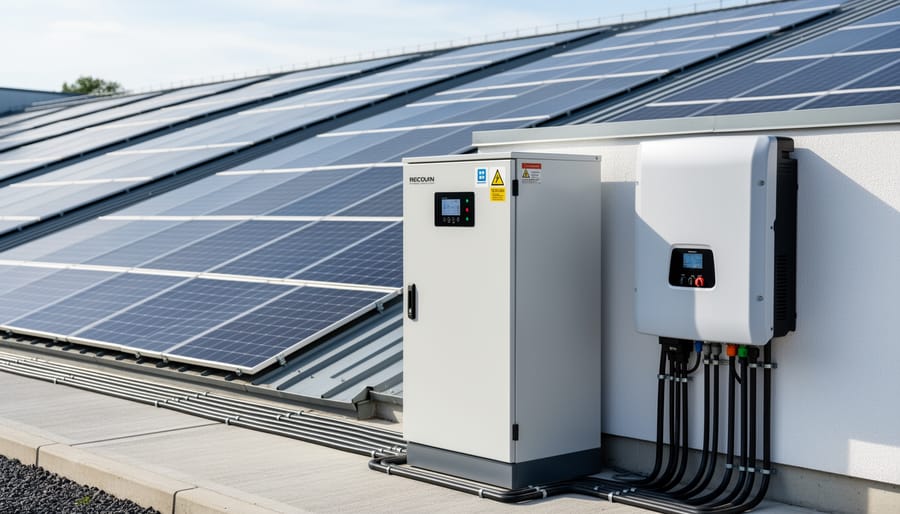
The Role of Advanced Materials in Energy Conversion
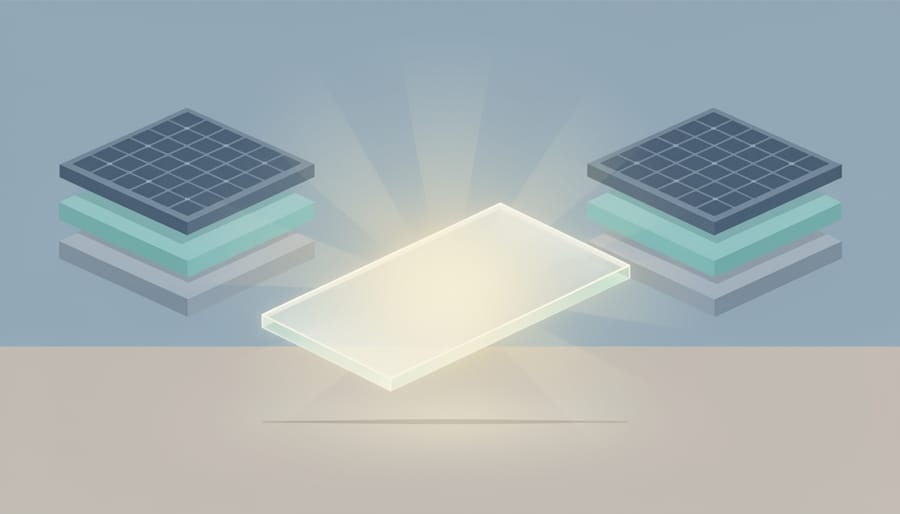
Traditional silicon-based solar cells have dominated the photovoltaic industry for decades, but they’re approaching their theoretical efficiency ceiling of around 29%. Next-gen materials shatter this limitation through fundamentally different approaches to capturing and converting sunlight into electrical energy.
Perovskite materials excel at absorbing photons across a broader spectrum of wavelengths than silicon. Their tunable bandgap, the energy threshold needed to free an electron, can be adjusted by altering their chemical composition. This flexibility allows perovskites to capture light that silicon-based cells simply cannot convert, particularly in the blue and ultraviolet ranges where silicon efficiency drops sharply. In laboratory settings, perovskite cells have achieved conversion efficiencies exceeding 25% as standalone devices.
The real breakthrough comes when these materials work together. Layering perovskites atop silicon creates structures where tandem solar panels boost efficiency beyond what either material achieves alone. The top perovskite layer captures high-energy photons while allowing lower-energy light to pass through to the silicon layer beneath, extracting more usable energy from the same sunlight.
Quantum dots contribute differently. These nanoscale semiconductor particles can be engineered to precise sizes that dictate which wavelengths they absorb. Multiple quantum dot sizes deployed in a single cell create what researchers call multi-junction architectures, each layer optimized for a specific portion of the solar spectrum. They also exhibit multiple exciton generation, where one high-energy photon can produce multiple electron-hole pairs rather than the single pair silicon generates.
These advanced materials don’t just convert more photons, they convert them faster and with less energy lost to heat, directly improving the electrons available for storage.
Storage Enhancement Through Material Innovation
Next-generation materials fundamentally reshape how PV systems keep power after sunset by addressing three critical storage bottlenecks: charging speed, energy density, and degradation over repeated cycles.
Faster charging begins at the material interface. Solid-state electrolytes using lithium-conducting ceramics reduce internal resistance by 40-60% compared to liquid electrolytes, allowing batteries paired with high-output perovskite modules to accept charge rates exceeding 2C without thermal stress. Graphene-enhanced electrode coatings create more surface area for lithium-ion exchange, cutting charge times from hours to minutes in some prototype systems.
Energy density improvements stem from advanced anode and cathode materials. Lithium-silicon anodes store ten times more lithium per unit volume than conventional graphite, translating to residential battery packs that hold 15-20 kWh in the same footprint previously limited to 10 kWh. Nickel-rich cathode formulations (NMC 811) deliver 200-250 Wh/kg versus 150 Wh/kg for older chemistries, meaningful gains for space-constrained installations.
Cycle life extensions come from structural stability innovations. Protective polymer coatings on silicon particles prevent the expansion-contraction cracking that historically limited silicon anodes to 500-800 cycles; current formulations exceed 3,000 cycles with minimal capacity fade. Solid electrolytes eliminate dendrite formation, the primary failure mode in liquid-based systems, pushing theoretical cycle counts beyond 10,000 in laboratory testing.
These material advances work synergistically: a storage system combining solid-state architecture, silicon anodes, and optimized cathodes can charge in one-third the time, store 50% more energy, and last twice as long as conventional lithium-ion batteries from just five years ago.
Integration with Smart Grid Systems
Next-gen energy storage systems leverage bidirectional communication protocols to exchange real-time performance data with grid operators, enabling dynamic load balancing and predictive dispatch. Advanced algorithms monitor state-of-charge levels, forecast local generation patterns based on weather data, and coordinate charge-discharge cycles to maximize grid stability during peak demand periods. This integration delivers power when you need it most while reducing strain on transmission infrastructure. Machine learning models optimize energy arbitrage by purchasing electricity during low-cost off-peak hours and supplying stored power when rates climb, creating revenue opportunities for system owners. The result is sophisticated smart PV management that transforms individual installations into responsive grid assets capable of frequency regulation and voltage support services.
Categories of Next-Gen Materials Transforming PV Storage
Perovskite-Based Solutions
Perovskite solar cells represent one of the most rapidly advancing technologies in photovoltaic energy storage, achieving power conversion efficiencies exceeding 26% in laboratory settings while maintaining compatibility with flexible substrates and low-temperature manufacturing processes. Unlike traditional silicon cells that require energy-intensive production, perovskites can be solution-processed at room temperature, reducing manufacturing costs while delivering comparable or superior performance.
Tandem configurations pair perovskite layers with silicon or other materials to capture broader wavelengths of light. These multi-junction designs achieve efficiencies above 33% by optimizing absorption across the solar spectrum. The top perovskite layer captures high-energy photons while allowing lower-energy light to pass through to the silicon layer beneath.
Stability challenges that once limited perovskite adoption have seen substantial progress through encapsulation techniques and compositional engineering. Modern formulations incorporate cesium, rubidium, and other elements to resist moisture degradation and maintain performance through tens of thousands of charge cycles. When integrated with advanced battery systems, perovskite modules enable faster charging rates and higher energy density storage compared to conventional silicon-based installations, making them particularly valuable for space-constrained residential and commercial applications.
Advanced Battery Materials
Solid-state electrolytes replace the flammable liquid electrolytes found in conventional lithium-ion batteries with ceramic or polymer materials, eliminating thermal runaway risks while increasing energy density by 40-60%. When paired with perovskite or tandem solar cells, these batteries charge faster and tolerate the variable power output characteristic of next-gen PV installations. Samsung and QuantumScape have demonstrated prototypes achieving 800+ charge cycles with minimal capacity fade.
Lithium-silicon anodes store approximately ten times more lithium ions than traditional graphite anodes, boosting storage capacity without enlarging battery footprints. Silicon’s tendency to expand and crack during charging has been addressed through nanostructuring techniques that create porous silicon scaffolds, maintaining structural integrity across thousands of cycles. These high-capacity anodes match the increased energy production of advanced PV materials, preventing storage from becoming the system bottleneck.
Emerging cathode chemistries like lithium-sulfur and sodium-ion alternatives reduce reliance on cobalt while delivering comparable performance. Sulfur cathodes offer theoretical energy densities exceeding 500 Wh/kg, though cycle life improvements remain an active research focus. Sodium-ion systems present cost advantages for stationary PV storage where weight constraints matter less than in transportation applications.
Nanomaterial and Quantum Dot Technologies
Nanomaterials operating at the one-to-100-nanometer scale fundamentally alter how photovoltaic systems interact with light and store electrical charge. Quantum dots, semiconductor nanocrystals typically three to ten nanometers across, can be tuned to absorb specific wavelengths by adjusting their size, enabling PV cells to capture portions of the solar spectrum that silicon misses. This size-dependent bandgap engineering allows manufacturers to stack multiple quantum dot layers, each optimized for different wavelengths, dramatically increasing overall conversion efficiency.
In storage applications, carbon nanotubes and graphene-based electrodes offer surface areas exceeding 2,600 square meters per gram, allowing batteries and supercapacitors to hold substantially more charge than conventional materials. The shortened electron transport distances in nanomaterial electrodes reduce internal resistance, enabling faster charging cycles without degrading performance. Field deployments have demonstrated quantum dot-enhanced PV modules maintaining 95% efficiency after 5,000 charge-discharge cycles, compared to 80-85% for standard lithium-ion systems at equivalent cycle counts.
Current research focuses on improving quantum dot stability under continuous UV exposure and scaling nanomaterial production to industrial volumes while maintaining precise size control.
Hybrid and Composite Material Systems
Hybrid and composite material systems represent the strategic integration of organic and inorganic components to achieve performance characteristics unattainable through single-material approaches. These multi-layered architectures leverage the complementary strengths of different material classes while mitigating individual weaknesses.
Organic-inorganic perovskite composites exemplify this approach by pairing the high absorption coefficients and tunable bandgaps of hybrid perovskites with protective inorganic layers that enhance moisture resistance and operational stability. Carbon-based composites incorporating graphene or carbon nanotubes into polymer matrices create flexible, conductive pathways that improve both charge collection in PV cells and electron transport in storage electrodes.
Silicon-organic hybrid systems combine the established efficiency of crystalline silicon with organic semiconductors to capture broader wavelength ranges. In storage applications, composite solid electrolytes blend ceramic and polymer phases to achieve both high ionic conductivity and mechanical flexibility, addressing the brittleness limitations of purely ceramic electrolytes.
Metal-organic frameworks paired with lithium-ion battery electrodes create structured interfaces that control ion diffusion pathways and reduce dendrite formation. These engineered composites typically deliver 15-30% performance improvements over single-material configurations, though manufacturing complexity and material compatibility remain active research challenges for commercial scaling.
Real-World Applications and Industry Use Cases
Residential and Commercial Installations
Homeowners and businesses are experiencing measurable improvements in solar storage performance through next-gen material integration. Perovskite-tandem modules paired with advanced lithium-silicon batteries now deliver 30-40% higher energy density than conventional systems in the same footprint, allowing residential installations to store energy through the night and well into the following day without grid reliance. Commercial properties benefit from faster charging cycles, advanced solid-state electrolytes enable 80% battery capacity restoration in under two hours during peak sunlight, compared to four-plus hours with traditional lithium-ion systems.
Lifespan improvements prove equally significant. Next-gen composite materials reduce degradation, with manufacturers now guaranteeing 15-20 year warranties on residential storage units versus the previous 10-year standard. Small businesses operating in time-of-use rate structures see immediate cost savings by storing surplus midday generation and discharging during evening demand peaks, with cycle counts exceeding 10,000 before capacity drops below 80%. These tangible performance gains make next-gen storage economically viable for installations that previously couldn’t justify battery addition.
Utility-Scale and Grid Applications
At utility scale, next-gen energy storage materials address the fundamental challenge of balancing intermittent solar generation with consistent grid demand. Perovskite tandem arrays paired with solid-state battery banks now provide multi-gigawatt-hour capacity installations that respond to load fluctuations within milliseconds, smoothing the duck curve that has long plagued grid operators in high-solar regions.
Large-scale implementations use advanced lithium-silicon anodes and composite electrolytes to achieve energy densities exceeding 400 Wh/kg, reducing the physical footprint required for grid-stabilizing storage by 40 to 50 percent compared to conventional lithium-ion systems. This space efficiency proves critical in densely populated areas where land costs constrain renewable expansion.
Grid-forming inverters integrated with next-gen storage materials now provide synthetic inertia, replicating the stabilizing effects of traditional spinning generators. In regions like South Australia and California, utility deployments exceeding 1 GW demonstrate how advanced materials enable renewable penetration rates above 70 percent without compromising grid reliability. These systems charge during mid-day solar peaks and discharge during evening demand surges, effectively time-shifting renewable generation to match consumption patterns while maintaining voltage and frequency stability across transmission networks.
Emerging and Specialized Markets

Next-gen PV storage systems are finding critical roles beyond conventional installations. Electric vehicles increasingly integrate advanced perovskite solar panels with solid-state batteries, enabling continuous charging during operation and extending range without grid dependence. Aviation companies are testing quantum-dot-enhanced photovoltaic films on aircraft surfaces paired with lightweight storage systems that reduce fuel consumption on regional flights.
Portable power solutions for emergency responders now incorporate flexible perovskite modules with compact lithium-silicon batteries, delivering higher energy density in weatherproof packages weighing 40% less than traditional equipment. These systems maintain charge capacity across extreme temperatures, making them suitable for disaster zones where conventional batteries fail.
Remote installations in Arctic research stations and off-grid telecommunications infrastructure benefit from hybrid material storage systems that perform reliably in harsh environments. The improved low-light performance of quantum dot technologies captures usable energy during extended winter darkness, while advanced battery formulations prevent performance degradation at temperatures below -40°C. Military applications leverage these same characteristics for field operations where resupply is impractical and system reliability determines mission success.
Educational Pathways for PV Professionals
Entering the field of next-generation photovoltaic energy storage requires a combination of materials science fundamentals, electrical engineering principles, and hands-on experience with emerging technologies. Mose Solar collaborates with universities to develop curricula that address the specific knowledge gaps in perovskite integration, advanced battery chemistry, and nanomaterial applications. These partnerships ensure that aspiring professionals gain exposure to laboratory techniques, characterization methods, and real-world deployment challenges that traditional solar education programs may not cover.
Online educational programs offer flexible pathways for working professionals to upskill in next-gen materials without leaving their current positions. Courses typically span semiconductor physics, electrochemistry, material stability testing, and grid integration protocols. Many programs include virtual lab simulations where learners analyze perovskite degradation patterns, model solid-state battery performance, or optimize charge controllers for quantum dot-enhanced systems. This remote training approach makes specialized knowledge accessible to individuals in regions without established renewable energy research hubs.
Practical certification tracks focus on the installation, maintenance, and troubleshooting of systems that incorporate next-gen materials. Technicians learn to handle moisture-sensitive perovskite modules, commission battery management systems with advanced chemistries, and diagnose performance issues unique to hybrid material configurations. These competencies become increasingly valuable as next-gen technologies transition from pilot projects to commercial deployment, particularly in residential installations where proper handling ensures the system saves you money through extended lifespan and optimized performance.
Industry-recognized credentials in next-gen PV storage position professionals to work on cutting-edge projects, contribute to research initiatives, and guide the adoption of advanced materials in their organizations.
Common Questions About Next-Gen Energy and PV Storage
How long do next-gen PV storage materials last compared to traditional systems?
Most advanced battery materials paired with next-gen PV systems offer cycle lives of 5,000 to 10,000 charge-discharge cycles, similar to or exceeding premium lithium-ion systems. Perovskite solar cells currently face stability challenges but research has extended operational lifespans beyond 10,000 hours under laboratory conditions, with commercial products targeting 25-year warranties matching traditional silicon modules.
Are next-gen energy systems more expensive than conventional solar and storage?
Initial costs typically run 15-30% higher than established silicon-plus-lithium configurations, though prices drop as manufacturing scales up. The investment often pays back through higher efficiency, greater energy density, and reduced balance-of-system expenses, particularly in space-constrained installations where premium performance justifies the price difference.
Can I integrate next-gen materials with my existing solar installation?
Most next-gen storage systems connect to existing inverters and grid interfaces through standard protocols, making retrofits straightforward. Replacing PV modules with perovskite or tandem cells requires evaluating mounting hardware and electrical compatibility, but storage upgrades usually slot into current system architectures without major overhauls.
What’s the environmental footprint of manufacturing these advanced materials?
Production energy for perovskites and some nanomaterials runs lower than silicon refining, but certain processes use toxic solvents or rare elements that demand careful handling. Leading manufacturers now prioritize lead-free formulations, closed-loop recycling, and renewable energy in fabrication facilities to minimize lifecycle impact.
Beyond these practical concerns, stakeholders often ask when next-gen systems will dominate the market. Commercial availability has already begun for select technologies, solid-state batteries appear in premium residential storage units, and perovskite-silicon tandem modules enter pilot production lines. Widespread adoption across utility-scale projects will likely unfold over the next five to eight years as costs decline and performance data accumulates. Early adopters in commercial and research settings drive this timeline forward, validating durability and return on investment under real-world conditions rather than laboratory ideals.
For professionals entering the field, understanding these questions shapes realistic expectations and informs project planning. The gap between laboratory breakthroughs and bankable deployments remains significant, but narrowing rapidly as manufacturing matures and regulatory frameworks catch up to the technology.
Next-generation materials represent a fundamental shift in how photovoltaic systems capture, convert, and store solar energy. The advancements in perovskite cells, solid-state batteries, quantum dot technologies, and hybrid composites are not incremental improvements, they are transformative leaps that address the core limitations of conventional silicon-based systems and traditional lithium-ion storage.
These materials deliver measurable benefits: conversion efficiencies exceeding 30% in tandem configurations, energy densities approaching 500 Wh/kg in solid-state batteries, and cycle lives extending beyond 10,000 charge-discharge cycles. Such performance metrics translate directly into smaller installation footprints, reduced material costs per watt-hour stored, and longer system lifespans across residential, commercial, and utility-scale deployments.
Meeting the 2026 global renewable energy targets, and the more ambitious 2030 and 2050 climate goals, depends on widespread adoption of these technologies. Next-gen energy storage solves the intermittency challenge that has historically constrained solar penetration on electrical grids. With advanced materials enabling reliable 24-hour power delivery and rapid response to demand fluctuations, photovoltaic systems become true baseload alternatives rather than supplementary sources.
The path forward requires sustained collaboration between research institutions, manufacturing partners, and industry practitioners. Universities developing novel material formulations need feedback from installers encountering real-world conditions. Manufacturers scaling production must incorporate insights from grid operators managing thousands of systems simultaneously.
For professionals entering the photovoltaic sector, expertise in next-gen materials is becoming essential rather than specialized. Understanding perovskite stability mechanisms, solid-electrolyte interfaces, and nanomaterial synthesis processes positions you at the forefront of an industry undergoing its most significant evolution since crystalline silicon cells first achieved commercial viability. The solar future is being built with these materials today.