No, community solar is not a pyramid scheme. It’s a legitimate renewable energy program regulated by state public utility commissions that allows multiple subscribers to receive credits on their electricity bills from a shared solar array, without the recruitment structure, income promises, or participant-funded payments that define pyramid schemes. While some unscrupulous third-party marketers occasionally use aggressive sales tactics that raise red flags, the underlying programs themselves operate under strict utility oversight and consumer protection frameworks.
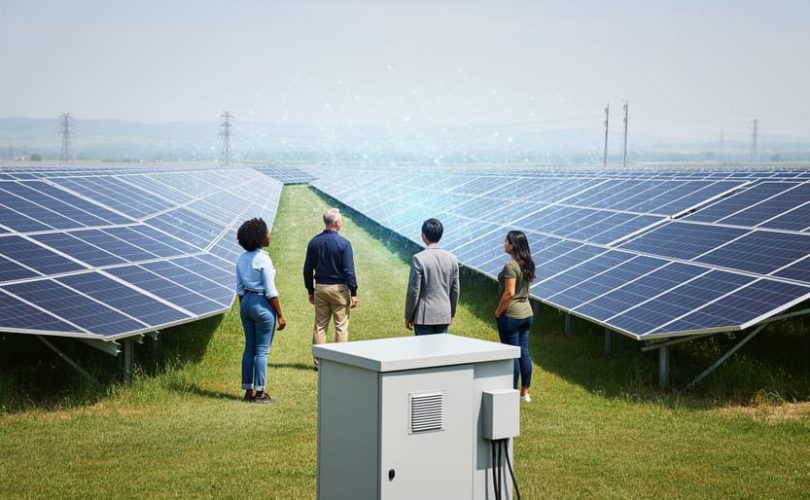
The confusion stems from how certain community solar subscriptions are marketed. Pyramid schemes profit by recruiting participants who pay to join and earn primarily by signing up others beneath them. Community solar, by contrast, generates actual electricity sold to the grid. Subscribers receive bill credits based on their share of production. No recruitment is required, payments flow from real energy generation, and the solar facility exists as verifiable infrastructure you can often visit.
Understanding how community solar works clarifies these distinctions immediately. The programs emerged from state-level policies designed to expand solar access to renters, homeowners with shaded roofs, and businesses without capital for on-site installations. By 2026, over twenty states have enacted community solar legislation with measurable subscriber protections, transparent pricing disclosures, and cancellation rights.
Legitimate programs display several hallmarks: registration with state utility regulators, publicly accessible project locations and production data, straightforward subscription agreements without upfront fees, and direct billing relationships with utilities or licensed electricity suppliers. The concern about scams is valid given the industry’s rapid growth, but regulatory frameworks exist precisely to prevent fraudulent schemes from operating under the community solar banner.
This article provides the verification methods, warning signs, and authoritative resources you need to confidently evaluate any community solar offer. We’ll explain eligibility criteria, enrollment processes, subscriber rights, and where to report suspicious activity, drawing on research conducted in collaboration with universities and informed by our renewable energy education programs.
What Community Solar Is, And What It Is Not
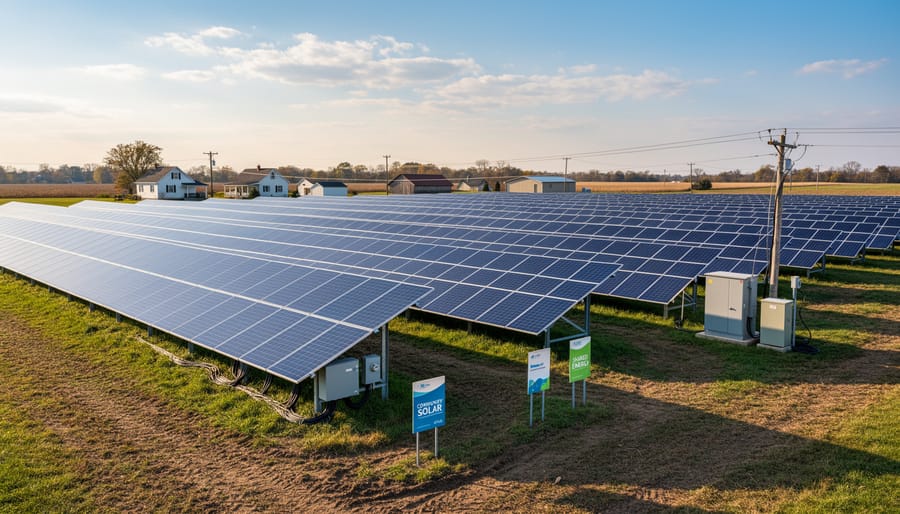
The Community Solar Business Model
Community solar projects operate on a straightforward revenue model centered on genuine electricity production. Developers build and maintain solar arrays, then divide the output into subscription shares. Subscribers pay for their allocated portion, typically through a monthly fee or per-kilowatt-hour rate, and receive credits based on production that appear directly on their utility bills. The credits reflect actual energy generated by the solar farm and delivered to the grid, creating a transparent value exchange.
This model contrasts sharply with pyramid schemes, where revenue depends on recruiting new participants rather than selling a legitimate product. In solar power sharing subscribers benefit from clean energy without recruiting anyone. Project developers earn income by selling electricity to utilities and managing subscriptions, not by building downlines. The subscription fees correlate directly to energy production capacity, and subscribers can verify their savings through utility bill credits that track kilowatt-hours generated.
If a program emphasizes signing up friends or promises payments for recruitment, that’s a warning sign. Legitimate community solar revenue flows from solar panels converting sunlight into electricity, not from expanding membership networks. The value exists independently of whether you bring in additional subscribers.
Red Flags of Pyramid Schemes vs. Legitimate Solar Programs
Legitimate community solar programs focus on delivering tangible energy savings through real solar arrays, while pyramid schemes disguise recruitment-driven income models as energy opportunities. Knowing the red flags helps you protect yourself from fraudulent offers masked as solar subscriptions.
| Characteristic | Legitimate Community Solar | Pyramid Scheme Red Flags |
|---|---|---|
| Primary Revenue Source | Electricity generation and utility bill credits | Recruiting new participants, not product sales |
| Upfront Costs | Low or no enrollment fees; transparent subscription terms | High upfront fees for “exclusive access” or training materials |
| Income Claims | Savings based on verified electricity production and rate structure | Promises of passive income, get-rich-quick returns, or exponential earnings |
| Emphasis in Marketing | Energy benefits, environmental impact, bill savings | Recruiting others, building downlines, earning from sign-ups |
| Verification | Registered with state utility commission; physical solar array exists | Vague about regulatory approval; no verifiable solar infrastructure |
If a program pressures you to recruit friends and family to maximize your own savings, that’s a major warning sign. Legitimate community solar platforms never require recruitment. Your subscription savings come exclusively from your share of the solar array’s output, not from how many people you refer.
Be wary of programs demanding large upfront payments for “starter kits,” “training sessions,” or “priority access” without clear documentation of what solar capacity you’re subscribing to. Lawful community solar subscriptions tie your costs directly to your electricity allocation, with transparent pricing available before you sign. Any pressure to pay immediately, reluctance to provide written contracts, or claims that “this opportunity closes soon” should trigger skepticism.
Another red flag is income framing rather than savings framing. Community solar subscribers save on utility bills; they don’t earn income from the program. If someone pitches community solar as a way to make money rather than reduce your electricity costs, you’re likely dealing with a pyramid scheme using solar as a facade.
Eligibility Requirements for Community Solar Programs
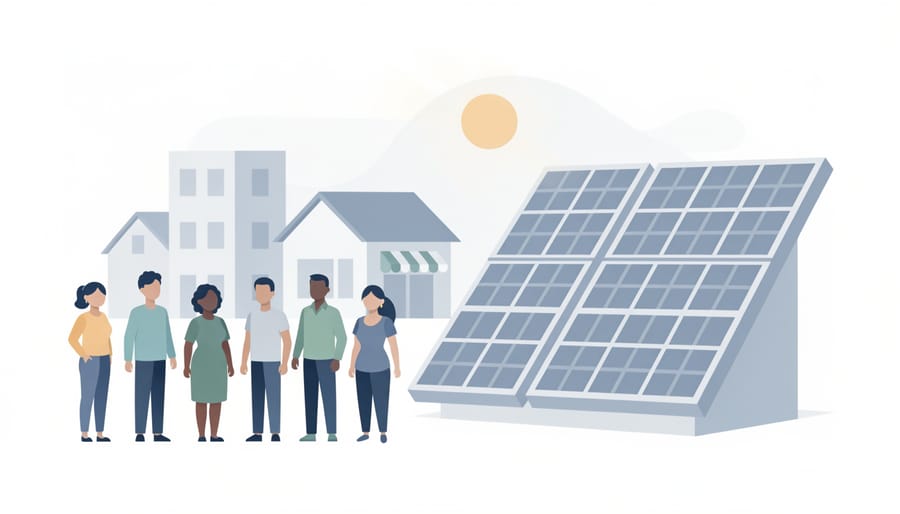
Community solar programs are designed to expand renewable energy access beyond traditional rooftop installations, but participation requirements vary by state, utility company, and individual project. Unlike pyramid schemes that target anyone willing to recruit others, legitimate community solar platforms have specific eligibility criteria tied to geography, utility service, and subscriber capacity.
The most fundamental requirement is geographic location. Subscribers must typically live or operate a business within the solar array’s designated service territory, often the same area served by the participating utility company. These service territory eligibility limits ensure that energy credits generated by the solar farm can be properly allocated through the subscriber’s existing utility account. Some states restrict participation to customers within the same county or distribution zone as the solar installation, while others allow broader regional participation.
Both renters and homeowners can subscribe to community solar, which distinguishes these programs from traditional rooftop solar that requires property ownership. This accessibility feature helps bring solar to everyone including apartment dwellers, those with shaded roofs, and individuals who cannot afford upfront installation costs. Businesses, nonprofits, and municipal entities also qualify in many programs, though they may have separate subscription tiers or capacity allocations.
Common eligibility criteria include:
- Active utility account with a participating electric company in the program’s service area
- Account holder status (the subscriber’s name must match or be authorized on the utility bill)
- Minimum credit score or no outstanding utility debt, depending on the developer’s requirements
- Subscription capacity limits (some programs cap the percentage of a subscriber’s average electricity usage that can be offset)
- Income verification for low-to-moderate income (LMI) reserved allocations in programs with equity mandates
Many states now mandate that a portion of community solar capacity be reserved for low-income households, similar to how solar co-ops prioritize community benefit. These programs may waive credit checks or deposit requirements for qualifying subscribers. No legitimate community solar program requires recruiting additional participants as a condition of enrollment, if recruitment is emphasized over energy subscription, that’s a pyramid scheme red flag, not a lawful solar platform.
How to Evaluate and Join a Community Solar Program
Verifying Program Legitimacy and Credentials
Start by confirming the developer’s regulatory standing. Visit your state’s public utility commission website and search for approved community solar projects by developer name or project identifier. Legitimate programs must register with the PUC and maintain compliance with state solar subscription regulations. Download the project’s certificate of approval or registration document, this proves the program exists in official records and meets minimum operational standards.
Check the developer’s business credentials through your state’s Secretary of State corporation database. Verify the company is registered, in good standing, and lists real officers with verifiable contact information. Cross-reference the business name against Better Business Bureau records and state attorney general consumer complaint databases. A pattern of unresolved complaints or recent incorporation with no operational history raises red flags.
Confirm the solar array physically exists and connects to the grid. Request the project’s interconnection agreement number from the developer, then verify it with the local utility company. Legitimate projects have documented grid connections with specific commissioning dates. You can also search the project address on satellite imagery services, recent aerial photos should show installed solar panels at the claimed location. If the developer refuses to provide the physical address or interconnection details, walk away.
Review the developer’s financial disclosures if the project uses public financing or tax credits. Community solar projects claiming federal Investment Tax Credits must file specific documentation. Ask for proof of insurance, performance bonds, or subscriber protection funds that legitimate developers maintain to cover operational failures or bankruptcy scenarios.
Understanding Subscription Terms and Billing
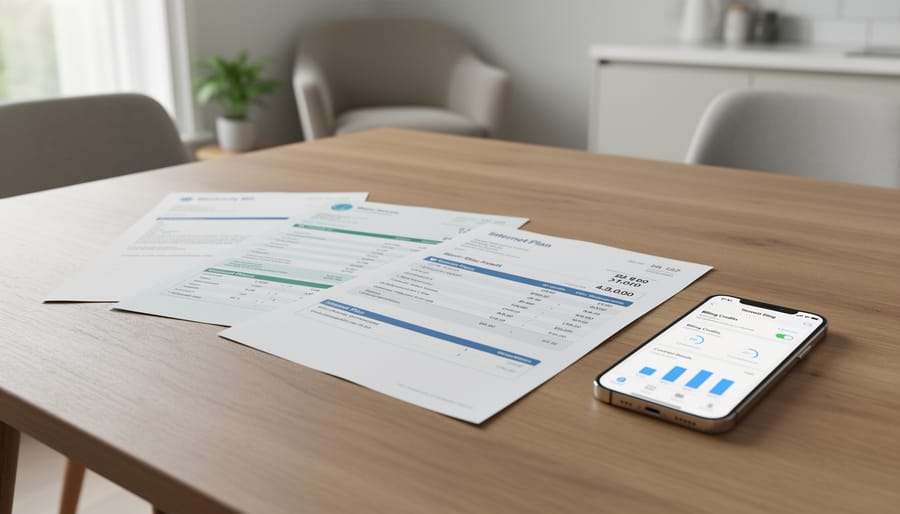
Before signing a community solar subscription, carefully review the agreement to confirm you’re receiving real value, not joining a pyramid scheme disguised as an energy program. Start by examining the credit rate, the discount you’ll receive per kilowatt-hour generated by your share of the solar array. Legitimate programs typically offer 5-15% savings compared to your standard utility rate, and this rate should be clearly stated in the contract.
Calculate your projected annual savings by multiplying your subscription size (measured in kilowatts) by the estimated annual production per kilowatt in your region, then applying the credit rate. For example, a 2 kW subscription producing 2,400 kWh annually at a 10% discount off a $0.12/kWh utility rate would save you roughly $29 per year. If projected savings seem unrealistically high or depend on recruiting others, that’s a red flag.
Examine the fee structure closely. Legitimate community solar programs charge subscription fees based on actual energy production, not upfront enrollment fees or ongoing “membership” charges unrelated to electricity. Watch for escalation clauses that increase fees faster than typical utility rate growth, exit penalties that trap you in unfavorable terms, or vague language about “administrative costs.” Some programs incorporate government solar incentives into subscriber savings, so confirm whether your discount reflects those benefits or if the developer retains them.
Review the contract term length, cancellation policy, and what happens if the solar array underperforms or shuts down. Transparent billing statements that show monthly production, your allocated credits, and net costs are standard in legitimate programs, opacity or complexity in billing is a warning sign.
Completing the Enrollment Process
Once you’ve verified the program’s legitimacy and reviewed the subscription terms, the enrollment process typically follows four concrete steps. First, complete the online or paper application form with your personal information, utility account number, and service address, most developers provide a streamlined digital portal that takes five to ten minutes. Second, upload or email a recent utility bill to confirm your account status and baseline usage; this allows the developer to calculate your appropriate subscription size and projected savings. Third, carefully review the final subscription agreement before signing, checking that the credit rate, subscription length, cancellation terms, and monthly fees match what you discussed during evaluation, never sign under pressure or without reading every clause. Fourth, after enrollment, monitor your utility bill over the next one to three billing cycles to confirm that community solar credits appear as a separate line item and that the charges from the solar developer align with your agreement. If credits don’t appear within the timeframe specified in your contract, contact both the developer and your utility company immediately to resolve the issue. Keep digital and paper copies of your signed agreement, enrollment confirmation email, and the first bill showing credits for your records in case disputes arise later.
Subscriber Rights and Obligations
Consumer Protections and Cancellation Rights
Community solar subscriptions come with enforceable consumer protections that sharply distinguish them from pyramid schemes, which offer no product-based guarantees. Most states require a three-day cancellation right after signing, allowing subscribers to exit without penalty during the cooling-off period. Early termination terms vary by developer and jurisdiction, but legitimate programs typically permit cancellation with 30 to 90 days’ notice and no exit fees after the initial subscription year, though some contracts include prorated buyout clauses for long-term agreements.
Refund policies depend on payment structure. Programs with upfront subscription fees usually outline refund timelines in the contract, commonly full refunds during the cooling-off window and prorated refunds thereafter based on unused credit value. Monthly subscription models rarely involve refunds since you pay as credits accrue. State public utility commissions often mandate disclosure standards requiring developers to specify cancellation procedures, fee schedules, and refund calculations in plain language before enrollment.
Consumer protection laws at the state level govern contract transparency, billing accuracy, and dispute resolution. Many jurisdictions require solar subscription agreements to include clear termination clauses, prohibit automatic renewals without consent, and mandate itemized credit statements. If a provider refuses cancellation, resists refunds owed, or fails to deliver promised credits, subscribers can file complaints with their state PUC, which has enforcement authority to investigate and compel compliance, protections absent in pyramid schemes where victims have no regulatory recourse.
Subscriber Responsibilities and Contract Obligations
Community solar subscribers assume several contractual responsibilities that differ fundamentally from pyramid schemes, where participants’ primary obligation is recruiting others. In legitimate community solar programs, your responsibilities center on fulfilling a standard service agreement tied to actual energy production.
Payment obligations typically follow one of two models: you pay a fixed monthly subscription fee regardless of solar production, or you pay only for the credits you receive based on your allocated share of the array’s output. Most contracts require automatic payment authorization through bank draft or credit card. Payment schedules align with your regular utility billing cycle, with solar credits appearing as line items on your electric bill and subscription fees charged separately by the community solar provider. Unlike pyramid schemes that demand upfront payments for recruitment rights, these fees purchase a measurable share of renewable energy generation.
Minimum subscription periods generally range from one to three years, though some programs offer month-to-month options at higher rates. Early termination before the minimum period often triggers cancellation fees calculated as a percentage of remaining contract value, typically 10-25% of unpaid months. You must maintain an active utility account within the program’s service territory throughout your subscription; relocating outside the coverage area usually constitutes valid grounds for fee-free cancellation if you provide proper documentation.
Transfer procedures vary by provider. Many contracts allow you to transfer your subscription to another eligible utility customer within the same service area, requiring written notice 30-60 days in advance. Some programs permit you to transfer your subscription to a new address if you move within the territory, while others treat relocation as a cancellation event. Always review transfer provisions before signing, as inflexible terms can create problems if your circumstances change.
Where to Get Help and Verify Community Solar Programs
To verify whether a community solar program is legitimate or to report suspected fraud, start with your state’s public utility commission (PUC) or public service commission. Each state regulator maintains registries of approved community solar projects, developer licenses, and subscription agreements. Visit your PUC website to search for the program name, confirm the solar array’s operational status, and review any consumer complaints on file. If the program is not listed or the developer cannot provide a valid registration number, that is a significant warning sign.
The Federal Trade Commission (FTC) is the primary agency for reporting pyramid schemes and deceptive business practices. File a complaint at if you encounter high-pressure recruitment tactics, promises of guaranteed returns, or upfront fees unrelated to actual energy credits. The FTC’s consumer guidance on renewable energy scams outlines specific red flags and enforcement actions against fraudulent solar schemes.
For independent verification and industry standards, consult these resources:
- North American Board of Certified Energy Practitioners (NABCEP), maintains a directory of certified solar professionals and accredited installation companies
- Solar Energy Industries Association (SEIA), publishes consumer guides, member directories, and best practices for community solar programs
- Interstate Renewable Energy Council (IREC), provides model consumer protection guidelines and state-by-state program databases
- National Association of State Energy Officials (NASEO), offers state-level renewable energy program directories and policy resources
- Better Business Bureau (BBB), maintains complaint records and business ratings for solar developers and subscription platforms
State attorneys general offices also handle consumer protection cases involving renewable energy fraud. Many have dedicated environmental or consumer protection divisions with complaint forms and investigation processes.
Educational institutions play a crucial role in advancing photovoltaic knowledge and industry transparency. Mose Solar collaborates with universities to develop professional education programs that train the next generation of solar experts in legitimate industry practices, technical standards, and ethical business models. These partnerships support both consumer protection and the development of robust community microgrids that deliver measurable renewable energy benefits.
For technical verification, request the solar array’s physical address and production data. Legitimate programs provide GPS coordinates, interconnection agreements with utilities, and monthly generation reports. Cross-reference these details with satellite imagery and state interconnection queues to confirm the facility exists and operates as claimed.
How to Apply or Complete the Process
Most community solar programs follow a straightforward enrollment process, though specific steps vary by developer and state regulations.
Start by contacting the program administrator directly through their official website or customer service line. You’ll typically need your utility account number, service address, and a recent electric bill. Some programs request proof of residence or income documentation if you’re applying for low-income subscriber rates.
Complete the enrollment application, which asks for basic contact information, utility account details, and your preferred subscription size. Many developers offer online portals where you can upload required documents and electronically sign agreements. Review the subscription agreement carefully before signing, pay attention to the credit rate, contract term, cancellation policy, and any fees.
The program administrator will verify your utility account information with your electric company and confirm your eligibility. This coordination step usually takes one to three weeks. Once approved, you’ll receive a confirmation notice with your subscription start date and credit allocation details.
Your utility company will begin applying credits to your monthly bill after the subscription activates. Monitor your first few bills to ensure credits appear correctly. If discrepancies arise, contact both the community solar administrator and your utility’s customer service department.
Keep all enrollment documents, including the signed agreement, confirmation emails, and initial billing statements showing proper credit application.
Frequently Asked Questions About Community Solar Legitimacy
Can I lose money in community solar?
Legitimate community solar subscriptions are structured so you pay only for the energy credits you receive, typically at a discount to your standard utility rate. You won’t lose money if the program delivers credits as promised, but you should review cancellation terms and confirm there are no hidden fees that could reduce your savings.
Do I need to recruit others to save money?
No. Authentic community solar programs base your savings on electricity credits from the solar array, not on recruiting other subscribers. If a program emphasizes bringing in new members as a condition for your benefits, that’s a red flag indicating a possible pyramid scheme rather than a legitimate energy subscription.
What happens if the solar farm shuts down?
Reputable developers carry insurance and performance guarantees to protect subscribers if a project ceases operation. Your subscription agreement should outline remedies such as credit transfers to another array, prorated refunds, or penalty-free cancellation. Check your contract for these protections before enrolling.
How do I know if a program is registered?
Contact your state’s public utility commission to verify that the community solar project holds valid permits and regulatory approval. Most states maintain online databases of approved solar facilities and developers, and the commission can confirm whether a program is authorized to operate in your utility territory.
Are there upfront costs or enrollment fees?
Most community solar programs charge no upfront fees; you pay only for monthly credits through your utility bill or a separate subscription invoice. Be cautious of programs demanding large deposits, membership fees, or investment contributions, as these are uncommon in standard community solar models and may signal fraudulent intent.
These questions reflect the concerns many prospective subscribers have when first encountering community solar offers. The distinction between energy-based savings and recruitment-based schemes is central to evaluating legitimacy. Unlike pyramid structures that collapse when recruitment slows, community solar platforms generate value from actual electricity production measured in kilowatt-hours and credited to subscriber accounts.
If a program’s marketing materials focus heavily on income opportunities from signing up friends rather than on energy savings, discount rates, or the physical solar array’s specifications, treat that as a warning. Legitimate providers emphasize contract terms, credit calculations, and project performance data. They welcome questions about regulatory status, insurance coverage, and developer track records because transparency strengthens subscriber confidence and long-term retention.
Community solar is not a pyramid scheme. It is a regulated renewable energy program that delivers measurable electricity credits in exchange for subscription fees, backed by state oversight and operational solar arrays. Pyramid schemes, by contrast, depend on endless recruitment rather than genuine product value and inevitably collapse under their own unsustainable structure.
The key to avoiding scams is straightforward due diligence. Verify program registration with your state’s public utility commission, confirm the solar farm exists and is operational, read subscription contracts carefully to understand credit rates and cancellation terms, and never pay large upfront fees for promised energy savings that depend on recruiting others. Legitimate community solar platforms generate value from electricity production, not enrollment commissions.
Understanding your contractual rights protects you further. Know your cooling-off period, early termination options, and how billing credits appear on utility statements. If a program pressures you to sign immediately, evades questions about regulatory approval, or emphasizes recruitment over energy generation, walk away.
For those interested in deepening their knowledge of photovoltaic technologies and renewable energy systems, Mose Solar collaborates with universities to offer educational programs that build professional competence in solar energy. Whether you are an aspiring PV professional or a consumer seeking to understand the industry, credible education and verified information remain your strongest tools for navigating the renewable energy landscape with confidence.