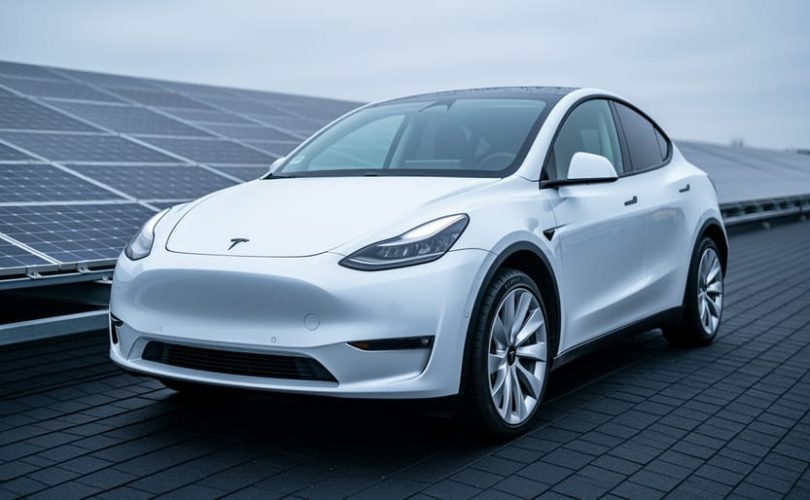
Protecting your Model Y’s paint from rooftop solar panel runoff requires a three-step approach: applying a high-grade ceramic coating or paint protection film to vulnerable areas, installing gutter guards or debris diverters on the solar array, and establishing a weekly rinse schedule to prevent mineral deposit accumulation. This proactive method takes approximately four to six hours for initial application and prevents the oxidation, water spotting, and clear coat deterioration that affect vehicles parked beneath residential photovoltaic systems.
The challenge stems from solar panel runoff carrying concentrated minerals, dust particles, and organic debris that standard car washes cannot fully remove. Unlike conventional outdoor parking, vehicles stationed under rooftop arrays face accelerated paint degradation because panel cleaning cycles and rain events channel contaminants directly onto hood, roof, and windshield surfaces. Left unaddressed, these deposits etch into clear coat within three to six months, requiring professional paint correction that costs significantly more than preventive protection.
Model Y owners benefit particularly from targeted protection strategies because the vehicle’s panoramic glass roof and horizontal body lines create natural collection points for runoff. The intersection of electric vehicle ownership and residential solar installation represents a growing segment within the renewable energy community, one that Mose Solar addresses through educational partnerships with universities developing integrated EV and photovoltaic infrastructure guidance. Our collaboration with academic researchers has identified specific protection protocols that preserve vehicle finish while maintaining solar system performance.
The following guide outlines professional-grade materials, safety protocols, and verification methods refined through field testing with photovoltaic professionals and automotive protection specialists. For comprehensive coverage beyond solar-specific concerns, review our recommendations for Tesla Model Y paint protection film applications.
Understanding the Paint Protection Challenge
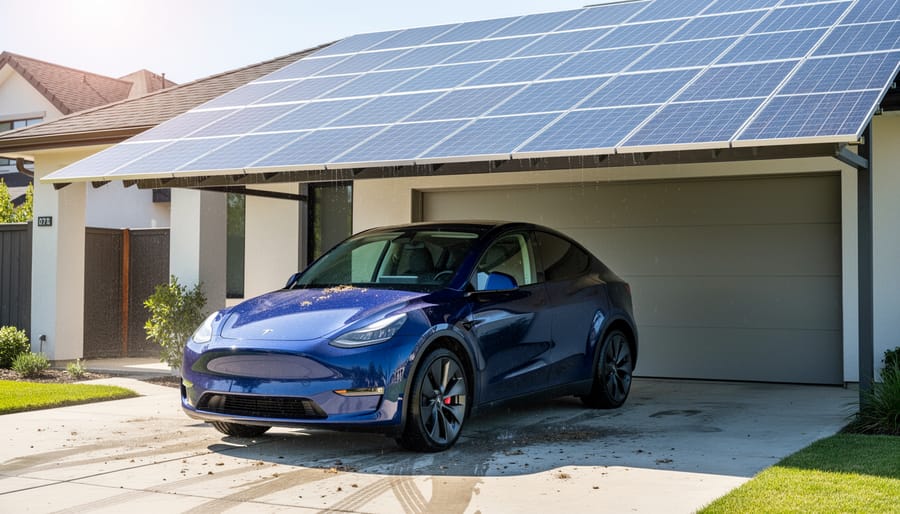
Parking your Model Y beneath or adjacent to rooftop solar panels creates a unique set of paint degradation risks that standard outdoor vehicle protection doesn’t fully address. The primary threat comes from mineral-rich runoff during rain events or panel cleaning. As water flows across photovoltaic surfaces, it collects silica particles, dust, and mineral deposits before cascading onto your vehicle’s paint. These concentrated mineral solutions can etch clear coat if left to dry, creating permanent water spots that standard washing won’t remove.
Tesla’s paint characteristics compound this challenge. Model Y factory paint is notoriously thin compared to traditional automotive manufacturers, typically measuring 3-5 mils versus the industry standard of 6-8 mils. This reduced thickness means less tolerance for abrasive contaminants and chemical exposure. The multi-coat paint system relies on a delicate clear coat for protection, which solar panel debris can compromise faster than thicker paint applications.
Bird activity intensifies near solar installations because panels create attractive perching and nesting structures. Droppings from these concentrated populations contain uric acid that bonds to paint within hours in warm conditions. The combination of acidic bird waste and mineral deposits creates a corrosive environment that attacks your paint’s protective layers simultaneously.
UV exposure patterns shift unpredictably under solar arrays. While portions of your vehicle receive intermittent shade from panels, other sections endure unfiltered sunlight. This irregular exposure accelerates oxidation in exposed areas while creating temperature differentials across body panels. The cycling between shaded and sun-exposed conditions stresses paint bonds more than consistent full-sun exposure would.
Understanding these interrelated factors is essential before selecting protection methods. The challenge isn’t just outdoor parking, it’s outdoor parking in an environment where panel durability maintenance activities and environmental concentration effects create persistent paint threats that require specialized countermeasures.
Tools and Materials You’ll Need
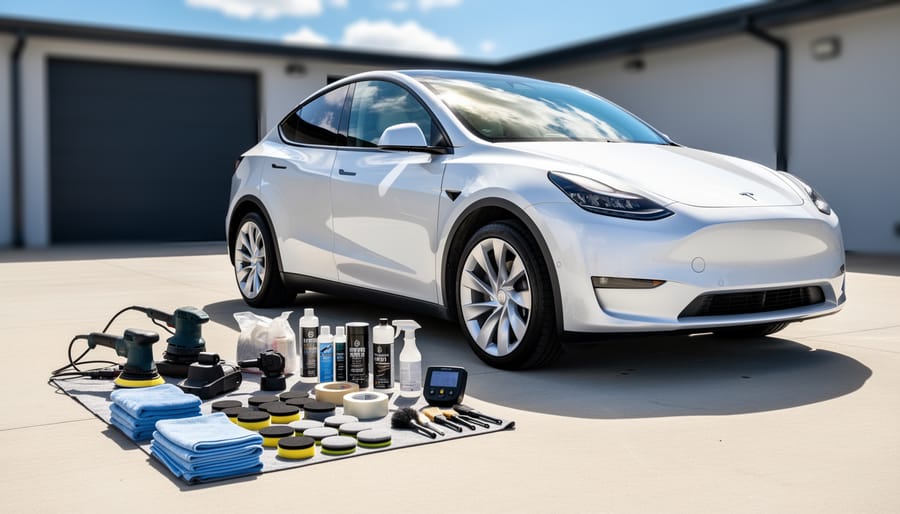
Protecting your Model Y’s paint in an outdoor rooftop solar environment requires a deliberate selection of quality materials. The products you choose must withstand not just typical outdoor exposure but also the specific challenges of solar panel runoff, mineral deposits, and concentrated debris. Invest in professional-grade supplies rather than bargain alternatives, the harsh conditions beneath solar installations will quickly expose inferior products.
Essential Protection Materials by Method:
- Ceramic Coating Route: SiO2-based ceramic coating (minimum 9H hardness rating), foam applicator pads, microfiber suede towels for buffing, and infrared thermometer to verify surface temperature
- Paint Protection Film Application: Pre-cut PPF kit for Model Y panels or bulk film if custom-cutting, spray bottle with slip solution (distilled water plus baby shampoo), squeegee with felt edge, and heat gun for edge conforming
- Car Cover Protection: Multi-layer outdoor cover with UV-resistant top layer and soft inner fleece (avoid single-layer covers that trap moisture), elasticized hem for wind resistance, and storage bag for off-season
- Surface Preparation Essentials: Detailing clay bar kit (medium grade), 70% isopropyl alcohol in spray bottle, pH-neutral car wash soap (7.0 pH), two 5-gallon wash buckets with grit guards
- Application and Maintenance Tools: Premium microfiber towels (minimum 400 GSM weight), foam cannon for pressure washer or hose attachment, soft-bristle detailing brushes for panel gaps, and quick detailer spray for touch-ups
You’ll also need proper lighting to verify complete coverage during application. A cordless LED work light reveals high spots, streaks, and missed areas that natural sunlight can obscure. For outdoor work beneath solar panels, battery-powered equipment eliminates extension cord hazards and allows positioning away from overhead runoff zones during the protection process.
Safety Warnings and Pre-Application Considerations
Before applying any paint protection products to your Model Y, address several critical safety and environmental factors that directly affect application success and your personal wellbeing. Working in direct sunlight creates multiple problems: product flash times accelerate unpredictably, surfaces become too hot to touch safely, and UV exposure degrades certain chemical formulations during application. Choose a shaded workspace or wait until evening when ambient temperatures drop and your vehicle’s painted surfaces cool completely.
Temperature control matters more than most owners realize. Most ceramic coatings and sealants perform optimally between 50-80°F, with surface temperatures ideally matching ambient air temperature. Cold surfaces prevent proper chemical bonding, while excessive heat causes premature curing that locks in application streaks and high spots. Use an infrared thermometer to verify panel temperatures before starting, particularly on dark-colored Model Ys that absorb heat rapidly even in shade.
Chemical safety requires attention when working with isopropyl alcohol, ceramic coating solutions, and paint preparation products. Ensure adequate airflow in your workspace, wear nitrile gloves to prevent skin contact with solvents and silica-based formulations, and keep products away from children and pets. Never apply coatings in enclosed garages without proper ventilation, as fume accumulation poses respiratory risks during extended application sessions.
Assess your rooftop solar runoff patterns before committing to protection methods. If water channels consistently across specific vehicle zones or if mineral deposits accumulate rapidly, you might need professional drainage solutions. Coating paint won’t solve structural water management problems, it only protects against the exposure that proper site planning minimizes. Walk your parking area during rain to observe flow patterns, and consider whether repositioning your vehicle or installing ground-level drainage would address root causes more effectively than relying solely on paint barriers.
Step-by-Step Paint Protection Process
Step 1: Assess Your Solar Runoff Pattern
Start by parking your Model Y in its typical outdoor spot beneath or adjacent to your rooftop solar array during light rain, or simulate runoff by gently hosing down the panels. Watch carefully where water streams off the panel edges and observe the flow patterns across your parking surface. Most residential solar installations create concentrated runoff at panel corners and along mounting rails rather than sheeting evenly across the entire array.
Mark these flow paths mentally or with chalk on the pavement. Notice which sections of your vehicle sit directly in the runoff zone, typically the roof, hood, and trunk areas catch the most exposure. Pay attention to where debris accumulates: leaves, dust, and bird droppings often concentrate at panel edges and wash down with the first rain.
Take photos from multiple angles showing your Model Y’s position relative to the solar panels above. These images help you identify which body panels face the highest contamination risk. If your panels angle toward a specific section of the vehicle, that zone becomes your priority protection area.
Repeat this assessment across different weather conditions. Morning dew runoff behaves differently than afternoon thunderstorm flows, and seasonal debris patterns change throughout the year.
Step 2: Deep Clean and Decontaminate the Paint
Start with a thorough two-bucket wash to eliminate all surface contaminants before applying any protective products. Fill one bucket with pH-neutral car soap diluted according to manufacturer specifications, typically two ounces per gallon, and keep the second bucket filled with clean rinse water. Work from top to bottom using a microfiber wash mitt, rinsing the mitt in the clean water bucket after each panel before reloading with soap. This method prevents dirt redeposition and is particularly important for removing the fine silica dust and mineral residue that accumulates from solar panel runoff.
After washing, perform a clay bar treatment while the paint remains damp. Spray a dedicated clay lubricant onto a two-foot-square section and glide a fresh clay bar across the surface using light, overlapping strokes. You’ll feel the clay grab as it pulls embedded contaminants, solar panel grit, industrial fallout, and tree sap, from the paint pores. Inspect the clay frequently and fold to expose a clean surface when it becomes visibly dirty. Complete the entire vehicle methodically, then rinse thoroughly with a strong stream to flush away all loosened particles and soap residue.
Step 3: Surface Preparation and Inspection
After washing, dry the Model Y completely using clean microfiber towels in a blotting motion rather than dragging across the surface. Work panel by panel to prevent water spots from forming. Once dry, inspect the paint under bright light for existing damage: look for swirl marks, scratches, bird dropping etching, or mineral deposits that survived the clay bar treatment. These flaws will be sealed beneath any coating you apply, so address them now with paint correction if needed.
Next, wipe down all surfaces with 70% isopropyl alcohol using a fresh microfiber cloth. This removes any remaining oils, wax residues, or quick detailer products that would prevent proper coating adhesion. Work in two-foot sections, wiping in straight lines.
Verify the surface is ready by performing a water sheeting test: spray a small amount of distilled water onto the paint. It should sheet off uniformly without beading. If water beads up, residual wax or sealant remains, repeat the alcohol wipe-down on that area.
Step 4: Apply Paint Protection Film to High-Risk Zones
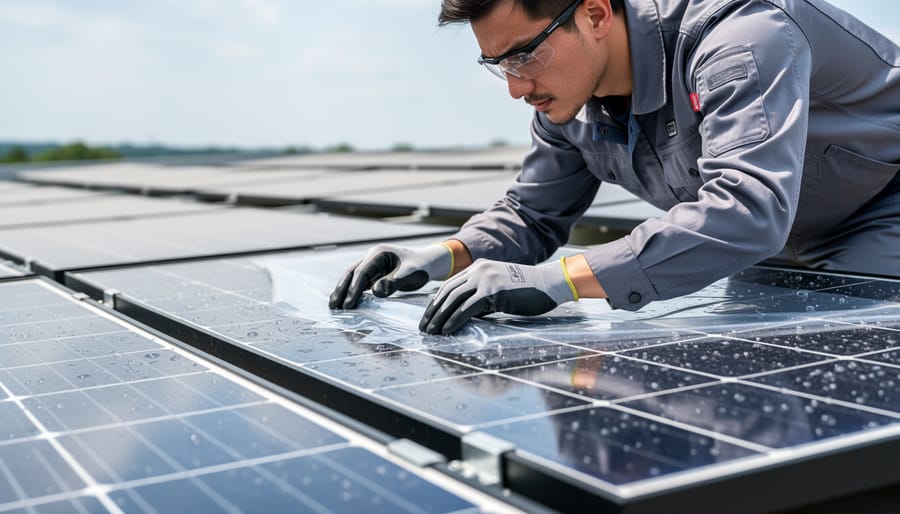
Paint protection film offers the most robust defense for Model Y surfaces directly exposed to solar panel runoff. Focus on the roof, hood, and trunk lid, these catch the majority of water and debris flowing from overhead panels.
Start with pre-cut PPF kits designed specifically for Model Y geometry, which eliminate trimming errors. If you’re working with bulk film, add a 1-inch margin beyond the target area to ensure complete coverage. Mix three drops of baby shampoo per 16 ounces of distilled water in a spray bottle for your slip solution.
Spray both the paint surface and the adhesive side of the film liberally. Position the film carefully, then use a soft squeegee to push water and air bubbles from the center outward. Work slowly, rushing creates permanent wrinkles. Apply firm, overlapping strokes at a 45-degree angle.
Pay special attention to edges where runoff concentrates. Use a heat gun on low setting (around 200°F) to activate the adhesive and wrap edges slightly around body contours. This prevents lifting when water flows across the surface repeatedly. Trim excess material with a sharp blade held at a shallow angle to avoid cutting into the paint.
Let the film cure untouched for 48 hours before exposing it to water or parking under the solar array.
Step 5: Apply Ceramic Coating or Sealant
With the surface fully prepped, you’re ready to apply the primary protective barrier. Work systematically through each panel, start with the roof, then move to the hood, fenders, doors, and trunk, to ensure complete coverage without missing spots.
Pour a small amount of ceramic coating or sealant onto a foam applicator pad. Apply the product in straight, overlapping lines using light to moderate pressure. Cover one section at a time, roughly 2×2 feet, rather than attempting entire panels at once. This prevents the product from curing before you can buff it, which creates high spots and uneven protection.
Watch the product as it flashes, it’ll typically transition from a wet appearance to a hazy, rainbow-like sheen. Most ceramic coatings flash within 30-60 seconds, though synthetic sealants may take slightly longer. When you see this visual cue, immediately buff the section with a clean microfiber towel using circular motions. Apply firm pressure to level the coating and remove excess product.
Inspect each section under angled light before moving forward. You should see a uniform, reflective finish without streaking or missed areas. If you spot uneven coverage, apply a small amount of product to your towel and re-level that zone.
Repeat this process across all painted surfaces, replacing applicator pads and buffing towels as they become saturated to maintain application quality.
Step 6: Allow Proper Curing Time
After applying your ceramic coating or sealant, the curing window determines whether your protection bonds properly or fails prematurely. Most ceramic coatings require 24-48 hours of dry conditions, while sealants typically cure in 12-24 hours. Check your specific product’s technical sheet for exact timing.
During this period, keep your Model Y garaged or under a waterproof car cover. If neither option exists, park away from your rooftop solar panels, even a light rain triggering panel runoff can contaminate uncured coatings, creating permanent streaking or bonding failures. Morning dew counts as moisture exposure, so covered storage remains critical overnight.
Avoid touching the paint, driving through rain, or washing the vehicle. Temperature stability matters too: ideal curing occurs between 60-75°F. Extreme heat or cold extends cure times and compromises chemical cross-linking. If unexpected weather arrives mid-cure, adding protection time (an extra 12-24 hours) ensures the coating fully hardens before facing solar runoff challenges.
Step 7: Implement Ongoing Maintenance Protocol
Maintaining your Model Y’s protective barrier requires consistent attention in outdoor solar environments. Establish a washing routine every two weeks using pH-neutral soap and the two-bucket method. This frequency prevents mineral deposits from solar runoff and organic debris from bonding to the coating surface.
Between washes, use a spray detailer with your microfiber towels to remove light dust and water spots. Apply the detailer after morning dew or light rain events, which often carry particulates from your rooftop panels. This quick maintenance takes five minutes and extends your ceramic coating’s effectiveness significantly.
Plan for quarterly reapplication of your coating booster or sealant top coat. These products refresh the hydrophobic properties that degrade from continuous UV exposure and repeated solar panel cleaning events. Mark your calendar for seasonal reapplications, ideally timed after professional solar maintenance when panels receive their own cleaning.
Inspect high-exposure zones during each wash. Check for reduced water beading or new etching on the roof and hood. Early detection allows targeted spot treatment before protection fully compromises, saving time and expense compared to complete reapplication.
Verification and Effectiveness Testing
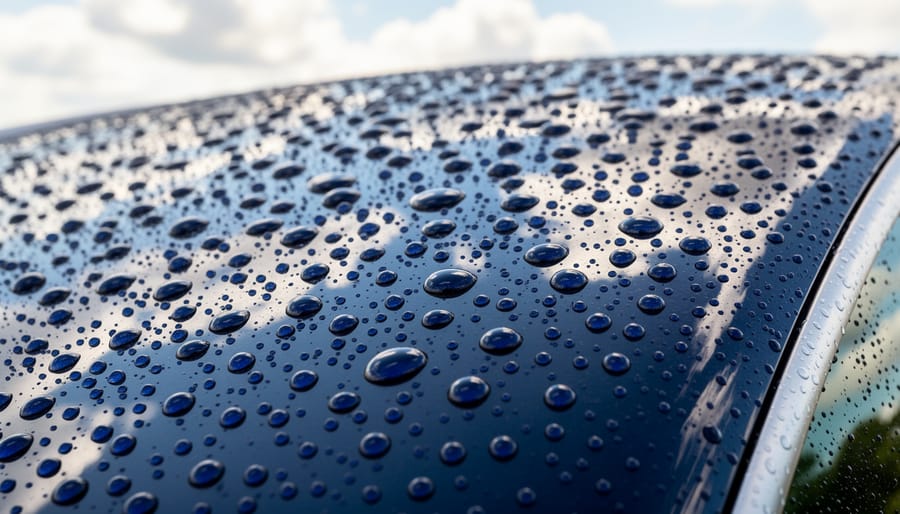
After completing your paint protection application, you need objective confirmation that it’s actually shielding your Model Y from solar panel runoff and debris. Start with the water beading test: spray a small amount of distilled water onto different painted surfaces. Properly applied ceramic coating or sealant should create tight, rounded water beads with contact angles exceeding 90 degrees. If water sheets flat or forms loose puddles rather than defined spheres, that area needs reapplication.
Conduct a bright-light inspection within 48 hours of application. Move a portable LED work light across all treated panels at shallow angles. This reveals streaking, missed spots, or uneven coating thickness that normal daylight conceals. Pay special attention to the roof and hood, where solar runoff concentrates.
Mark your calendar for post-cleaning inspections. After each rooftop solar panel maintenance session, check the vehicle within 24 hours for new swirl marks, water spots, or etching patterns. Compare these observations to photos taken immediately after your protection application. New defects indicate either compromised protection or the need for more frequent reapplication in high-exposure zones.
Schedule quarterly reassessments of the roof, hood, and trunk areas directly beneath panel edges. Repeat the water beading test and photograph these zones under consistent lighting. Declining bead tightness or increased contamination adhesion signals it’s time for maintenance coating or a fresh protection layer before permanent paint damage occurs.
Next Steps: Integrating Protection with Solar System Maintenance
Schedule your vehicle protection efforts around your solar array’s maintenance calendar to prevent setbacks. Contact your solar panel service provider to establish their cleaning schedule, typically every six months in most climates. Request 24-hour advance notice before any panel work so you can reposition your Model Y or apply temporary protection.
When panel cleaning is scheduled, move your vehicle to an alternate parking spot at least 15 feet from the array’s drainage path. If relocation isn’t possible, cover your Model Y with a waterproof car cover rated for outdoor use, ensuring complete coverage from roof to rocker panels. Solar panel cleaning often uses high-pressure water systems that generate significantly more runoff than natural rainfall, potentially overwhelming your ceramic coating’s hydrophobic properties with concentrated mineral deposits.
Document the runoff patterns after each professional cleaning session. If repeated sessions show consistent paint contamination despite your protection measures, discuss drainage modifications with your solar installer. Simple solutions like gutter extensions or ground-level splash guards can redirect cleaning water away from your parking area.
Proactively applying solar maintenance tips helps you anticipate when your vehicle faces elevated exposure risks. Understanding PV system care cycles through resources like Mose Solar’s educational programs provides the knowledge to coordinate both investments effectively, protecting your Model Y while maintaining optimal solar performance.
Frequently Asked Questions
How often should ceramic coating be reapplied in solar environments?
Quality ceramic coatings last 2-3 years in normal conditions, but outdoor solar environments with constant runoff and debris typically require reapplication every 12-18 months. Apply booster sprays quarterly to extend coating life between full reapplications.
Can I use a car cover instead of coating?
A high-quality outdoor car cover provides temporary protection but traps moisture underneath, which can cause more harm than good in long-term outdoor parking situations. Combine a breathable cover with ceramic coating for maximum protection, using the cover only during severe weather or extended non-use periods.
Will PPF yellow under constant UV exposure?
Modern PPF products use advanced urethane formulations that resist yellowing for 5-10 years even under intense UV exposure. Choose premium brands with UV inhibitors specifically rated for outdoor applications to ensure longevity matching the typical solar lifespan of your rooftop system.
What’s the best protection for dark-colored Model Ys?
Dark colors like Tesla’s Midnight Silver Metallic and Deep Blue Metallic show swirls and etching more readily than lighter shades. Layer PPF on horizontal surfaces (roof, hood, trunk) with a graphene-infused ceramic coating on vertical panels for comprehensive defense against solar runoff damage.
How do I protect against bird droppings attracted to solar panels?
Bird droppings contain acidic compounds that etch paint within hours. Remove droppings immediately with a damp microfiber towel and quick detailer spray, working gently to avoid scratching. Ceramic coatings create a sacrificial barrier that prevents droppings from bonding to paint, making removal safer and easier.
Does Tesla’s OEM paint require special products?
Tesla’s water-based paint is thinner than traditional automotive finishes, making it more vulnerable to environmental damage. Use pH-neutral products formulated for sensitive clear coats, avoid abrasive polishes, and choose ceramic coatings designed specifically for modern EV paint systems.
These questions reflect the real challenges Model Y owners encounter when protecting their vehicles in outdoor solar environments. The intersection of rooftop photovoltaic systems and EV ownership creates unique maintenance demands that traditional car care advice does not address. Understanding both your solar installation’s maintenance cycle and your vehicle’s protection needs helps you develop a coordinated approach that preserves your investment in both systems over their operational lifetimes.
Protecting your Model Y’s paint from rooftop solar panel exposure requires commitment, but the investment pays dividends in preserving your vehicle’s appearance and resale value. The three-layer approach outlined in this guide, thorough surface preparation, application of durable protective barriers, and consistent ongoing maintenance, creates a comprehensive defense against the unique challenges posed by parking beneath photovoltaic installations.
Your Model Y represents a significant investment in sustainable transportation, and your rooftop solar system embodies the same environmental commitment. Both deserve protection strategies that acknowledge their interaction. Regular inspections after solar panel cleanings, quarterly reapplication of sealants in high-exposure zones, and coordinated maintenance schedules ensure your paint protection system remains effective against mineral runoff, debris accumulation, and concentrated UV exposure.
Understanding how your PV system impacts the environment below it, from drainage patterns to maintenance requirements, reflects the broader photovoltaic knowledge that empowers renewable energy adoption. Mose Solar’s university-collaborative educational programs offer deeper insights into solar system behavior, including predictive maintenance technologies that help you anticipate panel cleaning schedules and adjust vehicle protection accordingly.
Your renewable energy lifestyle deserves an integrated approach where solar performance and vehicle care complement each other. With proper paint protection in place, you can park confidently beneath your panels, knowing both investments are working together toward a sustainable future.