Showing 701 Result(s)
A futuristic city skyline at sunset featuring advanced solar panel installations on buildings, demonstrating innovative rail-less and robotic solar installation technologies.

Revolutionary Solar Installation Methods That Are Reshaping Energy Generation

Solar energy innovation stands at the forefront of our renewable energy revolution, driving unprecedented advancements in efficiency, accessibility, and technological sophistication. Recent breakthroughs in photovoltaic technology, coupled with solar installation fundamentals, have catalyzed a transformation in how we harness the sun’s power. From perovskite-silicon tandem cells achieving record-breaking conversion rates of 29.8% to revolutionary bifacial panels that capture …

An innovative 5G solar-powered security camera system integrated with solar panels and connectivity symbols, set against a backdrop of a modern smart city, symbolizing the fusion of renewable energy with cutting-edge surveillance technology.

Smart Solar Security: Making Your 5G Camera System Cybersafe

The convergence of 5G connectivity and solar-powered surveillance represents a transformative advancement in security technology, offering unprecedented capabilities for remote monitoring and sustainable operation. Modern 5G solar-powered security cameras combine high-speed cellular connectivity with renewable energy independence, enabling real-time HD video transmission, advanced AI-powered analytics, and continuous operation without traditional power infrastructure constraints. These systems integrate seamlessly with smart city initiatives and enterprise security frameworks, providing a robust solution for both urban and remote …

Conceptual illustration of a solar photovoltaic system converting sunlight to electricity, showing solar panels, inverters, and energy flow.

Solar PV Predictive Maintenance: How Your System Actually Works (And Why It Matters)

Photovoltaic (PV) solar technology represents one of humanity’s most elegant solutions for harnessing renewable energy, converting sunlight directly into electricity through a sophisticated yet remarkably reliable process. At its core, PV solar systems employ specialized semiconductor materials that exhibit the photoelectric effect – a phenomenon where photons from sunlight knock electrons loose from their atoms, generating an electric current. This fundamental principle powers everything from small residential rooftop installations to massive utility-scale solar farms, contributing significantly to our global transition toward…

A futuristic city skyline featuring buildings with integrated solar panels on windows, facades, and roofs, highlighting the blend of modern architecture and renewable energy solutions.

Building-Integrated Solar: How Modern Architecture Is Revolutionizing PV Energy

Building-integrated photovoltaics (BIPV) represents a revolutionary convergence of architectural design and renewable energy technology, transforming conventional building elements into power-generating assets. This innovative approach seamlessly integrates solar cells into building materials – from windows and façades to roofing tiles – creating structures that not only shelter but actively contribute to sustainable energy production. As cities worldwide push toward carbon neutrality and net-zero building standards, BIPV systems have emerged as a crucial solution, offering both aesthetic appeal and significant energy …

Aerial perspective of solar panels mounted high above a flourishing agricultural field, highlighting the synergy between solar energy harvesting and crop cultivation in an agrovoltaic system.

Agrovoltaic Systems: How Solar Panels Are Revolutionizing Modern Farming

Agrovoltaic systems represent a groundbreaking fusion of solar energy generation and agricultural production, transforming traditional farmland into dual-purpose energy powerhouses. This innovative approach optimizes land use by simultaneously harvesting solar power above while cultivating crops below, addressing two critical global challenges: sustainable energy production and food security.
Field experiments conducted in 2024 reveal compelling results across multiple crop types. Rice …

Futuristic building with integrated solar panel facades and roofing, highlighting sustainable architecture and renewable energy technology in an urban environment.

Building-Integrated PV Insulation: The Smart Way to Power and Protect Your Building

Building-integrated photovoltaics (BIPV) represents a revolutionary convergence of architectural design and renewable energy technology, transforming traditional building elements into power-generating assets. This innovative approach seamlessly integrates solar cells into building materials, including windows, facades, and roofing systems, effectively replacing conventional construction materials while generating clean electricity. The technology not only addresses the …

Illustration of a city skyline with solar panels on rooftops and commercial buildings, connected by digital lines representing energy flow and grid integration, illustrating the transformative impact of distributed solar PV systems on local power generation.

Distributed Solar PV Systems: Revolutionizing Local Power Generation

Distributed solar photovoltaics are revolutionizing our energy landscape by democratizing power generation and fundamentally reshaping grid infrastructure. As photovoltaic technology advances, these decentralized systems are emerging as a cornerstone of sustainable energy transformation, offering unprecedented opportunities for energy independence and grid resilience. From residential rooftops to commercial installations, distributed solar PV systems are creating a more flexible, efficient, and …

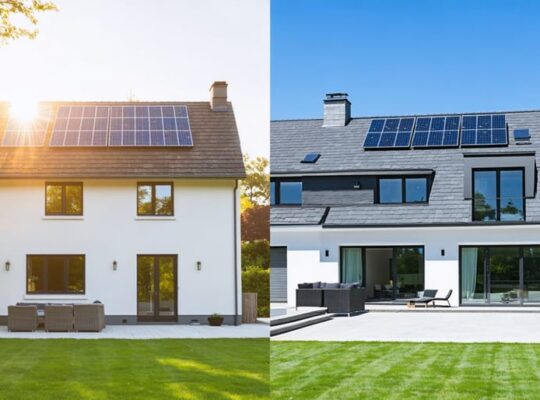
A comparative image showing a traditional home with mounted solar panels juxtaposed against a modern home with integrated solar roof shingles, highlighting the differences in design and technology.

Solar Roof Shingles vs Panels: Which Technology Maximizes Your Home’s Energy Potential?

The evolving landscape of residential solar technology presents homeowners with a critical choice: traditional solar panels mounted on existing roofs versus integrated solar shingles that replace conventional roofing materials entirely. While both systems harness the sun’s energy to generate clean electricity, their differences in efficiency, installation requirements, and cost structures significantly impact long-term investment returns. Solar panels typically offer higher energy conversion rates (18-22%) and lower installation costs ($15,000-$25,000 for average homes), making them the established choice for maximum power generation…

Illustration of a solar farm with digital overlays representing different solar financing models and currency symbols integrated into solar panels to indicate financial engagement in clean energy projects.

Smart Solar Financing: How Modern PV Projects Pay for Themselves

Solar financing has revolutionized the accessibility of photovoltaic technology, transforming what was once a capital-intensive investment into an attainable clean energy solution. Modern solar power financial models now offer diverse pathways for businesses, institutions, and homeowners to adopt solar technology without substantial upfront costs. From power purchase agreements (PPAs) and solar leases to green bonds and innovative hybrid financing structures, the market has evolved to …

Artistic depiction of a smart solar storage system with advanced photovoltaic panels and a digital interface for real-time energy management, showcasing different battery technologies and grid integration.

Smart Solar Storage: Maximize Your PV System’s Power Performance

Optimizing solar energy storage systems represents a critical frontier in renewable energy efficiency, where advanced technology meets practical implementation. Modern photovoltaic systems can achieve up to 40% greater efficiency through strategic optimization of key components and operational parameters. From sophisticated battery management systems to intelligent load distribution algorithms, the science of solar optimization has evolved dramatically in the past decade. Industry leaders and research institutions are now focusing on three primary areas: energy storage density enhancement, conversion efficiency improvements, and smart grid…

Expansive desert landscape featuring advanced solar panel arrays integrated with native vegetation, illustrating the balance between renewable energy technology and the natural ecosystem.

Desert Solar Meets Nature: How PV Systems Are Transforming Barren Landscapes

Desert ecosystems present unique challenges and opportunities for solar energy development, demanding innovative approaches that balance technological efficiency with environmental preservation. The integration of resilient solar panel solutions within these delicate landscapes has emerged as a critical focus for sustainable energy expansion. Through collaborative research between leading universities and industry partners, groundbreaking ecosystem desert projects are …

Diverse group of students in a private university lab working with solar technology equipment, highlighting the fusion of rigorous education and industry-focused experience in photovoltaic engineering.

How 4-Year Private Universities Transform PV Industry Careers

Four-year private universities represent a pivotal pathway in photovoltaic engineering education, offering specialized programs that combine rigorous academic training with industry-focused expertise. These institutions stand at the forefront of renewable energy innovation, providing comprehensive curricula that encompass both theoretical foundations and practical applications in solar technology. With smaller class sizes, dedicated research facilities, and established industry partnerships, private universities create an optimal learning environment for aspiring PV professionals. Their programs typically feature advanced laboratory …

Conceptual depiction of a solar PV installation site with digital overlays indicating hazardous materials like asbestos and lead, highlighting the significance of safety protocols and protective gear in building environments.

Critical Hazards Lurking in Solar PV Buildings: What Every Professional Must Know

Hazardous materials in buildings pose significant risks to occupants, workers, and the environment, demanding rigorous identification and management protocols. From legacy asbestos insulation to volatile organic compounds (VOCs) in modern construction materials, these substances require specialized handling during renovation, maintenance, and safe installation practices. Professional assessment reveals that approximately 70% of commercial buildings constructed before 1980 contain at least …

Conceptual depiction of pristine versus weather-damaged solar panels, illustrating the durability challenges and environmental impacts associated with solar power systems.

Solar Panel Durability Challenges: Key Issues That Impact Long-Term Performance

Solar energy’s rapid growth as a renewable power source brings with it significant challenges that demand careful consideration. While photovoltaic technology offers compelling environmental benefits, understanding its limitations is crucial for making informed investment decisions and setting realistic expectations for system performance. From weather-dependent power generation to substantial initial costs, solar energy systems face several notable drawbacks that impact their widespread adoption and operational efficiency. This comprehensive analysis examines seven critical disadvantages of solar power installations, providing …

Illustration of a sustainable farm with elevated solar panels above agricultural crops, showcasing sheep grazing and diverse plant life, representing the integration of agrivoltaics.

Smart Solar Farms That Protect Your Land: A Double Win for Energy and Agriculture

Land use sustainability stands at the intersection of environmental stewardship and renewable energy development, demanding a strategic approach that balances ecological preservation with clean energy deployment. As solar installations continue to expand globally, implementing sustainable solar energy practices becomes increasingly critical for maintaining biodiversity, protecting soil health, and ensuring long-term ecosystem viability.
The integration of solar infrastructure with …