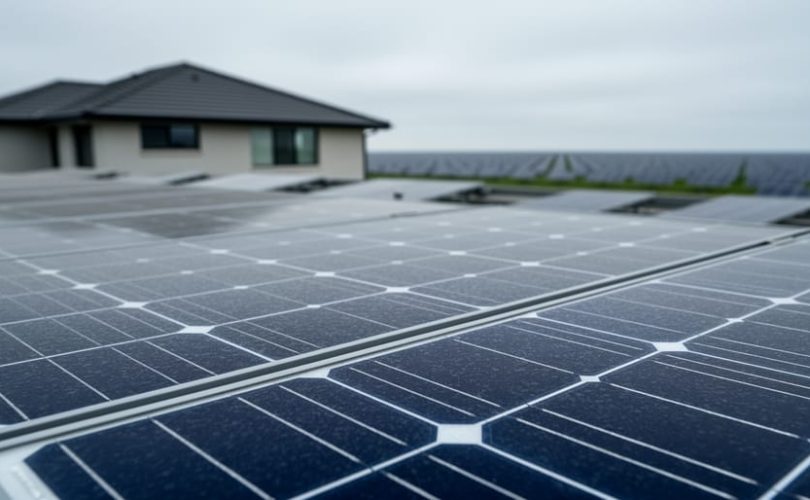
A BP solar module is a photovoltaic panel manufactured by BP Solar, a subsidiary of British Petroleum that produced crystalline silicon and thin-film solar technology from 1981 until the division’s closure in 2011. These modules converted sunlight directly into electricity through semiconductor materials and were widely installed in residential, commercial, and utility-scale applications across six continents before BP exited the solar manufacturing sector.
Understanding BP solar modules remains relevant for three distinct audiences in 2026. Thousands of BP module installations continue operating worldwide, requiring owners and maintenance professionals to understand their specifications, performance characteristics, and replacement options as components age beyond their original 25-year warranties. The technological approaches BP pioneered, particularly in multi-crystalline silicon cell efficiency and anti-reflective coatings, influenced design standards that shaped modern photovoltaic development. For professionals entering the solar industry, BP Solar’s trajectory offers instructive lessons about market positioning, manufacturing economics, and strategic decisions that determine long-term viability in renewable energy sectors.
This article examines What is a PV module through the specific lens of BP’s product line, explaining the core operating principles that convert photons into electrical current, the distinct module types BP manufactured across three decades, and the residential and commercial applications where these panels were deployed. We’ll analyze the technical specifications that differentiated BP’s crystalline and thin-film products, provide practical guidance for maintaining existing installations, and extract strategic insights from BP Solar’s rise and withdrawal from photovoltaic manufacturing.
Whether you’re troubleshooting an existing BP system, researching solar industry history for academic purposes, or seeking to understand how first-generation manufacturers influenced current module technology, this comprehensive examination delivers the technical depth and practical context you need.
What BP Solar Modules Are
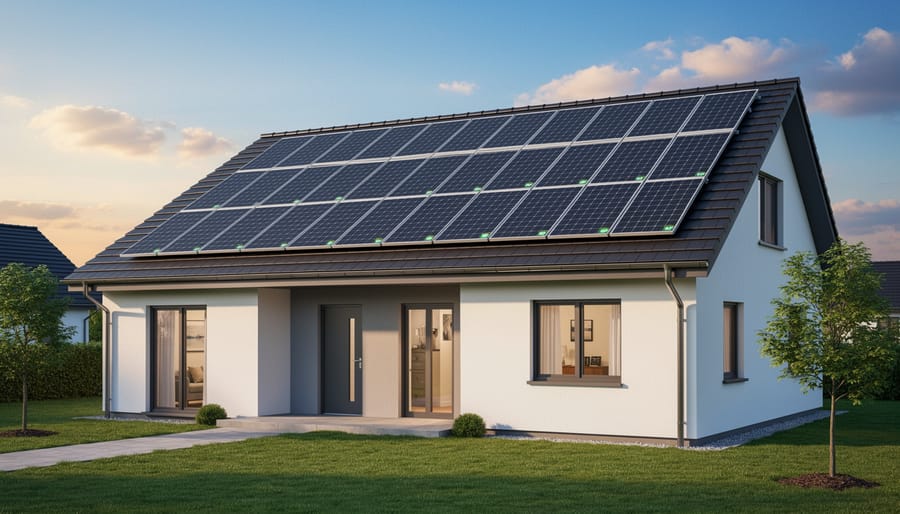
BP solar modules are photovoltaic panels manufactured by BP Solar, the solar energy division of British Petroleum that operated from 1981 until the company exited the solar manufacturing business in 2011. These modules converted sunlight directly into electricity using silicon-based solar cells and were deployed in residential, commercial, and utility-scale installations across six continents during BP Solar’s three decades of market presence.
At its peak, BP Solar ranked among the world’s top solar manufacturers, producing modules that met International Electrotechnical Commission (IEC) standards and undergoing certification testing similar to panels from competing manufacturers. The company’s product line spanned monocrystalline and polycrystalline silicon technologies, with power outputs ranging from small residential panels around 75 watts to commercial modules exceeding 200 watts by the mid-2000s.
The BP Solar brand emerged during a period when major energy corporations invested in renewable technology development, viewing solar as a strategic diversification from fossil fuel operations. British Petroleum acquired Lucas Energy Systems and Solarex (a major American manufacturer) during the 1990s, consolidating these operations under the BP Solar name and establishing manufacturing facilities in Spain, the United States, India, and Australia.
BP Solar’s contribution to photovoltaic technology evolution included refinements in silicon cell processing, anti-reflective coating application, and module lamination techniques that became industry standards. The company’s 2011 exit from solar manufacturing reflected strategic business decisions rather than technical failures, as installed BP modules continue generating electricity in systems commissioned years earlier.
Today, BP solar modules exist only as legacy products in operational installations. No new BP-branded modules have entered the market since 2011, and the company discontinued warranty support and replacement part availability following its solar division closure. System owners with BP modules typically source replacement panels from current manufacturers, matching voltage and current specifications rather than brand.
How BP Solar Modules Work
Cell Structure and Materials

BP solar cells employed high-purity silicon wafers as their foundational material, with the choice between monocrystalline vs polycrystalline structures directly impacting conversion efficiency. Monocrystalline variants used single-crystal silicon grown through the Czochralski process, achieving superior electron mobility and higher efficiency ratings. Multi-crystalline options offered cost advantages through simpler manufacturing while accepting modest performance trade-offs.
The cell surface featured silicon nitride anti-reflective coatings, typically 70-80 nanometers thick, designed to minimize photon reflection and maximize light absorption across the solar spectrum. This blue-tinted coating reduced surface reflectance from approximately 35% to under 3%, substantially boosting photon capture.
Conductive layers consisted of screen-printed silver paste forming the front contact grid and aluminum paste creating the rear contact. The front grid design balanced two competing requirements: wide enough spacing to avoid shading active cell area, yet dense enough to minimize resistive losses as electrons traveled to collection points. BP optimized this grid geometry to reduce electrical resistance while preserving maximum light exposure.
The rear aluminum layer served dual functions as both electrical contact and back-surface field, creating a potential barrier that reflected minority carriers back toward the junction, reducing recombination losses. Later BP modules incorporated aspects similar to Mono PERC cells through enhanced rear-surface passivation techniques, though full PERC architecture emerged primarily after BP Solar’s operational period.
Module Assembly and Electrical Configuration
BP Solar modules transformed individual photovoltaic cells into functional power-generation units through systematic assembly processes that determined electrical output characteristics. The company connected typically 36, 60, or 72 cells in series strings, with each cell contributing approximately 0.5 to 0.6 volts. This series configuration accumulated voltage while maintaining the current output of a single cell, a 60-cell module would produce roughly 30 volts at maximum power point, suitable for charging 12-volt battery systems or grid-tied inverter applications.
The electrical architecture balanced voltage and current requirements for specific applications. Residential modules often used 60-cell configurations delivering 240 to 280 watts, while commercial installations favored 72-cell variants producing 300 to 350 watts. BP Solar occasionally employed parallel connections between cell strings to increase current output for specialized low-voltage applications, though series remained the dominant topology.
After electrical interconnection with soldered ribbons or conductive adhesives, BP encapsulated the cell assembly between tempered glass and a polymer backsheet using ethylene-vinyl acetate (EVA) lamination. This process occurred in vacuum laminators at controlled temperatures, creating a weatherproof package that protected cells from moisture infiltration while maintaining optical transmission. An aluminum frame provided structural rigidity and mounting points, with junction boxes housing bypass diodes that prevented hot-spot formation when individual cells experienced shading or damage.
Types of BP Solar Module Technologies
Crystalline Silicon Modules
BP Solar manufactured both monocrystalline and multi-crystalline (also called polycrystalline) silicon modules, representing the two dominant crystalline technologies in commercial photovoltaic production. Their monocrystalline modules, fabricated from single-crystal silicon ingots using the Czochralski process, delivered higher conversion efficiencies, typically 14-17% in commercial products during BP Solar’s operational years, owing to the uniform crystal structure that enabled more efficient charge carrier movement. These modules featured distinctive uniform dark colouring and rounded cell corners resulting from circular wafer production.
BP’s multi-crystalline silicon modules, produced by casting molten silicon into blocks then slicing into square wafers, offered a cost-effective alternative with efficiencies ranging from 12-15%. The visible grain boundaries in these cells created their characteristic speckled blue appearance. Though slightly less efficient than monocrystalline variants, multi-crystalline modules required less energy-intensive manufacturing and generated less silicon waste, making them economically attractive for large-scale deployments through the solar panel installation process.
Both technologies employed screen-printed silver contacts, anti-reflective silicon nitride coatings, and aluminium back-surface fields, manufacturing techniques that remain foundational in contemporary crystalline silicon module production.
Specialty and Building-Integrated Products

BP Solar pioneered several architectural photovoltaic products that integrated solar generation directly into building envelopes, moving beyond conventional rooftop arrays. Their building-integrated photovoltaic (BIPV) offerings represented a significant departure from standard modules, designed to serve dual functions as both construction materials and electricity generators.
The company’s solar tile systems emerged as particularly notable innovations, featuring photovoltaic cells embedded in roofing materials that mimicked traditional architectural aesthetics. These products addressed the visual concerns of property owners who resisted the appearance of rack-mounted panels, offering power generation without compromising building design. BP Solar tiles integrated into residential and commercial roof structures while maintaining weather protection and durability standards expected from conventional roofing materials.
BP Solar also developed semi-transparent photovoltaic facades and glazing products for commercial architecture. These systems allowed natural light transmission while generating electricity, making them suitable for curtain walls, skylights, and canopy applications. The modules featured spacing between cells or employed thin-film technologies to achieve controlled transparency levels, balancing daylighting requirements with power output.
These architectural products typically sacrificed some efficiency compared to standard modules but provided value through their dual functionality, eliminating separate material and installation costs while meeting building codes and aesthetic requirements that conventional solar arrays couldn’t address.
Applications and Uses in Modern Solar Installations
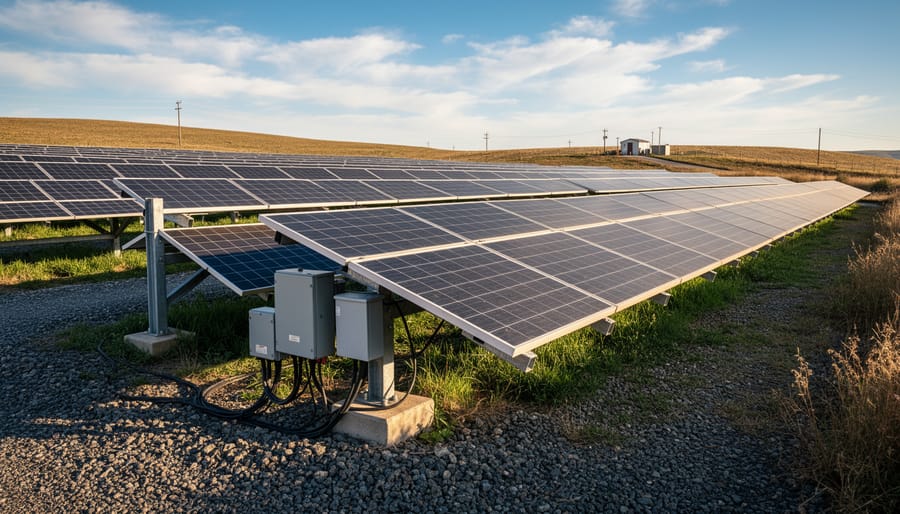
BP solar modules found widespread deployment across multiple market segments during the company’s active period from 1973 to 2011, leaving behind a substantial installed base that continues to generate electricity today. These installations represent a cross-section of the solar industry’s evolution and provide valuable lessons for understanding how photovoltaic technology has been integrated into diverse energy applications.
The primary deployment sectors for BP solar modules included:
- Residential rooftop installations ranging from 2 kW to 10 kW systems
- Commercial building arrays sized between 20 kW and 500 kW
- Ground-mounted utility-scale projects from 1 MW to multi-megawatt capacity
- Off-grid applications including telecommunications sites, remote monitoring stations, and rural electrification
- Building-integrated photovoltaic installations using BP’s specialized solar tiles and façade products
Residential installations represented BP Solar’s largest market segment by project count, with modules commonly mounted on pitched roofs in both suburban and rural settings. These systems typically featured BP’s polycrystalline modules in the 150 W to 230 W range, configured in strings that fed grid-tied inverters. Many homeowners selected BP products specifically for their warranty backing and the perceived stability of a major energy company standing behind the technology.
Commercial deployments capitalized on BP Solar’s reputation for quality and performance consistency. Corporate facilities, educational institutions, and government buildings installed larger arrays that demonstrated organizational commitment to renewable energy while providing measurable electricity cost offsets. BP’s commercial-grade modules proved particularly suitable for flat-roof mounting systems common in warehouse and industrial applications.
Despite BP Solar’s 2011 market exit, tens of thousands of these installations remain operational worldwide. System owners continue to benefit from electricity generation, though they face challenges sourcing direct replacement modules when failures occur. The modules’ standardized electrical characteristics and mounting dimensions generally allow integration of current-generation products as replacements, though matching exact specifications requires careful attention to voltage, current, and physical compatibility. This installed legacy provides ongoing performance data that informs understanding of long-term photovoltaic module reliability and degradation patterns across different climate zones and application types.
BP Solar’s Technical Specifications and Performance Standards
BP Solar modules operated within performance ranges that reflected both the technological capabilities of their era and the company’s commitment to manufacturing quality. Throughout their production years, BP Solar’s crystalline silicon modules typically delivered power outputs ranging from 50 watts to 300 watts per module, with efficiency ratings between 12% and 17% depending on the product line and generation. Their premium monocrystalline Saturn series achieved efficiencies near the upper end of this spectrum, while their more cost-effective multicrystalline modules offered competitive performance at lower price points.
The technical specifications that defined BP Solar’s product quality included several key metrics that professionals should understand:
- Temperature Coefficient
- A measure of how much a module’s power output decreases as operating temperature rises above standard test conditions (25°C). BP Solar modules typically exhibited coefficients between -0.4% to -0.5% per degree Celsius, meaning performance dropped roughly 0.45% for each degree above 25°C.
- Maximum Power Point (Pmax)
- The optimal operating point where a module delivers its highest power output, measured under standard test conditions of 1000 W/m² irradiance and 25°C cell temperature. BP Solar specified this rating with a tolerance typically within ±3% for quality control.
- Fill Factor
- A ratio expressing the “squareness” of the current-voltage curve, calculated by dividing maximum power by the product of open-circuit voltage and short-circuit current. BP Solar modules maintained fill factors above 0.70, indicating efficient energy conversion across the operating range.
- Nominal Operating Cell Temperature (NOCT)
- The temperature a module reaches under defined ambient conditions (800 W/m² irradiance, 20°C ambient, 1 m/s wind speed). BP Solar modules showed NOCT values between 45°C and 47°C, helping installers predict real-world performance.
Certification standards formed another critical dimension of BP Solar’s quality framework. Their modules routinely carried IEC 61215 certification for crystalline silicon modules and IEC 61646 for thin-film products, demonstrating compliance with rigorous mechanical load, thermal cycling, and humidity-freeze testing protocols. UL 1703 listing for the North American market and CE marking for European distribution further validated their manufacturing consistency.
Warranty structures set by BP Solar established benchmarks that influenced industry norms. The company offered 25-year linear performance warranties guaranteeing 80% of rated power after a quarter-century, alongside 5-year workmanship warranties covering manufacturing defects. These warranty terms, considered generous during their commercial period, helped establish customer expectations that persist across today’s solar module market.
Legacy and Impact on Solar PV Module Development
BP Solar’s closure in 2011 marked the end of a 40-year chapter that fundamentally shaped commercial photovoltaic manufacturing. As one of the earliest major corporations to commit substantial capital to solar technology, BP Solar demonstrated that renewable energy could transition from laboratory curiosity to mass-produced commodity. The company’s decision to scale polycrystalline silicon production in the 1990s helped drive down costs across the industry, establishing manufacturing processes that remain foundational today.
The technical innovations BP Solar introduced rippled through subsequent module design. Their work on screen-printing metallization patterns, anti-reflective coating optimization, and junction box standardization became industry norms that manufacturers worldwide adopted. The company’s extensive field testing programs, deploying modules across diverse climatic zones, generated reliability data that informed warranty structures and performance modeling standards still referenced in 2026 specifications.
Beyond hardware, BP Solar’s market development strategies opened critical pathways for the industry. Their aggressive push into European residential markets in the 2000s normalized solar installations for homeowners, while their utility-scale projects demonstrated bankability to investors skeptical of renewable energy. The company’s transparent datasheets and certification processes set expectations for technical disclosure that forced competitors to match or exceed their transparency.
BP Solar’s exit also delivered sobering lessons about corporate commitment and market dynamics. The parent company’s strategic pivot highlighted how fossil fuel majors could constrain renewable divisions despite technological success. This cautionary tale influenced investment patterns, pushing the industry toward specialized solar manufacturers and venture-backed startups rather than relying on energy conglomerates.
Today’s high-efficiency heterojunction cells and bifacial designs build on foundations BP Solar helped establish. Understanding this lineage matters for professionals tracking the future of solar panels where incremental improvements compound over decades to create transformative change.
Frequently Asked Questions About BP Solar Modules
Several questions consistently arise among photovoltaic professionals and system owners encountering BP solar modules in existing installations. Understanding availability, compatibility, and performance considerations helps inform decisions about maintaining or upgrading systems with BP-branded components.
Can I still purchase new BP solar modules?
No, BP Solar ceased manufacturing and selling photovoltaic products in 2011 when British Petroleum exited the solar business. New BP-branded modules are not available through official channels.
What should I do if a BP solar module fails in my existing system?
Replace the failed module with a current-generation panel that matches the electrical specifications of your existing array. Modern modules typically offer superior efficiency and performance compared to older BP products, but ensure voltage and current compatibility to avoid system imbalances.
How long can I expect BP solar modules to continue operating?
Well-maintained BP modules installed in the 2000s can continue generating electricity for 25-30 years or more, though power output typically degrades 0.5-1% annually. Performance depends heavily on installation quality, environmental conditions, and regular maintenance.
Are replacement parts available for BP solar modules?
Individual module components like junction boxes or frames generally cannot be replaced. However, balance-of-system components such as inverters, mounting hardware, and wiring can be updated with current products that interface correctly with BP modules’ electrical output.
System owners should prioritize regular performance monitoring to detect degradation or failures early. Most BP modules used standard electrical connections and mounting configurations, which simplifies integration with modern balance-of-system equipment during partial upgrades. When replacing individual failed modules, select products with similar voltage and current ratings to prevent string mismatches that reduce overall system performance.
For installations nearing the end of their operational life, complete system replacement often proves more cost-effective than managing individual component failures. Modern modules deliver significantly higher power output per square meter, making full upgrades attractive investments despite functional legacy equipment. Aspiring PV professionals should develop familiarity with these upgrade scenarios, as thousands of early 2000s solar installations containing BP and other discontinued brands will require professional assessment in coming years.
BP solar modules represent a significant chapter in photovoltaic technology development, demonstrating how corporate commitment to renewable energy can accelerate innovation and market adoption. Though BP Solar ceased operations in 2011, the modules installed during their active years continue generating electricity in systems worldwide, testament to the durability and engineering quality that characterized their products. For aspiring photovoltaic professionals, studying BP Solar’s trajectory offers valuable lessons about manufacturing scale-up, technology transfer from research to production, and the commercial challenges of early-stage solar markets.
The technical innovations pioneered by BP Solar, particularly in crystalline silicon efficiency improvements and building-integrated photovoltaic applications, influenced design standards that persist in contemporary module manufacturing. Their experience navigating certification requirements, establishing quality benchmarks, and adapting module specifications to diverse applications provides practical insights for understanding current industry practices. Existing BP solar installations serve as real-world laboratories for studying long-term module performance, degradation patterns, and maintenance requirements over operational lifespans exceeding design expectations.
For those seeking comprehensive knowledge of photovoltaic module evolution and technology, Mose Solar offers educational programs developed in collaboration with universities, providing structured learning pathways that connect historical developments like BP Solar’s contributions to cutting-edge advancements in 2026. These programs equip renewable energy professionals with the technical foundation and industry perspective necessary for careers in an increasingly sophisticated solar sector, where understanding technology heritage informs innovation.