Bridge construction loans provide short-term financing that covers the gap between initial solar project development costs and the disbursement of permanent, long-term capital. Typically ranging from six months to three years, these loans enable developers to begin construction immediately while arranging tax equity partnerships, securing institutional financing, or awaiting project completion milestones that trigger permanent funding. The typical bridge loan covers 70-85% of project costs at interest rates between 8-12% annually, significantly higher than permanent financing but essential for maintaining project momentum and meeting interconnection deadlines.
Solar developers turn to bridge construction loans when timing misalignments threaten project viability. Perhaps your solar PV infrastructure project received utility approval with a narrow construction window, but your tax equity investor requires substantial completion before funding. Or your permanent lender mandates a proven operational track record before releasing capital. Bridge loans solve these critical timing problems, though they demand rigorous documentation and carry inherent refinancing risk.
Understanding the bridge loan process separates successful solar developers from those who miss market opportunities. This guide walks through every phase of securing bridge construction financing: assembling the required documentation package, navigating lender requirements, managing the application timeline, and executing a smooth transition to permanent capital. Our collaboration with university renewable energy programs and feedback from practicing developers informs these practical strategies, ensuring you approach bridge financing with realistic expectations and professional preparation.
Understanding Bridge Loans in Solar Project Development
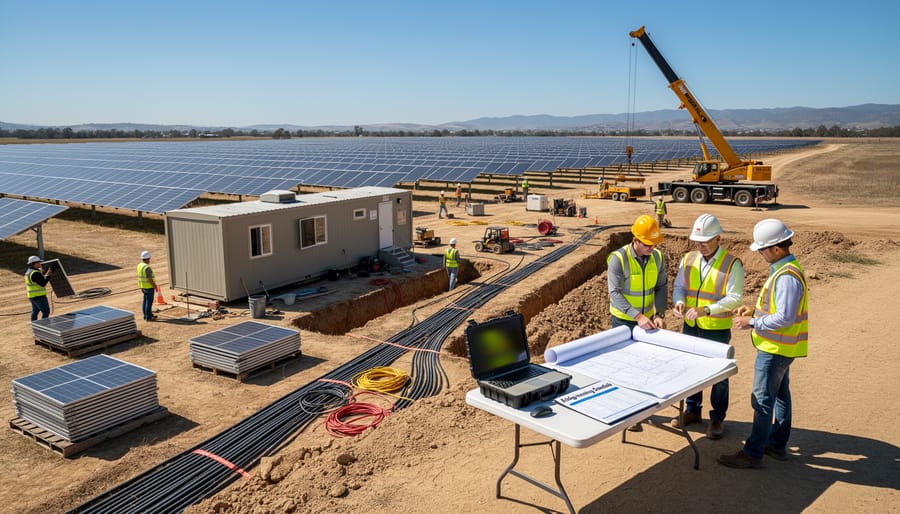
Bridge construction loans serve as short-term financing instruments that solar project developers use to cover immediate capital needs while waiting for permanent funding to materialize. Unlike traditional project financing, which provides long-term capital based on a project’s anticipated cash flows over 20-30 years, bridge loans address temporary liquidity gaps with faster approval processes, shorter repayment periods (typically 12-24 months), and higher interest rates that reflect their interim nature. Think of them as financial scaffolding: they support the project structure during a vulnerable transition phase before the permanent foundation is in place.
The fundamental difference lies in the underwriting approach. Traditional solar project finance relies heavily on detailed revenue projections, power purchase agreement terms, and long-term operational performance. Bridge lenders, by contrast, focus on the exit strategy, specifically, the certainty and timeline of the permanent financing that will repay the bridge loan. They’re less concerned with 25 years of energy production forecasts and more interested in proof that a tax equity investor or commercial lender has committed to take them out within a defined window.
These gap scenarios arise from the sequential nature of solar project development. A developer might receive all necessary permits and sign a power purchase agreement but still wait months for their long-term lender to complete due diligence and close the financing, yet contractors and equipment suppliers require deposits now. Similarly, many tax equity investors won’t fund until a project achieves commercial operation and passes interconnection testing, creating a funding void during the final construction phase when expenditures peak. Some developers encounter gaps when their construction loan matures before their tax equity partner can legally invest, often due to quarterly investment committee schedules or partnership flip structure requirements.
The necessity of bridge financing often signals timeline mismatches between development milestones and capital availability rather than project weakness. In 2026’s solar market, these instruments have become standard tools for managing the inherent asynchronicity between building physical infrastructure and closing complex financial structures.
Financial Requirements and Documentation Needed

Lenders scrutinize solar bridge loan applications against rigorous financial standards because they’re committing capital before your project generates revenue. Prepare a comprehensive documentation package that demonstrates both project viability and your capacity to repay or refinance within the bridge period.
Your financial documentation package should include these essential elements:
- Project financial model spanning construction through operational phases, with monthly cash flow projections and sensitivity analyses for key variables like equipment costs and interconnection delays
- Pro forma income statements, balance sheets, and cash flow statements covering at minimum the bridge loan term plus 12 months
- Letter of intent or term sheet from your permanent lender or tax equity investor, confirming takeout financing is lined up
- Independent appraisal of the project’s as-completed value, typically from an appraiser experienced in renewable energy assets
- Developer and sponsor financial statements for the past three years, including balance sheets, income statements, and tax returns
- Personal financial statements and credit reports for key principals if personal guarantees are required
- Detailed construction budget with line-item costs, contingency reserves, and payment schedules tied to project milestones
- Evidence of committed equity contributions, showing you’ve secured your required capital stack portion
- Schedule of all other project funding sources, including grants and RECs that reduce the financing gap
Your financial model must reflect 2026 solar economics accurately. Include current module pricing, inverter costs, and balance-of-system expenses rather than outdated figures. Lenders will stress-test your assumptions against industry benchmarks, so conservative projections strengthen your credibility more than optimistic scenarios do.
The developer track record matters significantly. First-time developers face higher scrutiny and may need stronger co-developers or experienced advisors. Document your team’s completed projects with photos, performance data, and references from previous lenders. If you lack direct solar experience, highlight transferable construction or project finance expertise.
Collateral documentation varies by lender but typically includes equipment purchase orders, land control documents, and subordination agreements from other creditors. Some lenders require additional security beyond the project itself, such as cash reserves or corporate guarantees. Understanding these requirements upfront prevents delays when you reach the term sheet stage.
Technical and Legal Documentation Requirements
Securing bridge construction loans requires thorough technical project documentation that demonstrates engineering viability and legal compliance. Lenders conduct rigorous reviews of both technical specifications and legal instruments before committing capital, as these materials substantiate the project’s feasibility and establish clear security interests.
On the technical side, comprehensive engineering designs form the foundation of your documentation package. Detailed electrical single-line diagrams, civil site plans showing panel layouts and access roads, and structural calculations for mounting systems prove the project’s technical soundness. Equipment specifications must include manufacturer data sheets for solar modules (with nameplate capacity, efficiency ratings, and degradation warranties), inverter specifications (including AC/DC ratios and grid compliance certificates), and racking system load calculations. These specifications anchor the project’s performance projections that underpin financial models.
Interconnection documentation carries particular weight. Your executed interconnection agreement with the utility, including approved interconnection studies and any required system upgrades, demonstrates grid access certainty. Missing or conditional interconnection approvals often stall bridge loan processes entirely.
The legal documentation package must be equally comprehensive:
- Power purchase agreements or offtake contracts with creditworthy counterparties
- Executed construction contracts with experienced EPC contractors, including performance guarantees
- Site control documentation: land leases, easements, or purchase agreements with title insurance
- Building permits and electrical permits from local authorities having jurisdiction
- Environmental assessments including Phase I reports, wetlands delineations, and endangered species clearances
- Zoning approvals and special use permits where applicable
- Evidence of compliance with local solar ordinances and setback requirements
Title work receives intensive scrutiny. Lenders require title reports showing clear ownership or leasehold rights, plus title insurance policies naming them as loss payee. Any encumbrances, liens, or easement conflicts must be resolved before closing.
Solar-specific compliance adds another layer. In 2026, this includes proof of eligibility for federal Investment Tax Credits (such as prevailing wage and apprenticeship compliance documentation where applicable), state renewable energy credit registrations, and any Buy America certification for modules and steel. Equipment must meet UL standards and NEC code requirements with supporting certifications.
Risk Assessment and Safety Warnings
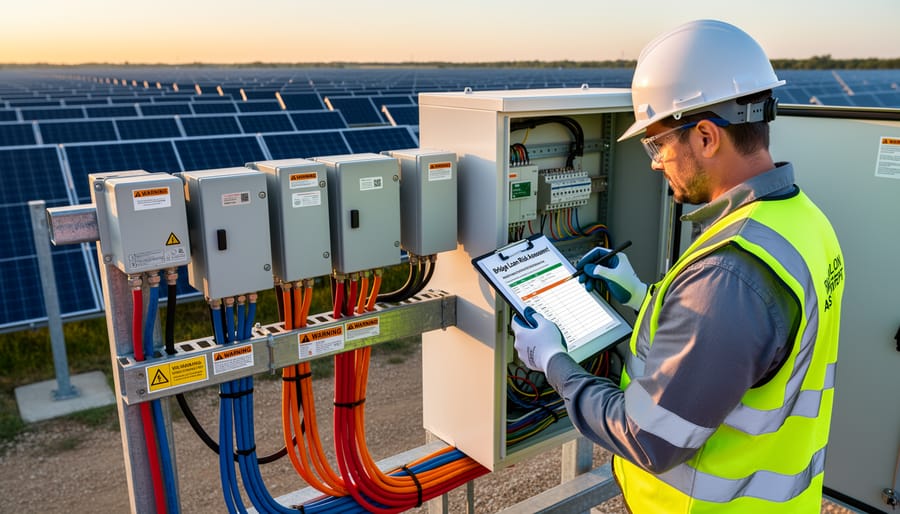
Bridge construction loans carry substantial financial risks that solar project developers must fully understand before committing. Interest rates typically range from 8% to 15% annually for solar projects, significantly higher than long-term project debt, which often sits between 4% and 7%. On a $5 million bridge loan held for six months at 12%, you’ll pay approximately $300,000 in interest alone. These costs compound quickly if your project timeline slips.
The compressed repayment window creates intense pressure. Most bridge loans mature in 12 to 24 months, leaving little margin for construction delays, permit holdups, or interconnection complications. If your permanent financing doesn’t close before the bridge loan matures, you face expensive extension fees, often 1-2% of the loan amount, or forced refinancing at potentially worse terms. Project delays of just 30-60 days can trigger covenant violations, giving lenders the right to accelerate repayment or seize collateral.
Personal guarantee requirements expose you beyond the project itself. Many bridge lenders, especially for developers without extensive track records, require principals to personally guarantee repayment. This puts your personal assets, home, savings, other business holdings, at risk if the solar project fails. Prepayment penalties add another layer of cost; even if you secure permanent financing early, you may owe 2-5% of the outstanding balance to exit the bridge loan ahead of schedule.
Don’t pursue bridge financing if your permanent financing isn’t contractually committed, your construction timeline lacks adequate contingency (minimum 15-20% buffer), your project economics can’t absorb the bridge loan costs and still meet return thresholds, or you’re relying on speculative revenue assumptions. Red flags include lenders unwilling to provide detailed term sheets upfront, interest rates exceeding 15%, excessive origination fees above 3%, or any lender pressuring you to close without adequate due diligence time.
Step-by-Step Process to Secure Bridge Construction Loans
Step 1: Pre-Qualification and Lender Identification
Start by creating a shortlist of potential bridge lenders that actively finance solar projects. Commercial banks with renewable energy divisions typically offer competitive rates but impose stricter underwriting criteria, expect them to require proven developer track record and substantial collateral. Specialty solar lenders understand PV-specific risks better and move faster, though interest rates run 1-2% higher. Private debt funds provide the most flexible terms but charge premium rates of 12-15%.
Before approaching lenders, assess whether your project meets baseline pre-qualification thresholds. Most bridge lenders require projects above 1 MW capacity, firm power purchase agreements or offtake contracts, interconnection queue position with study deposits paid, and construction-ready status with permits in hand. Developer experience matters: first-time developers face significantly higher scrutiny and often need experienced EPC contractors to compensate.
Prepare a concise pre-qualification package containing your one-page project summary, preliminary financial model showing bridge loan repayment from permanent financing, developer resume highlighting completed projects, and draft timeline showing construction completion date aligning with permanent lender commitments. This initial inquiry separates serious prospects from time-wasters and typically yields responses within one week indicating whether formal application is warranted.
Step 2: Submit Formal Loan Application
Once you’ve identified suitable lenders during pre-qualification, submit your formal application package through the lender’s designated channel, typically an online portal or secure document-sharing platform. Your submission should include the complete financial and technical documentation detailed in earlier sections: project pro forma, permanent lender commitment letter, engineering designs, interconnection agreements, and developer financial statements.
Assign a dedicated point person from your development team to engage with the loan officer. This individual should be thoroughly familiar with project details and authorized to provide immediate responses to clarification requests. Expect initial questions within 48-72 hours covering construction timeline assumptions, equipment procurement status, offtaker creditworthiness, and contingency planning.
The initial review phase typically spans 2-4 weeks, during which underwriters assess project viability and documentation completeness. Lenders may request supplemental materials such as updated financial projections, additional contractor references, or clarification on permitting status. Respond promptly, delays in providing requested information directly extend the review timeline and signal poor project management capability to underwriters.
Track your application status through regular check-ins (weekly is appropriate), and maintain organized records of all correspondence and document submissions for future reference during due diligence.
Step 3: Due Diligence and Underwriting
Once your application is submitted, the lender launches a comprehensive due diligence process that typically spans 4-8 weeks. This phase determines whether your solar project meets their risk thresholds and validates the information you’ve provided.
The technical review forms the backbone of this evaluation. Lenders hire independent engineering firms to assess your project design, equipment specifications, and construction feasibility. These engineers scrutinize module degradation assumptions, inverter sizing, shading analysis, and structural calculations. They’ll verify that your energy production estimates align with industry standards and examine whether your equipment selections carry appropriate warranties.
Financial underwriting runs parallel to technical review. Analysts stress-test your pro forma under various scenarios: delayed interconnection, reduced power prices, higher construction costs, or extended timelines. They model debt service coverage ratios across different production years and verify that your revenue assumptions match current PPA rates or merchant market projections.
The legal team examines site control documentation, interconnection queue position, permit validity, and any encumbrances on the property. They review your agreements with contractors, equipment suppliers, and off-takers to identify completion risks.
Collateral appraisers determine the project’s liquidation value, which directly affects how much the lender will advance. Most bridge lenders fund 70-80% of appraised project value for solar installations.
Step 4: Term Sheet Negotiation
Once you receive the term sheet, typically within days of completing due diligence, allocate at least one week for thorough review before signing. This document outlines all financial terms and obligations, so mistakes here cost dearly.
Start by comparing the proposed interest rate against current market benchmarks. For solar bridge loans in 2026, rates between 8% and 12% are standard, while anything exceeding 15% warrants scrutiny. Examine all fees beyond interest: origination fees (typically 1-3% of loan amount), commitment fees, legal fees, and exit fees. Calculate the all-in cost, not just the headline rate.
Focus on three critical covenant areas. Financial covenants define debt service coverage ratios and liquidity requirements you must maintain. Construction covenants specify milestone completion deadlines and quality standards. Reporting covenants dictate your disclosure obligations throughout the loan term.
The draw schedule section controls how construction funds release. Push for flexible draw procedures tied to reasonable completion percentages rather than rigid calendar dates, since solar projects face weather delays and equipment delivery uncertainties.
Exit requirements deserve special attention. Confirm the permanent financing conditions that satisfy the bridge loan, typically substantial completion plus interconnection approval. Negotiate extension options upfront; one 90-day extension at a predetermined rate provides crucial backup if your tax equity investor encounters delays.
Engage experienced solar finance counsel before signing any term sheet.
Step 5: Loan Documentation and Closing
Once your term sheet is finalized, the lender’s legal team drafts comprehensive loan documents. Expect a loan agreement defining principal amount, interest rate, repayment terms, and default conditions. You’ll receive security agreements granting the lender liens on project assets, solar arrays, land rights, contracts, and accounts. For solar projects with planned tax equity or permanent debt, intercreditor agreements establish lien priority and control rights between your bridge lender and future capital providers.
Review every covenant carefully. Bridge loans typically restrict additional debt, require minimum liquidity levels, and mandate construction milestones. Miss a covenant and you risk technical default. Engage experienced solar finance counsel to negotiate problematic terms before signing.
The closing process involves exchanging executed documents, filing UCC-1 financing statements, recording mortgages, and funding initial draws. Schedule coordination meetings between your attorney, the lender’s counsel, title companies, and escrow agents. From executed term sheet to wire transfer typically takes two to four weeks, assuming no title defects or last-minute documentation issues emerge. Budget for legal fees ranging $15,000 to $40,000 depending on project complexity.
Verification Steps and Funding Confirmation
Once your bridge loan closes, methodical verification prevents costly oversights. Begin by reconciling the initial disbursement against the loan agreement’s funding schedule. Within 48 hours of closing, confirm that proceeds landed in the designated project account and match the expected amount minus any fees deducted at closing. Request written confirmation from your lender that all conditions precedent have been satisfied and no outstanding documentation remains.
- Confirm initial disbursement amount matches loan agreement terms, accounting for origination fees and reserves
- Verify all security instruments (mortgages, UCC filings) have been properly recorded with appropriate jurisdictions
- Establish dedicated construction account with dual-signatory controls and lender oversight access
- Obtain written confirmation that all conditions precedent are satisfied and no pending requirements remain
- Set up monthly compliance reporting calendar aligned with covenant measurement dates
- Test draw request portal or system with a small initial requisition to confirm procedures work
Establish clear draw request procedures immediately. Your construction contract likely includes a payment schedule tied to milestones like foundation completion, module delivery, or inverter installation. Create templates for draw requests that include lien waivers, progress photos, third-party engineer sign-off, and updated budget-to-actual reports. Most solar bridge lenders require 5-10 business days to process draws, so submit requests ahead of contractor payment deadlines.
Implement robust accounting systems that track spending by category against your approved budget. Many developers use project management software integrated with accounting platforms to generate real-time reports for lenders. Schedule monthly calls with your loan officer to review progress, flag potential delays, and discuss any budget variances before they trigger covenant violations. Understanding these monitoring frameworks becomes valuable whether you later pursue green bond financing or public-private partnerships for future projects, as institutional investors demand similar transparency and controls.
Transition Planning to Permanent Financing
Successfully transitioning from bridge to permanent financing requires careful coordination that should begin months before your bridge loan matures. Start by establishing clear communication channels between your bridge lender and permanent financing sources at the outset of construction, as misalignment between these parties causes most extension problems.
Your permanent lender or tax equity investor will require specific project milestones before closing. Typically, this means mechanical completion, successful testing and commissioning, preliminary interconnection approval, and initial production data. Create a detailed backward timeline from your bridge loan maturity date, accounting for each milestone’s verification period. Most permanent financings need 45-60 days from documentation start to fund disbursement, so initiate formal closing procedures when you’re 85-90% through construction.
Documentation preparation should parallel your construction schedule. Update financial models monthly with actual costs and performance data. Gather as-built engineering reports, final permits, warranty assignments, and updated insurance certificates as construction progresses rather than scrambling at the end. Your permanent lender will conduct fresh due diligence even if they provided a commitment letter earlier, so anticipate requests for updated environmental reports, title updates, and legal opinion letters.
Bridge-to-perm conversion mechanisms, where your bridge lender also provides permanent debt, streamline this transition by eliminating refinance risk. These structures typically convert automatically upon meeting predefined conditions like achieving substantial completion and demonstrating 30 days of production data. However, conversion terms must be negotiated upfront and locked into your initial bridge loan agreement.
If delays threaten your timeline, communicate immediately with both lenders. Extension fees typically run 0.5-1.0% of loan principal monthly, plus higher interest rates, making proactive problem-solving essential.
Educational Resources for Solar Finance Professionals
Understanding bridge construction loans and the broader project finance landscape requires structured education beyond ad-hoc learning. Mose Solar addresses this need through online educational programs developed in collaboration with university partners, specifically designed for aspiring photovoltaic professionals.
These curricula include comprehensive modules on construction and bridge financing mechanisms, covering underwriting principles, term negotiation strategies, and risk management frameworks specific to solar projects. The programs examine real-world case studies of bridge-to-permanent transitions, intercreditor dynamics, and timing coordination between construction lenders and tax equity investors.
For professionals seeking to master the full spectrum of solar financing structures, the educational offerings extend beyond bridge loans to include Solar PPP support tax equity mechanics, and debt refinancing strategies. The university-partnered approach ensures curricula remain current with 2026 market standards while providing academic rigor.
By pursuing structured education in project finance, industry professionals gain the analytical skills necessary to evaluate financing options critically, structure appropriate funding strategies, and navigate the complex intersection of technical development and capital deployment that defines successful solar projects.
Frequently Asked Questions About Solar Bridge Loans
Bridge construction loans raise practical questions for solar developers, particularly those new to project finance structures. Understanding the financial mechanics, eligibility requirements, and risk scenarios helps you evaluate whether bridge financing fits your project timeline and capital strategy.
How much do bridge loans cost compared to permanent financing?
Bridge loans for solar projects typically carry interest rates between 8-15%, significantly higher than long-term project debt which ranges from 4-7% in 2026. You’ll also pay origination fees of 1-3% and potentially closing costs that add another 0.5-1% to total expenses, making bridge financing substantially more expensive on an annualized basis than permanent capital.
Can startup developers without track records secure bridge loans?
Most bridge lenders require demonstrated project execution experience and strong sponsor balance sheets, making it extremely difficult for startups to access this financing independently. New developers typically need creditworthy co-developers, completion guarantees from established firms, or substantial personal collateral to overcome experience gaps and secure approval.
What happens if construction delays prevent the scheduled takeout?
Missing your bridge loan maturity date triggers default provisions that can include penalty interest rates jumping to 18-24%, acceleration of principal, or foreclosure on project collateral. Most lenders offer short extensions at significant cost, but repeated delays often result in forced asset sales or equity dilution to satisfy the bridge obligation.
How do tax equity closing timelines affect bridge loan structure?
Tax equity investors typically require 90-120 days from commitment to funding, creating extended bridge exposure if you need that capital to repay the construction loan. Structuring your bridge term with buffer time beyond expected tax equity close protects against underwriting delays, and some lenders offer bridge-to-tax-equity products specifically designed for this transition period.
What are typical loan-to-cost ratios for solar bridge loans?
Bridge lenders usually advance 70-85% of total project costs for utility-scale solar, with the gap requiring developer equity or mezzanine capital. Commercial and residential portfolios may see lower advance rates of 60-75% due to perceived execution risks, and lenders adjust these ratios based on sponsor strength, offtake contracts, and geographic market conditions.
These cost and qualification parameters directly influence whether bridge financing makes economic sense for your project. A developer with thin margins might find that 12% bridge interest combined with 2% fees erases profitability gains from accelerating construction, while established firms with strong permanent lender relationships can use bridge loans strategically to capture time-sensitive incentives or grid connection windows. The startup barrier reflects lender risk aversion rather than an absolute prohibition, but overcoming it requires creative structuring, joint ventures with experienced partners, or accepting more expensive terms that account for higher perceived risk.
Construction delay scenarios warrant particular attention in your financial planning. Solar projects face weather dependencies, supply chain variables, and interconnection uncertainties that can push completion dates beyond initial estimates. Building 60-90 days of schedule contingency into your bridge term costs more upfront through extended interest payments but provides insurance against the catastrophic expense of default interest or emergency refinancing. Similarly, aligning your bridge maturity with realistic tax equity timelines rather than optimistic projections prevents the scramble for extensions that weaken your negotiating position with all capital providers.
Securing bridge construction loans for solar projects requires meticulous preparation, thorough documentation, and clear understanding of both opportunities and risks. The process, from pre-qualification through permanent financing transition, demands attention to financial models, technical specifications, legal instruments, and realistic timeline expectations. Success hinges on assembling complete documentation packages, identifying appropriate lenders familiar with solar project characteristics, and negotiating terms that align with your project’s construction and interconnection schedule.
The risks are real: high interest rates, compressed repayment windows, and potential penalties for delays make bridge loans expensive and demanding. Project developers must enter these arrangements with eyes wide open, comprehensive contingency plans, and strong relationships with takeout lenders. Poor preparation or overly optimistic projections can transform a valuable financing tool into a financial trap.
For aspiring photovoltaic professionals, understanding bridge financing mechanisms represents a competitive advantage in an industry where capital structures grow increasingly sophisticated. Mose Solar offers educational programs developed in collaboration with universities that provide structured training in solar project finance, including detailed coverage of construction and bridge financing strategies. These curricula combine academic rigor with practical application, preparing the next generation of solar professionals to navigate complex financing landscapes confidently.
Whether you’re developing your first solar project or expanding your industry knowledge, investing time in understanding bridge loans and broader project finance structures pays dividends throughout your career. The solar industry needs professionals who can bridge the gap between technical expertise and financial acumen, exactly what structured education delivers.