
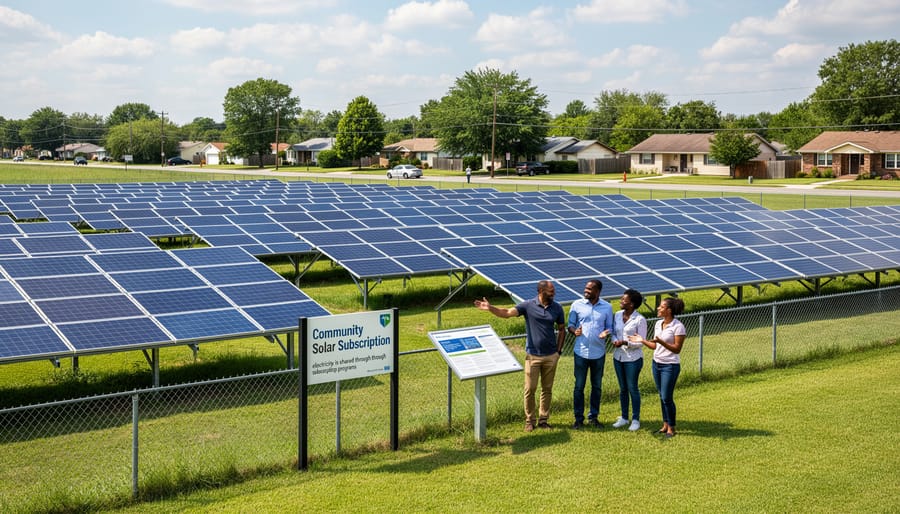
A community solar subscription fee is a monthly charge, typically ranging from $10 to $50, that covers your participation in a shared solar farm and guarantees you a proportional share of the electricity credits it generates. This fee structure allows households and businesses without suitable rooftops to access solar energy savings without installing panels, though the actual economic benefit depends on your utility’s credit rate, the subscription terms, and local electricity costs.
Unlike traditional rooftop solar installations that require substantial upfront capital and property ownership, community solar operates on a fundamentally different model. Subscribers pay the monthly fee in exchange for credits applied to their utility bill, credits that typically offset 5% to 15% of total electricity costs under standard subscription agreements. The arrangement works because how community solar works enables developers to build utility-scale projects that benefit from economies of scale, passing a portion of those savings to subscribers while maintaining project profitability.
The challenge for prospective subscribers lies in evaluating whether these fees deliver genuine value. Subscription agreements vary significantly across providers and states, with some programs offering locked-in credit rates that protect against utility price increases, while others adjust monthly based on production variability and market conditions. Understanding the fee structure, what it covers, eligibility requirements, and your contractual rights before enrollment is essential to determining whether community solar makes financial sense for your specific situation. This guide examines each component of the subscription process to help you make an informed decision.
What Community Solar Subscription Fees Are
Fee Components and What You’re Paying For
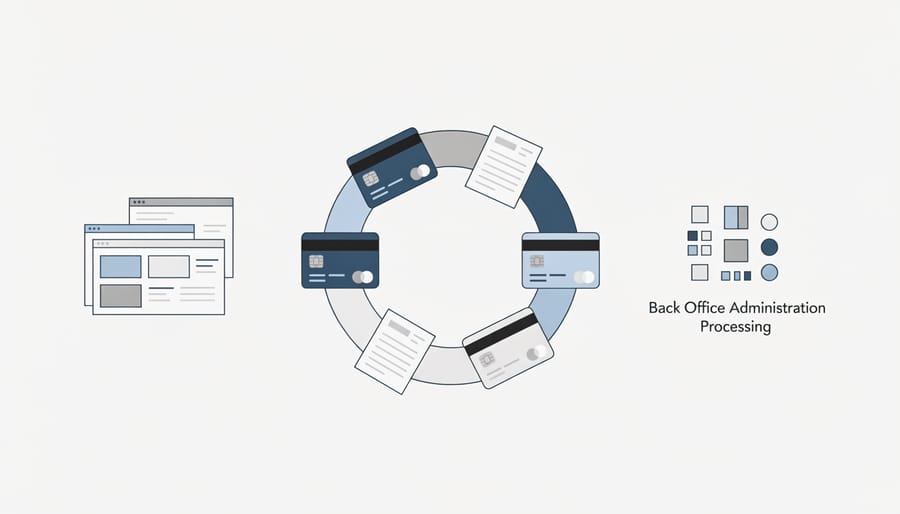
Community solar subscription fees typically comprise several distinct charges, each funding a different aspect of program operation. Understanding these components helps you compare providers and assess whether a subscription aligns with your budget.
Most programs charge an enrollment fee ranging from $0 to $150 as a one-time cost covering administrative setup, contract processing, and system capacity allocation. This initial charge grants you access to the solar power sharing arrangement and reserves your portion of the solar array’s output.
| Fee Type | Typical Cost | Frequency | What It Covers |
|---|---|---|---|
| Enrollment Fee | $0, $150 | One-time | Contract processing, account setup, capacity reservation |
| Monthly Subscription | $15, $50 | Recurring | Administrative costs, billing coordination, customer service |
| Program Management | 2-5% of credits | Recurring | System monitoring, maintenance coordination, performance tracking |
| Capacity Reservation | Varies by kW | Monthly or annual | Guarantees your allocated share of solar production |
Beyond enrollment, monthly administrative charges typically run $15 to $50, covering ongoing billing coordination between the solar provider and your utility, customer support, and account management. Some providers instead deduct a percentage of your solar credits (usually 2 to 5 percent) as their program management fee.
Capacity reservation costs secure your designated share of the solar array’s output, calculated per kilowatt subscribed. This fee structure ensures the provider can maintain system operations while guaranteeing your energy allocation remains available throughout your contract term. Providers structure this charge either as a fixed monthly rate or an annual payment, with costs varying significantly based on regional solar development expenses and competitive market conditions.
How Subscription Fees Differ Across Billing Models
Subscription fees vary significantly depending on the billing model a community solar program uses, affecting both the fee structure and how you ultimately save money.
Allocation-Based Models
Under allocation-based billing, you receive a physical allocation of kilowatt-hours (kWh) from the solar array each month. Your subscription fee typically correlates directly with your allocated share, if you subscribe to 500 kWh monthly, you pay a fixed fee for that capacity regardless of actual production. Fees in these models often include a higher upfront enrollment charge because the provider reserves specific capacity exclusively for you. Monthly fees tend to be more predictable, but you may pay the same amount even during low-production months.
Credit-Based Models
Credit-based programs generate bill credits proportional to your subscription size, which your utility applies against your electricity charges. Subscription fees here usually follow a percentage-of-savings structure: you pay 85-95% of the credit value, keeping 5-15% as savings. This approach ties fees directly to production, so months with lower solar generation result in smaller fees and credits. Administrative costs may be built into the percentage rather than charged separately, making the fee structure simpler but less transparent.
Virtual Net Metering Programs
Virtual net metering (VNM) structures allow the solar array’s production to be allocated across multiple subscriber meters without physical connections. VNM programs typically charge capacity reservation fees based on your subscribed kilowatt share rather than monthly production. You might pay $15-25 per subscribed kilowatt annually, plus monthly administrative fees of $3-10. Because VNM programs often serve income-qualified subscribers, some waive or substantially reduce these fees for eligible households, replacing them with guaranteed percentage savings instead.
Who Qualifies for Community Solar Subscriptions

Geographic and Utility Requirements
Community solar subscriptions operate within strictly defined service territories established by your utility provider. You can only participate in a community solar farm if your electric account is serviced by a utility company that partners with the solar project. Unlike solar co-ops that may cross utility lines, community solar programs respect the physical and regulatory boundaries of existing electric distribution networks.
Most states limit community solar availability to specific regions where legislation authorizes these programs and utilities have implemented the necessary billing infrastructure. For example, utility community solar requirements outline precise geographic constraints tied to utility service areas. Rural electric cooperatives, investor-owned utilities, and municipal power companies each maintain separate program portfolios, meaning a solar farm managed by one utility cannot serve customers of another, even if the properties are physically adjacent. Before applying, verify both that your utility offers community solar and that available projects have capacity in your specific service zone.
Financial and Credit Considerations
Most community solar providers conduct a soft credit inquiry to assess financial reliability, though this rarely affects your credit score. Subscribers with credit scores above 650 typically face no additional requirements, while those with lower scores may need to pay a refundable security deposit ranging from $100 to $300. Some programs waive credit checks entirely for subscribers willing to prepay their first three months of subscription fees.
Income-qualified programs offer substantial relief for eligible households. If your income falls below 80% of your area’s median income, you likely qualify for reduced or eliminated subscription fees. Many states mandate that community solar projects reserve 40-50% of capacity for low-to-moderate income subscribers, who receive benefits including waived enrollment fees, no credit checks, and guaranteed savings of 10-20% on their electricity costs.
Documentation requirements for income verification vary but commonly include recent tax returns, pay stubs, or proof of participation in assistance programs like SNAP or Medicaid. Nonprofit organizations and community action agencies can help you navigate the application process and identify programs offering the most generous financial accommodations.
How to Subscribe to a Community Solar Program
Required Documentation and Information
Before applying to a community solar program, gather the required documents to streamline the enrollment process. Most providers need similar information to verify eligibility and set up your account, though exact requirements vary by program and whether you’re applying as an income-qualified subscriber.
Standard Documentation Requirements:
- Recent utility bill showing your account number and service address
- Government-issued photo ID (driver’s license, passport, or state ID)
- Proof of residence such as a lease agreement, mortgage statement, or property tax bill
- Social Security number or Tax ID for credit verification
- Income documentation if applying for low-to-moderate income programs (pay stubs, tax returns, or benefit award letters)
Income-qualified applicants typically need additional verification like recent tax returns, copies of SNAP or Medicaid benefit cards, or letters from social service agencies confirming eligibility. Some programs accept participation in other assistance programs as automatic qualification, simplifying the documentation burden.
Keep digital copies of all submitted documents for your records and watch for scams that request unusual personal information or upfront payments beyond legitimate subscription fees. Reputable providers never ask for payment before contract signing or request sensitive banking details during initial application stages.
Timeline and Activation Process
Once you submit your completed application and supporting documents, expect the approval process to take two to four weeks on average. Most community solar providers review applications within five to seven business days, but the full timeline depends on third-party verification steps, utility account confirmation, credit checks if required, and capacity allocation in the solar array.
You’ll receive an approval notification by email or through the provider’s portal. At this point, most programs charge the initial enrollment fee and begin your first monthly subscription period. Some providers bill immediately upon approval, while others align billing with your utility cycle to simplify tracking.
Solar credits typically don’t appear on your utility bill right away. The activation lag usually runs 30 to 60 days from enrollment because providers must coordinate with your utility company to register your subscription, allocate your portion of solar production, and integrate billing systems. Your first bill showing solar credits will reflect generation from the previous month.
During this waiting period, you’re still paying regular utility rates without offset. Factor this delay into your savings projections, initial months may not deliver immediate financial benefit until the full billing coordination completes.
Subscriber Rights and Obligations
What You’re Entitled To
As a community solar subscriber, you have contractual entitlements designed to protect your investment and ensure program transparency. Understanding these rights helps you hold providers accountable and verify you’re receiving the value promised when you enrolled.
Most community solar contracts guarantee the following protections:
- Monthly solar credit delivery matching your subscribed allocation percentage
- Clear, itemized billing statements showing subscription fees and corresponding credits
- Locked-in pricing terms that prevent arbitrary fee increases during your contract period
- Access to your solar array’s production data and performance metrics
- Written notice of any material changes to program terms or fee structures
- Protection from service disconnection or penalty fees due to solar array underperformance
Your contract should specify exactly how credits are calculated, typically as a percentage of the community solar facility’s total production based on your subscription size. You’re entitled to receive these credits consistently, regardless of seasonal variations or temporary equipment issues. If the solar array underperforms due to maintenance or weather damage, the provider bears that risk, not you.
Transparent billing means you can trace every charge and credit on your statement. Your utility bill should clearly separate your standard electricity charges from community solar credits, while your subscription fee invoice should detail what you’re paying for. If production data isn’t automatically provided, you have the right to request monthly or quarterly reports showing your array’s generation and how your credits were calculated.
Your Responsibilities as a Subscriber
As a community solar subscriber, you’re expected to meet several ongoing obligations throughout your contract term. Your primary responsibility is paying subscription fees on schedule, typically monthly, according to the payment terms outlined in your agreement. Late payments may result in penalties, suspension of solar credits, or contract termination depending on your provider’s policies.
You must maintain your utility account in good standing, as community solar credits are applied directly to your utility bill. If your utility service is disconnected or suspended, you may continue owing subscription fees without receiving the corresponding credits, creating a financial gap.
Notification requirements are equally important. You’re typically required to inform both your community solar provider and utility company if you move, even within the same service territory. Failing to provide advance notice, usually 30 to 60 days, can result in forfeiture of your subscription deposit or early termination fees.
Most contracts obligate you to maintain your subscription for a minimum term, commonly ranging from one to three years. Breaking this commitment before the contract ends usually triggers cancellation fees. Additionally, you’re responsible for reviewing monthly statements for accuracy and reporting discrepancies promptly to ensure billing errors don’t compound over time.
Cancellation and Transfer Policies
Most community solar contracts lock subscribers in for 12 to 25 years, though early exit is possible under specific conditions. If you cancel before your term ends, expect an early termination fee, typically $100 to $500, or several months’ worth of subscription payments. Some programs waive this penalty if you move outside the utility’s service territory or face documented financial hardship.
Cancellation requires written notice, usually 30 to 60 days before your requested exit date. During this period, you remain responsible for subscription fees. Transferability depends on your provider: many allow you to transfer your subscription to a new occupant at your address or to your new home if it falls within the same service area. A few programs even let you gift or sell your subscription to another eligible party.
Penalty-free exits generally apply when the project fails to meet production guarantees stated in your contract, when solar incentives or regulatory changes fundamentally alter your subscription terms, or if the provider breaches contract obligations. Review your agreement’s force majeure and termination clauses carefully before signing, these sections define your escape routes and costs if circumstances change.
Understanding Your Community Solar Bill

Calculating Your Net Savings
To calculate your actual net savings, start with your total monthly electricity bill before joining community solar. Compare this to your current bill, which now includes three components: your reduced utility charge (reflecting the solar credits applied), your subscription fee, and any remaining electricity usage charges.
The math is straightforward: subtract your new total bill (utility charge plus subscription fee) from your pre-solar baseline bill. The difference represents your monthly savings. For example, if your old bill averaged $120, your utility charge dropped to $80 after credits, and your subscription fee is $35, your net savings equals $5 monthly ($120 – $80 – $35 = $5).
Review your first three months of statements to verify your savings match the provider’s projections. Account for seasonal variation in both solar production and your electricity consumption. If your credits consistently fall short of projections, contact your provider immediately, most contracts guarantee minimum credit delivery percentages. Keep copies of all billing statements to track cumulative savings over your contract term and identify any discrepancies early.
Where to Get Help and Additional Resources
When you need assistance navigating community solar subscription fees or resolving billing questions, several reliable support channels can help. Start with your community solar provider’s customer service team, they handle subscription-specific inquiries including fee structures, credit calculations, and account changes. Most providers offer phone support during business hours and email support with 24-48 hour response times.
Your utility company’s customer service department can clarify how solar credits appear on your bill, explain net metering calculations, and address questions about your underlying utility account status. They cannot modify your community solar subscription directly, but they coordinate with your provider to ensure billing accuracy.
State-level renewable energy offices administer many community solar programs and maintain detailed eligibility requirements, approved provider lists, and consumer protection guidelines. These offices are particularly valuable if you qualify for low-to-moderate income programs with reduced or waived subscription fees. Contact information varies by state, but most maintain dedicated community solar program websites with application portals and FAQ sections.
| Resource Type | Contact Method | What They Can Help With | Typical Response Time |
|---|---|---|---|
| Community Solar Provider | Phone, email, online portal | Subscription fees, contract terms, enrollment, cancellation | Same day to 48 hours |
| Utility Company | Phone, online account | Bill interpretation, credit verification, account status | Same day |
| State Energy Office | Website, email, phone | Program eligibility, approved providers, income qualifications | 3-5 business days |
| Consumer Protection Agency | Online complaint form, phone | Contract disputes, billing errors, provider complaints | 5-10 business days |
Consumer protection agencies in your state can intervene if you encounter billing disputes, contract misrepresentation, or unfair fee practices. File complaints through their online portals with documentation of the issue, your contract, and billing statements.
For those seeking deeper technical understanding of photovoltaic systems and community solar infrastructure, Mose Solar’s educational program, developed in collaboration with universities, offers coursework covering solar energy fundamentals, grid integration, and policy frameworks. These resources help subscribers make informed decisions grounded in technical knowledge rather than marketing claims alone.
How to Apply or Complete the Process
Applying for a community solar subscription follows a structured sequence that begins with confirming your eligibility and ends with active enrollment. Start by identifying available programs in your utility service territory, your utility company’s website or state energy office maintains current provider lists. Compare subscription options, focusing on fee structures, contract terms, and projected savings.
Once you’ve selected a provider, complete their enrollment application online or by phone. You’ll provide your utility account number, service address, and contact information. Providers may request additional documentation such as a recent utility bill to verify your account status and electricity usage patterns.
After submitting your application, the provider reviews your information and confirms capacity availability in the solar array. Most programs approve applications within 5-10 business days. Upon approval, you’ll receive a subscription agreement detailing your allocated capacity, monthly subscription fees, credit calculation method, and contract duration.
Review the agreement carefully before signing. Pay attention to cancellation policies, fee escalation clauses, and your minimum subscription period. Sign and return the contract through the provider’s designated method, electronic signature platforms are standard.
The provider then coordinates with your utility to activate your subscription. This administrative process typically takes 30-60 days. Solar credits begin appearing on your utility bill in the first full billing cycle after activation.
Frequently Asked Questions About Subscription Fees
Subscribers often have similar concerns when evaluating community solar programs, particularly around the financial aspects of their commitment. These questions address the most frequent uncertainties about how subscription fees work in practice.
Are community solar subscription fees refundable if I cancel?
Most programs do not refund monthly subscription fees already paid, though one-time enrollment fees may be partially refundable within a short window after signing. Refund policies vary significantly by provider, so review your contract’s cancellation terms before enrolling.
Can my subscription fee increase over time?
Many contracts include annual escalation clauses, typically capping increases at 2-4% per year to account for inflation and operational costs. Fixed-rate subscriptions lock in your fee for the entire contract term, though these often carry slightly higher initial fees.
What happens to my fees if the solar farm produces less energy than expected?
Your subscription fee remains the same regardless of solar production levels. If generation falls short, you receive fewer credits on your utility bill, which reduces your overall savings but does not change what you pay the community solar provider.
Are subscription fees tax-deductible?
For residential subscribers, community solar subscription fees are generally not tax-deductible because you don’t own the solar equipment. Business and nonprofit subscribers may have different tax treatment options and should consult a tax professional regarding their specific situation.
Do I pay subscription fees during months when I’m away or the property is vacant?
Yes, subscription fees continue throughout your contract term regardless of your occupancy or energy usage. The solar farm continues generating your allocated share of electricity, and those credits still appear on your utility account.
What fees apply if I need to transfer my subscription to a new address?
Transfer policies vary widely. Some providers allow one free transfer within the same utility territory, while others charge administrative fees ranging from $50 to $150, and some prohibit transfers entirely outside specific conditions.
Understanding these practical fee scenarios helps you evaluate whether a specific community solar program aligns with your financial situation and housing stability. If a provider’s answers to these questions seem vague or unfavorable, that may signal terms worth negotiating or a program to reconsider. Always request written clarification on fee policies that affect your long-term costs before signing a subscription agreement.
Understanding community solar subscription fees is essential before committing to any program. These fees represent the administrative and operational costs that enable your access to solar energy without installing panels on your property. While the fees themselves vary by provider and program structure, their purpose remains consistent: covering enrollment, capacity reservation, program management, and ongoing administrative support.
Before signing a subscription agreement, verify exactly what your fees cover and how they align with the solar credits you’ll receive. Calculate your projected net savings using your actual utility usage patterns, not just the provider’s estimates. Review contract terms carefully, paying special attention to escalation clauses, cancellation policies, and your rights as a subscriber. A legitimate community solar program will provide transparent billing statements and clear documentation of all charges.
Remember that subscription fees are just one component of the total cost-benefit equation. Assess eligibility requirements, understand your obligations as a subscriber, and confirm you’re working with a reputable provider backed by solid contract protections.
At Mose Solar, we’re committed to advancing photovoltaic education through our university partnerships and educational programs. Our goal is empowering industry stakeholders and consumers alike to make informed decisions about solar energy participation. Whether you’re evaluating community solar for the first time or comparing multiple providers, thorough research and clear understanding of all financial terms will ensure your subscription delivers the environmental and economic benefits you expect.