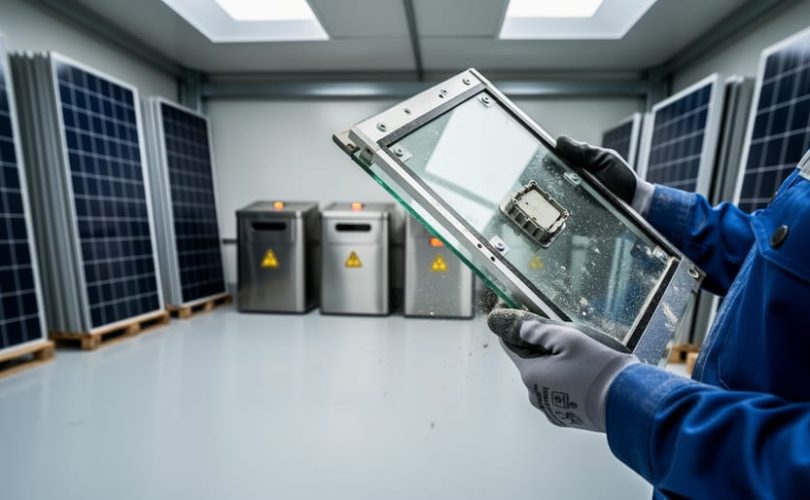
Recycling standards for photovoltaic systems establish the minimum technical, environmental, and safety requirements that manufacturers, recyclers, and installers must meet when handling end-of-life solar panels. These frameworks govern everything from material recovery rates and hazardous substance management to chain-of-custody documentation and worker safety protocols. While specific requirements vary by jurisdiction, most comprehensive standards address similar core elements: material collection processes, decontamination procedures, recovery efficiency thresholds, and proper disposal methods for materials that cannot be reclaimed.
The photovoltaic industry faces a significant end-of-life challenge in the coming years as the first generation of mass-deployed solar installations begins reaching retirement age. Panels typically carry 25-year performance warranties, meaning systems installed during the early solar boom are now approaching their planned service life. Without clear recycling standards, valuable materials like silicon, silver, copper, and aluminum risk entering landfills, creating environmental hazards while wasting recoverable resources worth substantial economic value.
Regulatory frameworks have emerged across multiple jurisdictions to address this challenge, though implementation timelines and specific requirements differ. Some regions mandate producer responsibility programs requiring manufacturers to finance end-of-life management. Others focus on recycler certification, establishing minimum performance criteria for facilities handling photovoltaic waste. Understanding which standards apply to your role in the solar value chain determines your compliance obligations, certification requirements, and operational procedures.
This guide clarifies what recycling standards exist, who must comply with them, how to achieve and maintain certification, what rights and obligations stakeholders hold, and where to access official resources and expert assistance. Through our partnerships with leading universities and specialized training programs, we’ve helped hundreds of industry professionals implement compliant end-of-life management systems that meet regulatory requirements while maximizing material recovery and economic return.
What Are PV End-of-Life Recycling Standards?
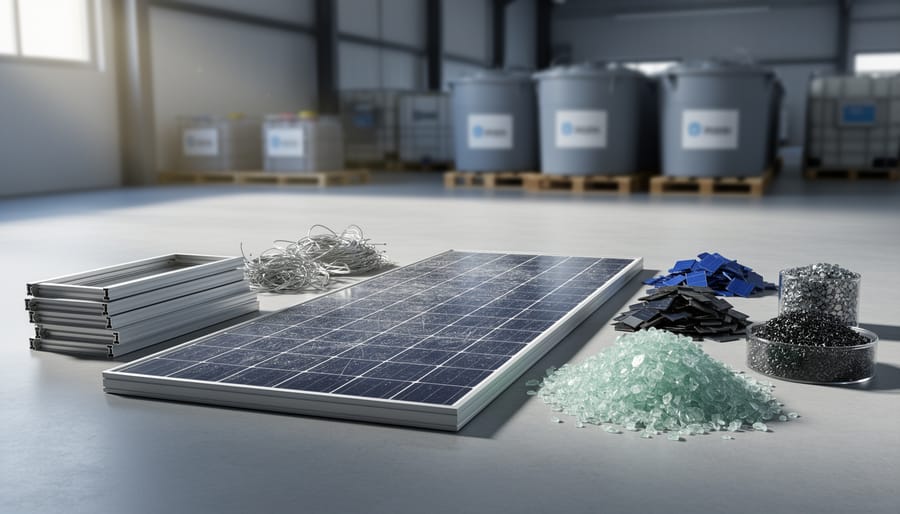
Core Components of Recycling Standards
PV recycling standards rest on four interconnected pillars that collectively define proper end-of-life panel management. Material recovery rates form the foundation, standards specify minimum percentages of glass, silicon, metals, and other components that must be extracted and returned to productive use. These thresholds ensure recycling is genuinely recovering valuable materials rather than simply diverting panels from landfills. Understanding how PV recycling works helps clarify why these recovery targets matter for both environmental protection and economic viability.
Hazardous substance handling addresses the safe management of materials like lead solder in older panels, cadmium in thin-film technologies, and silver paste used in contacts. Standards mandate specific containment, processing, and disposal methods to prevent environmental contamination during dismantling and material separation. Recyclers must demonstrate proper handling procedures and waste treatment capabilities.
Documentation requirements create accountability throughout the disposal chain. Standards typically mandate detailed waste transfer records, processing reports, and material recovery certificates that track panels from collection through final material disposition. This paper trail proves compliance and enables verification.
Environmental protection measures extend beyond the recycling facility itself, covering transport protocols, facility operational controls, emissions limits, and site contamination prevention. These safeguards ensure the recycling process doesn’t create new environmental problems while solving the waste challenge.
International vs. Regional Standards
Recycling standards for PV modules vary significantly across regulatory frameworks, reflecting different priorities and market conditions. The European Union pioneered comprehensive requirements through its WEEE Directive, which established collection targets, treatment standards, and extended producer responsibility for electronic equipment including solar panels. This framework emphasizes material recovery rates and producer financing of collection infrastructure, creating a model that other regions have studied and adapted.
Outside Europe, approaches differ. Some jurisdictions have introduced mandatory take-back programs with specific handling requirements, while others rely on voluntary industry initiatives combined with general e-waste regulations. Certain regions impose landfill bans on PV modules, effectively requiring recycling without prescribing detailed process standards. Emerging frameworks often start with basic collection and documentation requirements before progressing to material recovery targets.
These variations create challenges for global manufacturers and recyclers operating across multiple markets. A facility certified under one regional standard may need additional processes or documentation to serve other jurisdictions. Industry bodies work to harmonize technical specifications, but regulatory differences persist, reflecting local waste management infrastructure, environmental priorities, and market maturity. Organizations serving international markets must track multiple compliance frameworks and maintain flexible systems that satisfy the most stringent applicable requirements.
Who Needs to Comply: Eligibility and Applicability
Manufacturer and Producer Responsibilities
Extended Producer Responsibility (EPR) shifts end-of-life management costs and logistics from governments and consumers back to the companies that manufacture or import PV modules. Under EPR frameworks, producers fund and organize collection systems, ensure panels reach certified recyclers, and often finance the actual recycling process, even decades after selling a module.
This approach creates financial incentive to design panels for easier material recovery. When producers bear recycling costs, they’re more likely to reduce hazardous materials, use recyclable adhesives, and standardize components that recyclers can efficiently separate. Many EPR schemes require producers to join collective compliance organizations that pool resources to run take-back networks, spreading the administrative burden across multiple brands.
Manufacturers must register with relevant authorities, report annual sales volumes, and pay fees proportional to the number of panels they place on the market. These fees fund the infrastructure needed to collect aging panels from residential rooftops, commercial sites, and utility-scale installations. Documentation requirements are substantial: producers track every module sold, maintain records proving proper end-of-life handling, and demonstrate that partnered recyclers meet technical standards for material recovery.
Non-compliance carries penalties including market access restrictions. A producer unable to demonstrate a compliant take-back system may face sales bans in regulated jurisdictions. EPR fundamentally redefines “selling a solar panel” to include responsibility for what happens when that panel stops generating power thirty years later.
Installer and Project Developer Obligations
Solar installers and project developers shoulder specific responsibilities throughout a system’s lifecycle, beginning well before panels reach retirement. You must maintain accurate records of panel specifications, installation dates, and quantities from project commissioning, documentation that becomes critical decades later when planning end-of-life management.
Most regulatory frameworks require installers to inform system owners about proper disposal requirements and approved recycling pathways at the time of installation. This includes providing clear guidance on what to do when panels are damaged, replaced during maintenance, or decommissioned at system end-of-life. Some jurisdictions mandate that you include end-of-life management plans in project documentation or communicate decommissioning costs upfront.
When panels do reach retirement, you’re typically responsible for ensuring they reach certified recycling facilities rather than general landfills. This means verifying recycler credentials, obtaining proper waste transfer documentation, and maintaining chain-of-custody records. For large-scale projects, developers often need to establish financial assurance mechanisms or escrow accounts covering future decommissioning and recycling costs.
Keep detailed service records throughout the system’s operational life, they demonstrate due diligence and facilitate compliant disposal when the time comes.
Recycling Facility Requirements
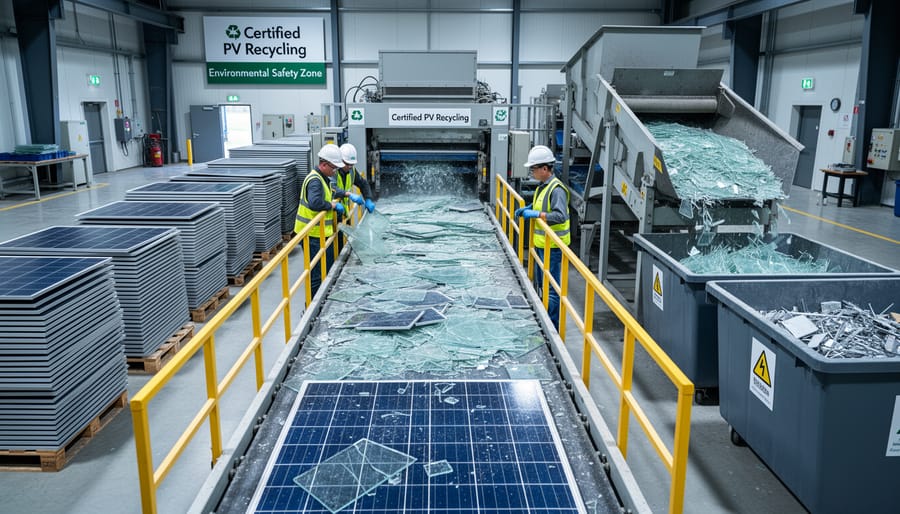
Recycling facilities handling solar panels must meet rigorous infrastructure and operational standards to safely process the PV waste challenge. Certified facilities require specialized equipment for dismantling modules, separating glass from semiconductor materials, and recovering metals like silver, copper, and aluminum. Proper ventilation systems and containment protocols protect workers from exposure to hazardous substances such as lead or cadmium telluride present in certain panel types.
Process controls must ensure minimum material recovery rates, typically requiring facilities to recover specific percentages of glass, metals, and silicon from each module processed. Recyclers maintain detailed records tracking waste volumes, processing methods, and material outputs to demonstrate compliance during audits.
Environmental permits for hazardous waste handling, water discharge, and air emissions are standard prerequisites. Facilities also implement quality management systems documenting procedures, staff training records, and corrective actions. Regular reporting to regulatory bodies details processing volumes, recovery rates, and disposal methods for non-recyclable residues, creating transparency throughout the waste management chain.
The Certification Process: How to Achieve Compliance
Pre-Application Assessment
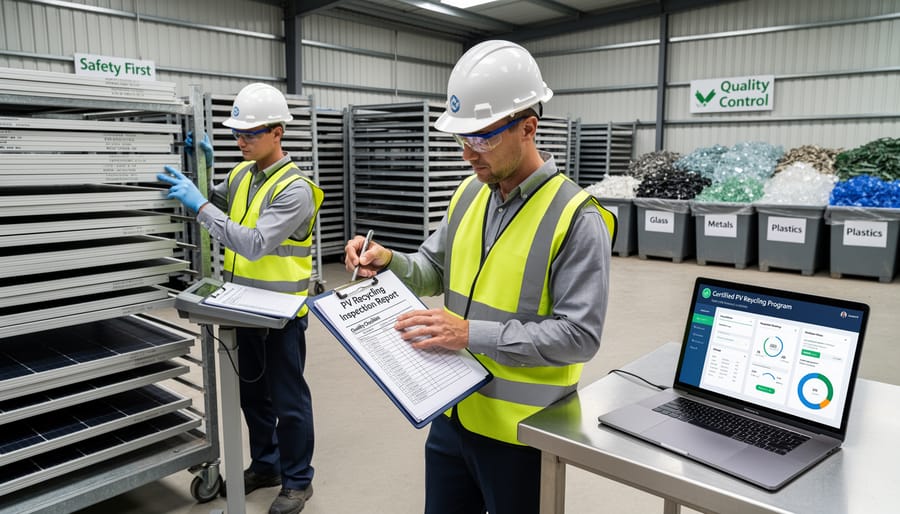
Before pursuing certification, organizations must conduct a thorough internal assessment to determine readiness and identify areas requiring improvement. This evaluation phase prevents costly application delays and ensures a smoother certification process.
Start by reviewing your facility’s current operations against the applicable standard requirements. Document existing material handling procedures, recovery processes, and safety protocols. Compare these practices to what certification demands, noting specific gaps in equipment, processes, or documentation systems.
Conduct a physical infrastructure audit examining receiving areas, processing equipment, storage facilities, and environmental controls. Assess whether your space and machinery can achieve required material separation rates and handle hazardous components safely. Many facilities discover they need upgraded ventilation systems, additional storage capacity, or specialized equipment for glass or silicon recovery.
Evaluate your documentation systems and record-keeping practices. Certification requires detailed tracking of incoming waste, processing activities, and output materials. If your current systems rely on informal logs or inconsistent data collection, you will need to implement structured tracking before applying.
Identify staff training needs and develop a compliance training program. Certification bodies verify that personnel understand relevant procedures, safety requirements, and quality standards. Document existing skills and plan training to address knowledge gaps identified during your assessment.
Application and Documentation Requirements
Applying for recycling certification requires comprehensive documentation proving both technical capability and environmental compliance. Facilities must submit detailed process flow diagrams showing how panels move through their system, from intake and hazardous material separation through mechanical and chemical recovery stages. These diagrams need to demonstrate compliance with material recovery thresholds and proper handling of components like lead-bearing solder, cadmium compounds, and silicon dust.
Technical specifications form the core submission. Applicants document their equipment specifications, processing capacity in tonnes per year, and material recovery rates for glass, aluminum, copper, silicon, and other valuable components. Environmental permits covering air quality, wastewater discharge, and hazardous waste handling must be current and submitted in full. Many jurisdictions also require proof of financial assurance, bonds or insurance demonstrating the facility can cover closure costs and potential environmental liabilities.
Quality management documentation is equally critical. This includes written standard operating procedures for every processing step, employee training records, and incident response protocols. Certification bodies typically require at least six months of operational data showing consistent compliance with recovery and environmental standards before they’ll consider an application complete. Expect to provide waste tracking records, material output reports, and chain-of-custody documentation proving where recovered materials ultimately go.
Third-Party Audit and Verification
Independent certifying bodies conduct on-site inspections to verify that recycling facilities meet technical and environmental standards. These organizations, typically accredited by national metrology institutes or environmental authorities, assess whether your processes, infrastructure, and management systems align with stated compliance requirements.
Auditors examine your facility’s physical capabilities first: material handling equipment, separation technologies, storage areas for hazardous substances, and worker safety measures. They review your documented processes for receiving panels, dismantling modules, extracting materials, and managing waste streams. Expect questions about your quality control procedures, employee training records, and environmental monitoring systems.
The verification process includes reviewing your material recovery data, chain-of-custody documentation, and downstream disposal contracts. Auditors check that you track each batch of incoming panels through processing and can demonstrate where recovered materials go after leaving your facility. They verify your testing protocols for material purity and confirm that hazardous components receive proper handling.
Most certification programs require sampling and witnessing actual processing operations during the audit. The certifying body compares your claimed recovery rates against observed performance and tests output materials to confirm they meet purity specifications. This on-site verification ensures your documented processes reflect actual capabilities rather than theoretical projections.
Maintaining Certification Status
Certification isn’t a one-time achievement. Most programs require re-audit every two to three years, with annual compliance reports documenting waste volumes processed, recovery rates achieved, and any incidents. Regulators expect documented evidence of continuous improvement, whether through upgraded equipment, refined processes, or staff training. Failure to submit timely reports or maintain performance benchmarks can trigger additional audits or suspension. Keep detailed records of all recycling activities, as certifying bodies may request documentation at any time to verify ongoing adherence to standards.
Rights and Obligations Under Recycling Standards
Producer and Importer Obligations
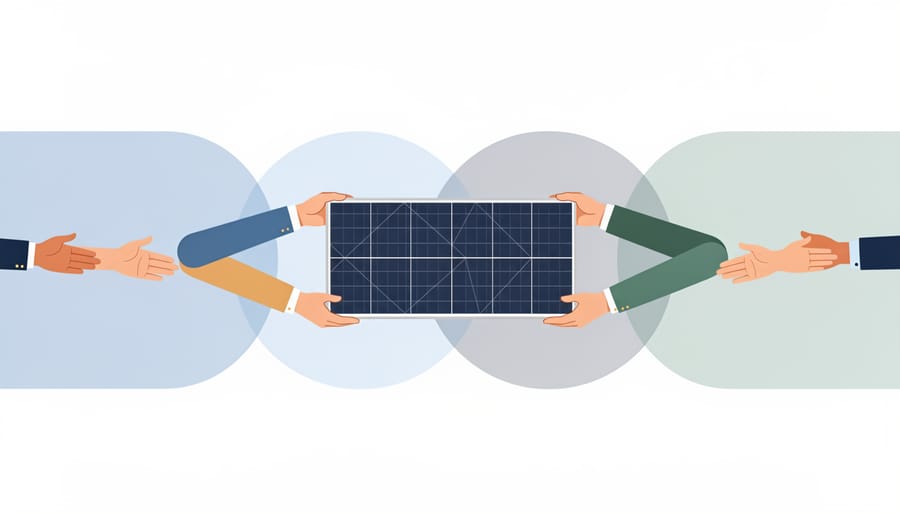
Producers and importers of PV modules typically bear primary financial responsibility for end-of-life management under extended producer responsibility frameworks. This means you must fund collection, transportation, and proper recycling of panels you place on the market, either through individual take-back programs or collective schemes that pool resources across manufacturers.
Financial mechanisms vary but often include advance recycling fees, performance bonds, or membership in approved producer responsibility organizations. You’ll need to register with relevant authorities, report annual sales volumes and market share, and demonstrate adequate financial provision for future waste streams. Many jurisdictions require proof of insurance or escrow accounts covering potential recycling costs.
Take-back program mandates require you to accept returned panels at no cost to end users and ensure delivery to certified recycling facilities. Documentation duties include tracking panel serial numbers, maintaining collection point networks, and submitting periodic compliance reports showing weight collected, materials recovered, and recycling rates achieved. Some programs specify minimum collection targets as percentages of historical sales.
Record retention periods commonly span seven to ten years, covering everything from import documentation to recycling certificates. Non-compliance penalties range from fines to market access restrictions, making robust systems essential. Smaller importers often join collective schemes rather than establishing individual programs, reducing administrative burden while meeting obligations.
Recycler Rights and Responsibilities
Certified recyclers gain specific rights to access and process PV waste streams, but these come with corresponding responsibilities that maintain the integrity of recycling programs. Recyclers who meet certification standards can participate in official take-back schemes and receive waste from registered producers, securing a reliable feedstock for their operations.
Material ownership typically transfers to the recycler once panels are accepted for processing, allowing sale of recovered commodities such as glass, aluminum, silicon, and metals. However, this ownership hinges on meeting documented recovery targets, many programs require minimum percentages of materials to be reclaimed rather than sent to landfill. Recyclers must maintain detailed records of incoming waste quantities, material recovery rates, and residual waste disposal methods.
Reporting obligations are substantial. Certified facilities submit regular compliance reports to regulatory bodies and often to the producers whose waste they handle, documenting volumes processed, materials recovered, and environmental metrics. Quality assurance requirements include maintaining process controls that prevent environmental release of hazardous substances and ensuring downstream processors of recovered materials meet appropriate standards. Certification can be suspended if facilities fail audits or miss reporting deadlines, making consistent operational discipline essential for maintaining market access.
Documentation and Traceability Requirements
Proper documentation forms the backbone of recycling compliance. Every party handling end-of-life PV modules must maintain detailed records tracking panels from collection through final material recovery. Waste transfer forms document each handoff, capturing module serial numbers, quantities, hazardous component details, and receiving facility information. These records create an unbroken chain proving panels reached approved recyclers and underwent compliant processing.
Most regulatory frameworks require five to seven years of record retention, though specific periods vary by jurisdiction. Documentation must include collection manifests, transport logs, processing certificates, and material recovery reports. Modern chain-of-custody tools streamline this process through digital tracking systems that automatically generate required documentation and flag compliance gaps. Producers remain legally responsible for ensuring complete documentation even when using third-party logistics providers, making robust tracking systems essential for demonstrating regulatory compliance and protecting against liability claims.
Key Technical Standards and Certification Bodies
Several international and regional organizations have developed frameworks to certify recycling operations and validate end-of-life management processes for photovoltaic modules. These certification schemes establish technical benchmarks for recovery rates, process controls, environmental protection measures, and quality management systems that recycling facilities must meet.
The landscape of certifying bodies includes both general environmental management standards organizations and PV-specific initiatives. Some operate globally with recognized accreditation across multiple jurisdictions, while others focus on regional compliance requirements. Manufacturing trade associations, environmental certification agencies, and third-party testing laboratories all play roles in developing and administering these programs.
Recognized certification schemes and accrediting organizations include:
- Environmental management system certifiers that verify comprehensive quality control and documentation practices
- Waste management and recycling-specific accreditation bodies evaluating technical competence and process effectiveness
- PV industry associations developing sector-specific recycling protocols and verification programs
- Independent testing laboratories providing technical validation of material recovery processes
- Regional e-waste compliance schemes adapted for photovoltaic materials
These certification programs frequently overlap in their requirements. A recycling facility might pursue general environmental management certification alongside industry-specific PV recycling accreditation. The schemes interact through mutual recognition agreements, where certification under one framework satisfies requirements in another jurisdiction, or through tiered approaches where baseline environmental standards form prerequisites for specialized PV recycling validation.
Certifying bodies typically require audited proof of technical capacity, equipment capable of separating silicon, metals, and glass; containment systems for hazardous materials; and documented procedures for handling, processing, and tracking materials through recovery. Facilities must demonstrate both infrastructure and operational competence to achieve certification, with periodic reassessment maintaining credential validity. Understanding which certifications your jurisdiction recognizes and which schemes potential partners accept helps navigate this complex ecosystem efficiently.
Where to Get Help: Resources and Support
Regulatory Agency Resources
Navigate compliance requirements by consulting official regulatory bodies in your jurisdiction. The European Commission’s environment directorate publishes detailed WEEE implementation guidance for member states, while individual countries maintain their own environmental agency portals with jurisdiction-specific requirements.
In North America, state environmental protection agencies provide recycling program guidance, with some jurisdictions operating dedicated solar waste management resources. Check your regional authority’s website for current obligations, registration processes, and approved recycler lists. Many agencies offer compliance assistance programs and direct consultation services for regulated entities.
Australia’s environment department and Asian regulatory bodies publish similar guidance through their respective environmental ministries. Search for “solar panel waste” or “photovoltaic recycling requirements” on government environment websites to locate applicable regulations. When regulations aren’t yet specific to PV, general electronics waste standards typically apply until dedicated frameworks emerge.
Industry Association Support
Industry associations serve as valuable compliance partners, translating complex regulatory requirements into practical implementation guidance. Organizations such as the Solar Energy Industries Association, European Photovoltaic Manufacturing Council, and regional renewable energy trade groups maintain technical committees focused specifically on end-of-life management. These associations develop compliance toolkits, host workshops on certification processes, and facilitate peer-to-peer learning among members navigating similar regulatory challenges. Many offer template documentation systems, compliance checklists, and direct consultation services at reduced cost for members. Trade group events provide opportunities to meet certified recyclers, share operational strategies, and stay current as recycling frameworks evolve. Joining relevant associations connects you with collective expertise while supporting industry-wide advancement of sustainable practices.
Educational and Training Programs
Understanding compliance requirements is one step; building the expertise to implement them is another. Professional development programs have emerged to help solar industry professionals navigate the technical and regulatory complexities of end-of-life management.
Mose Solar offers specialized online training developed in collaboration with university partners, covering PV recycling standards, material recovery processes, and certification pathways. These programs equip aspiring professionals with practical knowledge of compliance documentation, facility requirements, and proper handling protocols for retired modules.
Many industry associations also provide workshops and certification courses focused on recycling operations and regulatory compliance. These educational opportunities help manufacturers understand extended producer responsibility, guide installers on approved disposal channels, and prepare recycling facilities for third-party audits.
For those exploring specific take-back programs, understanding K-Cycle eligibility and similar program requirements can clarify participation options and compliance pathways. Continuing education keeps professionals current as standards evolve and new recovery technologies emerge, ensuring the industry maintains high environmental performance standards.
How to Apply or Complete the Process
Obtaining recycling certification begins with contacting the relevant certification body in your jurisdiction. Most programs require you to submit an application form detailing your facility’s capabilities, processing methods, and quality management systems. You’ll need to provide documentation of your infrastructure, employee training records, and environmental permits.
Once your application is accepted, the certification body schedules an on-site audit. Auditors examine your physical facilities, review your process flows, and verify that you can meet required material recovery thresholds. They’ll inspect hazardous material handling procedures, worker safety protocols, and documentation systems. Expect the audit to take several days depending on your operation’s size.
After a successful audit, you’ll receive provisional certification valid for a specified period. You must then demonstrate consistent performance through regular reporting of recovery rates, waste streams, and processing volumes. Most programs require annual reports and periodic re-audits to maintain certification status.
For producers establishing take-back programs, the process involves registering with regulatory authorities, demonstrating financial assurance for end-of-life management, and contracting with certified recyclers. Registration typically requires details of your sales volumes and a compliance plan showing how you’ll meet collection and recovery targets.
Keep detailed records throughout. Documentation proves compliance and simplifies renewals.
Frequently Asked Questions About PV Recycling Standards
Professionals entering the PV recycling field frequently encounter practical questions about how standards function day-to-day. Understanding these operational details helps clarify obligations and expectations for all stakeholders in the solar panel lifecycle.
What happens if panels aren’t recycled properly?
Improper disposal violates environmental regulations and can result in penalties, loss of certification status, and liability for environmental damage. Beyond legal consequences, panels that bypass certified recyclers may leak hazardous materials into landfills or lose valuable materials that could otherwise be recovered for reuse.
How long does certification typically take?
The timeline varies based on facility readiness and documentation completeness, but most organizations should expect several months from initial application through final audit approval. Facilities with existing environmental management systems and proper infrastructure often progress faster than those requiring significant upgrades.
Are recycling costs covered by producers?
Extended producer responsibility frameworks typically require manufacturers and importers to finance end-of-life management, either through direct take-back programs or collective financing schemes. The specific cost allocation depends on local regulations and whether the producer participates in an industry-wide compliance program or manages obligations independently.
What materials can be recovered from recycled panels?
Certified recycling processes recover glass (which comprises roughly three-quarters of panel weight), aluminum frames, copper wiring, silicon wafers, and smaller quantities of silver and other metals. Understanding what happens when recycled reveals both the economic value and environmental benefit of proper material recovery versus disposal.
Another common concern involves compliance verification methods. Regulatory authorities and certification bodies conduct periodic audits, review documentation trails, and may perform unannounced facility inspections to confirm ongoing adherence to standards. Recyclers maintain chain-of-custody records demonstrating that panels entered their facilities and materials were processed according to approved methods.
Questions about cost distribution often arise during compliance planning. While producers bear financial responsibility under most frameworks, these costs typically factor into product pricing structures rather than appearing as separate end-of-life charges. Some jurisdictions allow producers to display recycling fees transparently, while others require the cost to be built into the base price.
Material recovery expectations also generate questions, particularly regarding which components must be recycled versus which may be disposed of as residual waste. Standards specify minimum recovery percentages for major material categories, but exact rates depend on panel type, age, and recycling technology employed. Recyclers using advanced separation techniques achieve higher recovery rates than facilities relying on basic mechanical processing.
Installers frequently ask whether they need separate certification or whether working with certified recyclers satisfies their obligations. In most cases, installers fulfill their duty by documenting proper handoff to approved recyclers and maintaining records proving panels reached certified facilities. Direct installer certification becomes necessary only when they operate their own collection or preliminary processing operations before transferring panels to final recyclers.
PV end-of-life recycling standards represent more than regulatory compliance, they’re essential infrastructure for a truly sustainable solar industry. As installations mature and recycling capacity expands, these frameworks ensure that the environmental benefits of solar energy extend through the entire product lifecycle, not just the operational phase.
The regulatory landscape continues to evolve as governments recognize both the environmental imperative and the economic opportunity in recovering valuable materials from retired panels. Certification programs provide the verification mechanism that gives all stakeholders confidence in proper handling, from manufacturers fulfilling extended producer responsibility to recyclers demonstrating capability and installers documenting compliant disposal.
Your role in this system, whether as manufacturer, installer, recycler, or project developer, carries specific obligations and opportunities. Staying current with standards changes, maintaining proper documentation, and understanding your compliance pathway isn’t optional; it’s fundamental to operating in the modern PV industry.
Keep informed through official regulatory channels and industry associations as requirements shift. Professional development in end-of-life management strengthens your capability and market position. Mose Solar’s online programs, developed with university partners, offer structured education for aspiring professionals seeking to master these critical competencies.
The transition to circular economy principles in solar energy depends on informed, compliant practitioners at every stage. Your commitment to understanding and meeting recycling standards directly contributes to the industry’s long-term environmental credibility and economic viability.