Green energy insurance costs vary substantially based on project scale, technology type, geographic risk profile, and coverage scope rather than following a universal price schedule. Unlike standardized property or auto policies, insurance for solar installations and other renewable projects is underwritten individually, with premiums reflecting the unique risk profile of each facility. Understanding what drives these costs matters just as much as the price itself, particularly for developers integrating insurance expenses into project economics alongside solar financing and operational budgets.
The fundamental cost drivers start with project size and system complexity. A residential rooftop array faces different risks than a utility-scale solar farm spanning hundreds of acres, and insurers price accordingly. Weather exposure, equipment value, business interruption potential, and liability thresholds all shift the premium equation. Installation quality, component warranties, and operational track records influence underwriting decisions, while local building codes and grid interconnection requirements add regulatory layers that affect coverage needs.
Coverage structure itself determines what you pay. Property damage protection forms the baseline, but comprehensive policies layer in business interruption coverage, equipment breakdown protection, liability shields, and specialized endorsements for emerging technologies. The choice between bundled packages and modular policies creates different cost profiles, as does the decision threshold between commercial insurance and self-insured retention programs for larger portfolio operators.
This article breaks down how project variables translate to insurance costs, examines the components worth paying for versus optional add-ons, identifies the pricing factors you can influence during project development, and provides frameworks for deciding when commercial coverage delivers better value than self-insurance strategies.
Green Energy Insurance Costs by Project Scale
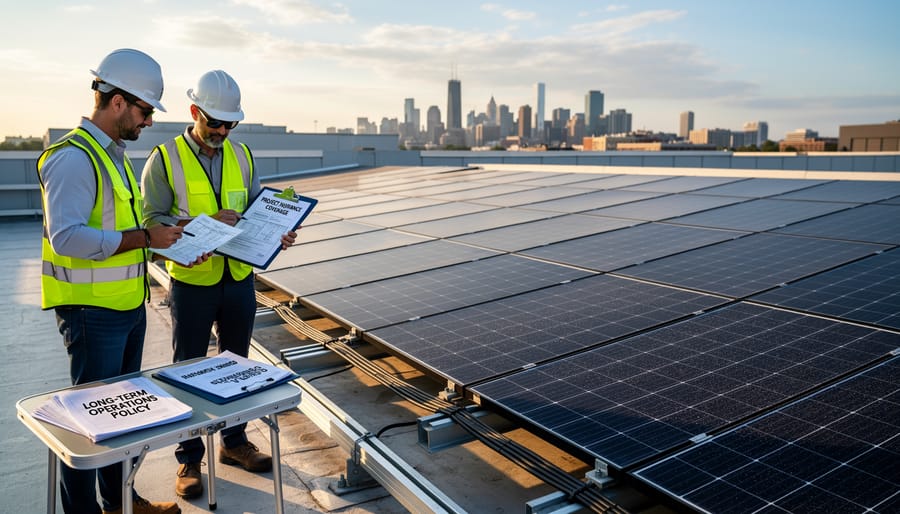
Insurance premiums for solar projects scale with system size, but the relationship isn’t linear. Small residential arrays face different risk profiles and assessment methods than multi-megawatt solar farms, which means the cost structure changes fundamentally as projects grow. Understanding how insurers evaluate each scale helps you anticipate coverage expenses and factor them into your solar ROI calculations from the planning stage.
| Project Scale | Typical Capacity | Primary Coverage Considerations | Premium Assessment Method |
|---|---|---|---|
| Residential | 3-10 kW | Property damage, roof penetration liability, equipment replacement | Add-on to homeowner’s policy or standalone calculation based on system value |
| Commercial | 50 kW – 5 MW | Business interruption, liability, performance guarantees, financing requirements | Customized underwriting based on revenue projections and replacement costs |
| Utility-Scale | 5 MW – 500+ MW | Revenue protection, grid interconnection liability, construction phase coverage, investor requirements | Detailed risk modeling incorporating location-specific hazards and power purchase agreements |
Residential systems often represent the simplest insurance case. Many homeowners add solar coverage as an endorsement to existing property insurance, treating panels as an asset attachment similar to a new roof or addition. Insurers typically assess these based on the system’s replacement value rather than its electricity generation potential. The coverage protects against physical damage from weather events, fire, or theft, but may not include revenue loss since most residential owners use net metering rather than selling power directly.
Commercial installations introduce complexity because they often serve dual purposes: reducing operating expenses and generating revenue through excess power sales or renewable energy credits. Insurers evaluate both the physical asset value and the income stream at risk. A rooftop array on a warehouse differs from a ground-mount system behind a manufacturing facility in terms of structural risk, accessibility for maintenance, and potential business disruption if damaged. Underwriters examine construction quality, panel specifications, inverter reliability, and the financial strength of any power purchase agreements in place.
Utility-scale projects receive the most granular risk assessment. Insurers model site-specific weather patterns, evaluate soil conditions affecting foundation integrity, analyze grid interconnection complexities, and scrutinize developer experience. These large installations may require separate policies for construction phase risk versus operational phase coverage. The premium structure often reflects the project’s debt-to-equity ratio and lender requirements, since financing agreements typically mandate specific coverage minimums and loss payee provisions. Portfolio owners with multiple solar farms sometimes negotiate fleet policies that spread risk across geographic regions, potentially achieving better rates than insuring each site individually.
Scale also affects claims handling and loss adjustment. A residential claim might involve replacing damaged panels and filing within standard homeowner procedures. A commercial claim could trigger business interruption calculations tied to lost production during repairs. Utility-scale losses may require forensic engineering assessments, revenue reconstruction based on weather data and grid records, and coordination among multiple stakeholders including lenders, tax equity investors, and offtakers.
What Green Energy Insurance Policies Cover
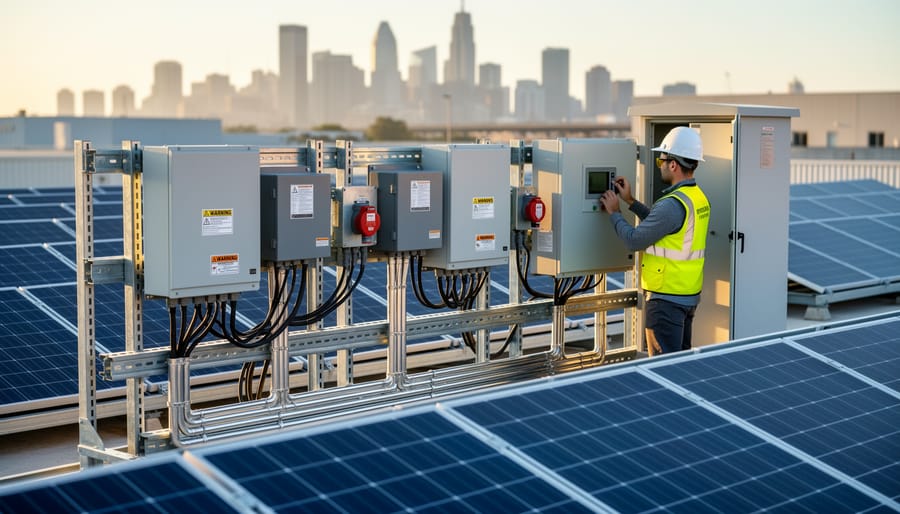
Green energy insurance for solar projects comprises multiple coverage layers, each designed to protect different aspects of the investment and operational risk profile. Understanding these components helps project developers and investors evaluate proposals and allocate their insurance budgets effectively.
Property Damage Coverage
Physical asset protection forms the foundation of most solar insurance policies. This coverage addresses damage to photovoltaic panels, inverters, mounting structures, transformers, monitoring equipment, and electrical infrastructure from weather events, fire, vandalism, or equipment failure. For ground-mounted systems, it extends to foundations, fencing, and access roads. The breadth of property coverage directly influences premium costs because it determines the insurer’s exposure to total loss scenarios.
Business Interruption and Loss of Revenue
When a solar installation stops producing electricity, the financial impact extends beyond repair costs. This coverage compensates for lost revenue during downtime, whether caused by covered property damage or operational failures. For systems under power purchase agreements, it protects the income stream investors rely on for debt service and returns. The coverage period you select, how many months of lost revenue the policy will pay, significantly affects premium structure, with longer periods commanding higher costs.
Core Coverage Components
Solar project insurance packages typically include:
– General liability protection covering bodily injury and property damage claims from third parties during operations or arising from the installation
– Professional liability (errors and omissions) addressing design flaws, faulty workmanship, or incorrect system specifications that lead to underperformance
– Builder’s risk or construction phase insurance protecting the project during installation until commissioning is complete
– Equipment breakdown coverage for mechanical and electrical failures not covered under manufacturer warranties, particularly for inverters and balance-of-system components
– Warranty insurance that steps in if manufacturers become insolvent or fail to honour product guarantees
– Cyber risk coverage for smart inverters, monitoring systems, and grid-connected installations vulnerable to hacking or ransomware attacks
Performance Guarantees and Environmental Coverage
Some policies incorporate performance insurance that compensates owners when actual energy production falls below guaranteed levels due to covered causes. Environmental liability coverage addresses contamination or pollution claims, though solar projects present minimal environmental risk compared to conventional energy generation. These specialized coverage types add incremental cost but provide critical protection for projects with performance-based financing or strict output requirements.
Each coverage component carries its own pricing logic based on the specific risks it covers, making solar insurance costs highly variable depending on which protections you include in your policy structure.
Factors That Determine Insurance Premiums
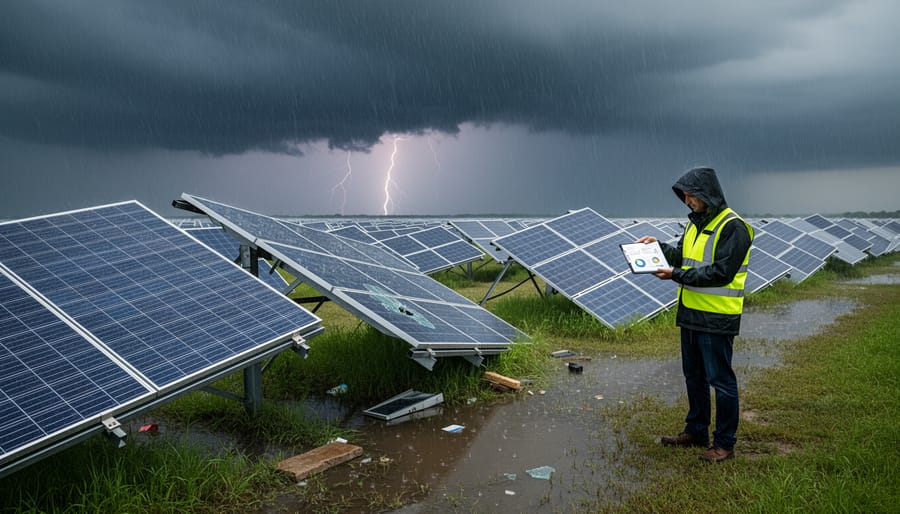
Insurance carriers evaluate solar projects through a multi-factor risk model that weighs both external hazards and project-specific characteristics. Understanding these variables helps developers and investors identify where they have leverage to manage premium costs.
Geographic Location and Weather Risk
Where you build matters enormously. Insurers maintain detailed loss histories for every region, tracking hail frequency in the Great Plains, hurricane exposure along coastlines, wildfire risk in the West, and flooding patterns throughout river valleys. Projects in high-risk zones face higher premiums because catastrophic weather events drive the largest claims. A solar farm in Oklahoma’s hail belt will cost more to insure than an identical system in a temperate, low-wind area. Carriers use proprietary weather models and decades of actuarial data to price this location-specific risk.
Panel Technology and Quality Ratings
Equipment specifications directly influence insurability. Tier 1 panels from manufacturers with strong financial backing and proven track records reduce uncertainty for insurers. The quality rating reflects both product reliability and the manufacturer’s ability to honor warranties, which can offset claims. Performance history, certification standards (IEC, UL), and the manufacturer’s claims experience all factor into premium calculations. As panel price trends create wider equipment options, the choice between premium-tier and economy products carries insurance implications beyond the initial purchase price.
Installation Standards and Certifications
How a system is built matters as much as what it’s built with. Insurers assess whether installers hold NABCEP certification, follow local electrical codes, use proper racking and anchoring methods, and document quality control procedures. Projects installed by experienced contractors with clean safety records command better rates than those built by unproven teams. Wind uplift testing, electrical inspection reports, and engineering certifications all serve as risk reduction evidence that influences premium quotes.
Site Characteristics
Ground-mount systems face different risks than rooftop installations. Ground-mounted arrays may be more vulnerable to flooding, wildlife damage, or theft, but they offer easier maintenance access that can reduce claims. Rooftop systems introduce structural concerns, membrane penetration risks, and fire department access issues. Flat roofs versus pitched, ballasted versus penetrating mounts, and proximity to property edges all enter the underwriting assessment.
Claims History and Deductible Selection
Your track record follows you. Developers or owners with clean claims histories earn preferential pricing, while those with frequent losses pay more or face coverage restrictions. The deductible you choose represents risk sharing with the carrier. Higher deductibles lower premiums by shifting smaller losses to the owner, a strategy that makes sense for well-capitalized projects with multiple assets. This self-insurance component lets you control premium expenses in exchange for greater first-dollar exposure.
Coverage Limits and Contract Length
The breadth and depth of coverage you purchase sets the premium baseline. Higher replacement cost values, broader business interruption periods, and more extensive liability limits all increase premiums proportionally. Multi-year contracts sometimes offer rate stability but may lock you into terms that don’t reflect improving risk profiles. Annual renewals give flexibility to adjust coverage as the project matures and equipment depreciates.
Risk Mitigation Measures
Proactive protection drives premium savings. Real-time monitoring systems that detect faults early, on-site security (fencing, cameras, lighting), vegetation management programs that reduce fire risk, and preventive maintenance schedules all demonstrate risk reduction that carriers reward. Documented emergency response plans, spare parts inventory, and rapid repair protocols further strengthen your underwriting profile by shortening potential business interruption periods.
Self-Insurance vs. Commercial Policy Trade-offs
Deciding whether to self-insure or purchase commercial green energy insurance hinges on project scale, risk tolerance, and financing structure. The choice affects both immediate costs and long-term financial exposure.
Self-insurance, essentially accepting full financial responsibility for losses without a commercial policy, might make sense for very small residential installations where total system replacement cost remains manageable within a household’s emergency reserves. A homeowner with a modest rooftop array generating enough power to offset personal consumption could potentially absorb repair or replacement costs from savings without threatening financial stability. This approach avoids annual premium expenses and eliminates paperwork with insurance carriers.
However, the risks escalate sharply as project value increases. Even mid-sized commercial installations represent substantial capital investments that most businesses cannot easily replace from operating cash flow. Weather events, fire, theft, or equipment failure could wipe out years of projected savings. For investment-grade projects backed by external capital, self-insurance is rarely viable, lenders and equity investors require professional coverage as a condition of financing because uninsured assets cannot serve as reliable collateral.
Pros
- Eliminates annual premium expenses for small systems with low replacement costs
- Provides flexibility to allocate capital elsewhere in the business
- Avoids claim reporting procedures and potential premium increases after losses
- Works for owner-operators with strong balance sheets and risk appetite
Cons
- Exposes owners to potentially catastrophic financial losses from single weather events
- Disqualifies projects from most commercial financing and tax equity structures
- Leaves no protection against third-party liability claims from system failures
- Lacks business interruption coverage that protects revenue streams during repairs
Commercial policies deliver the professional risk transfer that makes solar projects bankable. They satisfy lender requirements, protect investor capital, cover liability exposures that could exceed system value, and provide revenue continuity during repair periods. The coverage enables project owners to secure lower-cost debt financing, which typically offsets much of the insurance expense through reduced interest rates.
Portfolio owners managing multiple installations sometimes adopt middle-ground strategies. They purchase commercial coverage but select higher deductibles to reduce premium costs, effectively self-insuring smaller losses while maintaining protection against major events. Large developers with dozens of sites across different regions may self-insure property risks through captive insurance entities while maintaining commercial liability and construction coverage. These hybrid approaches require sophisticated risk modeling and substantial capital reserves.
For any project seeking third-party financing or representing significant capital relative to owner resources, commercial green energy insurance functions as essential infrastructure rather than optional protection. The modest premium cost pales against the financial devastation of an uninsured total loss or liability judgment.
How to Evaluate Insurance Proposals for Solar Projects

Comparing insurance proposals for solar projects requires systematic evaluation rather than choosing based on premium price alone. A structured review process ensures you select coverage that protects your investment adequately while meeting financing requirements and avoiding gaps that could jeopardize project economics.
- Request detailed policy documentation including declarations pages, coverage forms, and the complete list of exclusions. Don’t rely on broker summaries, the actual policy language determines what’s covered when you file a claim.
- Map each coverage component against your project’s specific risks and lender requirements. Confirm that property damage limits match equipment replacement costs at current market prices, business interruption coverage extends long enough to rebuild, and liability limits satisfy power purchase agreement terms.
- Compare deductible structures across proposals, noting whether deductibles apply per occurrence, per panel, or as annual aggregates. A lower premium with a $50,000 deductible may cost more over time than higher premiums with a $10,000 deductible if your region experiences frequent hail.
- Check each insurer’s financial strength rating through A.M. Best, Moody’s, or Standard & Poor’s. Prioritize carriers rated A- or higher who will remain solvent to pay claims decades into your project’s operating life.
- Verify the insurer’s renewable energy book of business and claims experience. Carriers specializing in solar understand technology-specific risks like potential-induced degradation and electrical faults better than generalist property insurers.
- Review claims settlement history by requesting references from other solar project owners who have filed significant claims with each carrier. Fast, fair claims payment matters more than premium savings when your revenue stream stops.
- Confirm that policy terms satisfy your financing agreements. Tax equity investors and lenders specify required coverage types, limits, additional insured endorsements, and loss payee provisions that non-negotiable for funding.
Create a comparison matrix listing each proposal with coverage limits, exclusions, deductibles, premium costs, and insurer ratings side by side. This visual tool makes gaps and differences immediately apparent and provides documentation for stakeholder discussions. The lowest-cost option rarely delivers the best value when you account for coverage breadth, insurer reliability, and alignment with project finance requirements.
Insurance Requirements in Solar Project Financing
Solar project financing introduces stringent insurance requirements that typically exceed what an owner might voluntarily purchase. Lenders view insurance as essential collateral protection, while tax equity investors and offtakers see it as project viability assurance. These stakeholders impose coverage mandates that directly shape both policy structure and premium costs.
Debt providers routinely require all-risk property coverage for the full replacement value of project assets, business interruption insurance covering debt service obligations during outage periods, and comprehensive general liability protection. The financing agreement specifies these minimums in detail, often mandating that coverage amounts exceed actual replacement costs by a buffer percentage to account for cost escalation during rebuilding. Lenders also require naming themselves as loss payees, ensuring insurance proceeds flow to them first to protect their collateral position before any distribution to equity holders.
Tax equity structures add performance-based insurance requirements, as investors depend on production tax credits or investment tax credits tied to system output. They often mandate coverage for underperformance scenarios and require naming the tax equity investor as an additional insured party. Power purchase agreement counterparties similarly impose liability minimums and operational continuity coverage to protect their contracted energy supply.
These financing-driven requirements mean project developers cannot simply choose the cheapest available policy. Insurance brokers must structure coverage that satisfies all stakeholder mandates simultaneously, which typically results in more comprehensive and expensive policies than simpler owner-only coverage. When building a project finance model insurance premiums flow through as an annual operating expense that reduces net cash flow and affects levelized cost of energy calculations. Underestimating these costs during development can compromise project economics once actual financing terms arrive.
Common Questions About Green Energy Insurance Costs
Do insurance premiums change over a solar project’s operational life?
Yes, premiums typically decrease as the system ages and proves operational reliability, though coverage amounts may also adjust downward to reflect depreciated equipment value. Many insurers offer multi-year policies with rate locks to provide cost predictability for financial modeling.
Are green energy insurance premiums tax-deductible?
For commercial solar projects, insurance premiums are generally deductible as ordinary business expenses, reducing the effective after-tax cost of coverage. Residential system owners should consult tax advisors, as deductibility depends on whether the system qualifies as investment property or a personal asset.
What happens if a claim exceeds my coverage limits?
The project owner bears responsibility for losses beyond policy limits, which can threaten project viability and financing agreements. This risk underscores the importance of adequate coverage limits that account for total project value, business interruption exposure, and potential liability scenarios.
How do manufacturer warranties interact with insurance coverage?
Manufacturer warranties typically cover equipment defects and performance guarantees, while insurance addresses external damage, theft, and operational risks. The two work in tandem rather than duplicating coverage, though some insurers offer warranty insurance that protects against manufacturer insolvency or warranty disputes.
Understanding how insurance coverage coordinates with other project risk management tools helps optimize protection while controlling costs. Manufacturer performance guarantees, for instance, promise specific output levels over 25 years, but they don’t protect against physical damage that prevents the system from operating. Insurance fills that gap, creating layered protection that addresses both equipment failure and external perils.
The emergence of new solar technologies affects insurability in complex ways. Bifacial modules, floating solar installations, and agrivoltaic systems present underwriting challenges because insurers lack extensive claims data for these configurations. Early adopters may face higher premiums or coverage restrictions until track records develop, though this risk often moderates as technologies mature and demonstrate reliability.
During construction and warranty periods, coverage needs shift substantially. Builder’s risk policies protect systems during installation, then convert to operational coverage at commissioning. Some manufacturers require specific insurance provisions during warranty periods, particularly for systems with performance guarantees tied to financing structures. Project developers must coordinate these overlapping requirements to avoid gaps or duplicate coverage that inflates costs unnecessarily.
Insurance cost considerations extend beyond direct premiums to include how coverage integrates with broader project economics. Financing agreements, power purchase contracts, and grid integration costs all interact with insurance requirements, making it essential to model these expenses holistically rather than in isolation. Projects that treat insurance as an afterthought often face last-minute coverage adjustments that disrupt financing timelines or require expensive policy modifications.
Green energy insurance represents a fundamental component of solar project economics, not a discretionary line item you can eliminate to improve returns. Projects without adequate coverage face financing barriers, investor skepticism, and potentially catastrophic financial exposure that can erase years of energy production revenue in a single weather event or equipment failure.
The relationship between insurance and project bankability is direct. Lenders will not finance uninsured solar installations, tax equity investors require proof of comprehensive coverage before committing capital, and power purchase agreement counterparties insist on protection for their contracted energy supply. Insurance costs flow into your levelized cost of energy calculations and debt service coverage ratios from day one. Projects that underinsure or skip coverage entirely typically cannot secure competitive financing terms, if they can access institutional capital at all.
When budgeting for solar investments, integrate insurance expenses into your financial models during the feasibility stage rather than treating them as an afterthought during construction. Work with insurance brokers who specialize in renewable energy and understand the unique risk profiles of photovoltaic systems. Generic commercial property agents rarely grasp the technical nuances that determine appropriate coverage for solar assets.
Mose Solar offers educational programs developed in collaboration with university partners that address project finance and risk management for renewable energy professionals. These modules prepare aspiring solar specialists to evaluate insurance requirements alongside other critical project finance considerations, building the analytical skills the industry needs as solar deployment accelerates.