Energy-as-a-Service (EaaS) financing enables property owners to install solar photovoltaic systems with zero upfront capital, transferring all ownership, operational responsibility, and performance risk to a third-party provider in exchange for ongoing energy payments. Unlike traditional solar loans or leases, EaaS treats solar electricity as a utility service rather than an asset purchase, fundamentally restructuring how organizations and homeowners access renewable power. The provider owns the system, manages all maintenance and monitoring, and guarantees energy delivery while the customer pays only for the electricity produced or a fixed capacity fee.
This financing model has evolved significantly since 2020, particularly for commercial, industrial, and institutional customers facing budget constraints or lacking technical expertise to self-manage solar infrastructure. Understanding EaaS requires examining eligibility criteria that differ sharply from conventional financing, navigating application processes that prioritize energy consumption patterns over credit scores, and evaluating contractual rights that govern everything from system performance to early termination.
For professionals entering the photovoltaic sector, EaaS represents a growing market segment requiring specialized knowledge of service agreements, performance metrics, and customer relationship management. Mose Solar’s university-developed educational programs address these competencies directly, preparing industry stakeholders to evaluate and structure EaaS transactions effectively. The following sections clarify what qualifies a customer for EaaS, how to pursue this financing path, and where to access authoritative guidance in this evolving space.
Understanding Solar Energy-as-a-Service Models
How EaaS Differs from Traditional Solar Financing
Solar Energy-as-a-Service occupies a distinct position in the financing spectrum, fundamentally different from traditional approaches in both structure and scope. Where conventional options treat solar as an equipment transaction, EaaS reframes it as an energy service delivered under a comprehensive contract.
The core distinction lies in the breadth of responsibility. Outright purchase and solar loans transfer all ownership and operational duties to the customer, you own the equipment, claim tax benefits, handle maintenance, manage warranties, and bear performance risk. Solar leases shift ownership to a third party while you pay fixed monthly fees for equipment use, though maintenance obligations vary by contract. Power purchase agreements (PPAs) further simplify the arrangement: you pay only for electricity generated at a predetermined rate, with the provider owning and maintaining the system.
EaaS expands beyond the PPA model by bundling energy delivery with guaranteed service levels. Rather than merely selling kilowatt-hours, EaaS providers commit to comprehensive system management, monitoring, preventive maintenance, repairs, insurance, warranty claims, and performance optimization, as part of the subscription. The provider assumes full operational responsibility, not just equipment ownership.
| Financing Type | Upfront Cost | Ownership | Maintenance Responsibility | Typical Contract Length |
|---|---|---|---|---|
| Outright Purchase | Full system cost | Customer | Customer | N/A |
| Solar Loan | Minimal to none | Customer | Customer | 5-20 years |
| Lease | None | Provider | Varies by contract | 15-25 years |
| PPA | None | Provider | Provider | 15-25 years |
| EaaS | None | Provider | Provider (full service) | 10-25 years |
This service-centric approach appeals to organizations prioritizing operational simplicity over asset control. EaaS contracts typically specify performance commitments and maintenance response protocols that go beyond standard PPA terms, positioning the provider as an energy service partner rather than merely an equipment lessor or electricity vendor.
Key Components of EaaS Agreements
EaaS agreements combine multiple services into a single contract, shifting operational complexity from the customer to the provider. Understanding what the provider commits to deliver helps customers evaluate proposals and ensures they receive comprehensive support throughout the system’s life.
A typical EaaS contract bundles several distinct services:
- System monitoring and optimization: Real-time performance tracking through web-based platforms, with providers analyzing production data to identify and resolve efficiency issues
- Preventive and corrective maintenance: Scheduled inspections, cleaning, component testing, and prompt repairs when equipment fails or underperforms
- Performance guarantees: Commitments that the system will meet specified energy production levels, with remedies if output falls short
- Insurance coverage: Property and liability protection for the solar equipment, protecting both provider investment and customer property
- Warranty management: Provider handles all manufacturer warranty claims for panels, inverters, and balance-of-system components
- Interconnection management: Coordination with utilities for grid connection, meter upgrades, and ongoing compliance with utility requirements
Performance guarantees vary by provider and project specifics. Some contracts specify minimum annual energy production based on site modeling, while others guarantee system availability or uptime. Review guarantee terms carefully to understand what triggers provider remedies and how underperformance is compensated, whether through service credits, cash adjustments, or system improvements.
End-of-term provisions outline customer options when the initial contract expires. Most agreements offer contract renewal at adjusted rates, the option to purchase the system at fair market value, or provider removal of the equipment at no cost to the customer. Clarifying these terms during negotiation prevents surprises when the contract approaches expiration.
Eligibility Requirements for EaaS Financing
Commercial and Institutional Eligibility
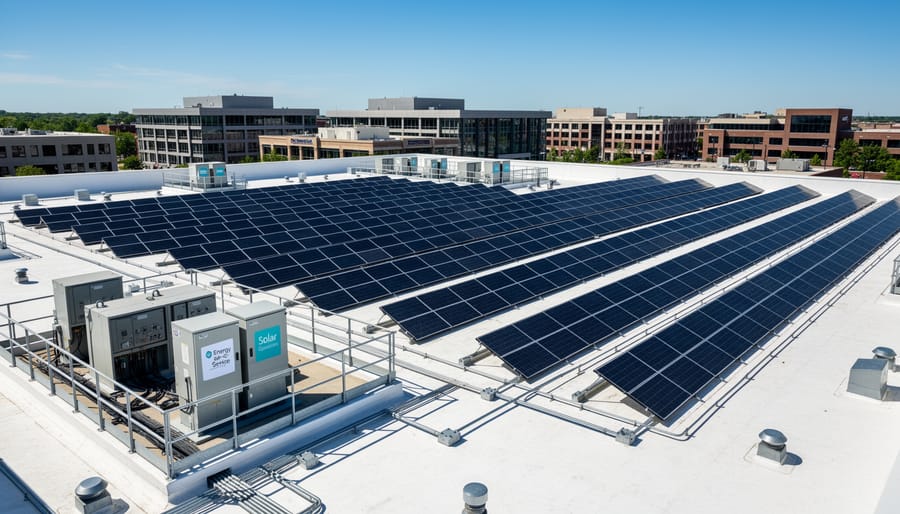
Commercial and institutional customers form the primary market for Energy-as-a-Service financing, though specific eligibility criteria vary across providers. Most EaaS programs target organizations with substantial, predictable energy consumption and the financial stability to support multi-year service agreements.
Energy usage typically represents the first screening criterion. Providers generally seek commercial customers with sufficient baseline electricity consumption to justify system economics and administrative overhead. While thresholds differ by provider and market, organizations with higher annual energy expenditures typically find more competitive EaaS offerings. Educational institutions, healthcare facilities, manufacturing operations, and large office complexes often meet these consumption levels naturally.
Financial assessment follows energy evaluation. Unlike outright purchase or loan financing that requires traditional credit scoring, EaaS providers evaluate organizational financial health through different lenses. They review annual revenue, cash flow stability, existing debt obligations, and payment history with utilities and vendors. Nonprofits and government entities may face modified criteria reflecting their distinct financial structures, with providers examining budget reliability and funding sources rather than profit metrics.
Property tenure matters significantly. Providers require either:
- Outright property ownership with clear title
- Long-term lease extending beyond the proposed EaaS contract duration
- Documented authorization from property owners for system installation
- Suitable roof condition verified through structural engineering assessment
- Adequate load-bearing capacity for solar array weight
Contract duration expectations typically range from ten to twenty years, aligning with system operational lifespan and provider return-on-investment requirements. Organizations unwilling to commit to these timeframes may find pay-as-you-go solar models or shorter-term PPAs better suited to their operational planning.
Organizations with planned relocations, building sales, or major facility modifications within the contract period often face challenges securing EaaS financing unless they can demonstrate transfer mechanisms or site continuity assurances.
Residential Eligibility Considerations
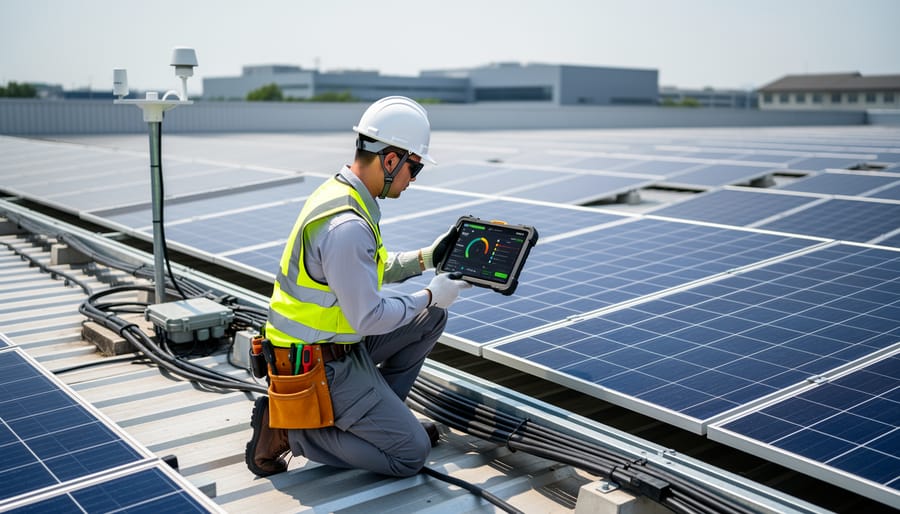
While Energy-as-a-Service financing remains primarily a commercial offering, a growing number of providers have introduced residential programs tailored to homeowners seeking comprehensive service packages. These residential EaaS options typically require homeowners to meet creditworthiness standards that providers evaluate through credit score reviews and financial documentation, though specific thresholds vary by company. Unlike commercial programs that may accept long-term leases, residential EaaS generally requires clear property ownership verification through title documentation to ensure the contract term can be fulfilled.
The physical characteristics of your home play a central role in eligibility. Providers assess roof age, condition, and structural integrity to ensure the surface can support solar equipment throughout the contract period, typically ranging from ten to twenty-five years. Your roof must offer adequate solar exposure with minimal shading from trees, neighboring structures, or architectural features that would compromise energy production. Some providers use satellite imagery and shading analysis tools during initial screening before conducting on-site assessments.
Economic viability depends heavily on your local utility rate structure. Residential EaaS works best where retail electricity rates are high enough to make subscription fees attractive compared to grid power, making it a practical pathway to solar affordability. Providers evaluate whether your current energy consumption and rate schedule support a financially sensible service agreement before extending offers.
Site and Technical Requirements
Successful EaaS deployment depends on meeting specific site and technical criteria that providers assess during feasibility studies. Understanding these requirements helps customers gauge project viability early in the process.
Solar resource adequacy is foundational, sites need sufficient sunlight to generate meaningful energy output. Providers analyze local solar irradiance data and conduct shading studies to determine whether tree cover, adjacent buildings, or terrain features will compromise system performance throughout the year. Roof orientation and tilt significantly affect energy production; south-facing roofs in the Northern Hemisphere typically capture maximum sunlight, though east-west configurations can still work depending on roof pitch and local conditions.
Structural considerations are equally critical. Roofs must safely support the added weight of solar panels, racking systems, and occasional snow or wind loads. Providers typically commission structural engineering assessments to verify load capacity and identify any necessary reinforcement before installation. Roof age, material condition, and remaining service life also factor into feasibility, installing a decades-long solar system on a roof nearing replacement creates obvious complications.
Electrical infrastructure must accommodate solar integration. The existing electrical panel needs adequate capacity to accept solar input, and the service entrance rating may need upgrading. Providers evaluate voltage compatibility, available space for inverter and metering equipment, and distance from the array to interconnection points, as excessive wire runs reduce efficiency and increase costs.
Utility interconnection feasibility determines whether the local grid can accept solar exports without costly infrastructure upgrades. Providers coordinate with utilities to assess line capacity and transformer availability. Finally, the local permitting environment influences project timeline and complexity, jurisdictions with streamlined solar permitting processes reduce administrative burden and accelerate deployment.
How to Apply for and Implement EaaS Financing
Initial Assessment and Proposal Phase
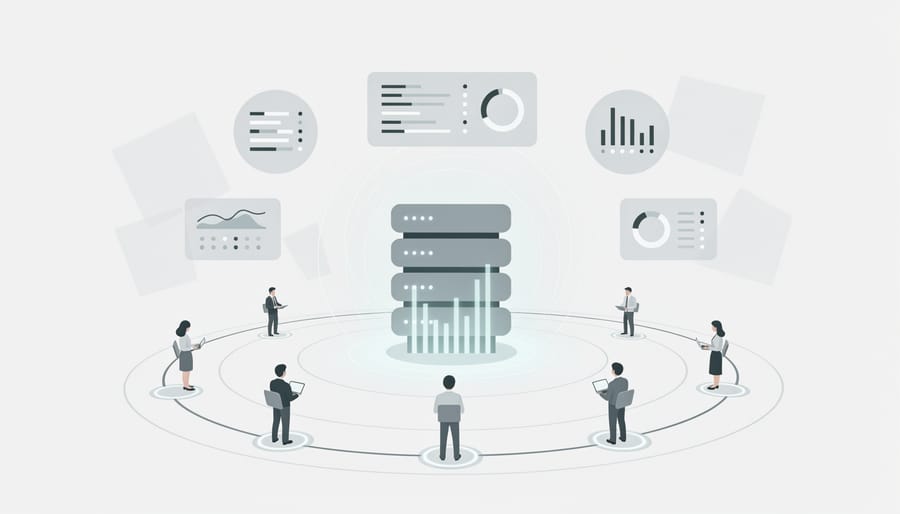
The initial assessment phase begins when you contact EaaS providers with basic information about your property and energy needs. Most providers request recent utility bills (typically 12 to 24 months), property ownership documentation, and roof age or condition details. Commercial customers should prepare annual electricity consumption data and peak demand patterns, while residential applicants need monthly usage history and current rate structure information.
Once you submit this preliminary data, the provider conducts a comprehensive feasibility study. The solar resource assessment analyzes your site’s sun exposure using satellite imagery, shading analysis tools, and often an on-site inspection. Engineers evaluate roof orientation, tilt angle, available surface area, and any obstructions that might reduce system performance. This step determines whether your location receives adequate sunlight to make the project economically viable for both parties.
The structural engineering review examines whether your roof can support the added weight of solar panels, mounting hardware, and potential snow loads. Providers may require detailed structural drawings for commercial buildings or a physical inspection to verify load-bearing capacity. Simultaneously, the interconnection analysis assesses your electrical infrastructure’s compatibility with solar generation, reviews utility grid connection requirements, and identifies any necessary upgrades to switchgear, transformers, or service panels.
After completing these technical evaluations, you receive a customized proposal detailing system size and configuration, projected energy production, subscription pricing or usage rates, contract duration options, and performance commitments. Proposals typically include financial projections comparing your current electricity costs against EaaS subscription payments, helping you evaluate whether the arrangement delivers meaningful savings while meeting your operational requirements.
Contract Negotiation and Key Terms
When you receive customized EaaS proposals, systematic evaluation and negotiation separate favorable agreements from costly commitments. Understanding which terms are standard versus negotiable, and how each provision affects your long-term costs and operational flexibility, determines whether an EaaS arrangement delivers value.
Start by examining the pricing structure. Providers typically offer either fixed monthly subscription fees or usage-based payments tied to energy production. Fixed subscriptions provide budget certainty regardless of system performance, while usage models align costs with actual energy delivered. Compare how each structure would perform under different production scenarios, particularly underperformance conditions. Request clear documentation of how rates are calculated, what they include, and what triggers adjustments.
Contract duration warrants careful consideration. Agreements commonly run ten to twenty-five years, matching expected system life. Longer terms often secure lower rates but reduce flexibility. Evaluate whether the duration aligns with your facility plans, ownership timeline, and technology refresh expectations.
Escalation clauses govern how subscription rates increase over time. Rather than accepting a proposed escalator without scrutiny, compare it against projected utility rate inflation and alternative financing costs. Some agreements cap escalations at specific thresholds; others tie increases to regional utility rates or inflation indices. Clarify the escalation mechanism, calculation method, and any protective caps.
Performance commitments define what production levels the provider guarantees. Providers may structure these as minimum energy delivery thresholds or system availability requirements. Understand the measurement methodology, compensation if thresholds aren’t met, and whether force majeure provisions excuse underperformance. Request transparency into how performance is monitored and reported.
Maintenance response times affect how quickly issues get resolved. Agreements should specify maximum response windows for different issue severity levels and define what constitutes resolution. Clarify whether remote monitoring triggers automatic dispatch or requires customer notification, and how emergency situations are handled.
Liability allocation determines financial responsibility when problems occur. Review indemnification provisions, insurance requirements, damage limitations, and dispute resolution mechanisms. Understand which party bears risk for equipment failure, weather damage, utility interconnection issues, and third-party claims.
Early termination provisions matter if circumstances change. While providers discourage early exit, agreements should specify termination conditions, buyout formulas, system removal obligations, and notice requirements. Some contracts allow termination for cause; others require the customer to purchase the system at fair market value.
End-of-term options require advance planning. Common choices include renewing the service agreement (often at reduced rates), purchasing the system at fair market or predetermined value, or having the provider remove it at no cost. Negotiate these options upfront rather than accepting default terms that may not serve your interests years later.
Installation and Service Activation
Once contract terms are finalized, the EaaS provider assumes responsibility for the installation process. The provider coordinates all permitting with local authorities, procures solar panels and balance-of-system components, manages construction crews, and schedules required electrical inspections. They also handle interconnection procedures with the utility company, including submitting applications and installing necessary metering equipment. Throughout this phase, the customer’s primary obligation is ensuring site access for workers and equipment during scheduled installation periods.
After physical installation completes, the provider conducts system commissioning, testing electrical connections, verifying proper operation of inverters and monitoring equipment, and confirming the system meets design specifications. The utility performs final inspection and grants permission to operate. Simultaneously, the provider configures the monitoring platform that tracks energy production and system health, providing the customer with login credentials and training on interpreting performance data.
Service activation occurs when the utility formally connects the system to the grid. At this point, solar generation begins, the subscription billing commences according to the contract’s start date provisions, and the provider’s ongoing maintenance and performance guarantee obligations take effect. Customers receive documentation including as-built drawings, equipment warranties, and emergency contact protocols for reporting system issues.
Rights and Obligations Under EaaS Contracts

Provider Responsibilities and Performance Guarantees
Under Energy-as-a-Service contracts, providers assume comprehensive responsibility for solar system performance and reliability. The provider’s obligations begin with system design and installation executed to engineering specifications and local building codes, ensuring the array meets the capacity and output projections stated in the contract. Once operational, the provider maintains full responsibility for ongoing system health through scheduled preventive maintenance and corrective repairs when issues arise.
EaaS agreements typically include performance guarantees where providers commit to minimum energy production levels, though specific thresholds vary by contract and site conditions. If the system underperforms relative to these contractual benchmarks, providers may credit customers or adjust subscription fees accordingly. Service level agreements often specify response timeframes for addressing performance issues, many providers commit to acknowledging reported problems within hours and initiating corrective action within days, though terms differ across programs.
Providers handle performance monitoring through real-time tracking platforms that detect anomalies and degradation patterns. This continuous oversight allows providers to identify and resolve issues before they significantly impact output. The provider also manages warranty claims with equipment manufacturers, eliminating customer involvement in navigating panel, inverter, or racking warranty processes.
Insurance coverage for system damage, liability, and business interruption typically falls under provider responsibility, protecting both parties from unforeseen losses. Providers must also maintain regulatory compliance throughout the contract term, adapting to evolving interconnection requirements, building codes, and safety standards.
Advanced providers increasingly employ AI financing optimization tools to model performance scenarios and refine pricing structures, though the contractual commitments remain the clearest indicator of what customers can expect from their EaaS provider.
Customer Obligations and Access Rights
Under an EaaS contract, customers accept defined responsibilities while retaining important rights to information, oversight, and recourse. Payment obligations form the contract’s foundation: customers must remit subscription fees according to the agreed schedule, whether monthly or quarterly, and adhere to any escalation terms specified in the agreement. Late payments may trigger penalties or service suspension, so maintaining timely payment is essential to continuous service delivery.
Site access represents another critical obligation. Customers must provide the provider reasonable access to the property for routine maintenance, emergency repairs, system monitoring equipment servicing, and periodic inspections. Most contracts require advance notice for non-emergency visits, but urgent situations, such as fire risk or grid safety issues, may necessitate immediate entry. Customers cannot obstruct technician access or delay necessary work without risking contract violations.
Customers must also report system performance anomalies or visible damage promptly, enabling providers to address issues before they escalate. Maintaining adequate property insurance protects both parties, and some contracts require customers to list the provider as an additional insured party. Critically, customers cannot modify, repair, or tamper with the solar installation themselves; unauthorized alterations void warranties and may create safety hazards or regulatory violations.
Compliance with utility interconnection rules falls partly on customers, who must cooperate with utility communications, permit system inspections, and avoid actions that jeopardize grid connection approval. Customers retain rights to access real-time and historical performance data through monitoring platforms, allowing them to verify the system meets contractual commitments. Audit rights enable customers to review maintenance records and demand documentation supporting performance claims. Effective contracts establish clear dispute resolution procedures, typically beginning with direct negotiation, escalating to mediation, and reserving arbitration or litigation as final recourse.
System Ownership, Incentives, and Tax Implications
In Solar Energy-as-a-Service arrangements, the provider retains legal ownership of the photovoltaic system throughout the contract term. This ownership structure enables the provider to claim federal tax credits, including the Investment Tax Credit (ITC), and to depreciate the system using the Modified Accelerated Cost Recovery System (MACRS). These tax benefits significantly reduce the provider’s net investment cost, and the resulting savings are typically passed through to customers via lower subscription fees than would otherwise be necessary.
Customers do not receive direct federal tax benefits since they neither own the equipment nor purchase it outright. However, depending on program structure and jurisdiction, customers may remain eligible for certain state or local incentives. Some states offer performance-based incentives, rebates, or renewable energy credits that follow the energy consumer rather than the system owner. Eligibility varies by location and program design, so customers should verify available incentives with providers during contract negotiation and review applicable state energy office guidelines.
The accounting treatment of EaaS payments requires careful consideration. For commercial and institutional customers, subscription fees are generally treated as operating expenses rather than capital expenditures, which can affect financial statements, budget categorization, and debt covenants differently than purchased systems would. Organizations should consult qualified tax advisors and accountants familiar with renewable energy transactions to understand how EaaS contracts will be classified under applicable accounting standards and what implications arise for tax reporting, balance sheet treatment, and financial ratio calculations.
Where to Find EaaS Providers and Get Help
Identifying Qualified EaaS Providers
Finding a reputable Solar Energy-as-a-Service provider requires careful research through multiple channels. Start by consulting established industry resources that maintain vetted provider directories:
- Solar Energy Industries Association (SEIA) member directory
- State clean energy offices and their approved contractor lists
- Regional clean energy associations and their financing partner networks
- Utility-sponsored solar programs that feature pre-qualified EaaS providers
- Commercial solar trade organizations like the Solar Energy Business Association of New England (SEBANE) or similar regional groups
Beyond initial discovery, thoroughly vet potential providers before engaging. Request documentation of their financial stability, including years in business and capitalization structure, providers need sufficient backing to honor multi-decade service commitments. Examine their project portfolio, focusing on installations similar to your facility type and size. Ask for case studies demonstrating their operational track record, including how they’ve handled system performance issues and customer service requests.
Customer references are essential. Speak directly with current clients about their experience, particularly regarding contract clarity, responsiveness to maintenance needs, and whether performance expectations have been met. Verify that providers carry adequate insurance coverage and bonding. Check licensing status with state contractor boards and any industry accreditation through organizations like the North American Board of Certified Energy Practitioners (NABCEP). For commercial projects, confirm the provider’s experience navigating utility interconnection processes and managing complex permitting requirements in your jurisdiction.
Professional Guidance and Educational Resources
Navigating Solar Energy-as-a-Service contracts requires specialized knowledge that spans technical, financial, and legal domains. Aspiring photovoltaic professionals benefit from comprehensive education that covers the full spectrum of solar financing mechanisms, not just traditional purchase models. Mose Solar addresses this need through online educational programs developed in collaboration with universities, providing structured curricula that examine EaaS alongside conventional financing options, contractual frameworks, and performance risk allocation.
For organizations evaluating specific EaaS proposals, professional guidance proves essential. Solar finance consultants bring expertise in comparing financing structures, modeling long-term costs, and identifying terms that align with organizational priorities. Legal advisors specializing in renewable energy contracts review service agreements to clarify performance guarantees, liability provisions, and exit mechanisms. Certified public accountants assess tax implications of different financing approaches, helping organizations understand how EaaS subscriptions affect financial statements differently than asset ownership or traditional leases.
Industry conferences and webinars focused on solar financing innovation provide ongoing education as EaaS models evolve. Organizations like the Solar Energy Industries Association and regional clean energy associations host events where providers, customers, and advisors discuss emerging practices, regulatory developments, and lessons learned from deployed projects. These forums help professionals stay current as service delivery standards mature and new contractual approaches emerge in the market.
Evaluating EaaS Against Alternative Financing Options
Financial and Operational Considerations
Choosing between EaaS and alternative financing models hinges on your organization’s financial position and operational priorities. If preserving working capital ranks high, EaaS eliminates the upfront investment required for direct purchase or the down payments typical of solar loans. Organizations with limited liquidity or capital allocated to other strategic initiatives often favor subscription-based models that convert solar access into a predictable operating expense rather than a capital outlay.
Asset ownership preference matters. Purchasing or financing a system builds equity and allows you to claim tax credits and depreciation directly. EaaS, by contrast, treats solar as a service, you pay for energy or system access without owning the equipment. This trade-off suits entities that view solar primarily as a utility cost reduction tool rather than a balance-sheet asset.
Internal maintenance capacity influences the decision. EaaS providers handle all operational responsibilities, from routine inspections to component replacements. Organizations lacking trained staff or unwilling to manage vendor relationships for inverter repairs, panel cleaning, and monitoring troubleshooting gain operational simplicity. Conversely, entities with existing facilities teams may prefer ownership models that grant full control over maintenance timing and vendor selection.
Accounting treatment varies by structure. EaaS subscriptions typically appear as operating expenses, while purchased systems become capital assets subject to depreciation schedules. Lease classifications depend on contract terms and accounting standards applicable to your organization. Consult your financial advisors to determine how each option affects financial statements and key performance metrics.
Long-Term Cost and Value Analysis
Comparing EaaS to traditional financing requires projecting all costs over the system’s operational life, typically twenty to twenty-five years. EaaS subscriptions appear straightforward, monthly or annual payments, but the cumulative total often exceeds what you would pay through outright purchase or a solar loan when you account for financing interest and maintenance reserves. The critical difference lies in who bears performance risk and operational responsibility. With ownership models, you absorb maintenance costs, potential underperformance losses, and the expense of addressing equipment failures or technology obsolescence. EaaS providers assume these risks, bundling them into subscription pricing.
Calculate net present value for each scenario using your organization’s cost of capital. Include tax implications: owners capture depreciation and credits directly, while EaaS providers monetize these incentives and pass some value through reduced subscription rates. Factor in your maintenance capacity, if you lack in-house expertise, ownership adds external service contracts to your cost baseline. Consider salvage value: purchased systems retain residual worth at end-of-life, whereas EaaS contracts typically include removal obligations or renewal terms.
The “best” choice depends on whether you prioritize minimizing total lifetime expenditure, preserving capital for core operations, or eliminating performance uncertainty. Organizations with strong balance sheets and technical capabilities often find ownership most economical. Those valuing operational simplicity and predictable budgets may accept EaaS’s premium for risk transfer and comprehensive service.
Solar Energy-as-a-Service financing has emerged as a significant evolution in the solar financing landscape, addressing the operational complexities and upfront barriers that have historically limited adoption. By consolidating system ownership, maintenance responsibility, performance risk, and energy delivery into a single service agreement, EaaS fundamentally shifts solar from a capital investment to an operational expense model. This service-oriented approach complements traditional purchase options, loans, leases, PPAs, and newer models like P2P solar funding expanding the range of viable pathways for organizations and property owners to access solar energy.
What are typical EaaS contract lengths?
Most EaaS agreements run 10 to 25 years, with commercial contracts commonly spanning 15 to 20 years to align with system economic life and provider financial models.
What happens if my EaaS provider goes out of business?
Contracts typically include provisions for system transfer to another qualified operator or buyout options. Review assignment clauses and ask providers about financial stability and backup arrangements during contract negotiation.
Can I transfer an EaaS agreement if I sell my property?
Most agreements allow transfer to qualified buyers who meet creditworthiness requirements, though some contracts require provider consent. Clarify transferability terms before signing.
Can I purchase the system before the contract ends?
Many EaaS contracts include early buyout provisions with predetermined pricing formulas, though terms vary widely by provider. Negotiate this option upfront if early purchase flexibility matters to your organization.
For aspiring photovoltaic professionals, developing fluency across these diverse financing structures has become essential as the industry matures and customer needs diversify. Understanding when EaaS offers advantages over traditional models, how to evaluate provider terms, and how to guide clients through contract implications represents core competency in modern solar project development. Mose Solar’s educational programs, developed in collaboration with universities, provide comprehensive training on EaaS and the full spectrum of solar financing models, equipping professionals with the analytical frameworks and practical knowledge needed to navigate this evolving landscape effectively.