Showing 20 Result(s)
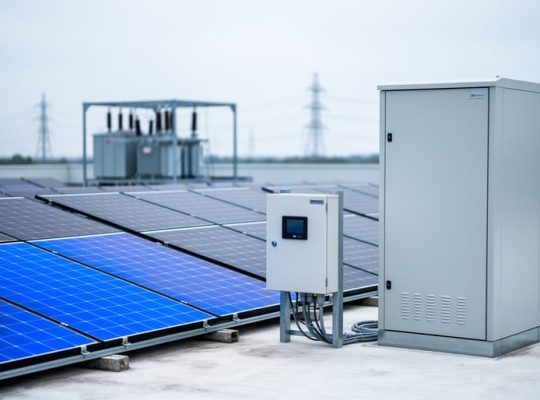
Rooftop solar panels beside a battery energy storage cabinet and inverter equipment under a bright sky, representing PV+BESS system integration.

PV+BESS Systems: How Battery Storage Enhances Solar Energy Yield and Project Feasibility

Pre-feasibility screening for PV+BESS projects determines whether a proposed solar-plus-storage installation justifies detailed engineering and financial analysis by evaluating site conditions, energy demand patterns, grid characteristics, and preliminary economics. This early-stage assessment typically requires three to five days of data collection and analysis, focusing on solar resource availability, load profiles, regulatory environment, and basic system sizing to identify red flags and opportunities before committing significant resources to full feasibility studies.
The integration of battery energy storage systems with …
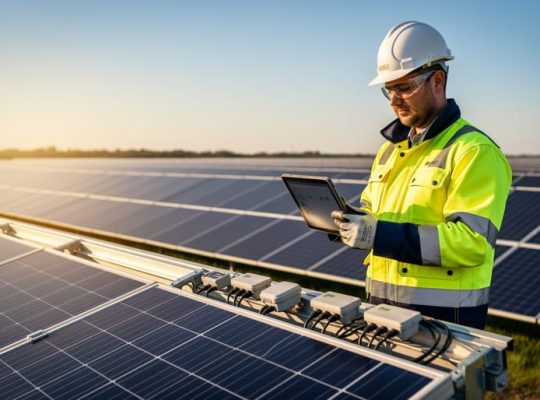
A utility professional inspects sunlit solar panels at a PV farm while using measurement tools for performance verification, captured in an editorial photo style.

How to Implement M&V Professional Practices in PV Operations and Maintenance

Becoming an M&V professional means mastering the systematic process of measuring, verifying, and documenting photovoltaic system performance to ensure predicted energy production aligns with actual output. This specialized skill set combines data acquisition, statistical analysis, and standardized reporting protocols to quantify system efficiency, validate performance guarantees, and identify operational issues before they escalate into significant losses.
The professional application of Measurement and Verification in solar O&M has evolved from optional best practice to essential competency. As the global PV fleet ages and …

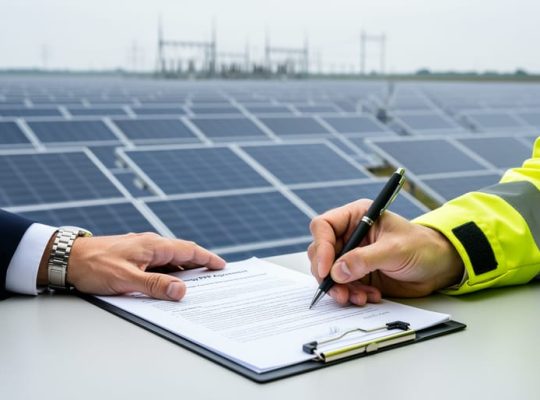
Two people signing a solar public-private partnership contract next to a utility-scale solar farm with rows of photovoltaic panels in the background.

Solar PPP: Eligibility, Structure, How to Participate, and Where to Get Support

Solar public-private partnerships (PPPs) are contractual agreements where government entities and private companies collaborate to finance, design, build, and operate solar energy infrastructure, sharing both investment costs and long-term benefits. These PPP models solve a persistent challenge: how to deploy utility-scale solar installations when public budgets are constrained and private developers need stable, long-term offtake commitments.
The mechanism works through risk-sharing. …

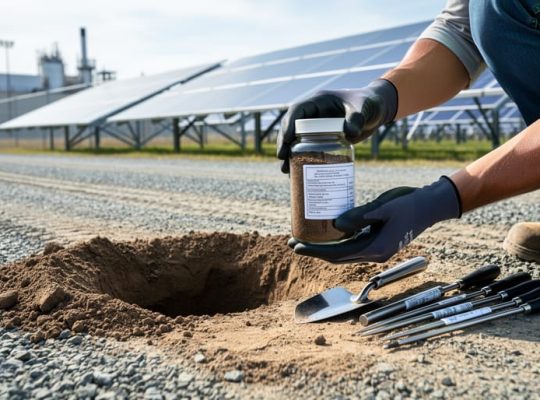
Gloved professional holding a soil sample jar near an excavation site with solar panels in the background, representing Phase 3 environmental remediation.

What Is a Phase 3 Environmental Site Assessment (and When Does Solar Development Need One)?

A Phase 3 Environmental Site Assessment (ESA) is the remediation and cleanup process undertaken when contamination identified during Phase 1 and Phase 2 assessments exceeds regulatory thresholds and poses a risk to human health or the environment. Unlike the investigative stages that precede it, Phase 3 involves active intervention to remove, contain, or neutralize contaminants on a property.
For solar developers, encountering the need for Phase 3 …

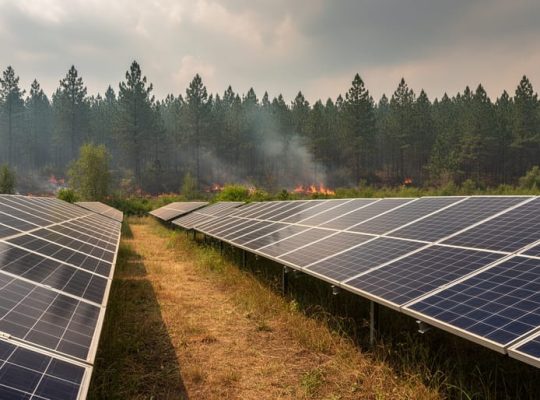
Solar photovoltaic panels in a forest clearing with maintained vegetation, viewed from low ground level, under smoky wildfire haze in the distance.

Wildfire and Forest Resilience Action Plans: How They Protect PV Systems from Smoke and Ash Damage

Wildfire and forest resilience action plans establish mandatory frameworks that require photovoltaic installations in high-risk zones to implement specific hardening measures, vegetation management protocols, and emergency response procedures to maintain operational continuity during fire events. For solar facility operators and PV professionals, these policies translate directly into design specifications, ongoing maintenance requirements, and insurance obligations that can determine whether a project survives catastrophic fire exposure or faces total loss.
California’s 2021 Wildfire and Forest Resilience Action Plan set the …