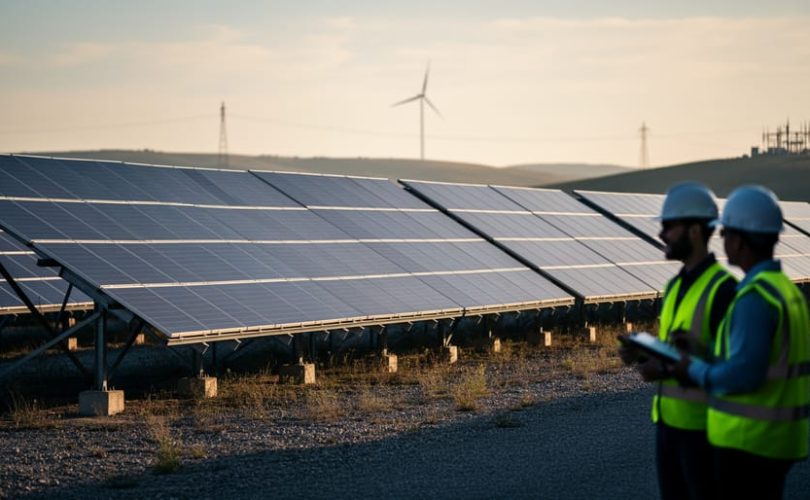
Global public-private partnerships represent formal agreements between government entities and private sector companies to jointly finance, develop, and operate large-scale solar infrastructure projects across national boundaries. These collaborative frameworks pool public resources with private capital and expertise to accelerate renewable energy deployment in markets where neither sector could achieve comparable scale alone. By distributing financial risk, leveraging institutional knowledge, and aligning regulatory support with commercial efficiency, PPPs accelerating solar development have emerged as a primary mechanism for meeting international climate commitments while creating measurable economic opportunity.
The structure typically involves multilateral development banks, national governments, or international agencies partnering with solar developers, equipment manufacturers, and financial institutions. Public partners contribute policy frameworks, land access, regulatory approvals, and risk guarantees, while private entities provide technical capabilities, project management, and often the majority of capital investment. This model has proven particularly effective in emerging markets where capital constraints and regulatory uncertainty would otherwise limit photovoltaic deployment at utility scale.
Understanding how to participate in these partnerships requires clarity on eligibility criteria, application procedures, contractual obligations, and available support systems. For aspiring photovoltaic professionals, these frameworks offer career pathways spanning project development, policy analysis, and technical operations. Solar companies evaluating growth strategies find structured opportunities to expand into new jurisdictions with reduced political and financial exposure. Academic researchers gain access to real-world implementation data that informs policy design and deployment modeling.
This article provides a comprehensive examination of global public-private partnerships in solar development, addressing the operational mechanics, participant requirements, engagement processes, rights and responsibilities, and institutional resources that shape this collaboration model in 2026.
What Global Public-Private Partnerships for Solar Are
Key Components of Global Solar PPPs
Global solar PPPs rest on four interdependent pillars that together create the conditions for large-scale photovoltaic deployment across borders.
The institutional framework establishes governance structures where multilateral development banks, national governments, and private entities share decision-making authority through joint steering committees. These bodies set project priorities, allocate responsibilities, and resolve disputes. Typical frameworks include a public sponsor (often a ministry or development agency), a private consortium (developers, manufacturers, investors), and an independent regulator or oversight body ensuring transparency and accountability.
Financing mechanisms blend public and private capital to reduce investment risk. Concessional loans from development banks lower the cost of capital for private partners, while sovereign guarantees protect against political risks. Risk-sharing instruments, such as first-loss facilities where public funds absorb initial losses, make solar projects viable in emerging markets. Revenue structures typically split electricity sales income between partners according to predefined ratios, with mechanisms adjusting for currency fluctuations and market changes.
Technology transfer agreements govern how technical knowledge flows from experienced developers to local partners. These contracts specify training obligations, intellectual property licensing terms, and requirements for localizing manufacturing or assembly. Many agreements mandate that international partners establish training facilities or collaborate with local universities.
Capacity-building elements ensure partnerships create lasting institutional knowledge. This includes staff secondments, technical exchanges, certification programs for local professionals, and requirements that projects employ and train domestic engineers, creating career pathways for aspiring PV professionals in participating countries.
How Global Solar PPPs Differ from National Models
Global public-private partnerships for solar development operate under fundamentally different constraints than their national counterparts, beginning with governance structures that must reconcile multiple legal systems, regulatory frameworks, and political priorities. Where a domestic PPP answers to a single government authority with unified project approval processes, global partnerships navigate coordination among sovereign nations, multilateral development banks, international climate finance mechanisms, and diverse private sector participants, each bringing distinct mandates, risk tolerances, and accountability requirements.
This multi-jurisdictional complexity extends to financing arrangements. National PPPs typically structure capital flows through established domestic banking channels and familiar currency environments. Global partnerships, by contrast, must manage foreign exchange risk across several currencies, coordinate funding from development finance institutions operating under different lending terms, and align with international environmental and social safeguards that exceed many national standards. The contractual architecture grows correspondingly intricate, often requiring parallel agreements addressing sovereign guarantees, cross-border arbitration provisions, and technology transfer obligations that would not appear in purely domestic arrangements.
Cross-border regulatory harmonization presents another distinguishing challenge. A national solar PPP implements one country’s interconnection standards, permitting processes, and labor regulations. Global partnerships must reconcile varying technical specifications, environmental assessment protocols, and procurement rules across participating countries while maintaining compliance with international frameworks like the Equator Principles. This regulatory coordination demands specialized legal expertise and extended negotiation timelines, making global PPPs slower to structure but potentially more scalable once operational frameworks are established.
Eligibility Requirements for Participation
Requirements for Private Sector Partners
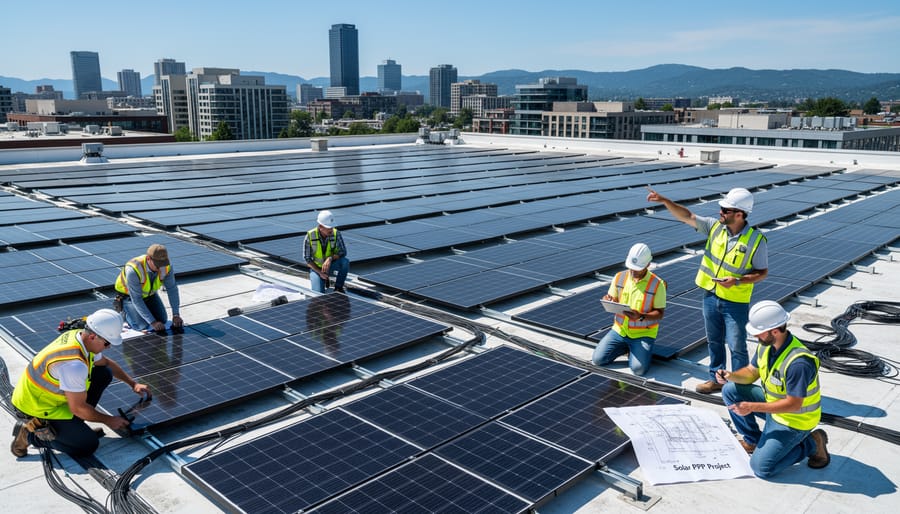
Private sector entities seeking to join global solar PPPs must demonstrate robust capabilities across several dimensions. Solar developers and manufacturers like Mose Solar typically need three to five years of operational history with documented utility-scale project delivery or manufacturing output exceeding defined thresholds, often 10 MW cumulative capacity for developers or annual production minimums for equipment suppliers. Financial institutions scrutinize balance sheets, requiring positive net worth, debt-to-equity ratios below sector benchmarks, and audited financials covering at least two fiscal years.
Technical capacity verification involves certified quality management systems (ISO 9001), environmental compliance (ISO 14001), and for engineering firms, accredited professional credentials from recognized industry bodies. Investors must show demonstrated experience in renewable energy financing, often supported by participation in green bonds or climate finance instruments. Most global PPPs mandate third-party certifications proving equipment meets IEC standards and compliance with labor rights, anti-bribery conventions, and environmental safeguards.
Track record matters: partnership evaluators look for completed projects, operational performance data, and references from previous clients or co-financiers. Organizations without extensive history can sometimes qualify through consortia arrangements, partnering with established firms to meet collective eligibility thresholds while building their credentials.

Requirements for Public Sector and Institutional Partners
Government agencies entering global solar PPPs must demonstrate clear policy mandates authorizing renewable energy collaboration and infrastructure development. Relevant ministries, typically energy, finance, or environment, require legislative approval or executive authority to commit public resources and sign binding agreements. Multilateral development banks and bilateral agencies need board authorization for project engagement, verified capital allocation capacity, and alignment with their institutional climate or sustainable development priorities.
Co-financing ability proves critical: public partners must show budgetary capacity to contribute their agreed funding share, whether through direct capital, sovereign guarantees, or concessional loans. Most global solar PPPs require 20-40% public sector financial participation alongside private investment.
Academic and research institutions participating in technology transfer or capacity-building components need recognized expertise in photovoltaic science, documented research output, and established educational delivery infrastructure. Universities must possess accredited programs in renewable energy or engineering, proven track records in industry collaboration, and capacity to train local technical personnel.
All public and institutional partners face stringent governance standards: transparent procurement processes, anti-corruption certifications, environmental and social safeguard policies, and demonstrated fiscal accountability. Development banks typically require sovereign credit ratings above specified thresholds for government co-financiers.
Pre-Qualification and Registration Processes
Global solar PPPs use rigorous pre-qualification protocols to ensure partners meet institutional standards before submitting full proposals. Most multilateral development banks require potential participants to register in central vendor databases, supplying audited financial statements, corporate governance documentation, and proof of technical competence in photovoltaic project delivery. Due diligence reviews verify ownership structures, beneficial shareholders, and any prior litigation or contract defaults that might indicate reputational risk.
Environmental and social safeguard screenings are mandatory. Partners must demonstrate capacity to conduct impact assessments aligned with international frameworks like the IFC Performance Standards, addressing land use, community consultation, labour practices, and biodiversity protection. This scrutiny attracts smart money by signalling project credibility and reducing downstream disputes.
Anti-corruption compliance is non-negotiable. Applicants certify adherence to anti-fraud compliance expectations submit conflict-of-interest disclosures, and confirm they have internal whistleblower mechanisms. Pre-qualification typically takes sixty to ninety days, after which approved entities gain access to tender portals for active partnership opportunities.
How to Apply and Participate in Global Solar PPPs
Finding and Identifying Partnership Opportunities
Locating global solar PPP opportunities requires systematic monitoring of official channels where development institutions and governments publish partnership announcements.
Multilateral development banks maintain dedicated procurement portals for solar projects. The World Bank’s Major Projects Database and Project Preparation Facility publish tender notices and funding opportunities, while the Asian Development Bank’s Business Opportunities section lists upcoming solar initiatives across member countries. The African Development Bank and Inter-American Development Bank operate similar platforms with searchable databases of active and pipeline projects.
UN agencies post partnership opportunities through the UN Global Compact and UNDP’s procurement notices, particularly for projects aligned with Sustainable Development Goal 7. The Green Climate Fund and Global Environment Facility publish calls for concept notes and full proposals on quarterly cycles.
National governments typically announce solar PPP opportunities through their energy ministries or dedicated renewable energy agencies. Many countries maintain PPP units that centralize all partnership tenders, check official government websites and subscribe to procurement bulletins.
Industry platforms like Renewable Energy World and specialized newsletters from the International Renewable Energy Agency aggregate global opportunities. Setting up alerts for “solar PPP tender” and “photovoltaic partnership RFP” across these channels ensures you don’t miss relevant announcements.
Preparing Your Application
A successful application requires six core documents that evaluators expect from serious candidates. Start with a technical proposal that details your project design, technology specifications, and implementation timeline, avoid generic descriptions and quantify everything with capacity figures, efficiency ratings, and milestone dates.
Your financial model must demonstrate project viability through realistic cost projections, revenue forecasts, and cash flow analyses spanning the full project lifecycle. Include sensitivity analyses showing how the project withstands variations in installation costs, energy prices, and financing terms. Experienced evaluators spot overly optimistic assumptions immediately.
The project feasibility study proves you understand local conditions: grid infrastructure capacity, land availability, permitting requirements, and market demand. Back assertions with data from site assessments and regulatory research, not speculation.
Environmental and social impact assessments address how your project manages ecological effects, community engagement, and job creation. Many partnerships require compliance with international standards like IFC Performance Standards.
Organizational credentials establish your track record. Submit audited financial statements, project portfolios with verifiable outcomes, certifications, and key personnel CVs. Partnerships with universities or completion of accredited educational programs strengthen your application by demonstrating commitment to technical excellence and capacity development, evaluators value partners who invest in workforce training.
Compile everything months before deadlines. Rushed applications with incomplete documentation rarely advance past initial screening.
Evaluation and Selection Process
Applications undergo a rigorous multi-stage review conducted by technical committees comprising representatives from public, private, and financial institutions. Most development banks and multilateral agencies employ a merit point evaluation method that assigns weighted scores across four primary criteria: technical merit (typically 30-40% weight), assessing your proposed technology, engineering approach, and project implementation plan; financial viability (25-35%), scrutinizing capital structure, cost projections, and return models; development impact (20-30%), measuring job creation, emissions reduction, and community benefits; and risk mitigation (10-20%), evaluating how you address currency fluctuation, political instability, and operational hazards.
Initial screenings eliminate non-compliant or incomplete submissions within two to four weeks. Shortlisted applicants then proceed to detailed technical review lasting eight to twelve weeks, often requiring presentations, site visits, and clarification meetings. Final approval from governing boards or steering committees adds another four to eight weeks. From submission to contract signing, expect six to nine months for straightforward projects; complex multi-country initiatives may extend to twelve months or longer. Scoring transparency varies, some agencies publish detailed evaluation reports, while others provide only final rankings and general feedback.
Rights and Obligations of Partnership Participants
Financial Rights and Investment Returns
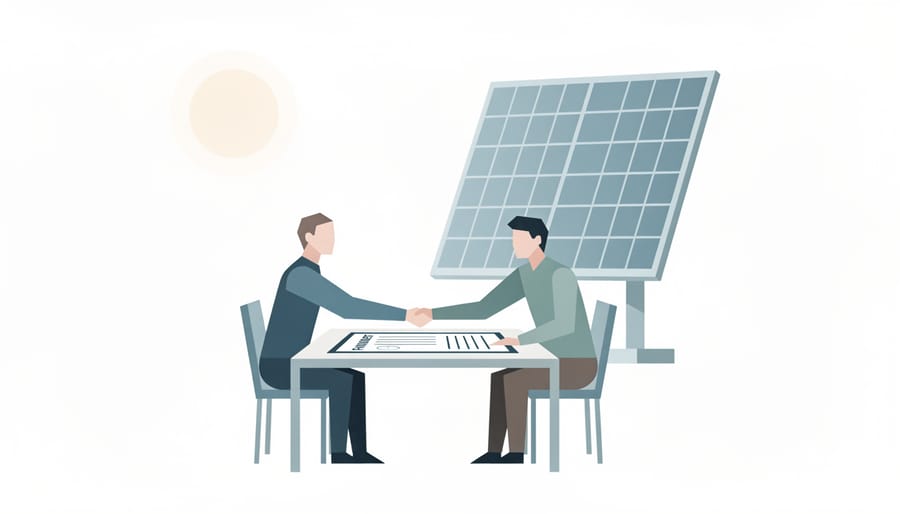
Global solar PPP agreements typically structure returns through a combination of direct revenue streams and performance-based incentives. Private investors can expect returns of 8-15% depending on project risk profiles, tariff structures, and host-country credit ratings. Revenue-sharing models vary: equity partners often receive dividends from power sales revenue after debt service, while technology providers may negotiate royalty arrangements based on capacity factors or energy output milestones.
Development finance institutions frequently offer political risk insurance and partial credit guarantees to mitigate sovereign default and expropriation risks, making projects bankable in emerging markets. Currency hedging instruments, forward contracts, currency swaps, or multilateral guarantees, protect against foreign exchange volatility when revenues are denominated in local currencies but financing is in hard currencies. Some frameworks incorporate blended finance structures where concessional capital from solar grants and RECs reduces overall project risk, improving commercial investor returns while lowering end-user tariffs.
Contracts typically specify minimum capacity factors, uptime guarantees, and penalty mechanisms for underperformance, balancing risk between public and private stakeholders while ensuring accountability throughout the project lifecycle.
Technical and Operational Obligations
Partners in global solar PPPs commit to rigorous technical performance standards tied to internationally recognized benchmarks. Your photovoltaic installations must meet minimum efficiency thresholds, typically 17-22% for polycrystalline modules and higher for monocrystalline technologies, alongside 25-year degradation guarantees that cap annual losses below 0.5%.
Technology specifications extend beyond equipment performance. You’ll document manufacturing processes, supply chain provenance for critical components, and cybersecurity protocols for grid-connected systems. Many agreements mandate localization requirements where feasible, pushing partners to establish in-country assembly facilities or workforce training centers.
Maintenance obligations typically span the project lifespan. Expect quarterly performance audits, predictive maintenance schedules using monitoring platforms, and rapid-response protocols for outages. You must maintain spare parts inventories and trained technician teams within specified response times.
Capacity-building commitments represent substantial obligations. Partners often must develop technical training curricula for local engineers, establish apprenticeship tracks, and collaborate with universities to create specialized PV programs. These initiatives mirror industry leaders’ educational partnerships, ensuring knowledge transfer that outlasts individual projects. Documentation requirements include quarterly progress reports on trainee placement rates and skill certification achievements, demonstrating measurable human capital development beyond infrastructure delivery.
Regulatory Compliance and Reporting Duties
Partners in global solar PPPs face continuous regulatory obligations that extend throughout the project lifecycle. Environmental monitoring requirements typically include quarterly air quality assessments, biodiversity impact tracking, and waste management documentation submitted to designated regulatory authorities. Most frameworks mandate annual environmental audits conducted by independent third parties, with results published on project websites.
Social impact reporting demands regular updates on community engagement outcomes, employment statistics disaggregated by gender and local versus external workers, and grievance mechanism activity logs. Development banks commonly require semi-annual social performance reports documenting how projects affect local populations, including displacement mitigation measures and benefit-sharing distributions.
Financial transparency obligations involve quarterly financial statements prepared according to International Financial Reporting Standards, annual independent audits, and disclosure of all material transactions between public and private partners. Many agreements require publication of contracts and amendments above specified thresholds, promoting accountability to taxpayers and ratepayers.
Anti-corruption compliance encompasses adherence to the Foreign Corrupt Practices Act or equivalent standards, implementation of whistleblower protections, and participation in integrity training programs. Partners must maintain detailed records of all interactions with government officials and report any suspected irregularities immediately. Coordination duties include attending quarterly steering committee meetings, providing monthly progress updates to public sector partners, and facilitating government access to project sites for oversight purposes.
Where to Get Help and Support Resources
Multilateral and Bilateral Support Institutions
Major development finance institutions provide critical support for organizations and professionals entering global solar PPPs. The World Bank Group, through the International Finance Corporation (IFC) and the Multilateral Investment Guarantee Agency (MIGA), offers project preparation facilities, risk mitigation instruments, and co-financing for utility-scale photovoltaic ventures. Contact their renewable energy teams via . The Asian Development Bank (ADB) operates a Clean Energy Financing Partnership Facility () supporting feasibility studies and technical assistance across Asia-Pacific markets. The African Development Bank’s Sustainable Energy Fund for Africa () provides seed capital and project development grants for solar initiatives meeting eligibility criteria.
Climate funds offer specialized financing: the Green Climate Fund () accepts accreditation applications from national and international entities, while the Climate Investment Funds () channel resources through multilateral development banks. Bilateral agencies such as USAID (), GIZ (), and the UK’s FCDO provide technical assistance, capacity building, and blended finance structures that enhance project investment returns. Most institutions maintain dedicated renewable energy or climate finance portals with online inquiry forms and regional contact directories.
Technical Assistance and Capacity-Building Programs
Entering the global solar PPP ecosystem requires specialized knowledge that goes beyond basic photovoltaic engineering. Several multilateral institutions offer dedicated technical assistance programs to bridge this gap. The World Bank’s Energy Sector Management Assistance Program (ESMAP) provides grant-funded feasibility studies, project preparation support, and capacity assessments for organizations new to cross-border solar partnerships. Similarly, the International Renewable Energy Agency (IRENA) operates a Project Navigator platform that offers step-by-step guidance on structuring bankable solar projects, complete with financial modeling templates and risk assessment frameworks.
For individual professionals, online educational programs have emerged as the most accessible pathway into the partnership landscape. Mose Solar’s collaboration with leading universities delivers comprehensive training modules covering PPP contract structures, international procurement standards, and multi-stakeholder coordination. These programs combine technical photovoltaic content with essential skills in cross-cultural negotiation, development finance, and regulatory compliance across different jurisdictions.
The United Nations Development Programme maintains regional technical support units in over 60 countries, offering on-the-ground advice for navigating local partnership requirements and connecting private sector participants with government counterparts. Their services include preparation of environmental and social impact assessments, which are mandatory for most global PPP applications, and workshops on gender-responsive solar project design, increasingly required by development finance institutions.
Frequently Asked Questions About Global Solar PPPs
What is the minimum project size for global solar PPPs?
Minimum project sizes vary by institution and program, but most multilateral development bank partnerships start at 10-25 MW for utility-scale projects. However, many programs now offer aggregation mechanisms that allow smaller projects to be bundled together, and some climate funds support distributed solar initiatives with capacities as low as 1-5 MW when they demonstrate strong development impact.
How long do global solar partnerships typically last?
Partnership durations generally range from 15 to 30 years, aligning with power purchase agreement terms and the operational lifespan of solar installations. The partnership contract itself may extend beyond the construction phase to cover long-term operation, maintenance, and technology upgrades throughout the project lifecycle.
Can small and medium enterprises participate in these partnerships?
Yes, SMEs can participate either as specialized service providers within larger consortia, through dedicated SME funding windows offered by some development institutions, or by focusing on niche roles such as component manufacturing, installation, or local capacity building. Many programs actively encourage SME involvement to support local economic development and technology transfer.
What are the most common reasons applications get rejected?
Applications most frequently fail due to insufficient technical capacity documentation, weak financial modeling that underestimates risks or overestimates returns, inadequate environmental and social impact assessments, or failure to demonstrate alignment with host country development priorities. Incomplete due diligence, particularly around anti-corruption compliance and beneficial ownership disclosure, also leads to disqualification.
How are intellectual property rights protected in global solar PPPs?
IP rights are typically defined in the partnership agreement through specific clauses governing proprietary technology, know-how, and innovations developed during the project. Most frameworks distinguish between background IP brought by partners and foreground IP created through the partnership, with licensing terms, usage restrictions, and ownership clearly specified to protect commercial interests while enabling necessary technology transfer.
What happens if a partner fails to meet their obligations?
Partnership agreements include detailed provisions for performance failures, ranging from cure periods and corrective action plans for minor breaches to termination rights for material defaults. Financial penalties, performance bonds, and step-in rights allow non-defaulting partners or sponsors to remedy situations, while dispute resolution mechanisms, typically international arbitration, provide structured pathways for addressing conflicts without derailing entire projects.
These questions reflect the practical concerns that professionals and organizations face when considering participation in global solar PPPs. Understanding these fundamentals helps potential partners assess whether they have the capacity and resources to engage successfully, and what steps they need to take to strengthen their position.
For aspiring PV professionals, these FAQs highlight the importance of building comprehensive technical and commercial skills. Educational programs that cover not just photovoltaic engineering but also project finance, environmental assessment, and international regulatory frameworks prepare candidates to contribute meaningfully to partnership teams. The complexity of these partnerships creates demand for professionals who can bridge technical, financial, and policy domains.
Smaller organizations should not be discouraged by the scale and complexity of global partnerships. Many successful participants started by taking specialized roles within larger consortia, building track records and capabilities that eventually enabled them to lead their own partnership bids. The key is identifying where your organization’s strengths align with partnership needs and positioning yourself accordingly in the ecosystem.
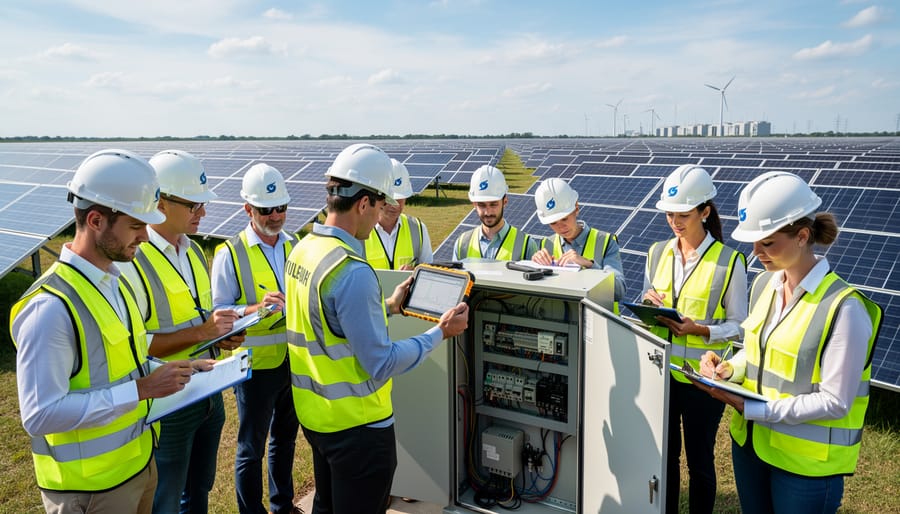
Global public-private partnerships represent a critical accelerator for solar PV deployment, combining the financial resources and policy frameworks of the public sector with private-sector innovation, technical expertise, and operational efficiency. These collaborative models enable projects of unprecedented scale and complexity, particularly in emerging markets where neither public nor private entities could succeed alone. For professionals at all career stages, global solar PPPs create diverse pathways for engagement, whether as project developers, technical specialists, financial analysts, policy advisors, or operations managers.
The partnerships’ success hinges on qualified, competent participants who understand both the technical dimensions of photovoltaic systems and the institutional dynamics of cross-border collaboration. Continuous education, professional development, and practical training are not optional but foundational. Mose Solar’s commitment to preparing the next generation of PV professionals through university-partnered programs reflects this reality, equipping aspiring specialists with the skills required to navigate complex partnership structures, contribute meaningfully to project design and execution, and advance their careers within the renewable energy sector.
Looking ahead, global PPPs will become increasingly central to achieving international renewable energy targets, particularly as countries work toward net-zero commitments and expand access to clean electricity. The frameworks established today are building the institutional capacity, financing mechanisms, and technical standards that will shape solar development for decades. For professionals entering the field now, mastering these partnership models offers competitive advantages and long-term career resilience in a sector defined by collaborative problem-solving and shared accountability for sustainable energy transitions.