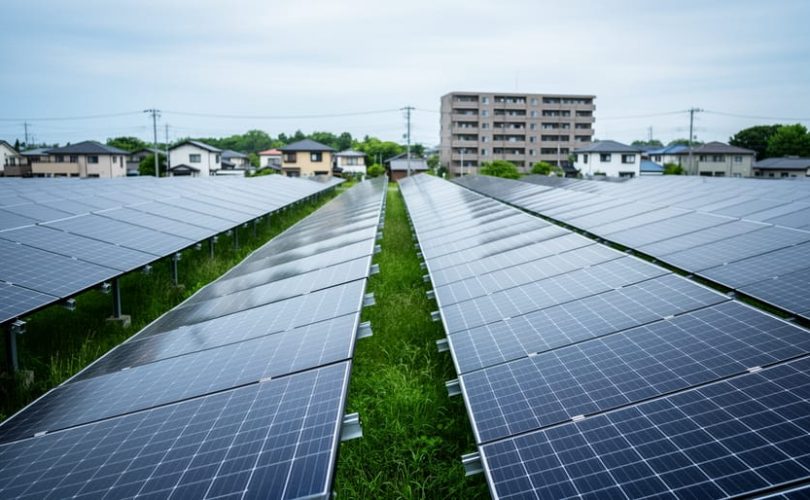
Community solar developers are specialized photovoltaic project companies that design, finance, and build solar installations specifically structured to serve multiple off-site subscribers rather than a single property owner. Unlike traditional solar developers who focus on rooftop or single-customer projects, these developers create shared renewable energy facilities that allow residents, businesses, and organizations without suitable roofs or sufficient capital to access solar electricity through subscription agreements.
The community solar model has fundamentally reshaped how Americans access renewable energy. By 2026, these developers have enabled over 5 gigawatts of solar capacity across programs serving hundreds of thousands of subscribers who couldn’t otherwise participate in the solar transition. Renters, apartment dwellers, and building owners with shaded or structurally unsuitable roofs now represent a substantial and growing customer base for solar electricity.
What distinguishes community solar developers from conventional project developers is their business model complexity. They must navigate subscriber acquisition and management, allocate energy credits across dozens or hundreds of participants, maintain regulatory compliance across varying state programs, and structure financing that accounts for distributed revenue streams rather than single power purchase agreements. The developer’s role extends well beyond construction to include ongoing subscriber management, billing coordination with utilities, and long-term operational oversight.
This article examines how community solar developers operate within the photovoltaic industry, the different organizational models they employ, and their expanding role in democratizing solar access. For aspiring professionals entering the renewable energy sector, understanding this specialized developer category offers insight into one of the industry’s fastest-growing segments. Through collaborations with universities and educational programs, the field continues to evolve as developers refine subscriber engagement strategies and expand into underserved markets where traditional solar deployment faces significant barriers.
What Community Solar Developers Do
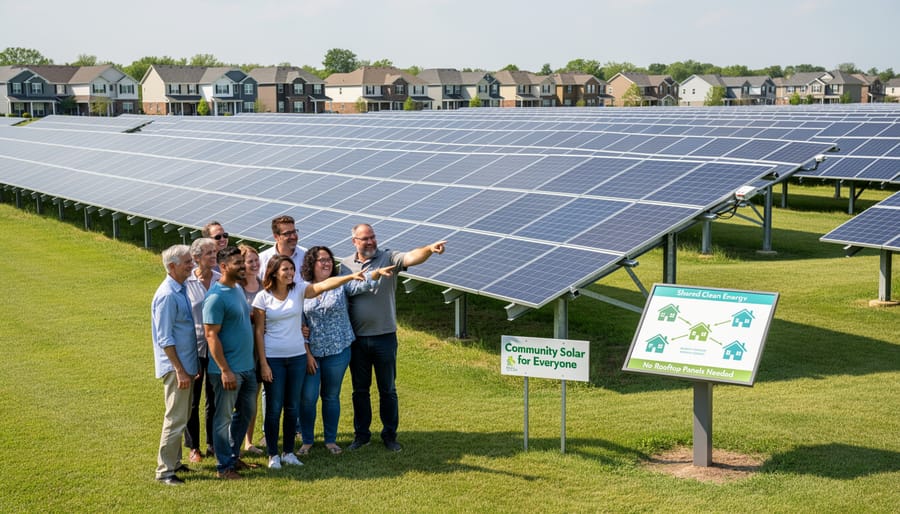
Community solar developers are specialized companies or organizations that design, finance, build, and operate shared solar energy facilities that serve multiple subscribers who cannot or prefer not to install solar panels on their own property. Unlike residential installers who work with individual homeowners or utility-scale developers focused on massive projects selling power directly to utilities, community solar developers occupy a middle ground, creating projects typically ranging from 500 kilowatts to 5 megawatts that distribute benefits across dozens or hundreds of participants.
The developer’s core responsibility begins with identifying suitable sites. They evaluate land parcels or rooftops based on solar resource quality, proximity to distribution infrastructure, zoning compliance, and community accessibility. Once a promising site emerges, developers secure land rights through purchase, lease, or partnership agreements with property owners.
Financial structuring represents perhaps their most complex task. Developers assemble capital from varied sources, institutional investors, tax equity partners, community investment funds, or green banks, to fund construction while designing subscription models that deliver savings to participants. They must balance project economics with affordability, ensuring returns satisfy investors while keeping subscription costs attractive enough to recruit sufficient subscribers.
- Community Solar
- A solar energy facility shared by multiple subscribers who receive credits on their electricity bills proportional to their subscription size, enabling solar access without rooftop installation.
- Subscriber
- An individual, household, or business that contracts to receive a portion of the energy production from a community solar project in exchange for monthly payments or subscription fees.
- Virtual Net Metering
- A billing mechanism allowing utility customers to receive credits for their share of community solar generation, offsetting consumption at their service address even though the panels are located elsewhere.
- Solar Garden
- Another term for community solar projects, emphasizing the shared, cultivated nature of the installation where multiple parties “grow” and harvest solar energy together.
Beyond financing, developers manage the technical aspects, engineering system design, procuring equipment, hiring contractors, and overseeing construction to ensure quality and timeline adherence. They navigate interconnection processes with utilities, securing agreements that allow project output to flow onto the grid and establishing the virtual net metering arrangements that enable subscriber billing credits.
Subscriber management forms an ongoing operational responsibility. Developers recruit participants, explain subscription terms, process enrollments, and coordinate with utilities to allocate bill credits accurately. They handle customer inquiries, subscription transfers when participants move, and maintain transparency about project performance.
Throughout this process, community solar developers serve as intermediaries, connecting landowners with solar potential to residents seeking clean energy, bridging investor capital with community benefit, and translating complex regulatory frameworks into accessible clean energy opportunities.
How Community Solar Development Works
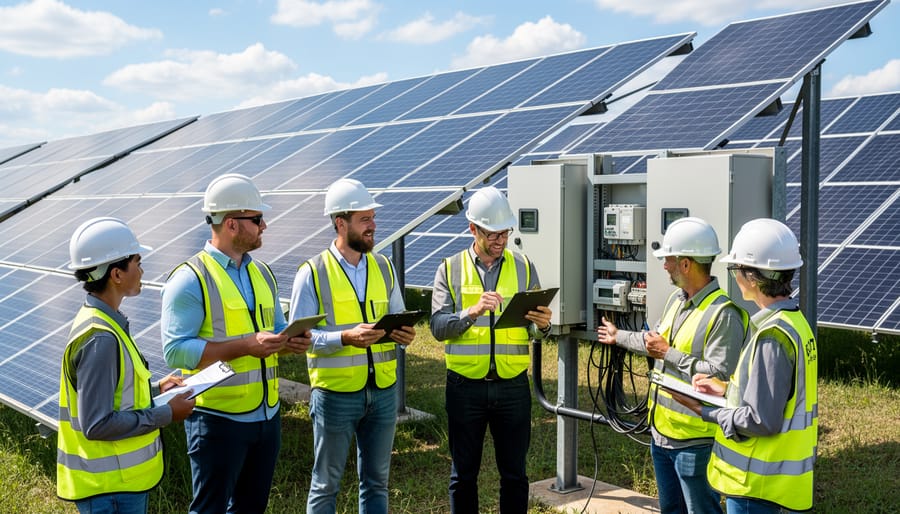
Project Financing Models
Community solar developers tap four primary financing mechanisms, each balancing investor returns with subscriber affordability. Third-party ownership structures dominate the sector: a developer or investor owns the solar array and sells subscriptions or credits to participants, claiming federal tax incentives while passing savings through reduced electricity bills. This model attracts institutional capital from private equity and infrastructure funds drawn to the solar investment shift toward distributed generation.
Community investment models invite local residents to purchase equity stakes or bonds in the project, keeping ownership within the community and circulating economic benefits locally. Cooperative structures take this further, operating on a one-member-one-vote basis and distributing any profits back to subscribers rather than external investors.
Developers increasingly blend these approaches. A project might use institutional debt to cover upfront construction costs, reserve a portion of subscriptions for low-income households at discounted rates, and offer the remaining capacity at market pricing to cross-subsidize affordability. Power purchase agreements lock in long-term revenue, reassuring lenders while giving subscribers predictable savings. The financing architecture must pencil out for all parties: developers need acceptable risk-adjusted returns, subscribers require tangible bill reductions, and communities want assurance the project won’t extract value and vanish.
Subscriber Acquisition and Management
Successful subscriber acquisition begins long before the project goes live. Community solar developers typically start recruitment six to twelve months before a project’s energization date, using targeted marketing campaigns that emphasize local benefits and transparent savings projections. Outreach strategies range from direct mail and community events to partnerships with local nonprofits, municipalities, and employers who can promote subscriptions to their members or employees. Developers competing for subscribers know that digital transformation has reshaped customer expectations, today’s subscribers demand online enrollment portals, real-time generation tracking, and automated billing updates.
Subscription agreements themselves must balance legal protection with accessibility. The best developers draft contracts in plain language, clearly stating subscription size (measured in kilowatts or percentage of system output), term length (often ten to twenty years), bill-credit calculation methodology, and exit provisions. Monthly bill credits typically flow through the utility: the subscriber’s share of solar generation appears as a credit on their electricity bill, offsetting grid usage. Developers calculate these credits using either a fixed dollar-per-kilowatt-hour rate or a percentage discount off the utility’s standard rate.
Ongoing customer relationships depend on proactive communication. Leading developers send quarterly performance reports showing subscribers exactly how much their solar share produced, their cumulative savings, and environmental impact metrics. When issues arise, a delayed interconnection, underperformance due to weather, or billing discrepancies, transparency prevents erosion of trust and keeps long-term subscriber satisfaction high.
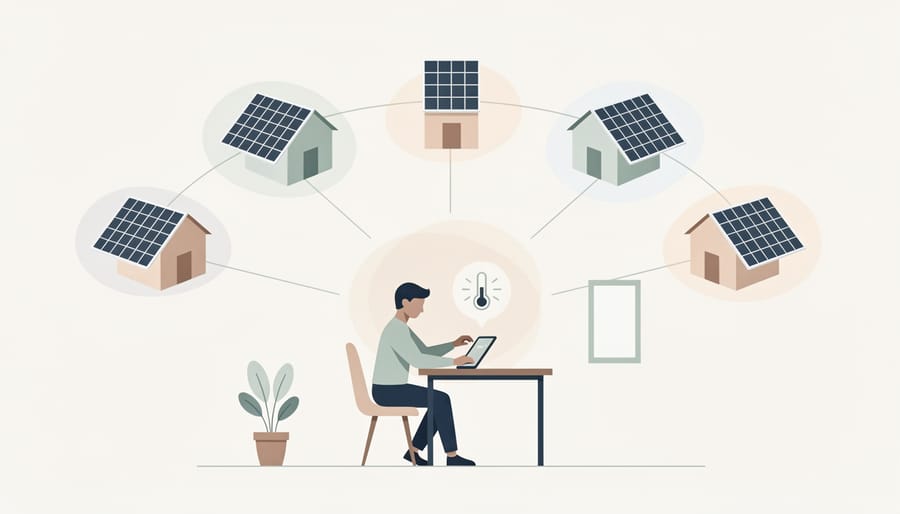
Categories of Community Solar Developers
Community solar developers come in several distinct forms, each bringing different priorities, capabilities, and business models to shared solar deployment.
Dedicated community solar specialists focus exclusively on designing, financing, and operating shared solar arrays. These firms, such as Clearway Community Solar, Nexamp, and CleanChoice Energy, have built their entire business around community solar subscriptions. Their specialized focus allows them to optimize subscriber acquisition platforms, develop standardized financing structures, and build relationships with regulators and utilities specific to shared solar programs. They typically maintain large portfolios across multiple states and can move quickly when new markets open or solar policy impacts create favorable conditions.
Diversified solar developers expand into community solar as one component of broader renewable energy portfolios. Companies like Pine Gate Renewables or Summit Ridge Energy develop utility-scale solar farms, commercial installations, and community solar projects. Their advantage lies in development expertise, access to capital markets, and economies of scale across project types. They can leverage relationships with landowners, equipment suppliers, and engineering firms across their entire portfolio, though community solar may not receive the same strategic emphasis as it would at a specialist firm.
Utility-sponsored programs represent a different model entirely. Some regulated utilities develop and own community solar facilities directly, offering subscription programs to their ratepayers. Xcel Energy’s Solar*Rewards Community program exemplifies this approach. These utilities control site selection, system design, and subscriber management in-house. The model ensures utility familiarity but may lack the innovation and customer-centric focus of independent developers, and subscribers typically face less competitive pricing than market-driven alternatives.
Nonprofit and community-based developers prioritize social equity and local benefit over profit maximization. Organizations like Co-op Power and local community development corporations develop projects serving specific populations, often low-income residents or environmental justice communities. They emphasize transparent governance, local ownership structures, and community wealth-building. While they may develop projects more slowly due to limited capital access, they often achieve deeper community trust and lasting local partnerships.
Hybrid models blend elements from multiple categories. A regional solar installer might add community solar subscriptions, or a nonprofit might partner with a commercial developer for financing while maintaining community governance. These arrangements allow organizations to play to their strengths while addressing capability gaps through collaboration.
Applications and Impact of Community Solar Development
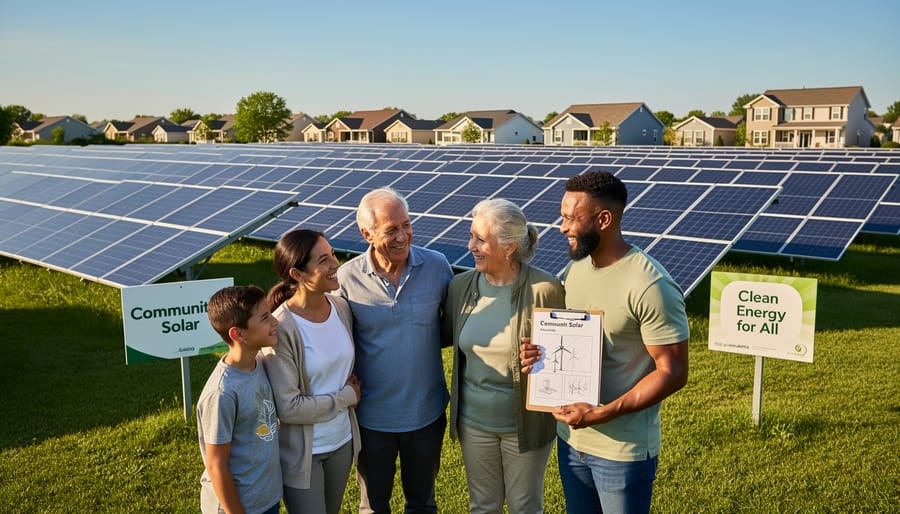
Community solar development delivers measurable benefits across multiple dimensions, from household budgets to grid stability. The projects these developers bring online serve populations historically excluded from solar adoption while advancing broader clean energy and equity goals.
The most fundamental impact is access expansion. Renters, residents of multifamily buildings, and homeowners with shaded or structurally unsuitable roofs can now participate in solar energy. A 2025 National Renewable Energy Laboratory analysis found that approximately 75 million households in the United States lack viable rooftop solar potential due to shading, roof condition, or rental status. Community solar developers directly address this barrier by creating shared solar facilities that deliver benefits regardless of individual property characteristics.
Energy cost reduction represents another core application. Low-to-moderate income households typically allocate a disproportionate share of income to utility bills, often 8-10% compared to the national average of 3%. Community solar subscriptions from experienced developers consistently reduce electricity costs by 10-20%, translating to annual savings between $150 and $400 per household depending on system size and regional electricity rates.
- Accessibility: Opens solar participation to renters and those with unsuitable roofs
- Affordability: Reduces electricity costs for low-to-moderate income households by 10-20%
- Environmental Justice: Locates clean energy infrastructure in underserved communities
- Economic Development: Creates local construction and maintenance jobs
- Grid Resilience: Distributes generation across multiple community-scale facilities
Environmental justice advances when developers intentionally site projects in historically marginalized communities. This approach addresses the reality that pollution-intensive energy infrastructure has long concentrated in low-income neighborhoods while benefits flowed elsewhere. Community solar flips this pattern by bringing clean generation and its economic advantages directly to affected populations.
Local economic impact extends beyond subscriber savings. A typical 2-megawatt community solar project generates 30-50 construction jobs and 2-3 permanent operations positions. Developers partnering with local contractors amplify these benefits while building workforce capacity in underserved areas.
Grid stability and decarbonization goals benefit from the distributed nature of community solar. Rather than concentrating generation in massive utility-scale facilities, developers create networks of mid-sized installations across service territories. This distribution reduces transmission losses and improves resilience against localized outages. When paired with battery storage and managed through digital innovation community solar portfolios can provide grid services including peak shaving and frequency regulation. Several states now count community solar capacity toward renewable portfolio standards, recognizing its contribution to clean energy mandates while acknowledging its unique equity dimensions.
Critical Success Factors for Community Solar Developers
Success in community solar development requires more than technical know-how and capital. The developers who thrive master five interconnected capabilities that struggling competitors often neglect or undervalue.
Regulatory expertise stands as perhaps the most critical differentiator. Effective developers maintain deep knowledge of state-level enabling legislation, utility interconnection procedures, and local zoning requirements that vary dramatically across jurisdictions. They build relationships with public utility commissions and municipal authorities before filing applications, anticipating objections and structuring projects to align with regulatory priorities. This proactive approach reduces approval timelines and minimizes costly project delays.
Community engagement separates developers who build lasting portfolios from those who struggle with subscriber acquisition. The best developers invest time explaining how shared solar works, addressing concerns about contract terms, and demonstrating genuine commitment to serving the community rather than extracting quick profits. They host informational sessions, partner with trusted local organizations, and design transparent subscription agreements that build confidence. This upfront investment in trust pays dividends through higher subscription rates and lower customer acquisition costs.
Financial innovation enables developers to make projects viable in challenging markets. Rather than relying on standard tax equity structures alone, successful developers blend community investment, credit enhancements for low-income subscribers, green banks, and patient capital from impact investors. They structure deals that balance investor returns with affordability targets, often creating tiered subscription models that cross-subsidize participation by lower-income households.
Operational excellence ensures projects deliver promised value year after year. Top developers implement rigorous monitoring systems, maintain response protocols for technical issues, and deliver accurate billing reconciliations that prevent subscriber disputes. They budget realistically for ongoing maintenance and factor degradation into long-term financial models.
Partnership strategies amplify developer capabilities and credibility. Collaborations with universities and research institutions provide access to emerging best practices, third-party validation of project designs, and pathways to workforce development. These partnerships, which Mose Solar actively fosters through its educational programs, create pipelines of trained professionals while advancing industry knowledge. Developers who engage with academic partners demonstrate commitment to continuous improvement and industry advancement rather than short-term opportunism.
Common Questions About Community Solar Developers
Community solar developers face a range of practical questions from prospective subscribers, partners, and stakeholders exploring this evolving energy model. These frequently asked questions reveal both the opportunities and operational realities of shared solar projects.
How do community solar developers make money?
Developers generate revenue primarily through subscriber payments, either upfront purchases of solar shares, monthly subscription fees, or a percentage of bill credits. They may also receive investment returns from tax equity partners, renewable energy credits, and performance-based incentives.
Do subscribers actually save money on electricity?
Most subscribers see savings of 5-15% on their electricity costs compared to standard utility rates, though actual savings vary based on subscription structure, utility rates, and project economics. Some programs targeting low-income households guarantee minimum savings to ensure affordability.
What happens if a subscriber moves?
Subscription agreements typically allow transfers to another household within the same utility territory or permit cancellation with 30-90 days notice. Developers maintain waitlists to fill vacated subscriptions, minimizing revenue disruption.
How do developers ensure project quality and reliability?
Reputable developers use tier-one equipment, employ certified installers, conduct third-party inspections, and provide performance guarantees. Ongoing monitoring systems track production, and maintenance contracts ensure issues are addressed promptly.
What’s the difference between community solar and community choice aggregation?
Community solar involves subscribing to a specific solar project, while community choice aggregation allows municipalities to procure electricity on behalf of residents from various sources. The two models can complement each other but operate through distinct mechanisms.
Can businesses and nonprofits subscribe to community solar?
Yes, most community solar programs serve commercial and nonprofit subscribers alongside residential customers, often allocating a portion of project capacity specifically for non-residential participants to diversify the subscriber base.
Another common concern centers on project timelines. From subscriber sign-up to receiving bill credits typically takes two to six months for operational projects, though new developments may require 18-24 months from announcement to commercial operation. Understanding these timeframes helps subscribers set realistic expectations.
Transparency around fees and contract terms remains essential. Well-managed developers provide clear documentation of subscription costs, termination provisions, bill credit calculations, and any additional charges. Subscribers should receive regular production reports and billing statements that make the value proposition tangible and verifiable, building trust through consistent communication and straightforward financial arrangements.
Community solar developers stand at the intersection of technical expertise, financial innovation, and social impact. They’ve transformed solar energy from a technology available mainly to property owners with suitable roofs and upfront capital into a resource accessible to renters, apartment dwellers, and households across income levels. By navigating complex regulatory environments, structuring viable financing models, and building trust within communities, these developers are proving that clean energy access doesn’t have to be exclusive.
The sector continues to evolve rapidly. As state policies mature and financing structures become more standardized, we’re likely to see increased participation from both specialized community solar firms and diversified renewable energy developers. The integration of battery storage with community solar projects, expansion into underserved markets, and innovative subscriber models will create new opportunities for professionals entering the field.
For aspiring photovoltaic professionals, community solar development offers a career path that combines technical knowledge with community engagement, policy navigation, and project management. It requires understanding everything from interconnection agreements to subscriber acquisition, from tariff structures to stakeholder communication. Mose Solar’s educational programs prepare students for these multifaceted roles, providing foundational knowledge in solar technologies alongside the business and community development skills essential for success in this growing sector. As community solar expands, so does the need for trained professionals who can bridge the gap between renewable energy potential and equitable access.