Showing 68 Result(s)
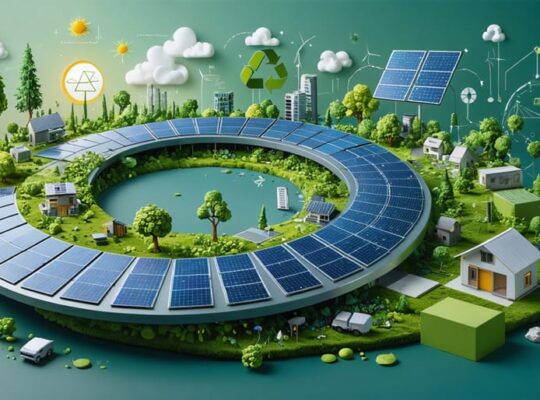
Conceptual illustration of a circular solar panel representing closed-loop manufacturing with elements like recycling and modular design. The image symbolizes sustainable energy production and environmental stewardship.

How Circular Solar Panels Are Revolutionizing PV Manufacturing

The transition to closed-loop manufacturing in solar panel production marks a pivotal shift in renewable energy sustainability. Circular solar panels represent a groundbreaking approach to photovoltaic technology, incorporating recyclable materials and modular designs that extend beyond traditional linear production methods. By reimagining the entire lifecycle of solar panels—from raw material sourcing to end-of-life recovery—manufacturers are achieving up to…

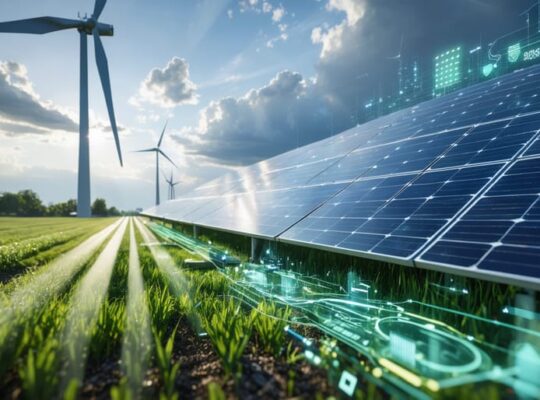
Illustration of a wind-solar hybrid system with a wind turbine and integrated solar panels, set against a diverse weather backdrop symbolizing advanced power management and renewable energy efficiency.

Wind-Solar Hybrid Systems: Advanced Fabrication Methods That Maximize Power Output

In the rapidly evolving landscape of renewable energy, hybrid wind-solar systems represent a groundbreaking advancement in sustainable power generation. These integrated systems harness the complementary nature of wind and solar resources, maximizing energy production through sophisticated engineering and intelligent design. By combining photovoltaic panels with wind turbines, these hybrid installations achieve remarkable efficiency gains of 20-35% compared to standalone systems, while reducing the intermittency challenges inherent to individual renewable sources.
Recent technological breakthroughs in power electronics and smart …

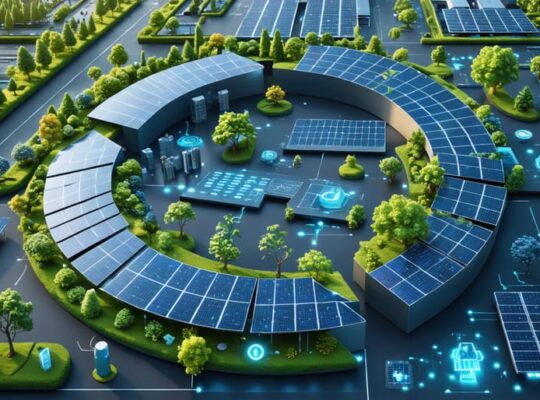
Conceptual image depicting the circular economy in U.S. solar manufacturing, showcasing the lifecycle from production to recycling, symbolizing sustainability and innovation in the industry.

U.S. Solar Manufacturing Surge: Building a Circular Economy for PV Production

The United States stands at a pivotal moment in solar manufacturing, with domestic production capacity poised to triple from 7.5 GW to 22.5 GW by 2024. This unprecedented expansion, driven by the Inflation Reduction Act’s manufacturing incentives and growing demand for clean energy solutions, marks a transformative shift in America’s renewable energy landscape. Sustainable manufacturing practices are revolutionizing production methods across the solar value chain, from polysilicon …

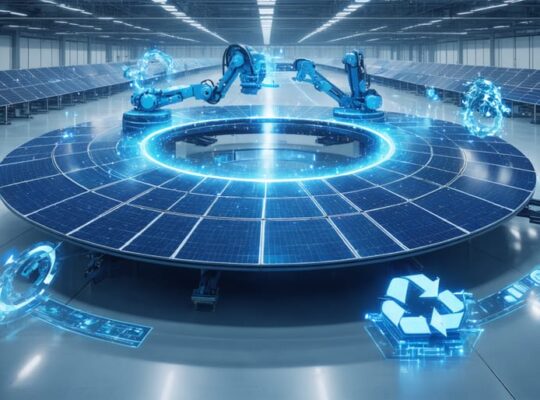
A conceptual illustration of circular solar panel manufacturing, featuring a loop of solar panels with robotic arms and solar energy symbols, set against a high-tech facility background.

How PV Manufacturers Are Revolutionizing Sustainable Production

Manufacturing’s intersection with sustainability represents one of the most critical challenges and opportunities in modern industry. As global resource consumption continues to accelerate, manufacturers face mounting pressure to transform their operations from linear production models to circular, sustainable systems that minimize environmental impact while maximizing economic value.
The integration of sustainable practices into manufacturing processes has evolved from a corporate responsibility initiative to a fundamental business imperative. Companies that successfully implement sustainable manufacturing strategies not only…

High-tech solar panel recycling facility with advanced machinery disassembling and sorting end-of-life panels; robotic arms and AI interfaces prominently featured, illustrating a circular economy process.

Revolutionary PV Panel Recycling Transforms Solar Manufacturing

Revolutionizing solar panel manufacturing through advanced recycling practices has become a cornerstone of sustainable energy production. As the industry grapples with the environmental impact of solar manufacturing, innovative closed-loop systems are transforming waste management and resource utilization. Modern recycling technologies now recover up to 95% of semiconductor materials and 90% of glass from end-of-life panels, significantly reducing raw material demands and …

Artistic representation of bio-inspired solar technology: butterfly wings and lotus leaves merging into solar panels, symbolizing nature's influence on photovoltaic innovation.

Nature’s Solar Secrets: How Bio-Inspired Design Is Revolutionizing Photovoltaic Technology

Nature’s 3.8 billion years of evolutionary innovation offers groundbreaking solutions for modern engineering challenges. Bio-inspired design – the practice of emulating biological systems in technological development – has revolutionized fields from photovoltaic technology basics to advanced materials science.
Consider how lotus leaves inspired self-cleaning surfaces, butterfly wings informed more efficient solar cells, and gecko feet led to revolutionary adhesives. These natural …

A conceptual illustration showing the synergy of solar panels, wind turbines, hydroelectric dams, and geothermal steam working together as part of a comprehensive renewable energy system.

How Solar PV Components Harness Nature’s Most Powerful Energy Sources

The global transition to renewable energy stands at a pivotal moment as nations, industries, and communities seek sustainable alternatives to fossil fuels. With solar PV technology leading the charge, an interconnected network of renewable energy sources is reshaping our power generation landscape. From the untapped potential of ocean thermal energy to the established reliability of hydroelectric power, these eight renewable sources represent the cornerstone of a sustainable energy future. Their integration …

Conceptual artwork of a solar manufacturing facility with a digital twin interface showing real-time data streams and holographic monitoring panels, representing the integration of physical and virtual manufacturing processes.

Factory Digital Twins Transform PV Manufacturing: Maximizing Efficiency Through Virtual Innovation

In today’s hyper-competitive manufacturing landscape, factory digital twins represent a transformative leap toward Industry 4.0, enabling unprecedented levels of optimization and predictive capabilities. This virtual replica technology creates real-time, data-driven simulations of physical manufacturing facilities, allowing companies to analyze, optimize, and troubleshoot production processes before implementing changes in the real world. By combining IoT sensors, artificial intelligence, and advanced analytics, digital twins provide manufacturers with a powerful tool to enhance operational efficiency, reduce downtime, and accelerate…

A futuristic solar panel with an intricate Z-shaped molecular structure, illustrating the concept of z-polymers, enhanced with dynamic lighting to symbolize UV and thermal resistance.

Z-Polymers: The Breakthrough Material Extending PV Panel Life by Years

Z-polymers represent a groundbreaking advancement in PV module construction, delivering superior encapsulation performance through their unique molecular structure and enhanced cross-linking capabilities. These advanced materials have revolutionized photovoltaic panel protection by combining exceptional UV resistance, thermal stability, and moisture barrier properties in a single solution. Recent developments in z-polymer technology have achieved up to 30% longer panel lifespans compared to traditional EVA …

Conceptual illustration of a futuristic photovoltaic manufacturing environment with digital twin technology overlaying real-time data metrics on solar panels and equipment.

3D Digital Twin Technology Revolutionizes PV Manufacturing Precision

In the race toward Industry 4.0, digital twins in manufacturing have emerged as a transformative force, particularly in photovoltaic (PV) production. These virtual replicas create precise, real-time representations of physical manufacturing systems, enabling unprecedented levels of optimization and predictive maintenance. By integrating IoT sensors, artificial intelligence, and advanced simulation capabilities, 3D digital twins provide manufacturers with a powerful tool to analyze, …

A futuristic representation of advanced photovoltaic technologies showing interconnected solar panels, semiconductor structures, and AI motifs, reflecting the theme of revolutionizing energy production.

Next-Generation Solar Manufacturing: How Advanced Photovoltaics Are Revolutionizing Energy Production

Advanced photovoltaics represent a quantum leap in solar energy technology, pushing the boundaries of conventional solar cell efficiency and manufacturing processes. Recent breakthroughs in perovskite-silicon tandems have achieved record-breaking conversion efficiencies exceeding 31%, while innovations in multi-junction architectures and novel semiconductor materials are revolutionizing the industry’s potential. These developments, coupled with artificial intelligence-driven manufacturing optimization and quantum dot integration, are transforming photovoltaics from a simple renewable energy source into a sophisticated technological …

A conceptual depiction of a solar panel integrating renewable materials such as bio-based encapsulants and recycled silicon, symbolizing the transition to more sustainable solar energy technologies.

Solar PV Components: The New Era of Renewable Resource Integration

Solar energy stands at the forefront of our transition to sustainable power generation, revolutionizing how we harness and deploy renewable resources in modern energy systems. As solar PV components become increasingly sophisticated, the industry has achieved remarkable advances in both efficiency and sustainability. Recent technological breakthroughs have pushed solar conversion efficiency beyond 25% in commercial applications, while simultaneously reducing the environmental impact of manufacturing …

A conceptual depiction of a photovoltaic manufacturing facility showcasing intertwined robotic arms and IoT sensors, emphasizing sustainable manufacturing processes with solar panels, recycling symbols, and green energy elements.

How Sustainable Manufacturing Transforms Modern PV Production

Sustainable manufacturing stands at the forefront of modern industrial innovation, representing a critical paradigm shift in how we produce solar panels and renewable energy technologies. The intersection of environmental responsibility and manufacturing efficiency has become increasingly vital as global energy demands surge alongside mounting environmental concerns. By implementing advanced recycling protocols, optimizing resource utilization, and adopting circular economy principles, manufacturers are revolutionizing traditional production methods while significantly reducing their environmental footprint.
Recent technological …

Conceptual representation of a smart factory floor in photovoltaic production, showcasing interconnected automated machines, robots, and IoT devices with digital overlays symbolizing cybersecurity measures.

Smart Factory Security: Protecting Your Automated PV Production Line from Cyber Threats

In an era where manufacturing facilities face unprecedented cyber threats, the convergence of operational technology (OT) and information technology (IT) has created both opportunities and vulnerabilities in photovoltaic production environments. Recent statistics reveal that manufacturing cybersecurity incidents have surged by 300% since 2019, with automated production systems becoming prime targets for sophisticated attacks. The integration of Industrial Internet of Things (IIoT) devices, smart sensors, and interconnected control systems has expanded the attack surface dramatically, making robust cybersecurity measures not just beneficial…

A futuristic smart factory showcasing advanced robotic arms assembling solar panels with precision, symbolizing the integration of automation and Industry 4.0 technologies in solar manufacturing.

Solar Panel Manufacturing Automation: How Smart Factories Are Revolutionizing PV Production

Solar automation represents a transformative leap in photovoltaic manufacturing, revolutionizing how we produce and deploy renewable energy solutions at scale. By integrating advanced robotics, artificial intelligence, and smart manufacturing systems, the solar industry has dramatically improved production efficiency while reducing costs and maintaining exceptional quality standards.
The convergence of Industry 4.0 technologies with solar manufacturing has created unprecedented opportunities for streamlined production processes, from wafer handling to module assembly. Modern automated production lines can now manufacture solar …