Custom solar window screens combine three critical functions: they block up to 90% of solar heat gain before it enters your building, reduce cooling costs by 25-40%, and maintain outward visibility while protecting interior furnishings from UV damage. Unlike traditional window treatments that address heat after it has penetrated the glass, these exterior-mounted mesh barriers intercept thermal radiation at the most effective point, the outside surface of your windows, making them one of the highest-return passive cooling investments available for 2026.
The distinction matters because standard interior blinds and films trap heat between the glass and the shade, creating a greenhouse effect that forces your HVAC system to work harder. Custom solar screens prevent this cycle entirely by reflecting and absorbing solar energy outdoors, where natural ventilation dissipates the captured heat. This fundamental difference in thermal management explains why facility managers, homeowners in desert climates, and commercial building operators increasingly specify these products as part of comprehensive energy reduction strategies.
As building energy codes tighten and utility costs rise, solar window screens represent an accessible entry point into adaptive PV design thinking. They provide immediate thermal benefits without the structural modifications or electrical integration required for larger renewable systems. Through partnerships with universities studying building envelope performance, we’ve documented measurable improvements in occupant comfort, reduced glare on workstations, and extended lifespan of interior materials exposed to direct sunlight.
The challenge lies in selecting the right configuration. Mesh density, frame material, mounting method, and color all influence performance outcomes in ways that aren’t immediately obvious to first-time buyers. This guide provides the evaluation framework professionals use to match screen specifications to specific building orientations, climate zones, and aesthetic requirements.
What Makes Solar Window Screens Different from Traditional Options
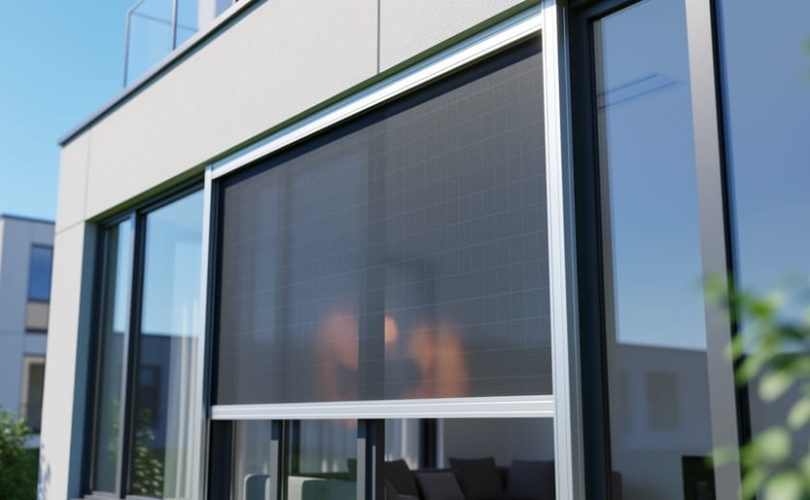
Traditional window screens serve a single, passive purpose: blocking insects and reducing glare while allowing airflow. Solar window screens transform this basic function into an active energy asset. These screens integrate photovoltaic cells directly into the screening material, converting sunlight into usable electricity while maintaining many benefits of standard screens.
The fundamental difference lies in energy generation. Traditional screens may reduce solar heat gain through shading, which passively lowers cooling costs. Solar window screens go several steps further by actively producing power. Modern units typically generate between 50 and 150 watts per square meter, depending on transparency and cell efficiency. This electricity feeds directly into a building’s electrical system, offsetting consumption from the grid and reducing utility costs beyond what passive shading achieves alone.
Solar window screens function as true photovoltaic interfaces between your building envelope and the power grid. They convert up to 20 percent of incident solar radiation into electricity while still providing solar heat gain coefficients between 0.15 and 0.45, comparable to high-performance shading products. Unlike traditional screens, they require electrical connections, compatible inverters, and often integration with building management systems to optimize performance.
This integration capability distinguishes solar screens as part of a broader shift toward personalized PV interfaces that adapt to occupant needs and building conditions. Advanced models communicate with smart thermostats, lighting systems, and battery storage, automatically adjusting to maximize energy harvest while maintaining comfort. Some electrochromic variants even change transparency based on sunlight intensity and indoor temperature setpoints.
The technical complexity means solar screens demand more sophisticated planning than traditional options. You need to evaluate electrical output against your consumption patterns, ensure inverter compatibility, and consider structural load for installations. However, for buyers seeking maximum building performance, this added complexity delivers measurable returns through dual-function shading and generation that traditional screens cannot match.
Essential Factors to Consider When Buying Custom Solar Window Screens
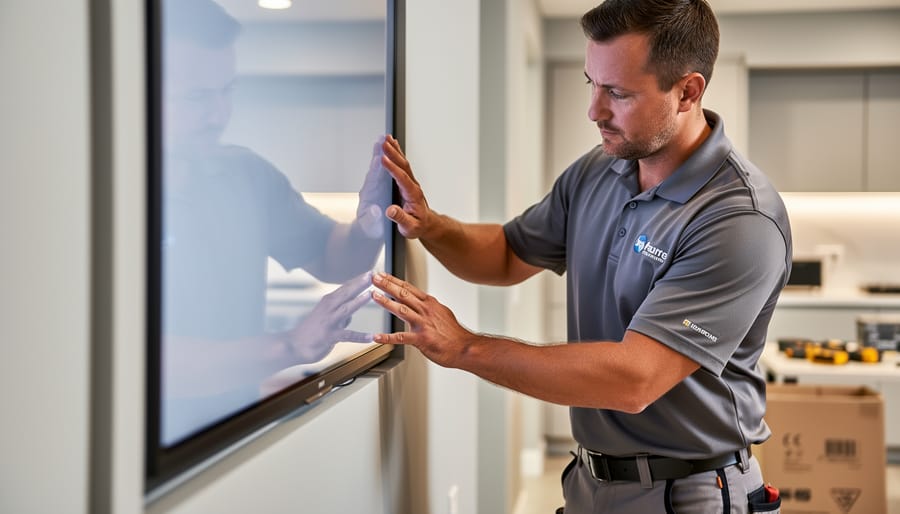
Energy Efficiency Metrics and Performance Ratings
Understanding the technical specifications of solar window screens is critical for predicting their actual performance in your building. Four metrics dominate the evaluation process, and knowing how to read them separates smart purchases from disappointing ones.
Conversion efficiency measures what percentage of sunlight the screen transforms into electricity. Most transparent solar screens in 2026 achieve 5-15% efficiency, while opaque models reach 18-22%. A ten-percentage-point difference translates directly to how much power generation capacity you get per square meter of window area. However, manufacturers often list peak efficiency under ideal laboratory conditions. Real-world performance typically runs 10-20% lower due to angle of incidence, temperature effects, and partial shading.
Solar heat gain coefficient (SHGC) indicates how much solar radiation passes through as heat, expressed as a decimal between 0 and 1. Lower numbers mean better heat blocking. Traditional windows have SHGC values around 0.6-0.8, while solar screens typically range from 0.2 to 0.5. A screen with 0.3 SHGC blocks 70% of solar heat, reducing air conditioning loads substantially in warm climates.
Visible transmittance (VT) quantifies how much visible light penetrates the screen. Values span from 10% for semi-opaque designs to 60% for highly transparent options. Balancing VT with efficiency creates inherent trade-offs: higher transparency usually means lower power generation.
When reviewing manufacturer specs, demand data from third-party testing facilities rather than in-house claims. Check whether efficiency ratings account for frame losses and whether SHGC measurements include the entire assembly, not just the active material.
Customization Options and Architectural Integration
Custom solar window screens in 2026 offer extensive customization to match virtually any architectural vision while maintaining energy performance. Transparency levels typically range from 10% to 80% visible light transmission, opaque screens maximize power generation for utility areas, while high-transparency options preserve views in offices and living spaces. Most manufacturers provide color choices beyond standard black and silver, including bronze, charcoal, and custom tints that complement building facades without compromising solar absorption.
Frame materials significantly impact both appearance and durability. Aluminum frames suit modern commercial buildings and withstand coastal environments, while composite materials offer lighter weight for retrofits with load constraints. Premium options include powder-coated finishes matching architectural color palettes or wood-composite frames for residential applications requiring traditional aesthetics.
Sizing flexibility varies by technology. Semi-transparent mesh screens typically accommodate custom dimensions up to 2.4 by 3.6 meters per panel, whereas rigid crystalline options may face size limits around 1.5 by 2 meters. Modular designs allow coverage of irregular window shapes through multiple coordinated panels.
For historic buildings, low-profile frames minimize visual impact from street level. Contemporary glass structures benefit from frameless edge-to-edge mounting that maintains clean lines. Always request physical samples, screen appearance changes dramatically under different lighting conditions compared to catalog images.
Electrical Output and System Compatibility
Before committing to a custom solar window screen system, verify its electrical specifications match your building’s power infrastructure and energy goals. Most residential screens generate 12V to 48V DC output, while commercial installations may require higher voltage configurations to minimize transmission losses across larger arrays.
Inverter compatibility determines whether your screens can feed power into your home’s electrical system or the grid. Microinverters attached to individual screen units offer flexibility and simplified troubleshooting, while string inverters work better for uniform installations with consistent sun exposure. Check that your chosen screens support your inverter’s maximum power point tracking voltage range, typically between 25V and 60V for residential systems.
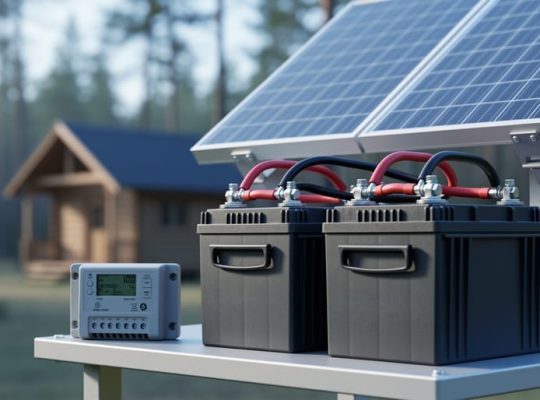
Grid-tied systems allow you to offset utility bills and potentially sell excess power back through net metering agreements, but require utility approval and specific safety disconnects. Off-grid configurations with battery storage provide energy independence but need careful capacity planning to match your actual consumption patterns during low-sun periods.
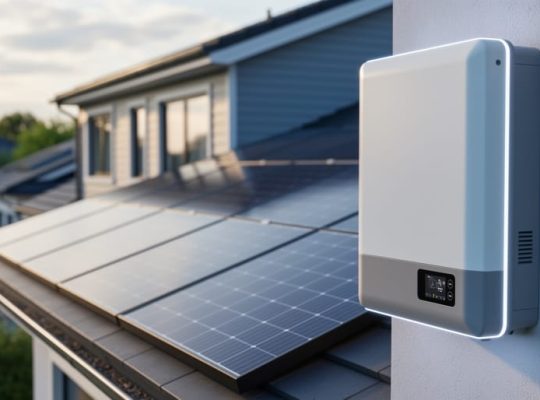
When adding window screens to existing rooftop solar arrays, ensure seamless solar integration through compatible charge controllers and monitoring systems. Most modern inverters support multiple input sources, but verify your current system’s expansion capacity before purchase. Professional assessment through certified installers trained in photovoltaic system design prevents costly compatibility mistakes and optimizes your total energy harvest across all generation points.
Durability, Warranty, and Long-Term Value
Custom solar window screens represent a significant investment, making durability and warranty protection critical evaluation factors. Quality screens built with tempered glass, aluminum or stainless steel frames, and UV-resistant encapsulation should deliver 20-25 years of reliable performance with minimal degradation.
Material quality directly impacts longevity. Premium screens use corrosion-resistant hardware, reinforced mounting points, and weatherproof electrical connections rated for outdoor exposure. Inferior materials may show visible wear, connection failures, or accelerated efficiency loss within 5-7 years.
Comprehensive warranties typically separate coverage into two categories: product warranties covering defects and structural integrity (10-15 years standard) and performance warranties guaranteeing minimum power output levels (often 80% efficiency at 25 years). Review exclusions carefully, as damage from improper installation, extreme weather events, or building modifications frequently void coverage.
Calculate total cost of ownership beyond purchase price. Factor in installation expenses, expected maintenance requirements, projected energy savings, and potential replacement costs. Screens with superior durability and strong warranties typically cost 15-30% more upfront but deliver better lifetime value through extended service, reduced maintenance needs, and sustained energy generation. Request detailed warranty documentation and manufacturer track records before committing to any system.
Types of Custom Solar Window Screens Compared
Transparent Photovoltaic Window Screens
Transparent photovoltaic window screens represent the cutting edge for applications where maintaining clear views is paramount. These screens use organic photovoltaic (OPV) or perovskite solar cell technologies that selectively absorb ultraviolet and infrared wavelengths while allowing most visible light to pass through. The result is a nearly clear appearance with visible transmittance typically ranging from 60% to 85%.
Power output from transparent screens is modest compared to opaque alternatives, usually delivering 50 to 150 watts per square meter depending on the technology and transparency level. OPV screens offer flexibility in manufacturing and can be applied to curved surfaces, while perovskite-based options show higher efficiency potential but are still maturing in terms of long-term stability.
These screens excel in residential settings where homeowners want to preserve views and natural light while adding supplemental power generation. They work particularly well for living room windows, sunrooms, and any application where aesthetics and visibility take priority over maximum energy output. Office buildings with glass curtain walls also benefit from transparent screens that reduce cooling loads without creating a darkened interior environment.
Semi-Transparent Mesh-Integrated Screens
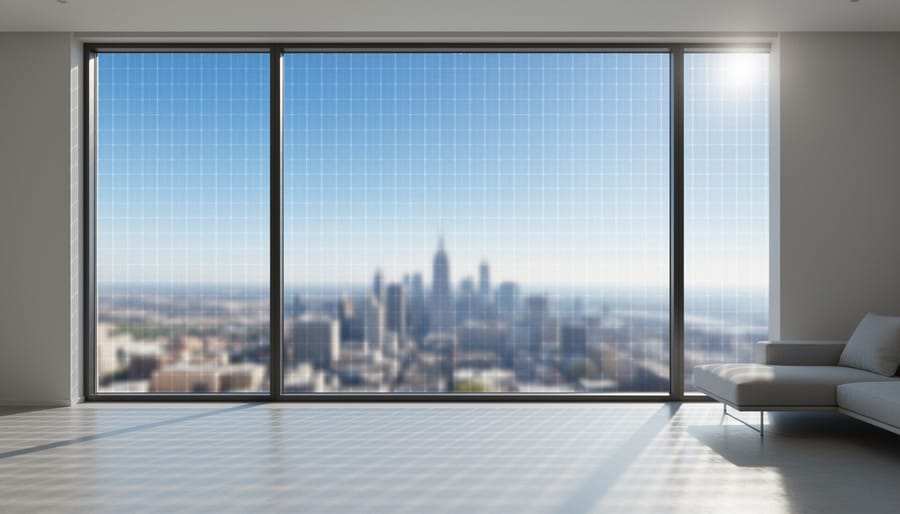
Semi-transparent mesh-integrated screens represent the middle ground in custom solar window solutions, embedding photovoltaic cells within a patterned mesh structure that preserves partial visibility while generating substantial power. These screens typically use monocrystalline silicon cells cut into narrow strips or thin-film materials deposited in geometric patterns, creating a grid that allows light through the gaps while converting solar radiation on the cell surfaces.
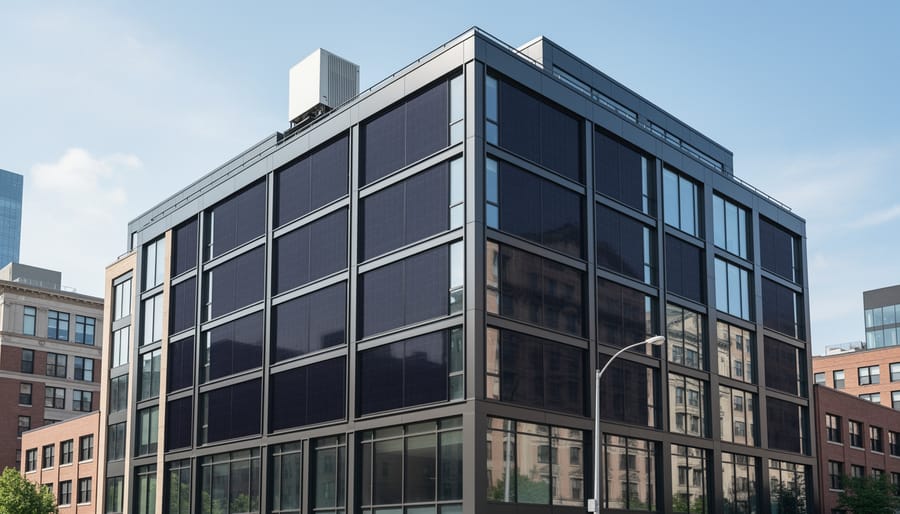
The mesh configuration provides 30-60% transparency depending on cell density and pattern spacing, making these screens particularly effective for commercial applications where both daylighting and solar shading are priorities. Office buildings benefit from reduced cooling loads while maintaining adequate natural light for workspaces.
Power output from mesh-integrated screens generally falls between 80-120 watts per square meter, significantly higher than fully transparent options but lower than opaque screens. The monocrystalline variants offer 18-22% cell efficiency within the covered areas, while thin-film versions provide 10-15% efficiency but greater design flexibility and lower production costs.
These screens work well on west and south-facing commercial facades where direct sun creates glare and heat gain issues. The partial shading reduces solar heat gain coefficient to 0.25-0.35 while still allowing occupants to see outside, addressing both energy performance and occupant comfort requirements that drive commercial building specifications.
Opaque High-Efficiency Screens
Opaque high-efficiency screens prioritize maximum power output over visibility, making them ideal for applications where natural light transmission is secondary to energy generation. These screens incorporate proven photovoltaic technologies, most commonly monocrystalline PERC (Passivated Emitter and Rear Cell) or multi-crystalline silicon cells, achieving conversion efficiencies typically ranging from 19% to 22% in 2026 models.
Unlike transparent or semi-transparent alternatives, opaque screens function essentially as vertically-mounted solar panels that replace traditional window coverings. They work best on building facades where windows face away from primary work or living spaces, in utility areas, stairwells, or mechanical rooms where daylighting matters less than energy offset.
The key advantage lies in raw performance. A standard opaque screen installation can generate 150 to 200 watts per square meter under optimal conditions, roughly double the output of comparable semi-transparent options. This makes them particularly attractive for commercial buildings pursuing net-zero energy goals or maximizing renewable energy credits.
Consider opaque screens when energy generation takes precedence over aesthetics or view preservation, and when your budget allows for premium efficiency at a lower cost per watt than transparent technologies.
Smart Adaptive Solar Screens
Smart adaptive solar screens represent the cutting edge of building-integrated photovoltaics, combining dynamic transparency control with continuous energy generation. These systems use electrochromic or thermochromic materials that automatically adjust their tint in response to temperature, light intensity, or user commands while maintaining power output throughout the transition.
Electrochromic variants apply low-voltage electrical current to alter transparency within minutes, allowing precise manual or automated control through building management systems. They typically maintain 60-75% of their photovoltaic efficiency even when fully tinted, making them ideal for spaces requiring adaptive light control without sacrificing energy generation. Current models from leading manufacturers achieve response times under three minutes for complete opacity changes.
Thermochromic screens shift transparency passively based on temperature thresholds, darkening automatically as surfaces heat beyond set points (usually 28-32°C). While lacking manual override capabilities, they require no external power for the tinting function itself, creating a truly self-regulating window system. Their photovoltaic efficiency remains relatively stable at 65-80% across transparency states, though transition speeds are slower at 10-15 minutes.
Both technologies cost 40-60% more than static solar screens but deliver superior occupant comfort and energy management, justifying the premium for high-performance commercial buildings and luxury residential applications.
Recommendations for Different Use Cases
Best Options for Residential Applications
For single-family homes, semi-transparent mesh-integrated screens offer the best balance of performance and livability. These systems typically deliver 80-120 watts per square meter while maintaining 40-60% visible transmittance, enough to preserve natural light and outdoor views without compromising interior comfort. Homeowners report energy cost reductions of 15-25% when installed on south- and west-facing windows.
Multi-family dwellings benefit from standardized semi-transparent units that simplify bulk purchasing and maintenance. Building managers should prioritize screens with 25-year warranties and proven weather resistance ratings, as replacing units across multiple floors increases labor costs substantially.
For historic or architecturally sensitive homes, transparent photovoltaic screens preserve curb appeal while generating 40-70 watts per square meter. Though less powerful, they integrate seamlessly with traditional window frames and satisfy homeowner association restrictions that prohibit visible solar equipment.
Budget-conscious buyers gain better returns from focusing installations on high-solar-exposure windows rather than outfitting every opening. Targeting four to six south-facing windows typically captures 70% of the available energy benefit at 40% of the cost of whole-house coverage.
Commercial Building and Office Solutions
Commercial facilities face unique requirements when specifying solar window screens at scale. Facility managers should prioritize semi-transparent mesh-integrated screens with conversion efficiencies above 12% for southern and western exposures, where energy generation potential justifies the investment. These installations typically deliver 15-25% reductions in cooling loads while generating 40-60 watts per square meter under optimal conditions.
LEED certification seekers benefit most from systems with documented Environmental Product Declarations and third-party verified performance data. Look for screens that contribute to multiple credit categories: Energy and Atmosphere (optimized energy performance), Materials and Resources (recycled content), and Innovation (building-integrated photovoltaics). Specify products with low embodied carbon and regional manufacturing to maximize points.
Large-scale deployments demand robust project management. Request phased installation schedules that minimize operational disruption, and insist on comprehensive commissioning protocols that verify electrical integration with existing building management systems. Negotiate bulk pricing but never compromise on warranty coverage, commercial-grade products should carry minimum 15-year performance guarantees and 25-year material warranties. Consider lifecycle replacement planning from day one, budgeting for inverter upgrades at 10-12 year intervals.
Retrofit Applications for Existing Structures
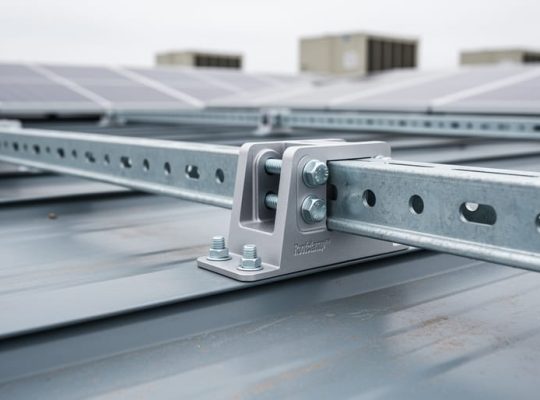
Adding solar window screens to existing buildings requires minimal structural modification when you select products designed for retrofit applications. Most manufacturers offer mounting systems that attach directly to existing window frames using clamp brackets or adhesive strips, eliminating the need for frame replacement or extensive carpentry work.
The primary compatibility concern is electrical integration. Buildings with existing solar PV systems benefit most from screens rated for the same voltage and inverter type as the current installation. For structures without solar infrastructure, standalone micro-inverter systems allow each screen to operate independently, feeding directly into existing electrical panels through dedicated circuits.
Assess your window frame material before purchasing. Aluminum and vinyl frames accept retrofit mounting hardware readily, while wood frames may require reinforcement to support the additional weight of photovoltaic screens. Semi-transparent mesh-integrated screens work particularly well in retrofit scenarios because their lighter weight and flexible sizing accommodate minor frame irregularities without custom fabrication.
Budget for professional assessment of your electrical service capacity. Adding multiple screens may require panel upgrades to handle increased generation capacity safely and comply with local electrical codes.
New Construction and Integrated Design
For new construction projects, solar window screens should be specified during the architectural design phase rather than added as an afterthought. This approach allows you to optimize building orientation, window placement, and electrical infrastructure around the screens’ energy generation potential from the outset.
Work with manufacturers who provide custom fabrication to exact specifications, enabling screens to integrate seamlessly with window frames, building facades, and structural elements. Coordinate with electrical engineers to design DC wiring pathways, inverter locations, and connection points that minimize voltage drop and installation complexity. Many manufacturers now offer BIM-compatible models that architects can incorporate directly into digital building designs.
Consider specifying smart adaptive screens in conference rooms and lobbies where variable transparency adds functional value beyond energy generation. For maximum efficiency, align screen placement with your building’s solar resource modeling and ensure compatibility with planned building management systems. Mose Solar’s educational programs train professionals in integrated photovoltaic design, helping architects and builders collaborate effectively with solar specialists during the critical planning stages.
Common Mistakes to Avoid When Purchasing Solar Window Screens
Overlooking Site-Specific Solar Potential
One of the costliest mistakes buyers make is selecting solar window screens based solely on manufacturer-rated peak efficiency, without evaluating whether their building can deliver the conditions those numbers require. A screen promising 18% conversion efficiency means little if north-facing windows receive minimal direct sunlight, or if nearby trees and structures cast shadows for most of the day.
Before purchasing, conduct a proper site assessment that accounts for your building’s orientation, roof overhang dimensions, seasonal sun angles, and local weather patterns. South-facing installations in Phoenix will vastly outperform identical screens on east-facing windows in Seattle. Serious buyers track actual solar exposure using insolation maps and shading analysis tools, not generic sales projections.
Professional installers who understand these installation secrets can model real-world output for your specific location. Pairing screens with an energy monitoring app post-installation helps verify whether performance matches site potential, catching underperformance early rather than discovering it years later.
Ignoring Integration with Existing Systems
Many buyers focus on the solar window screens themselves while overlooking how they’ll connect to their building’s existing electrical setup. This oversight causes serious performance bottlenecks and expensive retrofitting.
Voltage mismatch represents the most common integration failure. Your current inverter might handle 24V DC input while the screens you’re considering output 48V DC. Without a compatible inverter or DC-to-DC converter, the system won’t function. Similarly, grid-tied inverters require specific certification for interconnection, some solar screen models lack the necessary UL listing for your utility’s requirements.
Building management system (BMS) integration matters more than most realize. Modern commercial buildings rely on centralized energy monitoring and control. Solar screens without compatible communication protocols (Modbus, BACnet, or similar) become isolated assets that can’t coordinate with HVAC optimization or participate in demand response programs, cutting potential savings by 30-40%.
Check three things before purchasing: inverter compatibility specifications, utility interconnection approval status, and BMS communication protocols. Request a professional assessment of your electrical panel capacity, adding solar screens might require service upgrades that double your installation cost.
Prioritizing Price Over Total Value
Focusing solely on the lowest upfront price typically costs buyers more over a solar window screen’s 20-30 year lifespan. A screen priced $200 less per unit but delivering 15% lower efficiency means hundreds of dollars in lost energy generation annually for a typical commercial installation. Cheaper materials degrade faster, screens with inferior UV-resistant coatings or non-marine-grade aluminum frames may require replacement in 10 years rather than 25, doubling your lifetime cost. Limited warranties signal manufacturer doubts about product longevity; a robust 25-year performance guarantee indicates the company stands behind their quality. Calculate total value by dividing lifetime energy production (kWh × local electricity rate) by total cost including installation and maintenance. The “premium” option often delivers 40% better return on investment than the budget alternative despite costing 20% more initially.
Neglecting Professional Assessment and Installation
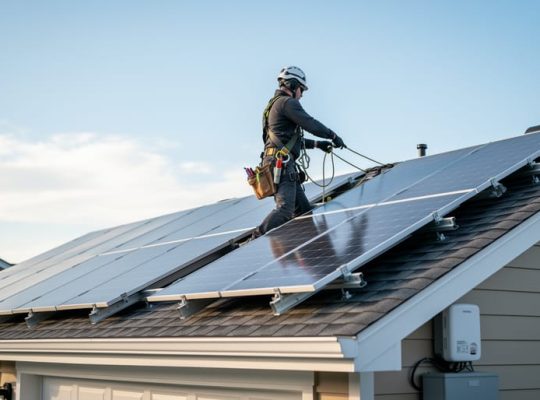
DIY installation of custom solar window screens carries significant risks that often negate the technology’s benefits. These systems require precise electrical connections, proper mounting to ensure structural integrity and water resistance, and integration with inverters or building management systems. Improper wiring can create fire hazards or void warranties entirely. Unqualified contractors may lack knowledge of building codes specific to photovoltaic installations, leading to permit failures or insurance complications. Professionals trained through certified programs, including those offered by Mose Solar in collaboration with universities, bring expertise in both electrical safety and architectural integration. They conduct site assessments to identify potential shading issues, verify structural support capacity, and optimize screen placement for maximum energy generation. The upfront investment in qualified installation typically pays for itself through avoided damage, proper system performance, and preserved manufacturer warranties.
Installation and Maintenance Considerations
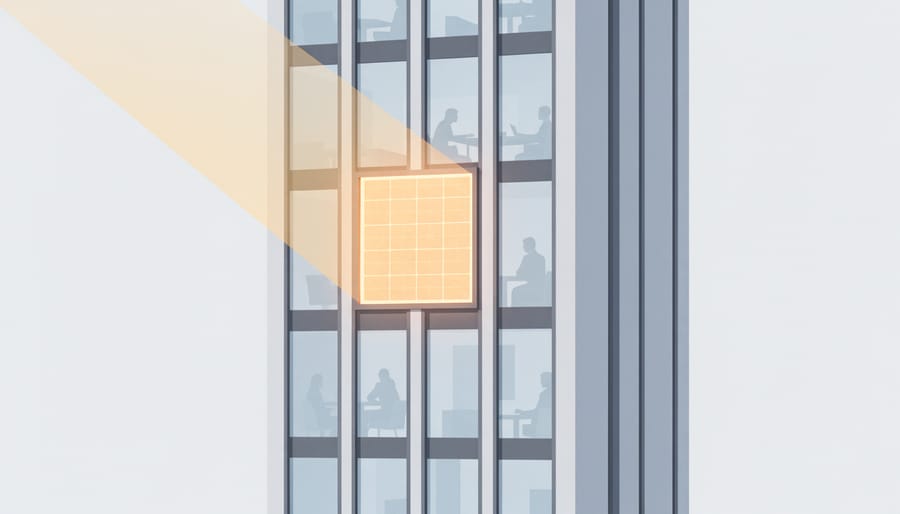
Installing custom solar window screens demands careful planning and professional expertise. Most installations require coordination between electrical contractors familiar with photovoltaic systems and window specialists experienced with custom frame mounting. The process typically takes two to five days for a residential project, longer for commercial applications. Expect site assessment, structural verification of load-bearing capacity, electrical system integration, and final testing before activation.
Professional installers certified through recognized training programs, such as those offered through Mose Solar’s collaborations with technical universities, understand the nuances of voltage requirements, inverter connections, and building code compliance. They’ll verify your existing electrical infrastructure can handle the additional load and ensure proper grounding. DIY installation is not recommended; improper wiring creates safety hazards and voids most manufacturer warranties.
Once installed, custom solar window screens require minimal but essential maintenance. Clean the surface every three to six months using non-abrasive cleaners and soft cloths to remove dust, pollen, and debris that reduce light transmission and energy output. Avoid pressure washers or harsh chemicals that can damage photovoltaic coatings. In dusty or coastal environments, increase cleaning frequency.
Monitor system performance through connected apps or building management software. Most modern screens include diagnostic capabilities that alert you to underperformance, enabling quick troubleshooting. Check electrical connections annually and inspect frame seals for weather damage. Replace worn weatherstripping promptly to prevent moisture infiltration.
Plan for inverter replacement or servicing every ten to fifteen years, a standard consideration for any grid-tied solar system. Many manufacturers now offer extended warranties when you register products and complete routine professional inspections. Using design tools during the planning phase helps identify maintenance access requirements, ensuring screens remain serviceable throughout their twenty-five-plus-year lifespan without compromising building functionality or requiring excessive scaffolding for routine care.
Frequently Asked Questions
Solar window screens represent a significant investment and technological decision for any property, so it’s natural to have questions before making a purchase. These answers address the most common concerns buyers bring to the selection process.
How much do custom solar window screens typically cost?
Prices range from $150-$400 per square foot for transparent photovoltaic screens to $75-$200 per square foot for semi-transparent mesh-integrated options, depending on customization requirements and energy output specifications. Total project costs also include inverter equipment, installation labor, and potential electrical upgrades.
What energy output can I realistically expect from solar window screens?
Typical residential installations generate 10-50 watts per square foot depending on screen type and orientation, translating to 15-30% reductions in building cooling loads and 5-15% of total electricity needs for optimally positioned applications. Performance varies significantly based on geographic location, building orientation, and local shading conditions.
Can solar window screens be installed on existing windows without replacement?
Yes, most custom solar screens mount to existing window frames using retrofit brackets that don’t require structural modifications. However, professional assessment is essential to verify frame integrity, proper electrical routing paths, and compatibility with current window hardware.
How long do solar window screens last, and what maintenance do they require?
Quality screens carry 20-25 year warranties with expected lifespans of 25-30 years under normal conditions. Maintenance involves quarterly cleaning with non-abrasive solutions, annual electrical connection inspections, and monitoring output through building management systems.
Will solar window screens work with my existing solar panel system?
Integration depends on inverter compatibility and system voltage specifications. Most modern hybrid inverters can accommodate window screen additions, but older systems may require separate microinverters or inverter upgrades to handle the additional input.
Do solar window screens qualify for tax incentives or rebates?
In most jurisdictions, these products qualify for the same federal Investment Tax Credit as traditional solar panels, currently covering 30% of total system costs through 2032. Additional state and utility incentives vary by location and should be researched during the planning phase.
How do I choose between transparent and semi-transparent options?
The decision hinges on your priority between visibility and power output. Transparent screens preserve 60-80% of natural light and views while generating modest power, ideal for occupied spaces where aesthetics matter; semi-transparent options sacrifice some visibility for 40-60% higher energy yields, better suited to conference rooms or upper-story applications.
Can I install solar window screens myself to save money?
While some mechanical mounting might seem straightforward, electrical integration requires licensed professionals to ensure code compliance, proper inverter connections, and system safety. DIY installation typically voids manufacturer warranties and creates liability risks that far outweigh labor cost savings.
The answers to these questions reveal a common theme: informed decisions require understanding your specific building conditions, performance expectations, and long-term objectives rather than simply comparing product specifications. The complexity of solar window screen systems means that working with qualified professionals, whether installers trained through programs like those at Mose Solar or certified solar integrators, provides value beyond the installation itself.
Cost considerations extend beyond the purchase price. Factor in potential energy savings over the system’s lifetime, available incentives that reduce net cost, and the added property value that energy-generating building envelopes provide. A $30,000 window screen system that delivers $1,200 in annual energy savings while qualifying for a $9,000 tax credit presents a different value proposition than the sticker price suggests.
Performance expectations should be grounded in your building’s reality. A south-facing commercial building in Arizona will see dramatically different results than a north-facing residential structure in Seattle, even with identical screen specifications. Request site-specific modeling from installers before committing to a particular product category.
Selecting the right custom solar window screens requires balancing technical performance, aesthetic integration, and long-term value against your specific building requirements and energy goals. The most successful installations stem from careful evaluation of site-specific solar potential, honest assessment of visibility versus efficiency trade-offs, and realistic projections of energy offset rather than optimistic manufacturer claims.
Your decision framework should prioritize conversion efficiency metrics and SHGC ratings for your climate zone, confirm electrical compatibility with existing or planned solar infrastructure, and verify warranty coverage that protects your investment over the typical 20-25 year lifespan. Whether you choose transparent photovoltaic screens for residential applications valuing natural light, semi-transparent mesh systems for balanced commercial performance, or opaque high-efficiency solutions for maximum generation, the technology must align with how you actually use the space.
The common thread among failed installations is rushing the decision without professional assessment or attempting to retrofit incompatible systems. Working with certified installers who understand both the electrical and structural requirements prevents costly mistakes. These personalized solar interfaces represent a significant evolution beyond passive window treatments, transforming building envelopes into active energy assets when properly matched to application.
Mose Solar’s educational programs, developed in collaboration with leading universities, offer structured training for professionals implementing these systems and resources for building owners evaluating options. As solar window screen technology continues advancing through 2026 and beyond, staying informed through credible educational channels ensures you make decisions based on current capabilities rather than outdated assumptions. The right custom solar window screens deliver decades of energy savings, but only when the selection process accounts for every variable specific to your building and objectives.