Showing 44 Result(s)
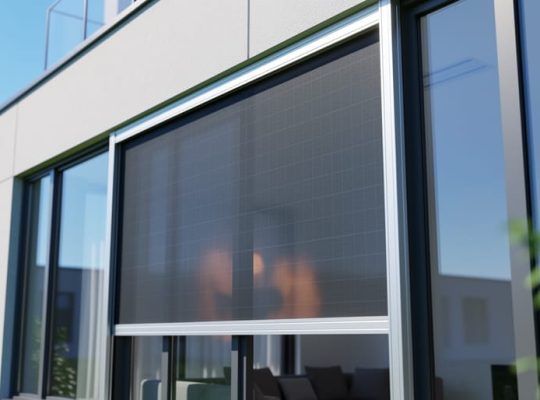
Exterior-mounted custom solar window screen installed over a large building window in bright daylight, with the mesh pattern and mounting rails visible.

How to Choose Custom Solar Window Screens: A Buying Guide for 2026

Custom solar window screens combine three critical functions: they block up to 90% of solar heat gain before it enters your building, reduce cooling costs by 25-40%, and maintain outward visibility while protecting interior furnishings from UV damage. Unlike traditional window treatments that address heat after it has penetrated the glass, these exterior-mounted mesh barriers intercept thermal radiation at the most effective point, the outside surface of your windows, making them one of the highest-return passive cooling investments available for 2026.
Key Takeaway: Prioritize openness factor…
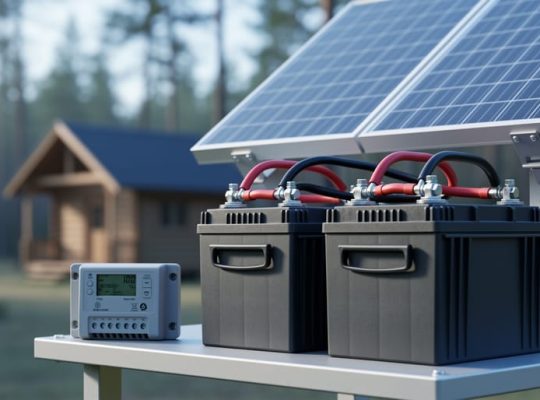
Two 6-volt deep-cycle batteries connected in an off-grid solar setup beside a solar charge controller and part of a photovoltaic panel, outdoors.

What Is a 6 Volt Battery Solar System (and How Does It Work)?

A 6 volt battery solar system combines photovoltaic panels with one or more 6-volt deep-cycle batteries to store electrical energy for small-scale off-grid applications. These compact power systems deliver reliable DC electricity for recreational vehicles, marine electronics, remote cabins, and portable power needs where space constraints or modest energy demands make higher-voltage configurations impractical.
Six-volt batteries offer distinct advantages in solar installations. Their construction typically features thicker lead plates than comparable 12-volt units, resulting in longer cycle life and better performance under frequent…

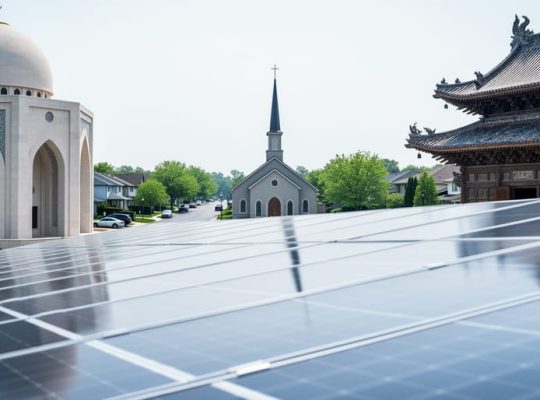
Shared solar panels in front of a mosque, church, and temple, illustrating interfaith collaboration for renewable energy.

What Is Interfaith Solar? (and How It Strengthens Communities Through Renewable Energy)

Interfaith solar refers to collaborative renewable energy projects in which religious congregations from different faith traditions pool resources, share infrastructure, or jointly develop photovoltaic systems to reduce energy costs, demonstrate environmental stewardship, and strengthen community bonds. These partnerships take multiple forms: a shared community solar array subscribed by mosques, churches, and temples; bulk purchasing agreements negotiated across denominational lines; or co-located installations on adjacent properties that benefit from economies of scale.
The model matters because houses of worship face distinct …

“Analyst reviewing project finance materials for a utility-scale solar project with a small solar panel on the desk and a blurred solar farm in the background.”

How to Build a Project Finance Model for Renewable Energy Solar Projects in 2026

Project finance modeling for renewable energy transforms solar projects from promising concepts into bankable investments by building a detailed, multiyear financial forecast that quantifies returns, manages risk, and demonstrates viability to lenders and equity partners. At its core, the process structures capital flows, revenue streams from power purchase agreements or merchant sales, operating costs, and tax benefits into a dynamic model that proves the project can generate sufficient cash flow to service debt and deliver targeted returns. Mastering this discipline is essential for project developers and finance professionals who need …

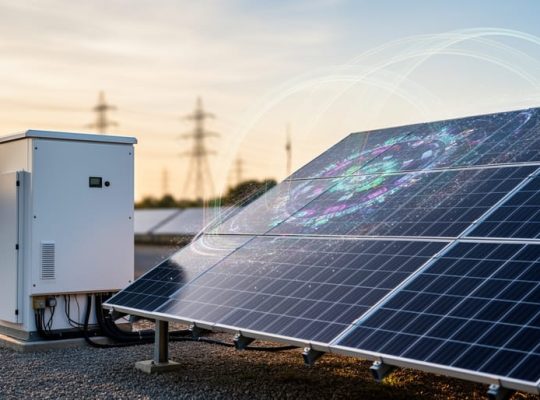
Solar panels and a battery storage unit at a modern energy site with subtle quantum-inspired light trails overhead, suggesting real-time optimization of PV power usage.

What Are Quantum Solar Systems (and How Do They Optimize PV Storage)?

A quantum solar system is a photovoltaic installation that uses quantum computing algorithms to optimize energy storage, distribution, and consumption in real time. Unlike traditional solar arrays that rely on preset charge controllers and basic automation, quantum solar systems leverage quantum processors to analyze thousands of variables simultaneously, including weather patterns, grid demand, battery chemistry, and electricity pricing, to make split-second decisions about when to store, discharge, or sell solar-generated power.
The technology represents a significant evolution in how we manage …

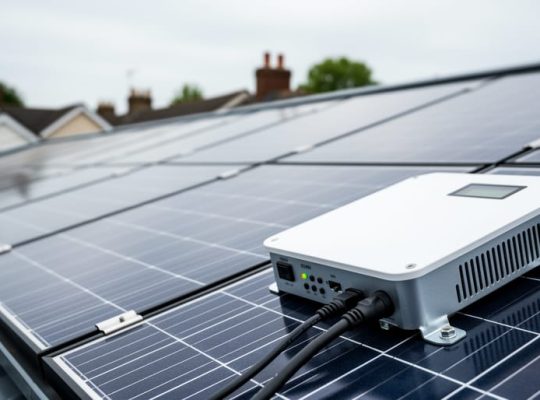
Rooftop solar panels and a grid-tie inverter unit in soft daylight, representing solar power feed-in to the electrical grid.

What Is Solar Power Grid Feed-In and How Does It Work?

Solar power feed-back, also known as net metering or grid export, occurs when a photovoltaic system generates more electricity than the connected property consumes, with the surplus energy flowing back through the utility meter into the electrical grid for credit or compensation. This bidirectional energy exchange transforms residential and commercial solar installations from passive consumers into active distributed generation nodes, fundamentally reshaping how electricity flows through modern power infrastructure.
Understanding this process matters for anyone considering solar investment, energy professionals …

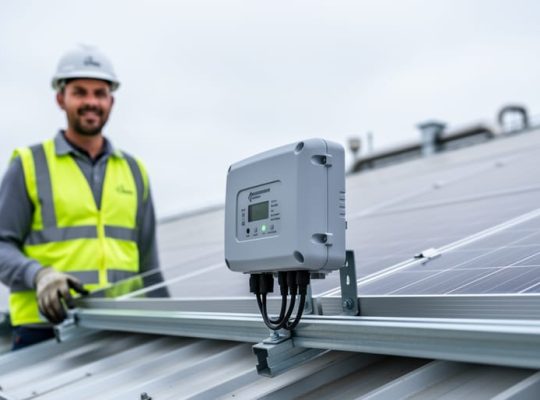
A solar installer next to a rooftop solar array with module-level power electronics (power optimizer or microinverter) mounted on the racking near the panels.

How to Optimize Efficiency Modules in Module-Level Power Electronics for Maximum Solar Performance

Optimizing module-level power electronics efficiency means improving the electrical conversion performance of power optimizers and microinverters attached to individual solar panels, typically yielding 1-3% additional energy harvest through proper configuration, firmware updates, and thermal management. The process requires a systematic approach to measurement, adjustment, and validation using specialized monitoring equipment and software tools, along with strict adherence to DC safety protocols when working with live photovoltaic systems.
Module-level power electronics have transformed solar installations by enabling panel-level …

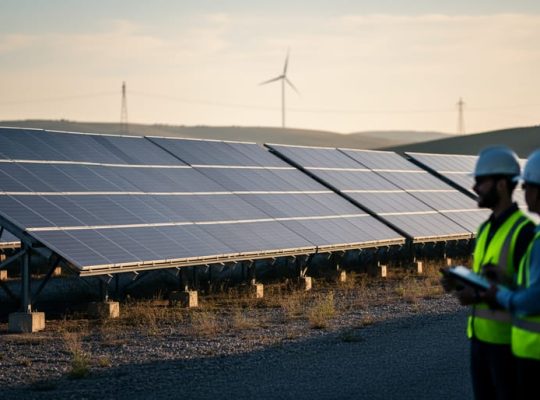
Utility-scale solar farm with photovoltaic panels in the foreground and two professionals in high-visibility gear near a clipboard, photographed at golden hour with a distant turbine and substation structures in the background.

Global Public-Private Partnership for Solar Development: Eligibility, How to Participate, and Where to Get Support

Global public-private partnerships represent formal agreements between government entities and private sector companies to jointly finance, develop, and operate large-scale solar infrastructure projects across national boundaries. These collaborative frameworks pool public resources with private capital and expertise to accelerate renewable energy deployment in markets where neither sector could achieve comparable scale alone. By distributing financial risk, leveraging institutional knowledge, and aligning regulatory support with commercial efficiency, …

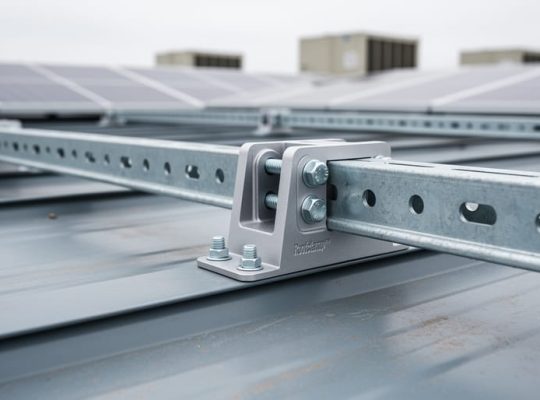
Aluminum Roofclamp™ bracket clamping onto a standing-seam metal roof with Unistrut-style framing supporting a solar PV array, shown in sharp detail on a commercial rooftop.

How to Install Unistrut Rooftop Support for Solar PV Arrays

Installing Unistrut rooftop support systems for photovoltaic arrays requires three essential components: non-penetrating attachment methods that preserve roof warranties, proper load distribution across the roof structure, and materials engineered to withstand decades of environmental exposure. The process centers on Roofclamp™ attachment technology, which connects Unistrut metal framing to standing seam roof ribs without drilling or piercing the metal panels. This approach delivers a stable mounting platform while maintaining the roof’s weatherproof integrity.
Key Takeaway: Successful…

Close-up of a quartz crystal monitor sensor near a vacuum thin-film coating chamber used in multi-crystalline solar module production.

What Is a Quartz Crystal Monitor (and How Does It Work in Multi-Crystalline Solar Module Production)?

A quartz crystal monitor is a precision measurement instrument that uses the frequency shift of a piezoelectric quartz crystal to measure thin-film deposition rates and thickness with nanometer-level accuracy in real time. In multi-crystalline silicon solar cell production, these devices are essential for controlling anti-reflective coatings, metallization layers, and other critical thin films that directly determine panel efficiency and longevity.
Understanding PV module basics provides the …

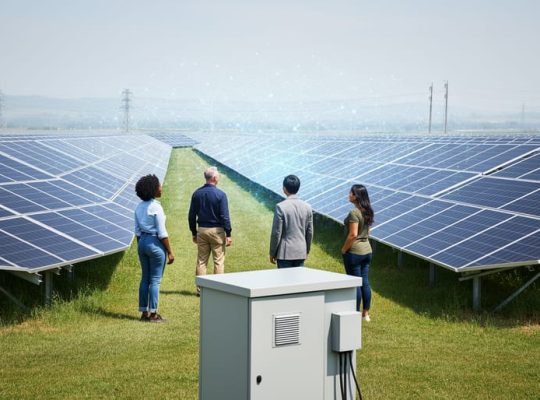
Community solar installation with rows of solar panels in a sunlit field, photographed at eye level with a few people observing the array in the distance.

Is Community Solar a Pyramid Scheme? Eligibility, How It Works, and Where to Get Help

No, community solar is not a pyramid scheme. It’s a legitimate renewable energy program regulated by state public utility commissions that allows multiple subscribers to receive credits on their electricity bills from a shared solar array, without the recruitment structure, income promises, or participant-funded payments that define pyramid schemes. While some unscrupulous third-party marketers occasionally use aggressive sales tactics that raise red flags, the underlying programs themselves operate under strict utility oversight and consumer protection frameworks.
The confusion stems from how certain community solar …

Large glass substrate moving through an automated thin-film solar manufacturing line with deposition equipment visible in a clean industrial facility.

First Solar Manufacturing Process: How It Works, Production Requirements, and Industry Resources

First Solar’s manufacturing process represents a fundamental departure from conventional silicon photovoltaic production, relying instead on cadmium telluride (CdTe) thin-film technology deposited on glass substrates through vapor transport deposition. This continuous, automated process builds complete solar modules in a single production line, achieving material efficiencies and cost advantages that traditional crystalline silicon manufacturing cannot match. Rather than sawing ingots or assembling discrete cells, First Solar’s approach deposits semiconductor layers just a few micrometers thick onto large glass sheets, …

A project manager monitors a shipping shipment at a port while solar panel modules are loaded from a container by a dock crane.

4PL Logistics for Solar PV Imports: Definition, Eligibility, Compliance Steps, and Support

A Fourth-Party Logistics (4PL) provider acts as a single point of control that integrates, manages, and optimizes your entire supply chain, including sourcing, freight forwarding, customs brokerage, warehousing, and final delivery, rather than simply executing individual logistics tasks. For solar PV importers managing complex international shipments with strict compliance requirements, a 4PL partner serves as both strategist and orchestrator, coordinating multiple third-party logistics providers (3PLs) while assuming accountability for customs documentation, tariff classification, and regulatory adherence across jurisdictions.
…

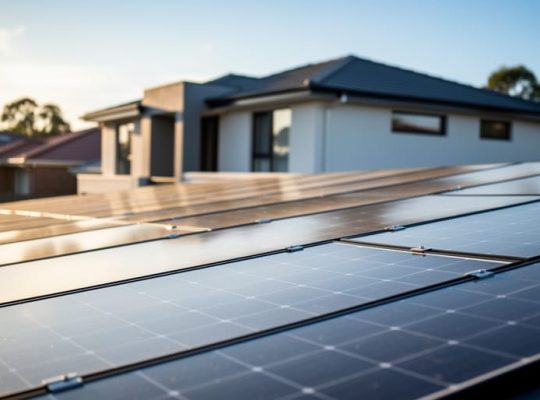
Rooftop solar panels installed on a modern suburban home exterior during golden hour sunlight.

Zillow Solar Study News Update: What Changed and What to Watch in 2026

Homes equipped with solar-energy systems sold for 4.1% more on average than comparable properties without solar power during the past year, according to data analyzed by Zillow. This premium translates to thousands of dollars in additional value for homeowners who invested in photovoltaic installations, offering concrete evidence that solar panels deliver measurable returns beyond monthly utility savings. The finding arrives as the residential solar market matures, with buyers increasingly viewing …

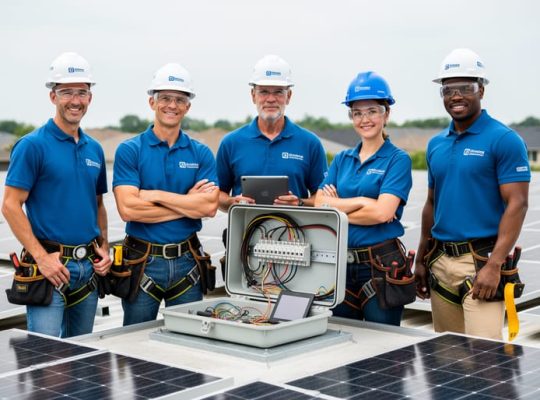
Diverse solar technicians collaborating on a residential rooftop installation near solar panels under natural daylight.

What Are the 9 Wellness Dimensions (and How Do They Support Mental Health in Solar Workforce)?

The nine dimensions of wellness form a holistic framework that recognizes health extends far beyond physical fitness to encompass emotional, environmental, financial, intellectual, occupational, physical, social, spiritual, and cultural well-being. Each dimension interconnects to create a comprehensive picture of human health, requiring attention and balance to achieve optimal functioning in both personal and professional contexts.
For professionals in the solar energy sector, this framework holds particular relevance. The renewable energy industry demands technical expertise alongside adaptability to rapidly evolving technologies, …