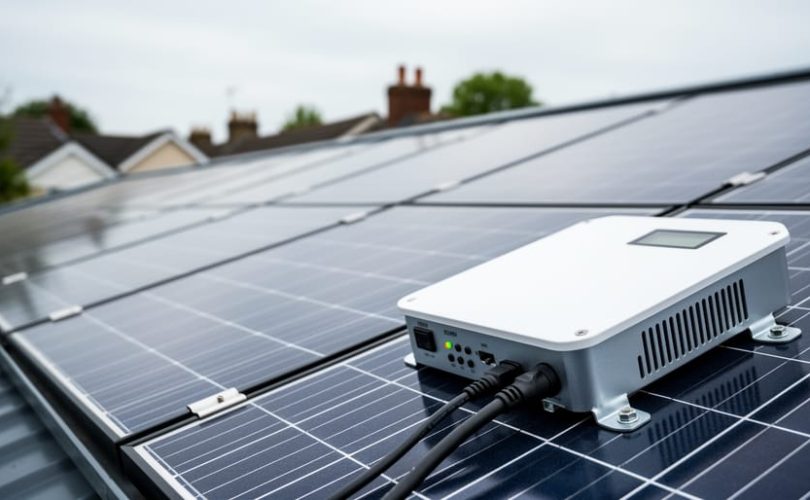
Solar power feed-back, also known as net metering or grid export, occurs when a photovoltaic system generates more electricity than the connected property consumes, with the surplus energy flowing back through the utility meter into the electrical grid for credit or compensation. This bidirectional energy exchange transforms residential and commercial solar installations from passive consumers into active distributed generation nodes, fundamentally reshaping how electricity flows through modern power infrastructure.
Understanding this process matters for anyone considering solar investment, energy professionals designing PV systems, or policymakers crafting renewable integration frameworks. The mechanism involves sophisticated inverter technology, utility interconnection agreements, and metering infrastructure that together enable a solar array to seamlessly transition between supplying on-site loads and exporting to the broader network. When your rooftop system powers both home and grid, complex technical and regulatory considerations come into play that determine system economics, grid stability, and the true value proposition of going solar.
This article provides the technical foundation required to grasp how electrons actually flow from panel to grid, examining the hardware components that enable bidirectional energy exchange, the different system architectures available to solar owners, and the integration challenges utilities face as distributed generation scales. Through our collaboration with university engineering programs, we’ve distilled field research and practical case studies into a reference-quality overview suitable for professionals entering the solar sector and stakeholders navigating the evolving landscape of distributed energy resources. Whether you’re an installer seeking deeper technical knowledge or a facility manager evaluating solar feasibility, the content ahead delivers the comprehensive understanding that typical overviews leave unaddressed.
What Solar Power Grid Feed-In Means
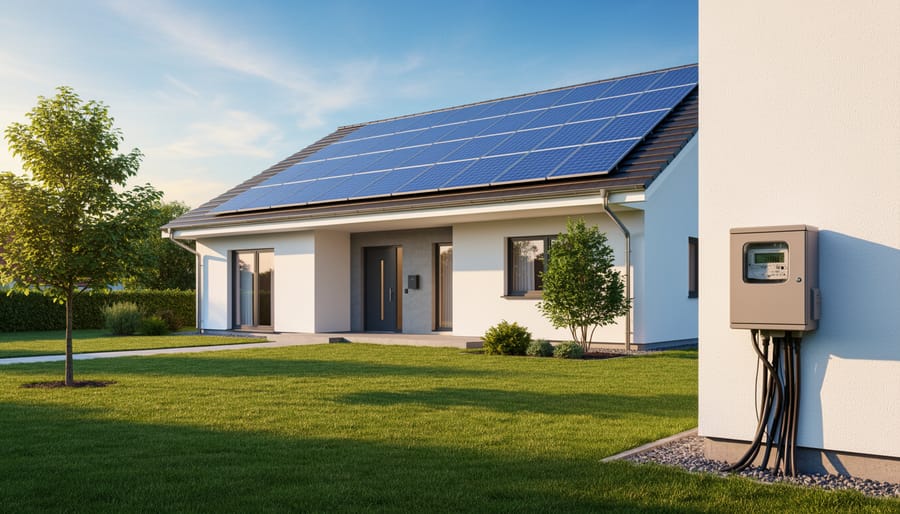
Solar power grid feed-in refers to the process where excess electricity generated by a photovoltaic system is exported to the utility grid rather than being consumed on-site. When your solar panels produce more energy than your building requires at a given moment, that surplus flows outward through your electrical connection and becomes available to other grid users. This bidirectional energy exchange transforms solar system owners from pure consumers into both consumers and producers, sometimes called “prosumers” in industry terminology.
The fundamental principle is straightforward: solar panels generate power during daylight hours, but your energy demand fluctuates throughout the day. When generation exceeds consumption, the excess doesn’t simply vanish. Instead, it travels through your meter, into the distribution network, and ultimately serves neighboring loads or gets absorbed elsewhere in the grid infrastructure. This outward flow happens automatically once your system meets the technical requirements for grid connection.
Understanding the terminology helps clarify how the process works in practice:
- Grid Feed-In
- The export of locally generated solar electricity into the utility distribution network when production exceeds on-site consumption.
- Net Metering
- A billing arrangement where utilities credit solar system owners for the excess electricity they export, effectively spinning the meter backward and offsetting future consumption charges.
- Feed-In Tariff
- A policy mechanism that pays solar producers a fixed rate per kilowatt-hour for all electricity fed into the grid, separate from retail consumption charges.
- Backfeeding
- Industry term for reverse power flow from a customer’s installation back through the service transformer into the utility’s distribution system.
- Grid Synchronization
- The technical requirement that solar inverters match the grid’s voltage, frequency, and phase before connecting, ensuring safe and stable power injection.
The distinction between net metering and feed-in tariffs matters considerably for project economics. Net metering typically values exported solar energy at or near the retail electricity rate you pay for consumption, making it financially attractive where available. Feed-in tariffs, by contrast, establish a predetermined payment rate, sometimes higher than retail rates to incentivize adoption, sometimes lower to reflect wholesale energy value. Jurisdictions worldwide implement vastly different compensation structures, directly impacting the financial viability of grid-connected solar investments.
How Solar Power Feeds Back Into the Grid
The Conversion Process: DC to AC
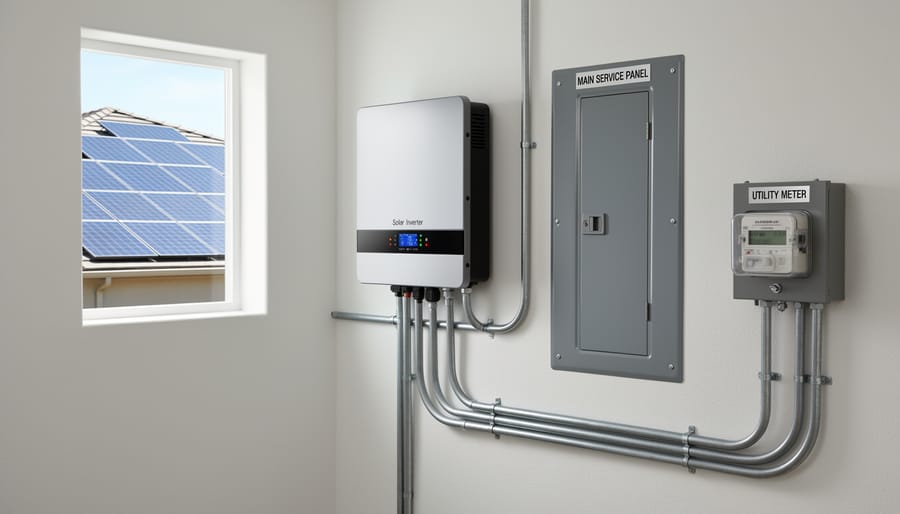
Solar panels produce direct current (DC) electricity when photons strike photovoltaic cells and liberate electrons. However, the utility grid operates on alternating current (AC), which reverses direction at a standard frequency, 60 Hz in North America, 50 Hz in most other regions. The inverter bridges this fundamental incompatibility by converting DC to AC and ensuring the output matches grid specifications.
Modern grid-connected PV inverters perform three critical synchronization tasks simultaneously. First, they match the grid’s voltage level, typically 120/240V for single-phase residential systems or 277/480V for commercial three-phase connections. The inverter continuously monitors grid voltage and adjusts its output to stay within utility-mandated tolerances, usually ±5% of nominal voltage.
Second, the inverter locks onto the grid’s frequency with precision better than 0.1 Hz. This frequency synchronization prevents power quality issues and ensures stable energy transfer. Advanced inverters use phase-locked loop (PLL) technology to track the grid waveform in real time, adjusting their output thousands of times per second.
Third, the inverter aligns the phase angle of its AC output with the grid’s voltage waveform. Perfect phase matching means current and voltage rise and fall together, delivering real power efficiently. Any phase mismatch would create reactive power, which utilities penalize because it burdens the distribution system without performing useful work.
Maximum Power Point Tracking (MPPT) algorithms run continuously within the inverter, extracting optimal power from the solar array while maintaining grid synchronization. This dual function, harvesting solar energy and conditioning it for grid compatibility, makes the inverter the most sophisticated component in a solar feed-in system.
Grid Synchronization and Safety Protocols
When a solar PV system connects to the utility grid, it must meet stringent synchronization and safety standards to prevent equipment damage, power quality issues, and hazards to utility personnel. These protocols govern how the inverter communicates with the grid and responds to abnormal conditions.
Synchronization Requirements
Before exporting power, the inverter must match the grid’s electrical characteristics precisely. It monitors the grid voltage (typically 120V/240V single-phase or 277V/480V three-phase in North America) and frequency (60 Hz in the U.S., 50 Hz in most other regions) in real time. The inverter adjusts its output to align within tight tolerances, usually ±0.5 Hz for frequency and ±5% for voltage, before beginning power transfer. This synchronization happens continuously; if grid parameters drift outside acceptable ranges, the inverter must respond within milliseconds.
Modern inverters also manage phase angle alignment, ensuring the AC waveform from the solar system peaks and troughs in lockstep with grid voltage. Misalignment causes reactive power flow and can trigger protective disconnects.
Anti-Islanding Protection
The most critical safety feature prevents islanding, a dangerous condition where the solar system continues energizing grid lines after utility power fails. If line workers assume a downed section is de-energized, backfeeding solar power poses electrocution risk. Anti-islanding detection systems continuously monitor voltage and frequency stability. When grid disturbances exceed thresholds, indicating a disconnect event, the inverter must cease operation within two seconds per IEEE 1547 standards, though many systems respond in under 0.16 seconds (10 grid cycles).
Detection methods include passive monitoring of voltage and frequency excursions and active techniques where the inverter injects small disturbances to test grid response. If the grid is absent, these disturbances cause rapid parameter shifts that trigger shutdown.
Automatic Disconnect Mechanisms
Grid-tied systems incorporate redundant protection layers. Besides the inverter’s internal controls, dedicated relays monitor overvoltage, undervoltage, overfrequency, and underfrequency conditions. A manual-accessible AC disconnect switch provides physical isolation for maintenance. These safeguards ensure the system responds appropriately to faults, storms, or intentional utility shutdowns, protecting infrastructure and human life while maintaining grid stability.
Metering and Energy Flow Management
Once the inverter synchronizes solar-generated AC power with the grid, accurate measurement of bidirectional energy flow becomes essential. Unlike conventional one-way electricity meters that track only consumption, grid-connected solar systems require bidirectional meters, often called net meters, that record both energy drawn from the grid and surplus electricity exported to it. These meters spin forward when the household or facility consumes more power than the solar array produces, and reverse direction when solar generation exceeds on-site demand, effectively subtracting exported kilowatt-hours from the total consumption reading.
Modern energy flow metering relies on digital smart meters that provide granular, time-stamped data rather than simple cumulative totals. Smart meters communicate with utility systems at regular intervals, transmitting production and consumption data in 15-minute or hourly blocks. This granularity enables time-of-use rate structures, where exported solar energy during peak afternoon hours may earn higher credits than overnight consumption charges, aligning economic incentives with grid needs.
The meter typically displays net energy usage over a billing cycle: if a system exports 800 kWh and imports 600 kWh in a month, the net reading shows 200 kWh of credit. Under net metering policies, utilities credit these exports at or near the retail electricity rate, though compensation structures vary by jurisdiction. Some regions apply feed-in tariffs with fixed payment rates per kWh exported, while others impose monthly rollover limits or expiration terms for accumulated credits.
Real-time monitoring platforms extend beyond the utility meter, allowing system owners to track instantaneous generation, consumption, and export through dedicated gateways or inverter-integrated apps. These dashboards reveal production patterns, identify underperforming panels, and help optimize energy use by shifting discretionary loads to high-generation periods, maximizing self-consumption before exporting surplus power.
Power Quality and Grid Stability Considerations
When solar power flows back into the grid, maintaining electrical quality becomes critical. Solar inverters must regulate voltage within tight tolerances (typically ±5% of nominal), as excess generation can cause voltage rise on distribution feeders, potentially damaging equipment or triggering protective disconnects. Harmonic distortion, unwanted frequencies introduced by power electronics, must stay below 5% total harmonic distortion (THD) to prevent overheating transformers and interfering with sensitive loads.
Frequency stability presents another challenge. The grid operates at precisely 60 Hz (50 Hz in some regions), and large-scale solar variability can stress this balance when clouds suddenly reduce output or clear skies cause rapid generation spikes. Modern inverters address these issues through reactive power support, where they inject or absorb vars to stabilize voltage, and fast frequency response capabilities that adjust output within milliseconds to maintain grid synchronization and prevent cascading failures across the network.
Types of Grid-Connected Solar PV Systems
Residential Grid-Tied Systems
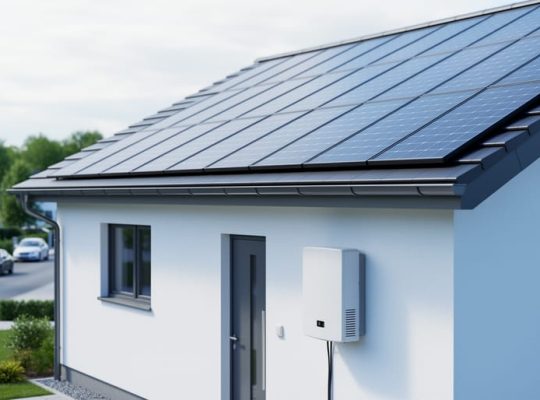
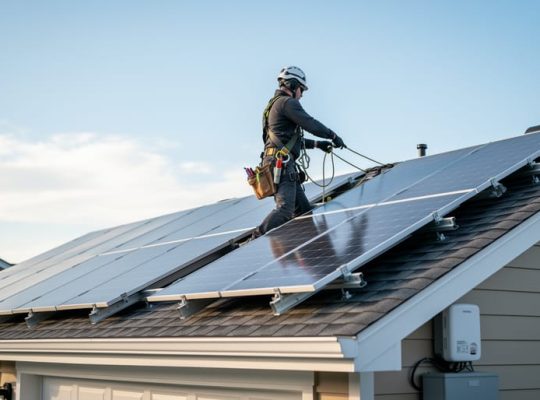
Residential grid-tied systems represent the most common configuration for homeowners integrating solar power with utility infrastructure. These installations typically range from 3 kW to 10 kW in capacity, sized to match household electricity consumption patterns. A standard 5 kW system can generate approximately 6,000-8,000 kWh annually, enough to offset 60-80% of typical residential demand depending on location and usage.
The residential integration process requires a formal interconnection agreement with the local utility, which establishes technical standards, safety protocols, and the terms under which excess generation flows to the grid. This agreement specifies equipment requirements, including inverter certifications, disconnect mechanisms, and meter configurations. Net metering arrangements allow homeowners to receive credits for electricity exported during high production periods, typically midday, which offset consumption during evenings or cloudy days. The bidirectional meter tracks both imported and exported energy, calculating net usage over monthly or annual billing cycles. System owners receive retail-rate credits in most jurisdictions, though compensation structures vary significantly by region and utility policy in 2026.
Commercial and Industrial Installations
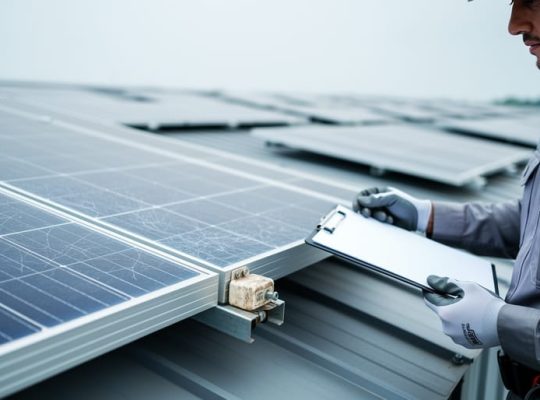
Commercial and industrial (C&I) solar installations occupy the middle ground between residential and utility-scale systems, typically ranging from 10 kilowatts to several megawatts in capacity. These mid-scale deployments serve businesses, manufacturing facilities, warehouses, schools, and municipal buildings with higher energy demands than residential properties.
C&I systems nearly always use three-phase grid connections rather than single-phase residential configurations. Three-phase power provides more stable voltage delivery and efficiently handles the larger load requirements of commercial operations. The inverters in these installations must synchronize with all three phases simultaneously, maintaining balanced power distribution across the grid connection.
Demand charge management represents a critical economic driver for commercial solar adoption. Utilities bill C&I customers not only for total energy consumption (kilowatt-hours) but also for peak power demand (kilowatts) during billing periods. Solar generation reduces both components, with battery storage increasingly added to specifically target peak demand periods and avoid expensive demand charges.
Power purchase agreements (PPAs) dominate the C&I financing landscape. Under these arrangements, third-party developers install and own the solar system while the business purchases the generated electricity at predetermined rates, typically below retail utility prices. This structure eliminates upfront capital costs and transfers maintenance responsibilities to the solar provider, making adoption accessible to organizations with limited capital budgets or balance sheet constraints.
Utility-Scale Solar Farms
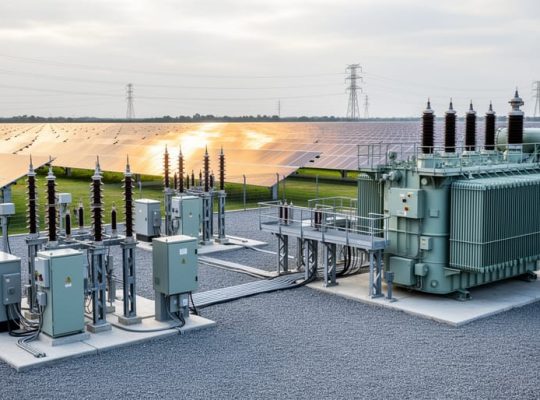
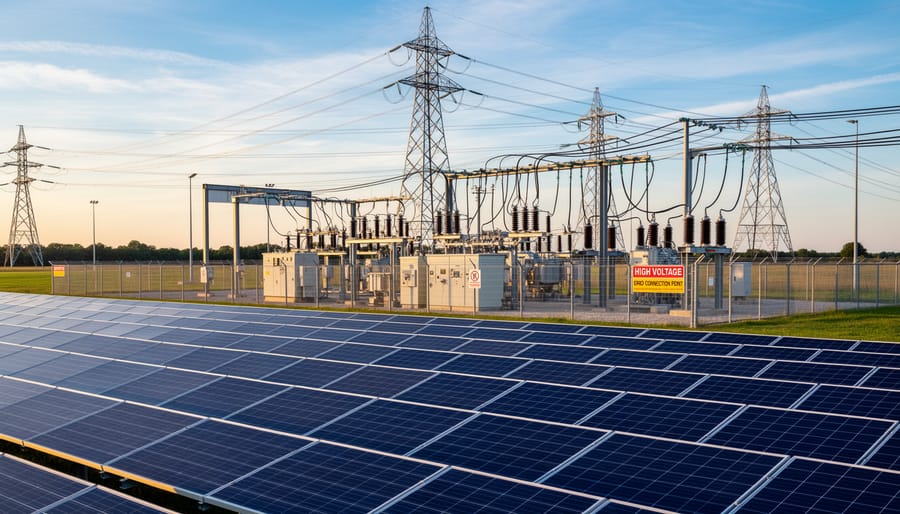
Large installations ranging from several megawatts to multiple gigawatts represent the most complex category of grid-connected solar. Unlike residential or commercial systems that connect to local distribution networks, utility-scale solar farms integrate directly at the transmission level through dedicated substations and step-up transformers that elevate voltage to 115 kV, 230 kV, or higher for long-distance transport.
These facilities deploy central inverters or string inverters aggregated into power blocks, each synchronized to deliver stable three-phase AC power. The scale demands sophisticated control systems that provide grid support services beyond simple energy delivery. Modern utility-scale plants incorporate advanced inverter functions for frequency regulation, responding within milliseconds to grid fluctuations by adjusting active power output. They supply reactive power for voltage control across transmission corridors, maintaining system stability during both normal operation and disturbances.
Power purchase agreements govern energy sales, typically spanning 20 to 25 years with utilities or corporate buyers. Interconnection studies assess transmission capacity, short-circuit levels, and potential stability impacts before construction begins. The largest installations include on-site weather forecasting systems and energy storage integration, enabling operators to predict and smooth generation variability while providing dispatchable capacity during peak demand periods when solar generation alone would be insufficient.
Hybrid Systems with Battery Storage
Hybrid systems combine solar panels with battery storage to store excess generation for later grid export or on-site use. Unlike pure grid-tied systems, batteries enable dispatchable power, solar energy can feed into the grid during peak demand periods rather than only when the sun shines. Modern configurations allow batteries to provide frequency regulation, voltage support, and backup power while maintaining grid interconnection. These systems use advanced inverters that manage simultaneous charging, discharging, and grid interaction, optimizing economic returns through time-of-use arbitrage and demand charge reduction. As utilities increasingly value flexible, controllable resources, hybrid installations represent the evolution of grid-connected solar from intermittent generation to reliable grid assets.
Solar PV Grid Integration Challenges in 2026
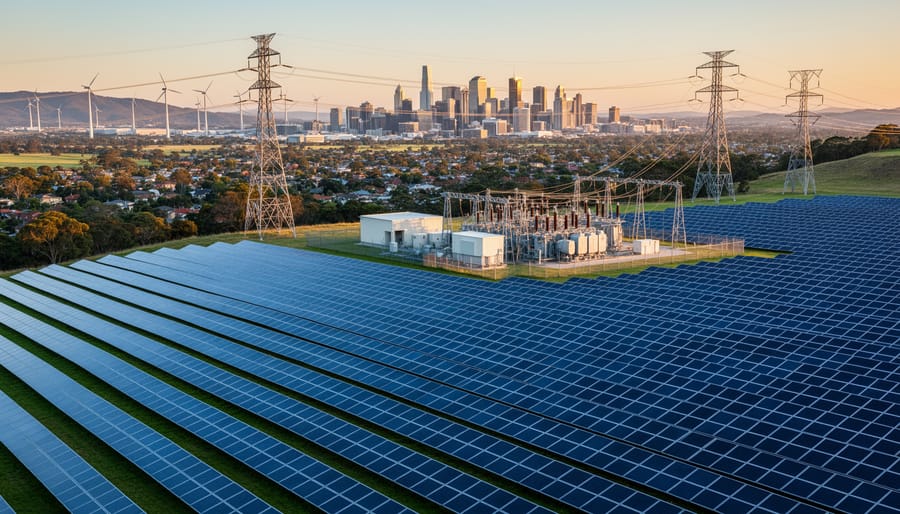
Intermittency and Grid Reliability
Solar generation fluctuates throughout the day based on cloud cover, time of day, and seasonal variations, creating significant challenges for utilities that must maintain constant supply-demand balance. Unlike dispatchable fossil fuel plants that can ramp output up or down on demand, solar PV systems produce power only when sunlight is available, forcing grid operators to compensate with flexible backup generation or storage.
The “duck curve” illustrates a critical problem facing grids with high solar penetration: midday oversupply when solar peaks drives down net load, followed by a steep evening ramp as panels stop producing while residential demand surges. This rapid ramp-up requirement, sometimes exceeding 13,000 MW in three hours in California, strains conventional generators that cannot respond quickly enough, threatening grid stability and driving up operating costs.
Grid operators must maintain spinning reserves and ancillary services to smooth solar variability, often curtailing renewable generation during periods of excess supply. Without advanced forecasting, energy storage, or demand response programs, these rapid fluctuations can trigger frequency deviations and voltage instabilities that risk cascading failures across interconnected systems.
Infrastructure and Hosting Capacity Limitations
Distribution grids were designed for one-way power flow from central generators to consumers. When solar systems inject power locally, they reverse that flow, creating technical constraints that utilities call “hosting capacity”, the maximum amount of distributed generation a circuit can accommodate without infrastructure upgrades.
Transformer capacity limits pose immediate barriers. Distribution transformers sized for neighborhood load weren’t built to handle reverse power from multiple rooftop arrays. Once aggregate solar exports exceed transformer ratings, utilities must upgrade equipment before approving new interconnections, adding months to project timelines.
Voltage rise is the most common rejection reason. Solar generation increases voltage on distribution lines; the farther from a substation, the more pronounced the effect. When voltage climbs beyond ANSI standards (typically 126V on 120V bases), protective relays trip. Circuits at the grid edge hit hosting limits first, even when total solar penetration remains low across the utility territory.
These physical constraints create interconnection queues and uneven solar adoption patterns. Urban feeders with robust infrastructure approve connections quickly, while rural circuits with long runs and aging equipment stall projects indefinitely, regardless of customer willingness to install solar.
Regulatory and Interconnection Barriers
Connecting a solar PV system to the utility network involves navigating a multi-layered regulatory landscape that varies significantly by jurisdiction. Permitting requirements differ between municipalities, states, and utility service territories, creating uncertainty for developers and installers. Many projects face lengthy interconnection queues, some utilities report wait times exceeding 12 to 18 months, as applications outpace grid operator capacity to review technical studies and approve connections.
Net metering policies, which determine how solar exports are credited, continue to evolve. Several jurisdictions have reduced compensation rates or imposed caps on participation, altering project economics. Utilities cite cost-shifting concerns, while solar advocates argue these changes undermine investment certainty. Technical standards like IEEE 1547-2018 mandate advanced inverter functions, but implementation timelines and compliance interpretation vary.
Jurisdictional fragmentation compounds these challenges. What qualifies as a streamlined interconnection process in one region becomes a protracted approval gauntlet elsewhere. For residential and commercial developers trying to connect to your grid understanding local utility requirements, anticipated study costs, and policy trajectories becomes essential due diligence before committing resources to installation.
Grid Modernization Requirements
The widespread adoption of solar PV systems demands substantial upgrades to grid infrastructure and control systems. Traditional distribution networks, designed for one-way power flow from central generators to consumers, struggle to manage the bidirectional energy flows and rapid output fluctuations that characterize high solar penetration.
Smart grid technologies form the backbone of modernization efforts, enabling real-time monitoring, automated voltage regulation, and dynamic load balancing across distribution feeders. Advanced metering infrastructure provides granular visibility into localized generation and consumption patterns, allowing utilities to optimize power flows and identify potential grid constraints before they trigger service disruptions.
The IEEE 1547-2018 standard represents a paradigm shift in inverter requirements, mandating grid-support functions that transform solar systems from passive generators into active grid participants. Modern inverters must now provide volt-VAR control to regulate voltage through reactive power injection, frequency-watt response to stabilize grid frequency during disturbances, and ride-through capability to remain connected during voltage or frequency excursions rather than immediately disconnecting.
Grid-forming inverters, an emerging technology category, can establish and maintain voltage and frequency independently, enabling solar-plus-storage systems to operate in islanded mode or provide black-start capability. These advanced functions position solar installations as distributed energy resources capable of delivering ancillary services traditionally provided only by conventional power plants, fundamentally reshaping how utilities manage grid stability in high-renewable scenarios.
Applications and Uses of Grid Feed-In Solar Systems
Grid-connected solar PV systems deliver measurable value across economic, environmental, and technical dimensions. Understanding where and how these systems provide benefits helps aspiring professionals identify opportunities and design solutions that maximize return on investment while supporting grid modernization goals.
Economic Benefits for System Owners
The most immediate application is electricity cost reduction. Grid-tied systems offset consumption during daylight hours, directly lowering utility bills for residential and commercial customers. When production exceeds on-site demand, net metering arrangements credit excess generation against future consumption, effectively using the grid as virtual storage. This mechanism enables monthly bill reductions of 50-90% for appropriately sized systems, with payback periods typically ranging from 5-12 years depending on local electricity rates and incentive structures.
For larger installations, demand charge management represents a significant value proposition. Commercial and industrial facilities face peak demand charges that can constitute 30-70% of their electricity costs. Solar generation during high-demand periods reduces these charges substantially, particularly when paired with battery storage that can shave peak loads beyond solar production hours.
Feed-in tariffs and power purchase agreements create direct revenue streams in markets where utilities or third parties purchase solar electricity at above-retail rates. While less common in 2026 than earlier decades, these programs still operate in specific jurisdictions and provide predictable cash flow for system owners.
Broader Value Streams
Grid-connected solar delivers value beyond individual economic returns:
- Bill reduction through on-site consumption offset and net metering credits
- Revenue generation via feed-in tariffs or wholesale market participation
- Demand charge management for commercial and industrial facilities
- Carbon footprint reduction by displacing fossil fuel generation
- Distributed generation benefits including reduced transmission losses and localized supply
- Grid resilience support through diversified generation and voltage regulation services
Modern inverters equipped with advanced grid support functions provide reactive power control, voltage regulation, and frequency response services that help stabilize distribution networks. These capabilities become increasingly valuable as solar penetration grows, with some markets now compensating solar systems for these ancillary services through capacity payments or performance-based incentives.
The distributed nature of grid-tied solar reduces strain on transmission infrastructure by generating power near consumption points, cutting line losses that typically claim 5-8% of centrally generated electricity. This locational benefit proves particularly valuable in congested urban areas where transmission upgrades carry prohibitive costs.
Frequently Asked Questions About Solar Grid Feed-In
Grid feed-in systems raise specific questions about technical requirements, compensation mechanisms, and safety protocols that every PV professional and system owner should understand clearly before interconnection.
What happens to my excess solar power at night?
Solar panels generate no electricity at night, so your system draws power from the grid as needed. If you have a net metering arrangement, nighttime consumption is offset against daytime exports when calculating your monthly bill.
Do I need permission from my utility to feed solar power into the grid?
Yes, interconnection requires formal approval through an application process that includes technical review, safety equipment verification, and a signed agreement with your utility. Installation without authorization violates grid codes and can result in disconnection or penalties.
How does my utility compensate me for the solar power I export?
Compensation depends on your jurisdiction’s policies, typically through net metering (one-to-one credit against consumption), feed-in tariffs (fixed rate per kWh), or wholesale market rates. Net metering remains the most common residential arrangement, though policies vary significantly by state and utility.
What safety equipment is required for grid-connected solar systems?
All grid-tied systems must include an inverter with anti-islanding protection, rapid shutdown capability, and automatic disconnect functionality that prevents backfeeding during grid outages. Additional requirements may include isolation transformers, ground fault protection, and arc fault detection depending on system size and local codes.
Can solar installations damage the electrical grid?
Properly designed systems that meet interconnection standards pose no damage risk. Problems arise from poorly configured inverters, inadequate voltage regulation on weak distribution circuits, or installations that exceed local hosting capacity without proper grid upgrades.
What is anti-islanding protection and why is it mandatory?
Anti-islanding protection automatically disconnects your solar system from the grid within two seconds of detecting a utility outage, preventing the creation of dangerous energized “islands” that could electrocute utility workers or damage equipment. This safety function is non-negotiable for grid interconnection approval under IEEE 1547 standards.
Understanding interconnection economics also matters for project feasibility. Utilities typically impose interconnection fees ranging from a few hundred dollars for small residential systems to tens of thousands for commercial installations requiring dedicated transformers or line upgrades. These costs, separate from installation expenses, can significantly impact return on investment calculations. System owners should request detailed cost estimates during the application process and factor them into financial projections.
The timeline from application to permission-to-operate varies widely, from four weeks in streamlined jurisdictions to six months or longer where utilities face application backlogs or require substantial engineering review. This variability makes early engagement with your utility critical for project planning, particularly for commercial installations with financing deadlines or seasonal installation windows.
Understanding how solar power feeds back into the grid is fundamental to accelerating photovoltaic deployment and overcoming the integration challenges that currently limit capacity expansion. This process, from DC generation at the panel through inverter synchronization to bidirectional metering, involves technical precision, regulatory compliance, and sophisticated grid management strategies that aspiring PV professionals must master.
The path from isolated residential installations to utility-scale solar farms requires navigating interconnection protocols, addressing hosting capacity constraints, and implementing advanced grid support functions. Modern grid-tied systems do more than export surplus electrons; they provide voltage regulation, frequency response, and increasingly sophisticated ancillary services that strengthen overall grid stability. Yet significant barriers remain: intermittency challenges, infrastructure limitations, evolving regulatory frameworks, and the urgent need for grid modernization shape the deployment landscape in 2026.
For professionals entering the renewable energy sector, comprehensive technical knowledge of grid integration separates competent installers from systems engineers capable of solving tomorrow’s challenges. The complexity of bidirectional power flow, anti-islanding protection, and harmonic management demands rigorous training grounded in both theory and practical application.
Mose Solar’s educational program, developed in collaboration with universities, equips aspiring PV professionals with the expertise needed to design, implement, and optimize grid-connected solar systems. These programs address the full spectrum of integration challenges, preparing the next generation of renewable energy specialists to advance solar power’s role in the modern electricity grid.