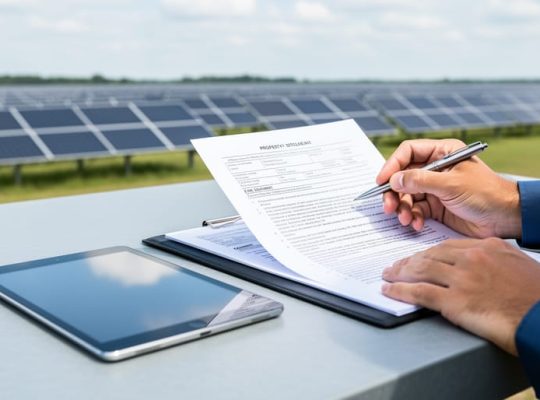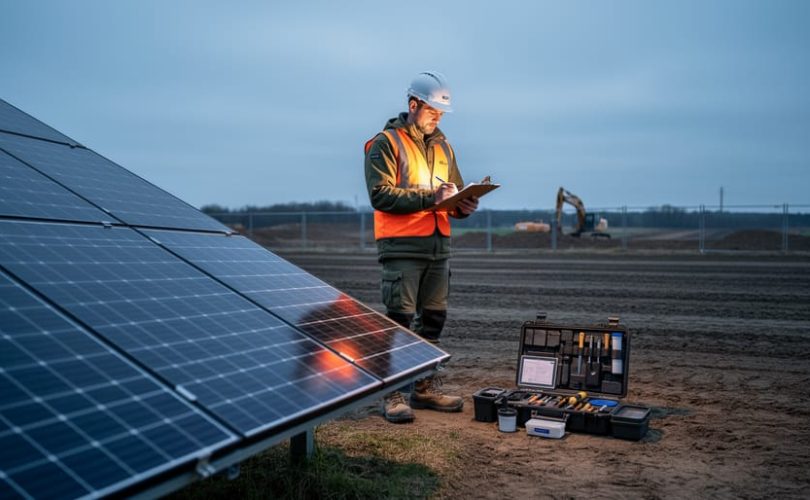
Environmental Phase I and Phase II assessments serve as gatekeepers for solar photovoltaic development, determining whether a site harbors contamination that could derail financing, trigger costly remediation, or expose developers to liability. A Phase I Environmental Site Assessment (ESA) is a non-invasive desktop and visual review required by most lenders and investors to identify potential environmental red flags through historical records, regulatory databases, and site inspections. When a Phase I raises concerns about recognized environmental conditions (RECs), a Phase II ESA follows with soil and groundwater sampling to quantify contamination levels and assess remediation needs. Together, these assessments typically add 4 to 8 weeks to pre-development timelines and cost between $3,000 and $50,000 depending on site complexity and sampling requirements.
Solar developers must understand when each phase is triggered and how findings shape project economics. A clean Phase I clears the path to construction and financing. Discovery of a REC demands a Phase II, and confirmed contamination can force site abandonment, expensive cleanup, or creative engineering solutions like elevated racking systems. Environmental due diligence sits early in the pre-screening workflow precisely because contamination can invalidate otherwise ideal sites with strong solar irradiance, grid access, and land availability.
The stakes extend beyond individual projects. As solar installations scale across brownfield sites and agricultural land with uncertain histories, rigorous environmental assessment protects developers from unforeseen costs while safeguarding communities from exposure to hazardous materials. Our educational programs, developed in collaboration with leading universities, equip renewable energy professionals with the skills to interpret environmental reports, manage assessment timelines, and integrate findings into comprehensive feasibility analyses that balance technical potential with environmental responsibility.
Understanding Phase 1 Environmental Site Assessments for Solar Projects
The Four Core Components of Phase 1 ESA
A Phase 1 ESA follows a structured methodology grounded in the All Appropriate Inquiries framework established by EPA regulation. For solar projects, each component must account for the unique characteristics of renewable energy development, including large footprints and minimal ground disturbance compared to traditional commercial construction.
Records review forms the foundation. Environmental professionals examine historical topographic maps, aerial photographs dating back decades, prior environmental reports, regulatory databases (federal, state, and local), fire insurance maps, and property title records. For solar sites, this review often spans 50+ years to identify former agricultural operations, abandoned wells, underground storage tanks from farm equipment, or prior industrial uses that predate the current landowner. Chain-of-title research reveals ownership patterns that might correlate with contaminating activities.
Site reconnaissance requires physical inspection of the entire proposed solar array area, access roads, and adjacent properties visible from the boundary. Professionals document current land use, vegetation stress patterns indicating subsurface contamination, stained soils, drums or storage containers, fill materials, and structures slated for demolition. They photograph evidence and note features like drainage patterns that could affect contaminant migration across the project footprint.
Interviews with current owners, past operators, neighboring property users, and local government officials fill information gaps. Questions probe historical uses, chemical storage practices, spill incidents, waste disposal methods, and community knowledge of environmental issues. Farmers may recall pesticide application areas or equipment maintenance zones not evident in records.
Report preparation synthesizes findings into a comprehensive document identifying recognized environmental conditions, data gaps, and recommended next steps. The report concludes whether RECs warrant Phase 2 investigation before solar development proceeds.
Common Recognized Environmental Conditions in Solar Sites
Solar project sites span a wide spectrum of land-use histories, each carrying distinct environmental legacies. Agricultural lands, the most common setting for utility-scale solar, frequently reveal pesticide and herbicide residues in soil, particularly organochlorines from decades-old applications. Former orchards may show elevated arsenic levels from legacy pesticide use, while fertilizer storage areas can flag nitrate contamination concerns.
Industrial and commercial sites repurposed for solar present a different profile. Former manufacturing facilities, gas stations, or transportation yards often trigger concerns about petroleum products in soil and groundwater, underground storage tanks (active or abandoned), and metals contamination from industrial processes. Even seemingly benign warehouse sites may reveal hydraulic fluid releases, battery acid spills, or transformer oil containing PCBs.
| Recognized Environmental Condition | Solar Development Implication | Typical Next Step |
|---|---|---|
| Historical pesticide use on agricultural land | May limit soil disturbance during construction; potential worker exposure during grading | Phase 2 soil sampling in high-use areas |
| Underground storage tanks (active or abandoned) | Removal required before construction; potential soil and groundwater contamination | Tank assessment and Phase 2 investigation |
| Adjacent contaminated properties | Groundwater plume migration risk; liability concerns for lenders | Vapor intrusion assessment; legal review |
| Asbestos-containing materials in structures | Demolition costs and timeline impact; regulatory notification requirements | Asbestos survey; abatement planning |
Brownfield sites, increasingly attractive for solar due to lower land costs and proximity to transmission infrastructure, carry the highest probability of significant contamination. These locations often combine multiple RECs: industrial waste disposal areas, fill material of unknown origin, and documented releases from previous operations. However, contaminated sites can still host successful solar projects when the Phase 1 assessment identifies issues early, allowing developers to evaluate remediation costs against land acquisition savings and structure appropriate liability protections before proceeding to Phase 2 investigation.
When Phase 2 Environmental Site Assessments Become Necessary
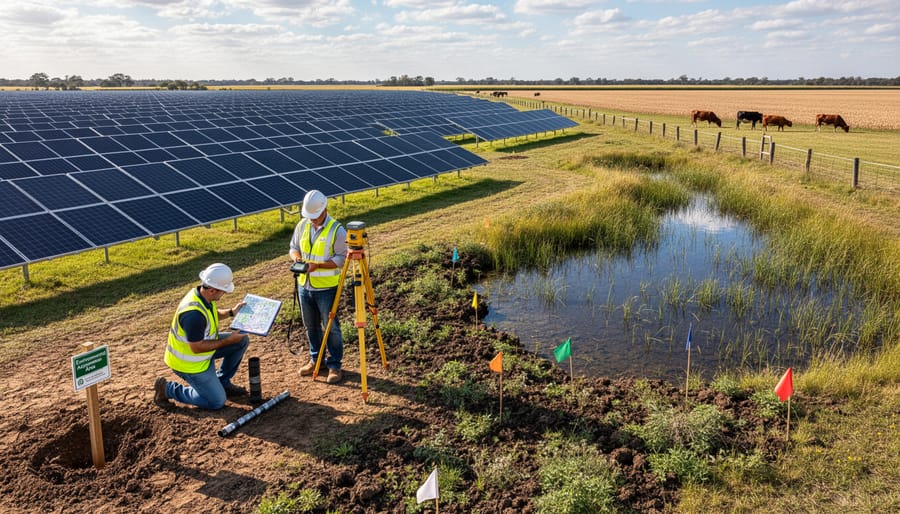
A Phase 2 Environmental Site Assessment becomes necessary when a Phase 1 ESA uncovers evidence suggesting potential contamination that requires verification through physical sampling and testing. This escalation isn’t automatic, it’s driven by specific findings and stakeholder requirements that indicate environmental risk remains uncertain or unacceptable.
The most common trigger is the identification of Recognized Environmental Conditions during the Phase 1 investigation. When the desktop review, site inspection, or interviews reveal past industrial use, underground storage tank records, stained soil, suspicious odors, or proximity to known contaminated sites, a Phase 2 provides the ground-truth data needed to quantify actual contamination levels. For solar projects, even seemingly minor concerns, such as historical agricultural chemical use or evidence of illegal dumping, can warrant Phase 2 investigation because developers need clean liability profiles before committing capital to construction.
Tax equity investors and construction lenders in the solar sector typically demand conclusive evidence that subsurface contamination won’t derail construction timelines, create cleanup obligations, or expose them to environmental liability under CERCLA’s secured creditor provisions.
Regulatory agencies may also flag sites requiring Phase 2 work. Properties located in environmental resource areas, within state cleanup program databases, or adjacent to Superfund sites often face regulatory scrutiny during the permitting process. Planning boards and environmental commissions commonly request Phase 2 data before approving special permits or site plan applications, particularly when ground disturbance for pile driving will mobilize potential contaminants.
The decision to proceed with Phase 2 balances risk tolerance against cost. When Phase 1 findings are ambiguous or historical records incomplete, a targeted Phase 2 resolves uncertainty and prevents costly surprises during construction.
The Phase 2 ESA Investigation Process
Sampling and Testing Protocols
When Phase 2 investigation confirms contamination exists, the sampling strategy must balance regulatory compliance with the practical realities of solar construction. Most Phase 2 programs start with soil borings at locations informed by Phase 1 findings, near former USTs, suspect staining, or historical use areas. For solar projects, consultants typically position borings to avoid future tracker foundations and inverter pads while still characterizing the contamination plume.
Soil samples follow depth intervals that capture both shallow impacts (0-2 feet, relevant for grading) and subsurface conditions where piles will penetrate. Labs analyze samples using EPA methods appropriate to the suspected contaminants: Method 8260 for volatile organics like petroleum hydrocarbons, Method 8270 for semi-volatiles including PAHs, and Method 6010 for metals such as lead and arsenic. Turnaround typically runs 10-15 business days for standard parameters.
Groundwater sampling adds complexity. Temporary wells installed during soil boring allow depth-to-water measurement and aquifer sampling using low-flow techniques that minimize disturbance. If shallow groundwater sits within excavation depth (common in coastal or wetland-adjacent sites), this becomes critical data for both contamination assessment and stormwater management planning. EPA Method 8260 and 8270 apply to groundwater as well, with results compared against state groundwater quality standards.
Vapor intrusion sampling matters less for open-air solar arrays than occupied buildings, but consultants may still collect sub-slab or soil gas samples if volatile compounds are present and future O&M buildings are planned. The sampling grid adapts to project layout: denser near confirmed hotspots, strategic at property boundaries, and deliberately avoiding equipment footprints to preserve usable land. This flexibility ensures the investigation answers regulatory questions without sterilizing developable acreage.
Interpreting Phase 2 Results and Risk Assessment
Once Phase 2 laboratory results return, they undergo a multi-layered evaluation process that determines whether contamination poses unacceptable risk to the solar project, future workers, and the environment. This interpretation directly shapes project viability decisions and potential remediation obligations.
Environmental consultants first compare detected contaminant concentrations against published regulatory standards, typically state-specific cleanup criteria or EPA Regional Screening Levels for soil and groundwater. Exceedances of these benchmarks flag potential regulatory concerns that may require remediation, institutional controls, or activity and use limitations before development proceeds.
However, generic screening levels often assume residential exposure scenarios that don’t reflect solar facility conditions. Solar arrays involve minimal worker presence, no residential occupancy, limited soil disturbance after construction, and engineered barriers (racking, ballast, gravel access roads) that reduce direct contact with contaminated media. Consultants can apply site-specific risk assessment methodologies that account for these reduced exposure pathways, demonstrating that detected concentrations pose acceptable risk under industrial or commercial land use scenarios.
Groundwater contamination receives particular scrutiny. Even if solar construction won’t encounter groundwater, contaminated plumes can trigger ongoing monitoring requirements, vapor intrusion concerns in any enclosed structures (inverter pads, substations), or liability for off-site migration. Projects on sites with groundwater impacts may face restrictions on pile driving depths, excavation limits, or mandatory vapor barriers.
The assessment culminates in a clear determination: no further action required, remediation necessary before construction, or implementation of engineering/institutional controls during development. This classification directly informs cost estimates, timeline adjustments, and whether the site remains economically viable for solar deployment. Projects with contamination above industrial screening levels but below residential thresholds often remain feasible with appropriate risk management strategies documented in environmental covenants or deed restrictions.
Timeline and Cost Considerations for Both Phases
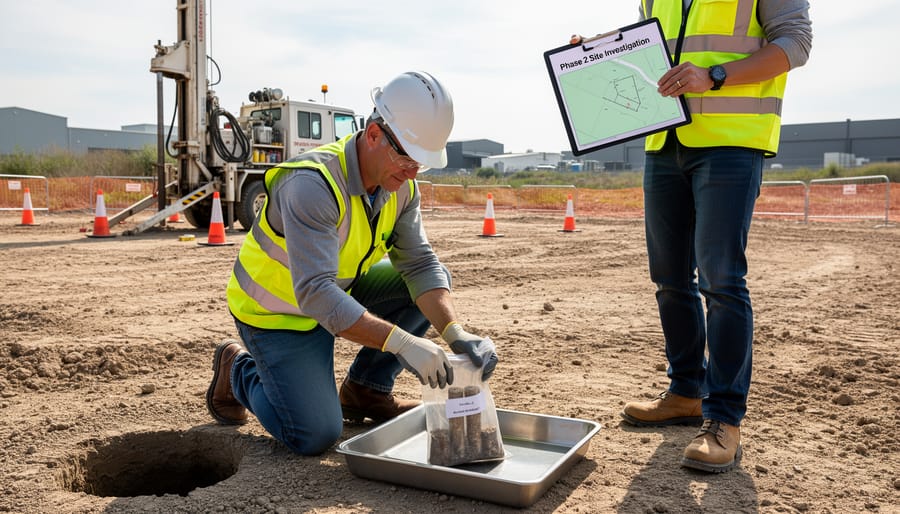
Understanding the time and financial commitment required for environmental assessments is essential for project planning and budgeting. These factors directly influence development schedules, financing timelines, and ultimately whether a site remains economically viable for solar development.
Phase 1 Environmental Site Assessments typically complete faster and at lower cost than their Phase 2 counterparts. Most Phase 1 ESAs for solar projects finish within two to four weeks from initiation, assuming straightforward site access and readily available historical records. The cost for a standard Phase 1 assessment on a solar project site ranges from $3,000 to $8,000, depending primarily on site size, historical complexity, and geographic location. Rural agricultural sites with simple ownership histories fall toward the lower end, while former industrial properties or sites with fragmented ownership and extensive historical uses push costs higher.
Phase 2 assessments require substantially more time and investment due to field sampling, laboratory analysis, and data interpretation. Typical Phase 2 investigations span six to twelve weeks, though complex contamination scenarios or difficult site access can extend this to four months or longer. Costs for Phase 2 ESAs vary widely based on sampling scope, ranging from $15,000 for limited investigations addressing a single suspected contaminant to $75,000 or more for comprehensive assessments involving multiple sampling locations, diverse contaminants, and extensive laboratory analysis.
| Assessment Type | Typical Timeline | Cost Range | Primary Variables |
|---|---|---|---|
| Phase 1 ESA | 2-4 weeks | $3,000-$8,000 | Site size, historical complexity, records availability |
| Phase 2 ESA | 6-12 weeks | $15,000-$75,000+ | Sampling density, contaminant types, lab analysis scope |
Several factors can extend timelines and inflate costs beyond these typical ranges. Weather conditions delay field sampling during Phase 2 investigations, particularly when frozen ground prevents soil boring or heavy rainfall makes sites inaccessible. Laboratory backlogs during peak season can add two to three weeks to Phase 2 completion. Discovering unexpected contamination during Phase 2 sampling often necessitates additional investigation rounds, essentially restarting portions of the timeline.
Site-specific characteristics also drive variation. Large solar projects exceeding 100 acres require more extensive sampling grids, increasing both field time and laboratory costs. Sites with known or suspected contamination demand specialized sampling protocols and analysis for uncommon contaminants, which carry premium pricing. Limited site access requiring coordination with current property users or crossing adjacent parcels adds scheduling complexity and potential delays.
Budget an additional 15 to 25 percent contingency for environmental assessments to accommodate these variables and avoid project timeline disruptions when complications arise.
Impact on Project Feasibility and Financing
Phase 1 and Phase 2 environmental assessment results directly shape whether a solar project proceeds, how it’s financed, and what risk management structures must be put in place. A clean Phase 1 ESA typically satisfies lender due diligence requirements and allows the project to advance through permitting with minimal environmental constraints. When Phase 1 identifies recognized environmental conditions, the project enters a more complex evaluation where Phase 2 findings determine feasibility.
Lenders and tax equity investors treat environmental liabilities as deal-breakers or require substantial risk mitigation before committing capital. Most project finance agreements include environmental representation and warranty clauses that demand either a clean Phase 1 or a Phase 2 demonstrating that contamination poses no risk to project operations, worker safety, or long-term asset value. If Phase 2 reveals contamination exceeding regulatory thresholds, developers face three options: abandon the site, negotiate remediation responsibilities with the landowner, or incorporate cleanup costs into the project budget.
Remediation obligations significantly affect project economics and timeline. Active cleanup requirements can add six months to two years to the development schedule and costs ranging from tens of thousands to millions of dollars depending on contamination extent and regulatory oversight intensity. Developers must determine whether remediation expenses, combined with delayed revenue, still yield acceptable returns compared to alternative sites.
Insurance considerations shift when environmental issues surface. Pollution legal liability insurance becomes necessary for sites with known contamination, adding annual premiums of $15,000 to $50,000 or more for typical utility-scale projects. Some insurers exclude coverage for pre-existing conditions unless remediation achieves regulatory closure, forcing developers to retain environmental risk on their balance sheets.
Permitting pathways diverge based on environmental status. Clean sites proceed through standard local and state permits, while contaminated sites trigger additional regulatory reviews, public notification requirements, and potential deed restrictions that complicate land use approvals. Voluntary cleanup programs offered by many state environmental agencies can streamline this process but require formal enrollment, remediation work plans, and regulatory sign-off before permits issue.
Integration with Broader PV Pre-Screening Activities

Phase 1 and Phase 2 environmental assessments do not operate in isolation. They are one critical workstream within a comprehensive pre-screening effort that evaluates whether a proposed solar site can feasibly obtain permits, connect to the grid, and meet financing requirements. Successful project development requires coordinating environmental assessments with several parallel studies, each with its own timeline and regulatory trigger.
Wetlands delineation typically runs concurrently with Phase 1 ESA activities. While the Phase 1 investigates historical contamination, wetland specialists identify jurisdictional waters and wetlands that could require Section 404 permits or trigger mitigation obligations. Results from both studies inform initial site layout decisions, as contaminated areas and protected wetlands both constrain panel placement and access road routing.
Endangered species surveys follow a similar parallel track. Phase 1 desktop research may flag potential habitat concerns, but biological surveys conducted during appropriate seasonal windows provide definitive presence/absence data. A Phase 2 contamination finding could actually intersect with threatened species issues if remediation activities would disturb sensitive habitat, requiring coordination between environmental consultants and biologists.
Cultural resource assessments often begin after Phase 1 but before Phase 2 fieldwork. Archaeological surveys and tribal consultation processes can halt or redirect invasive Phase 2 sampling if culturally significant sites are identified. Smart developers sequence these studies to avoid destroying evidence or violating protection statutes during soil boring activities.
Interconnection studies proceed on entirely different timelines dictated by utility queue positions, yet their results directly affect whether environmental assessment costs are justified. A prohibitively expensive interconnection may render a site economically unviable before Phase 2 conclusions even matter.
This multi-disciplinary coordination extends beyond environmental matters into supply chain considerations like local content rules and forced labor compliance which affect procurement strategies once site control advances. Effective pre-screening treats environmental assessments as one data input among many, with results continuously feeding into updated feasibility models and risk registers.
Frequently Asked Questions
Can we skip the Phase 1 assessment if the site looks clean?
No. Lenders, investors, and title insurance companies typically require Phase 1 ESA reports regardless of a site’s appearance, as historical contamination often leaves no visible surface evidence. Skipping this step creates liability exposure and will block most financing and insurance pathways.
What happens if Phase 2 testing identifies contamination?
Contamination discovery doesn’t necessarily kill a project. Developers must evaluate whether levels exceed regulatory thresholds for the intended use, assess remediation costs against project economics, and determine if risk-based closure or institutional controls offer viable alternatives to full cleanup.
Who is responsible for paying remediation costs?
Liability depends on ownership timing and contractual terms. If contamination predates the developer’s involvement, prior owners or operators may bear responsibility, though environmental laws can impose liability on current owners. Purchase agreements should clearly allocate remediation obligations and include indemnification provisions.
Can solar construction begin while Phase 2 investigation is underway?
Generally no. Construction before completing Phase 2 creates legal and financial risks, as disturbance of contaminated soils triggers regulatory obligations and can spread contamination. Lenders will not release construction financing without a complete environmental assessment showing acceptable risk levels.
These questions surface repeatedly during pre-development discussions because environmental liability represents one of the most significant financial and legal risks in solar project development. Unlike technical challenges related to B-Roof design or logistical complexities addressed through 4PL logistics environmental contamination introduces unknowns that can’t be engineered around until they’re properly characterized.
The timing question deserves particular emphasis. Developers often want to accelerate schedules by conducting environmental work in parallel with other activities, but this creates false economy. Starting interconnection applications, wetland delineations, or permitting work before environmental clearance wastes money if contamination later kills the project or forces relocation to a different portion of the site.
Insurance and financing requirements drive much of the environmental assessment timeline. Title insurers won’t issue policies without Phase 1 clearance, and construction lenders structure environmental liability exclusions based on Phase 2 findings. Understanding these stakeholder requirements early prevents costly delays when projects reach the financing stage and suddenly face demands for updated or supplemental environmental work.
Early environmental assessment stands as one of the most cost-effective risk management strategies in solar PV development. Conducting Phase 1 and, when necessary, Phase 2 environmental site assessments during the initial pre-screening stage allows developers to identify deal-breaking contamination issues before substantial capital commitments, avoid sites with hidden remediation costs that would erode project economics, and present clean environmental diligence to financiers and offtakers who require it.
Projects that skip or delay environmental assessment often face painful surprises during later permitting stages or due diligence reviews by lenders and equity investors. What appears as a modest upfront expense for assessment becomes a strategic investment that accelerates timelines, strengthens financing positions, and supports informed site selection decisions. The clarity provided by comprehensive environmental investigation enables teams to negotiate land terms appropriately, structure remediation responsibilities correctly, and proceed with confidence through interconnection and permitting processes.
For professionals entering the solar industry, understanding environmental assessment requirements represents essential knowledge. The intersection of environmental due diligence, regulatory compliance, and project finance creates complex challenges that require both technical comprehension and practical judgment.
Mose Solar offers educational programs designed to build this expertise, providing aspiring PV professionals with frameworks for understanding pre-development due diligence activities, including environmental assessments, within the broader context of utility-scale solar project development. Our university partnerships bring academic rigor to real-world application, preparing the next generation of solar professionals to navigate these critical early-stage decisions.